
How to Choose a Dog Breed for Your Lifestyle: Step-by-Step
This post contains affiliate links. As an Amazon Associate, we earn from qualifying purchases.
To choose a dog breed for your lifestyle, audit five things before you open a single breed profile: hours the dog will be alone, your real weekly activity, grooming tolerance, budget, and who else lives in the house. Match breed groups to those answers first, then read individual breed profiles.
Breed groups are the shortcut because the job a breed was built for still shapes the dog standing in your kitchen. A herding breed moves things. A sighthound spots motion and chases it. A retriever brings things back and drops them at your feet. This is also why learning how to choose a dog breed for your lifestyle starts with the group.
What follows is the audit itself, the places where the major sources flatly disagree, and the questions that separate a breeder who will match you honestly from one who will sell you whatever is available this month.
Key Takeaways
- Run the audit before the breed list. Hours alone, weekly activity, grooming time, budget, and household members rule out more breeds than any quiz does.
- Size is a weak predictor of energy. Purdue Extension ties small breeds to apartments; Merck points out that some Great Danes are lazy and some small dogs never stop.
- Grooming is a recurring bill, not a one-time cost. Long-haired breeds need brushing or combing daily, and many need professional grooming every 4-8 weeks.
- A first dog is usually better as an adult. Purdue recommends an adult dog with some basic obedience training for anyone who has never owned a dog.
- Ask for health records and breed-specific testing before money changes hands, especially hip dysplasia in larger breeds.
Why the Breed Quiz Comes Before the Puppy Pictures
Picking by appearance is the most expensive mistake in the how to choose a dog breed for your lifestyle process.
The AKC recognizes 200 breeds, and every one of them was bred for a job. That job is the best single predictor of what your evenings will look like for the next decade or so.
Breed groups sort dogs by the work they were developed for: herding, sporting, hound, working, terrier, toy, and non-sporting. Original function predicts exercise drive, vocal habits, and training needs far more reliably than adult weight does. A small terrier and a small toy breed can live completely different lives indoors.
Purdue University Cooperative Extension puts a number on the owner-time side of that. Their bulletin notes that owners working 8, 12, or 14 hours a day may find a dog is not the best pet choice at all. That line rules out more breeds than any quiz, and it’s the first thing I walk first-time dog owners through.
The AKC breed-lifestyle selection guide makes the same point from the other direction. A match depends on lifestyle, activity level, and living conditions, and a bad one ends with the dog returned to the breeder, rehomed, or moved to a shelter. That’s the failure path, in that order.
Here’s where the experts split, and it matters for how much weight you put on breed at all. VCA Animal Hospitals leans hard on genetics: genetic programming for certain traits is what makes breeds who they are. Merck leans the other way, noting that most dogs raised with children see them as part of the family, and stressing training over breed. Both are describing something real. The practical read is that a breed sets the starting point and the household sets the outcome.
The Five-Point Lifestyle Audit
Five numbers decide more than breed research does: hours alone, active minutes per week, grooming minutes per week, monthly budget, and the head count in your house.
Answer the how to choose a dog breed for your lifestyle questions in writing. Actually write them down.
- Hours the dog will be alone on a normal weekday. Purdue flags the 8, 12, and 14-hour workday as the threshold where a dog may not be the right pet at all. Skip this check and you get the destruction that later gets blamed on the breed.
- Active minutes you actually logged last month. Count the walks you took, not the ones you planned. The gap between those two numbers is where most mismatches start.
- Grooming minutes per week, plus the professional appointment. VCA states that long-haired breeds need brushing or combing every day, and that many need professional grooming every 4-8 weeks. Underestimate this and the coat mats somewhere you can’t see until it’s a vet visit.
- Monthly budget including the vet line. Purdue notes that purebreds tend to cost more than mixed breeds, especially from a breeder or pet store, and that purebreds from breed rescues can be less expensive. The purchase is the smallest number in the column.
- Who else lives there. Children, existing pets, and frequent guests all change the answer. VCA’s guideline is blunt: if there are children in the home, the pet must be calm and not easily excited.
If you can’t fill in the hours-alone number without guessing, you aren’t ready to shortlist breeds. Guess wrong there and every other answer gets wasted.
The Purdue Extension dog selection publication walks the same questions in more detail, including purpose, prior experience, and finances. It’s a land-grant extension bulletin, which means nobody is selling you a puppy at the end of it.
Does a Small Dog Really Suit an Apartment Better?
Two of the most trusted sources in this field answer that question in opposite directions, and neither one is obviously wrong.
Purdue Extension states that small breeds tend to adapt better than large breeds to the smaller space available in an apartment. Merck’s position is that size doesn’t always tell you how active a dog will be, and offers the Great Dane as an example of a big dog that can be pretty lazy once it grows up.
| Question | Purdue Extension position | Merck Veterinary Manual position |
|---|---|---|
| Does size predict apartment fit? | Small breeds adapt better to smaller space | Size doesn’t predict activity level |
| Supporting example | Small breeds suit apartment living | Great Danes can be lazy; some small dogs need a lot of exercise |
| Practical reading | Start your shortlist with small breeds | Judge the individual breed, not the weight class |
The workable answer sits between them. Use size as a first filter, then check the individual breed’s activity level before you commit. A lazy giant and a frantic ten-pounder are both real.
Renting adds a layer most breed guides skip. The Wisconsin Department of Agriculture, Trade and Consumer Protection points out that many rental properties do not allow pets, so read the lease before you read the breed profile. That’s the check that decides whether the apartment-friendly dog breed question is even yours to answer.
A small-yard dog breed is a different question from an apartment breed. A yard changes the exercise math.
Size, Lifespan, and the Numbers That Actually Hold
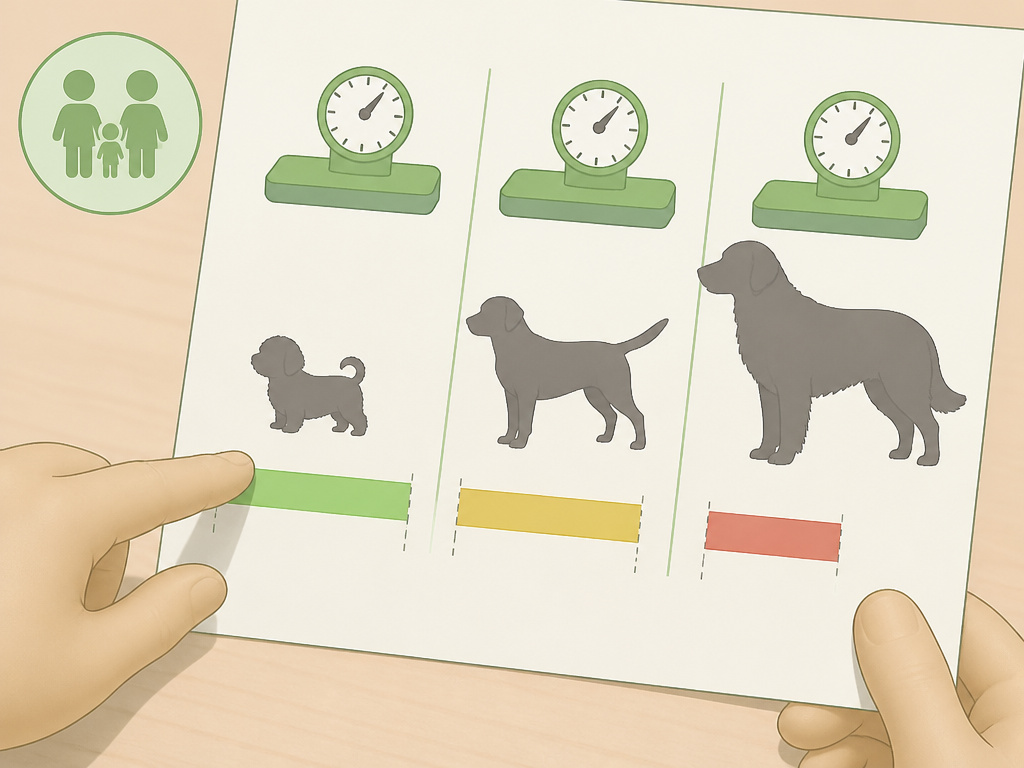
Twenty pounds is the line Purdue draws between a small breed and a medium one, and it’s a useful line because lifespan data comes attached to it.
| Size class | Weight at maturity | Typical lifespan |
|---|---|---|
| Small breed | Up to 20 pounds | 15-16 years, average 14 |
| Medium breed | 20-50 pounds | Not given in the bulletin |
| Large breed | Over 50 pounds | 8-12 years, average 10 |
That lifespan gap is the part people skip. A large breed is roughly a ten-year commitment. A small breed is roughly a fourteen-year one, and older dogs may cost more because they need more veterinary care as they age.
Merck also warns that smaller, active dogs like small poodles or chihuahuas might not handle rough play from young kids well. Both ends of the chart carry a risk the middle doesn’t. If there are families with kids in the house, Purdue’s guidance is to look for dogs with a low tendency to bite and a high tolerance for handling.
Merck adds a harder line: dogs that are used to a child-free home might not react well to a new child, and might develop problems like aggression or accidents in the house. Always supervise, and never leave children or infants alone with a dog.
I’d rather see a family take a medium adult dog from a foster home than a large puppy they picked for the look. The foster can tell you how that dog behaves around kids. Nobody can tell you that about an eight-week-old puppy.
Grooming Is a Time Bill, Not a Personality Trait

Coat type sets a recurring appointment you can’t skip, and it’s the most commonly underestimated line in breed research.
Run your fingers into the coat behind the ear. Run your fingers into the coat behind the ear and you may hit a felted knot before you reach skin. That knot is what the daily brushing was supposed to prevent.
VCA’s numbers are specific: long-haired breeds need brushing or combing every day, and many need professional grooming every 4-8 weeks. Purdue’s bulletin adds that long-haired breeds need more regular grooming than short-haired dogs and shed a lot more hair.
The Coat Types That Cost You Time
- Double coats carry a thick undercoat, and dogs with thick coats can struggle in hot areas.
- Long-haired breeds need brushing or combing every day, and many need professional grooming every 4-8 weeks.
- Short-haired dogs might have trouble in the cold.
- Flat-faced and short-legged breeds need separate attention, and VCA flags both groups for additional veterinary care and exercise adjustments.
That last point deserves its own line. VCA notes that brachycephalic breeds such as the pug and French bulldog, and achondroplastic breeds such as the corgi and dachshund, may require additional veterinary care and adjustments to their exercise routines. Budget for that before you budget for the brush.
Merck adds that some heavy-coated dogs might need to be shaved in the summer. Breed-club and coat-care specialists argue the opposite, that a double coat insulates against heat and can grow back unevenly. Merck doesn’t cite a source for the shaving line, so treat it as one opinion rather than settled practice.
Coat is the visible cost. Dog breed temperaments are the invisible one, and they’re harder to budget for.
What most people get wrong: Buying the brush before reading the coat. Buying the brush before reading the coat is a common mistake.
How Much Exercise Does the Breed Actually Need?
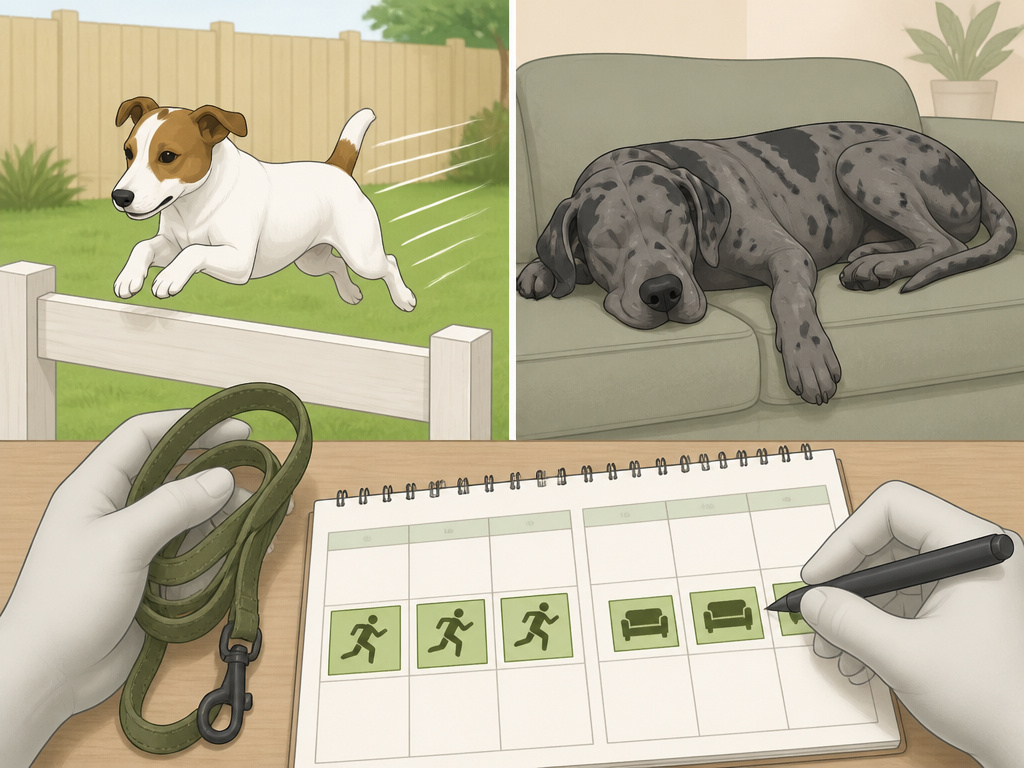
Weight class tells you almost nothing about how much exercise a breed needs.
Merck’s own example is a Great Dane that lazes around and a Jack Russell Terrier that never stops, and the two are nowhere near the same size. Merck also notes that larger dogs like retrievers, and very active dogs like Jack Russell Terriers, need space to run and play and are better suited to homes with a fenced yard. They might not do well in apartments.
Working dogs add a different requirement. Merck states that Border Collies need to have a job to do, or they get bored and act out. A bored Border Collie doesn’t lie down. It paces the fence line, barks at the same passing car every time, and works the one gate you left unlatched.
Purdue names the mechanism behind most “bad breed” reputations: many undesirable behaviors, including hyperactivity and destructive behavior, can result from insufficient exercise. That’s the whole explanation, and it’s usually filed under the wrong heading.
If your week is already full, the low-energy dog breed list is the honest place to start rather than a training plan you won’t follow. The high-energy dog breed question deserves a different test: can you give the dog a job, not just a walk?
Merck warns that very active breeds aren’t a good fit if you have limited mobility, which is the first thing worth checking for older adults. The fuller breed exercise needs breakdown is worth reading before you fall for a working breed’s look.
One more thing from my own yard. A determined terrier may dig under a line that stops another dog cold, and I’ve stopped treating that as a training failure. It’s a planning question, and it belongs in the breed conversation.
The part nobody mentions: A tired dog and an under-exercised dog look identical on the couch. The difference shows up at the fence line, in the drywall, and in the bark that starts early and doesn’t stop.
Puppy or Adult Dog: Where the Experts Split

Picture a shelter with a litter of mixed-breed puppies in one run, an adult dog in another, and no reliable information about how big those puppies will get.
Merck is direct about the uncertainty. It’s sometimes hard to predict how big and active a mixed-breed puppy will be when it grows up. The AKC’s counterweight is predictability, which it calls the major advantage of a purebred over a mixed-breed puppy or older dog, with fewer chances of surprises in size, physical characteristics, behaviors, and personality traits.
The two organizations also frame the risk differently. The AKC describes the failure path as return to breeder, then rehome, then shelter, which implicitly favors a breeder-sourced puppy. Merck treats an adult dog as a viable option that needs extra attention to settle in, and recommends learning the dog’s medical and behavior history from the previous owner or shelter.
Purdue lands closer to Merck. If you have never owned a dog before, an adult dog with some basic obedience training may be your best choice.
A dog raised in a child-free home can react badly to a new baby. Merck lists aggression and house-soiling as the possible outcomes, and there’s no reliable way to screen for that in a single meeting.
That’s the strongest argument for an adult dog from a foster home, where the foster has actually watched the dog around children. It’s also why puppy matching should start with the household, not the litter.
The AKC Selecting a Puppy ebook lists nine questions research should answer before a breed is chosen, including how big the dog gets, how much it barks, and whether it does well with children and other pets. That list is a good filter. Just read it as a breeder’s perspective, because that’s what it is.
What to Ask Before You Commit

If you could ask a breeder only three questions, which three would tell you the most?
When I was vet-shopping for my current dog, I called several clinics and asked one question: what’s your protocol if I call after hours with a bloated dog? Some said go to the emergency clinic and stopped there. Another gave me the address and told me to call ahead so they’d be ready. That last one got my business.
The same test works on breeders and shelters. The answer matters less than whether they engage with the question at all.
Questions for a Breeder
- Are the parents tested for breed-specific diseases? Merck names hip dysplasia in larger breeds as the standard example, and asks buyers to raise it directly.
- Are you a member of the breed’s national club? The AKC states that responsible breeders should ideally belong to it and follow the parent club’s recommended health tests. Those who complete all of them are designated Breeders of Merit.
- Can I see at least one parent? The AKC’s puppy guide recommends asking to see at least one of the parents during a home visit.
- Will you still answer my email in six months? The AKC’s guidance is to look elsewhere if a breeder doesn’t respond or shows no interest in the life the dog will lead after it leaves.
Merck adds one more. Some pet stores get puppies from responsible breeders, but others source from puppy mills, which often raise dogs in poor conditions. Ask where the puppy was actually born.
Questions for a Shelter or Rescue
- What were the dog’s living conditions before this? Ask the shelter about the dog’s history before deciding.
- Can I see the health records? Merck lists illnesses, vaccinations, heartworm prevention, and spay or neuter status, and recommends getting the records for future vet visits.
- Can my family and my existing pets meet the dog first? Merck recommends arranging exactly that meeting before you decide.
- What happens if it doesn’t work out? The AKC’s failure path runs back to the breeder, then to a rehome, then to a shelter. Know which one applies.
A shelter that doesn’t ask about your lifestyle, living conditions, and expectations is a warning sign. The AKC says so plainly. Good shelters screen hard, and that screening is a service, not an obstacle.
Two last items belong on the calendar, not the questionnaire. Purdue recommends an annual vet visit for a physical exam and vaccinations, and notes that in most states the law requires a rabies vaccination. Your vet can tell you what vaccinations your dog needs.
Frequently Asked Questions
What is the most important factor when choosing a dog breed?
The hours the dog will spend alone each weekday. Purdue Extension notes that owners working 8, 12, or 14 hours a day may find a dog is not the best pet choice at all, and that single constraint deserves an honest answer before anything else. Answer it honestly before anything else.
Are small breeds really better for apartments?
Purdue Extension says small breeds tend to adapt better to smaller space. Merck disagrees with the premise, noting that size doesn’t predict activity and that some small dogs need a lot of exercise while some Great Danes are lazy. Use size as a starting filter, then check the individual breed’s activity level.
Should a first-time owner get a puppy or an adult dog?
Purdue’s guidance is that an adult dog with some basic obedience training may be the best choice for someone who has never owned a dog. Merck treats adult dogs as a viable option that needs extra attention to settle in. The AKC’s framing favors breeder-sourced puppies, so the sources genuinely split here.
How much does breed matter compared to training?
VCA Animal Hospitals argues that genetic programming for certain traits is what makes breeds who they are. Merck stresses training and household environment instead, noting that most dogs raised with children see them as part of the family. A breed sets the starting tendencies. The household decides how they play out.
How do I check whether a breeder does health testing?
Ask directly whether the parents were tested for breed-specific conditions, and name the condition. Merck uses hip dysplasia in larger breeds as the example. The AKC adds that breeders who complete all recommended breed-specific health checks are designated Breeders of Merit, and that club membership is a reasonable signal.
The Bottom Line
Here’s the trigger I’d hand anyone: if your honest hours-alone number is 8, 12, or 14 hours a day, stop breed shopping and reconsider whether a dog is the right pet at all. Purdue notes that owners working 8, 12, or 14 hours a day may find a dog is not the best pet choice at all, and that’s the one line in this process I won’t soften for anybody.
The concession is real, though. Everything above assumes you can shift your routine a little, or pay someone to break up the day. If you can’t do either, a cat or no pet is the honest answer, and no breed profile fixes it.
One last thing worth saying out loud, because the fence industry won’t. Most dogs that get labeled escape artists don’t need a stronger containment system. They need a longer walk and a job. Fix the exercise first, then shop for hardware.
That’s it. Done.
