
How to Understand Dog Breed Temperaments: Study the Data
This post contains affiliate links. As an Amazon Associate, we earn from qualifying purchases.
Understanding dog breed temperaments means reading the science behind the breed chart. The largest owner survey (Salonen et al., 2023, over 11,000 dogs) found breed is the most important personality variable, but effect sizes are small and a lot of variation stays unexplained. Three major studies disagree on how strongly breed predicts behavior.
That disagreement decides whether a breed chart is a useful starting point or a misleading one. Salonen’s team put breed at the top of the list but still wrote that most personality variation is unexplained. Mehrkam and Wynne went further, arguing that within-breed variance means two dogs of one breed can differ more than two dogs of different breeds. Knowing how to understand dog breed temperaments means reading such charts with care.
What follows: the studies that matter, the disagreements between them, and a practical read on which breed claims to trust and which to test yourself.
Key Takeaways
- Breed is the strongest single factor in one large study, but a small one. Salonen et al. (2023, over 11,000 dogs) found breed mattered most for personality, yet all factors had small effect sizes, while MacLean (2019) calls breed differences highly heritable and Mehrkam & Wynne (2014) say there’s little evidence breed categories predict behavior.
- The studies disagree on how much breed explains. MacLean (2019) calls breed differences highly heritable; Salonen (2023) calls breed the most important variable but with small effect sizes; Mehrkam & Wynne (2014) say there’s little evidence breed categories predict behavior.
- Breed stereotypes don’t match measured aggression in one survey. A 2024 DPQ survey (n=1,309) found breeds publicly labeled “potentially aggressive” scored lower on aggression than guarding breeds and mixed-breeds, though Salonen et al. (2023) found the fighting-dog group scored highest on aggressiveness/dominance.
- Sex can override breed in an individual dog. Males scored higher on aggression in the same survey, and within-breed variance means two dogs of one breed can differ more than two dogs of different breeds.
- Test the individual dog, not the label. A flirt pole and a few minutes of observation tell you more about prey drive than any breed chart.
What Does “Breed Temperament” Actually Measure?
Breed temperament is a statistical average. It isn’t a prediction for any single dog. When researchers say “Border Collies are energetic,” they mean the average Border Collie in their sample scored higher on an energy questionnaire than the average of other breeds. They don’t mean your Border Collie will be energetic.
Breed temperament research measures average differences between breed groups on owner-reported or observer-rated personality questionnaires. The effect sizes are typically small, meaning breed explains some of the variation between dogs but leaves most of it to individual genetics, environment, and experience.
That distinction matters more than most breed charts admit. A breed-level average can be real and still be useless for how to understand dog breed temperaments when predicting the dog in front of you.
The trait that gets measured also depends on who’s doing the measuring. Owner questionnaires (Salonen, Eyre) capture the owner’s perception of the dog. Expert-observer rankings (the older studies) capture a stranger’s impression. Neither is objective, and the two methods don’t always agree.
The types of dog breeds you’ll see in any breed chart are organized by lineage and function, not by measured temperament. That’s a useful taxonomy for understanding where a breed came from. It’s a weak predictor of how the dog will behave in your kitchen.
The Five Traits That Get Measured Most Often
Most modern dog personality research clusters around five broad traits. Salonen et al. (2023) measured them across more than 11,000 dogs:
- Insecurity — fearfulness and shyness around new things
- Energy — activity level and willingness to work
- Perseverance — persistence at a task
- Aggressiveness/dominance — reactive or pushy behavior
- Dog sociability — willingness to engage with other dogs
Those five traits aren’t the whole dog. They’re the five that showed up consistently enough across studies to be worth measuring. Trainability, prey drive, and territorial behavior get measured in some studies but not others, which is one reason the literature is hard to compare.
The 11,000-Dog Study: What Salonen Found
Salonen et al. (2023) surveyed owners of more than 11,000 dogs and found breed was the most important variable for personality. That’s the headline. The fine print is more interesting.
For each of the five traits, the study identified the highest-scoring and lowest-scoring breed or breed group:
| Trait | Highest | Lowest |
|---|---|---|
| Insecurity | Shetland Sheepdog | Bull-type terrier |
| Energy | Parson-type terrier | Livestock guardian breeds |
| Perseverance | Miniature Pinscher | Golden Retriever |
| Aggressiveness/dominance | Fighting-dog group | Golden Retriever |
| Dog sociability | Finnish Lapponian Dog | Border Collie |
Those are real, measured differences with very small p-values. They’re also averages. The study’s own authors wrote that “all factors had small effect sizes, highlighting that a lot of variation in personality remains unexplained.”
That sentence is the one to remember for how to understand dog breed temperaments. Breed matters in Salonen’s data. It just doesn’t matter as much as the breed chart implies, though MacLean et al. (2019) found breed differences highly heritable.
The PMC study on dog personality traits is worth reading in full if you want the exact effect sizes. The short version: breed is the loudest signal in the data, and it’s still a quiet one.
Why the Effect Sizes Are Small
Personality is polygenic and environmental. A dog’s temperament comes from hundreds of genes interacting with early socialization, training, and daily experience. Breed captures some of the genetic component. It captures none of the environment.
That’s the mechanism behind the small effect sizes. Two Golden Retrievers with the same breed background can end up with very different temperaments if one was socialized at eight weeks and the other spent its first year in a kennel. The breed signal gets buried under the environment signal.
Why Three Major Studies Disagree on Breed
The scientific literature on breed and behavior isn’t settled. Three major studies, all peer-reviewed, reach different conclusions about how much breed actually predicts.
| Study | Sample | Breed’s Role |
|---|---|---|
| Salonen et al. 2023 | 11,000+ dogs | Most important variable, small effect sizes |
| MacLean et al. 2019 | 17,000 dogs, 101 breeds | Highly heritable, clusters match genetics |
| Mehrkam & Wynne 2014 | Review of existing studies | Little evidence breed categories predict behavior |
MacLean et al. (2019) analyzed 17,000 dogs across 101 breeds, genotyped 5,697 of them at more than 100,000 loci, and found 131 SNPs tied to breed behavioral differences. Their conclusion: breed differences in behavior are highly heritable and behavior clusters match genetic relationships across 14 traits.
Salonen et al. (2023) found breed was the most important variable but emphasized the small effect sizes. Mehrkam & Wynne (2014) reviewed the literature and concluded there’s little evidence that behavioral differences correspond to conventional or genetic breed categories.
Those aren’t minor disagreements. They’re three credible research teams looking at overlapping data and reaching different conclusions about the same question. The heritable breed differences in behavior paper is a strong case for breed mattering, Salonen et al. (2023) found breed the most important variable with small effect sizes, and the Mehrkam & Wynne review is the strongest case against.
Methodology matters here too. Older studies like the behavioral profiles of dog breeds used expert-observer rankings from veterinarians and obedience judges, while modern studies like Salonen and Eyre rely on owner questionnaires. Different bias profiles, different results.
Where this goes sideways: Treating any single study as the final word on breed. The three major studies disagree, and the disagreement is the most useful thing in the literature. If a breed chart cites one paper and ignores the other two, it’s selling you a conclusion the science hasn’t reached.
The Aggression Stereotype That the Data Doesn’t Support
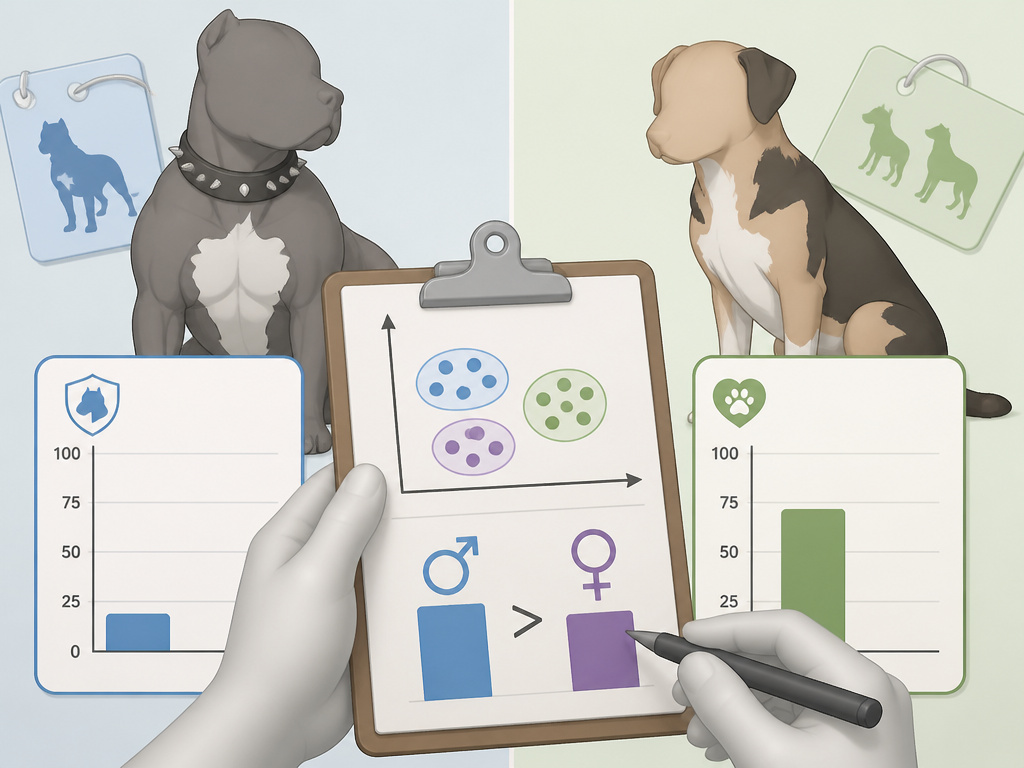
Public breed stereotypes about aggression don’t match measured aggression in one 2024 survey of 1,309 dogs across six breed clusters, though Salonen et al. (2023) found the fighting-dog group scored highest on aggressiveness/dominance.
The study found that breeds publicly stereotyped as “potentially aggressive” scored lower on aggression than guarding breeds (χ²(5)=3.657, p=0.041) and lower than mixed-breeds (χ²(5)=3.870, p=0.002). In other words, the breeds people fear most scored lower on measured aggression than the breeds people don’t think about.
That result sits in tension with the popular stereotype and with the Salonen finding that the fighting-dog group scored highest on aggressiveness/dominance, though the two studies measured different things. The two studies aren’t measuring the same thing. Salonen measured owner-reported aggressiveness/dominance within a breed group. The 2024 survey measured aggression across public stereotype categories.
The canine behavior across breed clusters study also found that mixed-breed dogs showed the highest fearfulness of the six clusters, and that males scored higher on aggression toward humans and animals (p=0.001).
That last finding is the one most breed charts ignore. Sex can override breed in an individual dog. A male dog of any breed is statistically more likely to show aggression than a female of the same breed. The breed signal is real. The sex signal is also real, and it can swamp the breed signal in a single dog.
I’ve met more than one “aggressive breed” dog that was calmer than the Labrador down the street. The label and the dog are different things. The 2024 data backs that up: the breeds most often labeled scored lower on measured aggression than the breeds nobody worries about.
Within-Breed Variance: Why Two Labs Aren’t the Same Dog
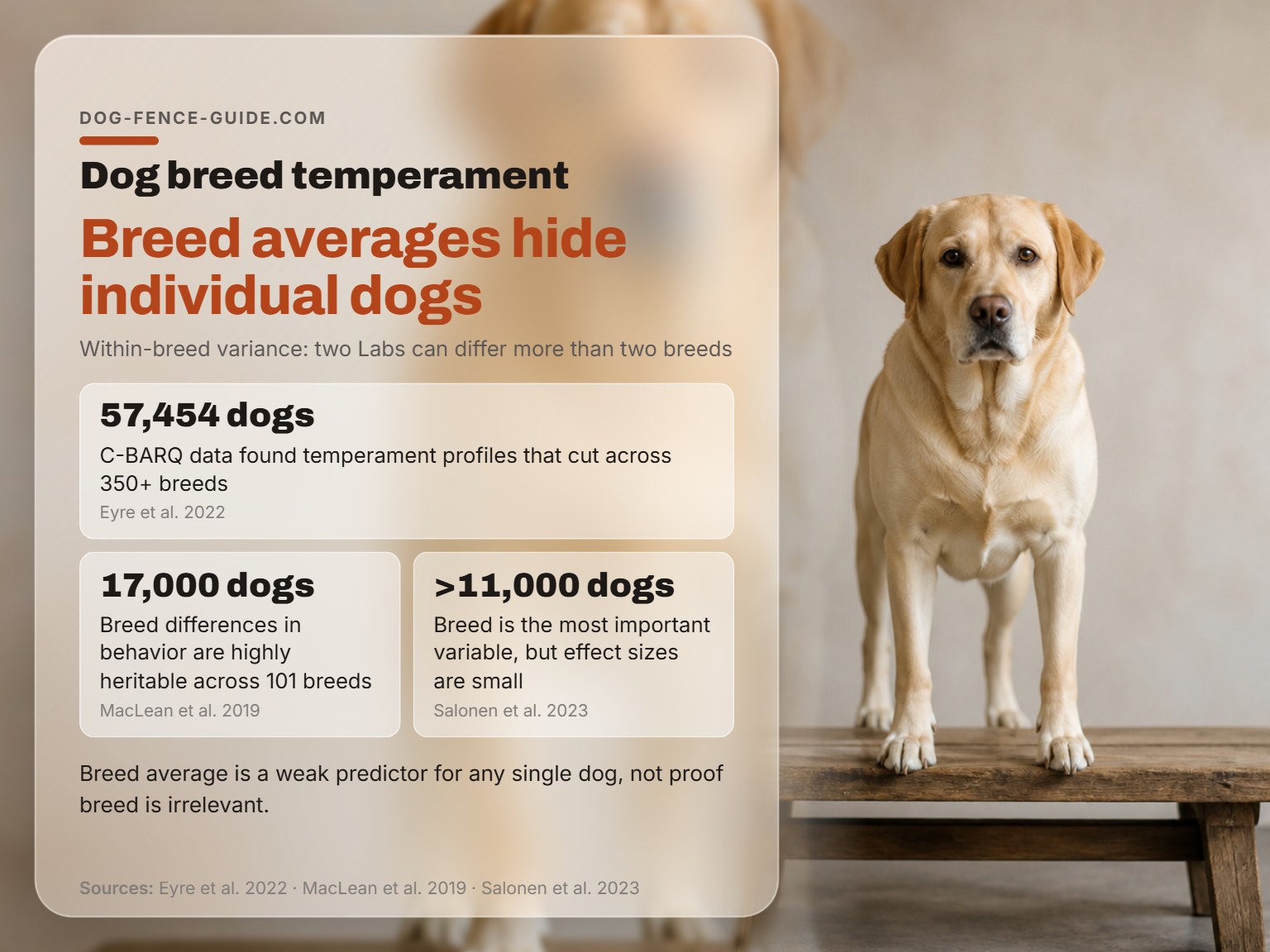
One strong argument against breed-based prediction is within-breed variance: Mehrkam & Wynne (2014) put it plainly that two dogs of one breed can differ more than two dogs of different breeds, while MacLean et al. (2019) found breed differences highly heritable and Salonen et al. (2023) found breed the most important variable.
That’s a measurable statistical claim about the distribution of behavior within breeds. Mehrkam & Wynne (2014) argue that if the variance inside a breed is large enough, the breed average stops being useful for predicting any individual dog, though MacLean et al.
Think about it this way. If the average Labrador Retriever scores higher on energy than the breed average of other breeds, and the within-breed spread is wide, then a substantial fraction of Labradors fall well above or below that average. Those dogs are still Labradors. They just don’t match the average.
The latent class analysis of dog breeds study (Eyre et al., 2022) analyzed C-BARQ data from 57,454 dogs across more than 350 breeds and found underlying temperament profiles that cut across breed lines. That’s consistent with the within-breed variance argument: the behavioral clusters don’t map cleanly onto breed categories.
Worth knowing before you start: The within-breed variance argument doesn’t mean breed is irrelevant. It means the breed average is a weak predictor for any single dog. Those are different claims, and the data supports the second one more strongly than the first.
What This Means for Choosing a Dog
If you’re choosing a dog, the breed average is a starting point, not an answer. The individual dog’s history, age, sex, and socialization matter as much as the breed label, though MacLean et al.
That’s why puppy matching matters more than breed selection for most families, though MacLean et al. (2019) found breed differences highly heritable and Salonen et al. (2023) found breed the most important variable. A matching process that tests the individual puppy’s temperament is more useful than relying on the breed’s reputation. Same logic applies to rescue dog temperament: the foster’s observations of the individual dog are more predictive than the breed label on the intake form.
The reading dog body language skill matters more than the breed label when you’re assessing an individual dog, though MacLean et al. (2019) found breed differences highly heritable and Salonen et al. A dog that’s about to react goes still first. The tail stops wagging, the ears pin, and the body weight shifts forward. You see the stillness before you see the reaction.
I’ve made this mistake myself. I once sized a containment zone for a young, high-energy dog based on the breed’s adult profile. The dog paced the boundary constantly. The breed chart said “moderate energy.” The dog said otherwise. That gap between label and dog is the whole reason this article exists.
How to Test a Dog’s Temperament Before You Commit
The most useful temperament test is the one you run yourself. Breed charts tell you about averages. A few minutes of observation tells you about the dog in front of you.
Before you start: If the dog has a bite history or you don’t know its history, don’t run the flirt pole test alone. Have a second person hold the leash and keep the dog muzzled until you’ve observed its baseline. A dog labeled “aggressive” by a previous owner may have a bite history you don’t know about, and the first test shouldn’t be the one that teaches you.
Here’s the sequence I use:
- Watch the dog before you interact. Does it approach you, ignore you, or retreat? The first moments tell you more about the dog’s baseline than any questionnaire.
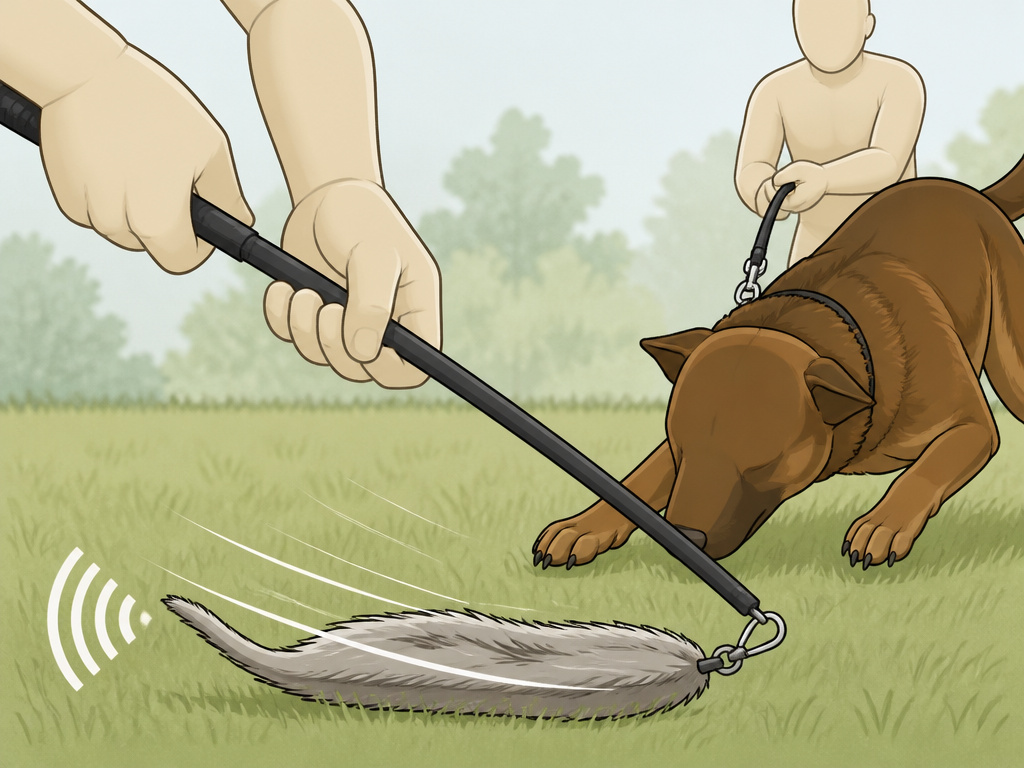
- Test prey drive with a flirt pole. A flirt pole and a few minutes of play will show you whether the dog locks on and pursues, or loses interest. High prey drive predicts containment failure better than breed does.
- Test recovery. Startle the dog mildly (drop a pan, not a firecracker) and watch how long it takes to recover. Fast recovery is a better predictor of trainability than breed.
- Ask about the dog’s history. Puppy mill, street dog, and well-socialized breeder puppy are three different starting points. The history matters more than the breed.
- Watch the dog with other dogs. Dog sociability is one of the five traits Salonen measured, and it’s the easiest one to observe directly.
The Flirt Pole Test
A flirt pole is a long pole with a lure on the end, used for training and exercise. For temperament assessment, it’s the single most useful tool I’ve found.
Here’s how to run it. Drag the lure across the dog’s field of view at a moderate speed. Watch three things:
- Does the dog lock on? Eye tracking and body orientation tell you whether the dog’s prey drive is engaged.
- Does the dog pursue? A dog that chases the lure across the yard has higher prey drive than one that watches and loses interest.
- Does the dog give up? A dog that quits quickly has lower drive than one that keeps chasing.
None of that is breed-specific. A Golden Retriever can have high prey drive. A terrier can have low prey drive. The breed average is a prior. The flirt pole is data.
The flirt pole makes a soft whir when you drag it, and the dog’s head tracks the sound before the lure comes into view. That split-second tracking is the tell. A high-drive dog hears it and locks on. A low-drive dog hears it and looks away.
What Breed Charts Get Right (and What They Miss)
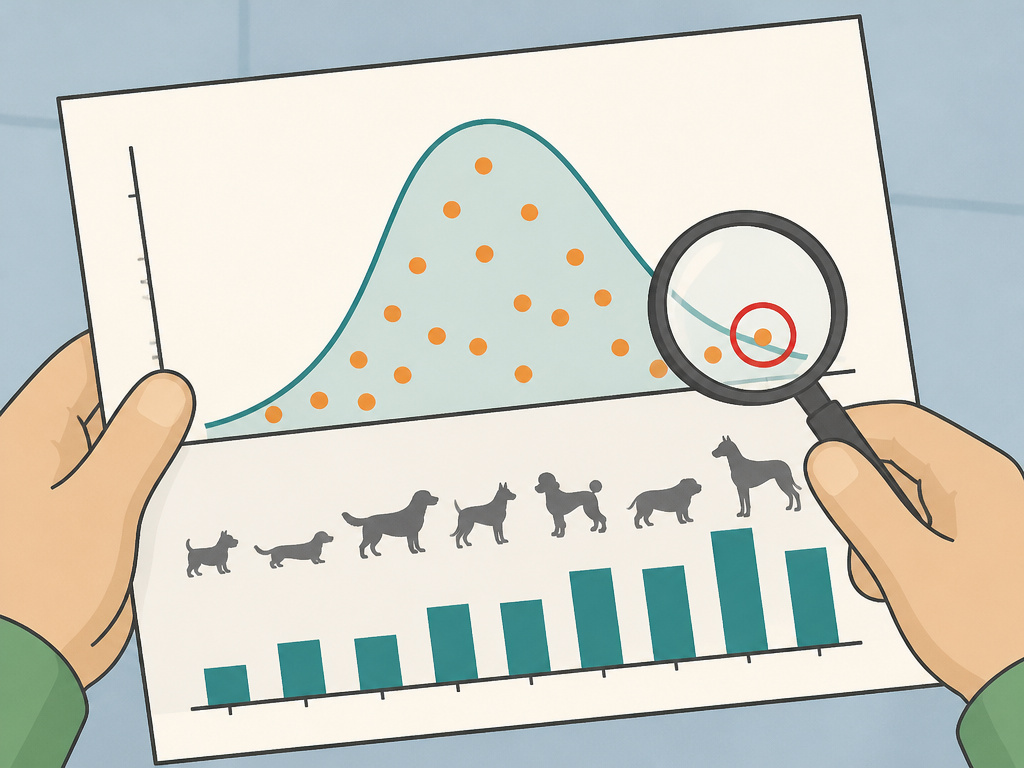
Breed charts have real value. They’re just less precise than they look.
What they get right: breed averages are real in Salonen’s data. Salonen et al. Found statistically significant differences between breed groups on all five traits, though Mehrkam & Wynne (2014) argue breed categories poorly predict behavior. If you’re choosing between a Shetland Sheepdog and a Bull-type terrier and you care about insecurity, the breed averages are informative.
What they miss: the individual dog. Mehrkam & Wynne (2014) argue within-breed variance is large enough that the breed average is a weak predictor for any single animal, though MacLean et al. (2019) found breed differences highly heritable. The dog breed energy levels article on this site covers the same problem from the energy side, and the conclusion is the same: the breed label is a starting point, not a diagnosis.
What they miss: the sex effect. Males scored higher on aggression in the 2024 survey. If you’re comparing a male and a female of the same breed, the sex difference can be larger than the breed difference.
What they miss: the methodology. Owner questionnaires and expert-observer rankings produce different results. A breed chart that doesn’t tell you which method it’s based on is telling you less than you think.
The kid-friendly dogs question is the same problem in a different form. The breed average tells you about the average dog of that breed. The specific dog in front of your child is the one that matters. Same for affectionate dogs: the breed average is a weak predictor of the individual dog’s affection.
If you’re choosing a family pet, the individual dog matters more than the breed. If you’re choosing a working dog, the breed matters more. The job selects for the extremes of the distribution, which makes the breed signal stronger.
Frequently Asked Questions
Does breed determine a dog’s temperament?
No. Breed is the most important single variable in the largest study (Salonen et al., 2023), but the effect sizes are small and most personality variation is unexplained. Breed sets a prior. The individual dog, its history, and its environment set the outcome.
Which dog breed is the most aggressive?
The data doesn’t support a simple ranking. Salonen et al. Found the fighting-dog group scored highest on owner-reported aggressiveness/dominance, while a 2024 survey found breeds publicly stereotyped as “potentially aggressive” scored lower on measured aggression than guarding breeds and mixed-breeds; the two studies measured different things. The two studies measured different things, and neither supports a clean “most aggressive breed” list.
Are mixed-breed dogs more unpredictable?
Not in the way people mean. The 2024 survey found mixed-breed dogs showed the highest fearfulness of six breed clusters, but that’s a group average across a very heterogeneous category. Mixed-breed dogs don’t fit breed-cluster models at all, which is why they’re often excluded from breed research. “Unpredictable” is the wrong word. “Not captured by breed categories” is more accurate.
How much of a dog’s personality is genetic?
MacLean et al. (2019) found breed differences in behavior are highly heritable and identified 131 SNPs tied to behavioral differences. But heritability is a population statistic, not an individual one. A high heritability estimate doesn’t tell you how much of your specific dog’s personality comes from genetics.
Can you change a dog’s temperament with training?
Training changes behavior, not temperament. You can teach a high-prey-drive dog to recall off a squirrel, but you can’t lower the prey drive itself. Manage the drive, don’t fight it. That’s the practical version of the within-breed variance finding: the individual dog’s drive is the thing you work with, not the breed average you wish it matched.
What’s the best way to assess a dog’s temperament before adopting?
Observe the individual dog. Watch how it approaches strangers, how it recovers from startle, how it interacts with other dogs, and how it responds to a flirt pole. Ask the foster or shelter staff about the dog’s history. The breed label is the least predictive piece of information you have, though MacLean et al. (2019) found breed differences highly heritable and Salonen et al. (2023) found breed the most important variable.
The Bottom Line
The most useful thing you can do with breed temperament research is read it as a prior, not a prediction. Salonen et al. (2023) gives you the best available breed averages but emphasizes small effect sizes. MacLean et al. (2019) gives you a strong case that those averages are genetically meaningful. Mehrkam & Wynne (2014) gives you the strongest case that they aren’t precise enough to predict an individual dog.
All three are right about something. The breed average is real. The individual variation is larger. The methodology shapes the result.
If you’re choosing a dog this week, here’s the specific step: run the flirt pole test on the actual dog before you commit. Not the breed. The dog. A 15-minute observation will tell you more about prey drive, recovery, and sociability than any breed chart you can read.
One concession: if you’re choosing a breed for a working role, the breed averages matter more than they do for a family pet. Working dogs are selected for the extremes of the distribution, which makes the breed signal stronger. For a companion dog, the individual dog is the better bet, though MacLean et al. (2019) found breed differences highly heritable and Salonen et al. (2023) found breed the most important variable.
That’s the whole argument. Breed tells you something, as MacLean et al. (2019) and Salonen et al. (2023) found. The dog tells you more, as Mehrkam & Wynne (2014) argue.
