
How to Choose a Dog Breed for an Apartment: Step-by-Step
This post contains affiliate links. As an Amazon Associate, we earn from qualifying purchases.
To choose a dog breed for an apartment, screen four things before size: daily activity needs, vocalization, grooming load, and how the dog copes with hallways, stairs, and neighbor noise. Size alone decides little. The American Kennel Club notes smaller breeds adapt well to confined spaces; Cornell flags noise-sensitive dogs as poor fits regardless of size.
Those four screens come from building geometry, not breed charts. A hallway with three neighbors and a stairwell door that slams at 6 a.m. Tests a dog’s nerves in a way a quiet house never does, which is why how to choose a dog breed for an apartment starts with the building itself.
What follows is the audit worth running before a breed name ever comes up: five questions, five breed groups that fail apartments differently, and the places where the veterinary sources flatly disagree with each other.
Key Takeaways
- Screen the breed group before the breed. A herding dog and a guarding dog fail apartment life for different reasons, and the fix differs by group.
- Vocalization is a tenancy issue. Cornell states that a dog barking at sounds or in your absence may not be well suited for an apartment building.
- Long-haired breeds carry a daily cost. Brushing or combing every day, plus professional grooming every 4-8 weeks, is the VCA baseline.
- Size is contested as a filter. AKC leads with it; Texas A&M says to consider size and general activity but stresses breed function; Cornell frames suitability around fear, noise, barking, and mobility rather than size.
- Check the building rules first. Some estates ban dogs outright, and no breed choice survives that.
Run the Lifestyle Audit Before You Look at a Breed
The audit is four numbers and one honest answer. Hours the dog will be alone, minutes of walking you’ll really give, patience for coat work, and whether you’ll still do it in February.
All pets require physical exercise, social interaction, and attention, and individual requirements differ from pet to pet. Breeds bred to work long days tend to be more active than others. A household without a fenced yard, or without regular time for walks, is better matched to a less active dog or an indoor cat.
VCA’s pet selection guidance puts it that plainly.
The Five Questions to Answer First
- How many hours a day is the dog alone? Hong Kong’s dog-care guidance is direct here: if you’re out all day, travel often, or work irregular hours, a dog may not be the right pet. Get this wrong and you’re picking a breed for a life the dog won’t actually have.
- How many walks will you really do? Eckman’s advice is several walks a day, not one long one. Under-exercised dogs become destructive, which turns into a landlord problem fast.
- Can you handle daily coat work? Long-haired breeds need brushing or combing every day, and many need professional grooming every 4-8 weeks, per VCA. That’s a standing appointment, not a seasonal one.
- Will the dog meet other dogs in shared space? Apartment complexes put dogs in contact, so Eckman recommends training, socializing, and keeping immunizations current.
- What does the building actually allow? Some housing bans dogs outright. Read the lease before the breed profile.
Question three is where owners underestimate themselves. I’ve landed on every six to eight weeks for my own dogs, which sits at the long end of VCA’s range. Double coats push me to eight. My oily terrier mix starts looking greasy sooner, so she gets the short end.
Answer them honestly, not aspirationally.
Why Size Is the Weakest Filter in the Breed Search
Size is the first thing many apartment-dog lists mention, but when you compare a how to choose a dog breed for an apartment, the veterinary sources weigh it differently: AKC leads with it, Texas A&M says to consider size and general activity, and Cornell frames suitability around fear, noise, barking, and mobility rather than size. The American Kennel Club does lead with it: smaller breeds adapt well to confined spaces and don’t need a tremendous amount of exercise. That holds up. The variable that sinks most matches is temperament under shared walls.
| Source | What it treats as the deciding factor | What it downplays |
|---|---|---|
| American Kennel Club | Size and general exercise load | Vocalization, building layout |
| Texas A&M (Dr. Stacy Eckman) | Breed function and daily activity | Size as a proxy for fit |
| Cornell Riney Canine Health Center | Fear, noise sensitivity, barking, mobility | Size, except for studio flats |
| VCA Animal Hospitals | Breed tendencies, grooming, vet care load | Apartment specifics |
Cornell’s list of traits needing extra attention runs fear of strangers, fear of other dogs, noise sensitivity, and barking, with arthritis and mobility issues flagged separately for stairs. Size appears once, attached to studio apartments specifically. Texas A&M’s Eckman says to consider size and general activity, then spends her actual warning on breed function: working breeds are difficult to house in small apartments.
Size is a shortcut. Shortcuts miss.
Which Building Features Disqualify a Breed That Passes Every Other Test?
Hallways, lifts, stairwells, and shared walls do the disqualifying. Cornell’s guidance is specific: apartment buildings have more active hallways, elevators, and stairwells, and that’s stressful for dogs fearful of strangers or other dogs, which is why how to choose a dog breed for an apartment has to start in the corridor.
| What you observe | What it points to | What to do next |
|---|---|---|
| Barks at hallway noise when alone | Sound-triggered or absence barking (Cornell) | Treat the building as a poor fit |
| Freezes at the lift door | Fear of strangers or other dogs (Cornell) | Look for a low-traffic building |
| Struggles on the third flight | Arthritis or mobility limits (Cornell) | Ground floor or a working lift |
| Pants hard on a mild walk | Flat-face heat sensitivity (Daily Paws) | Shorter walks, cooler hours |
| Alert-barks at every door slam | Vocal breed plus thin walls (Texas A&M) | Build a training plan first |
Where this goes sideways: Signing a fourth-floor walk-up with a dog that has arthritis or mobility limits. Cornell advises avoiding buildings with many stairs for exactly this reason, and the failure looks like a dog who stops on the second landing and waits to be carried.
Noise transmission is the other half. That anxiety tracks the building, not the breed.
Stand in the corridor at 6 p.m. And listen. You’ll hear the stairwell door, the lift chime, and someone’s television through the wall. Your dog will hear all three every day.
Test the building, not just the breed.
Match the Breed Group to the Job It Was Bred For
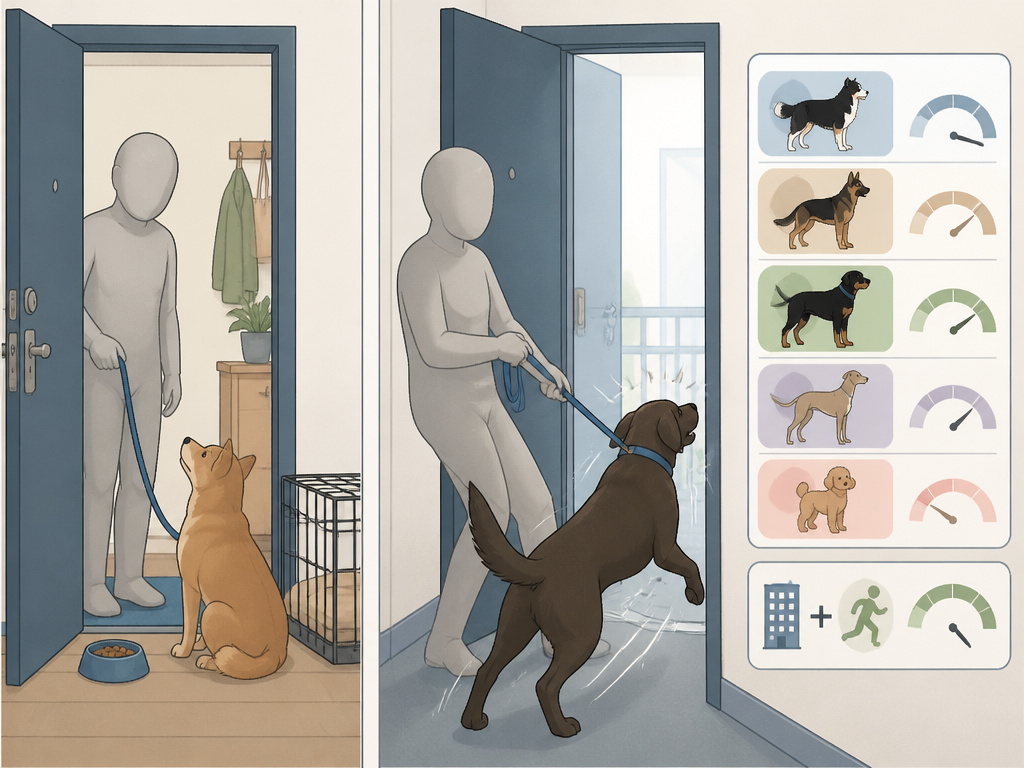
VCA names the mechanism plainly: animals bred for special functions reflect those purposes in their behavioral tendencies. Keep that sentence in your head while you read breed profiles.
Working breeds are difficult in small apartments because they need exercise and space.
Five Breed Groups and the Failure Each One Brings
- Herding breeds chase and bark at things that move, including vehicles and runners, so a busy hallway becomes a daily trigger rather than a one-off.
- Guarding breeds get territorial about the home and need training to accept visitors.
- Working breeds carry the heaviest exercise and space requirement, and Eckman calls them difficult to house in small apartments.
- Sighthounds chase prey on instinct, which matters more if you keep small pets than if you live in a small flat.
Eckman does offer one exception: an older working dog may not need a younger dog’s activity level. That softens the working-breed rule without erasing it.
Exercise is the next number to pin down. Dog breed exercise needs explained breaks the groups out by daily minutes, and if your honest answer is very low, low-energy dog breeds are the better starting list.
Small size doesn’t guarantee low exercise either. Some of the toy dogs for apartments still need real daily work, and a bored toy breed is a barker.
Group first. Breed second.
The Vocalization Screen Nobody Runs
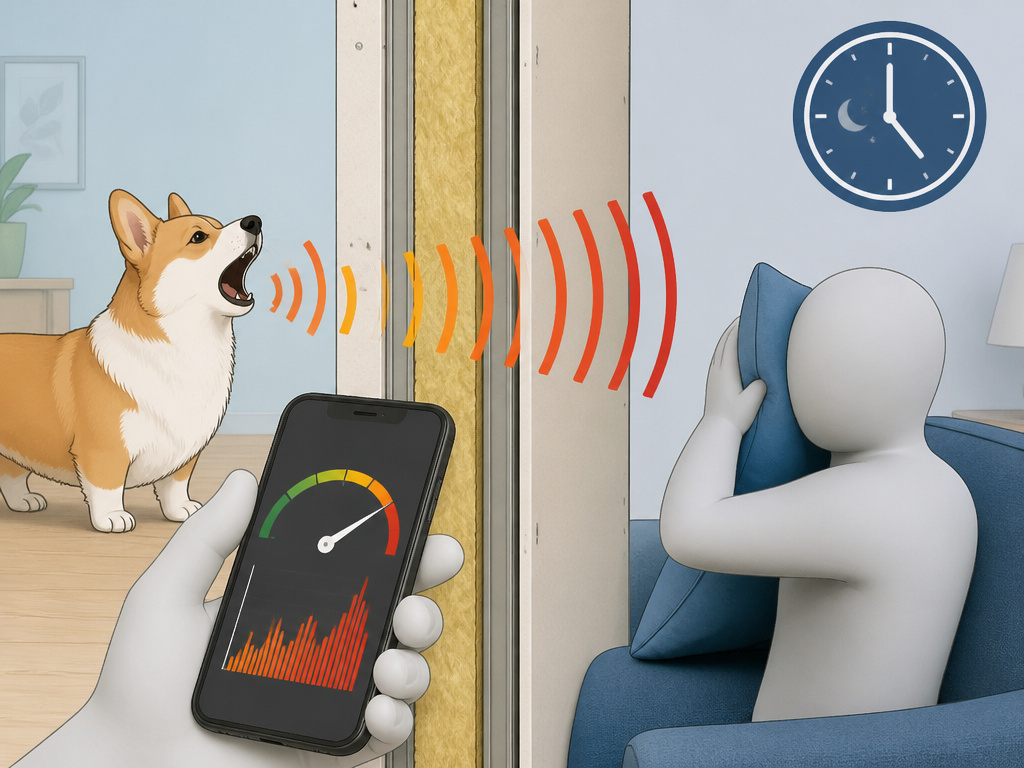
Barking is the screen almost nobody runs before signing a lease. Cornell treats it as a potential disqualifier, while the AKC’s apartment guidance doesn’t mention vocalization at all, the sources disagree on whether it is a selection criterion.
A dog that barks at hallway noise or in your absence may not be well suited for a shared building, no matter how small it is. Test that before you test the square footage.
Eckman frames the same problem from the landlord side. A dog that’s too vocal upsets neighbors, and that tension lands on your tenancy rather than on the dog.
Some breeds carry the risk in writing. Daily Paws describes the Pembroke Welsh corgi as vocal and recommends training against disruptive barking, and the Bedlington terrier as a breed that tends to bark and needs exercise plus mental stimulation to stay settled.
A determined barker doesn’t sound like a dog in a film. It’s a flat, repeating crack at the same pitch, and it carries through a shared wall the way a doorbell does.
Ask the foster how much the breed actually talks.
Where the Sources Disagree, and How to Read That
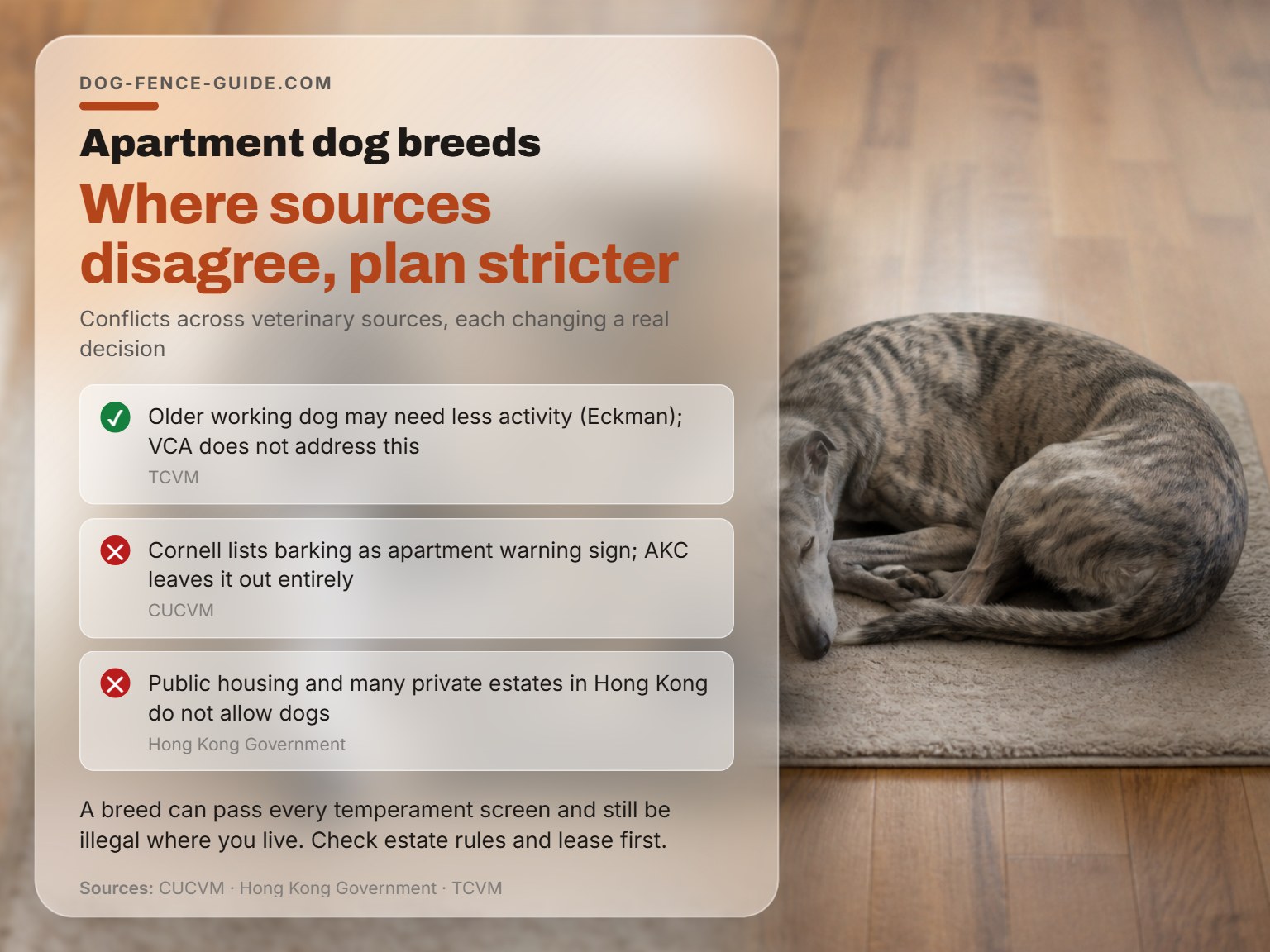
Five conflicts show up across the veterinary sources, and each one changes a real decision.
- The older working dog. Eckman says an older working dog may not need the high activity level of a younger one. VCA’s framing is more absolute about genetic programming.
- Barking as a criterion. Cornell lists it as a warning sign for apartment buildings. AKC leaves it out entirely.
- Greyhounds. Daily Paws calls them low-maintenance, with two speeds: sprinting and napping. Hong Kong’s guidance lists the Greyhound among breeds usually over 20kg when mature, which brings it under large-dog control suggestions.
- Flat-faced breeds. Daily Paws calls bulldogs and pugs easygoing apartment dogs, with a heat caveat for bulldogs. VCA flags the pug and French bulldog as needing extra veterinary care and adjusted exercise.
Hong Kong’s government guidance on caring for dogs adds a gate that overrides all of it: public housing estates and many private estates there don’t allow dogs at all.
The part nobody mentions: A breed can pass every temperament screen and still be illegal where you live. Check the estate rules and the lease before you fall for a breed profile.
Read the conflicts as a checklist rather than a tie to break. Where two credible sources disagree, plan for the stricter one and hope you didn’t need it.
Plan for the stricter reading.
What to Ask the Shelter, the Breeder, and the Vet

You’re standing in a shelter corridor and a dog is ignoring you to stare at the door. That dog just told you more than the breed label on the kennel ever will.
Eckman’s advice is to use that. Shelters can usually tell you how active a pet is and what its personality looks like, which is the information a breed chart can’t give you.
The One Question That Reveals a Breed’s Worst Trait
I’d rather hear one sentence from a breed-specific rescue foster than read ten breed profiles. Ask what the breed’s worst week looks like, then listen for the sigh before the answer.
VCA backs the same instinct from the other direction. It recommends consulting a professional who knows breed personalities, or your veterinarian, before you commit.
When I was vet-shopping for my current dog, I called several clinics and asked one question: what happens if I call late at night with a bloated dog? Some told me to go to the emergency clinic and stopped there. One gave me the address and said to call ahead. That one got my business.
A vet who asks how the dog lives before asking about vaccines is the one to choose. If the only questions are a checklist, that tells you how a weird symptom will get handled later.
The breeder question is narrower. Hong Kong’s guidance recommends a breeder who screens parents for inherited conditions and avoids inbreeding, and it warns against buying from a street hawker. Licensed traders and breeders only.
Ask before you fall in love with a photo.
Frequently Asked Questions
Is it cruel to keep a dog in an apartment?
No, provided the dog gets exercise and outdoor time. Hong Kong’s guidance says dogs need lots of exercise and need to be taken out to the toilet several times a day, and it calls it inappropriate to leave a dog tied up or alone on a balcony all day. The routine decides whether it works.
What size dog is best for an apartment?
There’s no agreed answer. AKC leads with smaller breeds adapting well to confined spaces. Cornell only flags size for studio apartments, and Texas A&M’s Eckman points at breed function instead. A medium or large dog can work with enough exercise and commitment, per Daily Paws.
Do apartment dogs need more exercise or less?
The requirement doesn’t drop because the home is small. Eckman warns that under-exercised dogs become destructive, and VCA notes breeds bred to work long days tend to be more active. Plan walks around the breed’s needs, then check the building’s stairs and lifts against the dog’s age.
How do I know if a breed will bark too much for my building?
Ask the people who live with the breed. Cornell flags dogs that bark at sounds or in your absence as poorly suited to apartment buildings, and breed-specific rescue fosters will tell you how vocal a breed really is. A shelter assessment of an adult dog beats a breed generalization.
Should I get a puppy or an adult dog for an apartment?
An adult dog with a known temperament is the lower-risk choice, especially in a building with shared walls. Shelters can often describe an adult dog’s activity level and personality, which Eckman points to directly. A puppy is a temperament guess plus a long training runway.
The Bottom Line
Before you open a single breed profile, write down two numbers: hours the dog will be alone each day, and walks you’ll genuinely do. If the dog will be alone all day and you can only manage a single walk, the breed question is moot. Fix the schedule or pick a cat.
That’s the threshold people skip, and it decides whether the rest of this advice even applies to you.
This all changes if you’re renting somewhere that bans dogs outright, or choosing a fourth-floor walk-up for a dog with hip trouble. In those cases the address makes the decision, and the breed list waits.
You raise the dog. The address only sets the limits.
