
How to Choose a Dog Breed for First-Time Owners
This post contains affiliate links. As an Amazon Associate, we earn from qualifying purchases.
To choose a dog breed for first-time owners, audit your life before you look at a puppy photo: hours alone, real activity budget, grooming tolerance, and monthly budget. Then match breed groups rather than individual breeds. The American Kennel Club recognizes 200 breeds, and most of them are wrong for most households.
What follows walks the audit in order: size and what it does and doesn’t predict, the coat question, kids and other pets, the three points where the veterinary sources genuinely disagree, and the screening questions that separate a careful breeder from a friendly one. This is also a practical guide to how to choose a dog breed for first-time owners.
Key Takeaways
- Match breed groups before breeds. Herding and working dogs were bred for a job, and an under-exercised one will find work of its own.
- Purdue’s weight bands are the definitions to use: small up to 20 pounds, medium 20 to 50, large over 50.
- Small breeds average 14 years and large breeds average 10. That four-year gap runs opposite to what most first-timers expect.
- Every dog needs obedience training, per the Purdue Extension, so the breed decides how much patience it takes, not whether it’s needed.
- Ask one hard question before you commit. A breeder or rescue that won’t answer a straight health question on the phone won’t answer one after the dog is home.
How Do You Match a Breed to the Life You Actually Live?
The audit happens on paper rather than on a breeder’s website. Write down five answers before you open a single breed profile.
Veterinary guidance on dog selection names four variables that drive the match: size, activity level, temperament, and coat type. Weight at maturity sorts dogs into three groups under the Purdue Extension definitions, with small breeds at 20 pounds or less, medium breeds from 20 to 50 pounds, and large breeds above 50 pounds.
Here’s the list I’d hand a first-timer, in the order that matters:
- Hours the dog will be alone on a normal Tuesday. Not your best week. A normal one.
- Your real activity budget, measured in the minutes you’d still walk in the rain.
- Grooming tolerance. Are you brushing a coat regularly, or paying someone else to do it?
- Monthly budget for food, the annual exam, and vaccinations, which the Purdue Extension recommends for every dog.
- Experience level. If you’ve never owned a dog, the Purdue Extension points at an adult dog with some basic obedience training as a reasonable first choice.
Answer those five honestly and you’ve eliminated a large share of the 200 breeds before you’ve looked at a photo. The breed for your lifestyle question is a scheduling question wearing a costume.
Does Size Tell You How Much Exercise a Dog Needs?
Purdue and Merck answer that one in opposite directions, and both are worth reading carefully.
The Purdue Extension states that small breeds tend to adapt better than large breeds to the smaller space available in an apartment. The Merck Veterinary Manual counters that size doesn’t always tell you how active a dog will be, noting that some small dogs need a lot of exercise while some big dogs, Great Danes among them, are pretty lazy once grown.
So use size for what it reliably tells you and nothing more.
| Size band | Weight at maturity | What it actually changes |
|---|---|---|
| Small | Up to 20 lb | Averages 14 years; fragile bodies are easily hurt in rough play |
| Medium | 20-50 lb | The widest spread of energy levels of the three bands |
| Large | Over 50 lb | Averages 10 years; can injure a small child without meaning to |
That lifespan column deserves a second look. Small breeds average 14 years and can reach 15 or 16, while large breeds run 8 to 12 with 10 as the average. A first-timer picturing a decade of commitment may be signing up for sixteen years.
Fair warning: I’ve never owned a very large dog, so my read on heavy-breed energy comes from reader feedback and research rather than my own floor. Where the difference between a low-energy dog breed and a merely calm one matters, I defer to people who’ve lived with both. The exercise needs by breed breakdown is the better starting point than any size chart, mine included.
Common mistake: Buying a small breed because you want a low-energy dog. A Jack Russell Terrier is a small dog that needs real running space, and an under-exercised one will remodel your sofa.
200 Breeds, and Only a Handful Fit Your House
The American Kennel Club recognizes 200 breeds, which is a research universe rather than a menu.
Breed groups do the first cut for you. Herding, working, sporting, terrier, hound, toy, and non-sporting groups carry broadly similar exercise and stimulation demands inside each group, which is why matching at the group level beats matching at the breed level when you compare a how to choose a dog breed for first-time owners.
Working and Herding Groups and the Job Problem
The Merck Veterinary Manual is blunt about this one: working dogs like Border Collies need a job to do, or they get bored and act out. That’s not a training problem you can out-train with a longer walk.
If you’re sedentary, a herding breed is the single most common mismatch I see.
What a Parent Club Knows That a Quiz Doesn’t
The AKC recommends visiting a breed’s parent club website, the breed’s national club, to learn its history, purpose, and disposition. That’s where you find out a breed was developed to work long days, which reframes the “how much exercise” question entirely.
The choosing a breed for apartment living question has its own wrinkle: the Purdue Extension notes that landlords permitting dogs often impose a size limit, which pushes demand toward small breeds for reasons that have nothing to do with the dog’s welfare. And if you have outdoor space but not much of it, the small-yard breeds discussion covers what actually fits.
Coat Type Is the Decision Most First-Timers Make Last

Long-haired breeds need more regular grooming than short-haired dogs and shed considerably more hair, per the Purdue Extension. That’s the least surprising sentence here, and it’s still the one people skip when they ask how to choose a dog breed for first-time owners.
Ask yourself three things before you fall for a fluffy puppy:
- Can you commit to regular brushing, every week, for the dog’s whole life?
- Will you do it yourself, or is a professional groomer in the budget?
- Does the coat match your climate, or fight it?
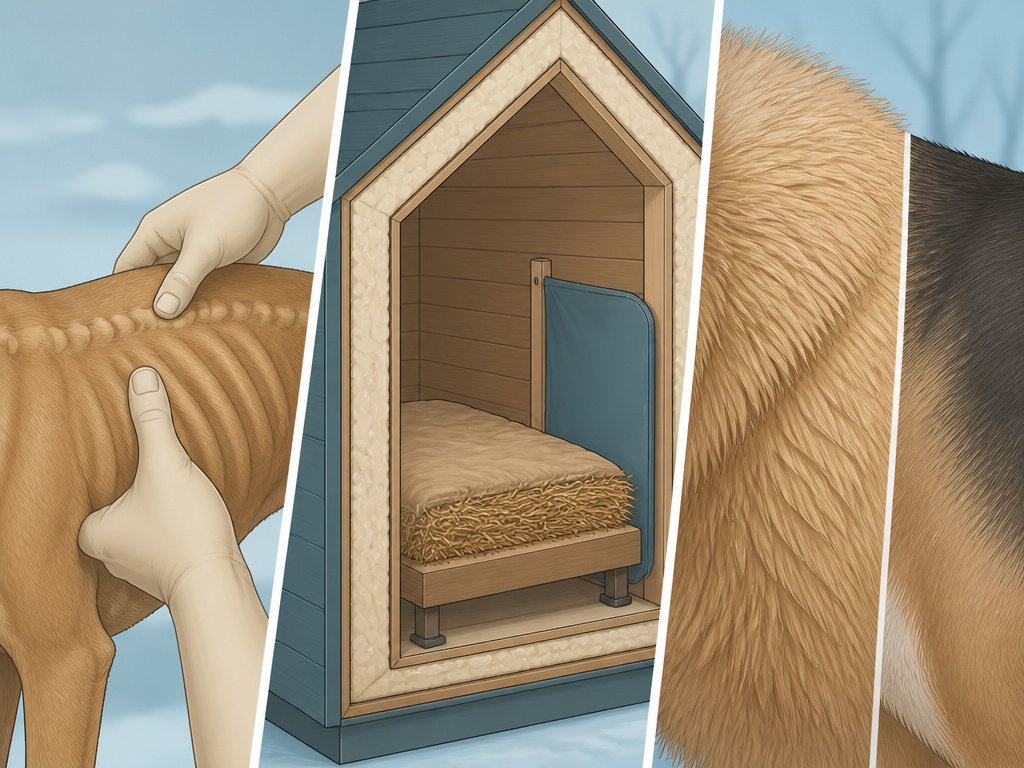
That last one comes from Merck, which notes that thick-coated dogs can struggle in hot areas while short-haired dogs have trouble in the cold. Small dogs that stay indoors usually do fine in any climate as long as outdoor time is short during bad weather.
I mix shampoo in a plastic cup of warm water before it ever touches the dog, and it spreads through a double coat far better than dolloping it straight onto the back. That’s a grooming habit, not a breed decision, but it’s the kind of thing that turns a dreaded chore into a quick job.
Children, Other Pets, and the First Week
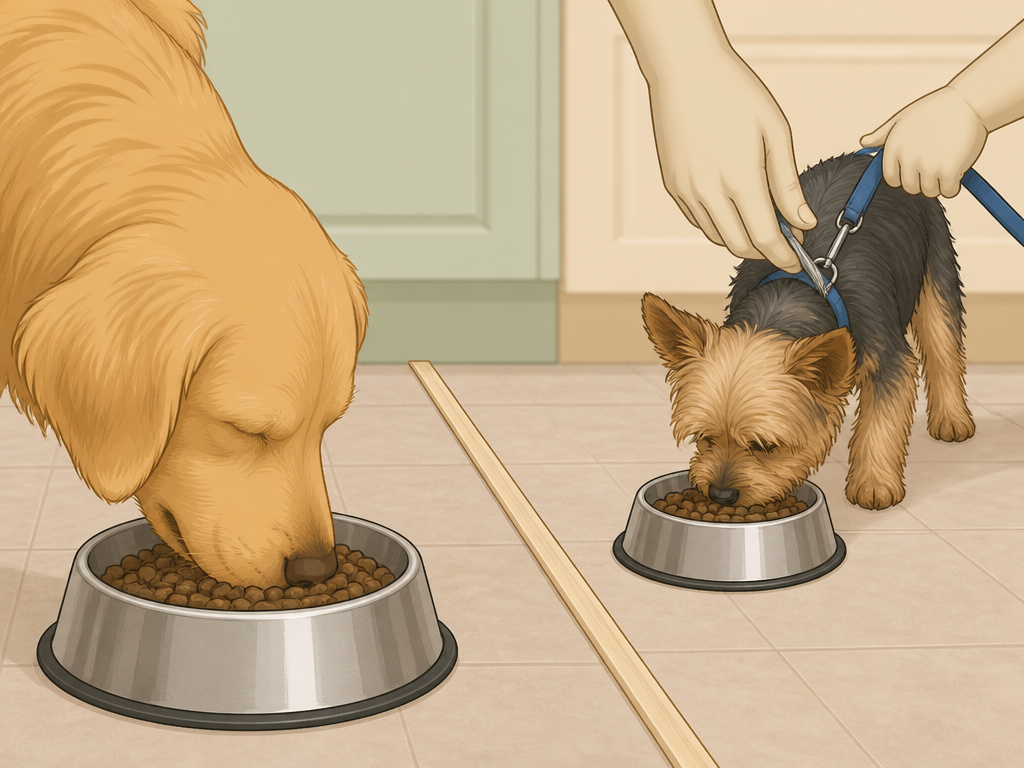
Picture the moment the new dog puts its nose in the existing dog’s bowl. That’s the moment the first week gets decided, and it has nothing to do with breed.
The Purdue Extension is direct about what to look for in a family dog: a low tendency to bite and a high tolerance for handling. It also says dogs that are overtly aggressive should always be avoided, which sounds obvious until you’re standing in a shelter meeting a dog that’s had a bad month.
Before you start: Never leave a child or infant alone with a dog, even one you already trust. Small breeds have fragile bodies and can be seriously hurt by rough play, while large breeds can injure a small child without any aggression at all. Both failures happen in the first unsupervised minute, not the first month.
Merck adds a failure mode most puppy-focused checklists miss: an adult dog used to a child-free home might not react well to a new child, and can develop aggression or accidents in the house. If a baby is on the way, that’s a question to ask about any adult dog you’re considering.
Territorial friction between a new dog and existing pets is normal. The Purdue Extension says it usually clears up within a week or so, and recommends feeding the dogs in separate locations during that stretch, because food is a common cause of conflict.
The kid-friendly breeds guide covers the handling-tolerance question in more depth, and the breed temperaments overview explains why a breed’s general disposition tells you less than the individual dog in front of you.
Where the Experts Genuinely Disagree
Three questions here have no settled answer, and pretending otherwise would be dishonest. Here’s who says what.
| Question | One position | The other position |
|---|---|---|
| Apartment fit | Purdue: small breeds adapt better to smaller space | Merck: size doesn’t predict activity level |
| Shaving a heavy coat | Merck: some heavy-coated dogs may need shaving in summer | Show groomers and breed clubs: never shave a double coat |
| Asking breeders about temperament | AKC: consult the parent club and responsible breeders | JAVMA: owner testimony comes from a few dogs and carries bias |
On shaving, the Merck Veterinary Manual is the credentialed source in the room, and it says some heavy-coated dogs might need to be shaved in the summer. The show-groomer position that double coats should never be shaved is widely repeated and worth hearing out, but it isn’t what the veterinary reference says.
On breeder testimony, the tension is real. The AKC tells buyers to consult parent clubs and responsible breeders to learn a breed’s disposition. A 1997 paper in the Journal of the American Veterinary Medical Association argues that asking breeders or owners yields opinions built on a handful of dogs and can reflect an understandable bias. Both positions are held by people who know dogs. Read the peer-reviewed dog selection research and decide how much weight to give each.
Purdue’s Answer for the Never-Owned-a-Dog Household
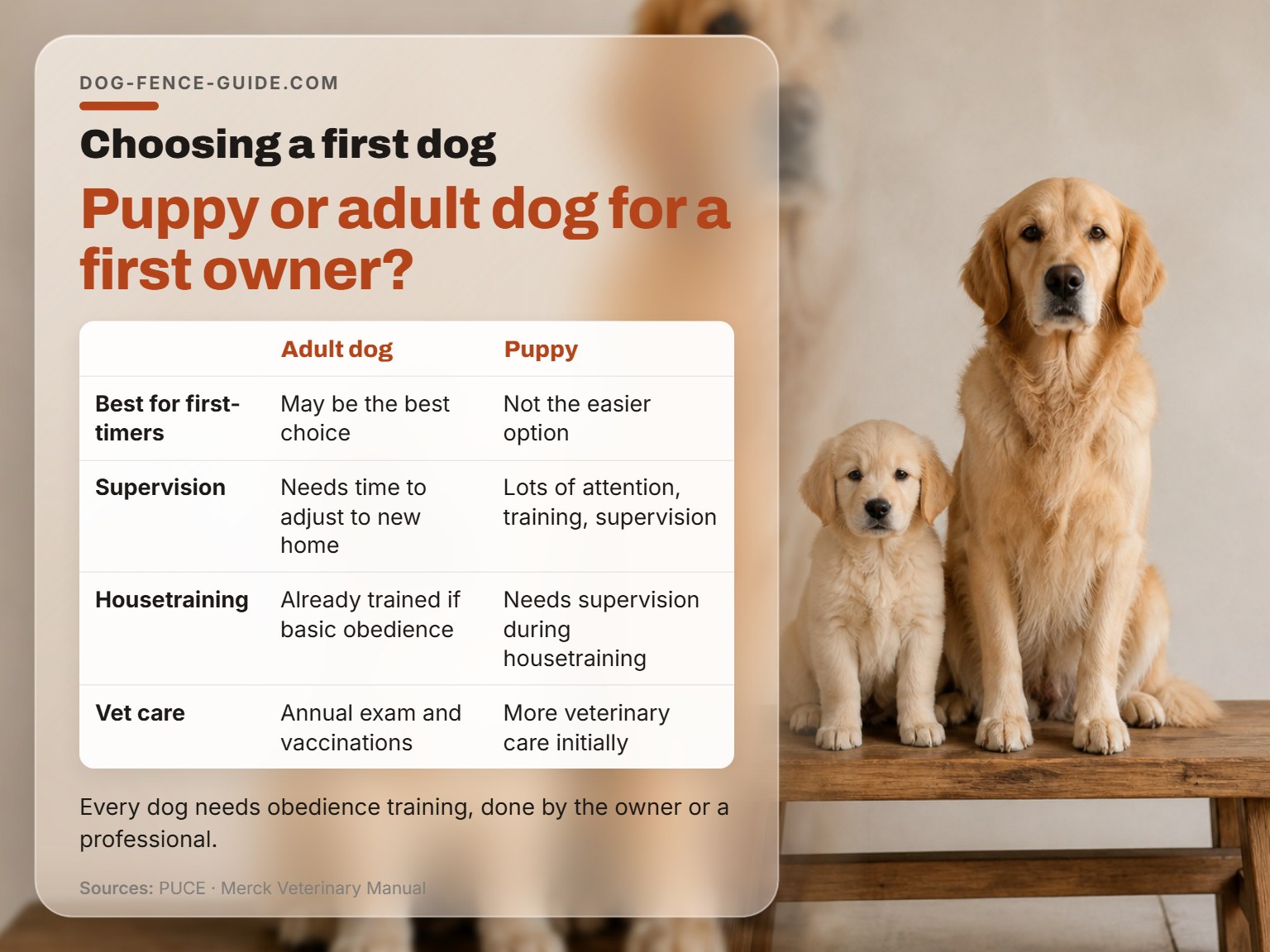
The Purdue Extension publication AS-567-W answers the experience question directly: if you’ve never owned a dog before, an adult dog with some basic obedience training may be your best choice. That single line eliminates most of the anxiety in this decision.
Puppies are not the easier option. Merck notes that puppies have a lot of energy and need attention, training, and supervision, especially during housetraining and teething, plus more veterinary care in the first year. Adult dogs need time to adjust to a new home, which is a shorter and cheaper problem.
If you do go the puppy route, VCA Animal Hospitals lists what to check before you commit:
- Coat: shiny, with no bald spots, redness, or flaking.
- Gait: clumsy is normal, but weight should be borne evenly on all four legs.
- Head: a soft spot larger than a dime could point to open fontanelles, which are openings between the skull plates.
- Navel: a protrusion there could be an umbilical hernia needing surgical correction.
- Males: two testicles should be in the scrotum, or the dog may be cryptorchid and need extra surgical time to neuter.
VCA also recommends asking whether all the pups eat dry puppy food and whether they’ve had vomiting or diarrhea, and notes that pups should be dewormed every two weeks starting at two weeks of age. The step-by-step dog adoption guide covers the rescue-side version of the same checklist.
Where You Get the Dog Matters More Than the Breed

Three places supply most first dogs: a breeder, a breed rescue, and a shelter. The screening questions are close to identical at all three.
The AKC designates breeders who adhere to all the recommended breed-specific health checks by their parent club as Breeders of Merit. A responsible breeder will ask you about your lifestyle, living conditions, and expectations, and may put you on a waiting list. Be wary of anyone who doesn’t ask.
Merck adds the practical questions: ask for references, ask about health history including illnesses, vaccinations, heartworm prevention, and spay or neuter status, and get the records. For a purebred, ask whether the parents were tested for breed-specific diseases like hip dysplasia in larger breeds. And be careful with pet stores, since some source from responsible breeders while others buy from puppy mills.
When I was vet-shopping for my current dog, I called several clinics and asked one question: what’s your protocol if I call late at night with a bloated dog? Two said go to the emergency clinic with no further detail. One gave me the address and told me to call ahead. That one got my business.
Ask the equivalent question of whoever sells you a dog. The purebred vs mixed breed comparison covers the predictability argument in full, and it’s the one place where the sources split cleanly. The AKC calls predictability of size, physical characteristics, behaviors, and personality the major advantage of a purebred. Merck occupies a middle position: it warns that it’s sometimes hard to predict how big and active a mixed-breed puppy will be, which supports the predictability argument without endorsing breed-level behavior claims.
Where this goes sideways: Skipping the reference check because the breeder was friendly and the puppies looked healthy. Health problems in a large-breed puppy often don’t surface until well after you’ve paid for the dog and the first year of vet care.
Training Is the Part the Breed Never Solves
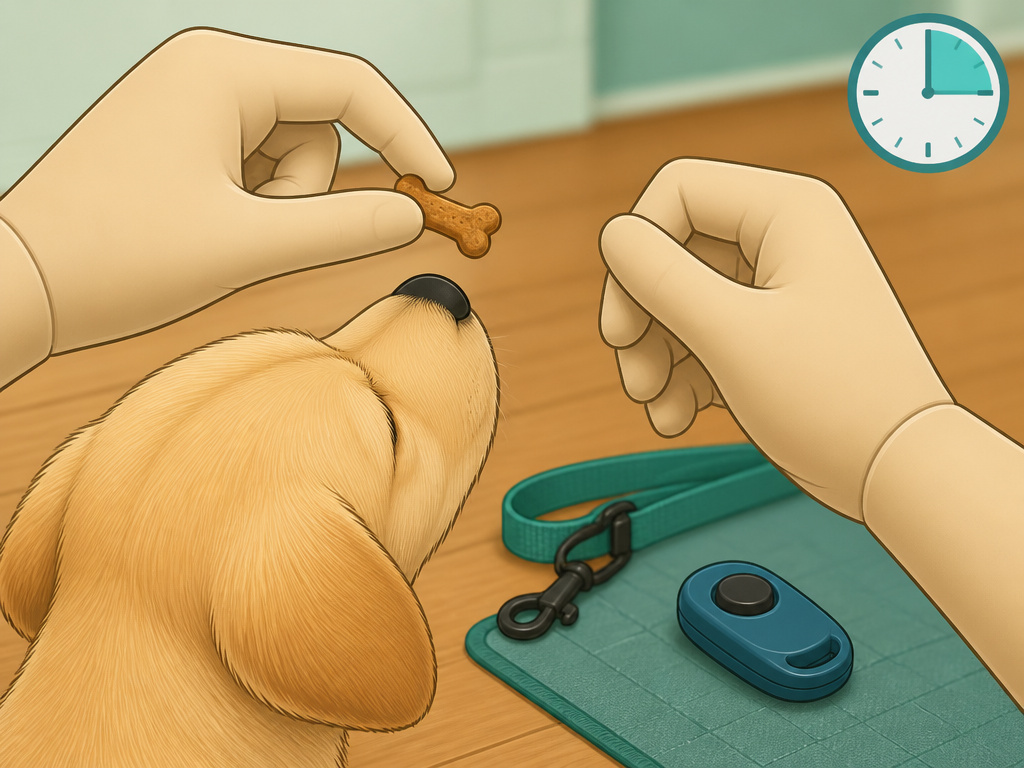
Every dog needs obedience training, done by you or by a professional, and the Purdue Extension states it without hedging. The breed changes how much patience that takes. It doesn’t change whether it’s needed.
The AKC’s Canine Good Citizen program is a 10-step test that certifies dogs with good manners at home and in the community. Over 725,000 dogs across the United States have completed it, and 42 states have passed resolutions recognizing the program. That’s a useful benchmark for what “trained” actually means.
The puppy settled into the routine.
The best predictor of a first dog working out isn’t the breed on the paperwork. It’s whether the owner will still be running short sessions once the novelty has worn off and the dog is testing every boundary you set.
The dog training guide for beginners covers the mechanics. What it can’t cover is the part where you keep showing up.
Frequently Asked Questions
What’s the easiest breed for a first-time owner?
There’s no single answer, and anyone who gives you one is guessing. The Purdue Extension’s better answer is an adult dog with some basic obedience training, regardless of breed, because it skips the puppy stage entirely. If you want a breed shortlist, filter by group first: avoid herding and working breeds unless you have a genuine daily job for the dog.
Is a puppy or an adult dog better for a first-time owner?
For a household that has never owned a dog, the Purdue Extension leans toward an adult dog with basic training. Puppies need more supervision, more training, and more veterinary care in the first year, per Merck. Adult dogs need adjustment time, which is a shorter and cheaper problem to solve.
How much exercise does a first dog actually need?
It depends on the individual dog more than the breed, and Merck is explicit that size doesn’t predict activity level. Some small dogs need heavy exercise while some large dogs are lazy once grown. The honest method is to ask the breeder or foster what the dog’s actual daily routine looks like, then decide whether you’d genuinely sustain it.
Should first-time owners get a purebred or a mixed breed?
The AKC argues that purebred predictability of size, coat, care requirements, and temperament is the major advantage. Merck points out that a mixed-breed puppy’s adult size and activity level are hard to predict. The Purdue Extension notes that purebreds tend to cost more than mixed breeds, though purebreds from breed rescues can be less expensive.
How do I know if a breeder is responsible?
Ask for references and health records, and ask whether the parents were tested for breed-specific conditions like hip dysplasia in larger breeds. A responsible breeder will ask you about your lifestyle and living conditions before selling you anything. The AKC designates breeders who follow all their parent club’s recommended health checks as Breeders of Merit.
The Bottom Line
Do the five-question audit tonight, on paper, before you open a single breed profile. It will eliminate more breeds than any quiz you’ll find online. Here’s what actually matters for your dog: the numbers you wrote down, not the ones a website assigned to a breed.
One concession, and it’s a real one. My advice on heavy breeds is secondhand, and I’d rather flag that than pretend otherwise. If you’re looking at a very large dog, find someone who has actually lived with one before you take my word for anything.
And one thing I’ll defend to anyone: if a breeder, rescue, or shelter won’t answer a hard question about health and behavior before money changes hands, that silence is your answer. Walk away. The right dog is being raised by someone who wants to be asked.
