
How to Choose a Dog Breed for Kids: Step-by-Step
This post contains affiliate links. As an Amazon Associate, we earn from qualifying purchases.
To choose a dog breed for kids, start with the child’s age, then the dog’s age, then the breed. Pediatric guidance puts readiness at about 5 or 6, and shelter guidance pairs any child under 6 with a dog over 2 years old. Breed comes third, and learning how to choose a dog breed for kids means weighing temperament and energy level against the child’s age.
That how to choose a dog breed for kids ordering sounds backwards to anyone who has spent a weekend reading breed profiles. It holds up anyway, because the two variables ahead of breed are the ones you can verify before you sign anything. A breed profile describes an average dog. Your child is a specific child, and the dog in front of you is a specific dog.
What follows is the how to choose a dog breed for kids order I use with families: the age thresholds from the pediatric and veterinary sources, the breeds those sources name and where they flatly contradict each other, and the three-adult test that tells you more than any online quiz.
Key Takeaways
- Wait until about age 5 or 6 before getting a dog as a companion for a child. Younger kids can’t reliably tell an animal from a toy.
- Humane Colorado pairs a child under 6 with a dog over 2. That shelter rule conflicts head-on with Merck’s veterinary advice that puppies usually fit families well.
- “Hypoallergenic” is a marketing word. The American Academy of Pediatrics states all dogs are equally likely to cause allergies, regardless of how much they shed.
- Meet three adult dogs of the target breed before you commit. Litter behavior as a puppy predicts almost nothing about adult drive.
- Never leave a child of any age alone with a dog. Pediatric, veterinary, shelter, and registry guidance all say this in nearly identical words.
What Age Should a Child Be Before the Family Gets a Dog?
Around age 5 or 6 is the usual threshold, and it comes from pediatric guidance rather than from dog people. The reasoning is developmental, not behavioral.
Younger children have difficulty distinguishing an animal from a toy, so teasing or mistreatment can provoke a bite. Pediatric guidance places the usual readiness threshold at age 5 or 6. Below that age, a guinea pig or hamster teaches the same lessons about daily care with less risk.
The American Academy of Pediatrics makes that case directly on its HealthyChildren.org family pet selection guide. Their point isn’t that dogs are dangerous. It’s that a four-year-old grabbing a tail isn’t being cruel, and the dog doesn’t know that.
If you have a toddler and you’re set on a dog anyway, the breeds for toddlers list is a better starting point than a general breed directory. The filtering is different when the child is that young.
I’ve watched this play out at the shelter more than once. A family arrives with a three-year-old, falls for a wiggly adolescent spaniel, and the meet-and-greet goes beautifully for four minutes. Then the kid shrieks, the dog startles, and everyone goes home to think about it.
Why Breed Alone Won’t Tell You How a Dog Will Act
A breed profile describes an average. Averages hide the dog you’ll actually live with, and the sources are unusually blunt about this.
Humane Colorado puts it plainly: generalizations can be made about specific breeds, but a dog’s individual temperament matters just as much. Merck notes that size doesn’t reliably predict activity level, since some small dogs need a lot of exercise while a grown Great Dane can be a couch fixture. And a mixed-breed puppy’s adult size and energy are genuinely hard to forecast.
The American Kennel Club argues the opposite case for purebreds, and it’s worth hearing them out. Their AKC choosing the right breed guide calls predictability the major advantage of a purebred: fewer surprises in size, behavior, and personality. That’s a real benefit. It just describes the range of outcomes, not the individual dog inside that range.
Here’s where I’ll get pushback. I think breed quizzes are entertainment, not a decision tool. A short quiz about your weekend habits cannot tell you whether you’ll tolerate a dog that herds your child across the kitchen every afternoon.
What those quizzes can do is narrow the field before you start making phone calls. Use them that way and they’re harmless. Use them as the decision and you’ll end up with a dog that matches a quiz instead of a household.
If you’re building that shortlist from scratch, start with a guide to choosing a breed for your lifestyle rather than breed popularity rankings. And if this is your first dog at all, the guide for first-time owners breakdown covers the breeds that forgive beginner mistakes.
The Child-Under-6 Rule and the Puppy Argument It Kills
Two credible sources give opposite defaults for the same household, and you should know that before you pick a side.
Humane Colorado’s rule is specific: if your child is under 6, it recommends adopting a dog over 2 years old, though Merck notes puppies usually fit families well. Their reasoning is that adult dogs need less time and attention once settled, and you can gauge how tolerant an adult dog will be of a child’s enthusiasm. They also suggest asking the shelter for a dog that has previously lived with children.
The pediatric guidance leans the same way: an older animal is often a good choice for a child, because a puppy may bite out of sheer friskiness, though Merck notes puppies usually fit families well.
Merck disagrees, gently. Puppies usually fit well into families and form strong bonds, though they carry a heavy load of training, supervision, and early veterinary care.
| Source | Default it recommends | Stated reason |
|---|---|---|
| American Academy of Pediatrics | Older animal over a puppy | Puppies bite out of sheer friskiness |
| Humane Colorado | Dog over 2 years when the child is under 6 | Adult tolerance is easier to gauge |
| Merck Veterinary Manual | Puppies usually fit families well | Strong bonds, but heavy training load |
Notice that nobody in that table is wrong. The shelter is optimizing for the early period, when a bite does the most damage. The veterinary manual is optimizing for the long-term relationship.
There’s a catch buried in the adult-dog option, and it comes from both the pediatric and veterinary sources. A dog raised in a home without children may not react well to a new child, and can develop problems like aggression or house accidents. Ask specifically what the dog’s previous household looked like.
What most people get wrong: Assuming “adult dog” automatically means “calm dog.” An adult husky is an adult. It is not calm, and no amount of adult-ness changes that.
If you go the puppy route, the guide to puppy matching is worth reading before you visit a litter. If you go the adult route, the guide to choosing a rescue dog covers the questions that actually surface temperament.
Which Breeds the Sources Actually Name
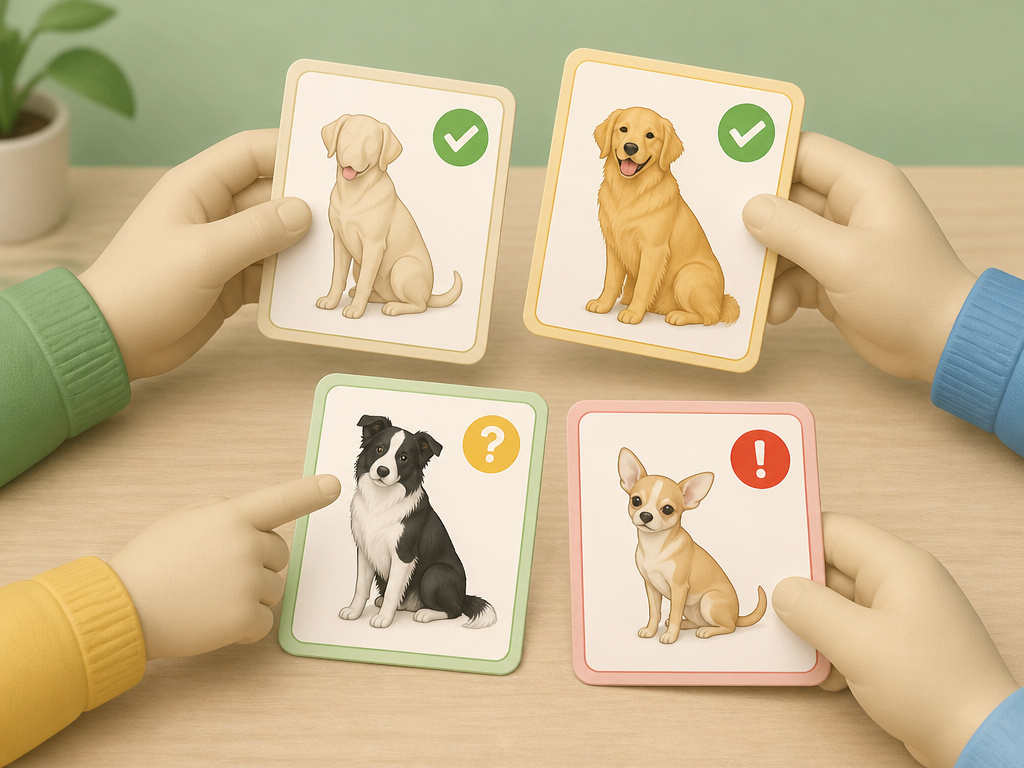
Labrador Retrievers and Golden Retrievers appear by name in two separate sources, which is the closest thing to consensus this topic has. Everything past that gets interesting.
Sporting breeds: the closest thing to consensus
Humane Colorado names Labradors and Golden Retrievers as good pets for families with children. The AKC points outdoorsy families toward Sporting or Herding breeds that thrive on outdoor work.
Merck adds the constraint that matters: larger dogs like retrievers need space to run and play, and they’re better suited to homes with a fenced yard. An apartment with a retriever is a negotiation, not a plan.
Herding breeds: two sources, opposite advice
This is the disagreement worth knowing about, because it’s the same breed and two credible organizations landing in different places.
Humane Colorado warns that herding breeds such as Border Collies and Shepherds are inclined to herd children, chasing and nipping at heels. Merck says working dogs like Border Collies need a job to do or they get bored and act out. The AKC, meanwhile, names the Border Collie as a good match for an outdoorsy family, while Humane Colorado warns herding breeds chase and nip at children’s heels.
All three statements can be true at once. A Border Collie with a job is a great family dog. A Border Collie without one invents a job, and the job is usually your kid.
The breeds sources steer you away from
Humane Colorado flags breeds selected for protective behavior, such as Chows and Rottweilers, as not usually recommended. The reasoning is specific: the comings and goings of children and their friends get read as territorial intrusion.
Toy poodles and Chihuahuas land in a similar spot for a different reason. They’re fragile, easily injured around rambunctious children, and more easily frightened by noise and activity. A frightened dog snaps to protect itself.
The AKC counts 200 recognized breeds, so no article can cover the field. What you can do is ask better questions before you commit to any of them:
- Ask whether the puppy’s parents were tested for breed-specific diseases. Merck names hip dysplasia in larger breeds as the example.
- Ask what the breeder’s parent club recommends for health screening, and whether they follow it. The AKC designates breeders who complete those checks as Breeders of Merit.
- Ask why the dog is available, and get the answer in writing if it’s a rehome.
- Ask to meet the dam, and the sire if he’s on site. Merck suggests visiting the breeder and seeing the parent dogs.
A breeder who asks you nothing about your household, your activity level, or your kids is a warning sign. The AKC says the same thing: be wary when nobody is asking questions.
The part nobody mentions: A breed-specific rescue’s foster homes know the adult temperament better than any breeder’s sales page does. Those dogs are already grown, already in a house, and already being described by someone with no financial stake in your decision.
Small Dog, Big Problem: What the Toy Breeds Get Wrong
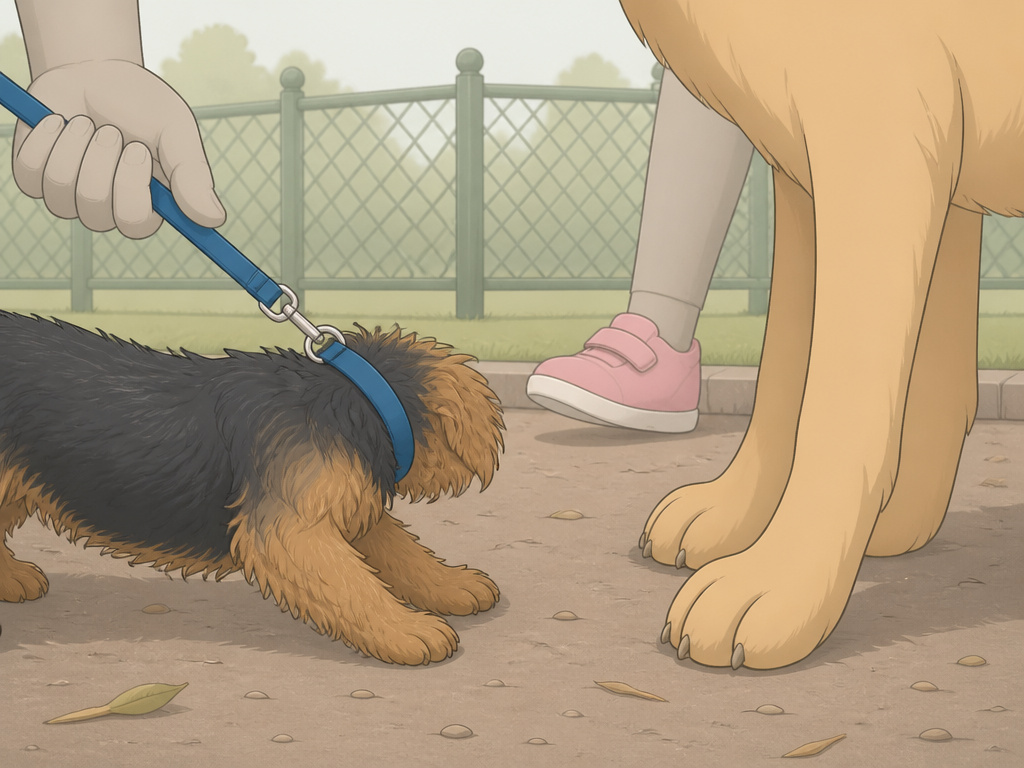
A small terrier mix pinned a larger puppy at our local park last spring while the owner narrated how “feisty” she is. The puppy’s owner was the one who left.
The “small dog side” of the park isn’t a safety feature. It’s a size category. If your small dog is the one starting fights, the segregated area just means the damage happens on a smaller scale.
Humane Colorado and Merck both warn that very small dogs like toy poodles and Chihuahuas may not be good choices for a young child, though the AKC suggests a smaller, smooth-coated breed like a Boston Terrier or a Pug for indoor families. They’re fragile, they get injured around rambunctious kids, and they don’t handle rough play well.
The AKC complicates that, usefully: for indoor families it suggests a smaller, smooth-coated breed like a Boston Terrier or a Pug, even as Humane Colorado and Merck warn that very small breeds may not suit young children. And they add the line that undercuts half the breed-shopping logic out there: don’t assume a smaller breed is less work.
Here’s my honest gap. My own experience is medium-to-large dogs with strong prey drives, so when a reader asks me about a tiny Yorkie and a low-voltage containment system, I’m extrapolating from the wrong data. I know it. For the small end of the range, read the guide to small dog breeds for families and then go meet the actual dogs.
Sturdier small breeds like Pugs and Beagles sit in a different category from the toy end. Humane Colorado names both as better able to tolerate the noise and rough play that comes with children.
How Do You Test a Breed Before You Commit?
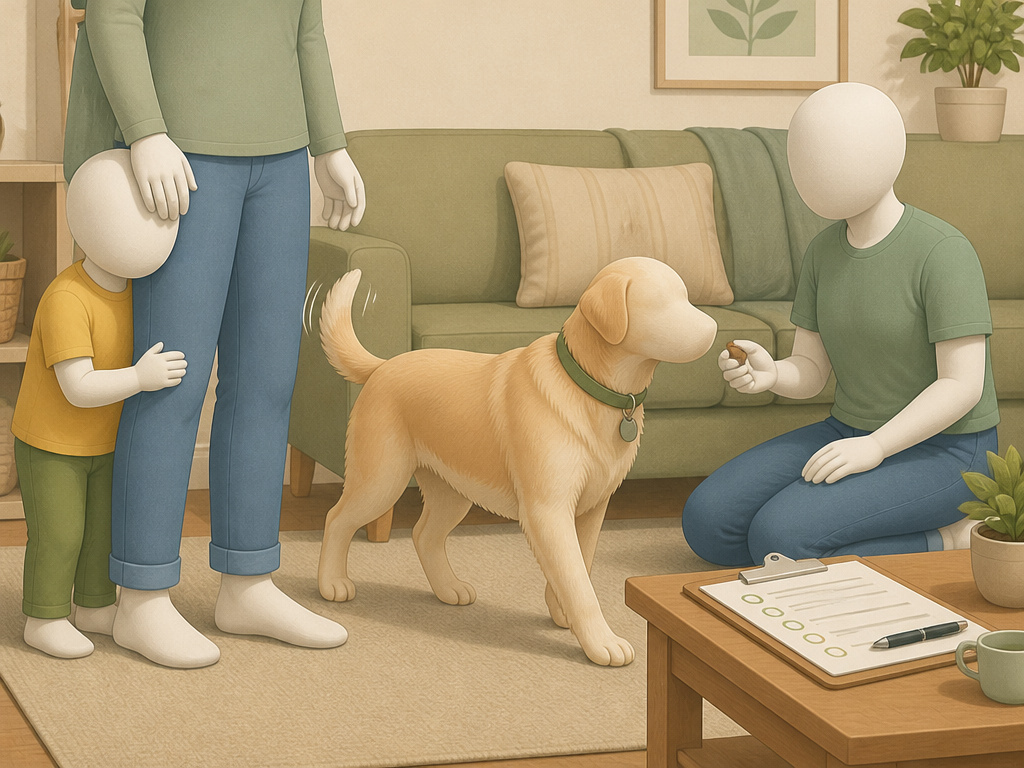
Meet three adult dogs of that breed, in person, before you commit to anything. Not puppies. Adults.
That’s my rule, and it has talked more people out of more breeds than any article I’ve written. I’ve had clients fall out of love with a breed after standing in a small living room with a full-grown Malamute. Better to find that out before you commit than after.
Before you start: Ask the owner before you approach any dog, and ask specifically whether the dog is comfortable with children. A dog that’s fine with adults can still be uneasy around kids. Keep your child behind you and let the dog approach first, and cut the visit short if the dog stiffens, backs away, or stops taking treats.
- Fill out a temperament-and-lifestyle matrix before you look at a single photo. One page: activity level, noise tolerance, grooming willingness, hours the dog will be alone, and how much of the daily care you’ll actually do.
- Find three adult dogs of the target breed through breed-specific rescue foster homes, local owners, or a breed club meetup. Foster homes are the best of the three because the dog is living in a house.
- Watch the dog around your child, not the other way around. You’re looking for a dog that chooses to stay in the room, not one that tolerates handling.
- Take an obedience class together once you’ve chosen. Humane Colorado recommends it as a way to teach the dog to respond to commands, and it gives you a neutral place to see how the dog handles stress.
That fourth step matters more than it sounds. A dog that shuts down in a class full of strangers will shut down at a birthday party.
The Supervision Rules That Apply to Every Breed
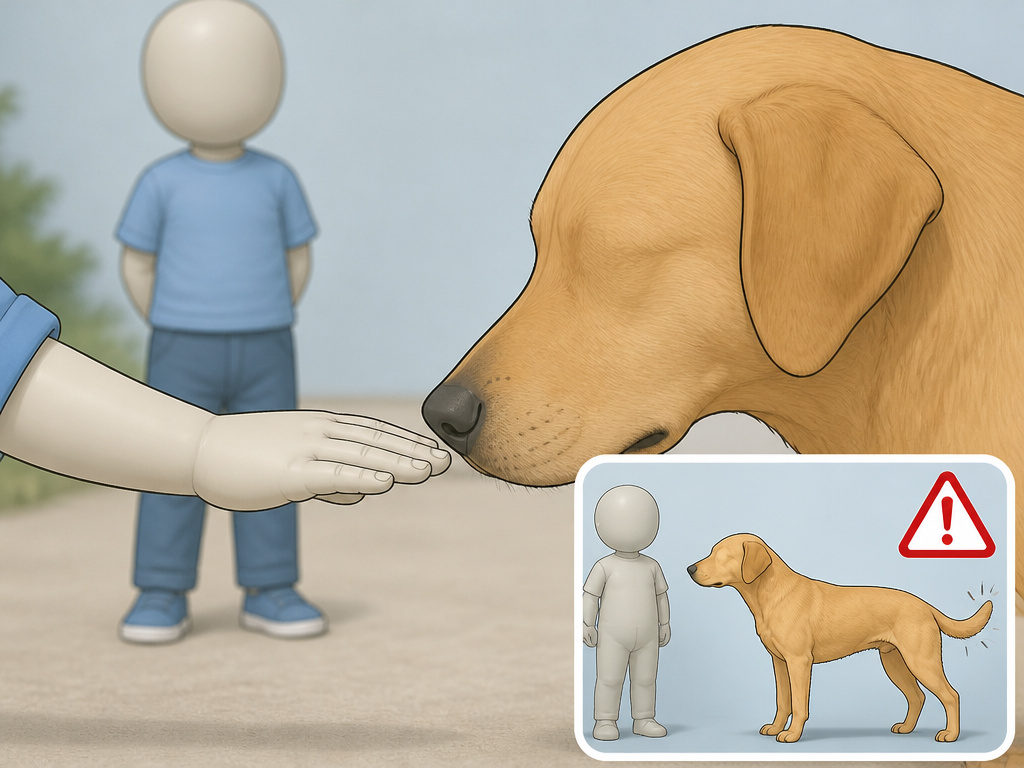
Four separate sources say the same thing in nearly the same words: never leave a child alone with a dog. The pediatric guidance, the veterinary manual, the shelter guidance, and the registry all agree. That’s rare enough to treat as settled.
The rest of the rules are teachable, and they’re worth teaching before the dog comes home.
- Greeting a dog: the child stands still while the dog sniffs, then slowly extends a hand. Not a hand thrust at the face.
- Signs of an unsafe dog: rigid body, stiff tail held at “half mast,” hysterical barking, a crouched position, a staring expression. Teach these to older kids by name.
- An unfamiliar dog approaches: face the animal and back away slowly until out of reach, avoiding eye contact.
- Rabies: make sure any dog or cat in the house is fully immunized. The pediatric guidance is direct about this.
- Rough play: most children under 10 can’t reliably run the procedures that discourage it, so teach the dog a “leave it” command instead.
One more, and it’s the one people skip. Don’t punish the dog for snapping or growling. Humane Colorado explains why: if being around children always produces bad things, the dog becomes defensive in their presence. You’ve trained the warning out and left the bite.
Rule of thumb: A dog that growls is communicating. A dog that has been punished for growling is a dog with no warning left.
The kids around dogs piece covers the greeting scripts and the body-language drills in more detail than I can fit here.
Frequently Asked Questions
What’s the best dog breed for a family with a toddler?
There isn’t one, and any source that names a single breed for a toddler is overselling. The pediatric guidance puts readiness at around 5 or 6, so a toddler household is early regardless of breed. If you’re proceeding anyway, shelter guidance suggests a dog over 2 years old, and both shelter and veterinary sources steer you away from fragile toy breeds.
Are hypoallergenic dogs actually better for allergic kids?
The American Academy of Pediatrics says no. Their position is that all dogs are equally likely to cause allergies, regardless of how much or how little they shed, and that “hypoallergenic” breed labels aren’t truthful. Dander is the issue, and every dog produces it.
Is a puppy or an adult dog better with young children?
Credible sources split on this. Humane Colorado recommends a dog over 2 years old when the child is under 6. Merck notes puppies usually fit well into families but need far more training, supervision, and early veterinary care. The pediatric guidance leans toward an older animal because puppies bite out of friskiness. Pick based on how much training time you actually have.
Are Border Collies good with kids?
Depends who you ask, and both answers are defensible. The AKC names the Border Collie as a good match for an outdoorsy family. Humane Colorado warns that herding breeds chase and nip at children’s heels. Merck’s framing reconciles them: a working dog without a job gets bored and acts out. The dog’s daily routine matters more than the breed label here.
Can my child be responsible for feeding and walking the dog?
No, not solely, at any age. Humane Colorado calls it unrealistic to expect a child to have sole responsibility for a dog, and the AKC agrees the adult is ultimately responsible, though the pediatric guidance says a child is usually ready to help with care around 5 or 6. The AKC puts it more bluntly: if the kids fail to feed or walk the dog, you wind up with the extra chores. The pediatric guidance adds that a child is usually ready to help with care around 5 or 6, which is different from being in charge of it.
Before You Go
Here’s the one number to hold onto: three. Three adult dogs of the breed you’re considering, met in person, before any deposit changes hands. That single habit catches more mismatches than every breed profile on the internet combined, and it costs you a few weekends.
One concession, because I’d rather you hear it from me. If your child is under 6 and you’re set on a puppy, the sources genuinely disagree and I can’t resolve it for you. The shelter guidance says a child under 6 pairs best with a dog over 2 years old. The veterinary guidance says puppies fit families fine. What I’d do in that spot is take the adult dog, because an adult dog’s temperament is already visible and a puppy’s isn’t.
Here’s what actually matters for your dog: the breed gets you to the shortlist, and the individual dog makes the decision. Get the order right and the rest follows.
