
How to Rename a Rescue Dog: Step-by-Step
This post contains affiliate links. As an Amazon Associate, we earn from qualifying purchases.
To rename a rescue dog, pick a short name that carries across a yard, then teach it the same way you’d teach any cue: say it once in a happy tone, mark the moment the dog looks at you, and pay with a small soft treat. If you’re wondering how to rename a rescue dog, most dogs start recognizing a new name within a few days.
That “few days” figure comes with a caveat worth hearing. A dog can learn the sound of a new name fast in a quiet living room, then act like he’s never heard it the first time a squirrel crosses the fence line. The name is a cue for attention. It doesn’t mean “come” or “watch me.”
What follows is the practical version: how the cue actually works, when to keep the old name instead, the step-by-step method trainers use, and how to rename a rescue dog with a name that survives a shout across a wet backyard at dusk.
Key Takeaways
- Say the new name once, not five times in a row. Repeating it teaches the dog to wait for the third or fourth call before responding.
- Pay every response at first, then fade to intermittent treats plus verbal praise.
- Keep the name positive. Don’t use it before time-outs, corrections, or taking away a chew toy until the dog has really learned it.
- Most dogs need a few days of consistent training to start recognizing a new name, but reliable responses around distractions take longer.
- Skip the rename entirely for working or service dogs, and think twice about a stable-home surrender who’s had the name for years.
What a Rescue Dog’s Name Actually Means to the Dog
A dog’s name is a verbal cue that means “pay attention to me.” Your dog doesn’t think of it as an identity the way you think of yours.
A dog’s name is a verbal cue meaning “pay attention to me,” not “come” or “watch me.” The word predicts that whatever you say or do next involves the dog. That’s why a name paired with treats and praise builds a fast, positive association, and a name paired with corrections builds a dog who flinches at the sound.
The AKC guide to renaming a dog spells this out: your dog has learned that the sound of his name means the next thing you do or say will be relevant to him. Say “Scout,” then put down the food bowl. Say “Scout,” then take away the slipper. The name predicts a consequence.
That’s the whole mechanism. If the consequences are positive, the dog learns to love the sound. If they’re negative, the dog learns to ignore it or run the other way. Renaming works because you’re building new associations on top of the old ones.
Dogs also already answer to multiple names. Their call name, their nicknames, the silly baby-voice version you use at 6am. The AKC notes that most dogs don’t distinguish the details of human speech, which is why they’ll often respond to similar-sounding words the same way.
One piece of housekeeping: dogs have a registered name (usually longer, on the paperwork) and a call name (what you actually shout in the yard). Renaming the call name doesn’t touch the registry. You’re not filing anything.
When a Name Is “Poisoned”
The AKC uses that word directly. A name or cue is poisoned when it’s been paired with mistreatment or harsh training. The dog hears the sound and braces for something bad.
That’s one of the clearest reasons to rename. It’s also one of the few cases where the usual advice flips: pick a name that sounds completely different from the old one, not something similar.
How Long Does It Take a Dog to Learn a New Name?
The honest range is a few days to a few weeks, and the sources don’t fully agree on where in that range most dogs land.
| Source | Timeline estimate | What it covers |
|---|---|---|
| AKC | A few days | First recognition in a quiet room |
| Animal Rescue Site | A few days to a few weeks | Full understanding, old name forgotten |
| PetMD (Gilbreath) | A few days or a few weeks | Understanding the new name |
The AKC’s training page says many dogs begin recognizing their name within a few days of consistent training, though reliable responses in distracting environments often take longer when you’re learning how to rename a rescue dog. The Animal Rescue Site says dogs catch on after a few days of being told the new name, and usually within a few weeks they completely understand it and forget the old one.
PetMD quotes Aimee Gilbreath of the Michelson Found Animals Foundation: it could take a few days or a few weeks for the pet to understand the new name. That’s the widest range, and it’s probably the most honest.
What “consistent training” actually means matters more than the timeline. Rover’s trainer Shoshi Parks, Ph.D., CPDT, recommends short bursts of three to ten minutes, a few times each day. Not one long session on Sunday.
One rescue I heard about bolted at every open gate and seemed hopeless. After a few weeks of short daily sessions, he was turning away from the boundary on his own. The lesson stuck: patience beats intensity, every time. Name training runs on the same clock.
The Rename-or-Keep Call: 3 Cases Where the Old Name Should Stay
Some dogs should keep their names.
The AKC advises against renaming a working or service dog, or a dog with a long positive history with its name. Rover’s Parks agrees: if you’re adopting or buying a working or service dog, the name is bound to trained cues, and keeping the original avoids interrupting training.
For an owner-surrendered dog who spent years in a stable, loving home, Parks recommends keeping the original name or choosing something phonetically similar. PetMD’s Jme Thomas, executive director of Motley Zoo Animal Rescue, warns that renaming an adult dog who may have had a name for almost a decade can cause confusion during the transition.
But Thomas also says 99 percent of the time it’s completely okay to rename your pet. She frames it as a fresh start and a bonding experience. PetMD’s Gilbreath adds the practical test: if the name will interfere with your relationship with the pet, by all means rename it.
Skip this if: You’ve adopted a working or service dog. The name is bound to trained cues, and renaming risks interrupting tasking. Keep the original and save yourself the headache.
When to Keep the Old Name
- Working or service dog with trained cues
- Owner surrender from a stable, loving home, especially after years with the name
- A dog who already responds reliably and the name isn’t causing problems
When to Change It
Rover lists four scenarios where a rename is clearly fine:
- You adopted a rescue with a shelter name
- You brought home a breeder puppy with a litter name
- The dog has a negative association with the name
- The dog doesn’t respond to the name
Add the AKC’s poisoned-cue case to that list. If the name is tied to abuse or harsh training, change it, and pick a sound that’s clearly different from the old one.
If you’re still picking the dog, how to choose a rescue dog covers temperament matching before you commit to anything.
The 5-Step Name Change Method
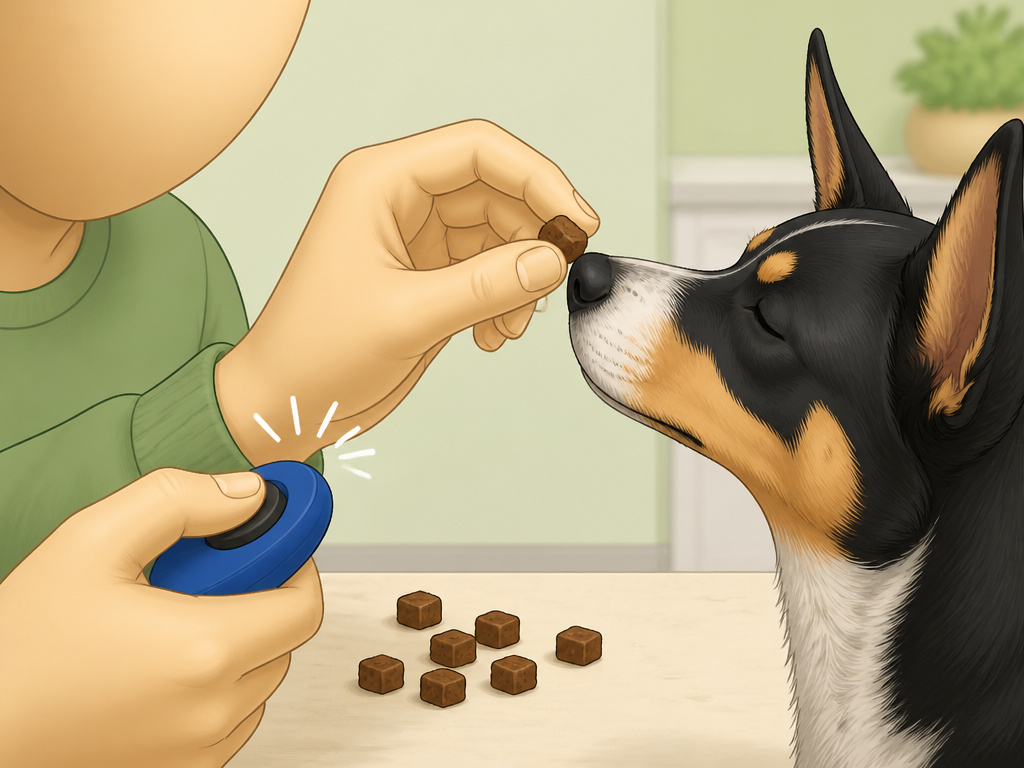
Five steps, in this order: pick, load, say, mark, pay.
The order matters.
- Pick the name. Dr. Sabrina Kong, DVM, told Rover that short, snappy names with a clear vowel sound at the end catch a dog’s attention best. Skip the four-syllable tribute to your favorite novelist.
- Load your pockets. Small, soft treats the dog can chew and swallow fast. The AKC recommends this specifically; a big crunchy biscuit breaks the rhythm of the repetition.
- Say the name once in a bright, happy tone while the dog isn’t looking. The moment he turns to look, mark it with a clicker or a word like “yes,” then treat immediately. If you skip the mark, the dog doesn’t know which behavior earned the reward.
- Add distance and eye contact. Once the dog responds consistently, move across the room and say the name. Wait for him to look at your face, not just turn toward you, before treating.
- Fade to intermittent treats plus verbal praise. The AKC is explicit here: keep the praise every time, but you don’t need a treat every rep forever.
I won’t rename a dog in the first few days home. The dog is already swimming in new smells, new rules, and a new person. Let the dust settle, then start the name work after a few days. The extra two days cost nothing.
The trainer’s name game is the same method with a different wrapper. The AKC dog name training game is worth reading in full if you want the clicker timing details. The name training basics apply to rescue dogs too.
What to Do When the Dog Won’t Respond
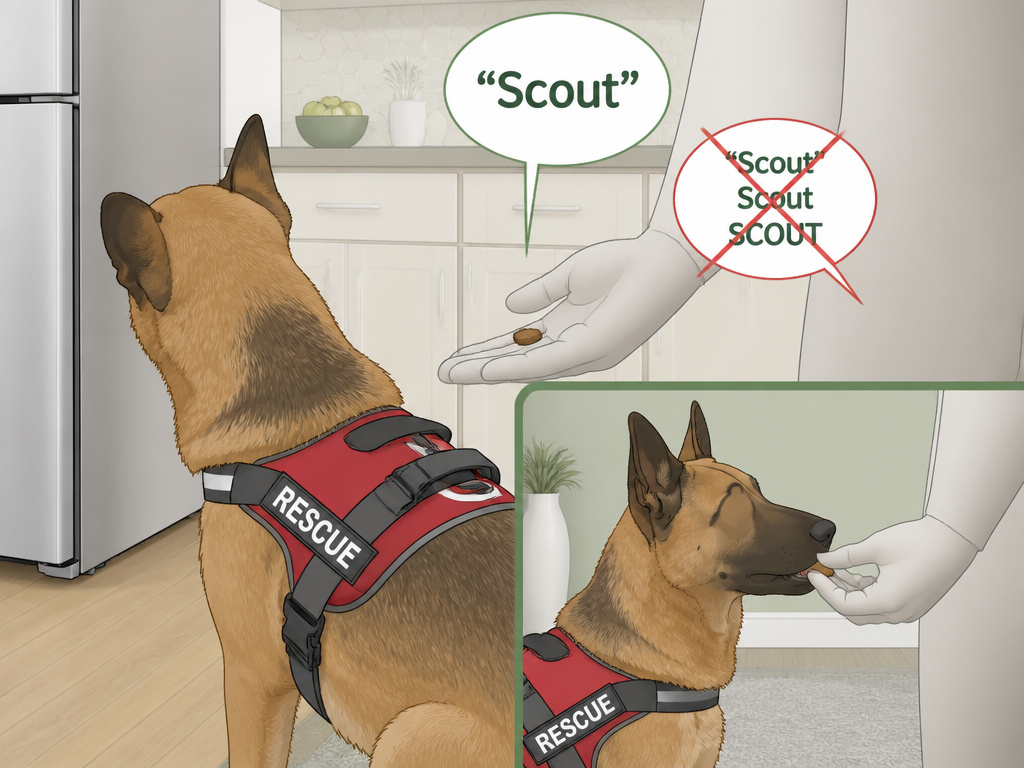
You’re standing in the kitchen, you’ve said “Scout” six times, and the dog is staring at the fridge.
Here’s where the sources split, and it matters.
The AKC says: say the name once. If the dog doesn’t respond, don’t repeat it and don’t shout it. Walk the dog away from the distraction and try again from a quieter spot. Mark and treat only the actual orienting response.
The Animal Rescue Site takes a different approach: repeat the new name in happy tones until the dog adapts, and reward when they look at you.
Say the name once. If the dog doesn’t turn, don’t repeat it louder. Walk him away from the distraction and try again from a quieter spot.
Both approaches agree on the underlying principle: the name should predict good things, and the dog should learn to turn toward the sound. The AKC’s version is stricter about not letting the dog learn that “Scout” means “Scout, Scout, SCOUT.” The Animal Rescue Site’s version is more forgiving for a dog who’s still figuring out that the new sound means him.
I’d split the difference: use the AKC’s one-call rule at first, then loosen up once the dog is responding reliably.
The Name-Change Name Game
If the dog already responds quickly to his adopted name, Rover suggests a slower transition. Here’s the sequence:
- Say the new name, then the old name, pausing briefly between them. Reward when the dog looks.
- Repeat a few times.
- Then say only the new name and reward when the dog looks.
- Repeat until the dog catches on.
It builds a positive baseline before you start layering.
If you’re still in the prepare for a rescue stage, get the supplies sorted before the dog arrives. The first week is really a rescue dog settling in period, and the name work can wait a few days.
Picking a Name That Survives the Backyard Test
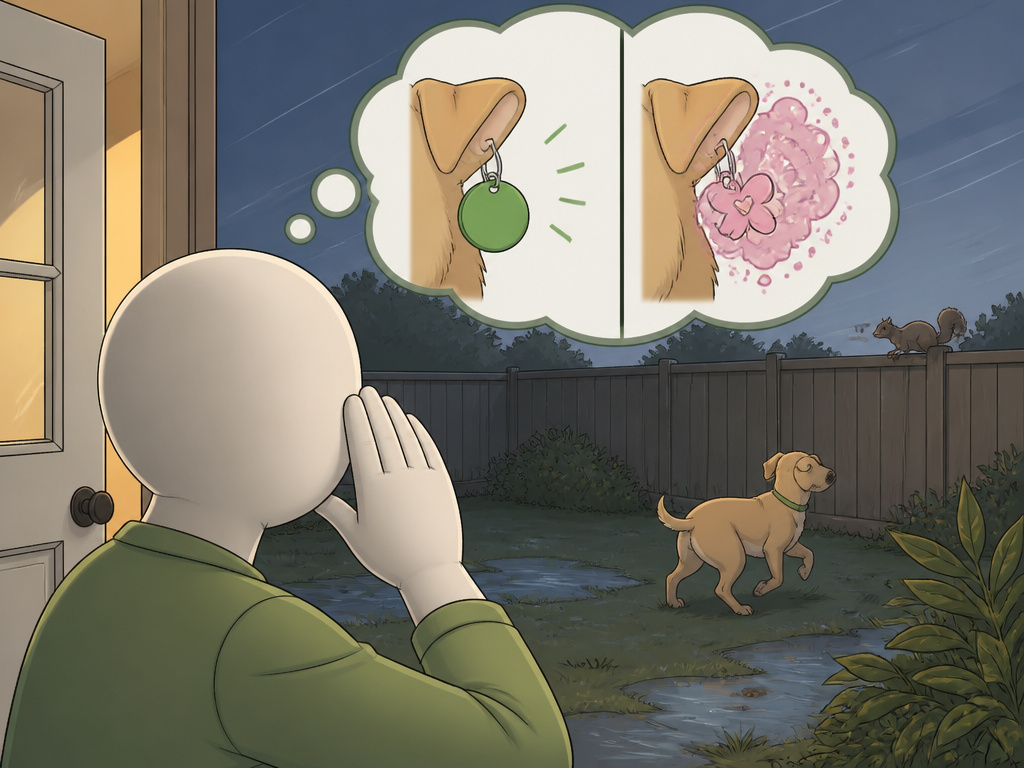
The name you love in the living room is not always the name that works at the back fence.
This is where I get picky. A name has to survive being shouted across a wet yard at dusk, with the wind blowing the wrong way and a dog who’s already half-distracted by a squirrel. That rules out a lot of names people love.
Dr. Kong’s rule is the starting point: short, snappy, clear vowel at the end. “Scout,” “Ruby,” “Finn,” “Mabel.” Names that land cleanly on the ear.
But there is a problem. A name that sounds lovely on paper can collapse into mush at a distance. Test it before you commit. Stand at your back door and call the name at full volume. If it doesn’t carry, pick something else.
Common mistake: Picking a name that sounds like a command. “Kit” and “sit” collapse into the same sound at a distance. You’ll figure it out the first time he sits instead of coming.
Names that sound like common commands are the biggest trap:
- Kit (sit)
- Bo (no)
- Ray (stay)
- Hal (heel)
- Bea (leave it)
Long, cutesy names are the second trap. “Sir Reginald Fluffington” is a great story and a terrible recall cue. Picking a name for the tag alone is like buying a deck for the wood and ignoring the joist hangers. The AKC notes that dogs often respond to similar-sounding words the same way, which cuts both directions: a name that sounds like a command gets treated like a command.
If you’re stuck for ideas, the list of popular dog names is a fine starting point, though I’d filter it through the backyard test before committing. The how to choose a dog name filters are worth running before you commit to anything.
Update the Tag, Not the Registry
The AKC distinguishes the registered name from the call name. Renaming the call name doesn’t touch the registry paperwork. You’re not filing anything with a kennel club.
But you do need a new tag. A custom tag gets the new name on the dog before he has a chance to slip out. Etsy has hundreds of stamped-tag sellers if you want something with more personality. The tag is the one piece of paperwork that actually matters in a lost-dog situation. Some shelters publish their own Saving Grace NC renaming document for adopters working through the same decision.
Biscuit would like it noted that he answers to three names and none of them reliably.
Frequently Asked Questions
Can you rename a dog at any age?
Yes. The AKC says dogs of any age can learn new names, and The Animal Rescue Site puts it bluntly: there’s no age that’s too late. Adult dogs learn through the same positive-reinforcement process as puppies. The only caveat is the one above: a working or service dog with trained cues is a different case.
Should the new name sound like the old one?
It depends on why you’re renaming. The AKC says a similar-sounding name (David to Dash) may make the transition easier if the old name has positive associations. If the old name is poisoned by abuse or harsh training, pick something that sounds completely different. The Animal Rescue Site says you don’t need a similar name at all; you can pick anything.
How many times a day should I practice the new name?
Rover’s Shoshi Parks recommends short bursts of three to ten minutes, a few times each day. The AKC suggests repeating the process several times throughout the day, and you can work it into normal life: while you’re watching TV, cooking dinner, or on a walk.
What if my dog ignores the new name entirely?
Drop to a smaller, quieter space and use a higher-value treat. The AKC suggests small pieces of cooked chicken or turkey meatball when the standard treat isn’t landing. Don’t shout the name; walk the dog away from the distraction and try again.
Do I need to change the name on the microchip or registry?
The AKC distinguishes the registered name from the call name. Renaming the call name doesn’t touch the registry. If your dog is microchipped, update the contact information with the chip company, but the name on the chip is usually just a label, not a legal identifier.
Will my dog forget his old name?
The Animal Rescue Site says most dogs forget the old name within a few weeks once the new one is established. In practice, many dogs keep responding to both, especially if they hear the old name from someone else. That’s fine. The new name just needs to be the one that reliably gets his attention.
The Bottom Line
Here is the honest version: renaming a rescue dog is mostly about patience and repetition, not technique. The method is simple, the timeline is a few days to a few weeks, and the dog will meet you somewhere in the middle.
If you take one thing from this, make it the backyard test. Stand at your door and call the name at full volume before you commit. If it doesn’t carry, pick something else. A name that works in the living room and fails at the fence line is a name you’ll be correcting for years.
Fair warning: the first week will feel like nothing is working. Then one day the dog will turn before you finish the first syllable, and you’ll realize it’s been working the whole time.
