
10 Best Wound Sprays For Dogs in 2026
This post contains affiliate links. As an Amazon Associate, we earn from qualifying purchases.
The Vetericyn Plus Dog Wound Care Spray is the best overall wound spray for dogs, thanks to its non-toxic, pH-balanced formula that is safe for your dog to lick. For a spray-on gel that stays put on surgical sites, the Vetericyn Plus Hydrogel Spray for Dogs is the best spray-on gel. The Vet Mediwash Antimicrobial HOCl Antiseptic Spray is our pick for a no-sting antiseptic that won’t make your dog flinch.
The challenge with treating a dog’s wound is that most dogs will immediately try to lick off whatever you apply. You need a formula that is both effective and safe if ingested, without harsh chemicals that sting on contact. Many sprays also need to work on different areas, from paws and legs to the more sensitive skin around the face.
We built this guide by researching manufacturer specifications, veterinarian recommendations, and patterns in owner feedback for the most popular wound sprays on the market. We focused on safety, ease of application, and the specific situations each formula handles best to help you choose with confidence.
Top 10 Wound Sprays For Dogs in the Market
Certain content that appears on this site comes from Amazon. This content is provided "as is" and is subject to change or removal at any time.
The Best Wound Sprays For Dogs, Reviewed
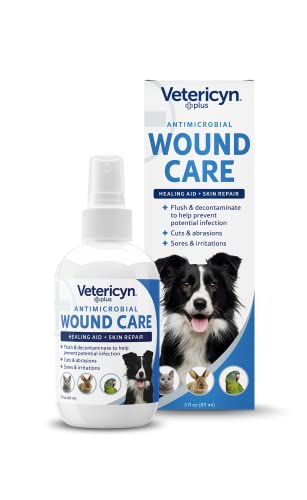
Vetericyn Plus Dog Wound Care Spray
What We Like
- Non-toxic, pH-balanced hypochlorous technology
- Lick-safe for worry-free application
- No antibiotics or steroids
- Veterinarian recommended
Trade-offs
- 3 oz bottle is small for large wounds
- Requires multiple daily applications
A 3-ounce spray that uses non-toxic hypochlorous technology means you can flush a cut or scrape without worrying if your dog licks it off. The formula is designed to be no-sting, which makes a big difference when you’re dealing with a sore spot and a nervous dog. It’s safe for all animals, so one bottle covers dogs, cats, and other pets. For a basic wound cleaner that’s safe enough to use on a face or paw, this is the one I grab first.
The 3-ounce bottle is compact enough to toss in a first-aid kit or glove box. But if you’re treating a large hot spot or multiple pets, you’ll be spraying it several times a day and may want a bigger volume. The Vet Mediwash Antimicrobial HOCl Antiseptic Spray, for example, comes in an 8-ounce bottle. For everyday scrapes, small cuts, and post-surgical sites, though, the Vetericyn Plus is hard to beat for simplicity and safety.
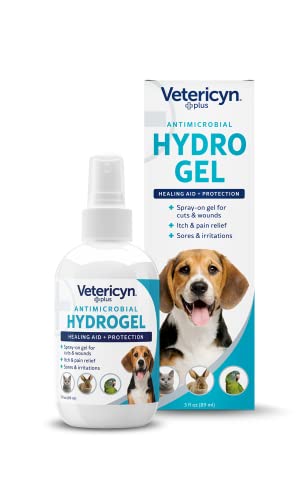
Vetericyn Plus Hydrogel Spray for Dogs
What We Like
- Non-toxic hypochlorous technology, pH-balanced
- Lick-safe, no antibiotics or steroids
- Veterinarian-recommended alternative to antibiotics
- Spray-on gel covers cuts, burns, incision sites
Trade-offs
- 3 oz bottle is smaller than several competitors
A non-toxic, pH-balanced hypochlorous formula means this spray-on gel is safe if your dog licks the area. So you can treat everyday scrapes, hot spots, and post-surgical incisions without wrestling an Elizabethan collar onto a miserable pet. The gel consistency stays put better than a thin liquid but spreads more easily than a tube of ointment, making it practical for active dogs.
The trade-off is the 3-ounce bottle. For a single wound it’s plenty, but if you’re treating a large area or multiple dogs, you’ll run out faster than the 8-ounce SkinSmart or PetSilver options. For a deep, weeping wound that requires frequent flushing, the straight spray of the Vetericyn Plus Wound Care Spray (no gel) would be a better fit.
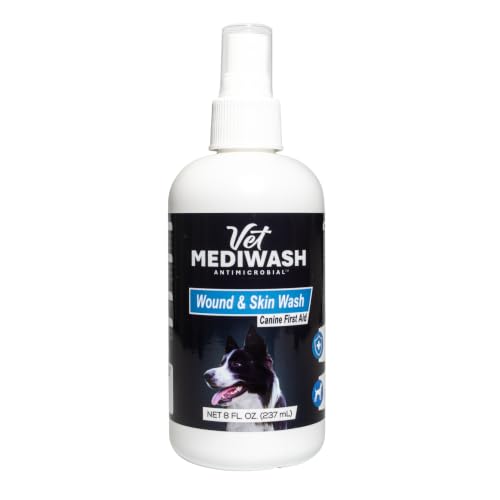
Vet Mediwash Antimicrobial HOCl Antiseptic Spray
What We Like
- No-sting formula avoids pet flinching
- Safe if licked, no cone needed
- HOCl technology, no harsh chemicals
- Visible improvement in 24-48 hours
Trade-offs
- Requires consistent daily use for results
- Spray nozzle can clog if not rinsed after use
Hypochlorous acid is the active ingredient here, and it matters because it kills bacteria without the burn of alcohol or the tissue damage of older antiseptics. That no-sting promise isn’t just marketing fluff, the formula is designed so your dog won’t flinch, run away, or resist when you spray it on a hot spot or paw wound. For dogs who’ve learned to associate first aid with discomfort, this makes treatment far less stressful. It’s also non-toxic and safe if licked, which means you can skip the cone and the constant monitoring. If your dog has skin sensitivities or hates being handled for wound care, this is the spray that gets the job done without turning it into a wrestling match.
You need to use it consistently; the product description says visible improvement takes 24 to 48 hours with regular application. That’s fine for a hot spot or a minor scrape, but if you’re dealing with a deep wound or something that needs a protective barrier that stays put, a spray can run off vertical surfaces. The Vetericyn Plus Hydrogel Spray for Dogs offers a spray-on gel format that may be more suitable for areas where a liquid spray might not stay in place. For everyday cuts, paw licking, and post-grooming irritation, though, the Vet Mediwash delivers effective, no-drama care without harsh chemicals.
Product photos
SkinSmart Antimicrobial Wound Care Spray

What We Like
- Sting-free formula for sensitive areas
- Safe to spray around eyes, nose, and ears
- Lick-safe, no steroids or antibiotics
- Relieves itch and deodorizes stinky skin
Trade-offs
- Hypochlorous acid is light-sensitive, requires dark storage
- Hypochlorous acid requires dark storage to stay effective
This spray uses hypochlorous acid as its active ingredient, a sting-free formula that is safe to spray around eyes, nose, mouth, and ears, and safe if licked. The 8-ounce bottle provides a generous volume for multiple uses, and because it contains no steroids or antibiotics, you don’t have to worry about your dog licking the treated area. It also helps relieve itch and deodorizes stinky skin, making it practical for wounds, hot spots, and post-surgical recovery at home.
Hypochlorous acid is light-sensitive, so the bottle needs to stay in a cabinet or drawer rather than on a sunny counter. Compared to the Vetericyn Plus Wound Care Spray, which uses a similar oxychlorine chemistry in a smaller 3-ounce bottle, this SkinSmart gives you more than double the volume for the same basic approach. The Vetericyn’s opaque bottle design handles light exposure better out of the box. If your dog has a hot spot behind an ear or a scratch near an eye, this is the spray you reach for first; just remember to store it out of direct sun.
Product photos
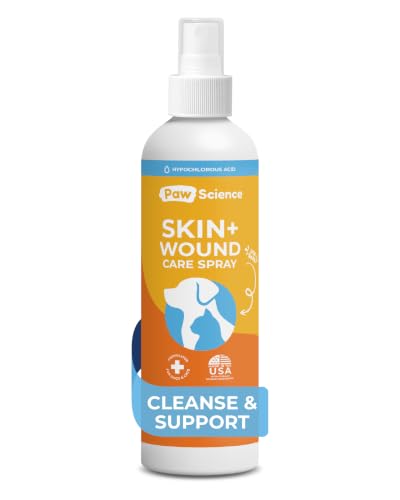
Paw Science Skin & Wound Care Spray
What We Like
- Lick-safe, non-toxic hypochlorous acid formula
- Sting-free and antibiotic-free
- Safe around eyes, nose, and mouth
- Suitable for daily sensitive skin areas
Trade-offs
- Targets sensitive skin, not deep wounds
This spray uses hypochlorous acid, a clinically recognized solution that is non-toxic, sting-free, and safe if licked. The formula is designed to gently cleanse cuts, abrasions, and areas of irritation while supporting a healthy environment for recovery. It assists the natural healing process of wounds, hot spots, rash, and general skin irritation in dogs and cats. Because it is non-toxic and safe around eyes, nose, and mouth, it can be used on skin folds, paws, groin, elbows, and other delicate regions without worrying about sting or irritation.
The formula is designed for routine first-aid care, not for deep or infected wounds. For a serious laceration or post-surgical site, a product like the Vetericyn Plus Wound Care Spray (which is also lick-safe and sting-free) may offer a more targeted antiseptic option. But for everyday hotspots, rashes, and skin irritation, this spray provides a gentle, no-sting solution that supports natural healing without antibiotics or steroids.
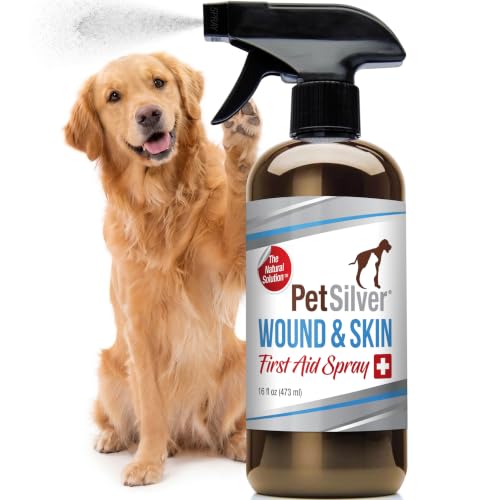
PetSilver Wound Spray
What We Like
- Chelated silver is premium, not colloidal
- No odor, no mess, non-stinging
- Limited ingredients: distilled water and silver
Trade-offs
- 16 oz bottle is larger than most wound sprays
- Requires up to 3 applications per day
- Silver-based formula not for buyers avoiding metals
A 16-ounce bottle means you won’t run out halfway through treating a persistent hot spot or a dog who finds every burr in the yard. It’s a sensible pick for owners who want a no-fuss, no-sting spray that’s safe if licked and skips harsh chemicals like chlorhexidine or chlorine derivatives.
You’re committing to a bigger bottle and up to three applications a day. If your dog tolerates regular spraying and you’re dealing with a wound that needs consistent cleansing, the extra volume and premium silver make sense. But if you’d rather apply a thicker gel less often, a hydrogel might fit your routine better.
Product photos
Vet Aid Animal Wound Care Spray

What We Like
- All-natural sea salt formula
- Works on multiple animal species
- Covers post-op wounds and hot spots
Trade-offs
- Saline only, no active antimicrobial ingredients
A 4 oz saline spray made from all-natural sea salt means this is about as gentle as wound care gets, no sting, no chemicals, just a simple rinse. That makes it a solid first step for cleaning fresh cuts, hot spots, or post-surgical sites on dogs, cats, horses, birds, and even reptiles. If you want something that won’t irritate sensitive skin or introduce anything harsh to a healing wound, this spray fits that need without fuss.
It’s just saline, so it cleans and supports healing but doesn’t actively fight bacteria like a hypochlorous acid spray (e.g., SkinSmart Antimicrobial Wound Care Spray) or provide a protective gel layer like the Vetericyn Plus Hydrogel Spray. For a simple, natural flush that works across species, this is your pick; for active infection control, look to the antimicrobial options in this guide.
Product photos
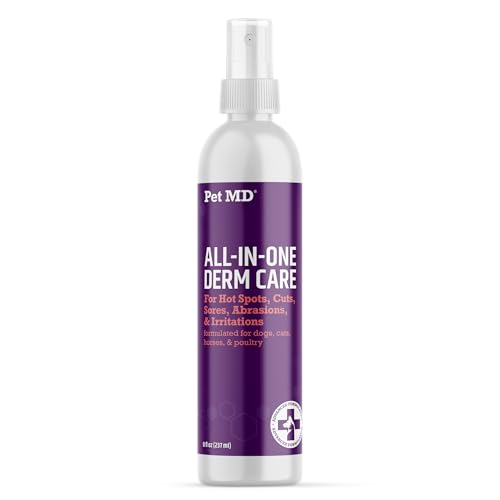
Pet MD All-in-One Derm Care Spray
What We Like
- Hypochlorous acid for gentle antiseptic action
- Covers cuts, burns, hot spots, ringworm
- Lick-safe for worry-free application
- Works for both dogs and cats
Trade-offs
- Requires 2-3 daily applications for 5-7 days
- Not for deep puncture wounds or surgical sites
The active ingredient here is hypochlorous acid, which means you get an antiseptic that kills bacteria without the sting or harshness of alcohol-based sprays. That matters when your dog has a raw hot spot or a fresh cut, because you can spray it on without making them flinch or fight you. This one is labeled for cuts, burns, rashes, hot spots, and even ringworm, so it covers the range of skin issues a typical household dog runs into. The lick-safe formula lets you apply it and walk away, no cone required for drying time. It suits owners who want one bottle that handles everyday scrapes and allergy-driven itch without needing a separate product for each problem.
The application frequency is the main consideration. You are looking at spraying this on two to three times a day for five to seven days, which is a commitment if your dog is squirmy or you have a busy schedule. Compare that to the Vet Mediwash Antimicrobial HOCl Antiseptic Spray, which comes in an 8 oz bottle and might stretch further between refills, but both use similar hypochlorous acid technology. The Pet MD bottle is 4 oz, so for a multi-pet household or a large dog with a big wound, you will go through it faster than you might expect. That is not a dealbreaker, just something to factor in when you are deciding how much convenience you want per application.
Product photos
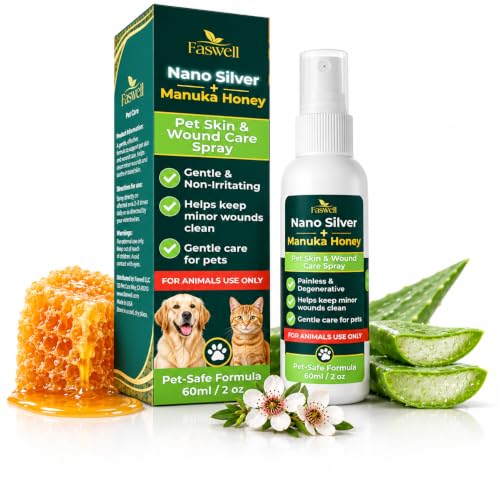
Faswell ManukaHoney-SprayforPets Wound Sprays
What We Like
- Nano silver and manuka honey blend
- Works for both dogs and cats
- Compact 2 oz bottle for travel
- Mess-free antiseptic spray application
Trade-offs
- Not labeled for post-surgical or deep wounds
- Not suitable for deep or puncture wounds
A 2-ounce bottle of nano silver and manuka honey spray is designed to clean hot spots, cuts, and scrapes on dogs and cats. The dual-ingredient blend offers a simple antiseptic option for minor wounds. It’s formulated for both dogs and cats, so one bottle covers multi-pet households, handy for grabbing off the shelf when the cat comes in with a scratch from the fence line.
The 2-ounce bottle is smaller than the 8-ounce SkinSmart Antimicrobial Wound Care Spray, so you will need to replace it sooner if you treat hot spots or scrapes often. That compact size fits easily in a dog first aid kit or travel bag, making it a practical choice for minor incidents on the go. The formula combines nano silver with manuka honey to gently clean irritated skin, which reviewers find useful for quick, mess-free application on red or scratched areas.
Product photos
Big Mare Dog Spray

What We Like
- No-sting relief works on contact
- CDS technology delivers ingredients deep into skin
- Treats hot spots, yeast, ringworm, and more
Trade-offs
- Not ideal for those who prefer a gel format
- Requires direct application, not suitable for full-body use
An antibacterial and antifungal formula means this spray tackles a range of skin issues like hot spots, yeast, ringworm, staph, and fold dermatitis. The CDS delivery system helps deliver ingredients deep into the skin’s regenerative layers, supporting healthier skin and hair growth. For owners dealing with multiple skin problems, that coverage can simplify treatment.
The 8-ounce bottle size means on a large dog with several hot spots, you might use it up faster than a smaller, more concentrated product. Still, for a single spray that covers both bacterial and fungal problems without stinging, it’s a practical option for the medicine cabinet.
Product photos
How We Evaluated Wound Sprays For Dogs
We started by reviewing the active ingredients in each spray, prioritizing non-toxic, pH-balanced formulas like hypochlorous acid that are safe for dogs to lick. We looked for products backed by veterinary recommendations and those labeled for use on sensitive areas, including around the eyes, nose, and mouth. Owner feedback patterns helped us understand which sprays were truly no-sting and which required frequent reapplication.
Our four main criteria were safety (lick-safe, no harsh chemicals), effectiveness (antimicrobial action, healing support), application (spray coverage, nozzle design, ease of use), and versatility (can it handle cuts, hot spots, surgical sites, or ringworm). We weighed these factors differently depending on the product’s intended use, such as daily sensitive skin care versus post-surgical wound management.
An evaluation like this cannot replace a veterinarian’s advice for deep or infected wounds. The goal is to give you a clear starting point. That way you can match a spray’s strengths to your dog’s specific needs, whether that is a gentle rinse for a minor scrape or a thicker gel for a healing incision.
What To Look For In Wound Sprays For Dogs
The best wound spray for your dog balances effective antimicrobial action with a formula that is safe to lick and doesn’t sting. You also need to consider the type of wound, the dog’s temperament, and how often you are willing to apply it.
Choose a lick-safe, no-sting spray with an active ingredient like hypochlorous acid or chelated silver. Match the format (spray, gel, or rinse) to the wound type and your dog’s tolerance for treatment.
Active Ingredient and Safety
The most common active ingredients in modern dog wound sprays are hypochlorous acid (HOCl) and silver. Hypochlorous acid is a gentle, non-toxic compound that the body’s immune system naturally produces to fight bacteria. It is sting-free and safe for use around the eyes and mouth. Silver-based formulas, like the chelated silver in PetSilver, offer a different antimicrobial approach with a long shelf life. Avoid products with alcohol or hydrogen peroxide, which can sting and damage healthy tissue.
Application Format and Wound Type
Sprays are ideal for large or irregularly shaped wounds because they cover the area without touching the skin. A standard spray works well for flushing out debris and applying a light antiseptic layer. A spray-on gel, like the Vetericyn Plus Hydrogel, is better for wounds on moving parts like a dog’s elbow or for covering surgical incisions where you want the product to stay in place. For deep puncture wounds or wounds that need heavy flushing, a saline rinse may be a better first step before applying an antiseptic.
Frequency of Application and Value
Most hypochlorous acid sprays require two to three applications per day for the first several days. This can mean a small 3-ounce bottle runs out quickly if you are treating a large wound on a big dog. Consider the bottle size and the treatment duration when comparing products. Some sprays, like the 16-ounce PetSilver, offer a larger volume for frequent use, while others are compact for travel or minor scrapes.
- Check the label for “lick-safe” or “non-toxic” if your dog is prone to licking wounds.
- Look for a spray nozzle that produces a fine mist for even coverage, not a stream.
- Verify the product is labeled for the specific issue you are treating, such as hot spots, ringworm, or post-surgical care.
- Choose opaque or dark packaging for hypochlorous acid sprays, which are light-sensitive.
A wound spray is only effective if you use it consistently. Pick a formula and application method you can stick with for the full treatment period.
Wound Sprays For Dogs Compared
The table below compares the key features of each wound spray, including active ingredients, format, and best use case, to help you quickly narrow down your options.
| Product | Active Ingredient | Size | Application |
|---|---|---|---|
| Vetericyn Plus Dog Wound Care Spray | Hypochlorous acid | 3 oz | Spray |
| Vetericyn Plus Hydrogel Spray for Dogs | Hypochlorous acid | 3 oz | Spray-on gel |
| Vet Mediwash Antimicrobial HOCl Antiseptic Spray | Hypochlorous acid (HOCl) | 8 oz | Spray |
| SkinSmart Antimicrobial Wound Care Spray | Hypochlorous acid | 8 oz | Spray |
| Paw Science Skin & Wound Care Spray | Hypochlorous Acid | N/A | Spray |
| PetSilver Wound Spray | Chelated silver | 16 oz | Spray |
| Vet Aid Animal Wound Care Spray | Sea salt | 4 oz | Spray |
| Pet MD All-in-One Derm Care Spray | Hypochlorous acid | 4 oz | Spray |
| Faswell ManukaHoney-SprayforPets Wound Sprays | Nano Silver & Manuka Honey | 2 Fl Oz | Spray |
| Big Mare Dog Spray | N/A | 8 oz | Spray |
Frequently Asked Questions
Can I use human wound spray on my dog?
No, you should not use human wound sprays on dogs. Many human antiseptics contain ingredients like alcohol, hydrogen peroxide, or iodine that can sting, delay healing, or be toxic if licked. Stick to products specifically formulated for dogs that are labeled as non-toxic and lick-safe.
How often should I apply a wound spray to my dog?
Most wound sprays, especially those with hypochlorous acid, recommend application two to three times daily for the first five to seven days. Always follow the instructions on the product label. For wounds that are not improving, or if you see signs of infection like swelling or pus, consult your veterinarian.
Is it safe to spray a wound spray near my dog’s eyes?
Some wound sprays, like the SkinSmart Antimicrobial Wound Care Spray, are formulated to be safe around the eyes, nose, and ears. However, most standard wound sprays should not be sprayed directly into the eyes. If you need to treat a wound near the eye, choose a product that explicitly states it is safe for that area.
What is the difference between a wound spray and a wound ointment?
Wound sprays are generally liquid or mist-based and are good for flushing debris and covering large areas without touching the wound. Wound ointments are thicker and stay in place longer. That makes them better for deep cracks, paw pads, or wounds on moving joints. The best choice depends on the wound location and how much your dog moves.
Can I use a wound spray on a hot spot?
Yes, many wound sprays are effective for treating hot spots. Look for a spray with antimicrobial and soothing properties. Products like the Big Mare Dog Spray are specifically formulated for hot spots, yeast, and ringworm. You can also find sprays for hot spots that are designed to cool the area and reduce itching.
The Bottom Line
The Vetericyn Plus Dog Wound Care Spray is the best overall choice for most dog owners. It is a safe, no-sting, lick-friendly option that works well for everyday cuts and scrapes, especially on sensitive areas. If you need something that stays put on a surgical site or a moving joint, the Vetericyn Plus Hydrogel Spray for Dogs is the better pick.
For owners of a wound-shy dog who flinches at any treatment, the Vet Mediwash Antimicrobial HOCl Antiseptic Spray offers a genuinely no-sting experience. If you are treating a sensitive area like the face or ears, the SkinSmart Antimicrobial Wound Care Spray is formulated to be safe there. And for those who want a large, gentle, two-ingredient silver spray for frequent hot spot use, the PetSilver Wound Spray delivers.
The single most important factor is choosing a formula your dog will tolerate and that you can apply consistently. A perfect antiseptic is useless if your dog fights it or you can’t keep up with the application schedule. Pair your spray with proper wound cleaning steps and safe antiseptics for wounds for the best results. For deeper issues, explore top-rated antiseptic sprays or dog-safe antiseptics for more options.
