
Is Dominance Theory True for Dogs? What Research Shows
This post contains affiliate links. As an Amazon Associate, we earn from qualifying purchases.
The short answer to whether dominance theory is true for dogs is no. The wolf-pack research behind it watched unrelated captive wolves with limited resources, and no major veterinary or training body endorses rank-based training today.
The model didn’t come from dog trainers. It leaked sideways out of mid-century wolf research into obedience manuals, and it stayed in print for decades after the wolf biologists themselves backed away from it. What those biologists found in wild packs looks far more like a family than a contest.
What follows is the actual evidence: what the wild-wolf work shows, what the dog studies measured, where those studies contradict each other, and what to do instead when your dog stiffens over a food bowl.
Key Takeaways
- The alpha-wolf model came from captive, unrelated wolves. Wild packs are family groups, and the breeding pair leads without fighting for the title.
- Dominance between dogs is a relationship, not a personality trait. APDTNZ describes it as context-dependent and almost never aggressive.
- The dog studies disagree on whether a group-wide hierarchy exists. One found a near-linear hierarchy (h′ = 0.94); Bradshaw’s group found none at all.
- Pinning, holding down, choke chains and shock collars are on the avoid list published by Dogs Trust, and physical discipline damages trust.
- Reward-based training has the better evidence base, according to both VCA Animal Hospitals and Dogs Trust.
Where the Alpha Wolf Story Came From
The 1940s wolf studies didn’t set out to sell anything. Researchers watched unrelated adult wolves housed together in enclosures with limited food and space, saw the most aggressive animals get first access to resources, and wrote up what looked like a hierarchy.
Captive wolf studies from the 1940s observed unrelated adult wolves housed together with limited food and space. The aggression recorded in those enclosures reflected the artificial conditions, not a natural social system. Wild wolf packs consist of a breeding pair and their offspring, and researchers report no dominance contests between them.
Dogs Trust is blunt about the origin: the theory came from unrelated wolves living in a captive environment with limited resources, and those wolves did not behave as they would in the wild. APDTNZ makes the same point with a sharper comparison. Applying wolf behaviour models to dogs is no more relevant than using chimpanzee behaviour to explain human behaviour.
Here’s what actually broke the model:
- The wolves were unrelated adults, not a family group.
- Food, space and mating opportunities were concentrated in a small enclosure, so competition was manufactured.
- The animals were captive, so what got recorded was a response to the setup.
- Nobody checked whether wild packs behaved the same way until decades later.
VCA puts the logic plainly: if the alpha-wolf theory is no longer considered true for wolves, the is dominance theory true for dogs question answers itself.
What Do Wolves Actually Do, and Why Doesn’t It Apply to Dogs?
Wild wolf packs are families. A breeding pair raises offspring that stay for a few years, learn to hunt, and help raise the next litter. VCA’s clinical guidance lists what decades of observation actually recorded: seasoned leaders travel near the back of the pack rather than the front, leaders let the young eat first when food is scarce, and an alpha wolf rarely initiates pinning at all.
Dogs Trust adds that wild wolf groups aren’t aggressive with each other and don’t fight over food, shelter or mates. When resources get scarce, they split into smaller groups and spread across more land. They avoid the fight.
A wolf pack is a family with parents, not a company with a CEO. Every training technique built on the CEO version is answering a question wolves stopped asking.
The doorway thing deserves its own paragraph, because it’s the piece owners repeat most. VCA states that neither dogs nor wolves use elevated positions to infer social meaning, and that doorways are man-made structures with little significance to a dog. What VCA does recommend is teaching manners at doorways: go out when told, wait when asked, don’t knock people over. That’s obedience, and it’s worth teaching. It just isn’t a status negotiation.
Is Dominance Theory True for Dogs? What the Studies Measured
For dogs, the honest answer is that the research splits on whether a stable group hierarchy exists, and APDTNZ finds no scientific evidence of dominance in dog–human relationships, though ASU News argues humans hold ‘super dominance’ over dogs.
The strongest pro-hierarchy data comes from van der Borg and colleagues, who scored body postures and behaviours in a domestic dog group. Status assessment through lowering of posture covered 91% of the pairs. The resulting hierarchy was near-linear at h′ = 0.94 (p<0.003), with strong unidirectionality at DCI = 0.97. Steepness came out at 0.79, which the authors read as a tolerant dominance style rather than a harsh one. The postures they scored are the ones you can learn to spot in your own kitchen, and a plain dog posture breakdown is the fastest way in.
Their best formal dominance indicators were high posture and a muzzle bite, and only the highest-ranked dog performed the muzzle bite. The best submission indicators were a body tail wag and two low postures, covering two-thirds of relationships. Van der Borg et al. Found no significant correlation of rank with age or weight, though the daycare study found older dogs out-ranked younger dogs and the owner-perception study found dominant dogs rated older than their partner.
A separate group of 24 neutered dogs at a daycare facility produced a similar shape. Submission, not aggression, was the most frequent, unidirectional and linear behaviour. Aggression there was low-intensity and ritualised, with no injurious contact. Dominance coverage was low compared with sexually intact dogs and wolves.
Then Bradshaw, Blackwell and Casey found the opposite. In their freely interacting group of neutered males, pairwise relationships existed but no overall hierarchy could be detected, and they argued wolf-type hierarchies have little empirical basis in dogs.
| Study | What it measured | Result |
|---|---|---|
| van der Borg et al. 2015 | Posture and behaviour in a dog group | Near-linear hierarchy (h′ = 0.94); tolerant style |
| Daycare study (Behaviour) | 24 neutered dogs at a daycare | Linear hierarchy; submission most frequent |
| Bradshaw, Blackwell & Casey 2009 | Freely interacting neutered males | Pairwise bonds; no overall hierarchy |
| Owner-perception study (N = 1,151) | Owner ratings across 1,151 pairs | 87% rated one dog dominant |
Why the study groups don’t match
The daycare authors are explicit that neutering and reduced resource competition explain their low dominance coverage. Results from intact or free-ranging populations don’t transfer to a neutered pet group. Group composition matters too, and so does the axis being measured: whether a study scores submission or aggression changes what it finds. Bradshaw questions any direct link between dominance and agonistic behaviour at all.
So when someone tells you the science is settled in either direction, they’re quoting one paper.
Why Alpha Rolls Get Dogs Bitten
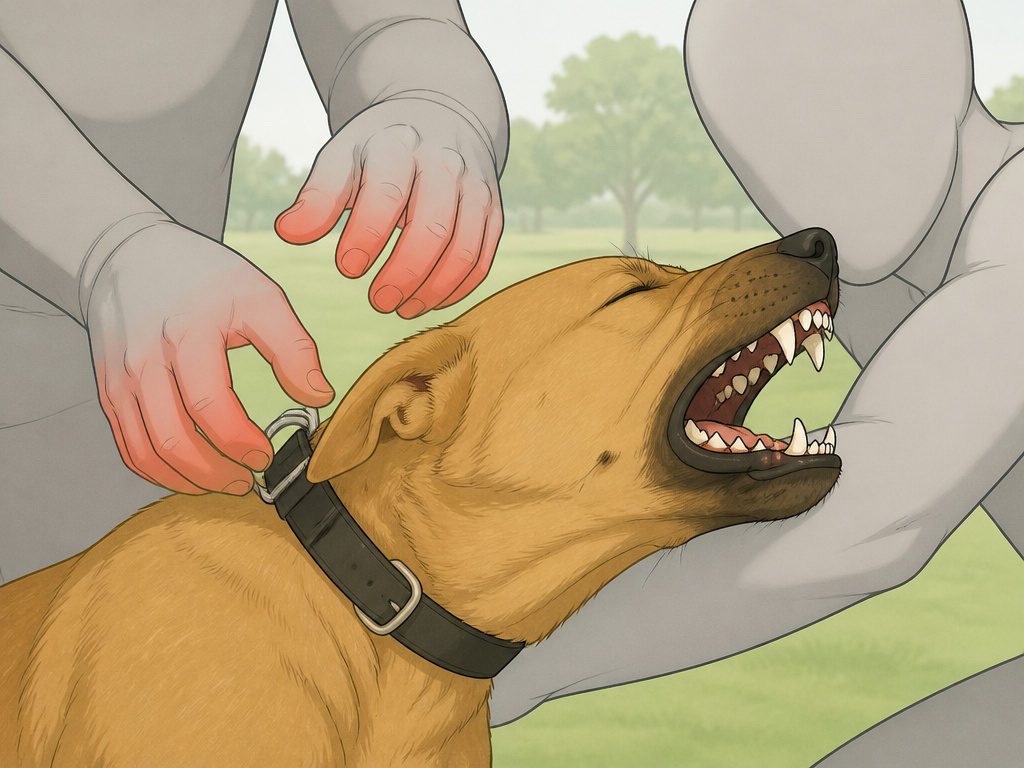
A trainer at a park near me ran an alpha roll on a client’s large dog. The dog didn’t submit. It went still first, shoulders bunched and mouth shut, and when the trainer rolled it onto its side the dog came up and bit him on the forearm. The dog got a label that afternoon. The trainer got stitches.
Before you start: Pinning a dog, rolling it onto its back, or holding it down puts your hands and face inside bite range. A dog that is already tense has one escape route left, and it’s its teeth. Keep your hands off the body and work at a distance instead.
The mechanism is simple enough. Physical restraint doesn’t teach a dog anything about rank. It teaches the dog that hands near the collar predict being overpowered, and a dog that expects that will defend itself earlier next time.
Dogs Trust lists the specific methods to avoid: pushing or pulling a dog into a position, holding a dog down, choke chains, electric shock collars, shouting, and smacking. The charity notes that physical discipline leaves a dog anxious, fearful and unlikely to trust its owner, and that these methods can make behaviour worse rather than better.
VCA goes further on the premise itself. Dominance-hierarchy training assumes a dog is committed to a constant battle of supremacy with its family, and VCA calls that premise incorrect and unsupported by scientific study. Trainers advising families to eat first, walk through doors first, occupy a higher position or pin a dog into submission are ignoring current research.
If you want the full breakdown of why the roll specifically backfires, alpha rolls covers the mechanics and the fallout.
What Actually Works Instead of Rank-Based Training
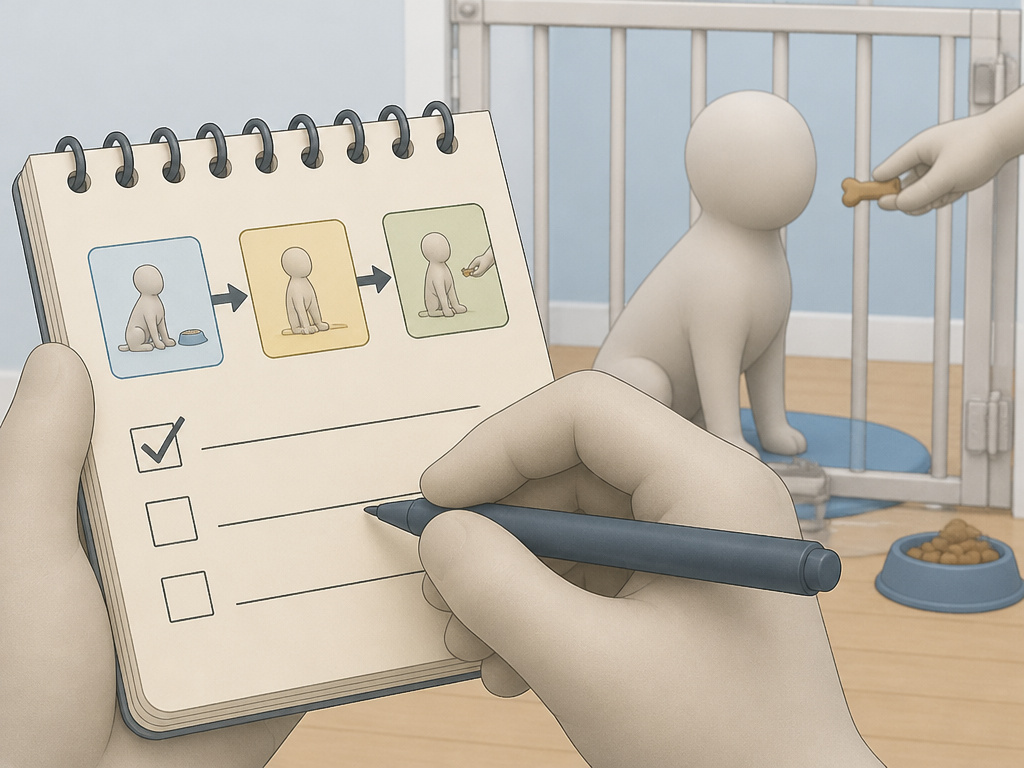
Short version: figure out what the behaviour is getting the dog, then change what it gets.
APDTNZ recommends that any training protocol, including one for a dog assessed with “dominance aggression,” focus on the function of the behaviour, its antecedents and its consequences. Modification then works by teaching an alternative behaviour, adjusting the emotional response through counterconditioning and systematic desensitisation, or managing the environment.
Here’s the sequence I’d follow:
- Write down what happens right before the behaviour. Antecedents first. If you skip this and jump to corrections, you’ll train the wrong thing and blame the dog when nothing changes.
- Remove the rehearsal. Put the food bowl behind a gate, move the toy bin out of reach, block the sightline to the window. A behaviour that can’t be practised stops paying out.
- Teach an alternative behaviour the dog can do instead, and pay it every single time at first.
- Fade the reward slowly. Going cold turkey on the treats in week one is how most owners lose the behaviour they just built.
VCA lists positive reinforcement, operant conditioning, classical conditioning, desensitisation and counter-conditioning as the approaches shown to teach desirable behaviours and prevent problems. Dogs Trust says the same thing in fewer words: rewards for good behaviour are more effective and better for everyone.
One owner I worked with had a noise-sensitive dog and a standard piece of advice to start training in the yard. It went badly until she moved the first sessions indoors, in a quiet room the dog already knew, and rebuilt the behaviour there before taking it outside. Same dog, same reward, different starting line.
Start with the environment, not the dog
If the dog is already getting out of the yard, a GPS collar tells you where it went instead of leaving you to guess. A GPS collar does that job, and it doesn’t fix the hole in the fence. Trackers buy you information. They don’t buy you containment.
A fence fails at the gates and the corners, not along the long straight run. Behaviour works the same way. The trouble shows up at the transitions, the doorway, the food bowl, the moment you pick up the leash, not in the calm middle of the afternoon.
I’ve stopped recommending trainers who lead with “calm, assertive energy.” Not because the phrase is meaningless, but because it usually comes attached to a correction protocol, and I’ve watched too many nervous dogs get louder under one.
What Dominance Does Mean Between Dogs
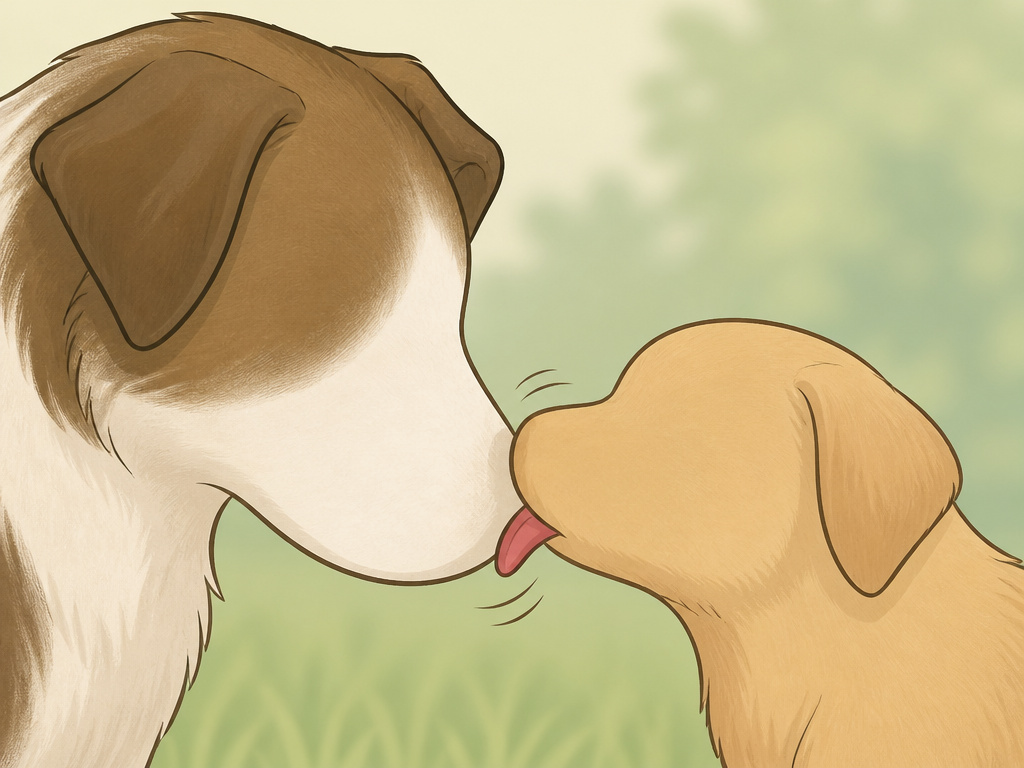
Dominance is real between dogs. It just doesn’t look like what the training books described.
APDTNZ defines it as a relationship within intraspecies social interactions, not a state of being or a personality trait. Dogs aren’t inherently dominant or submissive. Dominance shows up in a specific conflict, over a specific resource, and it’s context-dependent rather than fixed. One dog may come out ahead in one situation and not in another. It’s also almost never aggressive. Most of the time it’s conflict mitigation through small body gestures.
A submissive dog doesn’t cower and slink. It drops its head, sweeps a low, wide tail wag, and licks at the other dog’s muzzle. That muzzle lick met the criteria for a formal submission display in the daycare group.
Common mistake: Reading a still, stiff dog as stubborn or defiant. A dog that freezes has stopped offering behaviour, and that’s usually stress, not a challenge. Push a frozen dog and you get a snap with no warning in between.
If you want to read the signals accurately, dog body language is the place to start, and how dogs communicate with each other explains why so much of it happens in half-second glances. The guilty dog look is an example of the same misread: that head-down, ears-back expression is appeasement, not remorse.
What the Research Still Can’t Tell You
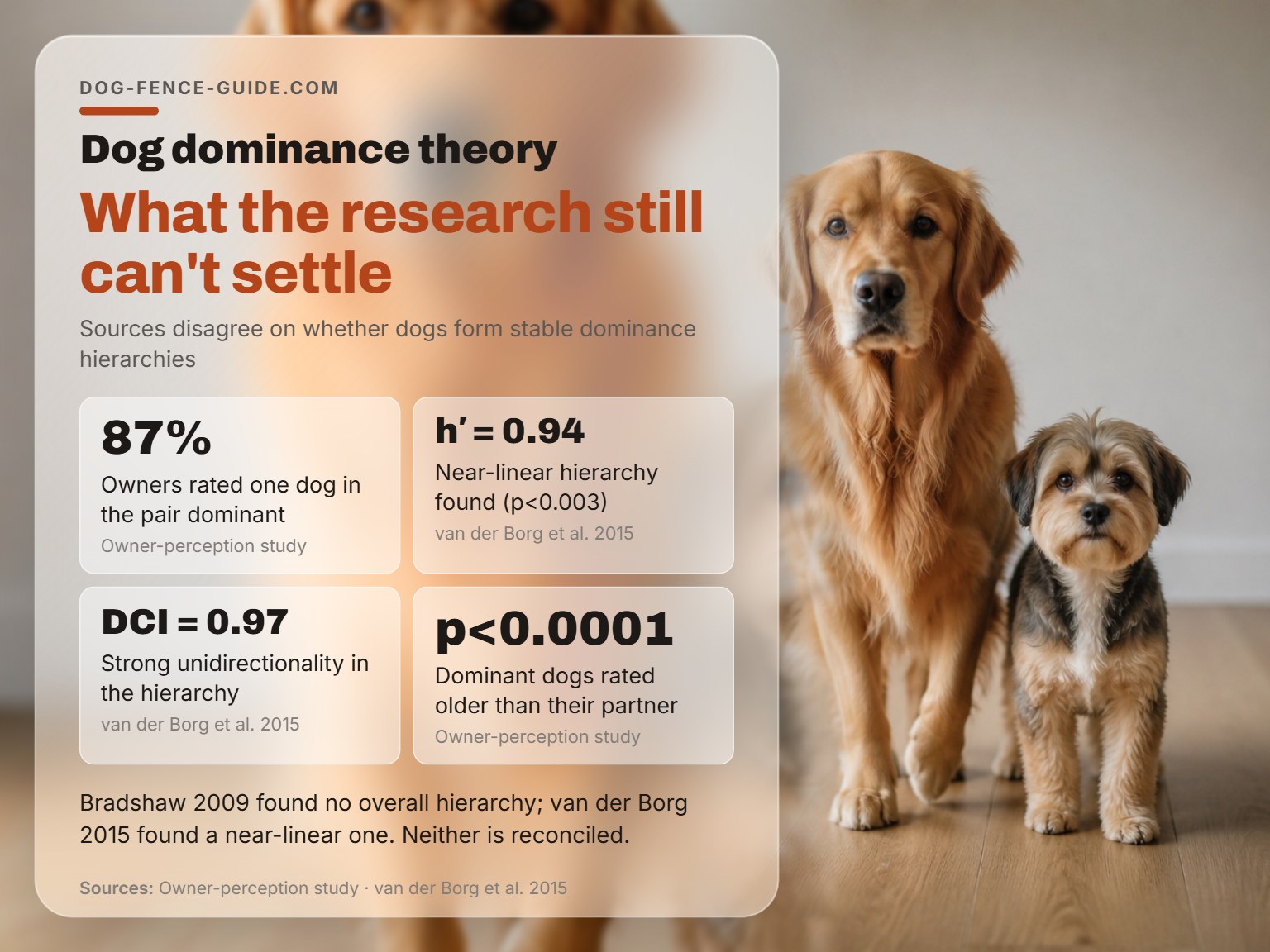
The literature has holes, and anyone quoting a single study is overselling.
ASU News points out that humans hold what amounts to super dominance over dogs, controlling resources down to when the dog can eliminate. Owners routinely misread that arrangement as a status contest. That’s a framing problem, and it’s a big part of why owner surveys and behavioural studies don’t line up.
The part nobody mentions: The owner-perception study treats rated dominance as a stable attribute of individual dogs, while APDTNZ insists dominance is a relationship rather than a trait. Both positions are published. Neither has been reconciled.
The owner-rated dominance ethological markers study found 87% of owners rated one dog in the pair dominant, with dominant dogs rated older (p<0.0001) and size and physical condition unrelated to the rating. In mixed-sex pairs, females were more frequently rated dominant. Whether that reflects real behaviour or a neutered-female artefact in the sample is genuinely unresolved, and the peer-reviewed dog dominance research doesn’t settle it either.
Breed doesn’t settle it. An Embark Breed + Health kit will tell you what your dog actually is, and it still won’t tell you whether that dog will guard a bowl from a toddler.
I’ll be straight about my own limits here. I’m not a behaviourist. I can tell you how containment fails and what an escape route looks like. I can’t diagnose fear-based aggression or separation anxiety, and if your dog is biting, that’s a veterinary behaviourist conversation, not a blog post.
Frequently Asked Questions
Is dominance theory true for dogs?
No. APDTNZ, Dogs Trust and VCA reject dominance-based training, and the wolf research it came from has been walked back, though some dog studies (van der Borg et al., the daycare study) do report detectable hierarchies. The dog studies disagree about whether group hierarchies exist at all, but none of them support rank-based training between a dog and a person.
Do I need to eat before my dog to show I’m in charge?
No. VCA states directly that advice to eat first, walk through doors first, occupy a higher position or pin a dog into submission ignores current research. Feeding your dog first or last changes nothing about your relationship. What changes behaviour is what you reward and what you stop rewarding.
Does my dog going through the door first mean anything?
Not where rank is concerned. VCA notes that doorways are man-made structures with little significance to a dog, and that neither dogs nor wolves use position or elevation to infer social meaning. Teaching a dog to wait at the door is still worth doing, because a dog that bolts through an open gate is a dog in the road.
Why does my dog growl when I take its toy?
Growling is information about how the dog feels right now, and it usually shows up when a valued resource is under threat. APDTNZ recommends focusing on the function of the behaviour and its antecedents rather than on rank. Punishing the growl removes the warning without removing the feeling, which is how you end up with a bite that came out of nowhere.
Can a dog be dominant over its owner?
APDTNZ states there’s no scientific evidence that dominance exists in interspecies relationships like the one between a dog and a human. What looks like a dog running the household is usually a dog that has been rewarded for the behaviour, or one that has learned the fastest route to a resource.
Is an alpha roll ever appropriate?
No professional body cited here recommends it. Dogs Trust lists holding a dog down among the methods to avoid, and VCA calls pinning a dog into submission unnecessary and sometimes cruel. It also carries a real bite risk, because you’re putting your hands on a dog that has already told you it’s uncomfortable.
Before You Hire a Trainer
One rule, and you can apply it on the first phone call. If a trainer mentions pack leadership, alpha status, or “calm, assertive energy” within the first ten minutes, end the call. That vocabulary is the tell, and it usually comes attached to a correction protocol you didn’t sign up for.
Here’s the concession, though. None of this means every behaviour problem is simple. A dog with genuine resource guarding, a bite history, or fear that generalises across the day needs a veterinary behaviourist and an assessment of the behaviour’s function, antecedents, and consequences, and reward-based training alone won’t cut it. The dominance story is wrong. The problem underneath it is still real.
Before you change anything at home, check three things:
- What the dog actually gets from the behaviour, in concrete terms. Attention, distance, food, the couch. Write it down.
- Where the rehearsal happens. If the dog practises the behaviour ten times a day, no training plan beats that arithmetic.
- Whether the environment is doing the work for you. Gates, sightlines, feeding locations, and a fence line you’ve walked slowly. The joints are where it fails, every time.
Fix those three and you’re already past most of what the alpha literature was trying to explain.
