
Do Dogs Feel Guilt? What the Research Actually Shows
This post contains affiliate links. As an Amazon Associate, we earn from qualifying purchases.
The answer to do dogs feel guilt is narrower than the headlines claim: three studies found the guilty look follows your scolding rather than your dog’s misdeed, and the researchers who ran them say the deeper question stays open.
Alexandra Horowitz wrote the most-quoted of those three papers, and she has spent years correcting how it gets cited. Her 2009 experiment measured whether people can spot guilt in a dog’s face. It never tested whether the dog feels anything.
What follows walks the three experiments in the order they were published, shows where they contradict each other, and then gets to the do dogs feel guilt question that matters at your own front door.
Key Takeaways
- The guilty look tracks scolding, not wrongdoing. Horowitz found dogs showed it more when owners scolded, whether or not the dog had done anything.
- The larger 2015 study found no effect at all from the dog’s own action or from whether the food was still visible, though Horowitz’s 2009 study had found the guilty look tracked scolding rather than the dog’s action.
- 74% of dog owners believe their dogs feel guilt, and almost 60% say the look makes them scold less. That second number is a training problem in the making.
- Nobody has tested whether dogs feel guilt. Horowitz says so about her own paper, and there are no brain-imaging studies on it either way.
- Punishing after the fact doesn’t teach the rule. It teaches your dog that your arrival is unpredictable.
The 2009 Experiment: 14 Dogs, One Treat, and a Very Misleading Headline
Fourteen dogs is a small study. It is also the one everyone quotes, so the details are worth getting straight.
In the 2009 protocol, an owner commanded a dog not to eat a treat, then left the room. Conditions varied whether the dog ate the treat and whether the owner was told the dog had eaten it. Observers then scored owner-identified guilty-look behaviors. Fourteen dogs completed the trials. No measure of the dog’s internal state was taken.
That last sentence is the one to hold onto. Horowitz was studying what people read into a dog’s face.
The behaviors scored are the ones you’d recognize instantly. Ears back and down. Head lowered. Eyes half-closed and sliding away from yours. Tail tucked between the legs. A low, cringing posture that makes the dog look smaller than it did ten minutes ago.
What moved those behaviors was scolding. Dogs showed the look more when owners scolded them than when owners stayed neutral, regardless of whether the dog had eaten the treat.
Then comes the result most summaries leave out. Dogs that had not misbehaved and were scolded anyway showed more guilt-associated behaviors than dogs that had misbehaved and were scolded. The most obedient dogs, wrongly accused, produced the strongest guilty looks of all.
Horowitz published the protocol and the behavioral coding in her disambiguating the guilty look study, and the coding sheet is worth a look before you quote the headline.
The question itself is old. A veterinary journal was publishing on whether mischievous dogs reveal guilt back in 1977, and the answer hasn’t gotten simpler since.
Do Dogs Feel Guilt, or Do They Read the Room?
Watch a dog greet an owner who is already angry and the sequence runs the same way every time. Ears flatten back against the skull. Head drops. Tail tucks until it presses against the belly. The whole body gets lower and smaller.
Those are signs of stress, and they’re the same signals a dog gives when the vacuum starts up.
Stanley Coren, writing in Psychology Today, puts it flatly: the ears-back, head-down, tail-tucked posture people read as guilt is a fear posture. The dog is trying to switch off something unpleasant it can already see coming.
The AKC says the same thing from the other direction. The behaviors people call guilty are also common signs of fear and stress in dogs.
| What you see | What it usually means | What to do |
|---|---|---|
| Ears flat, head low | Fear or appeasement | Lower your voice, stop advancing |
| Tail tucked to the belly | Stress response | Give space, don’t reach overhead |
| Eyes sliding away | Conflict signal | Turn sideways, skip the stare |
| Body lowered, paw raised | Trying to end the interaction | End it yourself, calmly |
So what is the dog actually reading? You. Your tone, your posture, how fast you come through the door. Dogs are unusually good at reading human emotions, which is exactly why the look is so convincing and so useless as evidence.
What most people get wrong: Assuming the look is about the past. It’s about the present, specifically the face you’re making right now.
The dog is doing what the horse did
The Scientific American write-up of this research draws a comparison to Clever Hans, the horse that appeared to do arithmetic by reading subtle cues from his owner. The dog at the door runs the same trick, minus the math. It has learned that a certain posture shortens an unpleasant moment, and it is very good at that.
The 2015 Replication: 96 Dogs, Four Conditions, and No Effect
The bigger study found nothing.
Lejla Ostojić and her colleagues tested 96 owner-dog pairs in Croatia. Each pair went through one of four conditions: the dog ate the food or didn’t, and the food was replaced or left visible.
Two exclusion rules tell you something about the design:
- Dogs younger than 6 months old were excluded.
- Dogs that had lived with their current owner for less than 3 months were excluded.
That second rule is the interesting one: dogs with their current owner for less than 3 months were excluded.
The results came out flat. Owners said their dog had eaten the food no more often than chance. Greeting behaviors weren’t affected by whether the dog had actually eaten anything, or by whether the evidence was still sitting there.
The authors concluded their findings don’t support the guilty look appearing without a negative reaction from the owner. They also flagged a confound: an unfamiliar experimenter was in the room, which may itself have triggered appeasement behavior. Their recommendation was an automated procedure with no human present.
You can read the methods and the statistics in the owner perception of dog guilt paper.
Where the Three Studies Disagree
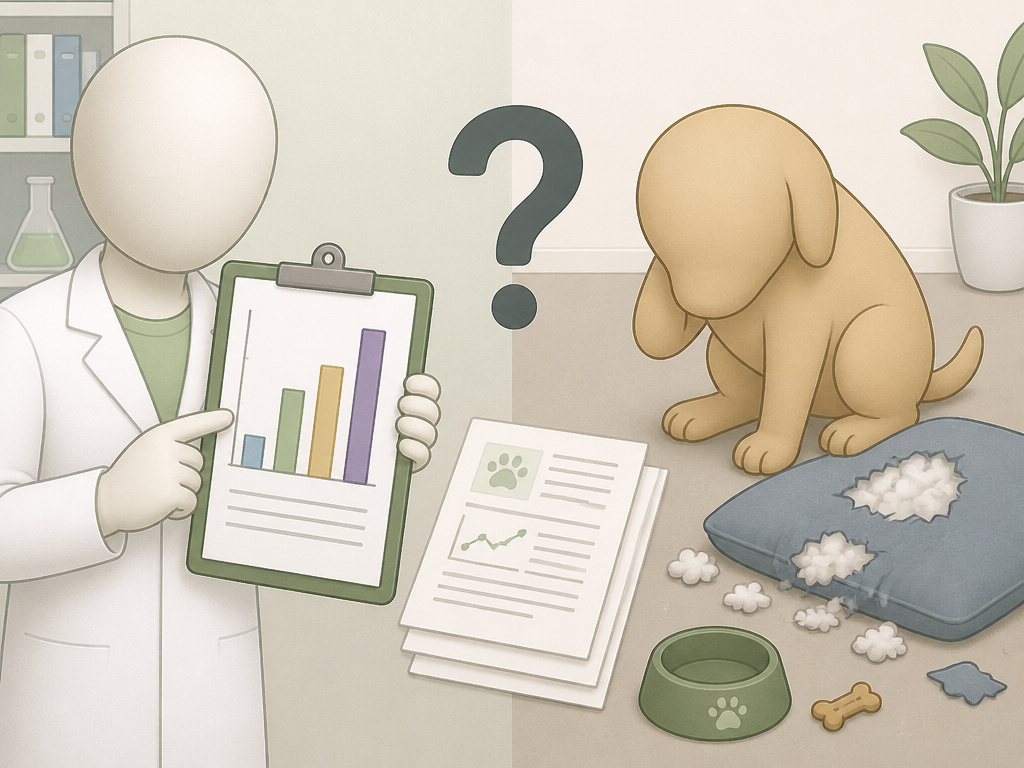
The three experiments do not line up, and the disagreements are worth naming out loud.
| Study | Dogs tested | Main finding |
|---|---|---|
| Horowitz 2009 | 14 | Guilty look tracked scolding, not the dog’s action |
| Hecht et al. 2012 | 64 | Eaten and not-eaten dogs looked the same |
| Ostojić et al. 2015 | 96 | No effect from the dog’s action or the food |
On whether owners can tell, Hecht’s group found almost 75% of owners correctly identified whether their dog had misbehaved, well above chance. Ostojić’s group found owners no better than chance. The gap may come down to what owners already knew going in.
On whether dogs feel guilt, the researchers themselves split. Horowitz says her study was “decidedly NOT about whether dogs feel guilt” and that the case isn’t closed. The AKC says the question remains open. Coren argues there’s no scientific evidence dogs feel guilt or shame, and that what we see is fear of punishment. Marc Bekoff argues the other way: there’s no reason dogs shouldn’t be able to feel guilt, as other mammals do.
Absence of evidence is not evidence of absence. Three studies showed the guilty look isn’t proof of guilt. Not one of them tested whether a dog can feel it.
What Owners Get Right and Wrong About Their Own Dog
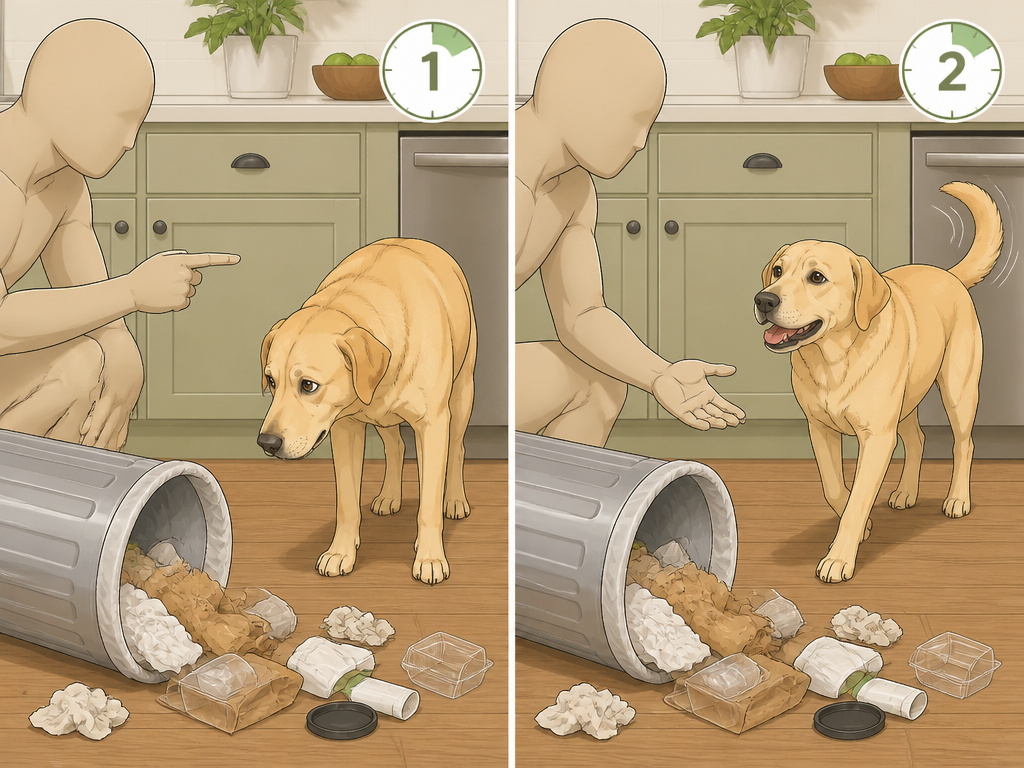
I ran a version of this in my own kitchen, with two dogs and a trash can I tipped over on purpose. I left everything in it. When I came back, the Lab mix who had done nothing at all gave me the full routine: head down, ears back, eyes sliding away. The other dog, who had actually been in the trash, trotted over wagging.
That’s the whole finding, in one kitchen.
The look arrived in the first second, before I’d even glanced at the can. That timing is the tell. A confession needs a memory of the act. A response to my face needs nothing but a face.
Hecht, Miklósi and Gácsi tested this with 64 dogs and a rule about food on a table being for humans. Dogs that ate were no more likely to look guilty than dogs that abstained. All of them showed fewer guilt behaviors when greeted than when scolded.
The behavioral assessment of dog guilt paper adds one wrinkle in the other direction. By the third greeting, only the dogs that had actually transgressed kept the behavior up.
Why 75% looked impressive and then didn’t
Almost three-quarters of owners in that study correctly said whether their dog had misbehaved. That reads like a real signal until you get to the next paragraph.
Some owners already knew their dog had eaten food before the rule was set. Remove those owners from the analysis and the accuracy collapses to chance. The owners weren’t reading their dogs. They were remembering.
That’s the trap in every “I can always tell” story, including mine.
What to Do Instead of Scolding a Dog That Looks Guilty
Three things work better than a lecture at the door: manage the room, reward what you want, and stop correcting after the fact.
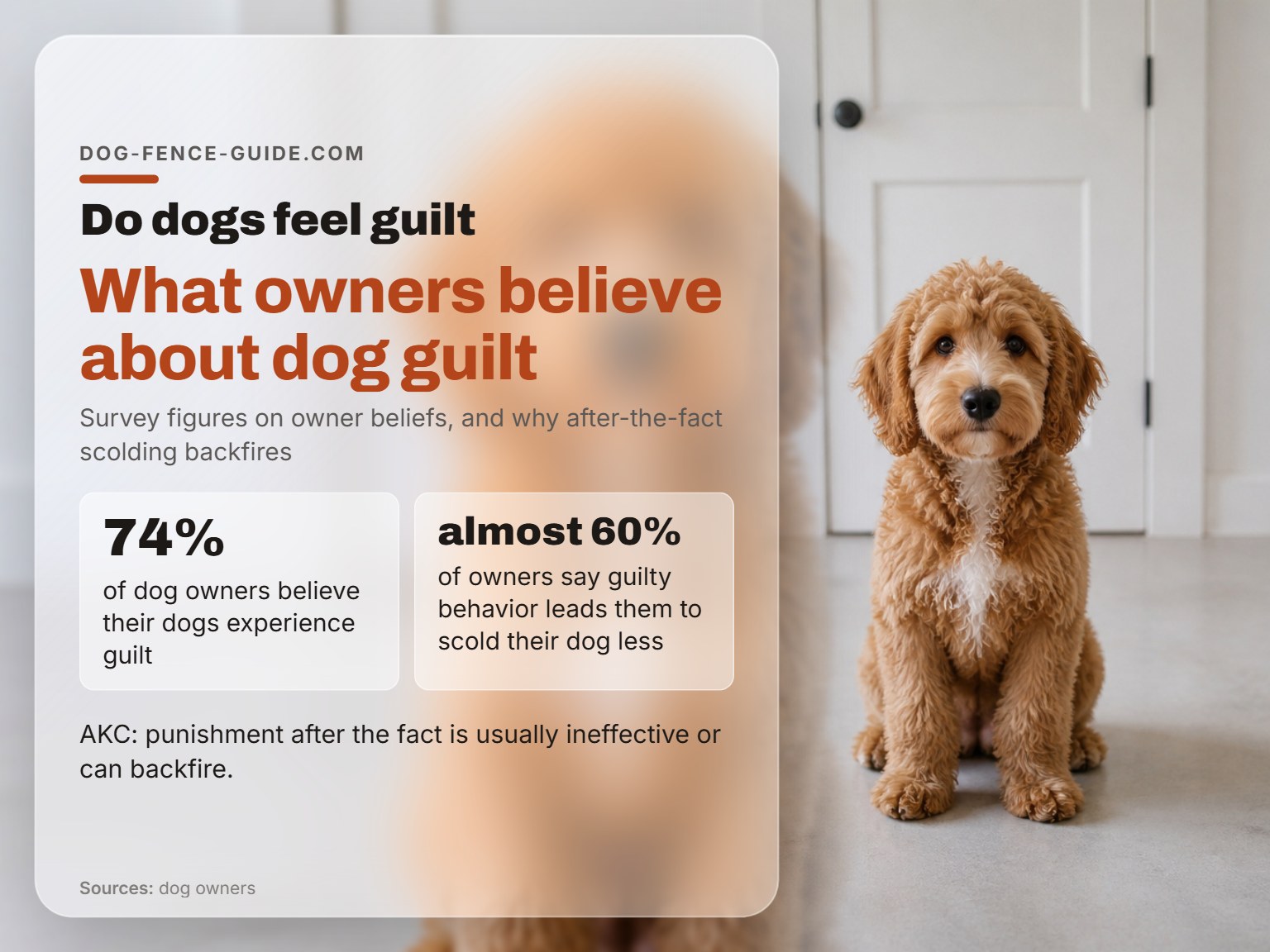
Start with the numbers. Seventy-four percent of dog owners believe their dogs experience guilt. Almost 60% say the guilty behavior leads them to scold the dog less.
That second number is the problem. A look that reduces scolding gets reinforced fast, whether or not the dog understands anything about the rule it broke.
The correction has to land during the behavior
The AKC’s position is blunt: because dogs are highly sensitive to human reactions, punishment delivered after the fact is usually ineffective or can backfire.
Owners ask me about their dog’s sense of time in almost every conversation about this, and the practical answer holds either way. The correction has to land while the behavior is happening. Hours later, it lands on your arrival instead.
Here’s what to do instead.
- Set the room so the rule can’t break. Crate, exercise pen, or a baby gate across the kitchen doorway. Skip this and you’re relying on a dog to resist a temptation you left out in the open.
- Leave something legal to destroy. Leave something legal to destroy, like a stuffed, frozen food toy, to keep your dog busy. Without it, the cushion is the only toy within reach.
- Reward the behavior while you’re watching. This is where positive reinforcement does its work. A dog that gets paid for lying on its bed doesn’t have to guess.
- Drop the after-the-fact correction. Your dog isn’t replaying the morning. The correction lands at the wrong moment and teaches the wrong lesson.
Common mistake: Coming home, finding the mess, and going to find the dog. Within two or three repetitions your dog learns that your arrival predicts something frightening, and the appeasement behavior gets stronger, not weaker.
What Would It Take to Know Whether Dogs Feel Guilt?
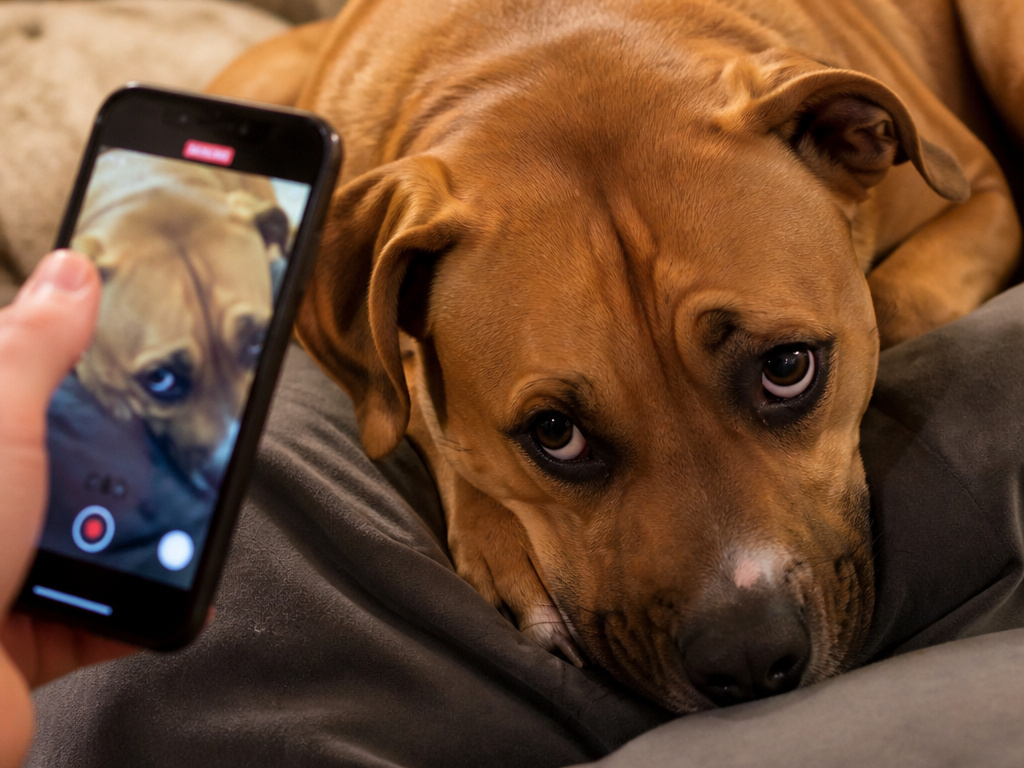
Nobody has scanned a dog’s brain for guilt. Not once.
Bekoff’s point in Psychology Today is that there are no studies showing dogs don’t feel or display guilt, and no neuroimaging work focused on guilt in dogs. The absence of evidence runs in both directions here.
Coren’s argument is different and worth taking seriously. He puts dog cognition at roughly the level of a two-and-a-half-year-old child, and notes that guilt and shame don’t show up in children until around age four. If that timeline holds, the machinery isn’t there.
That’s a real disagreement between two people who both read the literature, and it doesn’t resolve by picking the answer you find more comforting.
The canine cognition research keeps widening, and the honest position is that the question is open. The NSTA case study on guilty dogs shows how these experiments get taught, including the two YouTube clips it lists: a 2:18 clip and a 4:53 compilation.
I’ve stopped answering this one with a yes or a no. What I say now is that the look is real, you’re reading it accurately, and it’s telling you about your own face rather than about the cushion.
Before You Go
Here’s the threshold I’d draw. If your dog offers the guilty look before you’ve found anything, you’re watching a dog read your face. That’s worth changing something this week.
Three things to check in your own home before you decide your dog is confessing anything:
- Watch the timing. Does the look start before you’ve scanned the room? That’s a response to you, not to the evidence.
- Check what you left out. A tipped can, an open bin, a plate within reach. Management beats correction every time.
- Listen to your own voice. If you come through the door already braced for damage, your dog knows that before you’ve said a word.
None of this settles whether your dog feels anything. It might. The research hasn’t closed that door, and the people who ran the studies say so themselves.
What I’d skip: the dog-shaming photo, the sign around the neck, the stern lecture at the door. All three teach your dog to watch your face.
Frequently Asked Questions
Do dogs actually feel guilt?
Nobody has proven it either way. The three main experiments measured whether a dog’s body language reveals guilt, and found it tracks the owner’s reaction instead. Horowitz says directly that her 2009 study wasn’t about whether dogs feel guilt, and no brain-imaging study has looked at guilt in dogs.
Why does my dog look guilty when I haven’t even seen the mess yet?
Because the dog is reading you, not remembering the mess. Owners who walk in already expecting trouble get the ears-back, head-down greeting regardless of what the dog did. The look is a response to your posture, tone, and speed at the door.
Does scolding a dog after the fact work?
The AKC’s position is that it usually doesn’t, and can backfire. The dog doesn’t connect a correction hours later to something it did earlier. What it learns is that your arrival sometimes predicts something frightening.
Can owners really tell whether their dog misbehaved?
It depends on what they already knew. Hecht’s team found almost 75% of owners guessed correctly. Once researchers removed owners who already knew their dog had eaten before the rule was set, accuracy dropped to chance.
Is the guilty look a sign of stress?
It overlaps heavily with one. The AKC notes the behaviors people call guilty are also common signs of fear and stress, and Coren makes the same point about flattened ears, a lowered head, and a tucked tail.
Did the studies test whether dogs understand rules?
They tested whether dogs follow a rule and how they greet an owner afterward. The AKC notes dogs can learn household rules through consistent training, repetition, and positive reinforcement. Learning a rule and feeling bad about breaking it are separate questions.
