
What Supplements Help a Dog’s Coat: Start With the Bowl
This post contains affiliate links. As an Amazon Associate, we earn from qualifying purchases.
What supplements help a dog’s coat: omega-3 fatty acids (EPA and DHA), zinc, and linoleic acid carry the strongest study support, and a 23-study review found omega-3 benefit in canine haircoat disorder. Fix the diet first, since VCA puts adult dog food at 25 to 30 percent protein on a dry matter basis.
Dry matter basis is the number nobody prints on the front of the bag, and it’s the one that decides whether a coat problem is nutritional at all. Strip the water out of kibble and canned food and the two finally compare. Do that math once and a good chunk of the what supplements help a dog’s coat aisle starts looking optional.
What follows is the short list of ingredients with real trials behind them, the two places those trials flatly disagree, and the hardware check I run before I’ll discuss a single capsule.
Key Takeaways
- Omega-3 has the deepest evidence base. A systematic review of 23 studies found benefit in canine haircoat disorder, allergic dermatitis, and several other conditions.
- The bowl comes first. VCA puts adult dog diets at 25 to 30 percent protein and 10 to 15 percent fat on a dry matter basis.
- Zinc and linoleic acid have trial support, but the mineral strategy is unsettled. One study added zinc; another changed the copper-to-manganese ratio instead.
- Stop and the coat slides back. In one 90-day trial, clinical scores returned to baseline by day 180.
- Ask your vet before adding anything, and look for the NASC seal on the bottle.
Why 25% of Vet Visits Start With Skin and Hair
As many as 25% of veterinary visits involve skin and haircoat concerns, according to VCA Animal Hospitals. That single number explains why the supplement shelf keeps growing.
A dog’s skin barrier depends on protein and fat arriving together. Inadequate protein or fat produces hair loss, faded coat color, and a dry, brittle haircoat. VCA places adult maintenance at 25 to 30 percent protein and 10 to 15 percent fat on a dry matter basis.
VCA lists three routes to a deficiency: an unbalanced homemade diet fed long term, a poor-quality commercial dry food, and a diet supplemented inappropriately. That last one catches people. Over-supplementing sits on the deficiency list right next to under-feeding.
Here’s what a shortfall looks like on the dog:
- Hair loss in patches, starting along the flanks and back.
- Faded coat color, most obvious on black dogs that start looking rusty in sunlight.
- A dry, brittle coat that snaps instead of bending when you roll a tuft between your fingers.
- Slow regrowth after a groom, with bare patches that linger for months.
VCA’s targets are worth writing on the inside of a cabinet door. Adult dogs need 25 to 30 percent protein and 10 to 15 percent fat on a dry matter basis. Puppies need 30 to 35 percent protein and 15 to 30 percent fat.
If the bag you’re feeding doesn’t clear those bars, the what supplements help a dog’s coat fix is food for coat health, not a capsule. A supplement cannot rescue a diet that’s short on the basics.
I’ve watched people chase a coat problem for eight months while feeding a food that lists “meat” third on the label. Reading the guaranteed analysis takes ten minutes.
What Does Omega-3 Do That Makes It the Default Pick?
Omega-3 fatty acids land in cell membranes, and the red blood cell readings in the trials track that rise. That’s the mechanism sitting behind the coat results.
The clearest coat-specific data comes from a randomized, double-blind, placebo-controlled trial in dogs with poor quality coats. Dogs received EPA and DHA daily for 90 days. Clinical scores dropped significantly over the course of the trial.
That trial is the Agepi omega-3 placebo-controlled canine study, and it measured fatty acids in the erythrocyte membrane, the hair shaft, and the skin surface rather than relying on a handler’s opinion.
The wider picture agrees. A broader EPA DHA supplementation veterinary systematic review covering 23 studies, 20 in dogs and 3 in cats, found benefit in canine allergic dermatitis, haircoat disorder, keratoconjunctivitis sicca, valvular disease, and osteoarthritis. Keratoconjunctivitis sicca is the clinical name for dry eye, one of several conditions the review covered.
Dosing is where the guessing happens. The spread across omega-3 for dogs products is wide enough that the label matters more than the brand name on the front.
Before you start: Fish oil is calorie-dense, so a dog on a weight-management diet needs the dose subtracted from the bowl rather than added on top. And don’t run a course then quit cold.
A supplement tops up a diet that already works. Pour it into a bowl that’s short on protein and you’re paying for expensive urine.
Zinc and Linoleic Acid: Real Evidence, Unsettled Numbers
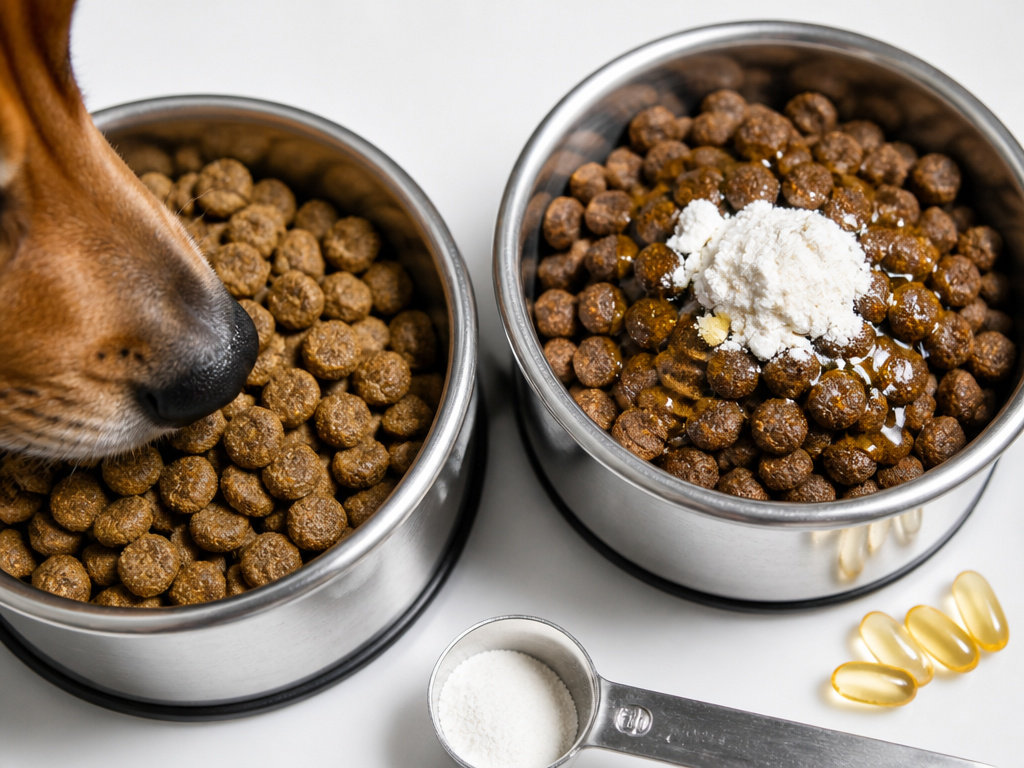
Zinc and linoleic acid were tested together in a nine-week diet study, and both moved coat measures in the right direction.
Researchers tested zinc and linoleic acid in a complete and balanced diet. The combination group showed better coat gloss and better coat scale against control. Zinc alone or combined also reduced transepidermal water loss.
Transepidermal water loss is moisture escaping through the skin. Lower is better.
The senior-dog work went at the problem from a different angle. The PMC trace mineral senior dog haircoat study compared amino acid-complexed minerals and a lysine and glutamic acid version against an inorganic control in senior dogs. Hair length was greater on both supplemented groups than on the control.
The lysine group also shed less hair at three months, and the amino acid-complexed group logged more active time per day.
The Mineral Numbers, Side by Side
The two supplemented diets in that study didn’t add minerals so much as rebalance them.
| Mineral (dry matter) | Control diet | Supplemented diet |
|---|---|---|
Now the part that matters for shopping. The zinc study added zinc to a complete diet and got a result. The senior-dog study lowered copper and raised manganese, and also got a result. Two different mineral strategies, both claiming coat improvement, neither one replicated against the other.
This is why skin and coat supplements that stack extra zinc on top of an already complete diet are a gamble. You’re guessing at which lever the researchers were actually pulling.
The part nobody mentions: VCA lists nutrient excesses and inappropriate supplementation as causes of deficiency, not just shortages. Stacking a zinc capsule on a complete food is exactly how that happens.
Fish Oil vs Plant Oils: Where the Studies Split
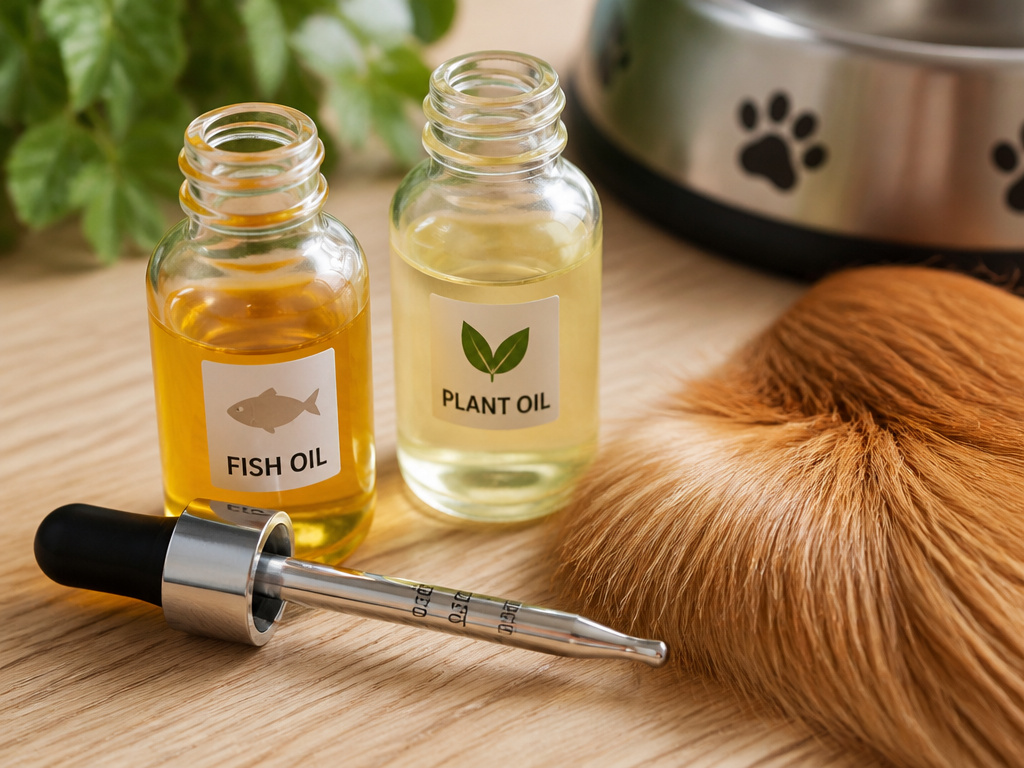
The plant-oil camp and the fish-oil camp both have published trials behind them. Neither has produced a clean knockout.
The camelina flaxseed canola oil dog coat trial fed oil to healthy adult dogs. Softness, shine, uniformity, color intensity, and follicle density all improved from baseline in every group. Transepidermal water loss and the inflammatory and oxidative markers did not differ between the three oils.
An older, smaller study on flaxseed supplementation hair coat condition scores found haircoat gains in both the flax and sunflower groups. Those gains were not sustained.
| Oil source | What the trial measured | Result |
|---|---|---|
| Fish oil (EPA and DHA) | Clinical coat score | Significant improvement |
| Camelina, canola, flaxseed | Water loss and inflammatory markers | No difference between the oils |
| Flaxseed and sunflower seed | Serum fatty acids and coat score | Improved, not sustained |
Read the middle column carefully, because that’s where the argument lives. The fish-oil trial scored a clinical coat. The plant-oil trial measured water loss and blood markers. Different endpoints, so nobody has actually put the two head to head.
Short version: if the dog is itchy and inflamed, marine oil has the clinical-score data. If the dog is healthy and you want shine, the plant-oil trial showed improvement from baseline in all three oils.
If you’ve settled on a liquid, the practical question is which dog coat oil actually delivers the EPA and DHA printed on the label.
When Plant Oils Make More Sense
Camelina, canola, and flaxseed oils cost less and store longer than a bottle of marine oil that goes rancid in a warm cupboard. For a healthy dog with a dull coat and no itching, the Frontiers data supports trying one before you spend on fish oil.
The Coat Problem That Isn’t in the Bowl
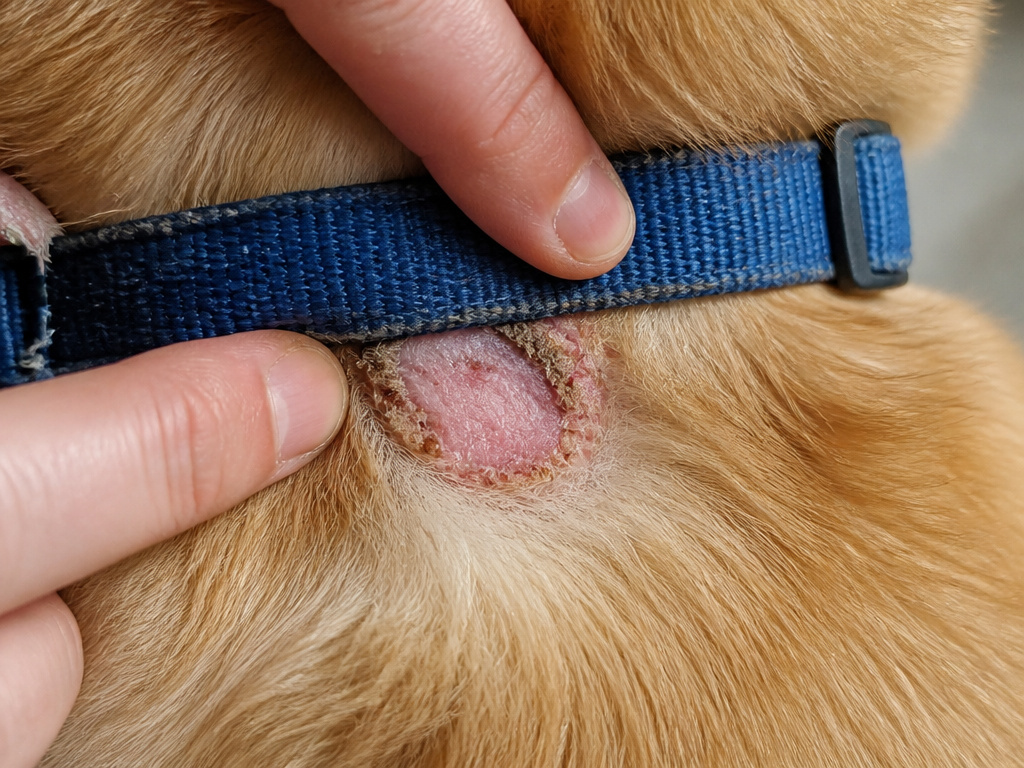
A dog comes in with a bald ring around the neck and a crusty patch sitting right under the D-ring. The owner has been buying a monthly salmon-oil chew since spring.
I pulled the dog off the chew and put two fingers under the collar. They didn’t fit. The nylon strap was buckled two notches tighter than it should have been, and it had been sanding the same half inch of neck for months. We loosened it, switched to a rolled leather collar, and the “supplement problem” cleared in about three weeks.
Measure first, decide second. Here’s the check I run now, before I’ll talk about fatty acids:
- Slide two fingers under the collar at the throat. If they won’t go, the collar is too tight, full stop.
- Look for a wear line in the coat where the strap sits, especially under the D-ring and the buckle.
- Check the harness straps the same way, plus the spot where the tags hang.
- Roll the collar over and feel the inside edge for stiffness or a curled seam.
I won’t recommend an omega-3 for a coat complaint until someone has run that check. Half the time the supplement was doing nothing because the dog was being sanded by its own hardware, and no capsule fixes a strap that’s too tight.
Grooming belongs in the same conversation. I bathe most dogs every six to eight weeks, and I’ve never had a vet blame a coat problem on under-bathing. Double coats get pushed to the eight-week end or longer. My oily terrier mix starts feeling tacky under the hand around week five, so she gets the shorter end.
Drying matters more than people think. A damp undercoat against warm skin is a hot spot waiting to happen. I use a high-velocity dryer, the kind groomers use, and part the coat in rows with my fingers to check the skin is dry rather than just the top layer. One spring bath on a thick-coated shepherd mix, air-dried on the porch, produced a hot spot the size of a half-dollar three days later. Nobody blamed the drying. Everybody blamed the shampoo.
Before you price out coat supplements, run the collar check. It’s free and it’s faster.
How Long Until You See a Change, and What Happens When You Stop
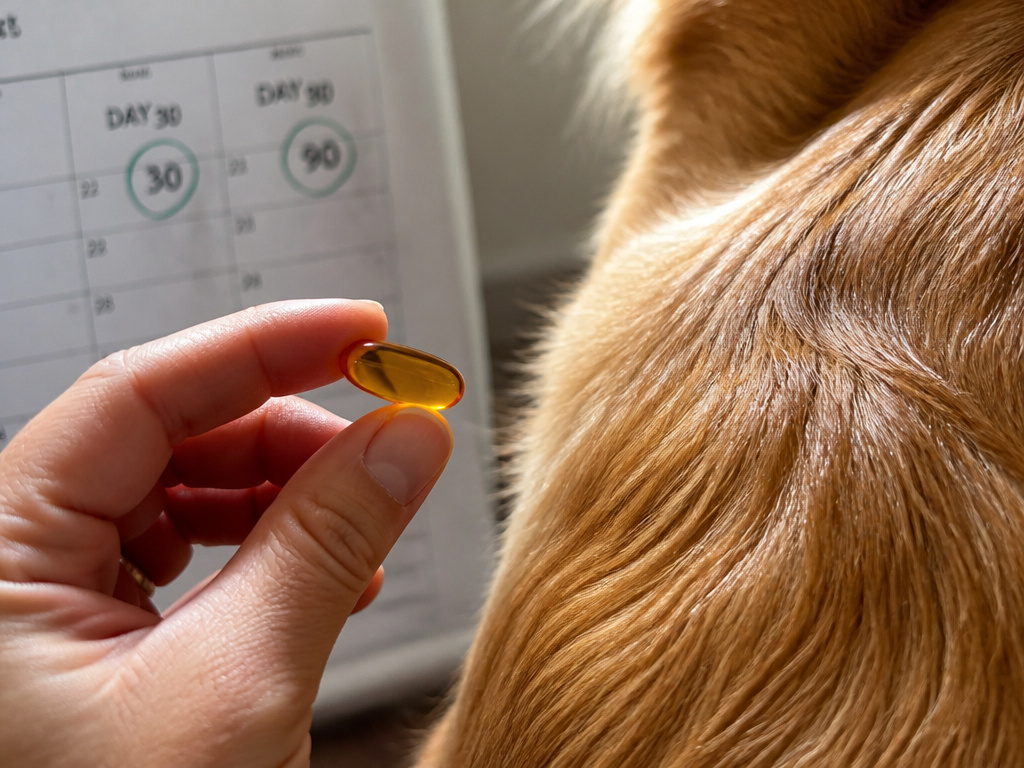
Ninety days is the number that keeps turning up in these trials.
The Agepi course, the senior trace mineral study, and the zinc and linoleic acid work all ran multi-month phases, and the Frontiers oil trial ran longer than any of them.
That day-30 reading is the one to hold onto. The fatty acids get into the blood before the coat changes, so a supplement that’s “doing nothing” at three weeks may simply be early.
Easy to miss: the flax and sunflower study found serum fatty acid levels peaked before the skin score did. Blood chemistry moves first, and the coat follows.
The Withdrawal Problem
Here’s where the sources genuinely disagree, and I’d rather show you the split than pick a side for you.
The Agepi trial reports clinical benefit persisting after the last capsule. The flax and sunflower study reports haircoat improvement not sustained after the course ended. Both describe the same window as the opposite outcome.
The one thing the research notes are clear on: don’t stop for more than a month and expect the work to hold. The senior-dog trial is the only one in this set that measured shedding directly, which is why supplements for shedding get oversold on the back of a single 0.38 g result.
Which Supplements Are Worth Buying, and Which to Skip
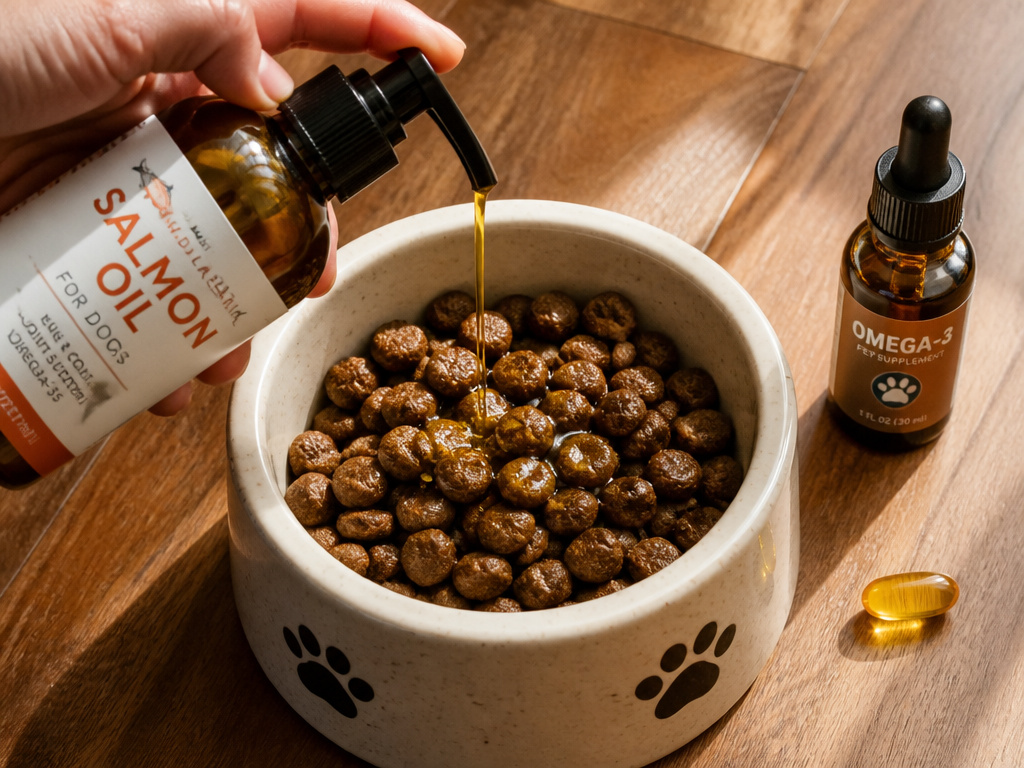
Buy one omega-3 product and leave the rest of the shelf alone.
Nordic Naturals Omega-3 Pet is the one I reach for when a vet has already said yes, because the liquid and the soft gels both list EPA and DHA separately instead of hiding behind a “fish oil” line. Nutramax Welactin is the other name I trust, and it’s the one a vet will recognize without looking it up.
Zesty Paws Omega Bites solve a different problem: the dog that won’t take a capsule. Grizzly Salmon Oil comes in a pump bottle you pour over the food, which is the easiest route if your dog already eats wet food.
Whatever you pick, look for the NASC seal. That’s the National Animal Supplement Council mark, and it means the product was made under a quality program with adverse event reporting. Supplements are loosely regulated, and that seal is the closest thing to a guarantee on the bottle.
What I’d Skip
- Calming chews sold as a fix for escape behavior. That’s a training problem wearing a supplement label.
- Mega-dose zinc on top of a complete food. VCA lists nutrient excesses as a deficiency cause.
- Anything without a third-party quality seal, no matter how good the review page looks.
Biotin is the one people ask about most. Nothing in the trial set behind this article tested it, so treat biotin for dogs as unproven for coat quality until someone shows you the study. Collagen is in the same spot.
Frequently Asked Questions
How long does it take for a coat supplement to work?
The trials behind this article ran 90 days in three cases and 16 weeks in another. The fish-oil study didn’t show a significant clinical change until day 60. Plan on three months before you judge anything, and take a photo on day one so you have a baseline to compare against.
Is fish oil or flaxseed better for a dog’s coat?
The evidence splits by what was measured. Fish oil has clinical coat-score data from a placebo-controlled trial. The camelina, canola, and flaxseed trial found coat improvements from baseline in all three oils but no difference between them on water loss or inflammatory markers. For a dog with itchy, inflamed skin, marine oil has the stronger case.
Can I just cook for my dog instead of buying a supplement?
Long-term unbalanced homemade diet is one of the routes to a nutritional deficiency that VCA lists. Home cooking works when the recipe is balanced by someone who knows what they’re doing. When it isn’t, the coat is usually the first place the shortfall shows up.
Do supplements help a dog that sheds too much?
One trial measured it directly. Senior dogs on amino acid-complexed trace minerals shed 0.38 g less hair at three months than the control group. That’s a real result from a real study, and it’s far narrower than the marketing around shedding products suggests.
Should I ask my vet before starting anything?
Yes. VCA’s own guidance is to ask about any supplement you’re considering, and it’s the cheapest advice here. Bring the bottle, not the website.
What about puppies?
Puppies need more of everything. VCA puts puppy diets at 30 to 35 percent protein and 15 to 30 percent fat on a dry matter basis, against 25 to 30 percent protein and 10 to 15 percent fat for adults. Get the food right before you consider a supplement.
Before You Buy
Three things, in this order.
First, read the guaranteed analysis and convert it to a dry matter basis. If the food clears 25 to 30 percent protein and 10 to 15 percent fat, the bowl is probably fine and the problem is somewhere else.
Second, run two fingers under the collar and look for a wear line. Check the harness straps too, and the spot where the tags hang.
Third, if the coat hasn’t changed by day 90 on a properly dosed omega-3, stop buying and get the skin looked at. That’s the threshold I use. Ninety days is long enough for the trials to show a difference, so it’s long enough for you.
One concession: none of this applies to a dog with an active skin infection, a thyroid problem, or a food allergy. Those need a diagnosis, and a bottle won’t touch them.
And if I had to pick one place to spend the money, it would be the food and a collar that fits. I’d rather see that than a third supplement.
