
How to Groom a Puppy for the First Time: Step-by-Step
This post contains affiliate links. As an Amazon Associate, we earn from qualifying purchases.
To groom a puppy for the first time, start handling at home the day they arrive, keep every session under 5 minutes, and book a professional groomer by 12 to 14 weeks of age if boosters are current. Puppies accept new handling most easily before four months, so the calendar matters more than the tools.
That four-month line is why the vaccine schedule is the wrong thing to plan around. PetMD notes that a puppy’s capacity to build positive associations drops dramatically after four months, so a puppy who meets clippers at nine weeks has an easier road than one who meets them at five months. That is why how to groom a puppy for the first time matters so much.
What follows is the order that works: handling first, brushing second, bathing only when needed, and ears and nails last, because those are the two places a first-timer can do real damage.
Key Takeaways
- Book the first professional groom by 12 to 14 weeks if boosters are current. A groomer quoted by Adopt a Pet puts it near 16 weeks, before the final shots are complete.
- Cap handling sessions under 5 minutes at first. Guide Dogs for the Blind allows only a couple of minutes per session, scaling to 10 as the pup matures.
- Bathe every 6 to 8 weeks or less. Shampooing dries the coat and skin and strips topical flea and tick products.
- Skip scissors entirely unless you’re a professional. PetMD calls home scissor work extremely dangerous.
- Ear cleaning splits the sources. Canine Academy says weekly; Guide Dogs says only when you smell something or see debris.
When Should a Puppy First See a Professional Groomer?
The two most-cited answers are 12 to 14 weeks and roughly 16 weeks, and both come from people who handle dogs for a living.
A puppy’s first professional grooming appointment is best scheduled between 12 and 14 weeks of age, provided booster vaccinations are current. Groomers screen for rabies, DHPP, and kennel cough documentation. Waiting until the full vaccine series is complete pushes the visit toward 16 weeks, and the socialization window narrows in the meantime.
PetMD, which is veterinarian-authored and editorially reviewed, says to get the puppy in by 12 to 14 weeks if boosters are up to date. Adopt a Pet quotes Los Angeles groomer Jess Rona recommending the first visit before the final vaccinations are complete, usually around 16 weeks. Both are pointing at the same window from opposite sides.
Here’s where the sources actually split:
| Question | Position A | Position B |
|---|---|---|
| First professional groom | PetMD: 12 to 14 weeks, boosters current | Adopt a Pet: around 16 weeks, before final shots |
| Handling session length | PetMD: under 5 minutes, several times daily | Guide Dogs: a couple of minutes, up to 10 later |
| Bathing frequency | Guide Dogs: every 6 to 8 weeks or less | Canine Academy: every two months is plenty |
| Ear cleaning | Canine Academy: once a week | Guide Dogs: only when smell or debris appears |
The practical read: the exact week matters less than the direction of travel.
Worth knowing before you start: A full-service appointment typically runs three to four hours, per PetMD.
Ask the groomer two things before you book. Do they require rabies, DHPP, and kennel cough proof, which PetMD treats as a sign the business is invested in dog welfare? And can they show you where dogs are kept between appointments?
The 5-Minute Ceiling That Decides Whether Grooming Sticks
Five minutes is the number PetMD gives for a handling session, run several times a day. Guide Dogs for the Blind is stricter, capping sessions at a couple of minutes and extending toward 10 only as the puppy matures in small increments.
The reason for the ceiling is flooding. A young puppy has a limited budget for new sensation before the brain stops filing it as information and starts filing it as threat. The AKC’s guidance on how to groom a puppy for the first time is to work in short sessions specifically so you don’t overwhelm or flood a puppy.
I judged a grooming tool after one afternoon once and called it a winner.
- Let the puppy sniff the brush, then stroke twice down the back. Stopping after a few strokes feels silly, and that’s the point. The AKC’s line is that a few brush strokes are enough.
- Put a lickable treat down before the brush touches fur. Plain yogurt, goat’s milk, or canned puppy food on a spoon works. Skip it and you get a puppy who chews the brush instead of tolerating it.
- End while the tail is still going. Pushing for one more pass teaches the puppy that the good part always ends badly.
- Time it.
I won’t run a first brushing past the point where the puppy is still leaning into the brush. The second they pull away, we’re done, even if the session was very short. You can always come back after lunch.
Start With Handling, Not Tools
Handling is the foundation everything else sits on, and it costs nothing. PetMD’s instruction is to teach a puppy to accept handling of the nose, ears, belly, and feet.
Timing matters as much as method.
The Four Spots to Touch Every Day
- Nose and muzzle. Run a finger along the top of the snout, then lift the lip to look at teeth. Guide Dogs for the Blind builds this into a daily exam.
- Ears. Lift the flap and look inside. Don’t clean yet, just look.
- Belly. Hand flat, two seconds, treat.
- Feet. Each paw, one at a time, press the pad gently. This is the single most valuable habit you’ll build.
Guide Dogs for the Blind runs a longer version of the same list: examine the ears, run hands over the face, lift the lips, check the coat for matting, and only then run a brush through if the puppy is still calm.
Fake Baths Before Real Baths
Canine Academy recommends starting with the empty tub, then adding the sound of running water and a little splashing, with treats the whole way. A bath mat in the bottom stops the scrambling.
The AKC goes further and suggests playtimes in the bathtub, grooming tubs, and on grooming tables, with favorite treats and toys along for the ride. If you’re building a permanent spot for this, an at-home grooming station setup with a non-slip surface pays for itself in the first month.
Thinking about preparing your dog for grooming as a gradual project rather than a single appointment changes the whole tone of it.
Brushing: A Few Strokes Beat a Full Session
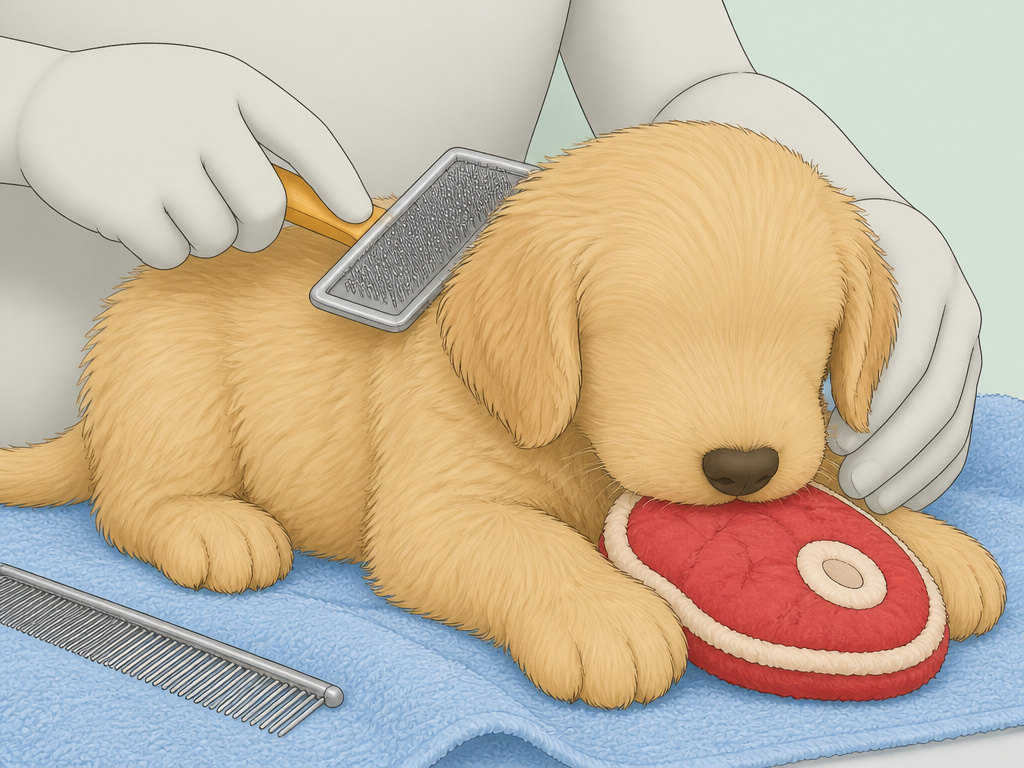
Every coat-care chart says brush weekly. For a puppy, that number is the wrong target entirely.
Canine Academy’s frequency guidance is aimed at adult dogs: at least once a week for all coats, daily for long-coated dogs. The AKC’s puppy guidance is about duration, not frequency. A few brush strokes are enough per session.
Both are right, and they’re answering different questions. Frequency keeps the puppy coat free of mats over months. When you compare a how to groom a puppy for the first time, session length keeps the puppy from deciding the brush is an enemy in the first week.
Most puppy brushes are built for adult coat density. For a first brush, a slicker with fine, bent wires does the work in a couple of passes. For a first brush, a slicker with fine, bent wires does the work in a couple of passes.
What to expect in the first month:
- Puppies try to chew the brush. Canine Academy suggests a stuffed food toy to keep the mouth busy during early sessions.
- Long-coated puppies will mat behind the ears and under the collar first.
- Don’t pull at it with a brush; work it loose with your fingers first.
If you’re starting from zero on tools, a grooming kit for beginners usually bundles a slicker, a metal comb, and a nail trimmer, which covers everything except shampoo.
A grooming routine is like a pipe run. You don’t judge it by the strongest joint, you judge it by the one that leaks, and on a puppy the leak is always the spot you skipped.
Weekly Bathing Is the Most Common Grooming Mistake
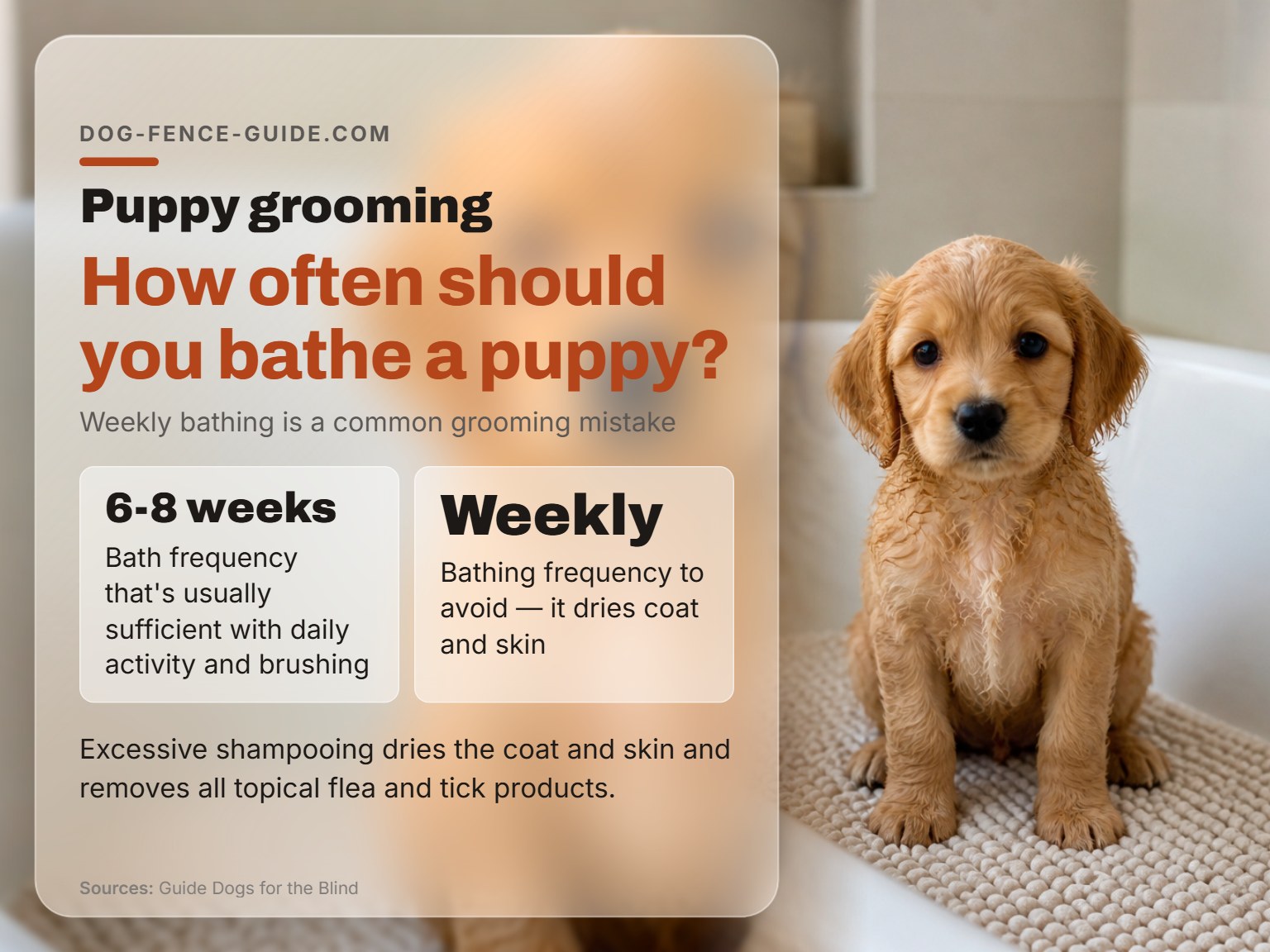
The Guide Dogs for the Blind manual states it plainly: do not bathe the puppy weekly. A bath every 6 to 8 weeks or less is usually sufficient with normal daily activity and frequent brushing. Canine Academy lands in the same place, calling a bath every two months plenty unless the puppy is genuinely dirty or smelly.
The mechanism is straightforward. Shampoo lifts oils off the coat and skin, and a puppy’s skin doesn’t replace them fast enough to keep up with a weekly schedule. Guide Dogs notes that excessive shampooing dries the coat and skin and removes all topical flea and tick products.
Guide Dogs frames bathing as a fallback: necessary only when wiping the puppy down with a wet cloth isn’t enough. PetMD lists bathing among the normal home procedures owners are welcome to handle. Same act, different default.
What goes wrong, and why:
| What you see | Likely cause | Fix |
|---|---|---|
| Flaking, dull coat | Bathing more often than every two months | Stretch to 6 to 8 weeks, brush in between |
| Scratching right after a bath | Shampoo residue left in the coat | Rinse again, all the way to clear water |
| Flea protection stops working | Shampoo stripped the topical product | Reapply per the label, bathe less often |
| Greasy patch along the back | Human shampoo | Switch to a mild puppy formula |
Use a mild puppy shampoo. Guide Dogs singles out aloe and oatmeal formulas as soothing, with a light scent that won’t irritate skin. Use a gentle dog shampoo, and a gentle puppy shampoo is the only category worth buying here. Human shampoo is too harsh for a dog’s skin and coat, per Canine Academy.
Two more rules from the Guide Dogs manual. Rinse thoroughly to cut skin irritation risk, and don’t use any shampoo containing flea control without checking with your vet first.
Common mistake: Rinsing until the water runs clear and then stopping. Run your hand down the leg and rinse that section again. Residue collects in the armpits and groin, and that’s where the itching starts, usually the next day.
The full bathing a dog at home routine is worth reading once before your first attempt, mostly for the drying part.
Ears and Nails: Where First-Timers Do Real Damage
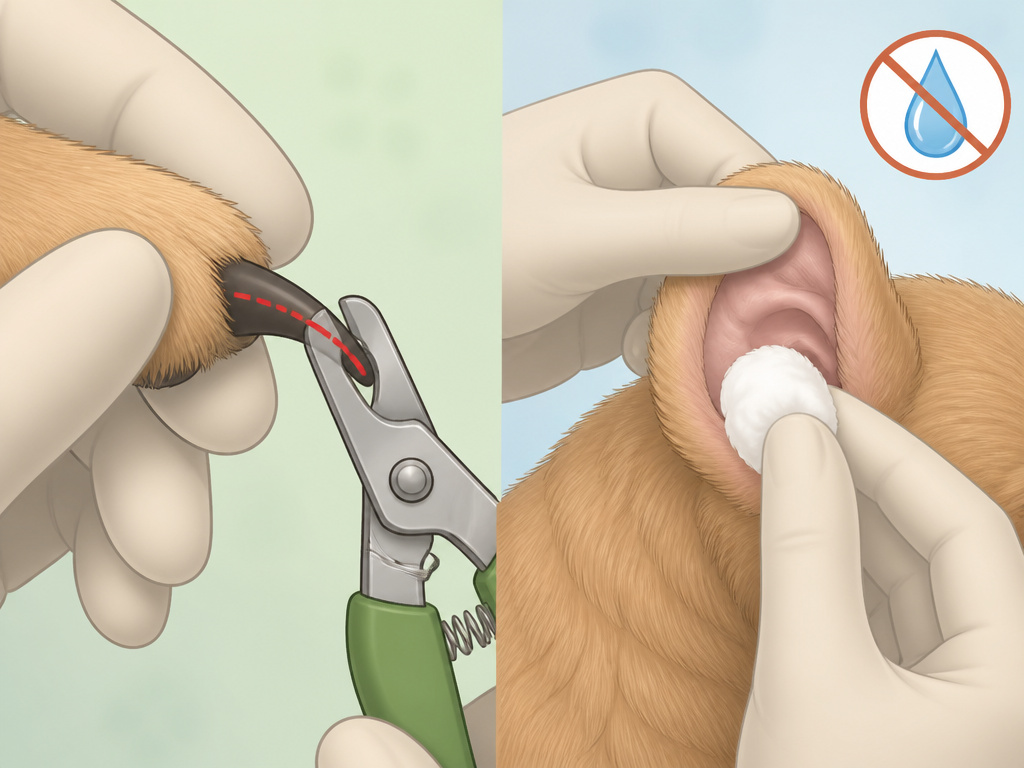
The puppy is on the table, the clippers are in your hand, the nail is dark and thick, and you cannot see where the quick starts. That’s the moment most first-timers get it wrong.
Before you start: A dog’s nail has a blood vessel running through it. Cut too close and it bleeds and hurts, and the puppy learns that hands on feet mean pain. That reaction can outlast the nail by months.
Guide Dogs for the Blind is blunt about this: if you don’t have experience clipping a dog’s nails, don’t attempt it yourself. Ask a vet, a technician, or an experienced groomer. The AKC assumes owners will trim and offers tool guidance, including small-dog or cat clippers for tiny breeds. Those two positions don’t reconcile, so pick the one that matches your confidence level.
PetMD notes a nail trim takes 10 to 15 minutes for a well-behaved dog, and longer for a dog anxious about having feet handled. Budget the time honestly.
Ear Cleaning: Two Methods, One Rule
Guide Dogs describes the flush method: hold the ear open, fill the canal liberally with cleaning solution, massage at the base, let the puppy shake out the excess, then wipe the outer ear with a clean cotton ball or soft cloth. Repeat if colored debris shows up on the cotton.
Canine Academy describes the wipe method: soak gauze, tissue, or a cotton ball with solution and gently wipe the inside surface, going only as far down as you can easily reach.
Both end the same way, with a treat and a calm voice. Canine Academy adds a rule worth keeping: don’t use water in the ear, because it leaves the canal moist and moisture leads to infection. Ear cleaning solution leaves the ear dry.
The sniff test comes from Guide Dogs. If the puppy shakes their head or scratches near the collar, smell the ear. A clean ear smells like dog, not unpleasant. Anything sour, waxy, or foul, plus redness or discharge, means a vet call.
Here’s the honest version on frequency: Canine Academy says clean once a week and after every swim day. Guide Dogs does a brief ear exam during daily handling and cleans when symptoms appear. Weekly is a reasonable default for a floppy-eared puppy; the symptom-based approach is what you fall back to once the ears are clearly healthy.
What If Your Puppy Still Fights the Brush?
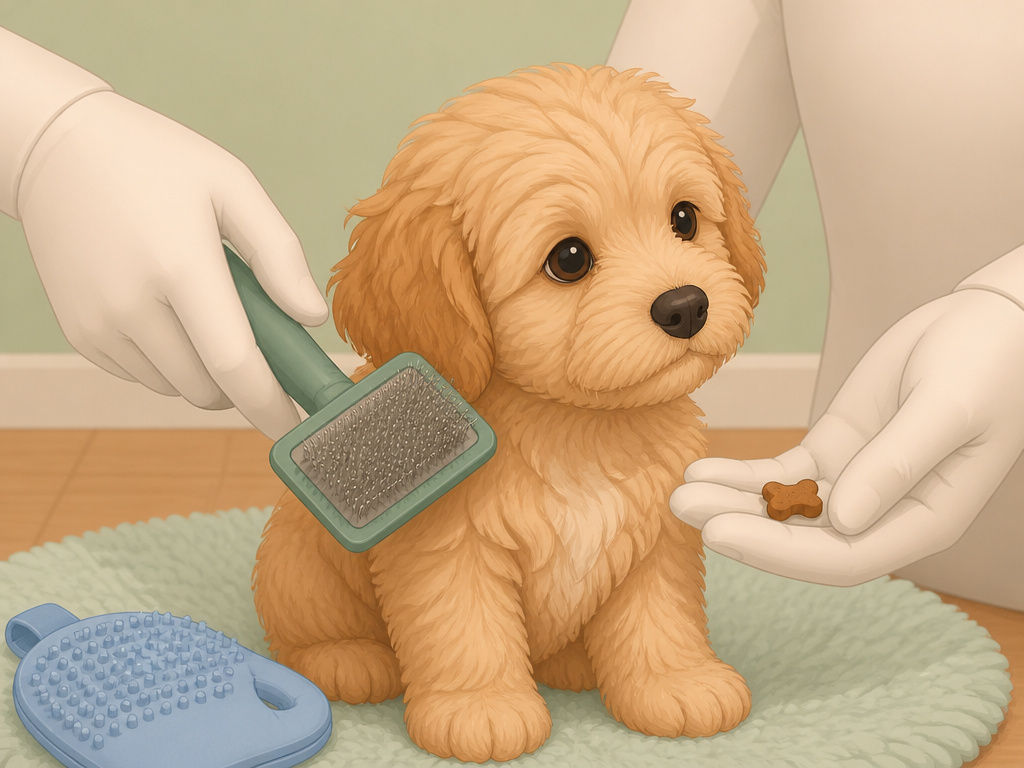
Some puppies accept all of this in a week. Others treat the slicker like a predator, and that’s where the plan needs adjusting rather than doubling down.
PetMD’s advice is to ask your vet for guidance if a puppy stays anxious about grooming. That’s a referral, not a failure.
Persistent grooming anxiety usually traces back to one session that went too long or ended badly, which is why the stop-on-a-high-note rule matters more than any tool choice.
If your puppy is brushing a dog that resists levels of resistant, drop back to two strokes and a treat, three times a day, for a week. Then add one stroke.
Where this goes sideways: Holding a puppy still to finish a nail or a mat teaches the opposite of what you want. Guide Dogs for the Blind’s rule is blunt: never force or manipulate a pup into a position they’re uncomfortable with.
Two practical moves from the groomer side.
Before You Buy
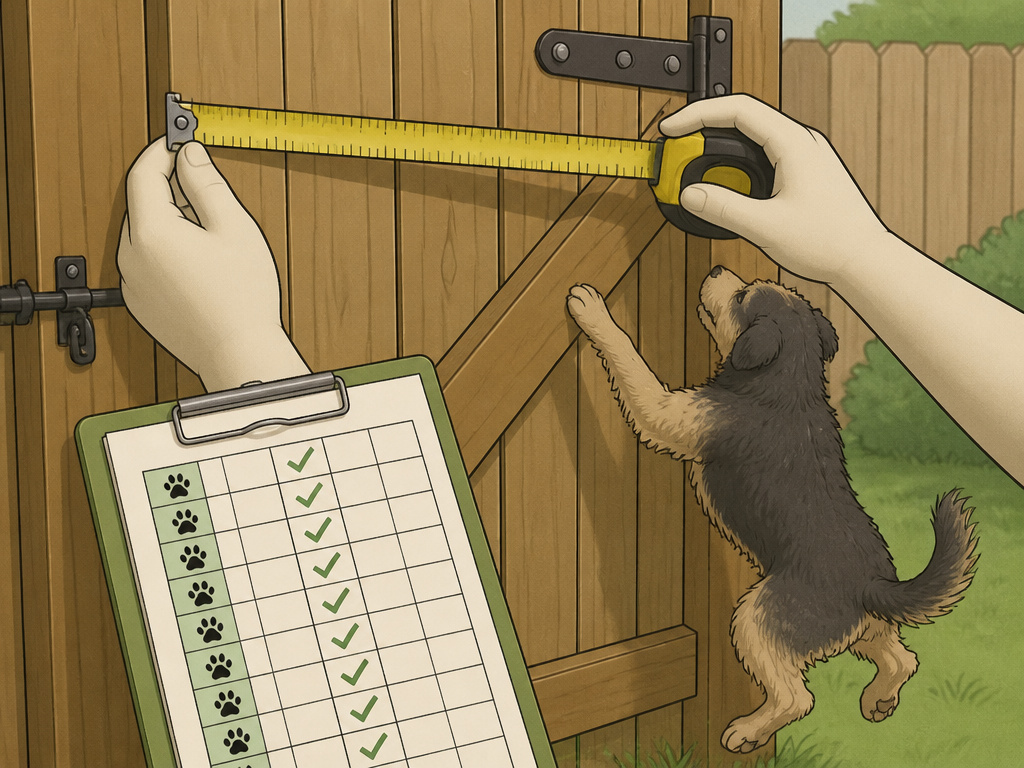
Three questions to ask yourself before you spend anything on grooming gear. Has this puppy been handled daily for at least a week, or am I buying tools to solve a handling problem? Do I know what my puppy’s coat will actually be at adulthood, or am I guessing from the fluff? And is there a groomer within reasonable driving distance who requires rabies, DHPP, and kennel cough proof?
Book the professional groomer and a vet visit in the same week and let people with experience do the first pass. The window for easy positive associations has mostly closed by then, and a slow, patient rebuild beats a crash course.
The one thing to do tonight costs nothing. Touch the nose, lift each ear, run a hand over the belly, and hold each paw for two seconds. Treat after each. That’s it. Once a day, and by the time the brush comes out your puppy already knows that hands mean good things.
Everything else here depends on that habit.
Frequently Asked Questions
What if my puppy is older than four months when I start grooming?
You can still teach a puppy to accept grooming after four months, but expect slower progress and more patience. Go back to short, reward-based handling sessions and let the puppy set the pace. Older puppies often need several weeks of practice before clippers or nail trimmers stop causing fear.
Should I use the same tools a professional groomer will use?
Not at first. Start with your hands and a soft brush, then introduce one tool at a time once your puppy stays relaxed. Letting a puppy investigate a clipper or nail file while it is switched off builds familiarity without the noise and vibration that scare first-timers.
How do I know if my puppy is stressed during a grooming session?
Watch for lip licking, yawning, tucked tail, stiff body, or attempts to pull away. These are early signs to stop and try again later. Ending on a calm note protects the positive associations you are building, which matters more than finishing the task.
Can I groom my puppy at home instead of hiring a professional?
Yes, many owners handle brushing, bathing, and basic upkeep themselves. A professional visit is still worth considering for the first nail trim and for breeds with coats that need clipping. A groomer can show you the correct technique and flag issues you might miss.
