
How to Manage a Puppy Coat: A 4-to-6 Month Plan
This post contains affiliate links. As an Amazon Associate, we earn from qualifying purchases.
Knowing how to manage a puppy coat starts with matching the brushing schedule to the coat type in front of you. Royal Canin sets long coats at daily brushing, medium at every other day, short at once or twice a week. Puppy coat loss typically happens between 4 and 6 months, though it can start at 12 weeks or wait until the puppy is 1 year old.
That window is why the how to manage a puppy coat question makes two puppies from the same litter look completely different in the same month. One blows coat in a cloud of fluff at four months. The other still looks like a mop at ten months, and you start wondering whether something is wrong. Both are normal.
What follows covers the brushing schedule by coat length, the bathing question the sources genuinely split on, the mat hotspots worth checking every week, and the clipper prep that keeps a grooming session from going sideways.
Key Takeaways
- Match the brush to coat length: short coats get once or twice a week, medium coats every other day, long coats daily.
- The 4-to-6-month window is typical for puppy coat loss, but 12 weeks to a year all falls inside normal.
- Mats form where things rub. Check under the collar, behind the ears, and in the armpits every week.
- Wash and dry before you clip. Grit and coat grease blunt blades early, according to the Wahl clipping guide.
- Sources split on bathing. Royal Canin ties frequency to coat texture; a Golden Retriever breeder bathes puppies three or so times a week.
What Coat Type Is Your Puppy Actually Growing?
Every puppy starts life in the same place: one layer of soft, fluffy fur that helps regulate body temperature. What grows in behind it depends on the breed.
A puppy is born with a single coat of soft fur that helps regulate body temperature. As the adult coat develops, double-coated breeds grow two layers, with the undercoat sitting shorter than the outer coat. Single-coated breeds grow one adult layer, which can come in short and curly or long and silky.
Working out which group your dog falls into matters more than the breed name on the paperwork, because the adult coat sets your brushing routine for the next decade. Run a hand backwards along the spine and you can usually feel the difference. A double coat feels dense and springy close to the skin, and a single coat lies flat, like fabric on a table. That’s the tell.
Coat type also decides whether a containment collar can do its job. Thick-coated dogs come up again and again in reader emails as the ones where the contact points sit buried in fur instead of touching skin. I bring up coat type early in the conversation now, before we talk about any product.
If you’re not sure which group your dog lands in, there’s a straightforward way to identify coat type by looking at the skin and the length of the guard hairs.
How to Manage a Puppy Coat Through the 4-to-6-Month Shed
Twelve weeks to a year is the full range, according to the AKC puppy shedding explainer, with 4 to 6 months as the typical middle. Some puppies start early. Some wait until their first birthday.
Long-haired breeds go through what breeders call “the uglies,” a stretch of months where the coat looks ruffled, patchy, or shaggy as the adult hair pushes through. It looks alarming. It’s normal.
Pomeranians are the extreme case.
The part nobody mentions: A puppy’s adult coat can come in a completely different color. Dalmatians are born without spots, and English Setters, Bedlington Terriers, Kerry Blue Terriers, and Shih Tzu often change dramatically. Nothing is wrong with the dog.
Once the adult coat is in, the seasonal shedding pattern takes over. Royal Canin notes that outdoor dogs shed twice a year, in spring and fall, driven by daylight. Indoor dogs shed year-round with two peaks in the same seasons. A double-coated dog blowing undercoat in spring is doing exactly what the coat is built to do.
One more thing worth flagging. The AKC states that even breeds marketed as non-shedding will shed a small amount of hair as puppies. The volume changes. The turnover doesn’t stop.
How Often Should You Brush a Puppy Coat?
The Royal Canin puppy care guide splits brushing frequency by coat length, and the split is wide.
| Coat Length | How Often | Tool |
|---|---|---|
| Short-haired | Once or twice a week | Rubber brush against the lay, then bristle |
| Medium (undercoat plus topcoat) | Every other day | Bristle brush, wide-toothed comb behind the hocks |
| Long-haired | Daily | Slicker, then a wide-toothed comb |
| Afghan Hound long coat | Up to an hour a day | Same tools, far more time |
Where the Sources Split on Brush Choice
The AKC lists bristle, wire-pin, and slicker brushes and says puppy coats often need a softer brush than the adult coat will. It then defers to your breeder, groomer, or vet rather than prescribing by coat type.
Royal Canin is more direct. It specifies a bristle brush for silky coats, naming the Yorkshire Terrier, on the grounds that it adds sheen, while the AKC lists bristle, wire-pin, and slicker as options and defers to your breeder, groomer, or vet rather than prescribing by coat type. Those two positions aren’t identical, and it’s worth knowing which one you’re following.
For most puppies, a slicker does the daily work. A slicker brush with soft pins works well for puppy fluff and stays useful once the adult coat arrives. I keep an undercoat deShedding tool in the drawer until the adult undercoat is in, because it’s built for that layer and not for baby hair.
If you’d rather see the options side by side, the best puppy brush picks break down by coat length.
I don’t recommend a wire-pin brush for a first puppy. The pins feel fine to you and awful to a dog that’s never been brushed, and one bad session buys you months of flinching. Start soft and build up.
The Bathing Question Nobody Agrees On
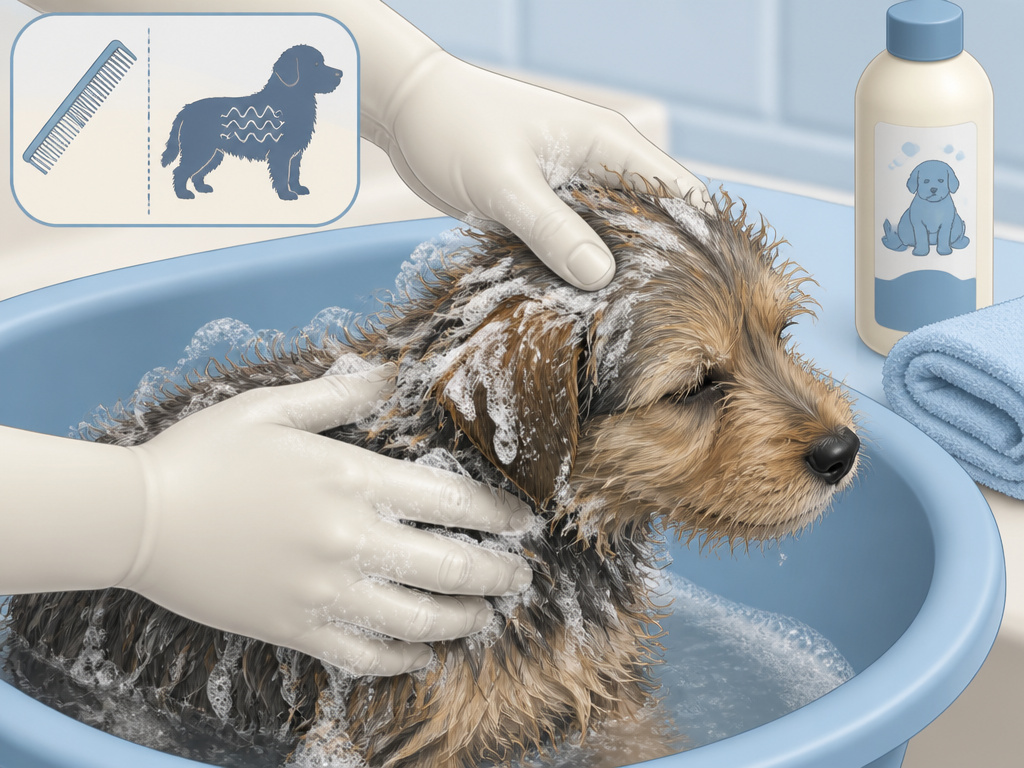
Ask five groomers how often to bathe a puppy and you’ll get five different answers. The published sources don’t agree either, which is worth saying plainly.
Here’s where I’ve landed after a lot of dogs. Bathing frequency should follow coat texture rather than a fixed calendar, and no vet has ever blamed a coat problem on under-bathing. Double coats get pushed to the long end of whatever schedule you choose or past it.
My oily terrier mix starts looking greasy sooner than most, so she gets the short end. Any bathing schedule is a starting point, and nothing more.
Every owner I know who bathes frequently is also an owner who keeps itch supplements on the shelf. I don’t think that’s a coincidence.
What the Sources Actually Say About Bathing
| Source | Bathing Guidance | What It Means for You |
|---|---|---|
| Royal Canin | Frequency follows coat texture; shaved coats washed only when dirty | Start with texture, not a calendar |
| Golden Retriever breeder guide | Bathe and dry puppies three or so times a week | Builds table tolerance by six months |
| AKC | Bathing removes dead hair; no frequency given | Treat it as a coat-transition tool |
That’s a genuine disagreement, and it’s more useful to name it than to paper over it. Royal Canin ties the schedule to coat texture and says shaved coats need washing only when dirty. The breeder writing that Golden Retriever coat guide bathes and dries puppies three or so times a week, and reports that by six months those puppies are happy to get on the grooming table.
Those two answers are answering different questions. One is about coat condition. The other is about handling. Both are honest answers.
Where the sources align: avoid human shampoo and use a puppy shampoo instead. Royal Canin states that human shampoo products irritate puppy skin, and recommends lukewarm water with the head area rinsed last.
I won’t put a puppy on a full conditioning routine while the coat is still changing underneath you. The coat is still changing underneath you, and a puppy that learns to dread the table is a decade-long problem. Bathe, dry, comb, done.
Mats Form Where the Collar Rubs
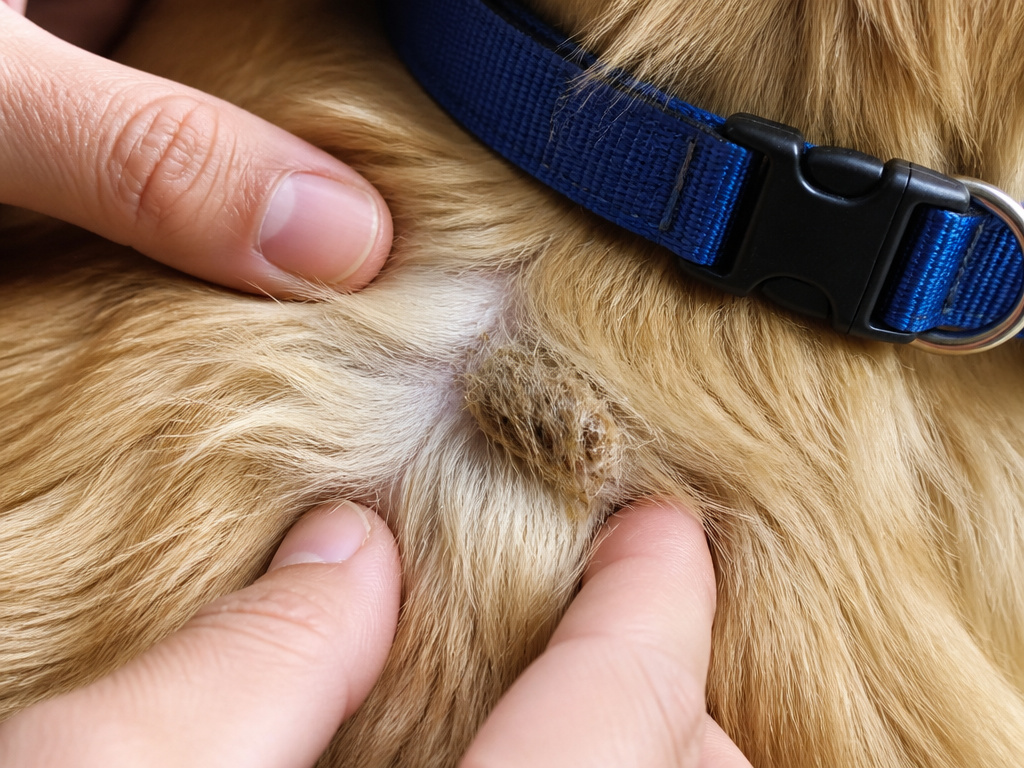
Slide two fingers under your dog’s collar and you’ll usually find it before you see it. A mat starts as a small tangle close to the skin, and by the time it’s visible it’s already pulling.
A coat behaves like a pipe system. The weakest joint decides where it fails, and on most dogs that joint is the collar line.
The hotspots are predictable:
- Under the collar and behind the ears, where hair rubs against something every time the dog moves
- In the armpits, for the same reason
- Ear flaps, which trap moisture
- Between the paw pads, where trapped moisture raises infection risk
A matted patch looks duller than the coat around it, and the hair sits in flat clumps instead of lying in strands. That visual is your early warning.
Mats do more than look bad. They interfere with vision, hearing, chewing, urination, defecation, and movement, and they work against the coat’s ability to cool the dog in summer and warm it in winter. They can also hide things you’d want to know about: foreign bodies, ingrown coll
Frequently Asked Questions
Can you shave a puppy to make coat changes easier?
Shaving is not a shortcut through the transition, and on double-coated breeds it can interfere with how the adult coat grows back. The undercoat insulates against heat as well as cold, so removing it does not keep a dog cooler. Clippers belong in the routine for tidying feet, sanitary areas, and mats that will not comb out, not for stripping the body.
Why does the adult coat sometimes look duller than the puppy fluff?
Puppy fur is finer and reflects light differently, so the incoming coat often reads as darker, coarser, or less shiny by comparison. That change is texture, not a health problem. Regular brushing spreads natural oils along the hair shaft and improves the look within a few weeks.
Does diet affect how smoothly a puppy blows coat?
Complete and balanced puppy food matters more than any supplement during this stage, since the new coat is built from what the dog eats. Sudden diet changes can trigger extra shedding on their own, so keep meals steady while the coat is already in flux. Ask your vet before adding oils or capsules.
How do you handle a puppy that hates being brushed?
Start with sessions under a minute and pair them with treats, working on one body area at a time. A rubber curry or a soft slicker is less threatening than a full-size brush on a nervous puppy. If mats are already tight against the skin, have a groomer or vet remove them rather than fighting through them at home.
