
Beagle Exercise Needs: What the Studies Actually Say
This post contains affiliate links. As an Amazon Associate, we earn from qualifying purchases.
Beagle exercise needs land somewhere between commercial guidance of about 60 minutes a day and a studied 35 minutes three times a week, and no study has settled which is right. The 1988 trial that tested a moderate program found no measurable physiological difference; a 2024 treadmill study found 12 weeks of conditioning clearly did.
The gap between those two findings matters more than either number. One measured what a moderate program changed in sixteen kennel-housed dogs over six weeks. The other measured what twelve weeks of graded treadmill work could build in dogs that started unfit. Different questions, different answers, and both got published in peer-reviewed journals.
What follows is the evidence as it actually reads, the parts of the standard advice that don’t survive contact with it, and a weekly structure you can run in an ordinary backyard with an ordinary Beagle.
Key Takeaways
- Nine percent of 225 Beagles in a 2017 UK survey met Kennel Club exercise guidelines. The gap between advice and behavior is the normal state of things, not a personal failing.
- A backyard alone is not exercise. In the 1988 trial, dogs released alone into an exercise area showed little inclination to move and didn’t move unless a person was present, though VCA notes many of a Beagle’s physical exercise needs can be met with backyard games, even if the breed prefers to walk and sniff.
- Group exercise has a documented failure mode. Fighting broke out in week three of the group-release arm of that same trial, which sits awkwardly beside VCA’s advice that Beagles tend to do well at dog parks.
- Off-leash work is a recall test wearing an exercise costume. Beagles follow scent trails and aren’t reliable on the return.
Beagle Exercise Needs: How Much Is Actually Enough?
Two commercial sources give two different answers, and neither one is a study. PitPat puts healthy adult Beagles at roughly 60 minutes a day. Hero Pet Health says 60 to 90 minutes split across two or three sessions.
Trotting intensity in Beagles has been defined as 0.591 g, where 1 g equals 9.81 m/s squared. In a 2024 accelerometry cohort of six colony Beagles aged 3 to 13 months plus 16 pet dogs, every Beagle exceeded 60 minutes a day above walking intensity and at least 30 minutes a day at approximately trotting intensity.
Both figures are guidance rather than measurement, and the measurement side is messier than either site admits.
| Source | Program tested or recommended | What it’s based on |
|---|---|---|
| PitPat | ~60 min/day | Commercial guidance |
| Hero Pet Health | 60–90 min, 2–3 sessions | Commercial guidance |
| 1988 AJVR trial | 35 min, 3x/week, 6 weeks | Controlled trial, 16 Beagles |
| VCOT Open 2024 | 15% incline, 5 days/week, 12 weeks | Controlled trial, 8 Beagles |
Notice what’s missing from that table: a head-to-head test of 60 minutes against 90 minutes. Nobody ran one.
Researchers went at the problem from a different angle. The standardised dog activity quantification approach defines trotting intensity at 0.591 g, which is how a collar can tell the difference between a wander and real work. In that cohort, every Beagle cleared 60 minutes a day above walking intensity and at least 30 minutes a day at roughly trotting pace.
Those dogs weren’t following a plan. They were being measured. That’s the useful part.
A Beagle can clear a walk without it counting as real work. An hour of walking and an hour of work are not the same currency.
A Fenced Yard Is a Containment Tool, Not an Exercise Plan
I spend most of my working life evaluating containment, so I’ll say this plainly: the fence keeps your dog home, and that’s the whole job. The 1988 trial is why I say it out loud. Sixteen purpose-bred male Beagles went into four groups over six weeks, and the dogs released alone into an exercise area showed little inclination to move.
They didn’t exercise unless a human being was present. That single line explains more backyard Beagles than any breed profile you’ll read.
VCA Animal Hospitals makes a related point without the lab coat. Many of a Beagle’s physical exercise needs can be met with backyard games, but the breed prefers to walk and sniff and explore. Which is a polite way of saying the dog wants a job, and standing in the yard isn’t one.
The regulation and the evidence point in different directions, and this article doesn’t get to pretend otherwise.
Where this goes sideways: Leaving a Beagle in the yard for an hour and calling it exercise. The dog stands at the gate, the odometer reads zero, and by week three you’ve got pacing along the fence line and digging at the corner posts.
A yard does three things well, and none of them is cardio:
- It gives the dog space to decompress off-leash. Useful, and entirely passive.
- It gives you a safe place to run scent games and long-line recall work, which is where the real value sits.
- It gives you somewhere to put the dog while you do something else, which is management, not exercise.
Those are worth having. They just don’t add up to a fitness program.
Nine Percent of Beagles Hit the Guideline
Nine percent.
That’s the figure from a 2017 UK owner survey covering 12,314 pedigree dogs, 225 of them Beagles, comparing reported exercise against Kennel Club guidelines. Fewer than one in eleven cleared the bar.
I don’t read that as a scandal. I read it as a sign the guideline was written for a schedule most households don’t have and a dog most owners haven’t actually watched.
The same dataset is one of the better arguments that breed exercise guidelines are widely missed, which cuts both ways. Some breeds genuinely need more than others. All of them need more than a yard.
If you want the wider picture of how breed exercise needs shift across groups, the pattern holds: the number on the label is a starting point, not a prescription.
Why the Guideline and the Behavior Diverge
The standard advice assumes three things the research doesn’t support.
- It assumes the dog will self-regulate. The 1988 trial found the opposite: released alone, the dogs did nothing.
- It assumes the owner’s schedule is the limiting factor. The 2017 survey suggests the owner’s understanding might be.
Beagles have been among the ten most popular breeds in America for decades. That means most of these dogs are living with people who chose a look and got a nose.
What a Real Conditioning Program Looks Like
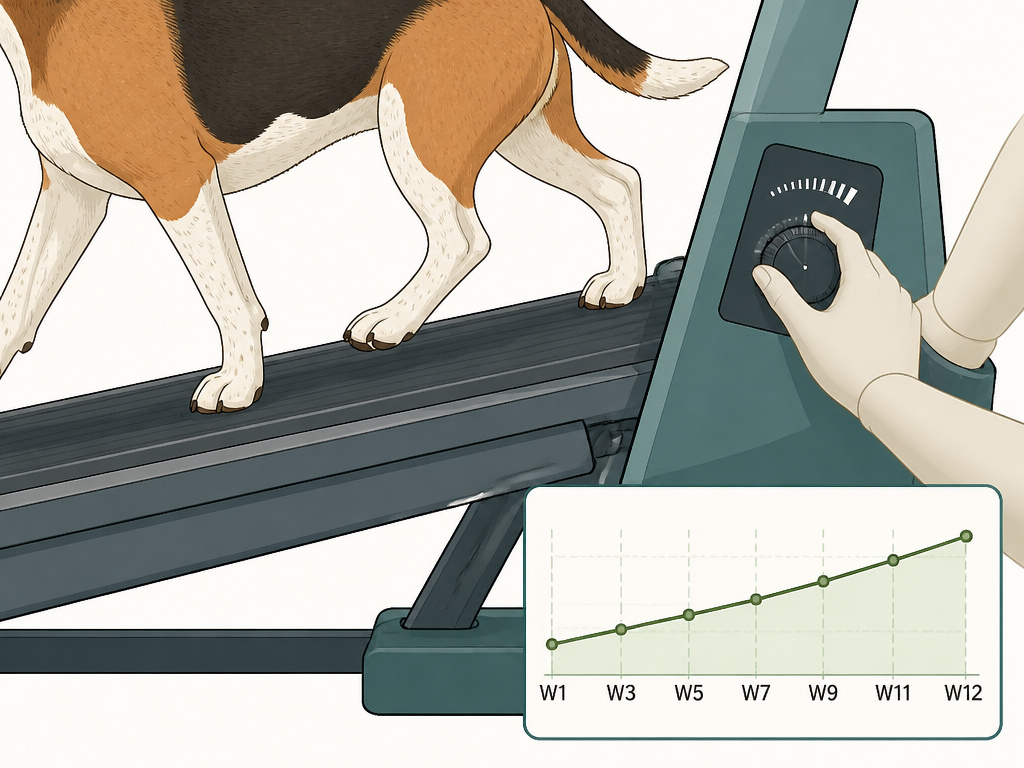
Lower is better, and the conditioned dogs started lower and finished lower.
The authors concluded that twelve weeks is sufficient to condition previously unfit Beagles. For anyone with a middle-aged couch dog, that’s the most useful sentence in the literature.
Build the incline over weeks, not days. Stop the session if the dog starts bracing instead of striding, because that’s a dog working against the equipment rather than with it.
Here’s the sequence I’d actually run, using the numbers the studies used.
- Get the vet check first. Skipping it means you discover a heart murmur on an incline instead of in an exam room.
-
Build the early weeks on flat ground at walking pace. The incline is the last variable you add, not the first. 3.
-
Add incline gradually toward the 15% mark. Jump straight to it and you’ll see the dog bracing rather than striding.
- Hold five days a week for twelve weeks. The conditioning effect in the VCOT study showed up at the end of twelve weeks. It did not show up at week four, and that’s where most people quit.
The Session Shape That Was Actually Measured
In plain terms, the dog’s whole system registered the work.
That’s a useful benchmark for what “enough” feels like from the inside. If a session doesn’t register as work, it was a stroll.
Meal timing around that matters more than people expect, and feeding a dog around exercise is worth getting straight before you add intensity.
Where Agility and Incline Work Fit
Backyard agility equipment covers the trotting and turning part of the equation without a treadmill, and it does something a treadmill can’t: it makes the dog choose to move. That’s the piece the 1988 trial said was missing.
Start with two obstacles. A dog that has to think about where its feet go is working harder than a dog running a straight line.
Off-Leash and Dog Parks Pull in Opposite Directions
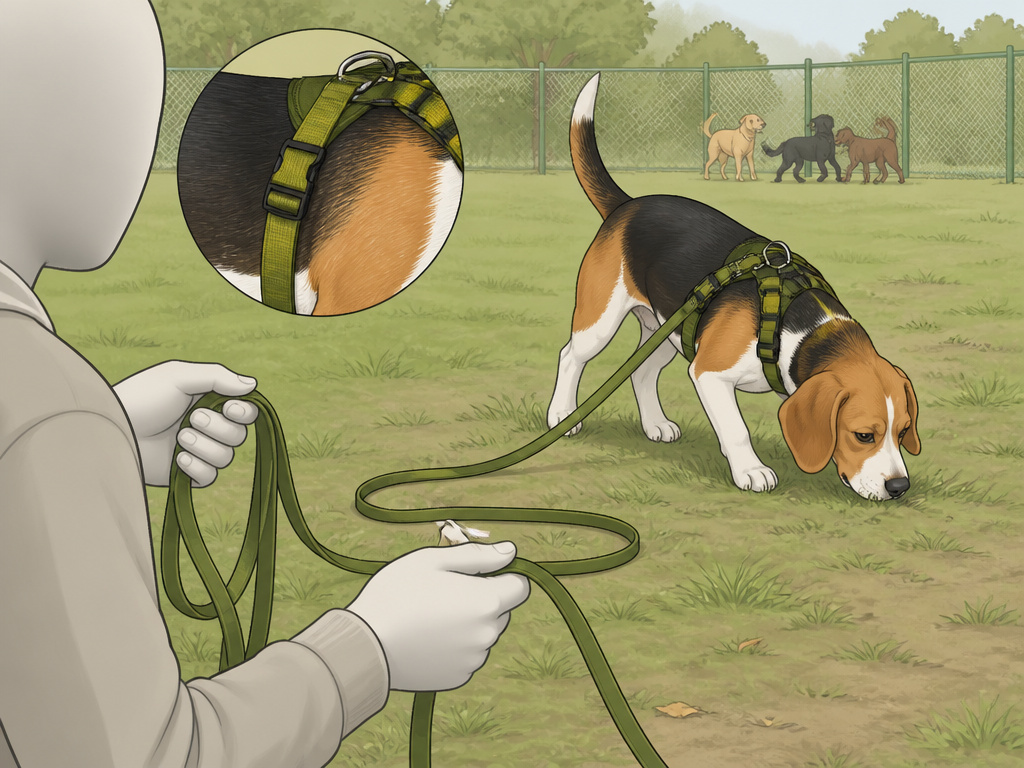
Off-leash work and dog parks pull in opposite directions, and the sources don’t hide the tension.
VCA Animal Hospitals is direct about the leash: care must be taken if a Beagle is allowed off leash, because the breed gets caught up following scent trails and isn’t overly obedient about returning. The same page says Beagles tend to do well at dog parks.
Now hold that beside the 1988 trial, where group-released exercise produced fighting in week three of a six-week program. Both things are documented. A dog park is a supervised group setting with owners standing right there. A group release into an exercise run is not.
The difference is supervision and space. That’s why I won’t tell you to skip the dog park, and I won’t tell you to trust one blindly either.
I won’t recommend a dog park for a Beagle that hasn’t done long-line recall work first. The park is honest feedback, because you find out quickly whether your recall exists. That is a terrible time to learn. I’ve watched that lesson land the hard way more than once.
A well-fitted beagle harness matters more than the leash does here. A dog that slips a collar at the edge of a scent line is gone.
When NOT to push it: don’t put a Beagle into an off-leash group situation before recall is reliable on a long line. The failure is fast and specific. The dog locks onto a scent, the head drops, and you’re the person jogging across a field calling a name.
Scent Work Is the Exercise Beagles Actually Want

Watch a Beagle cross an open field and the nose drops before the feet stop moving. The sniffing changes rhythm when the dog hits a real line: short pulls through the nose, then one long draw that ends with the head lifting.
VCA notes the breed prefers to walk and sniff and explore. That isn’t a consolation prize for a dog that can’t run a marathon. It’s the work the dog was built for.
A Beagle that’s had a real scent problem to solve comes home tired. If your dog is still bouncing after a pavement walk, the walk was the wrong tool.
Formal scent work training gives you a structure for this, but you don’t need a class to start. You need a dog, a scent, and somewhere the dog is allowed to put its nose down.
Three Scent Setups You Can Build Tonight
- The scatter feed. Toss a measured portion of the day’s ration across short grass and let the dog hunt it. Slows eating, works the nose, takes about as long as the dog wants it to.
- The hidden toy. Toys for beagles that hold a treat inside work well here. Show the dog the toy, then hide it where the dog can reach it without climbing.
- The trail. Drag a treat along the ground in a line the dog can follow. Start simple. A dog that repeatedly fails stops trying, and that’s a training problem you created.
Brain games for dogs fill the same slot on a rainy day, and they’re the closest thing to a substitute for a walk that actually holds up.
What Do You Do With a Beagle That’s Already Overweight?
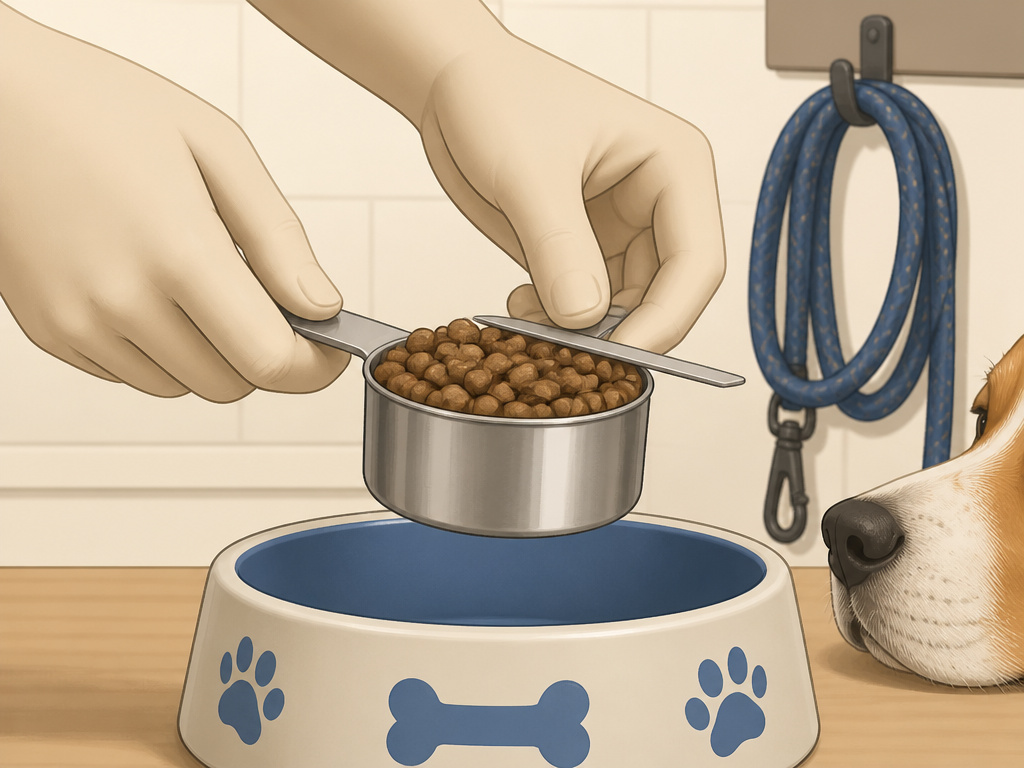
VCA is blunt about this one: Beagles love to eat anything and have a tendency to become obese. Adult dogs should be fed a balanced diet with restricted calories if the dog starts to gain too much weight.
Exercise helps. It won’t outrun the food bowl.
A dog gaining weight on a normal ration needs the ration measured, not another lap. That’s the order of operations, and getting it backwards is why so many owners conclude their dog “just doesn’t lose weight.”
| What you’re seeing | What it usually means | What to change |
|---|---|---|
| Weight creeping up despite regular walks | Calories, not mileage | Measure the ration, cut the extras |
| Dog still restless after a long walk | Physical work without mental work | Swap one walk for a scent session |
| Pacing the fence line, digging at posts | Under-stimulated, not under-exercised | Add a job, not distance |
| Lagging halfway through a session | Genuine fitness gap | Build the twelve-week progression |
If you’re starting from a dog that’s already carrying extra weight, the exercise routines for overweight dogs question is really a sequencing question. Cut first, then condition.
Easy to miss: Cutting the food and adding miles at the same time. The dog loses condition before it loses weight, and then you blame the exercise. Cut the extras first, measure the ration, and only then add work.
Frequently Asked Questions
Is a 30-minute walk enough for a Beagle?
Not on its own, and the honest answer is that no study has tested a 30-minute walk as a standalone program. Thirty minutes of walking keeps a dog’s routine intact. It doesn’t build fitness.
Do Beagles need exercise every day?
Both are defensible. What no protocol supports is the pattern most households land on: a big weekend and nothing Monday through Friday.
Can a Beagle get enough exercise in an apartment?
Yes, if you replace square footage with structured work. The 1988 trial is the relevant evidence here, and it found that dogs released alone into an exercise area showed little inclination to move. Space wasn’t the variable. Human involvement was. A dog walked, worked on scent, and trained regularly does better than a dog with a yard and no one in it.
Why does my Beagle still have energy after a long walk?
Because walking is low-intensity work and the breed was built for something else. VCA notes the breed prefers to walk and sniff and explore, and that sniffing is the part doing the tiring. A shorter session with real nose work usually lands harder than a longer one at heel.
Is a treadmill safe for a Beagle?
The published protocols used treadmills under controlled conditions with eight and seven dogs respectively, and both produced measurable physiological effects. That’s a lab setting with supervision. At home, the risks are heat, an unsecured dog, and starting at an incline the dog hasn’t earned. Get a vet check first and build slowly.
The Bottom Line
Everything above assumes a healthy adult Beagle with no orthopedic history. If your dog is a puppy, a senior, or carrying a diagnosis, the study populations don’t map onto your household and a vet sets the schedule, not an article.
This week, do one thing differently. Take the leash off the hook and walk the fence line with your dog instead of putting the dog out in it. Same yard, different job, and you’ll see the difference in the dog’s face before the week is out.
Beagle exercise needs don’t get met by square footage. They get met by a person who shows up, and that’s a thing you can start tonight without buying anything.
