
How to Board a Dog for the First Time: Step-by-Step
This post contains affiliate links. As an Amazon Associate, we earn from qualifying purchases.
To board a dog for the first time, book one short trial stay before the real trip, bring a vaccination certificate dated within the last 12 months, and decide in advance who is allowed to approve veterinary treatment while you are away. The paperwork and the pick-up plan are where first stays actually go wrong.
That 12-month window is a hard gate rather than a formality. A certificate dated thirteen months ago fails at the desk, and the person holding the clipboard has no discretion to wave it through.
What follows runs in the order I would do it: the trial stay, the certificate, the tour questions, the daily care standard, the bag, the authorization, and the pick-up check.
Key Takeaways
- Book the shortest stay first. VCA Animal Hospitals suggests a weekend or a few days before a long trip, while the AKC notes some facilities require a trial run outright.
- The certificate is a 12-month document. The NSW code requires proof that vaccination was done in the preceding 12 months, covering distemper, hepatitis, parvovirus and canine cough.
- Dogs under 4 months should not be boarded under that same code except in exceptional circumstances. That is a regulatory wall, not a preference.
- Ask who decides on vet care. The SF SPCA wants you deciding after a phone call; the NSW code wants authority signed over at admission.
- Visit twice and listen. Barking levels on a second visit tell you more about a kennel than the brochure ever will.
Why the First Stay Should Be Shorter Than You Think
Book the shortest stay you can first.
VCA Animal Hospitals suggests boarding your dog for a weekend or a few days before a long trip, and notes that some kennels recommend a series of short visits lasting a few hours each. One or two short stays let the dog learn the building and the staff while you are still in the same city, which is the practical answer to how to board a dog for the first time.
A short trial stay exposes three things a brochure cannot: whether the dog eats away from home, whether the dog settles overnight, and whether the facility’s staff notice a dog that is not settling. One or two short stays before a long booking give all three a chance to surface while the trip is still cancellable.
The Trial Stay Disagreement
The sources split on who decides. VCA frames short stays as something some kennels recommend and something always worthwhile, which puts the choice in your hands. The AKC dog boarding tips guide notes that some facilities require a trial run, which turns it into a gate you have to clear before they will take a two-week booking.
Ask which one this place is before you pay a deposit. A kennel that requires a trial run will tell you so in one sentence.
When a Trial Stay Isn’t the Answer
Zoetis Petcare points out that dogs with separation anxiety need extra preparation, and recommends a facility that allows trial visits and will spend extra time helping the dog settle. A dog that does not enjoy other dogs needs something different again: either a facility that keeps dogs separate, or a pet sitter.
If the place runs daycare alongside boarding, settle the dog daycare vs boarding question early. Daycare means group play, and group play means your dog needs social skills to cope with it.
A dog that has already done crate training before boarding settles faster in a run. Not because the run is a crate, but because the dog has practised being alone in a small space and waiting for someone to come back.
Which Vaccinations Does a Boarding Kennel Actually Require?
The NSW animal boarding code of practice asks for one thing at the door: a current certificate showing vaccination was done in the preceding 12 months.
Which vaccines sit on that certificate depends on where you live. Here is where the sources actually differ.
| Source | Vaccines named | Validity window |
|---|---|---|
| NSW DPI code | Distemper, hepatitis, parvovirus, canine cough | Vaccination within the preceding 12 months |
| VCA Animal Hospitals | Rabies, distemper, parvovirus, Bordetella | Current, no window stated |
| Zoetis Petcare | DAPP, leptospirosis, Bordetella, canine influenza | Bordetella yearly minimum, some kennels ask every 6 months |
The rabies gap is not an oversight: the NSW code leaves rabies off entirely and adds hepatitis instead.
The 12-Month Certificate Rule
The date on the certificate is the thing that gets checked. Book the vaccination check with your own vet before you book the kennel, and ask them to read you the date on the certificate.
Zoetis gives lead times that the NSW code does not mention. A DAPP booster should ideally be done at least 3 weeks before the stay, Bordetella at least 1 week before, and canine influenza at least 2 weeks before. The NSW code specifies no lead time at all, only the 12-month certificate.
Common mistake: Booking the kennel first and the vet second. A booster given the day before a stay falls short of Zoetis’s own three-week guidance for DAPP.
Two more admission rules catch people out. Dogs under 4 months and cats under 3 months should not be admitted except in exceptional circumstances, and animals known or suspected to be carrying an infectious disease get refused at the door regardless of what you have paid. Dogs arriving with worms are wormed at the owner’s expense.
Heartworm status is worth checking before admission too. The NSW code recommends it, and the facility has to record your dog’s heartworm prevention status anyway.
How to Board a Dog for the First Time: What to Ask on the Tour
You are standing in a reception area that smells like pine cleaner, and the person behind the desk says the runs are out back and you can see them from here.
That is the moment the tour either happens or doesn’t. The AKC’s position is that if you are not permitted to view the entire facility, you should turn tail, on the reasonable logic that a well-run kennel has nothing to conceal. The SF SPCA frames the same point more gently, as a question whose desired answer is yes.
What a Good Answer Sounds Like
The SF SPCA’s checklist is unusually specific, and that specificity is what makes it useful. A facility that monitors animals 24 hours a day, offers at least 3 potty breaks daily, and separates play groups by age, size and energy level rather than running one big free-for-all is what to look for.
The dog-to-attendant ratio during free play is the number most owners never ask for. The SF SPCA’s stated ideal is one person for every 7 small dogs and one person for every 5 large dogs. Staff should have at least a few weeks of intensive training covering animal care, body language, basic medical triage, CPR and wound management.
Ask how the staff handle a scuffle. The answer you want involves safe, humane separation and quiet time apart afterwards. Squirt bottles, physical punishment and loud verbal reprimands are all on the SF SPCA’s do-not-use list.
If a facility won’t let you see the whole place before you book, the tour has already given you the answer. Everything after that is a conversation about how much you are willing to overlook.
Here is the honest version of the red-flag list, in table form.
| What you see | What it usually means | What to do |
|---|---|---|
| Staff won’t walk you past reception | Something back there isn’t presentable | Walk away, per the AKC |
| No vaccination records requested | Intake screening isn’t happening at all | Ask directly and treat a shrug as a no |
| Runs visibly overbooked | Dogs doubled up or staff stretched thin | Ask the play ratio before booking |
| Heavy barking on both visits | Noise isn’t being managed | Look for partitioning or single housing |
Visit twice if you can, and listen rather than look. The SF SPCA makes that point directly: visit twice and observe how much barking you hear each time from the kennel area.
Two more checks take five minutes. If your state requires boarding kennel inspections, the licence or certificate should be on display. And a call to the Better Business Bureau costs nothing.
Choosing a boarding facility comes down to a set of questions, and many of them get answered by watching rather than asking.
How Much Daily Care Should You Actually Expect?
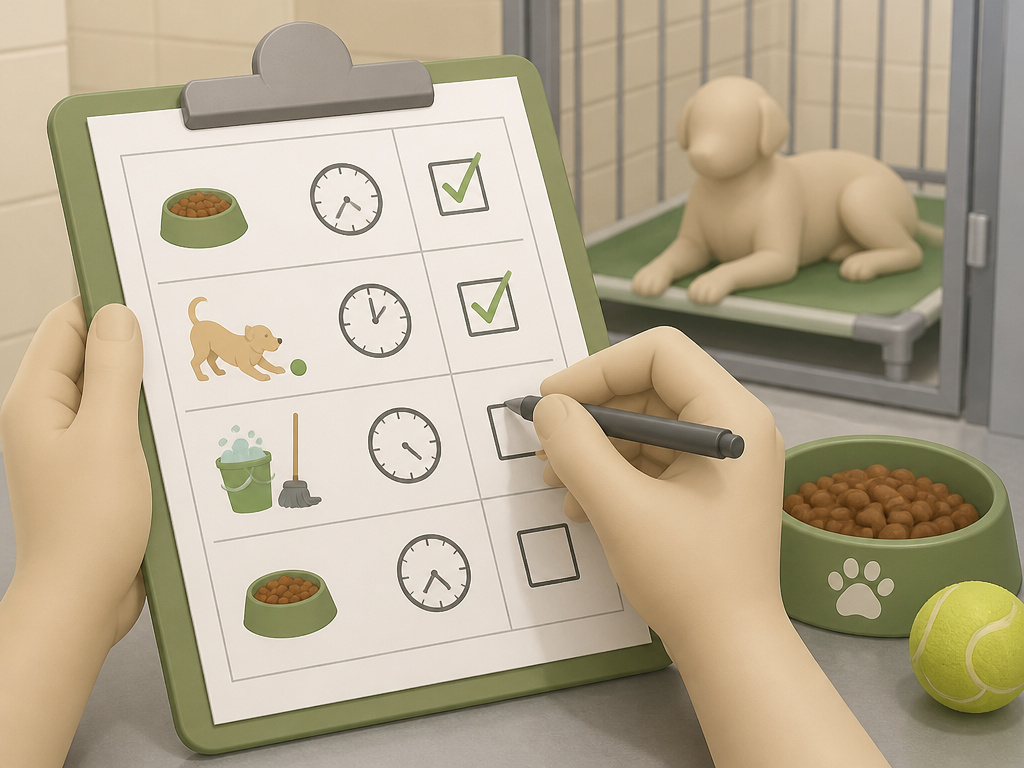
Fifteen minutes a day per dog is the CVMA’s floor for feeding and cleaning alone, and that is before anyone throws a ball.
The CVMA Code of Practice for Canadian Kennel Operations sets that 15-minute minimum explicitly, and also recommends that kennels offer training opportunities to caregivers rather than assuming the job is unskilled. The SF SPCA boarding facility guide fills in the rest of the day: one-on-one time with people, dog play where appropriate, and other exercise and socialization.
Feeding runs on a schedule. The NSW code requires adult dogs to be fed daily, with pups up to 6 months fed twice daily. Cats get monitored for the first 3 to 4 days after admission specifically to check they are eating.
Cleaning has a number attached too. Kennels and their exercise areas should be cleaned daily and disinfected at least once each week, plus before new dogs are introduced and after any outbreak of infectious disease.
I would rather see a scruffy reception area and a written daily schedule than a marble lobby and no answers. The schedule is the thing your dog actually lives inside for a week.
Housing details are worth a look while you are there. Dogs should preferably be housed singly or in compatible pairs, cats should be housed away from dogs because barking disturbs them, and buildings have to be securely lockable. Resting boards and bedding should be provided so dogs are not lying on bare concrete.
What to Pack, and What to Leave at Home
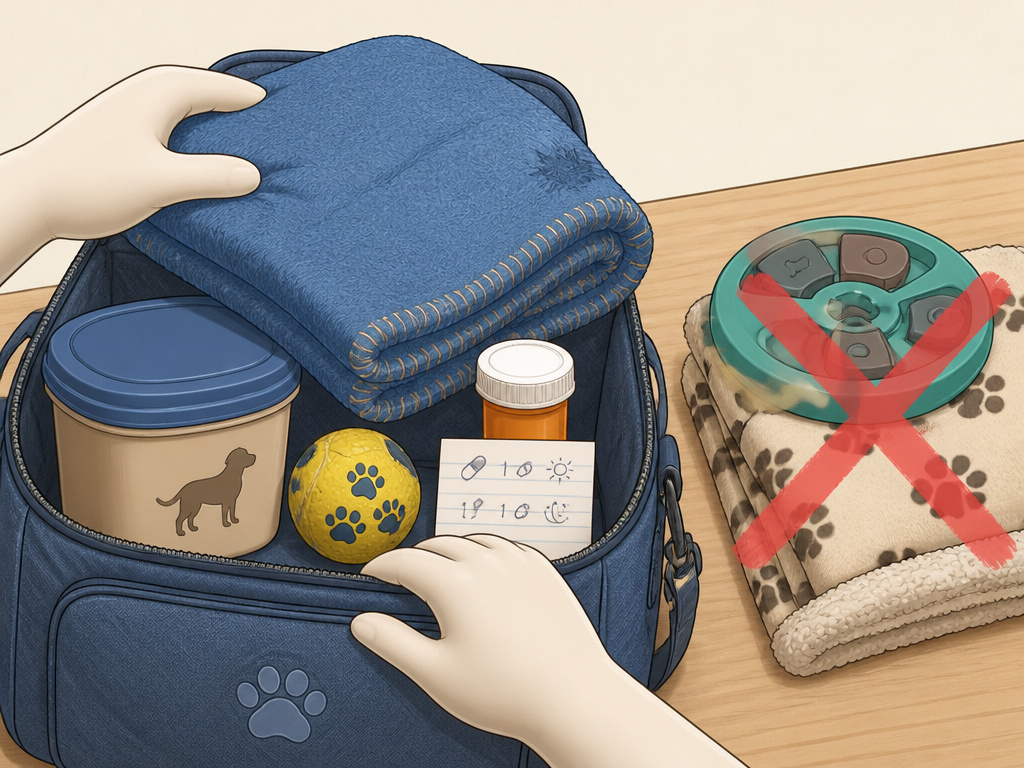
Pack less than you think, and make sure the little you pack smells like home.
VCA recommends bringing your dog’s own bed or blanket along with favourite toys, because familiar smell does more for a nervous dog than a new item ever will. The NSW code requires the facility to record any belongings that come in with your dog.
- A blanket that smells like your house. Not a new one from the pet shop on the way over.
- Your dog’s own food, in a labelled container, if the facility allows it. Ask first, because the feeding schedule has to be adaptable for special needs.
- Written medication instructions with dose and timing, plus the medication in its original packaging. Confirm the staff are willing and able to give it as scheduled.
- One familiar toy. A favourite toy travels well and gives staff something to hand over at settling time.
- Nothing valuable. Collars, leads and belongings all get logged.
Easy to miss: The NSW code requires the facility to record your dog’s condition and preferably weight on arrival. Ask for that record at drop-off. It is your baseline if your dog comes home looking thinner than they left.
Leave the food puzzle at home unless staff say otherwise. A food puzzle can help a dog settle in the right hands, and is a piece of clutter in the wrong ones.
Who Decides If Your Dog Sees a Vet While You’re Away?
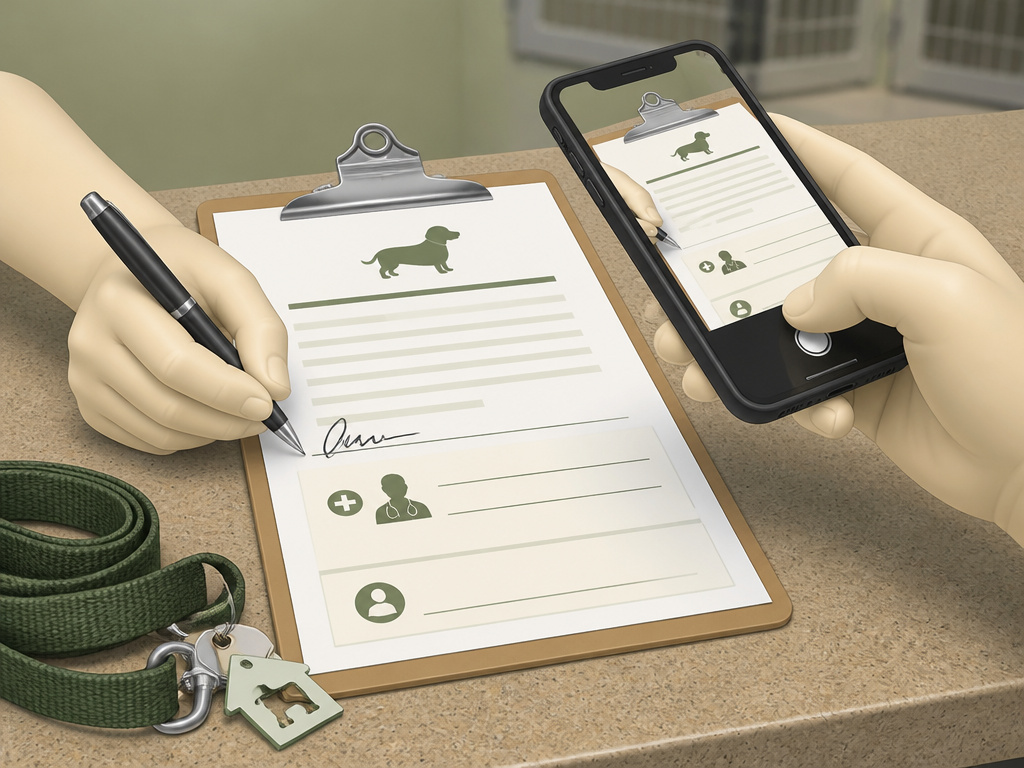
Two documents do the work here, and owners sign one and forget the other.
VCA is clear that you should leave written authorization for emergency veterinary care with the kennel, along with your vet’s contact details and the name of someone who can make decisions if you cannot be reached. That last part is the one people skip. Here is the catch: if your partner is on a plane and your sister is not named, nobody can say yes.
The sources disagree on how far that authority should extend. The SF SPCA wants the kennel to contact you and let you decide, with a vet fallback if you are unreachable. The NSW code takes a different route entirely, requiring authorization for veterinary treatment to be signed at admission, so the decision is delegated in advance rather than deferred to a phone call.
Neither approach is wrong. They just produce very different phone calls.
If nobody can reach you and nobody holds written authority, a dog that stops eating on day two can sit until day three before anyone is cleared to act. Sign the authorization at drop-off and name a second person who can say yes.
The Written Authorization
The NSW code also requires the facility manager to establish liaison with a vet who can attend to animals in their care and advise on disease prevention. Ask for that vet’s name. If the answer is vague, that is information.
The code states that where an animal becomes seriously ill or injured during boarding, and a vet who has examined the animal recommends it, euthanasia should be considered. That is a decision you want a named person holding, not a front desk improvising.
Keep a photo of the signed authorization on your phone. Paperwork at a kennel desk has a way of becoming paperwork in a drawer.
The Pickup Check That Tells You How It Went
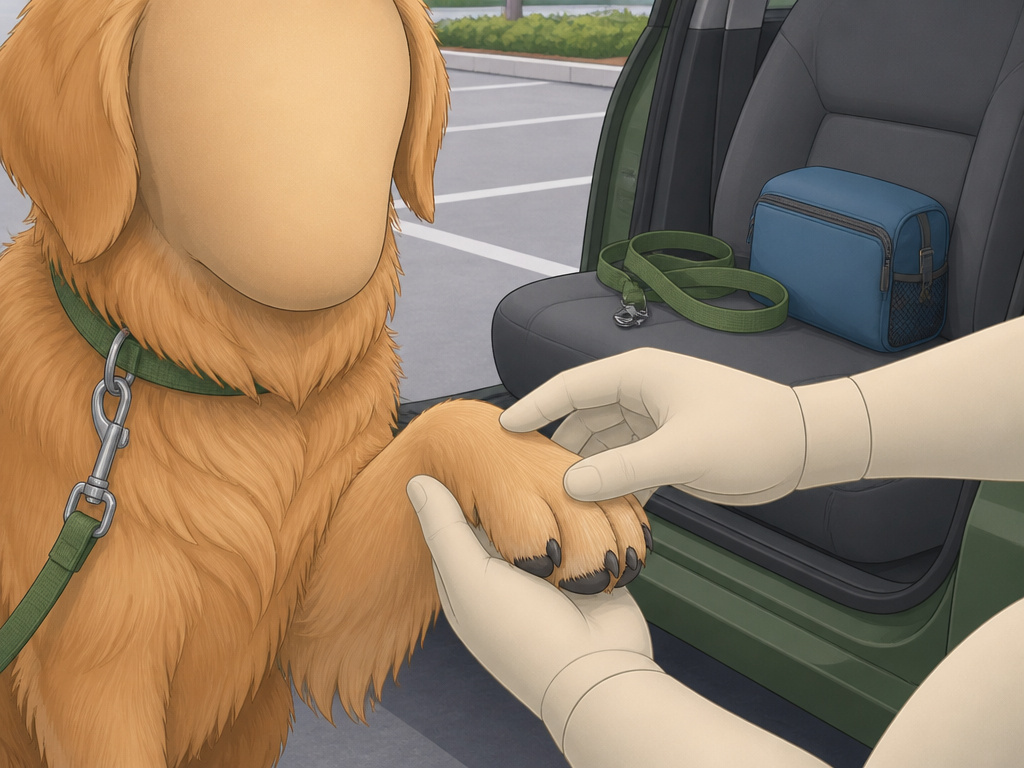
Look at the dog before you say a word to the staff.
VCA recommends evaluating your dog’s general condition at pickup, and then asking staff about behaviour and appetite. Do it in that order. The visual read is honest; the conversation afterwards is useful context.
A reduced appetite or lower water intake is normal for the first few visits in a dog that is not used to boarding. VCA says so plainly. What you are watching for is a dog that comes home in poor condition.
- Check the dog over in the car park. Eyes, coat, paws, and how they move.
- Ask what your dog ate and how much.
- Ask how your dog behaved with staff and other dogs. This is the part owners forget to write down.
- Collect the belongings you signed in, and check the log against what you brought.
One more thing to arrange before you go: the SF SPCA suggests confirming the facility will discharge your dog to you after hours with reasonable notice if your return is delayed. Ask at booking, not from an airport gate.
Frequently Asked Questions
How far ahead should I book a first boarding stay?
Early enough that you have room to change your mind. You need time for a trial visit, time to get the vaccination certificate dated correctly, and time for any booster to take effect before the stay. Zoetis puts the DAPP booster ideally at least 3 weeks ahead, which sets your practical floor.
Can I board a puppy under four months old?
Under the NSW code, no, except in exceptional circumstances. Dogs under 4 months should not be admitted for boarding, and cats under 3 months fall under the same rule. That is a regulatory line rather than a facility preference, so no amount of pleading moves it.
What if my dog won’t eat at the kennel?
Expect it on a first stay. VCA notes that many dogs unaccustomed to boarding eat less and drink less, and that this is normal for the first few visits. Bring your dog’s regular food if the facility allows it.
Do I need to bring my dog’s food?
Ask the facility first. The SF SPCA suggests checking the regular feeding schedule, whether it can be adapted for special needs, and whether you can bring your own food. Bringing your own food is usually the better call where it is permitted.
What happens if my flight home is delayed?
Arrange it before you travel. The SF SPCA suggests confirming that the facility will make arrangements to discharge your dog after hours with reasonable notice. Get that answer from someone who can commit to it.
The Bottom Line
If your dog is under 4 months old, plan for later, as the NSW code says such dogs should not be boarded except in exceptional circumstances. The NSW code sets that rule, subject to exceptional circumstances.
For everyone else, the single most useful thing you can do this week is call your vet and ask them to read you the date on your dog’s vaccination certificate. Not the vaccine names. The date. If it falls outside the preceding 12 months, you need to address it before boarding.
How to board a dog for the first time comes down to a short trial stay, a certificate with the right date on it, and a signed authorization naming a real human who can make decisions. Everything else on the tour is detail.
One concession, because it matters. None of this helps a dog that is genuinely dog-reactive or deeply anxious about separation. For that dog, choose a facility that keeps dogs separate or hire a pet sitter.
