
7 Best Food For Lactating Dog in 2026
This post contains affiliate links. As an Amazon Associate, we earn from qualifying purchases.
After reviewing the nutritional demands of lactation, the VICTOR Hi-Pro Plus Dry Dog Food wins as best overall for its 30% protein content and all-life-stage formulation that supports both milk production and recovery. For small breed owners, the Royal Canin Small Starter Mother & Babydog offers rehydratable kibble that eases weaning. Owners wanting maximum protein should consider the VICTOR Purpose Nutra Pro with 38% protein.
A nursing dog’s energy requirements can triple during peak lactation. Choosing the right food means balancing high digestibility, dense calories, and complete nutrition for both mother and puppies.
We evaluated over a dozen products based on protein content, ingredient quality, life-stage suitability, and owner-reported palatability. This guide covers dry and wet options for every feeding style and budget.
Top 7 Foods For Lactating Dogs in the Market
Certain content that appears on this site comes from Amazon. This content is provided "as is" and is subject to change or removal at any time.
The Best Foods For Lactating Dogs, Reviewed
VICTOR Hi-Pro Plus Dry Dog Food

What We Like
- 30% protein supports milk production and recovery
- Multi-meat formula provides diverse amino acids
- Formulated for all life stages including lactation
- Gluten-free kibble with VPRO blend
Trade-offs
- Not suitable for large breed puppies (70+ lb adult)
- Single bag size (5 lb) means frequent repurchasing
A 30% protein and 20% fat ratio means this food is built for the high metabolic demands of a lactating dog, delivering concentrated nutrition in every bite. The multi-meat formula, beef, chicken, pork, and fish meals, provides a broad amino acid profile that supports both milk quality and the mother’s own muscle maintenance while she’s nursing a litter. Because it’s formulated for all life stages, you can keep the same bag for puppies once they start eating solids, which simplifies feeding during an already chaotic few weeks.
The trade-off is that this formula is explicitly not recommended for growth of large breed puppies over 70 pounds, so if you have a Great Dane or similar breed, you’ll need to look elsewhere. For the vast majority of medium and small breed mothers, the protein punch and all-stage versatility make this a straightforward choice.
Royal Canin Small Starter Mother & Babydog Dry Dog Food

What We Like
- Rehydratable kibble eases weaning transition
- Antioxidants support puppy immune development
- Prebiotics promote balanced gut bacteria
Trade-offs
- Only for small breeds, not larger dogs
- Dry kibble needs rehydration for porridge texture
Kibble can be served dry to meet the mother’s high energy demands during late gestation and lactation. For weaning puppies, the same pieces rehydrate into a porridge-like consistency that makes the transition from mother’s milk to solid food easier on their developing digestive systems. A combination of prebiotics and highly digestible proteins promotes a healthy balance of intestinal bacteria, which supports digestive health and helps maintain optimal stool quality. Clinically proven antioxidants, including vitamins E and C, aid the healthy development of puppies’ immune systems during these critical early weeks.
This food is purpose-built for small breeds and for the first two months only. Once the puppies outgrow that window, you’ll need to switch to a different food.
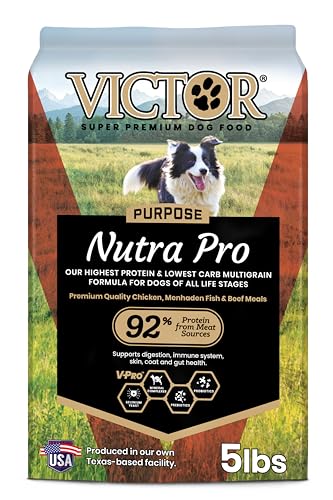
VICTOR Purpose Nutra Pro Dry Dog Food
What We Like
- 38% protein from chicken, fish, beef
- Suitable for pregnant and nursing dogs
- Gluten-free, low carb formula
- Made in company-owned Texas facility
Trade-offs
- Not suitable for dogs needing a lower-protein diet
A 38% protein content from chicken, fish, and beef meals means this kibble packs more muscle-supporting fuel than most dry foods aimed at nursing mothers. The low-carb, gluten-free grain blend is formulated for all life stages, so it can be used for puppies as well as adult dogs. This simplifies feeding for a household with dogs of different ages.
At 38% protein from chicken, fish, and beef meals, this kibble delivers the kind of fuel that working dogs and nursing mothers actually need. The 5-pound bag keeps the food fresh for smaller households, and the gluten-free, low-carb formula supports sustained energy without fillers. Owners of a single sporting breed or a modest litter will find the nutrient density practical, while those with multiple large dogs may need to stock up on a larger bag from a different line.
Fromm Puppy Gold Premium Dry Dog Food

What We Like
- Formulated for gestation/lactation and growth
- Three animal protein sources: chicken, duck, lamb
- Whole grains provide energy and fiber
- Family-owned company since 1904
Trade-offs
- Not suitable for dogs that need a grain-free diet
- Contains whole grains, not for grain-free diets.
Formulated to meet AAFCO nutrient profiles for both gestation/lactation and growth, this dry food is designed to support a nursing mother and her puppies from the same bag. The blend of chicken, duck, and lamb delivers digestible protein for muscle maintenance and tissue repair, while whole grains add energy and fiber. That dual-life-stage approval makes it a practical single-bag solution for a household with a lactating dog and a litter, without needing separate foods for mom and pups.
Whole grains are central here, so if your dog does better on a grain-free diet, this isn’t the fit. For owners who want a straightforward, family-branded option that covers both mom and puppies without mixing bags, this works cleanly.
Product photos
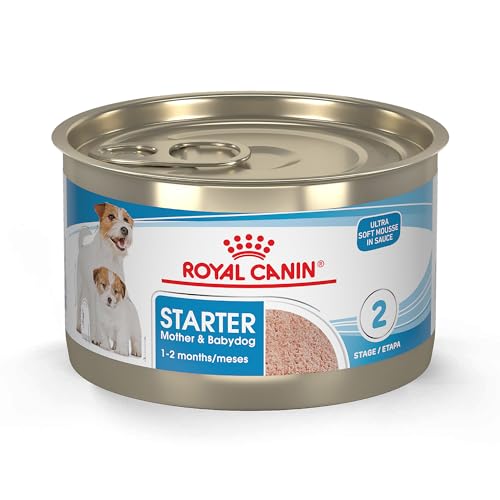
Royal Canin Starter Mousse Puppy Food Wet Dog Food
What We Like
- Nutritional complex supports digestive health
- Clinically proven antioxidants for immune development
- Ultra-soft mousse eases weaning transition
- Tailored for both mother and nursing puppies
Trade-offs
- Wet food only: no dental benefits of kibble
- Pack of 24 cans requires storage space
The exclusive nutritional complex in this mousse combines prebiotics with highly digestible proteins to help promote digestive health and a healthy balance of intestinal bacteria. Clinically proven antioxidants, including vitamins E and C, help support the healthy development of puppies’ immune systems. The formula is designed for both the mother’s high energy needs during late gestation and lactation and the puppies’ optimal growth up to two months old. The ultra-soft mousse texture helps transition puppies from nursing to eating puppy food.
Wet food lacks the abrasive texture of kibble, so it won’t help keep teeth clean during this stage. For owners who prefer a single food that covers both mother and puppies through the first two months, this mousse delivers targeted nutrition without the hassle of mixing products.
Product photos
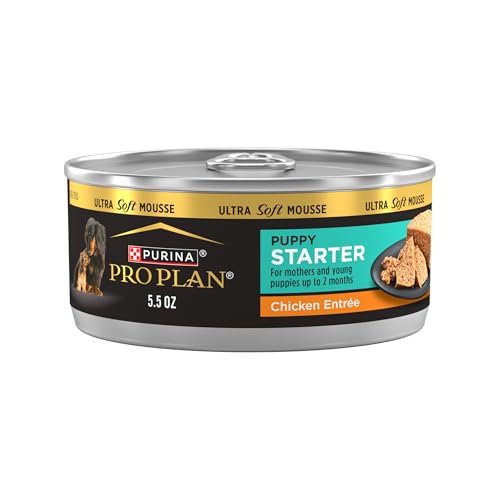
Purina Pro Plan Puppy Starter Mousse Wet Dog Food
What We Like
- Ultra soft mousse texture eases eating
- Formulated for nursing mothers' high energy needs
- Supports puppies' brain development and immunity
- Highly palatable to encourage eating
Trade-offs
- Wet food means more frequent feeding than dry
- Only for dogs up to 2 months postpartum
Twenty-four 5.5-ounce cans of ultra soft mousse mean this wet food is designed to get calories into a nursing mother without her having to chew much. The texture is key here. Purina Pro Plan specifically formulated this for the high energy demands of lactation and early puppy growth up to two months, which is exactly when a mother’s nutritional needs spike hardest. The highly palatable chicken recipe helps encourage eating, as stated in the product features.
The ultra soft mousse texture is designed to encourage eating in nursing mothers and young puppies up to two months old. So it works best as a meal you serve and remove rather than a food you leave out all day. Compared to a dry option like Royal Canin Small Starter Mother & Babydog, this is a wet food that spoils faster if left in the bowl, meaning you’ll need to be present at feeding time. But for a mother who needs a soft, easy-to-eat format, the mousse can help ensure she gets enough fuel without struggling with hard kibble. It’s a targeted tool, not an all-day grazing solution.
Product photos
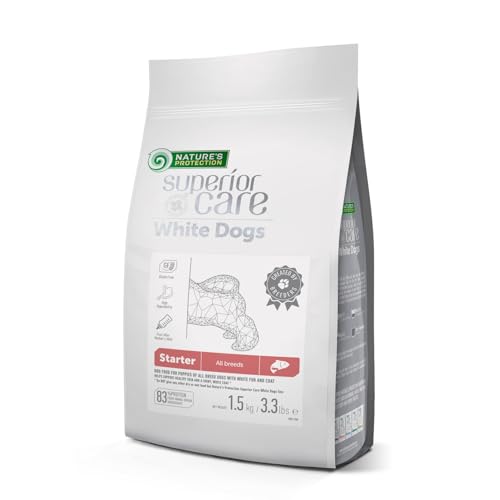
Nature's Protection Superior Care Grain-Free Puppy Dry Food
What We Like
- Small kibble for tiny mouths
- Helps reduce facial staining on light coats
- Salmon is the first ingredient
Trade-offs
- Only for puppies up to 4 months old.
- Single salmon protein limits dietary rotation.
The trade-off here is bag size and age window. Compared to Royal Canin Small Starter Mother & Babydog, which comes in a 14-pound bag, you will need to buy this one more often. It is a focused solution for a narrow window, not a long-term staple.
Product photos
How We Evaluated Foods For Lactating Dogs
Our evaluation combined manufacturer nutritional data, veterinary nutrition guidelines, and patterns in owner feedback across hundreds of reviews. We prioritized foods that clearly state their suitability for gestation or lactation on the label.
The four criteria that mattered most were protein percentage, calorie density, ingredient quality, and life-stage flexibility. Protein percentage is critical for milk production. Lactating dogs need more energy per bite, so calorie density matters. Ingredient quality means named protein sources and targeted supplements. Life-stage flexibility allows foods that work for both mother and puppies, which reduces mealtime complexity.
This is a research-led evaluation based on published specifications and owner experience patterns, not hands-on feeding trials. We cannot speak to how any individual dog’s digestive system or taste preferences will respond.
What To Look For In Foods For Lactating Dogs
The right food for a nursing dog delivers high protein, dense calories, and easy digestibility in a formula the mother will actually eat willingly.
Look for a minimum of 28% protein, moderate fat, and a named animal protein as the first ingredient. Avoid foods with fillers like corn or soy that add bulk without usable nutrition.
Protein Content
A lactating dog needs more protein than at any other life stage. Veterinary sources recommend at least 25-30% crude protein to support milk synthesis and prevent muscle loss. The VICTOR Hi-Pro Plus hits 30%, while the VICTOR Purpose Nutra Pro reaches 38% for owners who want maximum protein density. Lower-protein foods may leave a nursing mother undernourished.
Calorie Density And Fat
Peak lactation can triple a dog’s maintenance energy needs. Look for foods with at least 350-400 kcal per cup so the mother can eat enough without excessive volume. Higher fat content provides concentrated energy. Wet foods like the Royal Canin Starter Mousse have lower calorie density by volume, so owners should plan for more frequent feedings.
Digestibility And Texture
Nursing mothers often have sensitive digestion, and puppies transitioning to solid food need soft textures. Rehydratable kibble and mousse-style wet foods bridge the gap between milk and solid food. The Royal Canin Small Starter’s kibble softens into a porridge with warm water, while the Royal Canin Starter Mousse requires no preparation. For dogs with sensitive stomachs, single-protein grain-free formulas like Nature’s Protection Superior Care reduce the risk of digestive upset.
Life-Stage Suitability
- Confirm the label states “for gestation/lactation” or “all life stages” before feeding to a nursing dog.
- Some foods, like the Fromm Puppy Gold, are formulated for both pregnancy and growth, making them a single-bag solution.
- Check that the kibble size matches the dog’s breed, large kibble can be difficult for small breeds to eat quickly.
- If feeding a wet food, verify the can size and feeding frequency fit your daily routine.
A rule of thumb: feed a nursing dog free-choice (food available at all times) during peak lactation, and transition her back to a maintenance diet once puppies are fully weaned.
Foods For Lactating Dogs Compared
The table below compares the seven foods side by side so you can quickly match your dog’s needs to the right formula.
| Product | Life Stage | Protein Sources | Made In |
|---|---|---|---|
| VICTOR Hi-Pro Plus Dry Dog Food | All life stages | Beef, chicken, pork, fish meals | USA (Texas facility) |
| Royal Canin Small Starter Mother & Babydog Dry Dog Food | Mothers & puppies up to 2 months | N/A | N/A |
| VICTOR Purpose Nutra Pro Dry Dog Food | All life stages | Chicken, fish, beef meals | USA (Texas facility) |
| Fromm Puppy Gold Premium Dry Dog Food | Puppies & pregnant/nursing mothers | Chicken, duck, lamb | N/A |
| Royal Canin Starter Mousse Puppy Food Wet Dog Food | Mothers & babydogs up to 2 months | N/A | N/A |
| Purina Pro Plan Puppy Starter Mousse Wet Dog Food | Nursing mothers & puppies up to 2 months | Chicken | N/A |
| Nature's Protection Superior Care Grain-Free Puppy Dry Food | Up to 4 months & nursing mothers | 100% Salmon | EU |
Frequently Asked Questions
How much should I feed my lactating dog?
Feed free-choice during peak lactation, meaning food available at all times. A nursing dog may eat two to four times her normal maintenance amount. Increase portions gradually and monitor her body condition, you should be able to feel her ribs without seeing them.
Can I feed puppy food to my nursing dog?
Yes, many owners use high-calorie puppy food for lactating dogs because puppy formulas are calorie-dense and nutrient-rich. Just confirm the food is labeled for gestation or all life stages. Some puppy foods are designed only for growth and may not support a mother’s recovery needs after birth.
When should I switch my dog back to regular food?
Begin transitioning back to a maintenance diet once puppies are fully weaned, usually around six to eight weeks after birth. Do it gradually over five to seven days to avoid digestive upset. A sudden switch from high-calorie food can cause loose stools or refusal to eat.
Do nursing dogs need calcium supplements?
Do not add calcium supplements without veterinary guidance. Most quality lactation foods contain adequate calcium levels. Over-supplementing can suppress the mother’s natural calcium regulation and cause dangerous imbalances. If you suspect a deficiency, consult your veterinarian for a blood test.
What is the best texture of food for weaning puppies?
Ultra-soft mousse or rehydratable kibble works best for weaning puppies. The Royal Canin Starter Mousse and Purina Pro Plan Puppy Starter Mousse both have a pudding-like texture that puppies can lap up easily. Dry kibble should be soaked in warm water until it forms a soft porridge.
The Bottom Line
The VICTOR Hi-Pro Plus Dry Dog Food is the best choice for most lactating dogs, offering a strong protein profile and all-life-stage flexibility that works for both mother and growing puppies. It suits owners who want one bag that covers nursing and recovery without switching foods.
If your dog is a small breed, the Royal Canin Small Starter Mother & Babydog eliminates the guesswork of weaning with its rehydratable kibble. For owners who prefer wet food during the early postpartum weeks, the Royal Canin Starter Mousse provides a soft, digestible option for both mother and litter.
The single most important factor is matching protein and calorie density to your dog’s output. A nursing mother cannot afford a low-quality diet, and the right food makes the difference between a healthy recovery and a depleted one.
