
How to Tell If a Dog Is Scared: 12 Signs to Know
This post contains affiliate links. As an Amazon Associate, we earn from qualifying purchases.
A scared dog rarely shows one sign. It shows a pattern, and the pattern is what you read.
Learning how to tell if a dog is scared means reading a cluster of signs, not one: tail tucked between the legs, lowered head, trembling, lip licking, ears held low, and a tense closed mouth.
That cluster matters because single signals lie. A wagging tail can mean arousal, not happiness. A dog that freezes mid-step may be shutting down rather than relaxing. Research on owner training turned up something uncomfortable: training made owners more likely to notice mild fear but did not significantly improve how reliably they judged it.
What follows is a working list: 12 signs grouped by body region, the places where reputable sources disagree about what those signs mean, and the response veterinary schools actually recommend instead of comforting.
Key Takeaways
- Read the cluster, not the single sign. Several fear signals at once is strong evidence. One on its own is weak.
- Flattened ears are a strong single cue, but read them with the rest of the body.
- Comforting may amplify fear, per UC Davis, though a widely shared trainer video recommends soft tone and space instead of ignoring the dog.
- Punishment and flooding both make fear worse. UC Davis is explicit on both.
- Sudden fear in a senior dog is a vet question first, because pain, hearing loss, and cognitive changes all push a dog toward fearful behavior.
How to Tell If a Dog Is Scared in the Moment
A scared dog rarely shows one sign. It shows a pattern, and the pattern is what you read.
The fear response in dogs appears across three channels at once: posture, face, and movement. Posture covers tail position, head height, weight shift, and whether the body leans toward or away from the trigger. The face carries ear position, mouth shape, and eye whites. Movement covers freezing, pacing, and escape attempts.
Six of the twelve signs are the loud ones. They show up in the first second and they’re the ones most owners already recognize.
| Sign | What You See | Source |
|---|---|---|
| Tail tucked | Tail pressed between the legs, body tense | UC Davis, Bristol |
| Lowered head | Head drops below shoulder height | UC Davis |
| Trembling | Shaking when the dog isn’t cold | UC Davis, Bristol |
| Repeated lip licking | Licking with no food present | UC Davis, Bristol |
| Whale eye | Whites of the eyes visible, pupils wide | Bristol |
| Freezing | Dog stops moving and won’t take a cue | UC Davis, Bristol |
The other six are quieter, and they’re the ones that get missed. Ears held low or back against the head. A tense closed mouth with wrinkled eyebrows. Lifting one paw. Hackles raised more often than usual. Hiding or withdrawing behind an object or a person. Refusing a treat the dog would normally take.
The University of Bristol‘s behavioural signs table adds a few more worth knowing: pacing, panting that isn’t from heat or exercise, drooling with no food present, and a dog that startles easily or shuts down completely. If you want the full catalogue, our guide to signs of dog stress covers where fear overlaps with anxiety, and the dog body language breakdown covers the neutral signals that get misread as fear.
Which Signs Do Owners Actually Catch?
Research on how owners read canine emotion puts numbers on this. Flattened ears are among the signs owners most often miss. Low posture, lowered tail, hiding, escape attempts, panting, lip licking, and no eye contact are all listed as fear signs.
Sensitivity means the sign shows up when the dog is scared. Specificity, the how to tell if a dog is scared question, means it doesn’t show up when the dog isn’t. A sign that clears both is worth trusting. A sign that clears one but not the other is a coin flip with extra steps.
The uncomfortable part of the research is this: owner training made people more likely to notice mild fear, but it did not significantly improve how reliably they judged it. Learning the signs helps you spot the quiet ones. It doesn’t make you a reliable judge on its own.
Common mistake: Reading one signal in isolation. A wagging tail, a lifted paw, or a single lip lick tells you almost nothing without the rest of the body. A dog can wag while tense, and a dog can lick its lips because it just ate.
Weight shift is the piece most owners skip. A dog leaning away from a person is showing you its read on that person before it shows you anything else. The dog posture guide covers how lean direction and paw placement change what the rest of the body means.
Why Does a Scared Dog Sometimes Snap?
A growling dog has usually run out of exits. UC Davis puts it plainly: a scared dog may bark or growl if it feels it can’t escape what it fears. The growl is a warning signal, not a dominance display.
Before you start: A scared dog can bite even if it has never bitten before, and the bite often comes without a growl first. Keep your face back, don’t reach over the head, and put a barrier between you and a cornered dog. A dog that can’t retreat is the highest-risk situation in the house.
The University of Bristol table lists the escalation ladder in order: tense body with tail straight up, lunging forward, wrinkled muzzle, lip lift showing teeth, then a snap. Each step is a dog asking for space in the loudest way it has left. Punishing the growl removes the warning without removing the fear, which is how you get a dog that bites with no notice.
For the clinical framing of how aggression and fear overlap, PubMed Central indexes a canine aggression assessment research article.
Trembling is the other signal people misread. A dog that shakes during a thunderstorm isn’t cold. Our guide to dog shaking covers the difference between temperature and fear.
What the Freeze Response Actually Means
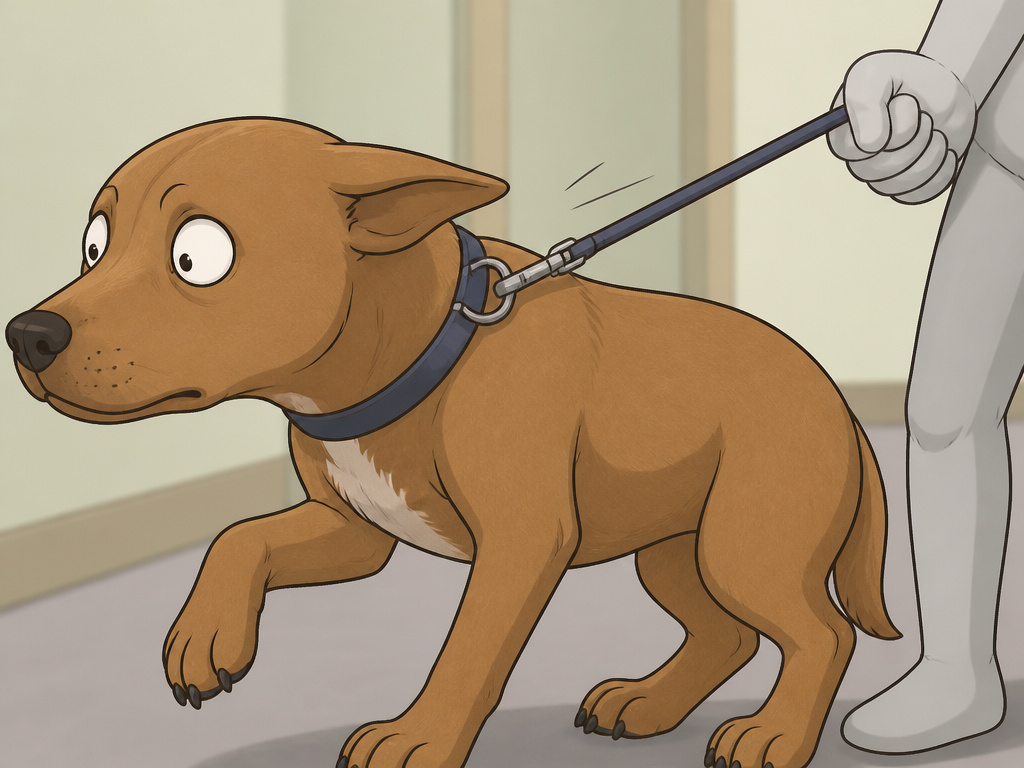
VCA Animal Hospitals frames freeze as one of four classic fear responses, alongside fight, flight, and fidget, and in that framing a dog that stiffens is communicating a desire to end the interaction, while UC Davis lists becoming immobilized as a fear sign without assigning it that intent. UC Davis lists becoming immobilized as a fear sign but doesn’t assign it that intent. Both agree the dog is scared. They differ on whether the freeze is a message or just a shutdown.
That distinction matters at the boundary line. A dog that stops and looks back at you has learned the boundary. A dog that stops and stares at the far side, body stiff, has learned to wait. The first dog is checking in. The second dog is enduring something.
The four responses break down like this:
- Fight: barking, growling, lunging, or snapping when escape isn’t possible.
- Flight: running away, hiding, or backing into a corner.
- Freeze: going still, refusing to move, or shutting down entirely.
- Fidget: pacing, spinning, tail chasing, or repetitive licking.
A frozen dog hasn’t learned anything. That’s the mistake I see most often after a few static corrections: the dog stops moving, the owner reads it as compliance, and the fear is still there underneath.
Should You Comfort a Scared Dog?
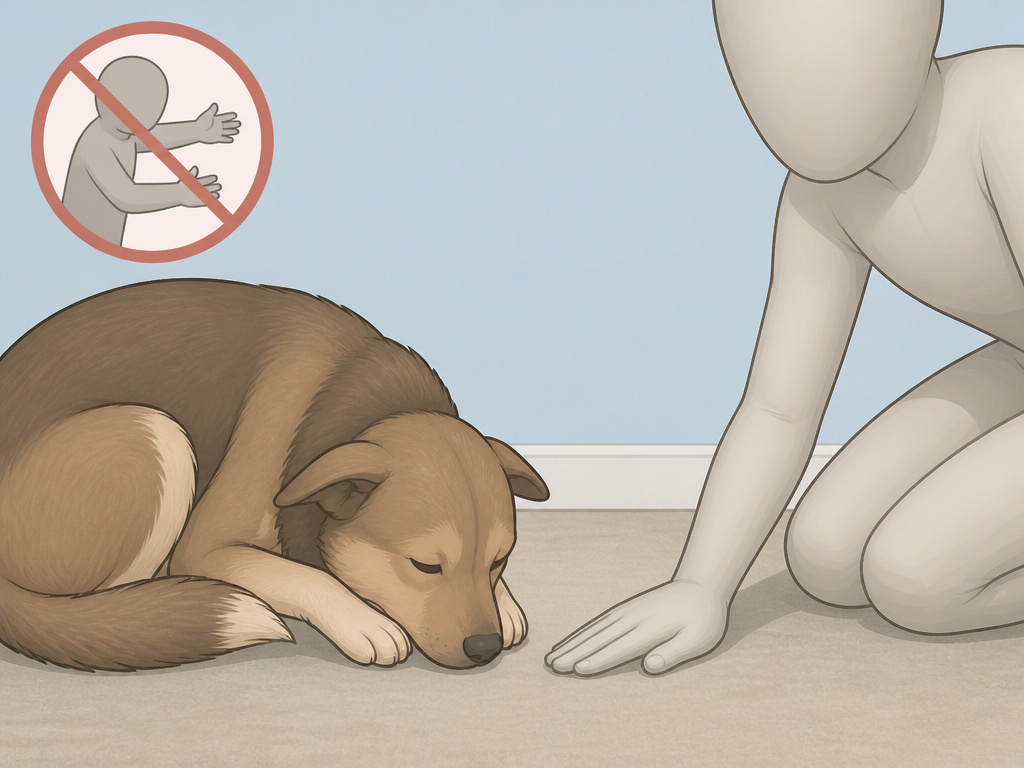
This is where the sources split, and the split is worth showing rather than smoothing over.
UC Davis says the owner’s natural reaction to comfort a fearful dog by petting or picking up may amplify the fear, because the dog reads the comfort as positive reinforcement of the fearful behavior, while a widely shared trainer video recommends speaking softly and giving space instead. Their recommended response is to act as though nothing unusual is going on, redirect the dog to a “look” or “sit” cue, then treat the cue.
A widely shared trainer video takes a different angle: speak softly and give space, and never force cuddles. That’s a quieter version of the same idea, with the tone dialed toward reassurance instead of neutrality.
| Response | UC Davis Position | Other Sources |
|---|---|---|
| Petting or picking up | May amplify fear via positive reinforcement | Trainer video: speak softly, give space, never force cuddles |
| Acting neutral | Act as though nothing unusual is going on | Not directly addressed |
| Redirecting to a cue | Use “look” or “sit”, then treat | Not directly addressed |
What both positions share: don’t flood the dog with the thing it fears, and don’t punish the reaction. UC Davis is explicit on both. Flooding makes the fear worse. Punishment strengthens the negative association with the trigger.
Where this goes sideways: Comforting a dog that’s already over threshold. Once the dog is past the point of taking a treat or hearing a cue, neither petting nor redirecting lands. Wait for the dog to come back down before you try either.
If you’re wondering whether your own nerves are part of the picture, our piece on whether dogs smell fear covers what the research actually supports and what it doesn’t.
When Fear Is a Medical Problem, Not a Training One
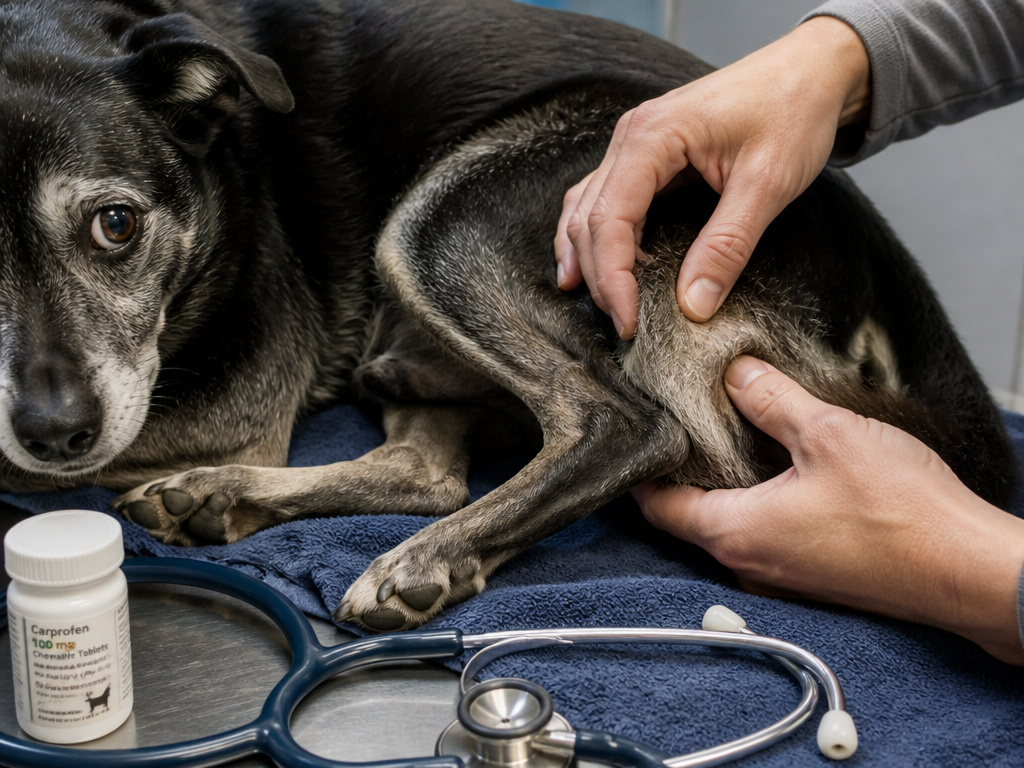
VCA lists four medical drivers behind sudden fear: pain, inadequate nutrition, medication that affects the brain or GI tract, and underlying medical conditions. Senior dogs are the highest-risk group, because osteoarthritis pain, hearing loss, vision changes, and cognitive decline all push a dog toward fearful behavior.
The practical test is simple. If the fear signs showed up suddenly in an older dog, or if they come with limping, appetite changes, or confusion, a vet visit comes before any training plan. A dog that’s scared because its hips hurt won’t respond to desensitization the way a dog that’s scared of the vacuum will.
A few situations worth flagging:
- Vet visits. A dog that only looks fearful at the clinic doesn’t meet the threshold for an anxiety disorder. Our guide to calming a dog at the vet covers visit-specific handling.
- Loud noises. Thunder and fireworks are the most common environmental triggers. The protecting dogs from fireworks guide covers the setup that works better than reassurance.
- New environments. A dog that’s fine at home and shut down in a new place is showing context-specific fear, not a global problem.
Socialization timing sits behind a lot of this. VCA puts the sensitive period at 3 to 14 weeks, with positive experiences at least twice weekly until 16 weeks, then weekly for at least another year. A negative experience in that window can produce a fear that lasts.
How to Build a Calmer Dog Over Weeks, Not Days
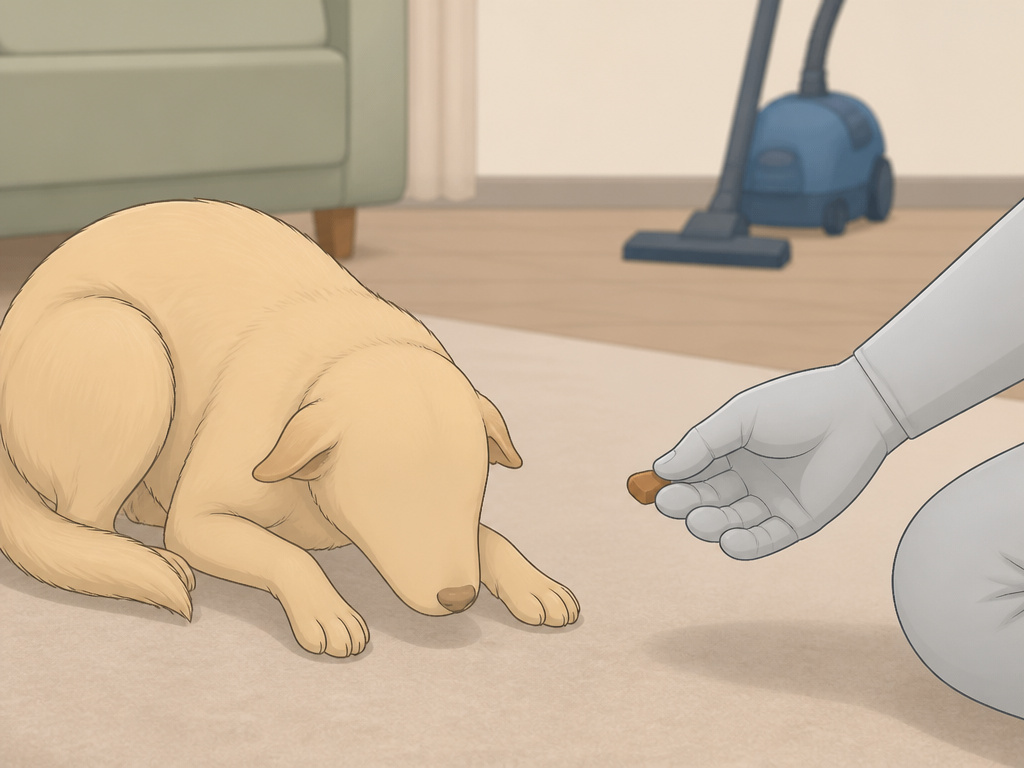
UC Davis recommends desensitization and counterconditioning for fear situations, with two hard conditions: the trigger has to be identified, and the relationship between dog and owner has to be stable first. Both take longer than most owners expect.
The sequence that works:
- Identify the trigger. Not “the vacuum” but “the vacuum at the far end of the hallway, switched on, for four seconds.” Narrow it until you can control the dose.
- Set the starting distance. Far enough that the dog notices the trigger but doesn’t react. If the dog won’t take a treat, you’re too close.
- Pair the trigger with something the dog values. Food works for most dogs. For dogs that aren’t food motivated, UC Davis suggests another non-food treat the dog actually values.
- Keep sessions short. VCA’s socialization guidance applies here too: short sessions, frequent breaks, and only continue if the dog is enjoying it.
- Raise the dose slowly. UC Davis is blunt about this: don’t move too quickly. A step forward that produces a reaction is a step you undo.
I’ve watched owners rush step five more than any other. The dog looks fine for three sessions, the owner jumps the distance, and the fear comes back harder than it started. Slow is the whole method.
Consistency across the household matters as much as the protocol. UC Davis is explicit: all family members should treat the fearful dog the same way. One person comforting while another redirects undoes the work.
If the fear is general rather than trigger-specific, the dog anxiety solutions guide covers the broader setup.
Frequently Asked Questions
How can you tell if a dog is scared versus just tired?
Tired dog settles and sleeps. A scared dog doesn’t settle even when it’s exhausted. Look for the cluster: tucked tail, lowered head, ears back, lip licking, and a dog that won’t take a treat it normally would. A tired dog takes the treat. A scared dog often won’t.
Do dogs really smell fear?
The research on canine olfaction is real, but the popular version of the claim runs ahead of the evidence. Whether dogs detect fear through smell specifically is a narrower question than most articles admit. What’s better documented is that dogs read human body language and tone closely.
Is a wagging tail always a sign of a happy dog?
No. A wagging tail signals arousal, and arousal can be positive or negative. A dog with a stiff, high wag and a tense body is not a happy dog. Read the wag alongside the rest of the body: ear position, mouth shape, and whether the weight is leaning toward or away from you.
At what age should socialization prevent fear?
VCA puts the sensitive period between 3 and 14 weeks. Positive experiences should happen at least twice weekly until 16 weeks, then weekly for at least another year. A negative experience in that window can produce a long-lasting fear, so the pace matters as much as the exposure.
When should I see a vet about my dog’s fear?
When the fear showed up suddenly, when it comes with pain signs like limping or reluctance to climb stairs, or when the dog is a senior and the behavior is new. VCA lists pain, nutrition, medication, and underlying medical conditions as drivers. Rule those out before you build a training plan.
Does punishing a scared dog work?
No. UC Davis is direct: punishment may enhance the dog’s negative association with the fearful stimulus. It also removes the warning signals, which is how a dog learns to bite without growling first.
The Bottom Line
If your dog shows fear signs at home with no obvious trigger, that’s the line where a vet visit moves ahead of any training plan. VCA’s list of medical drivers is short and worth ruling out early: pain, nutrition, medication, and underlying conditions.
For everything else, the UC Davis protocol is the one to follow. Identify the trigger, keep the dose small, pair it with something the dog values, and move slower than feels necessary. The dogs that improve fastest are usually the ones whose owners were willing to look boring for a few weeks.
One concession: this all assumes a dog whose fear is trigger-specific and manageable at home. A dog that’s shut down most of the day, or one that’s already bitten, needs a veterinary behaviorist rather than a training plan. That’s a different problem than the one covered here, and it needs a different set of tools.
Watch one full week before you change anything. The pattern you see in that week will tell you more than any single sign on the list.
