
How Often Should You Brush a Dog’s Teeth? Vets Disagree
This post contains affiliate links. As an Amazon Associate, we earn from qualifying purchases.
Brush a dog’s teeth daily. That’s the flat statement in the 2019 AAHA Dental Care Guidelines: brushing has to happen every day to be of benefit. The American Veterinary Dental College calls frequent, ideally daily, brushing the single most effective home care step between professional cleanings. Three times a week is the floor some sources allow, while AAHA and AVDC hold daily as the standard.
That three-times-a-week floor is where the how often should you brush a dog’s teeth guidance splits. The AAHA guidelines treat daily as the only frequency that delivers benefit, while VCA Animal Hospitals puts the ideal at twice a day and calls three times a week the minimum. A Purdue Extension bulletin sets three times a week as the effectiveness threshold, with daily as the goal. Three credible sources, three different numbers.
What follows is the evidence behind those numbers, the relapse timeline nobody mentions, and a routine built for a dog that would rather not. By the end you’ll know what to aim for, what to settle for, and when to put the brush down and book a cleaning instead.
Key Takeaways
- Daily is the target. The AAHA guidelines state brushing has to happen every day to be of benefit, and the AVDC calls it the single most effective home care step you have.
- Three times a week is the floor according to VCA Animal Hospitals’ minimum recommendation and Purdue Extension, though Purdue still lists daily as the goal.
- Stop for two weeks and you’re back to zero. In a 22-beagle trial, gum and plaque scores returned to baseline after 14 days without brushing.
- Brushing removes plaque, not tartar. The hard brown line at the gum margin needs a professional scale and polish.
- About 3.7% of dog owners brush daily, against 81% of surveyed owners who said they’d consider it.
Four Sources, Three Different Answers on Brushing Frequency
The 2019 AAHA Dental Care Guidelines put it in one line: brushing needs to be done daily to be of benefit. That’s the hardest position in the set, and it comes from the body that writes the clinical standard most general practices follow.
Plaque is a bacterial film that forms on the tooth surface within hours of a cleaning. Brushing disrupts that film mechanically before it mineralizes into hard calculus. Once calculus has formed, brushing cannot remove it, and only a professional scaling and polish will. The distinction matters, because a brush is usually judged by the wrong result.
The 2019 AAHA Dental Care Guidelines are blunt about the mechanism too: brushing only removes plaque, not calculus. Keep that in your pocket, because it explains half the confusion in this topic.
Here’s how the four main sources stack up.
| Source | Frequency stated | What it means in practice |
|---|---|---|
| AAHA 2019 guidelines | Daily | Anything less delivers no benefit by their wording |
| AVDC | Frequent, ideally daily | Daily is the target, not a hard rule |
| VCA Animal Hospitals | At least twice daily; 3x weekly minimum | Highest bar of the four |
| Purdue Extension | 3x weekly threshold, daily goal | A two-tier answer |
VCA Animal Hospitals sets the highest bar, stating that dogs need their teeth brushed at least twice every day. The same article then says three times a week is the minimum to help remove plaque and prevent tartar accumulation. Both sentences live on the same page.
Purdue Extension lands in a similar place. Its Preventing Periodontal Disease in Dogs bulletin names three times a week as the effectiveness threshold while keeping daily as the goal, and notes plainly that brushing is the most effective method for prevention but may be challenging for many caretakers.
I’d take daily over every other day every time. But I’d also rather see four honest sessions a week than a perfect record abandoned by Thursday, and the how often should you brush a dog’s teeth sources leave room for that.
How Often Should You Brush a Dog’s Teeth to See a Change in a Week?
Seven days is enough to move the numbers. A 2023 study in the Journal of Veterinary Dentistry brushed 22 beagles daily for two weeks and measured gingival index, plaque index, calculus index, and thiol at days 1, 7, 14, and 29.
Both gum scores and plaque scores improved significantly at day 7 and again at day 14. By the end of the fortnight, every dog in the study had a plaque index of zero, whatever it started at. The authors concluded that brushing has a positive effect on oral health as soon as seven days after you begin.
- Gingival index and plaque index both improved significantly at day 7 and again at day 14.
- Plaque reached zero in all 22 dogs, regardless of starting score.
- Calculus index did not improve at either check, which lines up with the AAHA position that brushing only removes plaque.
- Calculus index did not improve at either check, which lines up with the AAHA position that brushing only removes plaque.
That last point reframes the whole job. A brush interrupts a film before it hardens. The visible brown line at the gum margin is already past the point where bristles do anything.
Where the Every-Other-Day Evidence Splits
Two studies on the same interval reached opposite conclusions, and neither one is easy to dismiss.
A 1996 study by Gorrel and Rawlings on the role of tooth-brushing in dogs found that brushing every other day did not maintain clinically healthy gingivae. A 2015 randomized trial on the Effect of Frequency of Brushing Teeth found that daily and every-other-day brushing both produced statistically significant improvement compared with weekly or every-other-week brushing.
So the every-other-day question is genuinely open. Daily has the stronger backing and the wider agreement. Treat every other day as a fallback for the weeks when life gets in the way, not as a plan you build around.
The 14-Day Relapse Nobody Warns You About
Twenty-two beagles brushed daily for two weeks, then stopped. Two weeks later, on day 29, their gingival and plaque scores were back where they started.
That’s from the same 2023 trial, and it’s the finding worth taping inside the bathroom cabinet. Fourteen days of daily brushing took plaque to zero. Fourteen days of nothing undid all of it.
Brush daily or don’t start. Gum scores that improve over two weeks fall back to baseline within two weeks of stopping, so a habit you can’t sustain buys you nothing.
There’s a second timeline worth knowing. The 2023 paper cites earlier work showing that a complete return from gingivitis to healthy gingiva may take six weeks of brushing twice daily, or 24 weeks of daily brushing. Two weeks gets you a measurable improvement. Reversing established inflammation is a longer project.
I check breath the way I check a coat: hands and nose first, tools second.
Here’s the honest caveat. Nobody has run a long-term trial showing that daily brushing adds a specific number of years to a dog’s life. The evidence covers plaque, gingivitis, and calculus over weeks, not decades. The mechanism is solid and the short-term data is clean, but the long horizon is inference.
Common mistake: Brushing hard for two weeks, seeing the gums improve, then drifting to once a week. Plaque scores climb back inside a fortnight, and the brushing you did buys nothing at the new frequency.
Why Does Your Dog Fight the Brush?
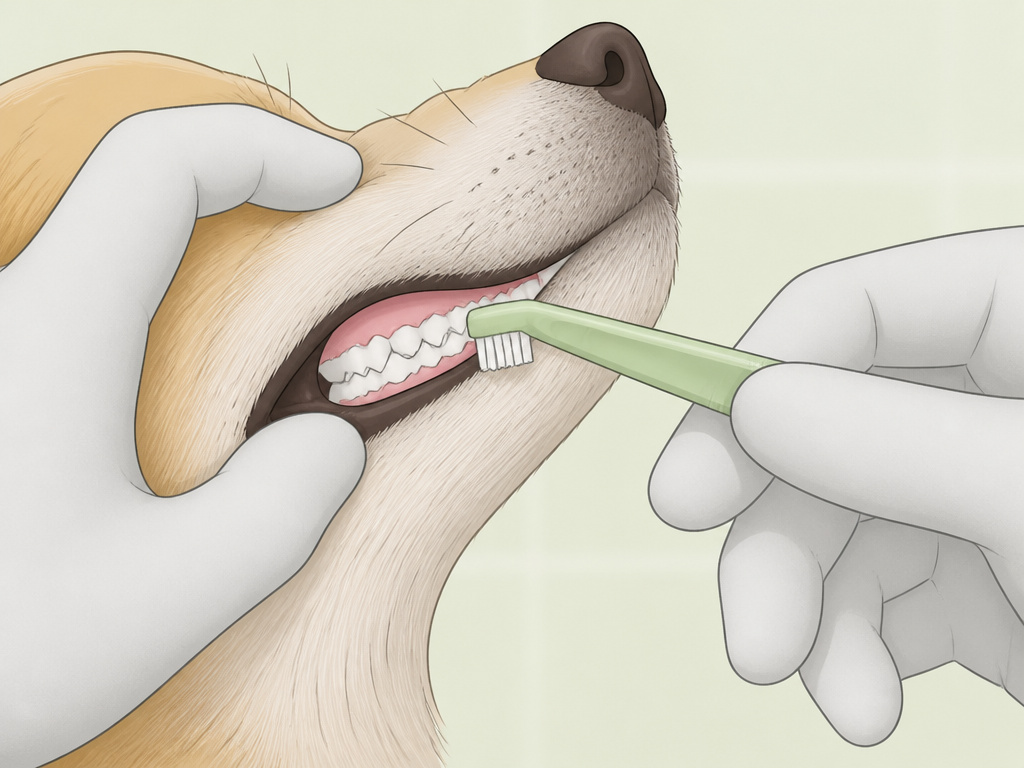
Your dog holds still for the first three strokes, then turns his head, licks his nose, and leaves. Nothing about that is unusual, and nothing about it means brushing won’t work.
In a 2023 adherence to dental home care study, 19 of 37 owners started brushing after their dog was diagnosed with periodontitis. Ten kept going. Nine stopped.
Among that surveyed group, 42% brushed daily, 11% brushed four to six times a week, and 17% managed one to three times a week. Compare that with the general dog-owning population, where 3.7% brush every day and 4.5% brush four to six times a week. A diagnosis moves the daily number from 3.7% to 42%.
The gap between intent and practice is the interesting part. 81% of respondents said they would consider brushing daily. Four out of five would consider it. Four out of ten actually do. And 64% reported some level of difficulty, with 31% calling it very difficult.
| What you’re seeing | Likely cause | What to do |
|---|---|---|
| Dog pulls away at the back teeth | A painful area in the mouth | Book a vet exam before pushing further |
| Pink tinge on the bristles | Gums already inflamed | Stop brushing; professional cleaning first |
| Brown line at the gum margin that won’t shift | Calculus, not plaque | A scale and polish, not more brushing |
| Tolerates ten seconds, then leaves | Habituation isn’t finished | Shorten sessions and build over weeks |
That first row matters more than the rest. The AVDC notes that a dog who resists brushing frequently may have painful areas in the mouth that need to be addressed. Resistance is information.
I’d stop the moment a dog flinches when the brush gets near the back of the mouth. A dog that suddenly hates a job he’s done for a year is telling you something hurts, and no amount of enthusiasm on your end fixes a cracked tooth.
The good news sits in the stress data. In the 2023 trial, fear, anxiety, and stress scores dropped from day 1 to day 14, and the authors noted it took longer than seven days for the dogs to become accustomed to handling and brushing. Give it two weeks before you decide your dog won’t tolerate it.
The Routine That Survives Past Week Two
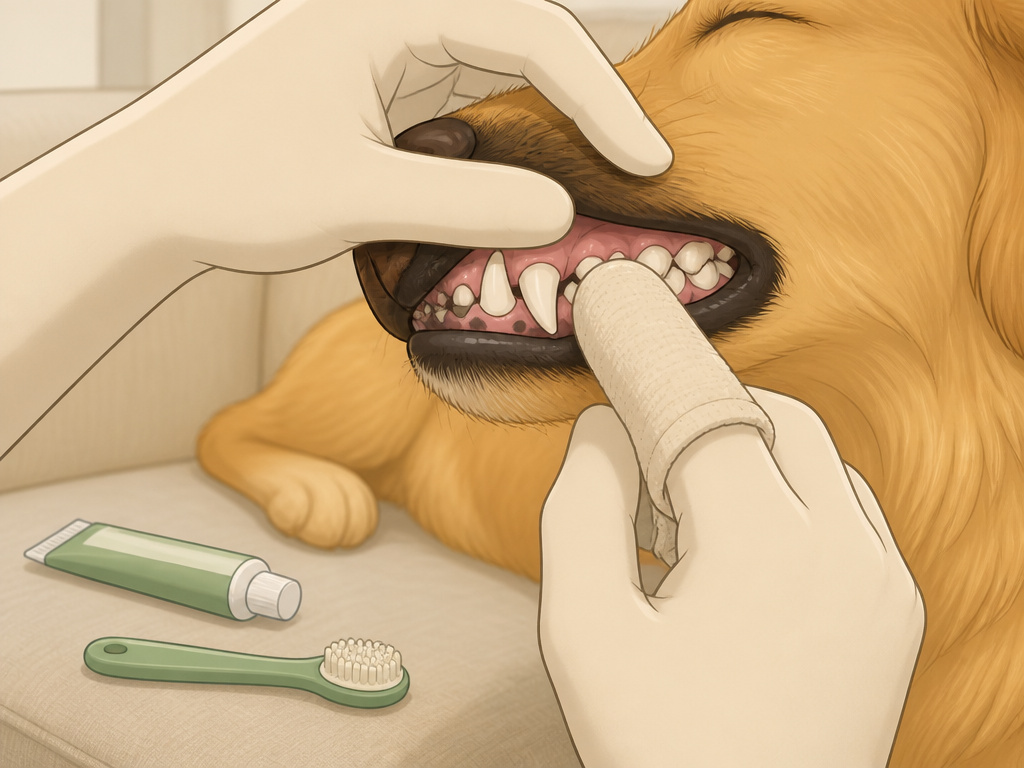
Four things decide whether this becomes a habit: when you do it, where the dog is, what’s on the brush, and how you stop.
Before you start: Human toothpaste can contain xylitol, which is toxic to dogs, and the high-foaming detergents in it aren’t meant to be swallowed. Skip bones, cow hooves, and hard nylon chews, which the AVDC lists as too hard and a fracture risk. And if the gums are red and puffy right now, get a professional cleaning before a brush goes anywhere near them.
- Get the mouth checked first if the gums look angry. Brushing already-inflamed gingiva causes pain and makes a dog brush-shy, and you’ll spend months undoing that.
- Pick a time when the dog is already flat out. A dog on the sofa after a walk argues less than a dog at the door waiting to go out.
- Start with a finger and a soft cloth, not a brush. VCA recommends gradually working up to brushing all the teeth, which will probably take several days or weeks.
- Work the outer cheek teeth and canines first. Plaque and tartar build fastest there, and the AVDC says to focus mainly on the outsides of the cheek teeth under the upper lip.
- Add pet toothpaste once the finger is accepted. Human toothpaste is out for the reasons above, and pet-specific pastes come in flavors dogs actually take.
- Brush the outsides and skip the insides. VCA notes most periodontal damage happens on the outer surfaces, and the tongue handles a lot of the inner surface on its own.
- Stop while it’s still going well. Ending on a good stroke keeps the next session easy; pushing to the last tooth teaches the dog that leaving is the only way to make it stop.
Expect the full mouth to take several days or weeks to work up to, per VCA’s guidance. That timeline is normal.
Which Toothbrush and Paste Actually Work
For most dogs, a pet-specific toothpaste is the starting point.
On brushes, start with a soft cloth or finger and work up to a soft dog toothbrush once the dog is settled. VCA’s guidance on how to choose a dog toothbrush covers the sizing question better than I can here, and there’s a wider rundown of dog toothbrush and toothpaste options if you want to compare before buying.
Two housekeeping rules that get skipped. Replace the brush every three months, and use a separate brush for each dog. Wear gloves if you can, or wash your hands properly afterward.
Do Dental Chews and Wipes Replace Brushing?
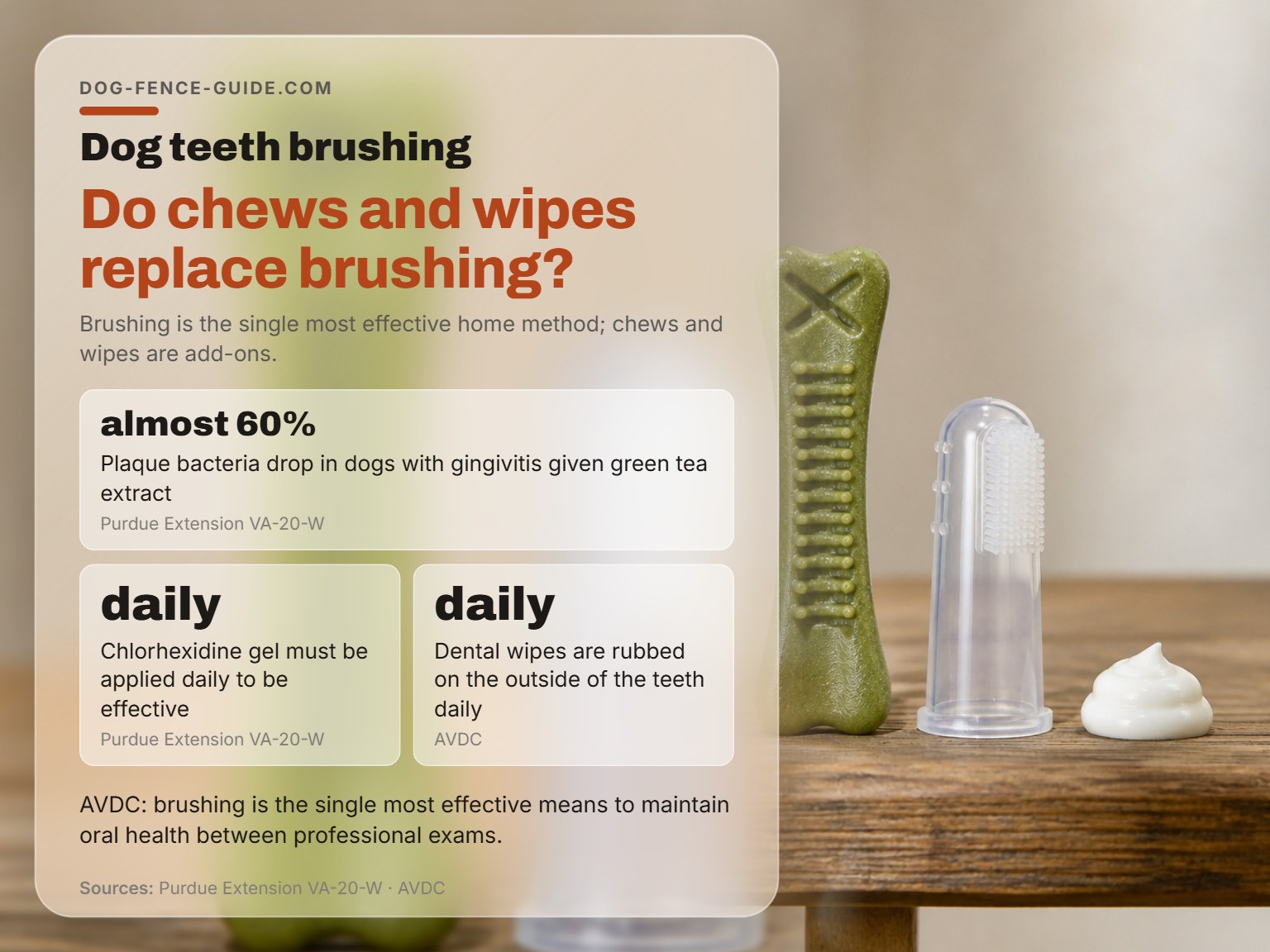
No. A chew is a supplement to a brush, and the sources are blunt about it.
The AVDC states that brushing is the single most effective means to maintain oral health between professional exams, and that combining several home methods achieves the best results. Everything else in this section is a supporting act.
- Chlorhexidine rinse or gel: described by the AVDC as the most effective anti-plaque antiseptic, and safe for pets with rare problems.
- Dental wipes: single-use, rubbed daily on the outside of the teeth to remove plaque.
- Dental chews: useful as an add-on, sized to the dog, and never a swap for the brush.
Purdue adds a condition to the chlorhexidine option: the gel has to be applied daily to be effective, and the dog has to accept having his mouth handled. That’s the same hurdle as brushing, which is why it doesn’t solve the compliance problem.
Green tea is the interesting footnote. Purdue cites work by Isogai and colleagues finding that plaque bacteria in dogs with gingivitis dropped by almost 60% in dogs receiving green tea extract versus those that didn’t.
The AVDC specifically does not recommend cow hooves, dried natural bones, or hard nylon products because they’re too hard. Purdue adds that any chew needs to be sized to the dog’s breed and body size, and the dog should be watched while chewing.
Skip this if: Your dog is a gulper who swallows chews in chunks. Size the chew up, or skip chews entirely and put the effort into the brush and a daily wipe instead.
If brushing genuinely isn’t happening, there’s a whole category of cleaning a dog’s teeth without brushing worth reading, and the dental treats comparison covers what’s worth buying. Just don’t tell yourself a chew is doing a brush’s job. It isn’t, and the tartar buildup that follows proves it.
When Brushing Is the Wrong Move Until the Vet Cleans First
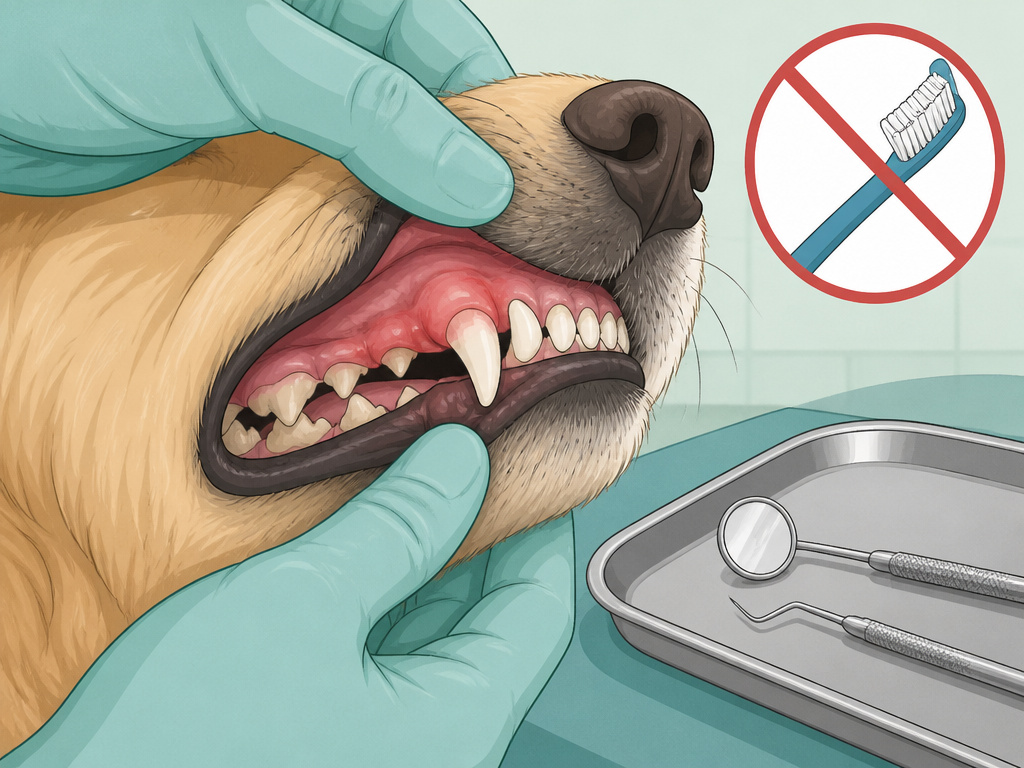
Everyone says brush daily. If the gums are already angry, that advice is wrong until a vet cleans the teeth.
The AAHA guidelines state that brushing already-inflamed gingiva will cause pain and animal aversion, and that daily brushing is contraindicated until professional treatment. That’s a hard stop, not a suggestion.
The 2023 study takes a slightly different line. It recommends a professional dental cleaning before starting brushing so the teeth are clean and problems are treated, but adds that where cleaning isn’t achievable, brushing may still be recommended because of its benefits. Two credible positions, and the practical read is: get the cleaning if you can, and don’t let a delay stop you forever.
Other cases where the standard answer needs adjusting:
- Flat-faced breeds. The AAHA notes brachycephalic breeds tend to have more dental issues because of rotated and crowded teeth, so the same brushing effort buys less.
- Small dogs. Owners of puppies expected to stay under 20 to 25 pounds at maturity should know dental care will likely be more involved than for a large dog.
- Puppies. Home oral hygiene training can start once permanent teeth have erupted. Juvenile dogs actively losing baby teeth may find it uncomfortable, and a bad early experience is hard to undo.
- Timing of the first cleaning. The AAHA recommends a true dental prophylaxis by one year of age for cats and small to medium dogs, and by two years for larger breeds.
Easy to miss: A dog that has never had a professional cleaning may have a fractured tooth or exposed pulp sitting under a normal-looking crown. The AAHA toolkit describes exactly that case in a golden retriever brushed daily since 12 weeks of age, where the damage only showed up under anesthesia.
If any of this sounds familiar, the dental disease symptoms and prevention rundown is the place to start, and routine vet care covers how often the exam should happen. For the mechanics of the job itself, the step-by-step brushing technique walkthrough pairs well with everything above.
One more edge case worth naming. Purdue points out that large dog numbers in shelter, laboratory, and breeding facilities make routine brushing impractical, so the daily standard doesn’t transfer to those settings. If you volunteer somewhere with a dozen dogs, don’t beat yourself up over a rule written for a household with one.
Frequently Asked Questions
Is brushing every other day enough for a dog?
The evidence is split. A 1996 study by Gorrel and Rawlings found every-other-day brushing did not maintain clinically healthy gingivae, while a 2015 randomized trial found daily and every-other-day brushing both beat weekly brushing significantly. Daily has broader agreement across AAHA, AVDC, and VCA. Treat every other day as a fallback.
Can I use human toothpaste on my dog?
No. Some human toothpastes contain xylitol, which is toxic to dogs, and others carry high sodium or baking soda that upsets digestion. The AVDC also points out that human pastes often contain abrasives and high-foaming detergents that shouldn’t be swallowed or inhaled by a dog. Use a pet-specific paste.
Does brushing remove tartar?
It doesn’t. Brushing removes plaque, the bacterial film, and the AAHA guidelines say so directly. A 2023 trial found no significant improvement in calculus index after 7 or 14 days of brushing. The hard brown line at the gum margin needs a professional scale and polish.
How long before brushing makes a difference?
Seven days. In the 2023 trial, gum and plaque scores improved significantly at day 7 and again at day 14, with plaque reaching zero in all 22 dogs. Full reversal of established gingivitis is slower: earlier work cited in that paper puts it at six weeks of twice-daily brushing, or 24 weeks of daily brushing.
What if my dog won’t let me brush at all?
Start with a finger and a cloth rather than a brush, and give it two weeks. In the 2023 trial it took longer than seven days for dogs to become accustomed to handling, with stress scores still improving by day 14. If your dog suddenly resists a routine he used to accept, get the mouth examined, because pain is a common reason.
Should I brush a puppy’s teeth?
Once the permanent teeth have erupted, yes. The AAHA notes that puppies actively losing baby teeth may find home dental care uncomfortable, and negative experiences should be avoided. Starting early helps: the AAHA toolkit describes a golden retriever brushed daily from 12 weeks of age.
Before You Go
The honest version of the answer is that the frequency question has a ceiling and a floor. The ceiling is daily, which is where the AAHA guidelines and the AVDC both point. The floor is three times a week according to VCA’s minimum recommendation and Purdue, while AAHA and AVDC hold daily as the standard. Somewhere between those two numbers is a habit you’ll actually keep.
One threshold worth carrying out the door: if the gums are red, puffy, or bleeding right now, the correct frequency is zero until a vet cleans the teeth. Brushing inflamed gingiva causes pain and makes a dog brush-shy, and you’ll spend months undoing that.
Tonight, do a quick check. Run a finger along the outside of the back teeth, look at the gum line, and smell the breath. That tells you whether you’re starting a habit or booking an appointment.
I’d rather see four honest sessions a week than a perfect plan abandoned by Thursday. Pick the number you’ll still be hitting months from now.
