
How to Care for a Puppy After Vaccination: Step-by-Step
This post contains affiliate links. As an Amazon Associate, we earn from qualifying purchases.
To care for a puppy after vaccination, watch the injection site and your puppy’s energy for the first 24 hours, keep the remaining doses on schedule, and call your vet if mild signs run past 24 hours (VCA) or a day or two (AVMA). Most reactions are mild and settle without treatment.
Those time windows are not identical across the organizations that publish them, and the gap matters when you are deciding whether to pick up the phone. VCA Animal Hospitals draws the line at 24 hours for mild signs. The AVMA client handout gives you a day or two. Both agree that anything severe gets a call right away, and knowing how to care for a puppy after vaccination helps you judge which of these windows applies.
What follows covers the first hour at the clinic, the first night at home, the lump you might find on day ten, and the yard your puppy comes back to. That last part matters more than most vaccine articles admit.
Key Takeaways
- Wait 30 to 60 minutes at the clinic after the injection if a serious reaction worries you, as VCA and the AVMA handout both advise.
- Mild signs usually start within hours and settle within a day or two; a site lump should shrink within 14 days.
- A lump still present at 3 weeks, or one that grows or turns painful, needs a call to your vet.
- Doses run 2 to 4 weeks apart, with the final one at about 4 months of age.
- Puppy-proof the yard before the next appointment, because a half-vaccinated puppy is not a protected puppy.
What Counts as a Normal Reaction in the First 24 Hours
A normal reaction is a small one, and it shows up fast. The AVMA vaccination client brochure notes that mild side effects usually begin within hours of the injection.
Mild postvaccination reactions in puppies include redness, mild swelling, and tenderness at the injection site, decreased activity, reduced appetite, and low-grade fever. These signs typically begin within hours of the injection and resolve without treatment. Persistent vomiting, hives, facial swelling, or collapse indicate a serious reaction requiring immediate veterinary care.
VCA Animal Hospitals lists the same five in its normal column. None of them need treatment. All of them need watching.
| Sign | Normal in the First Day | Call the Vet Now |
|---|---|---|
| Injection site | Red, tender, mildly puffy | Hot, spreading, or painful to touch |
| Energy | Sleepy for a few hours | Collapse or unable to stand |
| Appetite | Picks at dinner, then eats | Refuses food past 2 days |
| Face and muzzle | Normal shape and size | Hives, or swelling around eyes and neck |
That table covers the four things you will actually notice on the drive home. The rest of the list is rarer.
The Five Mild Signs That Are Expected
- Tenderness and mild swelling at the injection site, worst on day one.
- Sleepiness. A puppy that naps through the evening and wakes up normal is fine.
- Loss of appetite for a meal or two.
- Low-grade fever, which you may notice as a flat mood.
- Sneezing or a soft cough after an intranasal dose, covered further down.
Notice the shape of that list. Every item has an end point.
The Signs That Are Emergencies
The AVMA handout names five: persistent vomiting or diarrhea, hives, swelling of the muzzle, face, neck, or eyes, severe coughing or difficulty breathing, and collapse. VCA adds that serious allergic reactions can begin within minutes to hours of the shot.
Any one of those means you drive to the clinic. Do not wait for a second symptom to confirm it.
I keep my vet’s number and the emergency clinic’s number on the same note on the fridge. It takes seconds to write and saves you fumbling at the worst possible moment.
How Long Should You Wait at the Clinic Before Heading Home?
Thirty to sixty minutes is the window both client-education sources give. VCA Animal Hospitals tells owners to wait at the clinic for 30 to 60 minutes after vaccination if a serious reaction is a concern. The AVMA handout says the same thing in almost the same words.
That wait exists for a reason. Serious allergic reactions show up within minutes to hours of the injection, and they are medical emergencies.
Where this goes sideways: Pulling out of the parking lot at minute five. The reactions that become life-threatening declare themselves inside that first hour, and a puppy alone in a car seat is a puppy nobody is watching.
If your puppy has never reacted and the clinic is close, plenty of owners head straight home. That is a reasonable call for a dog with no history. The 30 to 60 minute cushion is for the ones where nobody knows yet.
A puppy that screamed through the lobby will remember it. Knowing how to calm a dog at the vet before the next appointment is worth more than an extra biscuit at the counter.
Why Does Your Puppy Sneeze After an Intranasal Vaccine?
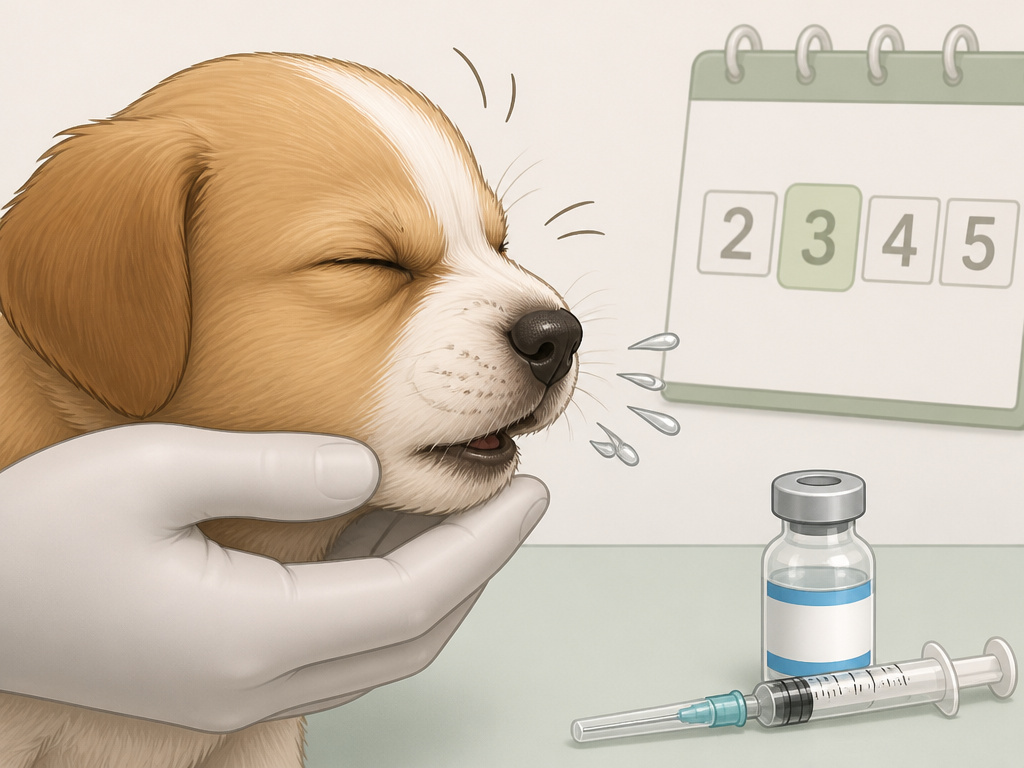
A few days after the nasal dose, your puppy sounds like a tiny percolator. Sneezing, a little clear discharge, maybe a soft cough that shows up when they get excited.
The two sources put slightly different clocks on it. VCA Animal Hospitals says respiratory symptoms may run for 2 to 4 days after an intranasal vaccine. The AVMA handout says 2 to 5 days. Plan for the longer end and day five will not surprise you.
| What You See | Likely Cause | When to Act |
|---|---|---|
| Sneezing, clear nasal discharge | Nasal vaccine irritation | Still going on day 5 |
| Small firm lump at the site | Granuloma | Still there at 3 weeks, or growing |
| Sleepy, off food | Normal immune response | Past 2 days, or getting worse |
| Hives or facial swelling | Allergic reaction | Immediately |
The nasal route is common for Bordetella, and the AVMA recommends that vaccine for dogs heading into boarding, daycare, or training facilities. A few days of snuffling is the trade.
When Does a Lump at the Injection Site Need a Vet?
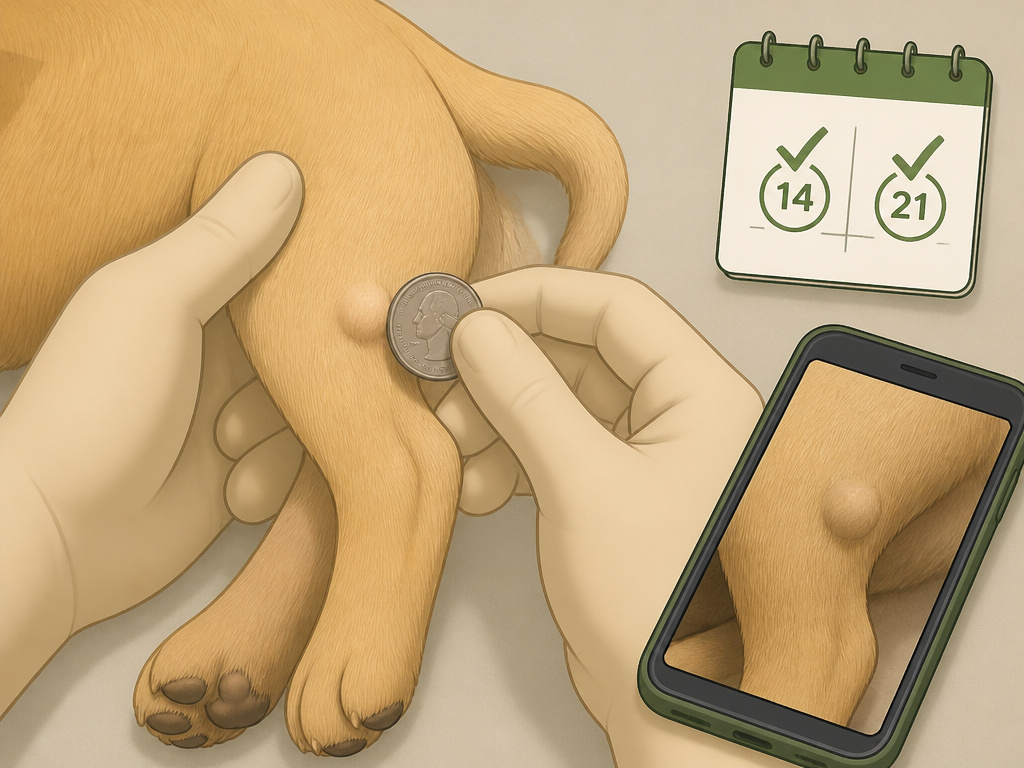
Most lumps are harmless. The calendar decides which kind you have.
A small, firm nodule at the injection site is called a granuloma. It feels like a small, firm bump under the skin. VCA says it should begin to shrink and vanish within 14 days.
Both VCA and the AVMA handout draw the same line at 3 weeks. If the swelling is still there, or it is getting larger or more painful, call your vet.
Measure it against a coin and take a photo regularly. A lump you can compare beats a lump you are trying to remember.
That habit has saved me more than one unnecessary phone call.
Why One Shot Doesn’t Finish a Puppy Series
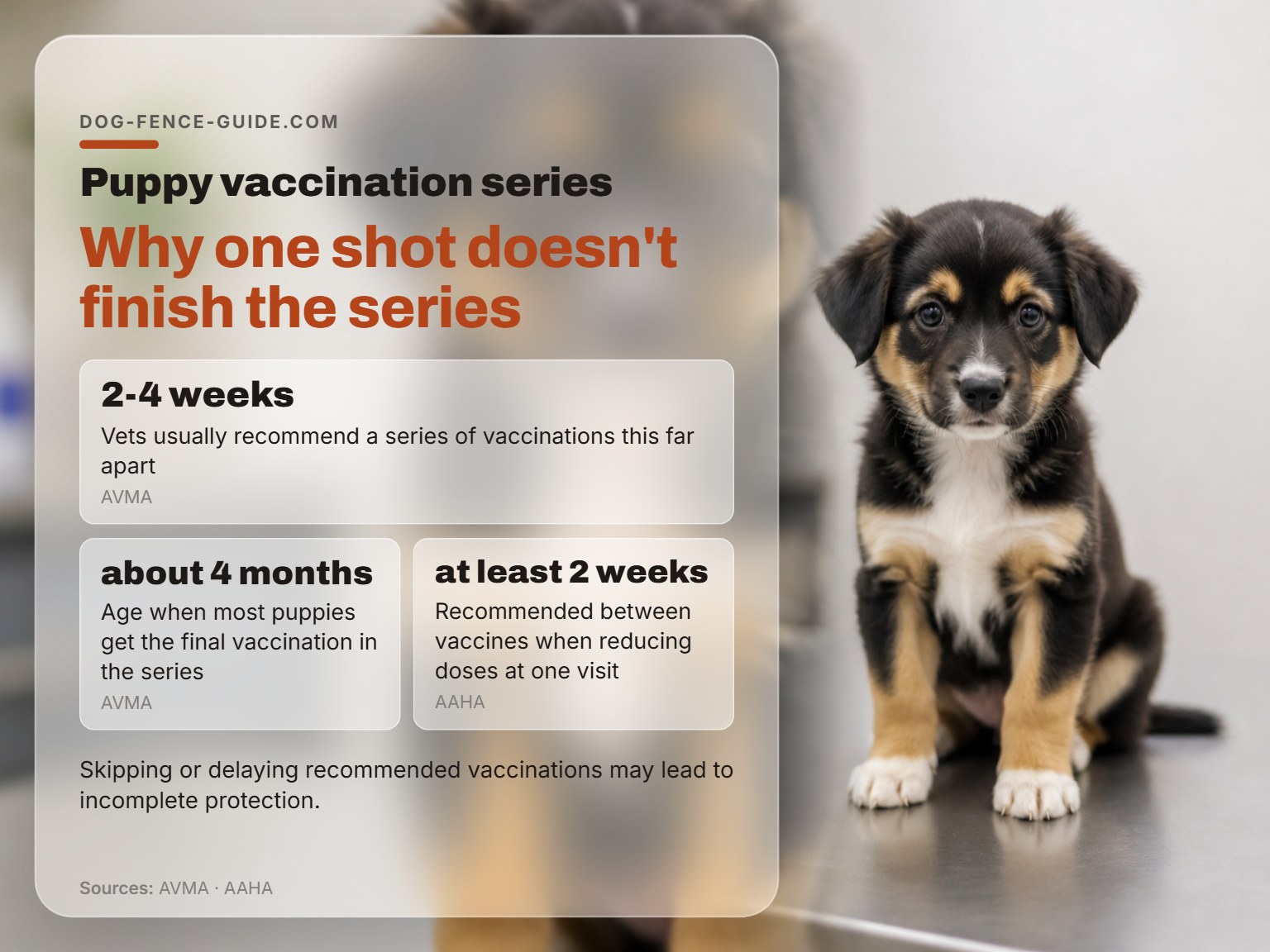
The first shot is a rehearsal. The AVMA explains that the first dose primes the immune system to recognize the virus or bacteria, and later doses push the body to build the antibodies that actually protect.
Vets usually recommend a series 2 to 4 weeks apart. For most puppies, the final vaccination in the series is given at about 4 months of age.
Why Maternal Antibodies Matter
Puppies get antibodies from colostrum, and those antibodies block the vaccine. The 2022 AAHA canine vaccination guidelines name maternal-derived antibodies as the most common reason young dogs fail to mount a response.
That is the mechanism behind the puppy that got sick anyway. It is also why the vaccine schedule matters more than any single dose, and why parvo symptoms are still worth knowing after the first shot.
AAHA also settles a common worry. There is no evidence of reduced protective immunity when multiple vaccines go in at the same visit.
Easy to miss: A gap in the series. Skipping or delaying recommended vaccinations can leave a puppy with incomplete protection, and that window opens quietly in the weeks between doses.
You will also hear that Doberman pinschers and rottweilers are immune nonresponders. AAHA notes the claim has been made and that definitive evidence is lacking. Treat it as a reason to follow up, not a reason to skip.
If you want a baseline for what a well puppy looks like between doses, these signs of a healthy puppy are the ones to check weekly.
Bringing a Puppy Home to a Yard That Isn’t Ready
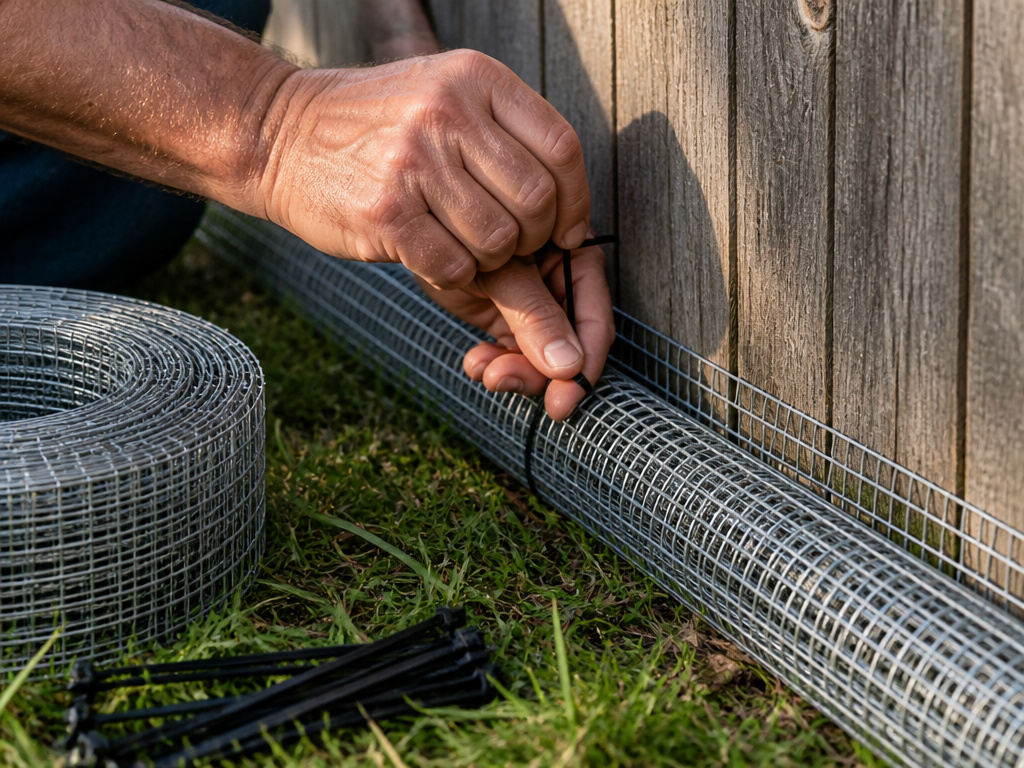
Hardware cloth is the cheapest piece of puppy fencing you will ever buy. A roll of mesh, zip-tied along the bottom of an existing fence, closes the gaps a puppy fits through and an adult dog never will.
Walk the perimeter on your hands and knees first. Dog-level gaps matter more than the brand on the panel, and a puppy finds every one of them quickly.
For a small puppy, an exercise pen gives you a movable safe zone that follows you around the yard. A walk-through gate that latches one-handed matters when you are carrying a wriggling puppy. Galvanized hardware cloth is the mesh I reach for on the bottom run of a wooden fence.
I would rather see a cheap exercise pen doing honest work for a while than a permanent fence installed in a hurry. Puppies change size faster than fence crews change schedules.
A half-vaccinated puppy should not be meeting strange dogs yet. That is what protecting a puppy before vaccines are complete actually looks like in practice, and it is also the practical reason to prevent parvo with a clean, dog-free patch of your own yard.
Social contact still matters. The puppy socialization window closes early, and you can fill it with people, sounds, and safe surfaces at home.
What to Do Before the Next Appointment
Two things belong in your notes: the date of the last reaction and the name of the vaccine on the record.
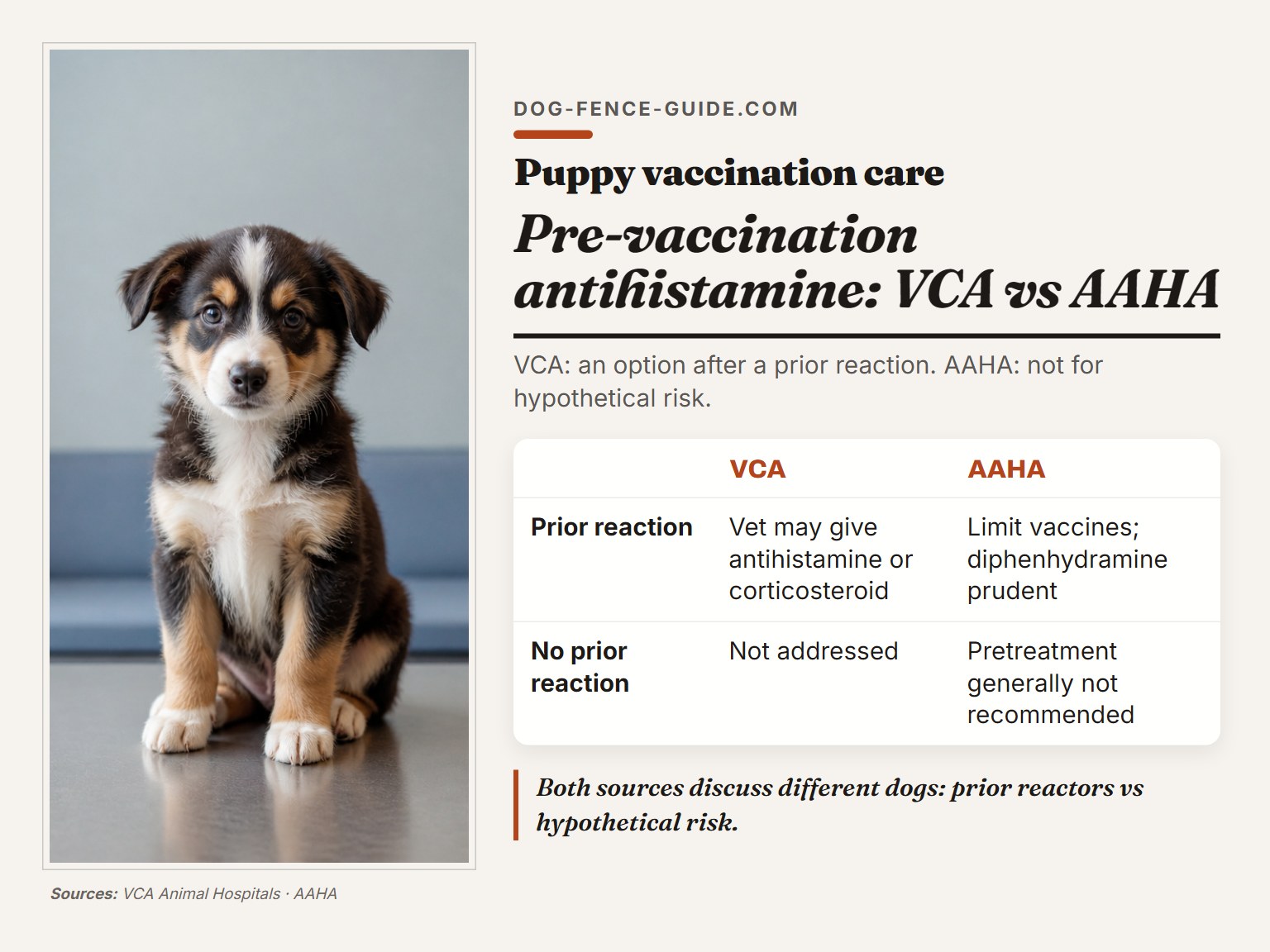
Tell your vet about any previous reaction, however small it seemed. VCA says the vet may give a pre-vaccination antihistamine or corticosteroid, or split the vaccines across visits.
If Your Puppy Has Reacted Before
- Write down what happened and how long after the shot it started.
- Photograph the injection site before it fades.
- Call ahead so the clinic can plan, and ask whether they want you to prepare for a vet visit differently.
- Bring the vaccine name and lot number if you have it.
Splitting vaccines means more visits. AAHA recommends at least 2 weeks between them so the heightened immune response from the previous shot settles down.
AAHA and VCA part ways on one point. VCA describes pre-vaccination antihistamine as an option when there is a reaction history. AAHA says pretreatment as a precaution is generally not recommended when the risk is hypothetical, such as an at-risk breed with no prior reactions. Both are talking about different dogs.
VCA also notes that your vet reports any serious reaction to the company that makes the vaccine.
If you handle vaccines at home, the Purdue canine vaccination guidelines PDF is the university document worth reading before you go that route.
Frequently Asked Questions
How long should I watch my puppy after a vaccination?
VCA Animal Hospitals and the AVMA both suggest 30 to 60 minutes at the clinic if a serious reaction is a concern. Serious allergic reactions show up within minutes to hours, so that window covers the riskiest stretch.
Is it normal for my puppy to be sleepy and off food after a shot?
Yes. Decreased activity, reduced appetite, and a low-grade fever appear on every published list of mild reactions. VCA says to call if those signs last more than 24 hours. The AVMA handout says a day or two. The sources disagree on the exact cutoff, so use the shorter window if your puppy seems uncomfortable.
How long does a lump at the injection site last?
VCA says a granuloma should begin to shrink and vanish within 14 days. Both VCA and the AVMA say to call your vet if it is still there at 3 weeks, or if it grows or becomes painful.
Can my puppy meet other dogs after the first vaccine?
Not safely. The AVMA notes that skipping or delaying doses leaves gaps in protection, and the series usually finishes at about 4 months of age. Keep contact to known, healthy adult dogs and clean spaces until your vet clears it.
My puppy sneezed for days after the nasal vaccine. Is that a problem?
VCA puts intranasal respiratory signs at 2 to 4 days and the AVMA handout says 2 to 5 days. Clear discharge and sneezing inside that window are expected. Anything past day five, or a cough that gets worse, is worth a call.
The Bottom Line
The most useful thing you can do this week is write the reaction down. Date, time, what you saw, how long it lasted. That note turns a vague “he seemed off last time” into something your vet can actually work with.
The trade-off on antihistamines is real. A puppy with no reaction history does not need pre-vaccination diphenhydramine, and asking for it adds a drug without adding protection. A puppy that has already reacted is a different conversation, and that one belongs with your vet.
Everything above assumes a puppy your vet has cleared to vaccinate. That call is theirs, not yours and not mine.
And if the yard is not ready yet, fix that before the next appointment. Peace of mind is the real goal, and half of it is a fence line with no puppy-sized holes in it.
