
Parvo Symptoms and Treatment in Dogs: What to Watch For
This post contains affiliate links. As an Amazon Associate, we earn from qualifying purchases.
Parvo symptoms and treatment in dogs center on vomiting, bloody diarrhea, lethargy, and loss of appetite, appearing 5 to 7 days after exposure. Treatment is supportive: IV or subcutaneous fluids, antiemetics like maropitant, antibiotics, and early nutrition. Aggressive inpatient care saves more than 90 percent of dogs; outpatient protocols report about 80 percent.
The 5-to-7-day window matters because a dog starts shedding virus in feces 4 to 5 days after exposure, often before anyone notices the first symptom. That gap is why parvo spreads so easily through kennels, shelters, and puppy classes.
What follows covers the symptom timeline, the inpatient-versus-outpatient decision, the medicines vets actually use, and the disinfection steps that decide whether a second dog in the house gets sick.
Key Takeaways
- Parvo moves fast: symptoms generally appear 5 to 7 days after exposure (range 2 to 14 days; Cornell cites 3 to 7 days) and progress to hemorrhagic diarrhea within 24 to 48 hours.
- Survival depends on speed: aggressive inpatient care saves more than 90 percent of dogs.
- Outpatient is real but narrower: reported about 80 percent success, and only for dogs not in hypovolemic shock.
- Early feeding beats withholding food: the old “no food or water until vomiting stops” advice has been reversed.
- Bleach is a reliable home disinfectant: Merck lists 1:30 for surfaces and 1:32 for kennels, Cornell says one part bleach to approximately 30 parts water, and ASPCA Pro uses 1:32; quaternium ammonium products don’t work.
What are the first parvo symptoms in dogs?
The first signs are vague: lethargy, loss of appetite, and a fever that comes and goes. Within 24 to 48 hours, most dogs progress to vomiting and hemorrhagic diarrhea. About 25 percent of dogs have non-hemorrhagic diarrhea instead, which is one reason parvo gets missed early.
Canine parvovirus targets rapidly dividing cells in the intestinal crypts, the bone marrow, and lymphoid tissue. Destruction of the crypt epithelium causes villous atrophy, impaired absorption, and a breached gut barrier. The resulting fluid loss and bacterial translocation drive the dehydration and sepsis that make parvoviral enteritis life-threatening in young dogs.
The physical signs to watch for:
- Gums that feel tacky instead of slick — a dehydration tell that shows up before the dog looks obviously sick
- Lethargy that doesn’t lift after rest
- Loss of appetite, and some dogs refuse water too
- Vomiting that starts as occasional and becomes persistent
- Diarrhea that turns dark, tarry, or streaked with blood
- A fever that may spike and then drop below normal
That last one matters. A temperature that reads normal or low in a sick puppy isn’t reassuring; it can signal the shift from early illness into shock.
One habit I’ve kept since a late-night emergency vet visit years ago: I photograph every abnormal stool and note the time. When you’re describing diarrhea to a vet at 2 a.m., “it started Tuesday” is useless. “Here’s the photo from 6 p.m. Tuesday” gets you seen faster.
Parvo isn’t the only cause of bloody diarrhea in a young dog. Distemper symptoms overlap enough that a vet will often test for both, especially in an unvaccinated puppy. The fecal ELISA for parvo takes less than 15 minutes, per Cornell’s Baker Institute, so there’s no reason to wait.
Parvo Symptoms and Treatment in Dogs: The 24-48 Hour Window
Within 24 to 48 hours of the first vague signs, most dogs progress to vomiting and hemorrhagic diarrhea. That’s the window that decides whether the case is manageable or a crisis.
| Stage | Timing | What You See |
|---|---|---|
| Exposure | Day 0 | Nothing; virus enters through mouth or nose |
| Shedding begins | Day 4-5 | Virus in feces, no visible symptoms |
| First signs | Day 5-7 (range 2-14) | Lethargy, anorexia, fever |
| Crisis | 24-48 hours after first signs | Vomiting, hemorrhagic diarrhea |
| Recovery (if survives) | Day 3-4 of illness | Appetite returns; full recovery usually within 1 week |
The diarrhea turns dark and tarry, with a smell sharper and more sour than ordinary loose stool. That smell is one of the reasons experienced vet techs isolate a suspected parvo case before the test comes back.
Here’s the mechanism behind the fast decline. The virus targets the rapidly dividing cells in the intestinal crypts, which are the factories that replace the gut lining. Kill the factories and the lining sloughs off within a day or two, which is why the diarrhea turns bloody and the gut stops absorbing water.
Cornell’s Baker Institute puts the incubation period at 3 to 7 days; the Merck Veterinary Manual says 5 to 7 days generally, with a range of 2 to 14. Neither is wrong. The practical takeaway is that a dog exposed on a Saturday can look fine until the following Friday and then crash over a weekend.
For owners managing the diarrhea phase, the treatment for dog diarrhea that works for ordinary upset stomachs is the wrong play here. Parvo diarrhea isn’t a diet problem.
Inpatient vs outpatient: which parvo treatment path fits?
Outpatient parvo treatment is real, but it isn’t the easy option the marketing makes it sound like. The Merck Veterinary Manual reports roughly 80 percent success for outpatient protocols. A randomized trial published in the Journal of Veterinary Emergency and Critical Care found 90 percent survival for inpatients versus 80 percent for outpatients, a difference that didn’t reach statistical significance (P = 0.66) but trended toward hospital care.
| Factor | Inpatient | Outpatient |
|---|---|---|
| Reported survival | >90 percent (Merck) | ~80 percent (Merck) |
| Best for | Hypovolemic shock, severe dehydration | Stable dogs, no shock |
| Monitoring | Continuous IV fluids, daily bloodwork | Daily clinic visits, home SQ fluids |
| Typical duration | Not specified in the fact sheet | Not specified in the fact sheet |
| Main risk | Hospital-acquired infection | Silent metabolic crash at home |
When inpatient care is the only safe option
A dog in hypovolemic shock needs the hospital. ASPCA Pro defines shock as meeting 5 or more criteria: cold extremities, dehydration over 8 percent, poor pulse quality, heart rate over 180 bpm, capillary refill time over 2 seconds, obtunded mentation, or a temperature above 39.4 C (103.0 F) or below 36.7 C (98.0 F).
The Merck Veterinary Manual notes that subcutaneous isotonic fluids may correct mild deficits under 5 percent but are insufficient for moderate to severe dehydration. If your dog is more than 5 percent dehydrated, home SQ fluids won’t cut it.
When outpatient actually works
Outpatient protocols work best for dogs that are still eating, still alert, and not in shock. The ASPCA Pro outpatient parvo treatment protocol requires daily clinic visits for an average of 3 to 4 days, subcutaneous fluids at home, and owner monitoring for dehydration and electrolyte crashes. It’s a real commitment, not a shortcut.
Common mistake: Choosing outpatient because the hospital quote felt high, then skipping the daily rechecks. The protocol only works if the dog is seen every day. Without daily electrolyte and glucose checks, outpatients that need dextrose or potassium supplementation may go unnoticed.
The evaluation of outpatient parvo treatment in that randomized trial is worth reading in full if you’re deciding between the two paths. The authors themselves hedge, using the word “may” rather than calling outpatient care a first-line standard.
If you want the full breakdown of which drugs fit each path, the parvo medicine guide covers the outpatient formulary in detail.
What medicines do vets actually use for parvo?
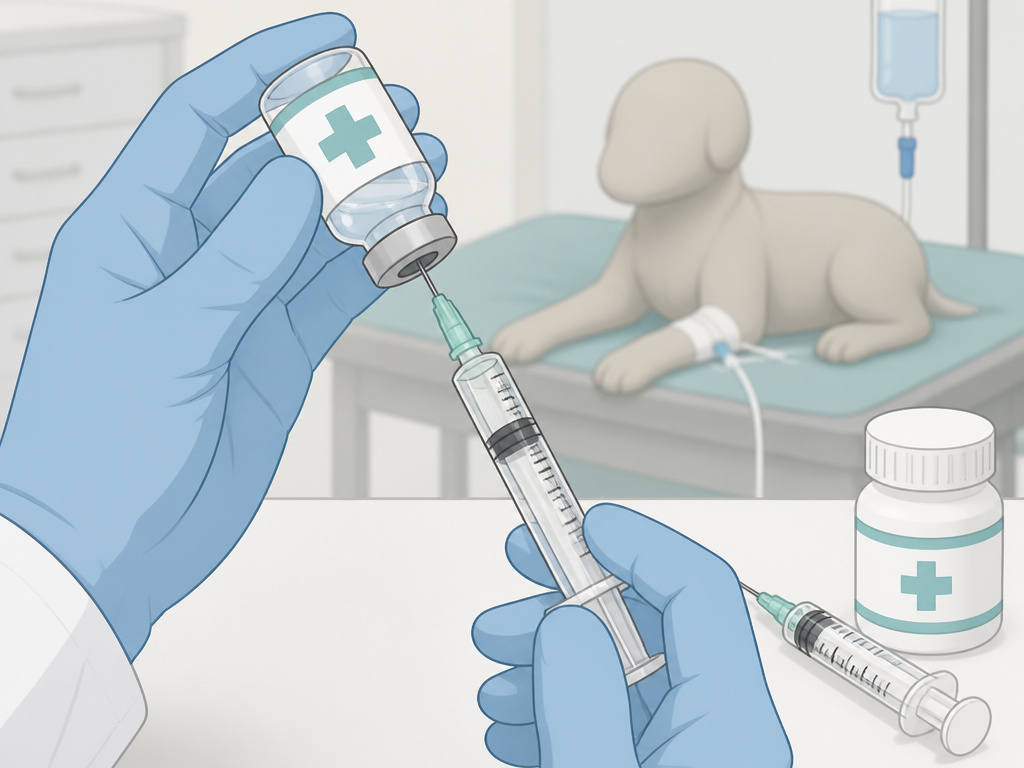
Maropitant, sold as Cerenia, is the antiemetic most vets reach for first. The Merck Veterinary Manual lists it at 1 mg/kg SC every 24 hours for outpatient vomiting control, or 1 mg/kg IV or SC every 24 hours for inpatients. ASPCA Pro uses the same 1 mg/kg SQ dose at the clinic and bumps to 2 mg/kg PO SID when the owner is treating at home.
| Drug | Dose | Purpose |
|---|---|---|
| Maropitant (Cerenia) | 1 mg/kg SC q24h; 2 mg/kg PO SID at home | Vomiting control |
| Ondansetron (Zofran) | 0.5 mg/kg IV q8h; 0.5 mg/kg sublingual q8h | Vomiting control |
| Metoclopramide (Reglan) | 0.2-0.5 mg/kg IM/SC q6-8h | Vomiting, gastric stasis |
| Cefovecin (Convenia) | 8 mg/kg SC once | Outpatient antibiotic |
| Ampicillin | 22 mg/kg IV q8h | Gram-positive, anaerobic |
| Enrofloxacin (Baytril) | 10-20 mg/kg IV q24h x 5-7 days | Gram-negative |
| Gentamicin | 9-12 mg/kg IV/IM/SC q24h x 5-7 days | Gram-negative |
Antiemetics: maropitant vs ondansetron
The Merck Veterinary Manual states maropitant and ondansetron “appear to be equally effective” at controlling vomiting in parvoviral enteritis. No head-to-head superiority is claimed. ASPCA Pro takes a slightly different line, reserving ondansetron for patients not adequately responding to Cerenia.
That disagreement matters for owners trying to read their bill. If your vet starts with Cerenia and switches to Zofran, that’s a legitimate clinical choice, not an upsell.
Antibiotics: which ones and for how long
Antimicrobials are indicated because the disrupted intestinal epithelium lets bacteria cross into the bloodstream, and because neutropenia is common. The Merck Veterinary Manual says ampicillin at 22 mg/kg IV every 8 hours covers gram-positive and anaerobic organisms; enrofloxacin or gentamicin add gram-negative coverage for severe cases.
Aminoglycosides like gentamicin must not be given until dehydration is corrected and fluid therapy is established. That’s a kidney safety rule, not a preference.
Enrofloxacin carries a cartilage-damage warning in growing dogs 2 to 8 months old, but the Merck Veterinary Manual notes that short courses of 5 to 7 days aren’t likely to cause clinical issues. That nuance gets flattened into blanket avoidance in a lot of online advice.
Fluid and electrolyte support
Fluid therapy is the backbone of parvo treatment. The Merck Veterinary Manual lists potassium chloride at 20 to 40 mEq/L and dextrose at 2.5 to 5 percent when electrolytes and glucose can’t be routinely monitored.
A note on the outpatient fluid dose. ASPCA Pro’s protocol calls for 40 mL/kg of crystalloids, adjusted as needed. An Elanco clinician brief uses 30 mL/kg every 6 hours plus dehydration replacement over 24 hours. Both are defensible; the right number depends on the dog’s ongoing losses, which is why the vet adjusts.
If your dog is vomiting and you’re looking for something to settle the stomach at home, the anti-nausea medicine options are worth understanding before you call the clinic. But don’t dose anything without a vet’s go-ahead on a parvo case.
There’s also a parvovirus treatment review and insights indexed on PubMed for readers who want the German-language literature perspective, though the Merck chapter remains the most current English-language reference.
Why early feeding replaced the old ‘withhold food’ advice
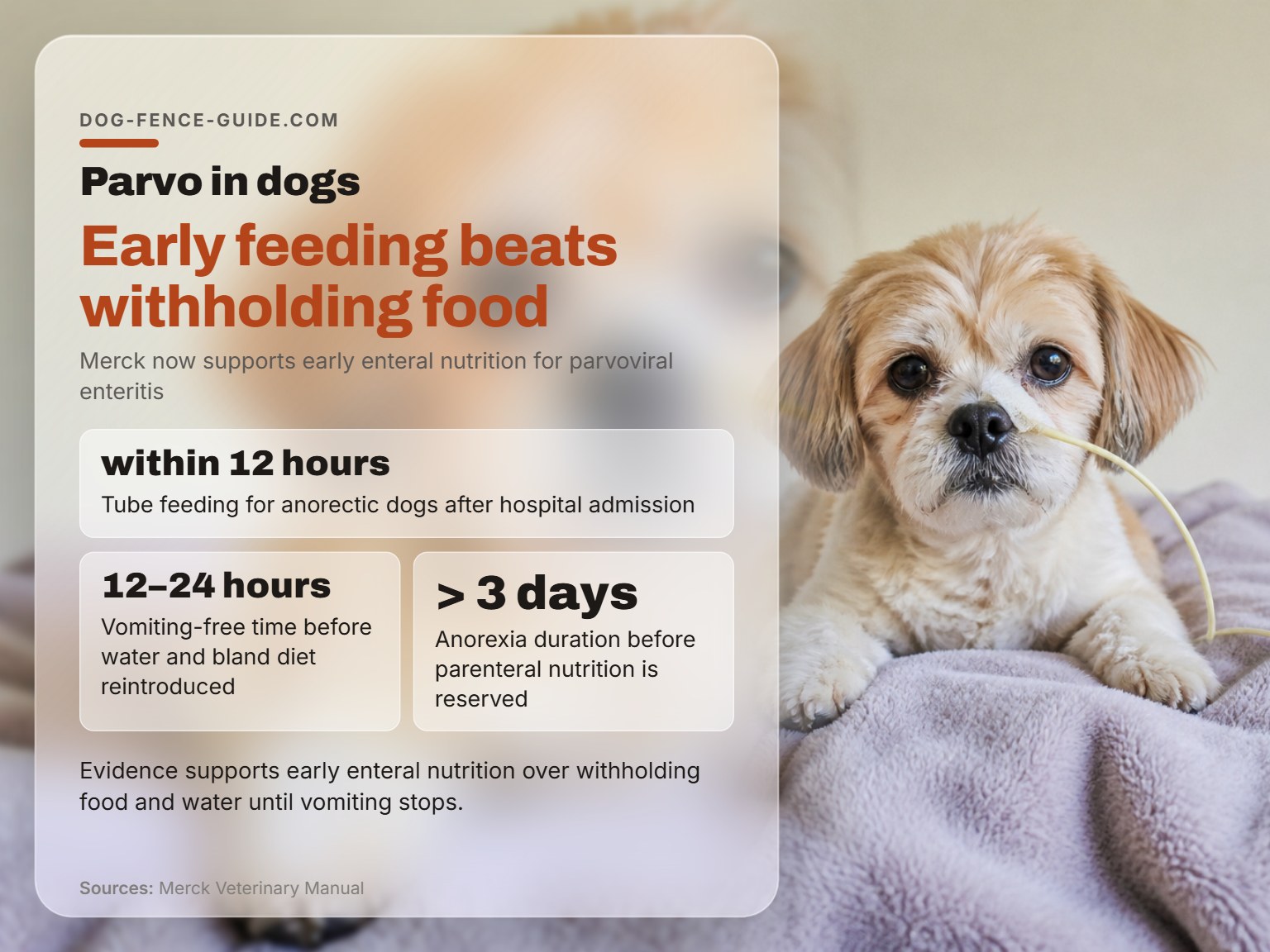
For decades, the standard advice was to withhold food and water until the vomiting stopped. That advice was wrong. The Merck Veterinary Manual now states that evidence supports early enteral nutrition, associated with earlier clinical improvement, weight gain, and improved gut barrier function.
The mechanism is straightforward. Food in the gut maintains the barrier function of the intestinal lining. Withholding food starves the enterocytes, accelerates villous atrophy, and makes bacterial translocation more likely. The old approach was making the gut weaker at the exact moment it needed support.
If a parvo dog won’t eat by day 3, the conversation shifts from “when will she eat” to “is a feeding tube the right call.” The Merck Veterinary Manual recommends a nasoesophageal or nasogastric tube within 12 hours of admission for anorectic dogs, and parenteral nutrition if anorexia runs past 3 days.
ASPCA Pro’s owner instructions take a slightly softer line: offer boneless skinless boiled chicken and rice or a prescribed diet, and don’t force-feed. Both sources agree that early nutrition matters; they differ on how aggressively to push it at home versus in the hospital.
Once vomiting has subsided for 12 to 24 hours, the Merck Veterinary Manual recommends gradual reintroduction of water and a bland, low-fat diet. The best food for a sick dog during recovery is usually a bland, easily digestible commercial diet or a homemade boiled chicken and rice mix.
Cornell’s canine parvovirus research at Cornell walks through the pathophysiology if you want to understand why the gut barrier matters so much in this disease.
How to Disinfect a Home After Parvo: The Bleach Ratio That Works
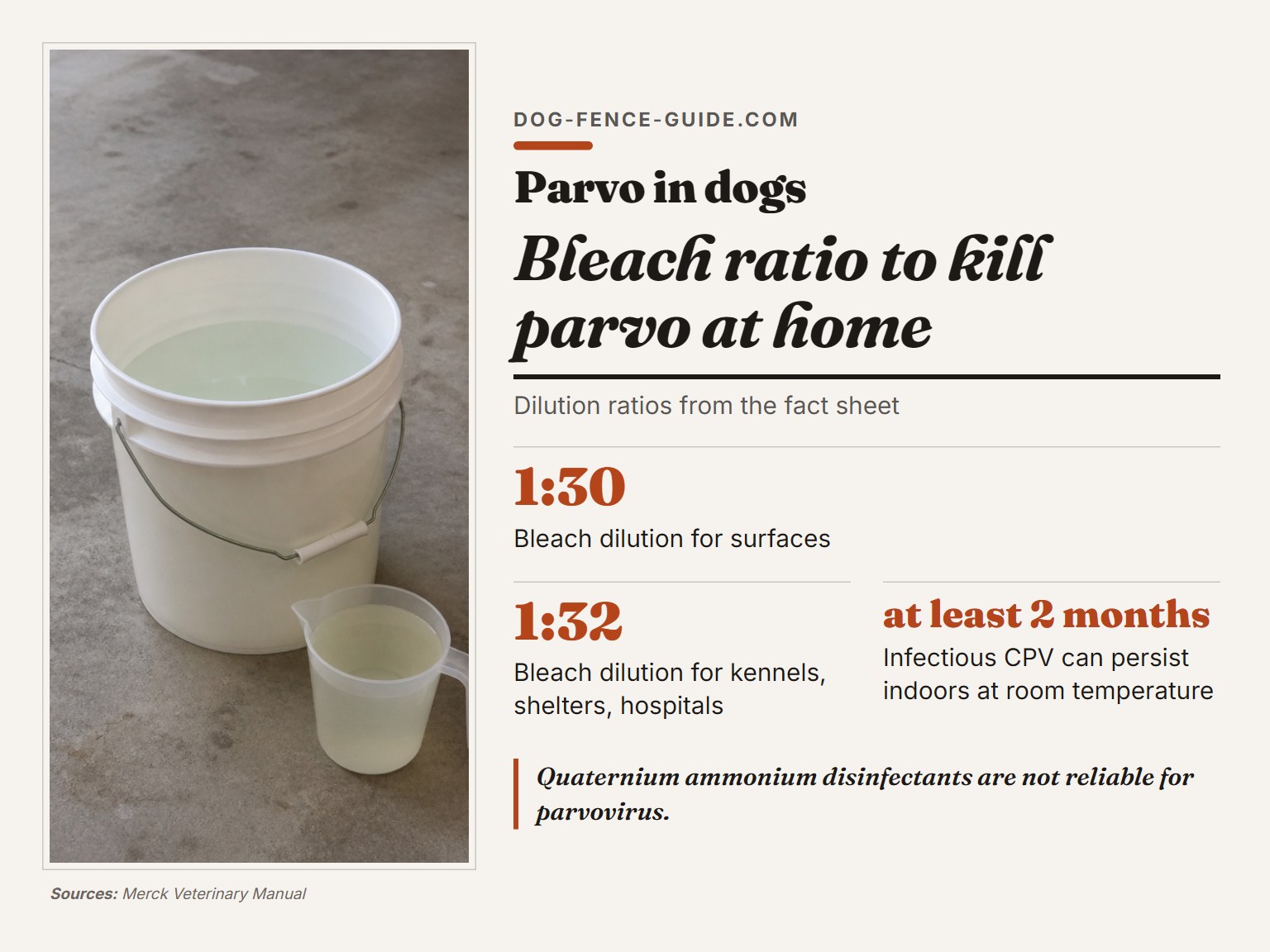
You’ve just carried a parvo-positive puppy through your front door. Every surface it touched is now a hazard. The virus is nonenveloped, which makes it resistant to many common detergents and disinfectants, and it can persist indoors at room temperature for at least 2 months.
The bleach dilution numbers vary by source. The Merck Veterinary Manual lists 1:30 for surfaces and 1:32 for kennels, shelters, and hospitals. Cornell says one part bleach to approximately 30 parts water. ASPCA Pro’s owner instructions use 1:32. Any of those ratios works; the important thing is that you’re using bleach at all, because quaternium ammonium disinfectants are not reliable for parvovirus.
The disinfection steps that actually matter:
- Remove all organic matter first. Feces, vomit, and urine inactivate bleach. Clean with detergent, rinse, then disinfect.
- Mix fresh bleach solution at 1:30 to 1:32. One part bleach to 30 or 32 parts water. Mix a new batch each time; bleach loses potency sitting in a bucket.
- Soak surfaces for the full contact time. Bedding, food and water bowls, toys, floors, crates. Don’t spray and wipe.
- Clean and dry twice. The Merck Veterinary Manual recommends cleaning, disinfecting, and drying twice before reuse in kennel settings. At home, once is usually enough for non-porous surfaces.
- Handle the yard separately. You can’t bleach a lawn. Cornell notes that rain and sunlight dilute the virus over a few weeks, but the Merck Veterinary Manual warns it can persist outdoors for many months and possibly years if protected from sunlight and drying.
Skip this if: You’re thinking about bleaching your grass. It kills the lawn and doesn’t reliably inactivate the virus in soil. Keep unvaccinated dogs off the yard for as long as you can, and talk to your vet about timing before bringing a new puppy home.
The persistence numbers also disagree. The Merck Veterinary Manual says infectious CPV can persist indoors for at least 2 months; ASPCA Pro’s owner instructions cite 5 to 7 months; Cornell notes the virus loses some infectivity after about a month indoors. The safest planning assumption is the longest number.
Fecal shedding is the other timeline to know. The Merck Veterinary Manual says about 10 days after clinical recovery; ASPCA Pro says 4 weeks. If you have another dog in the house, note that Merck says about 10 days after clinical recovery while ASPCA Pro says 4 weeks.
I keep a bleach bucket in the garage, and I mix a fresh batch every time. Sitting solution loses potency faster than people expect.
For the full prevention picture, including how to prevent parvo in a multi-dog household, the vaccination schedule is the foundation. The Merck Veterinary Manual recommends modified live vaccine at 6-8, 10-12, and 14-16 weeks, with a booster a year later and then every 3 years. Cornell’s Baker Institute recommends every 3 to 4 weeks from 6 weeks old until at least 16 weeks, then a booster a year later and every 1 to 3 years after that.
The PMC canine parvovirus clinical review covers the full prevention and disinfection literature if you want the primary-source version.
When home treatment fails: the red flags
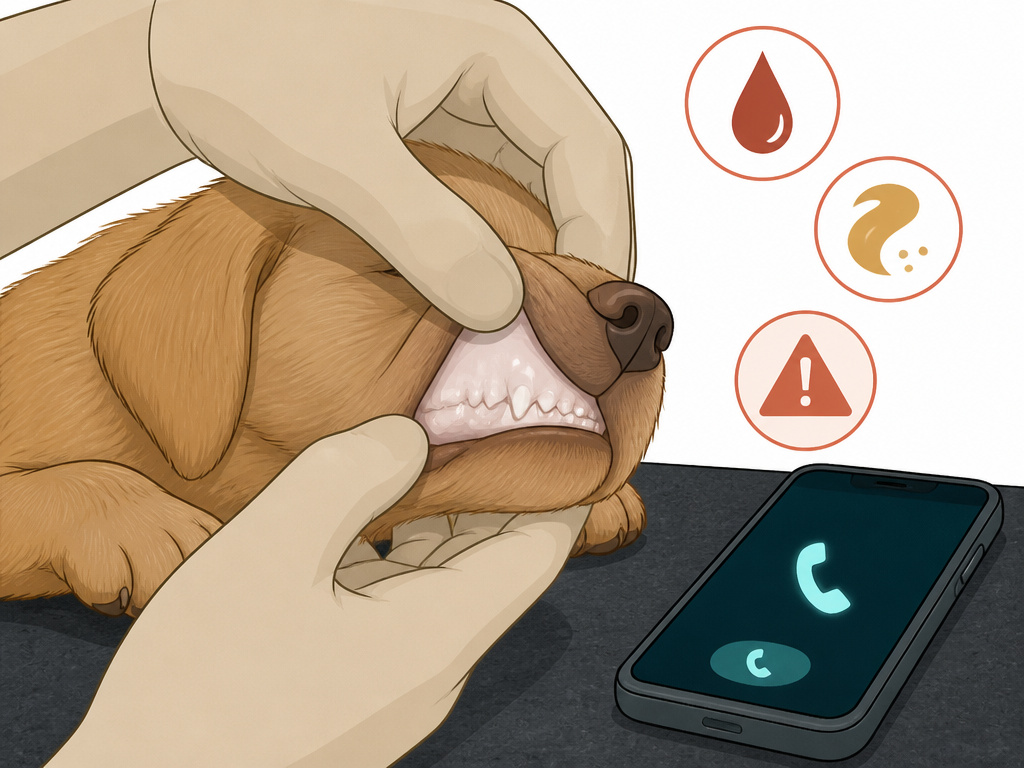
Some dogs need the hospital, and home care will kill them. ASPCA Pro defines outpatient failure as development of neurological symptoms, suspicion of aspiration pneumonia, intussusception, decline in mentation, no interest in eating or drinking, uncontrolled hemorrhagic diarrhea, intractable vomiting, or dehydration over 10 percent for 2 consecutive appointments.
The red flags that mean go now:
- Vomiting that doesn’t stop despite antiemetics
- Diarrhea that’s pure blood or black and tarry
- A puppy that’s limp, unresponsive, or can’t stand
- Gums that stay pale or white after a gentle press
- Skin on the back of the neck that stays tented after you let go
- No urine output
- Seizures, inappropriate vocalization, or sudden collapse
What most people get wrong: Waiting for the next scheduled recheck when the dog is clearly crashing. The protocol assumes the dog is stable between visits. If your dog is worse at 2 a.m. Than at the 4 p.m. Recheck, that’s an emergency room trip, not a wait-and-see.
The protecting puppies before vaccines guide covers the higher-risk window for puppies who haven’t finished their series. That’s the population where parvo hits hardest, and where the gap between “wait and see” and “go now” matters most.
Most puppies that survive the first 3 to 4 days of illness make a full recovery, usually within 1 week. The dogs that die usually die in that first window, which is why the decision to hospitalize early carries so much weight.
If I’m being honest, I’d rather see a dog go to the ER unnecessarily than wait one more hour on a hunch that turns out wrong.
Frequently Asked Questions
How long after exposure do parvo symptoms show up?
The Merck Veterinary Manual puts the typical window at 5 to 7 days after exposure, with a range of 2 to 14 days, while Cornell’s Baker Institute cites 3 to 7 days. Cornell’s Baker Institute cites 3 to 7 days. A dog starts shedding virus in feces 4 to 5 days after exposure, often before any symptoms appear.
Can a dog survive parvo without treatment?
Rarely. One clinical review puts untreated survival as low as 9 percent. With aggressive inpatient care, survival exceeds 90 percent. With supportive care overall, 70 to 90 percent of dogs survive.
Is parvo contagious to humans or other pets?
Canine parvovirus doesn’t infect humans or cats. It does infect wild canines like coyotes and wolves, and can also infect foxes, raccoons, and skunks. Cats have their own parvovirus, feline panleukopenia, which is a different virus.
How long does parvo live in the yard?
Outdoors, the virus can persist for many months and possibly years if protected from sunlight and drying. Indoors at room temperature, it survives at least 2 months, and ASPCA Pro’s owner instructions cite 5 to 7 months. Cornell notes the virus loses some infectivity after about a month indoors.
Can I treat parvo at home?
Only under a veterinarian’s supervision, and only if the dog isn’t in hypovolemic shock. Outpatient protocols report about 80 percent success, but they require daily clinic visits, subcutaneous fluids, and close monitoring for dehydration and electrolyte crashes.
When can I bring a new puppy home after parvo?
The Merck Veterinary Manual says only fully vaccinated puppies (at 6, 8, and 12 weeks) or fully vaccinated adult dogs should enter a home where a dog recently had parvo, while Cornell recommends waiting until the series is complete at least 16 weeks. Cornell recommends waiting until the vaccine series is complete, which is at least 16 weeks.
The Bottom Line
The single most useful thing you can do with parvo symptoms and treatment in dogs is to stop treating the timeline as flexible. A dog that was fine on Tuesday can be in shock by Thursday. The 24-to-48-hour window from vague signs to hemorrhagic diarrhea is the whole game.
Here’s the threshold I’d want every owner to know: if your puppy is lethargic, off food, and has vomited, call the vet before you do anything else. Don’t wait for the diarrhea to turn bloody. Don’t try a bland diet first. Merck advises against antidiarrheals because trapping bacteria in a compromised gut raises translocation risk, while Cornell notes medications to control nausea and diarrhea are sometimes useful.
Honest advice, plain and simple: the dogs that do best are the ones whose owners called early. The ones that do worst are the ones whose owners waited to see if it would pass. Parvo doesn’t pass on its own.
