
8 Best Milk For Puppies in 2026
This post contains affiliate links. As an Amazon Associate, we earn from qualifying purchases.
The PetAg Esbilac Puppy Milk Replacer Powder is the best overall because its formula is scientifically designed to mirror mother’s milk. It includes prebiotics and probiotics for healthy digestion. For a gentle option with added digestive support, the PetAg PetLac Puppy Milk Replacer Powder earns our nod as the best easy-to-digest powder. The Under the Weather Puppy Milk Replacer with Colostrum stands out for immune support.
Choosing the right milk for a newborn puppy isn’t as simple as grabbing any powder off the shelf. Puppies under six weeks old have specific nutritional needs that cow’s milk or generic formulas can’t meet, and the wrong choice can lead to digestive upset or poor growth. What matters most is finding a product that delivers complete nutrition, supports developing immune systems, and is easy for a tiny stomach to process.
This guide is built on a close look at manufacturer specifications, veterinary guidance, and patterns in what experienced breeders and owners report. We’ve focused on the eight milk replacers that consistently meet the needs of puppies from birth through weaning, so you can pick with confidence.
Top 8 Milk For Puppies in the Market
Certain content that appears on this site comes from Amazon. This content is provided "as is" and is subject to change or removal at any time.
The Best Milk For Puppies, Reviewed
PetAg Esbilac Puppy Milk Replacer Powder

What We Like
- Scientifically closest to mother's milk
- Includes prebiotics and probiotics
- Easy-to-mix powder formula
- Trusted brand in pet wellness
Trade-offs
- Must be refrigerated after mixing
- Only use mixed batch within 24 hours
- Do not use a blender to mix
PetAg Esbilac is formulated to be the next best thing to mother’s milk, with a protein, fat, and carbohydrate profile designed to match her milk closely. That means you’re providing the nutritional elements a newborn puppy needs during the first six weeks, without having to guess. The added prebiotics and probiotics support healthy digestion and immunity right from the start, which matters when a puppy’s gut is still developing.
Once you mix this powder with water, you have to use it within 24 hours and keep it refrigerated, so it’s not a set-it-and-forget-it product. That said, the formula includes prebiotics and probiotics, which the PetLac version from the same brand doesn’t list in its title, a detail that matters for puppies needing digestive and immune support. Backed by PetAg’s science-based approach, this provides complete, balanced nutrition for bottle-feeding a litter.
PetAg PetLac Puppy Milk Replacer Powder

What We Like
- Contains prebiotics and probiotics for digestion
- Complete nutrition for newborn to six-week puppies
- Highly palatable formula
- Supports orphaned, rejected, or weaning puppies
Trade-offs
- Powder must be mixed before each feeding
- Opened powder only lasts 3 months refrigerated
A 1:2 mixing ratio of powder to warm water means you can whip up a fresh bottle in under a minute. That matters when a hungry newborn pup is squirming and you’re already behind on sleep. This formula targets the youngest dogs, newborn to six weeks old, with prebiotics and probiotics built right into the powder to ease digestion and support gut health. For orphaned, rejected, or nursing puppies that need a gentle start, that’s the whole point: nutrition that doesn’t fight their sensitive stomachs while still delivering vitamins, minerals, and amino acids for proper growth.
The trade-off is that this is a mixing powder, not a ready-to-feed liquid, so you’ll be standing at the counter with a spoon and warm water several times a day. Opened powder keeps only three months in the fridge. If you’re fostering a single litter and can use it up fast, that’s fine. But for someone who wants a longer shelf life or a grab-and-go option, this one asks for a bit more daily attention.
Under the Weather Puppy Milk Replacer with Colostrum

What We Like
- Contains bovine colostrum for immune support
- Vet-formulated with taurine and vitamins
- Suitable for sensitive digestion
- Multi-use: bottle, topper, or recovery boost
Trade-offs
- Powder requires mixing before each feeding
- Not a complete solution for severe medical issues
Bovine colostrum is the standout ingredient here, delivering natural antibodies that help a puppy’s developing immune system get a stronger start. That makes this formula especially useful for orphaned pups or those from a stressed mother who missed out on early nursing. The whey proteins and digestible fats are gentle on delicate stomachs, and since it’s vet-formulated with taurine plus vitamins A, D3, and B12, you’re covering the nutritional bases for growth without guessing. If you’re raising a litter and want immune support built into every bottle, this is the direction to look.
Because it’s a powder, you’ll need to mix it fresh each time rather than grabbing a ready-to-feed bottle. That’s not a big deal for most owners, but if you’re juggling multiple feedings through the night, the PetAg Esbilac powder offers prebiotics and probiotics for digestive balance. That might suit pups prone to loose stools. Still, for immune-focused care in a flexible formula that works from newborn through recovery, this one does what it sets out to do without extra fluff.
Product photos
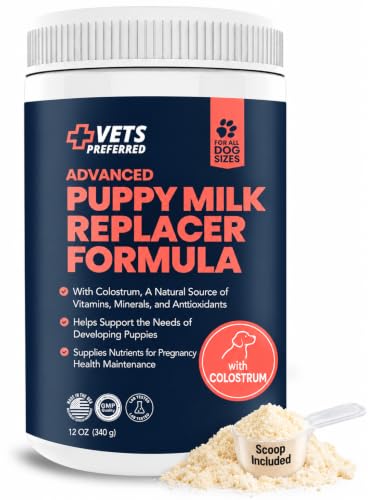
Vets Preferred Puppy Milk Replacer with Colostrum
What We Like
- Enriched with colostrum for immunity
- Supports nursing mothers' recovery
- Balanced protein, fat, and fiber
- Made in USA under GMP standards
Trade-offs
- Powder requires mixing before each feeding
- Not suitable for owners who want a pre-mixed liquid formula
A formula that includes colostrum gives newborn puppies a direct boost to their immune and digestive systems right when they need it most. This Vets Preferred milk replacer is built around that ingredient, making it a strong pick for litters where early immunity is a concern. It also provides balanced protein, fat, and fiber to support steady growth across all breeds and sizes, and the same nutrients help a nursing mother recover her strength while she’s feeding pups. If you’re managing a pregnant or recently whelped dog, this powder addresses both her needs and the puppies’ needs in one container.
The Vets Preferred Puppy Milk Replacer with Colostrum is a powder that must be mixed fresh each feeding, which is standard for milk replacers but less convenient than ready-to-use liquids. Its key advantage is the inclusion of colostrum to support immune and digestive health, plus the formula is designed for both puppies and nursing mothers, something the PetAg Esbilac powder doesn’t explicitly cover. For anyone caring for a lactating dog or a newborn litter, that dual-purpose benefit makes the extra mixing step worthwhile.
Product photos
Nutri-Vet Puppy Milk Replacer Powder

What We Like
- Veterinarian-formulated for balanced nutrition
- Includes probiotics for digestive support
- Provides essential protein, fat, carbohydrates, and vitamins
Trade-offs
- Powder requires mixing before each feeding
- Not suitable for puppies over six weeks old
The inclusion of Opti-Gut probiotics targets digestion and nutrient absorption right from the start, which matters when a puppy’s gut is still developing. This makes it a reliable option for whelping supplies and daily feeding during those first critical weeks.
It comes as a powder, so you’ll need to mix it fresh for each feeding rather than grabbing a pre-mixed bottle. Compared to the PetAg Esbilac powder, which also includes probiotics and a similar 12-ounce size, both require the same mixing routine. For someone who wants a formula backed by veterinary input and doesn’t mind a few extra minutes of prep, this one fits the bill.
Product photos
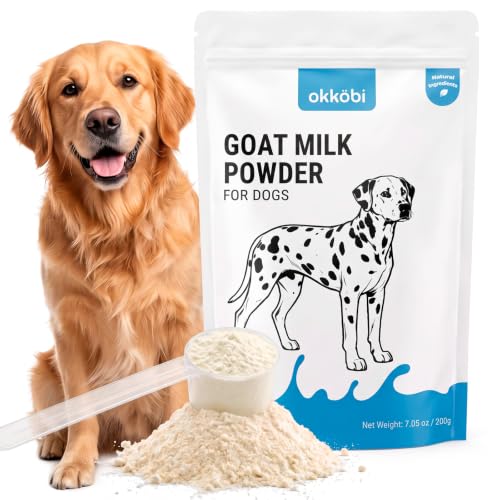
OKKÖBI Goat Milk Powder for Dogs
What We Like
- Gentle on sensitive stomachs
- Dissolves instantly in warm water
- Contains probiotics and enzymes
Trade-offs
- Not a complete long-term diet alone
- Not suitable for dogs with goat milk protein sensitivity
The trade-off is the smaller package size compared to some other milk replacers. If you are feeding a single puppy with a touchy gut, or using it as a daily topper for an adult dog with ongoing digestive issues, the focused goat milk formulation addresses a specific need. It is a purpose-built tool, not a bulk supply.
Product photos
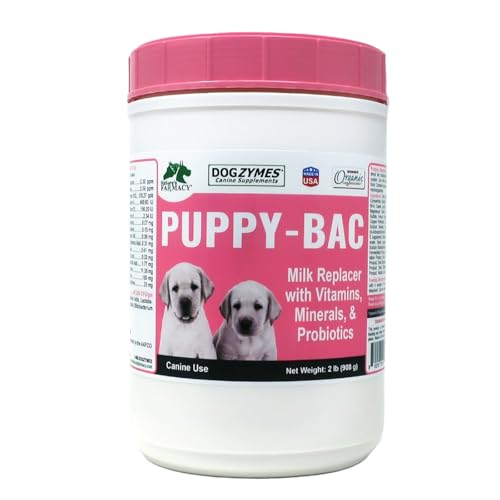
Dogzymes Puppy-Bac Milk Replacer
What We Like
- 441 million CFU/gram live microorganisms
- Can supplement or replace mother's milk
- Supports bitches needing a milk boost
Trade-offs
- Powder requires precise 1:4 mixing ratio
- Heavier container at 2.0 pounds
With 441 million CFU of live microorganisms per gram, this milk replacer includes live microorganisms and enzymes as listed on the label. It can supplement or replace mother’s milk and is formulated with proper ratios of protein, fat, and nutrients for growing puppies. The 1:4 mixing ratio is straightforward, and the 2-pound container gives you enough to get through those critical early weeks without constant reordering.
You’re committed to mixing every batch yourself, and at 2 pounds, this container is heavier than most others here, like the PetAg Esbilac at 0.9 pounds. That weight matters if you’re carrying it around a whelping box or storing in tight spaces. Still, for someone prioritizing a high probiotic count, the 441 million CFU per gram is a notable feature.
Product photos
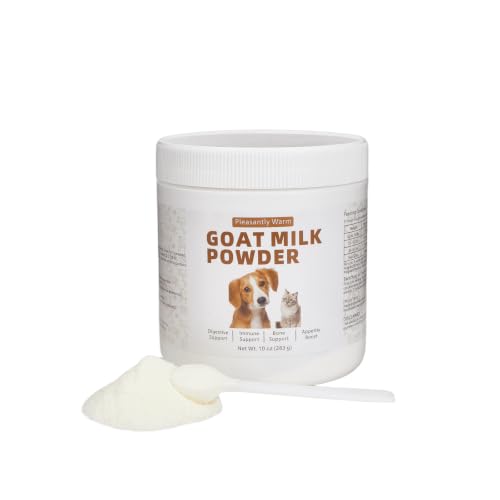
Pleasantly Warm Goat Milk Powder
What We Like
- Supports all life stages from puppy to senior
- Includes probiotics and digestive enzymes for gut health
- Rich in vitamins A, B, C, D and minerals
- No artificial flavors, colors, or preservatives
Trade-offs
- Powder form requires mixing before feeding
- Not a complete diet for newborn puppies without colostrum
A formula that covers puppies, adults, and seniors in one canister means you don’t have to switch products as your dog ages. This goat milk powder packs probiotics and digestive enzymes to support gut health, plus a full lineup of vitamins A through D and minerals like calcium and potassium. That makes it a practical daily supplement for a picky adult who needs a food topper or a senior whose digestion has gotten touchy. The powder mixes into a gravy or sprinkles dry over kibble, so you can adjust how you serve it based on what your dog actually tolerates.
This is a generalist product, not a targeted newborn replacer like PetAg Esbilac, which is formulated specifically for puppies under six weeks. If you are raising a litter from day one, Esbilac’s narrower focus on neonatal needs may fit better. For anyone who wants one milk supplement that works across multiple life stages without artificial additives, this goat milk powder covers the bases. It does that without forcing you to buy separate products for each phase of your dog’s life.
Product photos
How We Evaluated Milk For Puppies
We started by examining the nutritional profiles of each formula against what a mother dog naturally provides. This meant checking protein, fat, and carbohydrate ratios, as well as the presence of colostrum for immune support and prebiotics or probiotics for digestive health. Manufacturer documentation and veterinary resources informed every comparison.
The three criteria that mattered most were nutritional completeness, ingredient quality, and ease of preparation. A milk replacer must be a complete diet for a newborn puppy, not a supplement. We prioritized formulas with added colostrum, live probiotics, or digestive enzymes, and we looked for powders that mix smoothly without clumping. We also considered shelf life after opening, because a formula that spoils quickly can waste money and create hassle.
A research-led evaluation like this has an honest limit: we haven’t raised litters with each product in a controlled setting. What we can do is surface the specs, the expert consensus, and the real-world feedback patterns that help you narrow the field. If you’re looking for a full breakdown of all the top contenders, our guide to puppy milk replacement covers every option in detail.
For those exploring alternative bases, we also have a dedicated resource on goat milk for puppies and a separate look at puppy milk substitutes for emergency situations.
What To Look For In Milk For Puppies
The right milk replacer mimics a mother dog’s milk as closely as possible while being gentle enough for a newborn’s digestive system. Look for a complete nutritional profile, immune-supporting ingredients, and a preparation method you can stick with for multiple feedings a day.
Nutritional Completeness
A good puppy milk replacer must be a complete diet, not a supplement. Check that the formula provides adequate protein and fat to support rapid growth. Avoid products that list sugar as a primary ingredient or that lack taurine, an amino acid essential for heart and eye development in canines.
Immune Support Ingredients
Colostrum, the first milk a mother produces, is packed with antibodies that protect newborns before their own immune systems mature. Some milk replacers include bovine colostrum for this purpose. Prebiotics and probiotics also matter, because they help establish healthy gut flora, which is critical for digestion and immune function in the first weeks of life.
Ease of Mixing and Feeding
Powdered formulas require precise mixing to avoid over-concentration (which can cause dehydration) or under-concentration (which starves the puppy of calories). Look for products with clear instructions and a reputation for dissolving smoothly without clumps. Some powders must be refrigerated after mixing and used within 24 hours, while others have a longer window. Consider your schedule and whether you can commit to frequent preparation.
- Check the mixing ratio and whether the formula specifies using warm water for better dissolution.
- Confirm the storage requirements, some powders last months in the pantry, others need refrigeration after opening.
- Look for a formula that includes a scoop or measuring tool to ensure accuracy.
- Consider whether a ready-to-feed liquid would be more practical for your situation.
- Verify the product is formulated for puppies specifically, not for all life stages.
A good rule of thumb: if the label doesn’t say “complete nutrition” or “suitable as a sole diet,” it’s a supplement, not a replacer.
Milk For Puppies Compared
The table below compares the eight milk replacers we evaluated, covering key specs, formula type, and what each product is best suited for.
| Product | Form | Key Additives/Ingredients | Weight |
|---|---|---|---|
| PetAg Esbilac Puppy Milk Replacer Powder | Powder | Prebiotics & Probiotics | 0.9 pounds |
| PetAg PetLac Puppy Milk Replacer Powder | Powder | Prebiotics and probiotics | 0.8 pounds |
| Under the Weather Puppy Milk Replacer with Colostrum | Powder | Bovine colostrum | N/A |
| Vets Preferred Puppy Milk Replacer with Colostrum | Powder | Colostrum | 0.8 pounds |
| Nutri-Vet Puppy Milk Replacer Powder | Powder | Probiotics (Opti-Gut) | 0.9 pounds |
| OKKÖBI Goat Milk Powder for Dogs | Powder | Goat milk, probiotics, enzymes | 0.4 pounds |
| Dogzymes Puppy-Bac Milk Replacer | Powder | Live Microorganisms and Enzymes | 2.0 pounds |
| Pleasantly Warm Goat Milk Powder | Powder | Probiotics, digestive enzymes | 0.6 pounds |
Frequently Asked Questions
Can I give cow’s milk to a puppy?
No. Cow’s milk has a different fat and protein ratio than a mother dog’s milk and contains lactose levels that most puppies cannot digest properly. It often causes diarrhea, dehydration, and poor growth. Always use a commercial puppy milk replacer designed for canine digestive systems.
How often do I need to feed a newborn puppy milk replacer?
Newborn puppies need feeding every two to four hours, including through the night, for the first two weeks of life. As they grow, the interval can gradually increase to four to six hours. The exact schedule depends on the puppy’s age, weight, and overall health.
What is the difference between a milk replacer and a milk supplement?
A milk replacer is a complete diet designed to be the sole source of nutrition for an orphaned or rejected puppy. A milk supplement is meant to be used alongside mother’s milk when a puppy needs extra calories or a nursing mother needs support. Always check the label to know which you’re buying.
When should I start weaning a puppy off milk replacer?
Weaning typically begins around three to four weeks of age, when puppies start showing interest in solid food. The process should be gradual, mixing the weaning food with the milk replacer to create a soft gruel. Most puppies are fully weaned by six to eight weeks.
How do I know if a milk replacer is upsetting my puppy’s stomach?
Signs of digestive upset include loose stools, vomiting, excessive gas, or a refusal to eat. If you see these symptoms, stop using the formula and consult a veterinarian. Some puppies do better on a goat milk base or a formula with added probiotics.
The Bottom Line
For most puppy owners, the PetAg Esbilac Puppy Milk Replacer Powder is the best choice because it offers the closest nutritional match to mother’s milk, backed by decades of use in breeding and veterinary settings. It’s the formula you can trust for orphaned newborns or for supplementing a large litter when the dam needs help.
If your puppy has a sensitive stomach or you’re raising a litter that seems prone to digestive issues, the PetAg PetLac Puppy Milk Replacer Powder provides the same brand reliability with extra focus on easy digestion. For owners who want immune support from colostrum in a vet-formulated package, the Under the Weather Puppy Milk Replacer with Colostrum is worth paying more for.
The single most important factor in choosing a puppy milk replacer is nutritional completeness. A formula that isn’t designed as a sole diet can leave a growing puppy deficient in critical nutrients. Start with a product that meets that standard, and you’ve already solved the hardest part of the decision.
For more on the transition to solid food, our guide on how to wean puppies walks through the process step by step. If you’re caring for a newborn without a mother, our resource on caring for an orphaned puppy covers everything from feeding to warmth to hygiene.
