
4 Best Puppy Milk Replacements in 2026
This post contains affiliate links. As an Amazon Associate, we earn from qualifying purchases.
The PetAg Esbilac Puppy Milk Replacer Powder is the best overall choice because its protein, fat, and carbohydrate profile is closest to mother’s milk, and it includes prebiotics and probiotics for healthy digestion. For sensitive stomachs, the PetAg Goat’s Milk Esbilac Powder offers whole goat milk protein, while the Vets Preferred Puppy Milk Replacement Formula adds colostrum for immune support.
Raising newborn puppies without a mother means getting the nutrition balance exactly right, too much or too little of any nutrient can cause digestive upset or slow growth. Many owners also face the practical challenge of mixing a formula that dissolves smoothly and stays fresh in the refrigerator.
This guide is based on manufacturer specifications, veterinary nutrition guidelines, and patterns in owner feedback from breeders and foster homes. We break down what to look for in a milk replacer and which product fits different needs, from sensitive digestion to immune support.
Top 4 Puppy Milk Replacements in the Market
Certain content that appears on this site comes from Amazon. This content is provided "as is" and is subject to change or removal at any time.
The Best Puppy Milk Replacements, Reviewed
PetAg Esbilac Puppy Milk Replacer Powder

What We Like
- Closest to mother's milk in protein, fat, carbs
- Includes prebiotics and probiotics for digestion
- Easy-to-mix formula with simple ratio
- Trusted brand in pet wellness
Trade-offs
- Must be refrigerated after mixing
- Cannot use a blender during mixing
- Only mix enough for 24 hours
This formula is scientifically the next best to mother’s milk, providing protein, fat, and carbohydrates closest to her milk for puppies from birth to six weeks old. Prebiotics and probiotics are added to support healthy immunity and digestion during those early weeks. The mixing ratio is one part powder to two parts warm water, and the manufacturer advises against using a blender. Once mixed, the liquid must be refrigerated and used within 24 hours, so you will be preparing small batches.
The trade-off is that after mixing, the liquid must be refrigerated and used within 24 hours, which means small batch preparation is required. Compared to the PetAg Goat’s Milk Esbilac Powder, which is labeled for sensitive digestive systems, this standard formula provides complete nutrition for healthy puppies. For most litters needing reliable nutrition from birth, this is a well-established option.
PetAg Goat's Milk Esbilac Powder

What We Like
- Whole goat milk protein for sensitive digestion
- Includes prebiotics and probiotics for gut health
- Special fiber blend for easy digestion
- Complete balanced nutrition closest to mother's milk
Trade-offs
- Must be used within 24 hours of mixing
- Cannot be mixed with a blender
- Only for puppies under six weeks old
Whole goat milk protein is the single most decisive feature here, it makes this formula fundamentally different from standard cow-milk-based replacers. Combined with added prebiotics and probiotics, this powder targets the digestive system directly, which is exactly what you need when a litter is showing signs of upset from other formulas. It’s designed for puppies from newborn up to six weeks, so it covers the age range when their guts are still developing.
This formula requires a strict mixing schedule: any prepared formula must be fed within 24 hours, and you cannot use a blender to mix it (whisk or shake only). That means smaller batches and more frequent prep, which matters when you are already waking up every two hours for feedings.
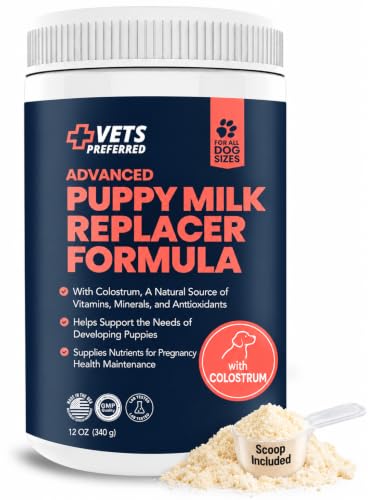
Vets Preferred Puppy Milk Replacement Formula
What We Like
- Enriched with colostrum for immune support
- Balanced protein, fat, and fiber
- Easy-mix powder formula
- Supports pregnant and nursing dogs
Trade-offs
- Powder form requires mixing with water
- Not suitable for dogs with lactose sensitivity
Colostrum is the standout ingredient here, and it’s what sets this formula apart for early puppy care. That first milk-like boost helps strengthen immune function and digestive health right when puppies are most vulnerable, which is exactly the kind of head start you want for a newborn litter. It also works as recovery nutrition for pregnant or nursing dogs, so one container can pull double duty in a multi-dog household. The balanced protein, fat, and fiber blend supports steady growth without the guesswork, and the powder mixes smoothly with water for feeding during weaning or supplemental nutrition.
The colostrum enrichment gives this formula a clear advantage for immune support in those first critical weeks. So if your priority is giving newborn puppies the strongest possible start, this earns its place in the cart. The downside is that it’s a powder you have to mix yourself, and at 12 ounces, it won’t last as long as larger options if you’re raising a big litter.
Product photos
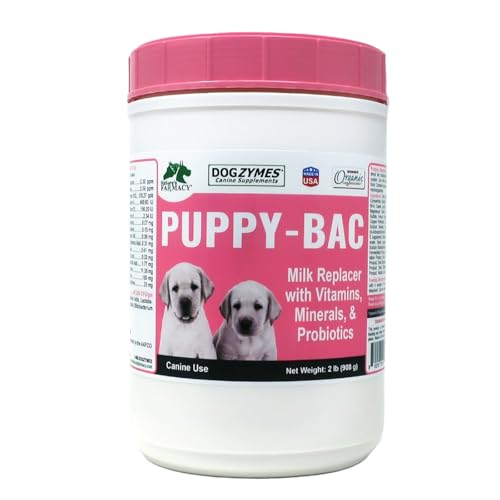
Dogzymes Puppy-Bac Milk Replacer
What We Like
- 441 million CFU/gram live microorganisms
- Formulated with proper protein, fat, nutrients
- Can supplement or replace mother's milk
- Also boosts milk production in nursing bitches
Trade-offs
- Powder mixing required before each feeding
- Not suitable for puppies with dairy sensitivities
With 441 million CFU per gram of live microorganisms, the probiotic level in this formula is significantly higher than what you’ll find in many standard milk replacers. That concentration of beneficial bacteria helps support digestive health in newborn puppies, whose guts are still developing. The enzymes included further aid in breaking down nutrients, making the formula easier on sensitive stomachs. Owners often report fewer digestive upsets compared to using basic powders. This density of live cultures means a little goes a long way toward maintaining a balanced gut flora, which is critical during the first weeks of life when puppies are most vulnerable to digestive issues.
You’re mixing powder yourself at a 1:4 ratio, which means measuring and stirring before every feeding session. At two pounds, the container is heavier than the 0.8-pound Vets Preferred option, so if you’re carrying it between rooms or traveling with a litter, that extra weight adds up. But for the live microorganism content and the ability to support both pups and their mother, it’s a focused tool rather than a general-purpose powder.
Product photos
How We Evaluated Puppy Milk Replacers
We looked at the nutritional profile of each formula first, comparing protein, fat, and carbohydrate levels against published standards for milk for puppies. The closest match to natural mother’s milk gets priority because newborn puppies have very specific digestive needs.
Digestive health was the second major factor. We favored formulas with added prebiotics, probiotics, or live microorganisms that help establish a healthy gut in the first weeks of life. Owners consistently report fewer cases of diarrhea and gas with these enhanced formulas.
Ease of preparation matters too, especially for breeders feeding multiple litters. We looked at mixing ratios, whether blending is recommended, and how long the mixed formula stays good in the refrigerator. A formula that requires precise daily mixing is fine for dedicated foster homes but less practical for busy kennels.
What To Look For In Puppy Milk Replacers
Choosing a milk replacer means matching the nutritional profile to the puppy’s age and digestive tolerance, while also considering how much time you can spend on preparation.
Look for a formula that matches mother’s milk in protein, fat, and carbohydrate content. Avoid cow’s milk-based replacers for sensitive puppies. Choose powder over liquid for longer shelf life. Check whether the formula includes probiotics or colostrum for immune and gut support.
Nutritional Balance
The ideal puppy milk replacer should mimic the macronutrient profile of canine mother’s milk. Protein should be the primary source of calories, followed by fat, with minimal carbohydrates. Formulas that deviate too far from this balance can cause poor growth or digestive upset. The best formulas list protein as the first ingredient and avoid fillers like corn syrup or starches.
Digestive Additives
Prebiotics, probiotics, and live microorganisms help establish a healthy gut microbiome in newborn puppies. This reduces the risk of diarrhea, which is one of the most common and dangerous issues in orphaned puppies. Some formulas also include colostrum, which provides passive immunity until the puppy’s own immune system develops.
Preparation and Storage
Most powdered milk replacers require mixing with warm water and must be refrigerated after mixing. Some formulas cannot be mixed with a blender because it creates too much foam, which can cause bloat in puppies. Check the storage window, most mixed formulas are only good for 24 hours, which means small, frequent batches are necessary.
- Check the mixing ratio before buying, some require precise measurements.
- Confirm the formula is suitable for the puppy’s age (some are only for under six weeks).
- Look for a formula that dissolves without clumping when stirred gently.
- Consider whether you need a formula that can be used to supplement nursing mothers as well.
- Verify the formula does not contain ingredients your puppy may be sensitive to, like lactose.
A good rule of thumb: if the formula causes gas or loose stool, switch to a goat milk-based replacer before trying a different brand.
Puppy Milk Replacements Compared
The table below compares the four top-rated puppy milk replacers across nutritional profile, digestive support, and ease of use so you can quickly see which one fits your situation.
| Product | Form | Key Additives | Mixing Ratio | Weight |
|---|---|---|---|---|
| PetAg Esbilac Puppy Milk Replacer Powder | Powder | Prebiotics, probiotics, vitamins | 1 part powder to 2 parts warm water | 0.9 pounds |
| PetAg Goat's Milk Esbilac Powder | Powder | Prebiotics, probiotics, vitamins | 1 part powder to 2 parts warm water | 5.0 pounds |
| Vets Preferred Puppy Milk Replacement Formula | Powder | Colostrum | N/A | 0.8 pounds |
| Dogzymes Puppy-Bac Milk Replacer | Powder | Live Microorganisms and Enzymes | 1:4 | 2.0 pounds |
Frequently Asked Questions
How do I mix puppy milk replacer correctly?
Follow the ratio on the package, typically one part powder to two parts warm water. Stir gently to avoid creating foam, which can cause bloat. Never use a blender unless the manufacturer explicitly allows it. Mix only enough for 24 hours and refrigerate immediately.
Can I use cow’s milk as a substitute for puppy milk replacer?
No. Cow’s milk has a different protein and fat profile than canine mother’s milk and lacks the specific nutrients puppies need. Using cow’s milk can cause diarrhea and malnutrition. Stick to a commercial milk replacer designed for puppies.
How often should I feed a newborn puppy milk replacer?
Newborn puppies need feeding every two to three hours, including overnight. As they grow, the interval increases. Follow the feeding chart on the formula package based on the puppy’s weight. Always warm the formula to body temperature before feeding.
When should I start weaning a puppy off milk replacer?
Weaning typically begins around three to four weeks of age. Start by offering a thin gruel made from the milk replacer mixed with food for weaning puppies. Gradually thicken the mixture over two to three weeks until the puppy is eating solid food exclusively.
What should I do if my puppy has diarrhea from milk replacer?
Stop feeding the current formula and switch to a goat milk formula designed for sensitive stomachs. Make sure the puppy stays hydrated, you may need to offer electrolyte solution between feedings. If diarrhea persists for more than 24 hours, see a veterinarian.
The Bottom Line
For most breeders and foster homes, the PetAg Esbilac Puppy Milk Replacer Powder is the best overall choice. Its nutritional profile is closest to mother’s milk and it includes prebiotics and probiotics for healthy digestion. It’s the formula we’d reach for first when raising orphaned litters.
If you’re dealing with a puppy that has a sensitive stomach, the PetAg Goat’s Milk Esbilac Powder is worth paying more for, whole goat milk protein is easier to digest than cow milk-based replacers. For immune support, the Vets Preferred Puppy Milk Replacement Formula adds colostrum, which is especially valuable in the first days of life.
The most important factor is getting the nutritional balance right from the start. A formula that matches mother’s milk in protein and fat content gives your puppy the best chance at healthy growth, and a good digestive additive can prevent the most common problems. Everything else, mixing ease, storage, cost, is secondary to that.
