
How Often Should Dogs See the Vet: Age-by-Age Schedule
This post contains affiliate links. As an Amazon Associate, we earn from qualifying purchases.
The question of how often should dogs see the vet has a simple floor: once a year for healthy adults and twice a year for seniors, while puppy schedules vary by source. Every guidance body agrees on the adult minimum; they split on puppies and on when a dog counts as senior.
The adult minimum is the easy part. The how often should dogs see the vet split shows up in the first year, where one guideline asks for three visits and another describes a monthly schedule, and again around year six, when a 50-pound dog and a 15-pound dog stop sharing a calendar.
What follows is the schedule by life stage, the places where the professional bodies disagree and who holds which position, and the one interval that carries legal weight instead of clinical advice. By the end you’ll know which number applies to your dog.
Key Takeaways
- Once a year is the floor for healthy adults, and AAHA, AAHA/AVMA, VCA and PetMD all land on that same number, while VetPartners sets the same annual minimum but ideally twice in 12 months.
- Puppies need far more than one visit: AAHA points to every 3 to 4 weeks until 4 to 5 months, while VetPartners sets a floor of 3 visits in the first 12 months.
- Senior status depends on weight and age, not one flat birthday. BSAVA puts dogs at or above 22.7 kg at 6 to 8 years and dogs below that weight at 7 to 10, while PetMD uses a flat 7 years with giant breeds earlier.
- Seniors go to twice a year across AAHA, VCA, BSAVA and PetMD, though AKC notes geriatric dogs nearing end of life often need more than every six months.
- The 12-month exam in 9 CFR 3.13 is law for dealers, exhibitors and research facilities. It’s a compliance floor, not wellness advice for a pet dog.
What Happens Inside the Annual Exam
VCA lists four screening categories at the center of a standard wellness visit: complete blood count, biochemistry profile, urinalysis, and thyroid hormone testing.
A standard canine wellness examination pairs a hands-on physical check with four screening categories, per VCA: complete blood count, biochemistry profile, urinalysis, and thyroid hormone testing. The depth of each panel is set by the individual patient, because disease in dogs is frequently advanced before any outward sign appears.
Before any of that, your vet walks through diet, exercise, water intake, breathing, behavior, habits, and elimination patterns. Those answers decide how deep the testing goes.
VCA Animal Hospitals states the case for scheduling plainly: dogs hide signs of disease in the early stages, so a condition can be well advanced before anything obvious shows. A scheduled exam catches what a symptom-driven one misses.
The four screening categories, in plain terms:
- Complete blood count (CBC): red cells, white cells and platelets. Infection, anemia and clotting problems surface here.
- Biochemistry profile: liver and kidney values, blood sugar, electrolytes.
- Urinalysis: concentration, protein, glucose, and sediment in the sample.
- Thyroid hormone testing: thyroid levels, with the depth set by the vet.
Common mistake: Booking the annual visit as a vaccine appointment only. The shots get done, the bloodwork doesn’t, and early changes sit unnoticed for another 12 months.
How Often Should Puppies See the Vet in Their First Year?
Three visits is the floor one guideline sets for a puppy’s first 12 months, while a monthly schedule through early puppyhood produces more.
AAHA, citing VCA, puts the first checkup at 6 to 8 weeks old for vaccinations and parasite treatment. From there, visits land every 3 to 4 weeks until the puppy is around 4 to 5 months old.
VetPartners AU/NZ sets a much lower floor: a minimum of three reviews in the first 12 months. PetMD expects four or more across the first year. VCA describes monthly exams through early puppyhood.
AAHA ties visits to the vaccine series at every 3 to 4 weeks until 4 to 5 months, while VetPartners sets a minimum of 3 reviews in the first 12 months, VCA describes monthly exams through early puppyhood, and PetMD expects four or more.
The first year, in order:
- 6 to 8 weeks: first exam, first vaccines, deworming and parasite prevention.
- Every 3 to 4 weeks after that: top-up vaccines until roughly 16 to 20 weeks, per AKC guidance.
- 12 weeks or older: rabies, which most US states require for dogs old enough to receive it.
- 6 to 18 months: the spay or neuter conversation, with timing set by size and breed.
Your practice’s vaccine schedule decides how those visits stack up, and rabies boosters run on their own clock. PetMD puts the rabies booster at around a year old, then every three years, or annually depending on where you live.
When Does a Dog Count as Senior?
Senior is a weight class as much as an age.
The BSAVA PetSavers guidance splits dogs at 22.7 kg. At or above that weight, a dog is senior at 6 to 8 years and geriatric at 9. Below it, senior runs 7 to 10 years and geriatric starts at 11.
PetMD uses a flat 7 years, with giant breeds moved earlier. VCA says a dog is middle-aged by the sixth birthday if small or medium, senior if large, and geriatric once past average breed life expectancy. AKC’s Dr. Klein puts toy breeds on twice-yearly visits from 7 to 9 years, and giant breeds a couple of years sooner.
BSAVA says outright that there’s no fully agreed definition of an aged dog. Any single cutoff is a convenience, not a fact.
What changes once your dog crosses into senior:
- Screening gets tighter, not looser. BSAVA notes ageing pets need more frequent health screening.
- Thirst becomes a measurement. Drinking over 100 ml per kg of body weight in 24 hours counts as excessive.
- Symptoms stop being explained away. BSAVA warns against dismissing changes as evidence of getting older.
A dog hiding a sore hip may show it on the scale: a hesitation before the back leg takes weight, a flinch when the stethoscope disc touches the ribs.
If your dog is already in that bracket, the senior dog vet visits question has its own answer, and senior dog care covers the home side of it.
Adult Dogs: The Annual Floor and the Case for Twice a Year
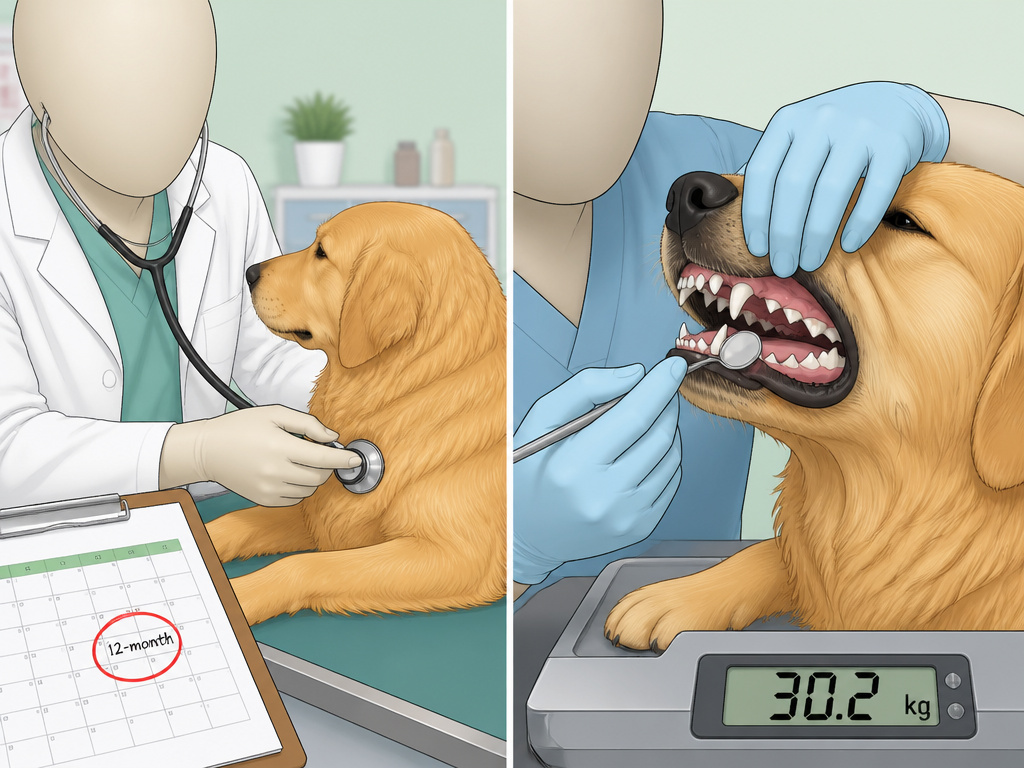
The annual exam is the baseline every major source agrees on.
AAHA and AVMA state that all dogs should have a veterinary examination at least annually. AAHA’s position statement repeats it and adds that more frequent visits suit some dogs, decided case by case on age, breed, health, and environment. VCA calls annual exams the norm for the average adult. PetMD says once a year even when the dog looks healthy.
VetPartners goes a step further: annual at a minimum, ideally twice in 12 months. The second review can be a nurse consultation covering dental exam, weight, nutrition, and preventive product administration.
That split is worth knowing, because it changes what the second visit costs you in time:
- Vet-led annual exam: full physical, screening decisions, vaccine review.
- Nurse-led second review: dental check, weight, nutrition guidance, preventive products.
- Chronic or behavioural cases: pulled onto the six-month track regardless of age.
On the preventive side, your vet picks the product, but the format matters for whether you’ll actually keep up. For most dogs that means a monthly preventive; the 12-month Proheart SR-12 injection VetPartners names is the alternative for owners who won’t hit a monthly date.
The AAHA/AVMA preventive healthcare guidelines for dogs are the underlying document here, and AAHA’s frequency of veterinary visits page is the short version of it.
How Often Should Dogs See the Vet? Where the Sources Split
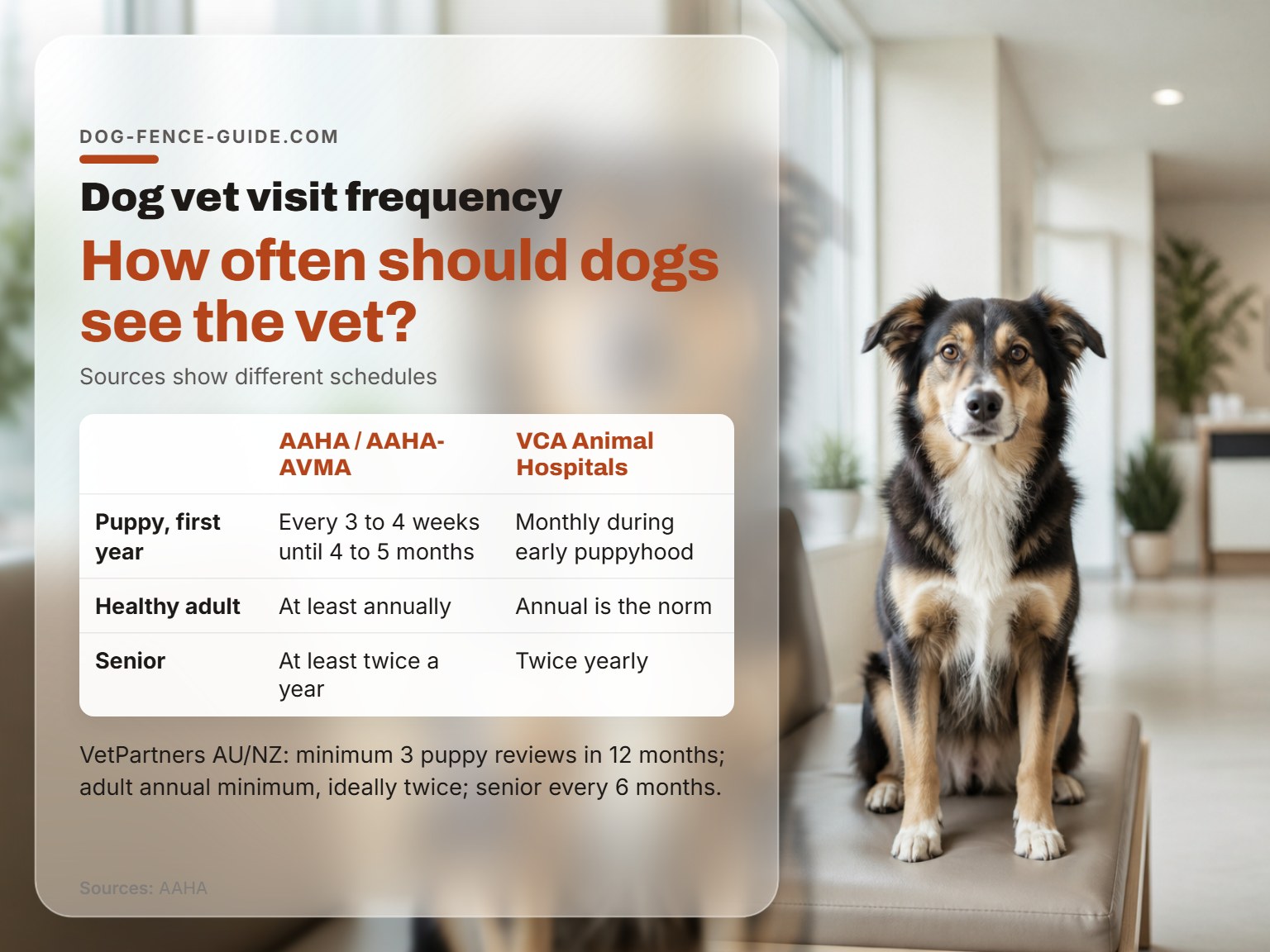
Three numbers cause most of the confusion: puppy frequency, adult frequency, and the age a dog becomes senior.
Here’s who says what, side by side.
| Life stage | AAHA / AAHA-AVMA | VCA Animal Hospitals | VetPartners AU/NZ |
|---|---|---|---|
| Puppy, first year | Every 3 to 4 weeks until 4 to 5 months | Monthly during early puppyhood | Minimum of 3 reviews in 12 months |
| Healthy adult | At least annually | Annual is the norm | Annual minimum, ideally twice in 12 months |
| Senior | At least twice a year | Twice yearly | Every 6 months at a minimum |
Puppy Frequency: Monthly vs Three Visits
The gap between monthly and three visits is substantial. Both numbers come from credible bodies, and they’re answering slightly different questions.
VCA’s monthly figure describes a care rhythm through early puppyhood. VetPartners’ three visits describes a minimum standard a practice should not fall below. If your puppy is on a vaccine series that finishes at 16 to 20 weeks, the schedule may land closer to the monthly end.
Senior Age: Weight Threshold vs Birthday
This one has no resolution, and BSAVA says so in print. A 7-year-old Papillon and a 7-year-old Irish Wolfhound are at different life stages, which is Dr. Klein’s point exactly.
BSAVA’s weight threshold is one option if you want a single trigger, but sources disagree: PetMD uses a flat 7 years with giant breeds earlier, and VCA calls a dog senior by the sixth birthday if large or middle-aged if small or medium.
When two credible bodies publish different intervals, plan around the tighter one and ask your vet which applies to your dog. One extra visit is a smaller problem than a condition that got six months of runway.
The AAHA canine life stage schedule sets out the stage-by-stage version in more detail, and the AKC dog vet visit schedule covers the breed-size angle.
The 12-Month Rule That Is Legally Binding

9 CFR 3.13 is the only interval in this whole picture that carries legal weight.
The federal rule applies to licensed dealers, exhibitors, and research facilities, not to pet owners. It requires regularly scheduled visits by the attending veterinarian not less than once every 12 months, plus a complete head-to-tail physical exam not less than once every 12 months.
It also mandates vaccinations for rabies, parvovirus and distemper, and sampling and treatment of parasites including fleas, worms, coccidia, giardia and heartworm, on a schedule the attending vet approves. Research facilities must keep records for the duration of the research activity and an additional three years after disposal, and dealers and exhibitors at least one year.
The part nobody mentions: The 12-month figure in federal rules is a compliance floor for licensed facilities. Reading it as wellness advice for a pet dog inverts what the regulation exists to do.
The contrast is stark. AAHA and AVMA use the same 12-month number, and their guidelines state explicitly that they aren’t intended to be an AAHA or AVMA standard of care. Same interval, opposite legal weight.
What Early Detection Actually Changes
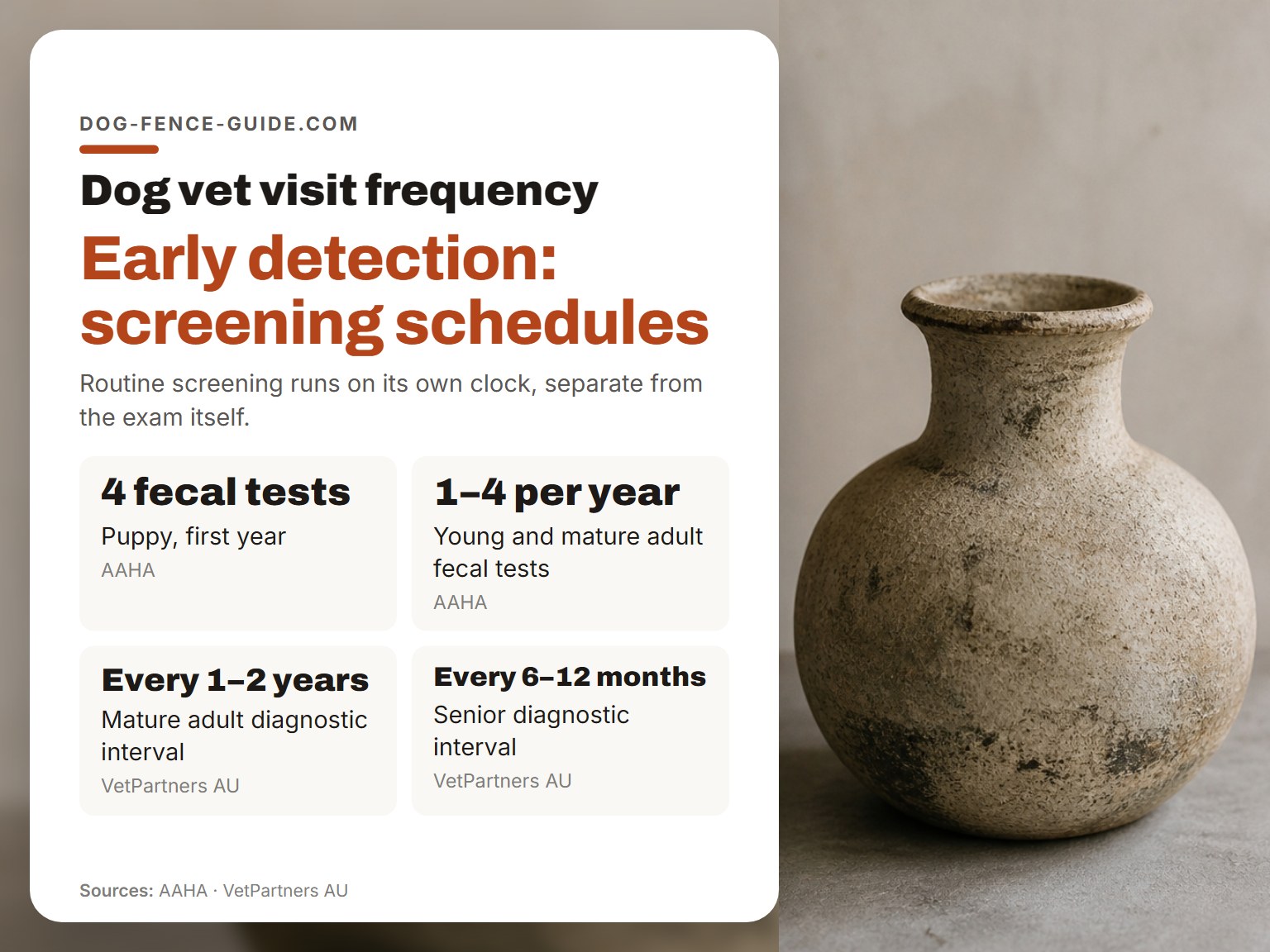
Catching a problem early changes the treatment list.
VCA describes early detection and treatment as less costly than waiting until a condition is advanced enough to affect quality of life, and notes that a problem caught before irreversible damage has a better prognosis. That’s the practical case for the schedule.
Dr. McVety, quoted by AKC, notes that a significant percentage of clients approaching a practice for euthanasia had not been to a veterinarian in the past 6 to 12 months.
Routine screening runs on its own clock, separate from the exam itself:
| Life stage | Diagnostic interval | Source |
|---|---|---|
| Puppy, first year | 4 fecal tests | AAHA 2019 |
| Young and mature adult | 1 to 4 fecal tests per year | AAHA 2019 |
| Mature adult | Every 1 to 2 years | VetPartners AU/NZ |
| Senior | Every 6 to 12 months | VetPartners AU/NZ |
Signs that shouldn’t wait for the next scheduled visit, per BSAVA:
- Drinking more than 100 ml per kg over 24 hours.
- Accidents indoors in a previously reliable dog.
- Weight loss, confusion, or unusual panting.
- Any change in how your dog looks or behaves.
Some of these are emergencies rather than scheduling questions. Repeated dog vomiting is a call-now item, not a wait-for-the-annual one.
The canine life stage diagnostic testing resource sets out the full testing table, including orthopedic radiographic screening to consider for large-breed dogs.
How to Make the Visit Count
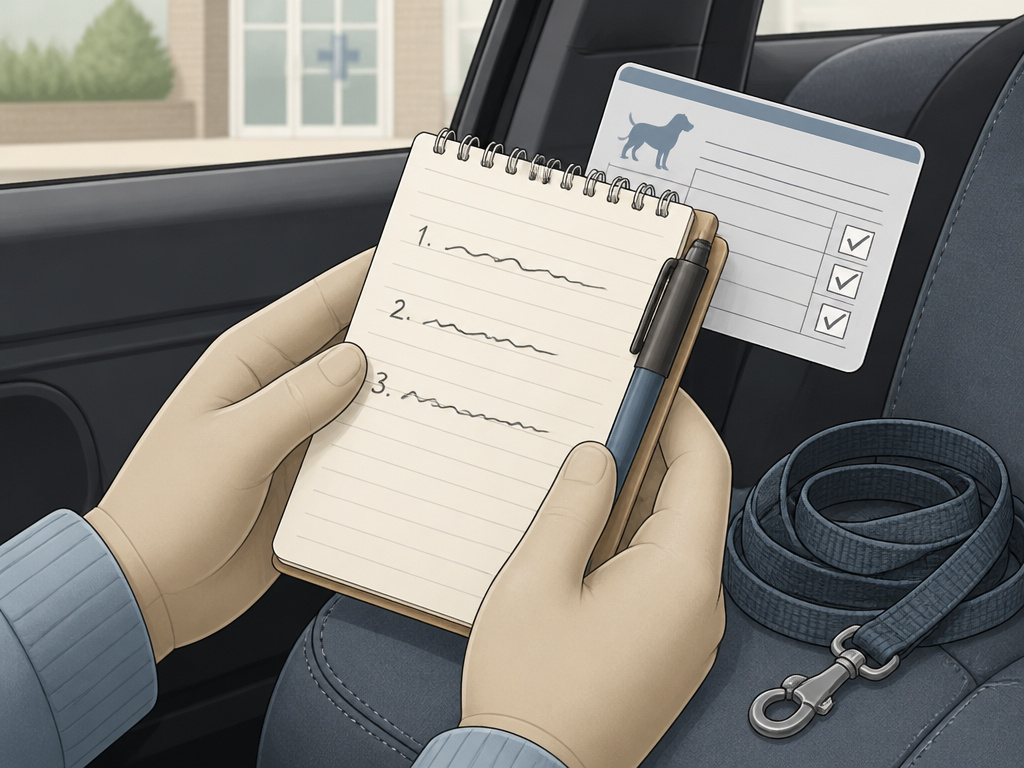
That reaction is normal and it’s manageable. Two things move the needle: choosing a practice before you need one, and walking in with a written list.
Pick a Practice Before You Need One
Call two or three clinics and ask one question: what happens when a dog needs a same-day appointment? The answer tells you more than any review score. Knowing how to choose a vet in advance beats scrambling during a limp.
Write Down Three Things Before You Go
A short written list helps. Vets work through a lot in a short window, and the list keeps the visit honest.
The prep work starts before the car:
- Note the water intake for a full 24 hours if thirst is on your list.
- Write down three questions, ranked by what worries you most.
- Bring the vaccine record from the breeder, rescue, or previous clinic.
- Skip the breakfast if bloodwork is planned, unless your vet says otherwise.
I’d rather see an owner walk in with three scribbled questions than a folder of internet printouts. The three questions get answered. The folder gets skimmed.
Anxious dogs do better with a plan. Preparing your dog for the vet covers the car and the waiting room, and if your dog is already past that point, calming dogs at the vet is the next step.
Frequently Asked Questions
Is once a year really enough for a healthy adult dog?
It’s the floor that AAHA, AAHA/AVMA, VCA and PetMD all agree on. VetPartners sets the same annual minimum but adds that twice in 12 months is ideal. If your dog is a large breed, a giant breed, or carrying a chronic condition, the tighter schedule is the better fit.
At what age should I switch my dog to twice-yearly visits?
Use weight as your trigger. BSAVA puts dogs at or above 22.7 kg into senior status at 6 to 8 years, and dogs below that weight at 7 to 10 years. PetMD uses a flat 7 years with giant breeds earlier. AKC’s Dr. Klein starts toy breeds on twice-yearly visits from 7 to 9 years.
Do senior dogs need bloodwork at every visit?
Not automatically. VCA lists four screening categories, and the depth of each panel is set by the individual patient. What changes in senior years is frequency: BSAVA recommends senior health checks at least twice a year, and VetPartners puts senior diagnostic testing on a 6 to 12 month cycle.
Can the second yearly visit be with a nurse instead of the vet?
VetPartners explicitly allows it. The second annual review can be a nurse consultation covering dental examination, weight assessment, nutrition guidance, and preventive product administration such as a Proheart SR-12 injection. AAHA and VCA guidance doesn’t describe that option, so ask your practice directly.
Is the 12-month exam rule something pet owners have to follow?
No. 9 CFR 3.13 applies to licensed dealers, exhibitors, and research facilities. AAHA and AVMA use the same 12-month interval but state that their guidelines aren’t intended as a standard of care. For a pet dog, the schedule is a clinical recommendation, not a legal requirement.
The Bottom Line
One trigger you could use is BSAVA’s weight threshold: at or above 22.7 kg, dogs are senior at 6 to 8 years, while PetMD uses a flat 7 years with giant breeds earlier and VCA calls large breeds senior by the sixth birthday.
The first step this week is small: book the annual exam and ask specifically for the four screening categories by name. If your dog is still in the puppy vaccine series, the calendar is already set by that series, so the only decision is which practice holds it.
One concession. If your dog is genuinely terrified of the clinic, a second visit every year isn’t free, and the stress is real. In that case, put the effort into one calm, well-prepared annual exam and ask whether the second review can be a nurse visit.
Before you book, check three things in your own situation:
- Your dog’s weight in kilograms, because that’s the number the senior definition turns on.
- The date of the last exam, since the 12-month clock runs from the visit, not the calendar year.
- Whether the last visit included bloodwork, because a vaccine-only appointment doesn’t reset the screening schedule.
