
How Often Should Senior Dogs See the Vet: Twice a Year
This post contains affiliate links. As an Amazon Associate, we earn from qualifying purchases.
Senior dogs should see the vet about every six months, not once a year. The American Animal Hospital Association (AAHA) sets twice-yearly exams as the floor for dogs older than seven, including visibly healthy ones, because age-related disease moves faster than a twelve-month gap can track.
Between exams, the how often should senior dogs see the vet question matters because kidney values can drift from normal to early compromise, dental disease can move from gingivitis to significant periodontal disease, and a mild heart murmur can grade up. Lakeside Animal Hospital names those three progressions as the reason for the shorter interval.
What follows: where the guidelines actually agree, where they split on the definition of senior, the tests worth asking for by name, and the home checks that catch what a six-month gap misses.
Key Takeaways
- Twice a year is the AAHA floor for senior dogs, even visibly healthy ones, though AAHA defines senior as the last 25% of estimated lifespan rather than a flat age.
- The definition of senior shifts by source. AAHA’s public resource uses a flat >7 years while its 2019 checklist uses the last 25% of lifespan; BSAVA uses body weight bands.
- Bloodwork, urinalysis, and blood pressure are the core senior diagnostics, on a 6-12 month cycle.
- SF SPCA permits annual senior labs starting at 8-10 years, a looser standard than AAHA’s.
- Chronic conditions like kidney disease or arthritis may need more than twice-yearly visits.
So How Often Should Senior Dogs See the Vet, Really?
Two organizations set the standard most vets follow: the American Animal Hospital Association in the US and the British Small Animal Veterinary Association in the UK. AAHA sets a six-month floor for senior dogs, while BSAVA calls for more frequent health screening without stating a fixed interval.
Senior wellness exams are recommended at least every six months for dogs past the age of seven. The twice-yearly cadence exists to intercept predictable twelve-month progressions, including kidney values drifting toward early compromise, gingivitis advancing to periodontal disease, and a mild murmur grading up, before any of those become harder to manage.
The how often should senior dogs see the vet question is one thing. The bigger disagreement is what counts as “senior” in the first place, and that matters because it sets when the twice-yearly clock starts.
| Source | Senior exam frequency | Notes |
|---|---|---|
| AAHA | Every 6 months | Includes visibly healthy pets |
| BSAVA | “More frequent” screening | No fixed interval stated |
| SF SPCA | Annual senior labs from 8-10 yrs | Permits annual for some seniors |
| Kittrell Animal Hospital | Every 6 months | Plus bloodwork and urinalysis |
| Lakeside Animal Hospital | Twice yearly over age 7 | Large/giant breeds as early as 5-6 |
That’s the consensus. The how often dogs see the vet question has a different answer at each life stage, and the AAHA dog life stage guide walks through all of them from puppy to senior.
AAHA, BSAVA, and Your Vet Disagree on What “Senior” Means
Here is the honest version: there is no single senior age. AAHA’s public resource says dogs older than seven and cats older than ten. AAHA’s own 2019 senior checklist defines senior as the last 25% of estimated lifespan through end of life. BSAVA uses body weight: dogs at or above 22.7 kg (about 50 lb) hit senior at 6-8 years and geriatric at 9; dogs under 22.7 kg hit senior at 7-10 years and geriatric at 11.
Your vet may split the difference by breed. Kittrell Animal Hospital calls dogs senior around eight, except giant breeds like Great Danes, Irish wolfhounds, mastiffs, and Saint Bernards, which need more frequent preventive care starting around five. Eagle Animal Hospital puts most dogs at seven, with larger breeds entering senior as early as five or six. Lakeside Animal Hospital uses seven as the default, five or six for large and giant breeds, and eight to ten for small breeds that age more slowly.
| Source | Senior threshold | Basis |
|---|---|---|
| AAHA (2024 resource) | >7 years (dogs), >10 (cats) | Fixed age |
| AAHA (2019 checklist) | Last 25% of lifespan | Lifespan-based |
| BSAVA | 6-8 yrs if ≥22.7 kg; 7-10 yrs if <22.7 kg | Body weight |
| Kittrell Animal Hospital | ~8 years; giant breeds ~5 | Age + breed |
| Lakeside Animal Hospital | 7 years; large/giant 5-6; small 8-10 | Age + breed size |
I’ve had two vets give me two different “senior” ages for the same dog. Both were right by their own guidelines. If you’re still working out where your dog sits, the signs of aging in dogs go beyond the calendar, and the AAHA senior pet care recommendations spell out what changes in the exam itself once you cross the line.
What Actually Happens at a Senior Wellness Exam
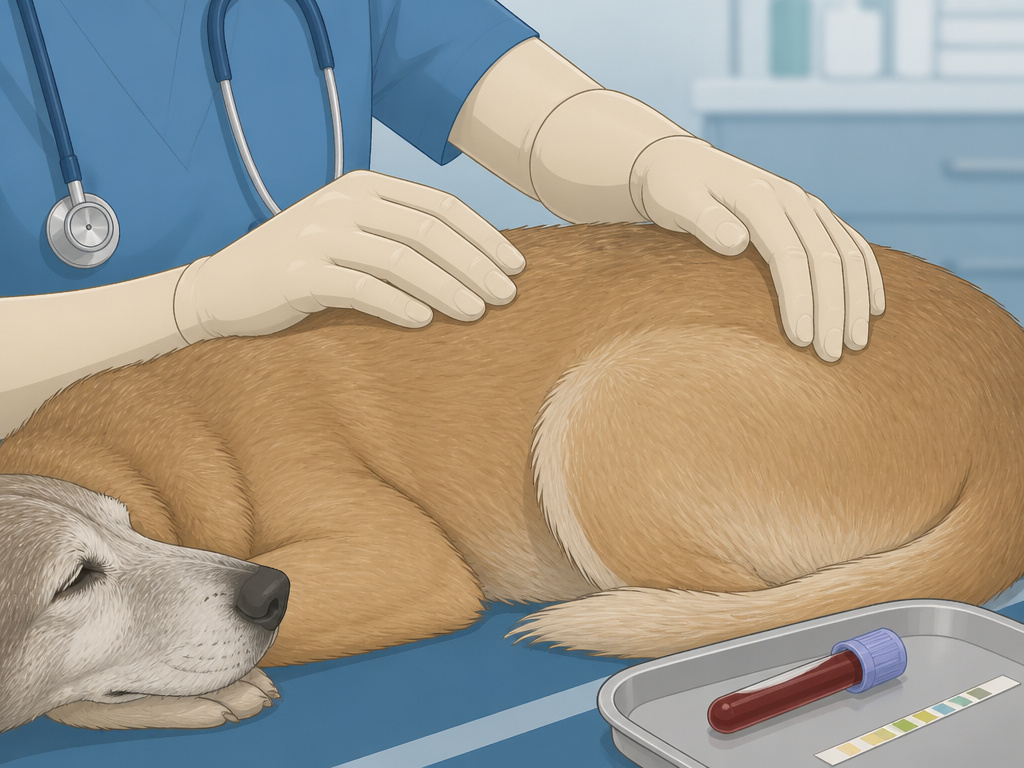
A senior exam covers more ground than the annual checkup you’re used to. Lakeside Animal Hospital lists the components: a full bloodwork panel, urinalysis, mobility and pain scoring, a detailed dental evaluation, and a blood pressure check for dogs with relevant risk factors.
The physical part is more hands-on than most owners expect. The vet runs hands down the spine and hips, checks muscle tone along the back, and feels for new lumps in the skin and coat that you might have missed at home.
- Full bloodwork – a chemistry panel with TP, albumin, ALT, glucose, BUN, creatinine, sodium, potassium, calcium, and SDMA where available
- Urinalysis – catches kidney and bladder changes before symptoms show
- Mobility and pain scoring – arthritis in dogs is significantly underdiagnosed
- Dental evaluation – periodontal disease is common in seniors and often silent
- Blood pressure check – for dogs with relevant risk factors
- A brief cognitive screen if you mention behavior changes
Same-visit lab results are worth asking about. Lakeside runs its senior bloodwork and urinalysis on-site, which means you can discuss findings before you leave the parking lot instead of waiting days for a callback. If your current clinic sends everything out, that’s a conversation worth having when choosing a vet for your dog. The 2023 AAHA senior care guidelines go deeper on what each test is designed to catch.
The Tests Worth Asking For by Name
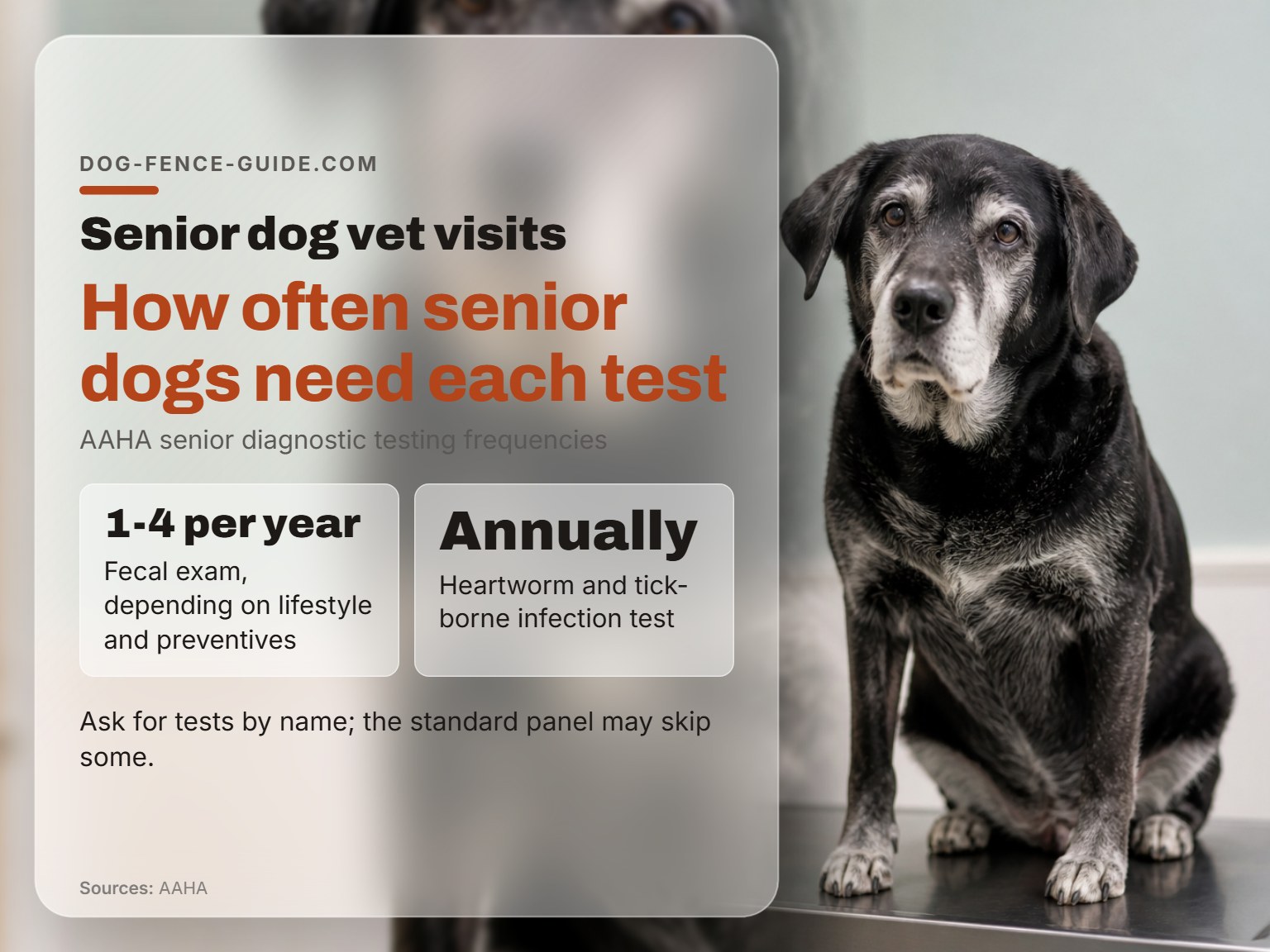
Ask for the tests by name and you’ll get them. Skip the ask and you’ll get the standard panel, which may not include everything a senior dog needs. The AAHA 2023 guidelines publish a frequency table for senior diagnostic tests.
| Test | Frequency | Notes |
|---|---|---|
| CBC, chemistry panel, urinalysis | Every 6-12 months | Core senior screen |
| Fecal exam | 1-4 times per year | Depends on lifestyle and preventives |
| Heartworm/tick-borne test | Annually | With year-round preventives |
I ask for the full panel now. The first time I didn’t, the T4 got skipped and we spent time chasing a thyroid question that one test would have settled. The AAHA life stage diagnostic testing page breaks down what changes at each stage, including the orthopedic radiographic screening AAHA recommends considering for large-breed dogs.
If your dog is on the lean side and losing weight, ask for the full chemistry panel even if the last one was six months ago. Weight loss in a senior is a symptom, not a stage.
How Often Do Senior Dogs With Chronic Conditions Need to Go?
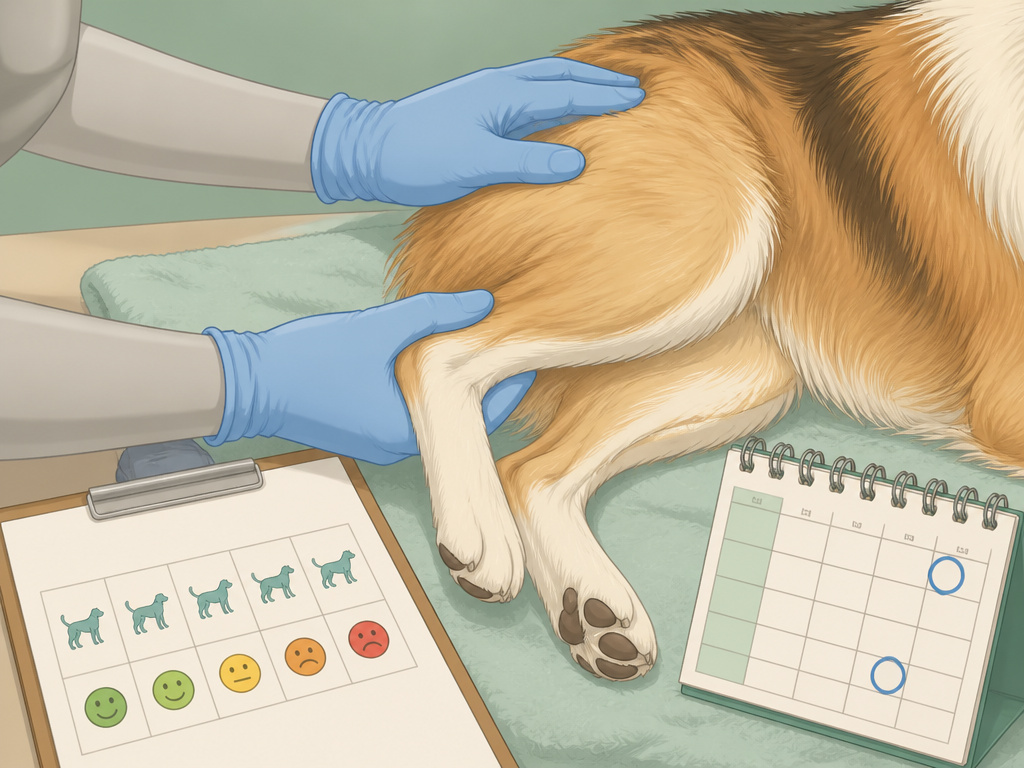
Twice yearly is the floor, not the ceiling. Eagle Animal Hospital notes that a pet managing an existing chronic condition such as kidney disease or arthritis may need an even more frequent schedule than twice yearly. The vet sets that cadence based on how fast the numbers are moving.
My old collie’s recheck schedule became more frequent once his mobility score started shifting. That wasn’t a crisis decision. It was a math decision about how much runway a slow-moving problem gets between visits.
Worth knowing before you start: A stable chronic condition does not mean a stable schedule. A dog managing kidney disease or arthritis can need visits more often than twice yearly, and the gap between “managing well” and “crisis” is often one missed recheck.
If your dog is slowing down but you’re not sure whether it’s arthritis or something worse, the senior dog mobility checklist is a useful pre-visit tool. Bring notes. Vets work better with specifics.
The Home Checks That Fill the Six-Month Gap
Sunday morning, dog on his side on the kitchen floor. That’s when I do the skin check: elbows, hips, ribs.
I started doing a five-point check: vision, hearing, cognition, mobility, and incontinence. It has caught problems before the vet did.
- Vision – watch them navigate a dim hallway
- Hearing – jingle keys behind their head and see if they turn
- Cognition – do they still greet you at the door?
- Mobility – time them up-and-down from a down-stay and compare month to month
- Incontinence – check morning bedding before you let them out
My old collie passed the hallway test but failed the “find the treat under the cup” game. That was my first clue about cognitive dysfunction, not stubbornness. The vet confirmed it and we changed everything: the routine, the yard access, the amount of time we spent letting him figure things out on his own schedule.
The most common mistake I see in forums is the deaf-dog version of this. Owner keeps the collar on a dog that’s gone deaf, the dog stops responding to the audible cue, and the owner calls it “selective hearing” or “stubbornness.” A deaf dog isn’t ignoring you. It literally cannot hear the warning, and any correction comes out of nowhere. Ask me how I know.
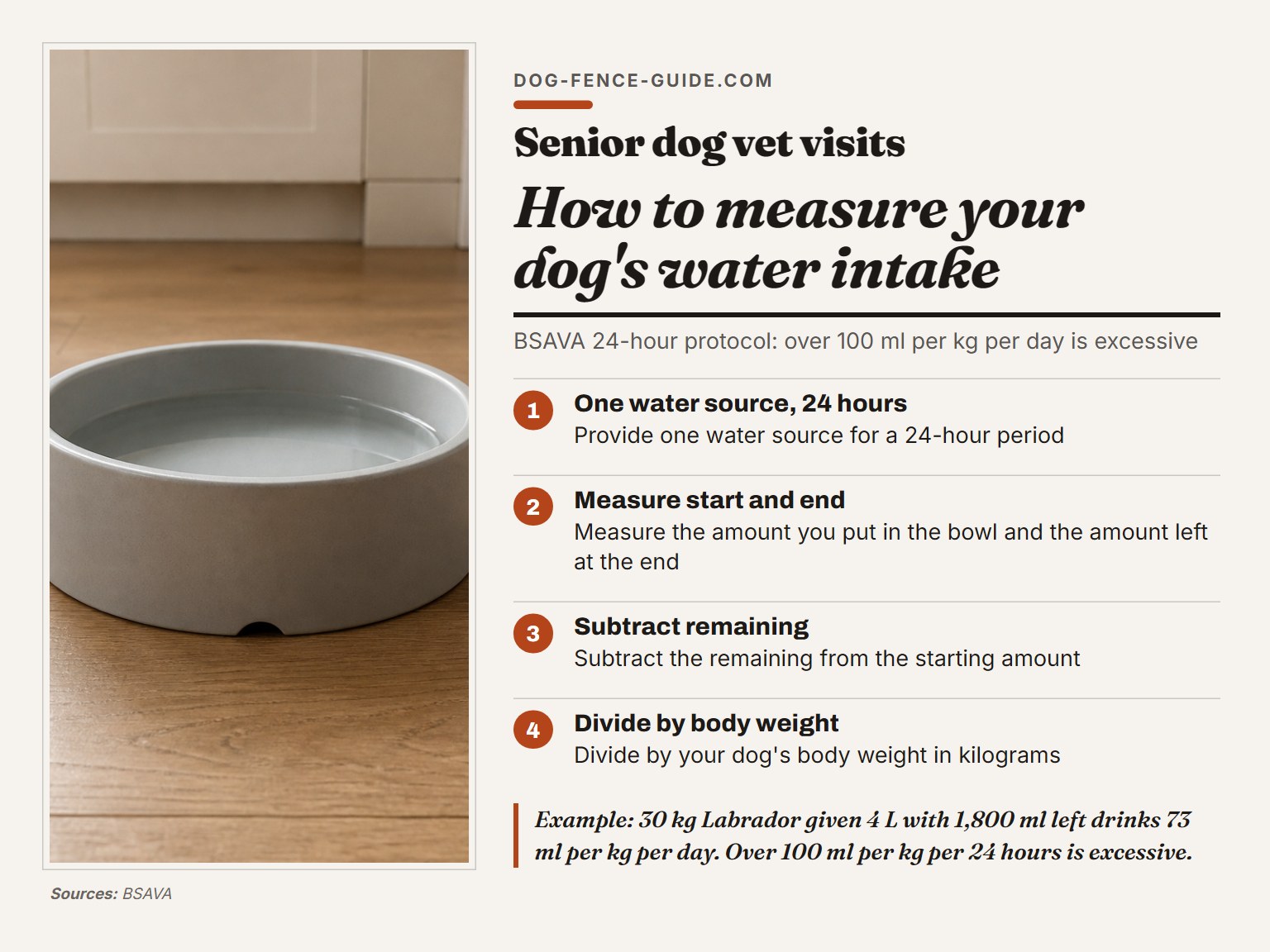
Water intake is the other home check worth doing properly. BSAVA’s protocol:
- Provide one water source for a 24-hour period
- Measure the amount you put in the bowl and the amount left at the end
- Subtract the remaining from the starting amount
- Divide by your dog’s body weight in kilograms
A 30 kg Labrador given 4 L (4,000 ml) with 1,800 ml left after 24 hours drinks 73 ml per kg per day. Drinking over 100 ml per kg per 24 hours is considered excessive and worth a vet call. The senior dog incontinence guide covers the bedding and skin-care side once the drinking question is settled. The SF SPCA dog wellness guide has the preventive baseline for everything else.
If your senior is drinking more than 100 ml per kg per 24 hours, don’t wait for the next scheduled visit. Increased drinking in an older dog can point to a major new disease, and the earlier the workup, the more treatment options stay on the table.
When to Call Before the Next Scheduled Visit
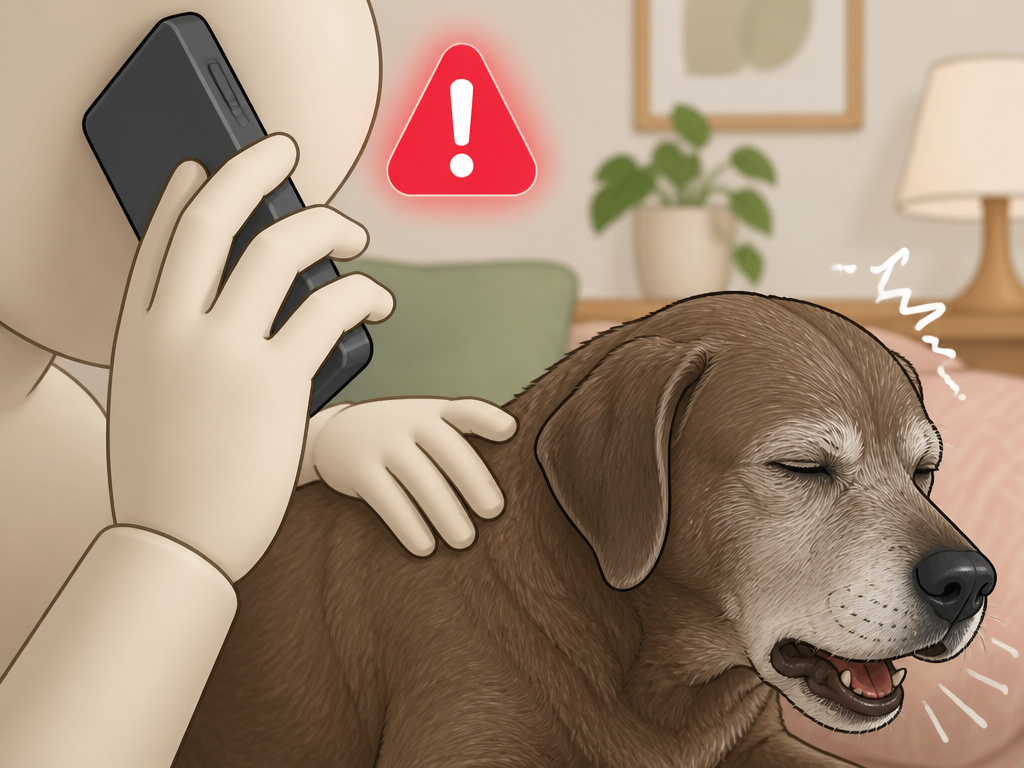
Some symptoms can’t wait for the next appointment. BSAVA’s list of warning signs includes vomiting, diarrhoea, difficulty passing faeces, coughing or wheezing, excessive scratching or licking, excessive panting, a swollen belly, and anything else that’s out of the ordinary for the way your dog usually looks or behaves.
Where this goes sideways: Dismissing a new symptom as “just getting older.” BSAVA’s guidance is explicit that signs should not be dismissed as evidence of aging. Problems caught early have the best chance of treatment, and Problems caught early have the best chance of treatment.
Two more reasons to call early. And a dog with a new cough or a sudden refusal to climb stairs is describing something the vet needs to hear, not something you can watch for another month. The senior dog quality of life guide has more on the daily-life side once the medical questions are answered.
Frequently Asked Questions
Is twice a year really necessary, or is once a year enough?
For a healthy dog over seven, twice a year is the AAHA recommendation; BSAVA calls for more frequent health screening without a fixed interval, and SF SPCA permits annual senior lab testing starting at 8-10 years. SF SPCA permits annual senior lab testing starting at 8-10 years, which is a looser standard. If your dog has any chronic condition, twice yearly is the floor, not the ceiling.
What’s the difference between a senior exam and a regular checkup?
Senior exam adds bloodwork, urinalysis, mobility and pain scoring, a detailed dental evaluation, and a blood pressure check for at-risk dogs. Lakeside Animal Hospital notes these are not standard components of a routine adult wellness visit.
At what age should I start twice-yearly visits for a large breed?
Kittrell Animal Hospital and Lakeside Animal Hospital both suggest large and giant breeds may need twice-yearly exams as early as age five or six. BSAVA’s body-weight bands put dogs at or above 22.7 kg at senior status between 6 and 8 years.
Can I do senior lab work less often if my dog seems healthy?
AAHA’s 2023 guidelines put core senior bloodwork on a 6-12 month cycle. SF SPCA recommends annual senior labs starting at 8-10 years. The shorter end of that range exists because dogs hide illness well, and a normal exam doesn’t rule out early kidney or dental disease.
How do I know if my senior dog needs to go in sooner than scheduled?
Watch for changes in drinking, toileting, appetite, mobility, or behavior that don’t fit the dog’s normal pattern. BSAVA’s warning list includes vomiting, diarrhoea, coughing, excessive panting, and a swollen belly. Any of those is a call, not a wait.
The Bottom Line
Here’s the threshold that matters: once your dog passes seven, book the next exam six months out before you leave the parking lot. If your dog is a giant breed, Kittrell Animal Hospital and Lakeside Animal Hospital suggest starting that rhythm as early as five or six. If your dog has kidney disease, arthritis, or a heart murmur, Eagle Animal Hospital notes these may need an even more frequent schedule than twice yearly, so ask the vet about a tighter cycle.
The one thing to do this weekend: run the five-point home check. Ten minutes, dog on the floor, and you’ll either have a clean baseline or a specific question for the next visit. Measure twice, decide once.
