
Shiba Inu vs Akita: Which Breed Fits Your Home?
This post contains affiliate links. As an Amazon Associate, we earn from qualifying purchases.
The shiba inu vs akita comparison starts with size. An Akita stands 24 to 28 inches at the shoulder and can weigh 70 to 130 pounds. A Shiba Inu runs 13.5 to 16.5 inches and about 20 pounds. Both are independent, double-coated Japanese breeds that need experienced owners and secure containment.
Containment is where the shiba inu vs akita split is hardest. An Akita’s weight and guarding instinct change what a fence has to do, because the job runs in both directions: keeping the dog in, and keeping everything else out. A Shiba’s escape risk is a separate problem, built on a recall that PetPlace describes as especially difficult.
What follows covers the size and weight figures as the registries define them, the Japanese-versus-American Akita split that trips up most comparison pages, temperament, grooming, health screening, and what each breed actually needs from a yard.
Key Takeaways
- Akita males run 100 to 130 pounds on the AKC standard; Shiba Inus sit at 17 to 23 pounds on the secondary sources that publish a figure at all.
- The FCI Shiba standard lists no weight, so every Shiba weight number you read is somebody else’s estimate.
- FCI sets Shiba height at 40 cm (15.75 in) for males and 35 cm (13.75 in) for females, with 1.5 cm allowed either way.
- Dogster and Hepper say Shibas should never be off leash outside an enclosed area, which makes the fence the deciding purchase.
- Akitas blow coat twice a year and shed more overall, while Shibas shed moderately all year with heavier seasonal periods.
How Big Is the Size Gap Between a Shiba Inu and an Akita?
Put them side by side and the answer lands in about a second. Dogster puts the Akita roughly 10 inches taller at the shoulder, and that figure holds up against the registry numbers.
The FCI Shiba Inu standard sets height at withers at 40 cm (15.75 in) for males and 35 cm (13.75 in) for females, with a permitted deviation of 1.5 cm in either direction. The standard specifies no weight for the breed. The AKC Akita standard gives American-type males 26 to 28 inches and 100 to 130 pounds.
| Trait | Shiba Inu | Akita (American type) |
|---|---|---|
| Height, male | 40 cm / 15.75 in (FCI) | 26-28 in (AKC) |
| Height, female | 35 cm / 13.75 in (FCI) | 24-26 in (AKC) |
| Weight | Not specified in the FCI standard | 100-130 lb male, 70-100 lb female |
| Tail carriage | Curled or sickle | Three-quarter curl or more |
| Typical lifespan | 13-16 years | 10-14 years |
| Standard colours | Red, black-and-tan, sesame, cream | Black, pinto, black mask |
The shiba inu vs akita weight gap changes your daily life more than the height gap does. A 100-pound Akita that plants its feet on a walk is a two-handed problem, and a 20-pound Shiba that plants its feet is an inconvenience you can pick up.
Shiba weight is the muddiest number in the whole comparison. Chewy’s vet-reviewed piece says about 20 pounds fully grown. PetPlace and Canine Journal both say 17 to 23 pounds. The FCI standard says nothing at all, which means every one of those figures is a secondary estimate rather than a breed requirement.
Shiba height has the same problem in miniature. FCI gives you a specific 40 cm and 35 cm with a tolerance. Chewy gives 13.5 to 16.5 inches. Canine Journal gives 13 to 17 inches. They overlap, but only the FCI figure is a standard.
The Akita Split That Breaks Most Comparisons
Two registries describe two different dogs under one name. The FCI recognises the Japanese Akita under Standard No. 255, with males around 67 cm and females around 61 cm, plus or minus 3 cm. The AKC recognises the American Akita, a taller and heavier dog with a different colour list entirely.
FCI treats these as separate breeds. That matters because a page quoting “24 to 28 inches” without naming which Akita it means has told you half a fact.
| Source | Akita height given | Akita weight given |
|---|---|---|
| AKC (American type) | 26-28 in male, 24-26 in female | 100-130 lb male, 70-100 lb female |
| Chewy (vet-reviewed) | 24-28 in | Up to 130 lb male, 100 lb female |
| Dogster | 26-28 in | 100-130 lb |
| Canine Journal | 24-28 in | 70-130 lb |
| FCI 255 (Japanese type) | About 67 cm male, 61 cm female, +/- 3 cm | Not given |
Colours split the same way. The Japanese Akita standard lists red fawn, brindle, and white. The American Akita standard permits black, pinto, and black mask. If you’re buying a puppy described as “rare black Akita,” you’re looking at an American-type dog, not a Japanese one.
Lifespan figures spread too, and this one is worth flagging because the spread is real. Chewy and PetPlace both say 10 to 14 years. Hepper says 10 to 13. AnimalWised says about 10 to 12. Canine Journal prints “20 to 13 years,” which reads as a typo for 10 to 13. Plan on somewhere in the low teens and treat anything more optimistic as marketing.
What Does “Independent” Actually Mean in Daily Life?
Independent is the word every breed description uses, and it hides two very different behaviours. Chewy’s vet-reviewed comparison says both breeds suit experienced pet parents because of that independent streak. PetPlace says neither is ideal for a first-time owner who isn’t fully prepared. Dogster says Shibas specifically aren’t recommended for first-timers.
Hepper disagrees with all three on the Shiba question, calling the Shiba a better choice for first-time owners than the Akita. That’s a genuine split among the sources, and it tells you the honest answer sits with the individual dog and the individual owner.
I’d rather see a first-time owner take on a calm adult Shiba from a rescue than a nine-week Akita puppy from a breeder. The rescue has already shown you what the dog is. The puppy hasn’t shown you anything yet.
The behavioural difference shows up fastest around recall. PetPlace notes that recall can be especially difficult with Shibas. Dogster goes further and says a Shiba should never be allowed off leash outside an enclosed area because they bolt on a whim. Hepper applies the same rule to both breeds, citing prey drive and wanderlust.
Akitas fail differently. PetPlace flags guarding instincts and a tendency toward dog intolerance, including same-sex aggression in some individuals. Dogster doesn’t recommend Akitas for households with other pets at all. PetPlace softens that to “may be less tolerant,” so treat the multi-dog question as dog-specific rather than settled.
Tamara Larson, corresponding secretary of the Akita Club of America, describes the breed as an integral part of the family unit that shouldn’t be kept outdoors or separated from its people. That’s a working description of what this dog needs, and it rules out the backyard-only arrangement some buyers imagine.
If you want the broader picture on how independence plays out across breeds, the independent dog breeds breakdown covers the pattern. For the Akita specifically, Akita training covers the socialization timeline that decides whether the guarding instinct becomes manageable.
Which Breed Is Easier to Contain in a Yard?
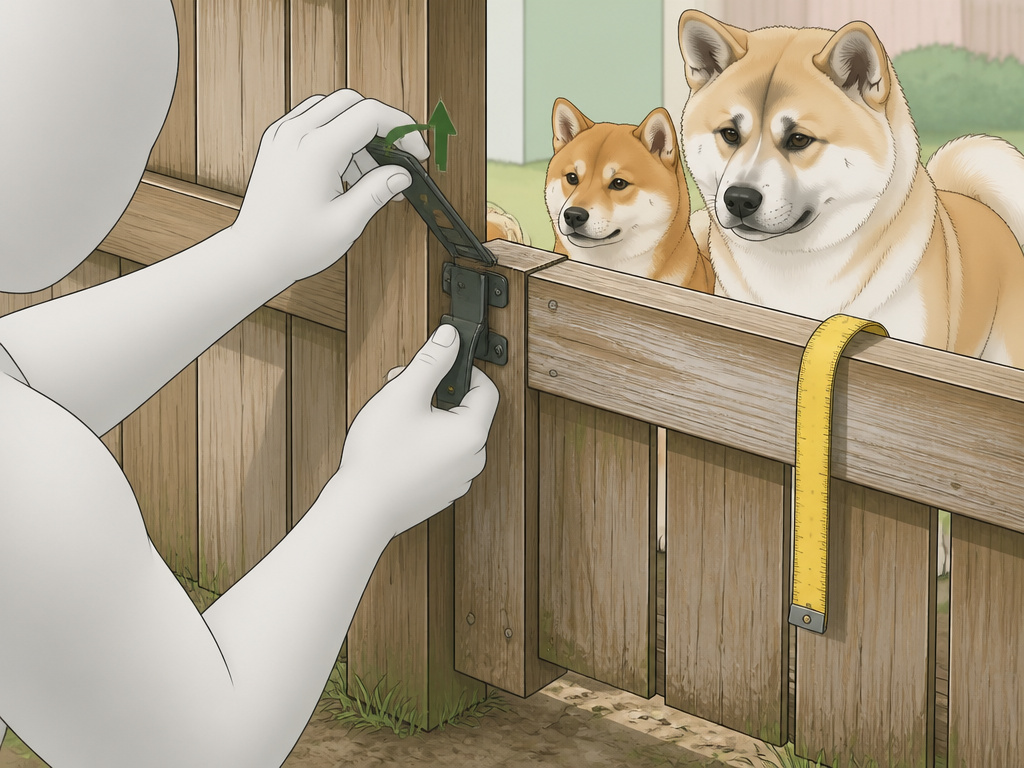
I watched a Shiba test a boundary at the exact same corner day after day. Same corner, same routine, same result. The system’s range never changed. The dog’s persistence did.
That’s the whole containment question in one paragraph. Range ratings on a box describe signal reach, not whether your dog will respect the line. Recall reliability is the number that predicts whether a fence holds, and for a Shiba the honest answer is that recall is the weakest link in the chain.
Breed clubs agree on the leash point. Jeri Burnside, treasurer of the National Shiba Club of America, describes Shibas as good hiking and running companions as long as they’re always on a leash and not out in the heat of the day. Dogster and Hepper both say the same thing in blunter terms.
Chewy recommends Shibas for condos and apartments, while PetPlace only calls them generally more apartment-friendly than Akitas rather than recommending them outright. PetPlace is more qualified, calling Shibas generally more apartment-friendly than Akitas rather than recommending them outright. On the Akita side the sources differ: Canine Journal says the Akita needs more room and cannot live in small spaces, while PetPlace says Akitas are usually better suited to homes with more space and an owner experienced with large, powerful dogs.
Walk your perimeter before you choose a breed, not after. Here’s the order I use:
- Walk the full line slowly, looking down rather than ahead. The failures are at ground level, where soil has settled or a board has rotted.
- Test every gate latch by hand, twice, with a little upward pressure applied. A latch that pops under lift is the single most common escape point.
- Check the corners where two fence runs meet. A fence behaves like a pipe system: the leak is never in the long straight run, it’s at the joint.
- Measure the actual height with a tape rather than trusting the listing. A low fence is a suggestion to a determined dog, and a taller fence is the floor I’d accept for either breed.
- Look outside the line, not just at it. What the dog can see and reach on the other side drives far more escape attempts than the fence material does.
A fence that keeps your dog in but lets the neighbour’s dog get nose-to-nose through the wire hasn’t solved the problem. Containment runs both directions.
For a Shiba, the harness matters as much as the fence, because the breed’s bolt instinct means the leash is your second line of defence. A properly fitted Shiba harness is worth more than a collar the dog can back out of.
Where this goes sideways: Buying a containment system rated for acreage before you’ve measured your dog’s recall. An acreage rating means nothing if the dog won’t come back from a short distance, and you’ll discover that on the first test, not the tenth.
Grooming and the Double Coat You’ll Live With
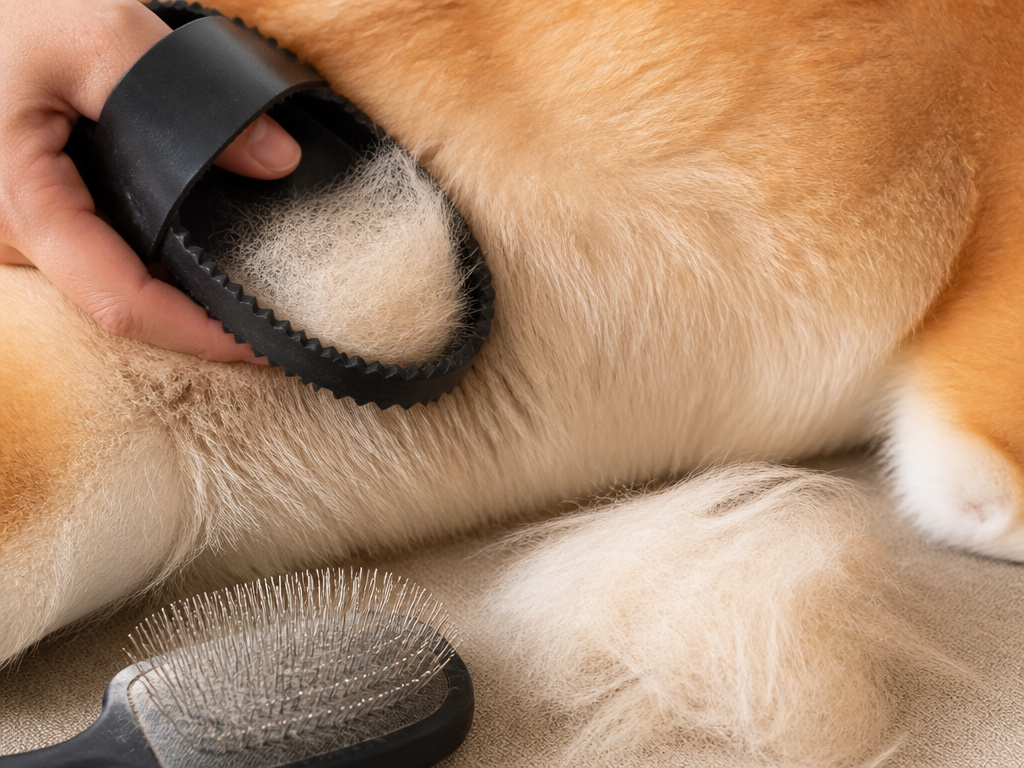
Run a hand against the grain on either breed and you’ll feel two distinct layers: a straight, stiff outer coat sitting over a soft, dense undercoat. The FCI Shiba standard describes exactly that structure, and the Akita carries the same double coat at a much larger body mass.
Shedding is where they part company. PetPlace says Shibas shed moderately year-round and heavily during seasonal periods. Akitas blow coat twice yearly and are heavier shedders overall, which is simple arithmetic once you account for the size difference.
Canine Journal’s cadence works for both: brush two to three times a week year-round, and most days during shedding season. Bathing every 8 to 12 weeks is the same source’s recommendation for either breed.
Neither breed suits an allergy household. PetPlace states that plainly, and no amount of brushing changes dander production. If allergies are in the picture, spend real time around an adult of the breed before you commit.
The undercoat is the part that ends up everywhere. It comes away in loose clumps during a coat blow, and a rubber curry comb pulls more of it than a bristle brush manages in the same time. Shiba grooming covers the tool choices for that double coat in more detail.
Health Screening That Changes Outcomes
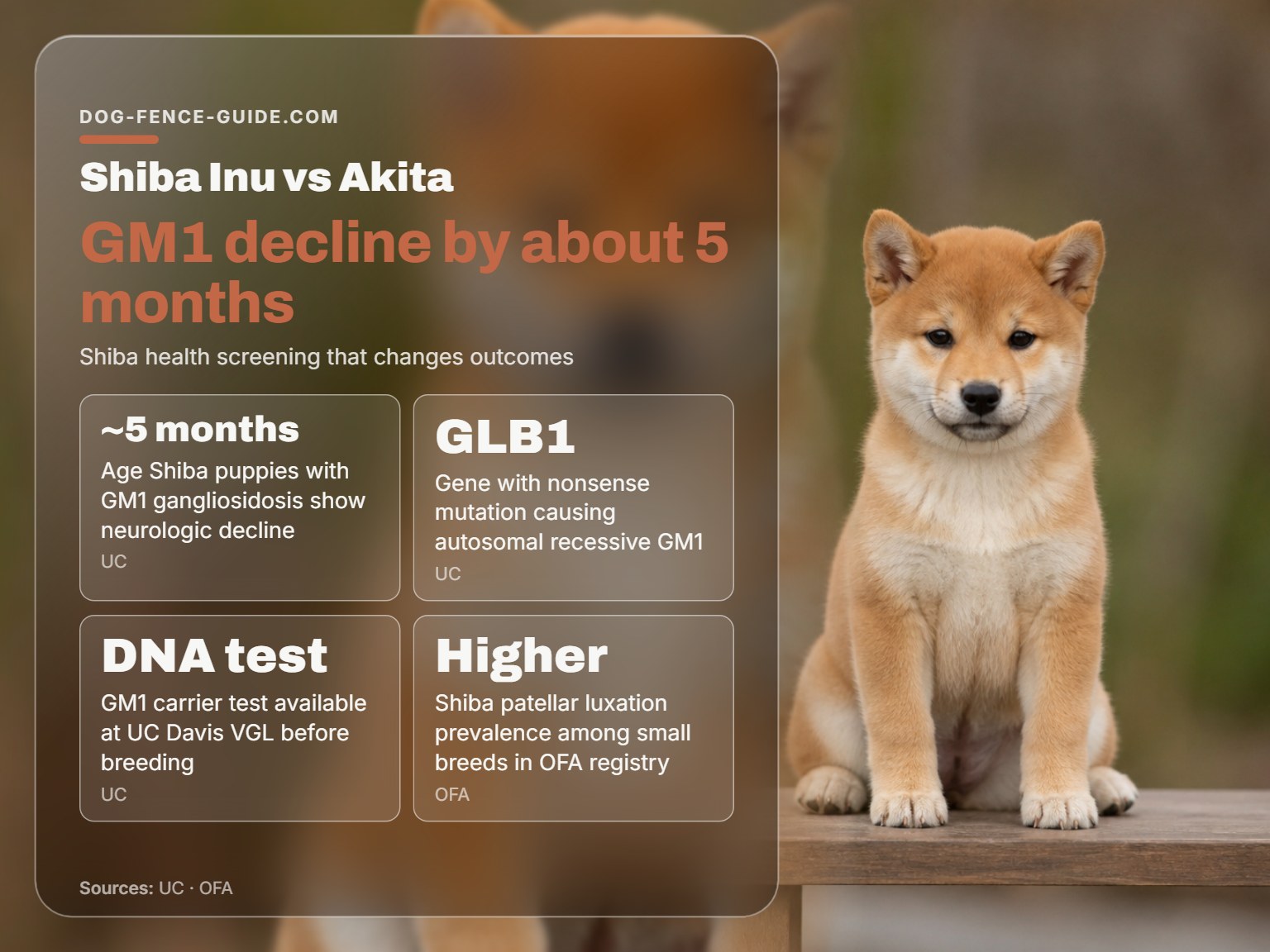
Five months is the number that matters most in this comparison. Shiba puppies affected by GM1 gangliosidosis show neurologic decline by about that age, according to UC Davis Veterinary Genetics Laboratory and the peer-reviewed work by Yamato and colleagues in the Journal of Veterinary Medical Science.
GM1 is an autosomal recessive lysosomal storage disorder caused by a nonsense mutation in the GLB1 gene. In plain terms, a puppy inherits one faulty copy from each parent and the nervous system starts failing early. A DNA carrier test exists at UC Davis VGL, which means responsible breeders can screen for it before breeding a pair.
Patellar luxation is the other Shiba flag worth knowing. The Orthopedic Foundation for Animals lists Shiba patellar luxation among the higher-prevalence small breeds in its registry statistics. PetPlace adds allergies, hip dysplasia, and certain eye disorders to the Shiba list.
Akitas carry a different set. Peer-reviewed veterinary literature documents hypothyroidism, pemphigus foliaceus, and Akita uveodermatologic syndrome, a Vogt-Koyanagi-Harada-like autoimmune condition specific to the breed. PetPlace adds hip dysplasia, autoimmune disorders, and bloat, and Dogster advises resting the dog after meals because of bloat risk.
Ask a breeder four things before you put a deposit down:
- GM1 carrier status on both parents, with paperwork from a lab rather than a verbal assurance.
- Hip and elbow screening, which Hepper says reputable breeders of either breed will have done.
- The age of any prior litter’s survivors, which tells you more than a health guarantee clause.
- Whether they’ll let you meet the dam, because temperament is inherited as much as trained.
Common mistake: Reading “health tested” on a listing and assuming it covers the breed-specific conditions. It usually means hips only. Ask which tests, from which lab, on which dog.
Feeding volume differs enough to plan for. Canine Journal puts a Shiba at around two cups a day and an Akita at roughly four. If you want the detail on portions and food types, Shiba diet covers it.
Exercise, Training, and the Daily Routine
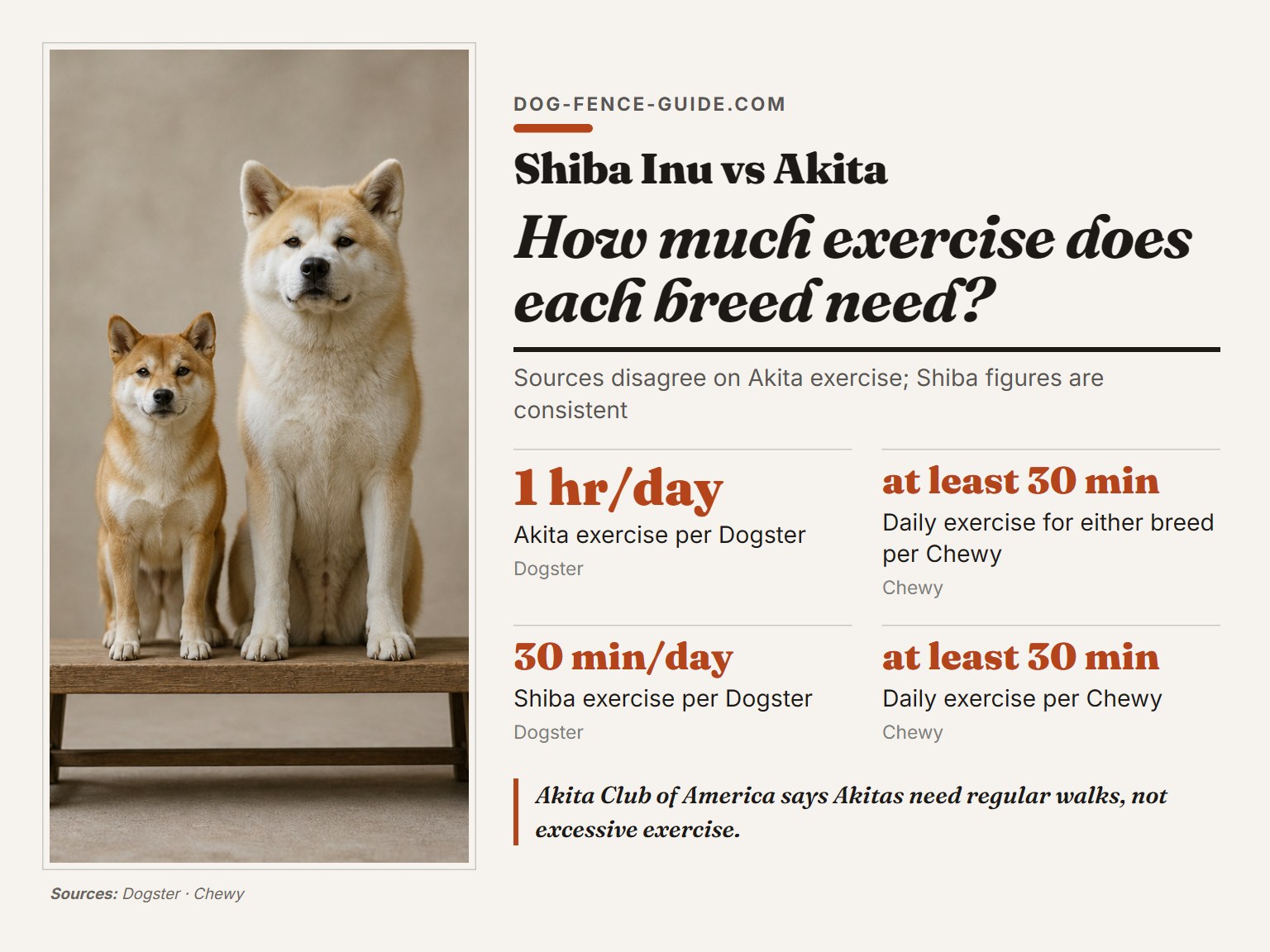
Exercise advice for the Akita contradicts itself across sources, and you should see all three positions. Dogster gives the Akita one hour per day. Chewy’s vet-reviewed guidance says to plan for at least 30 minutes daily for either breed. The Akita Club of America, quoted through Chewy, says the breed doesn’t need excessive exercise but should be walked regularly.
Those aren’t the same instruction. My read is that the club position describes a mature adult Akita in a settled home, while the one-hour figure describes a younger dog with energy to burn. Start at 30 minutes and add if the dog is still restless.
Shiba exercise is the one figure the sources agree on. Dogster says 30 minutes per day and Chewy says at least 30 minutes daily. That consistency is unusual in this comparison and worth trusting.
Training style matters more than duration for both. Chewy quotes the Akita Club’s point that these dogs bore quickly with repetitive, mundane methods, and recommends keeping sessions short. PetPlace makes the same argument from the other direction, noting that Shibas decide whether a command is worth following.
Heat is a real constraint for the Shiba. Jeri Burnside’s guidance is explicit about avoiding the heat of the day, and a double coat on a small black-pigmented dog in July is a genuine risk rather than a preference.
Frequently Asked Questions
Is a Shiba Inu easier to train than an Akita?
Neither is easy in the way a retriever is easy. PetPlace describes both as intelligent but independent, and Chewy says both suit experienced owners. Hepper rates the Shiba as somewhat less stubborn and a better first choice for a novice, but that’s one source’s view against three others that say neither breed suits beginners.
Do Shiba Inus and Akitas get along with other dogs?
Akitas are the higher risk of the two. PetPlace notes guarding instincts and a tendency toward dog intolerance, including same-sex aggression in some individuals, and Dogster doesn’t recommend Akitas for multi-pet households at all. Shibas are described as selective rather than aggressive. Any multi-dog home needs careful, early introductions either way.
How much does an Akita shed compared to a Shiba?
More, on both counts. PetPlace says Akitas blow coat twice yearly and are heavier shedders overall, while Shibas shed moderately year-round with heavier seasonal periods. Canine Journal’s brushing schedule of two to three times weekly, rising to most days in shedding season, applies to both.
Can either breed live in an apartment?
Chewy recommends Shibas for condos and apartments, while PetPlace only calls them generally more apartment-friendly than Akitas rather than recommending them outright. Canine Journal states the Akita needs more room and cannot live in small spaces, while PetPlace says Akitas are usually better suited to homes with more space rather than ruling out small spaces outright. A Shiba in a flat still needs daily walks and a secure exit routine, because Dogster says Shibas are known to bolt on a whim.
What is the height difference between a Shiba Inu and an Akita?
The FCI Shiba standard gives 40 cm (15.75 in) for males and 35 cm (13.75 in) for females, plus or minus 1.5 cm. The AKC American Akita standard gives 26 to 28 inches for males and 24 to 26 inches for females. Dogster summarises the gap as roughly 10 inches at the shoulder.
Before You Buy
Two things to verify in your own situation before you pick a breed off a photo.
First, measure your fence line and your gates. If the fence is under five feet, budget for raising it before you bring either breed home. A Shiba will test the weakest point repeatedly, and an Akita will test it too. Neither dog is going to respect a boundary you haven’t physically secured.
Second, ask yourself whether you can physically hold the dog you’re choosing. A 20-pound Shiba on a lead is a one-hand job. A 130-pound Akita that decides to go somewhere is a two-person problem, and no harness fixes that. If the answer is no, the Shiba is the honest choice.
One concession worth stating plainly. This comparison is built on breed standards and published guidance, and none of it predicts an individual dog. A well-bred, well-socialized Akita can be calmer than a poorly bred Shiba. Use the numbers to narrow the field, then meet the actual animal.
The last thing I’d say: pick the dog that fits the yard you have, not the yard you’re planning to build. Fences get finished. Dogs arrive first.
