
How to Teach a Dog Look at Me: Step-by-Step
This post contains affiliate links. As an Amazon Associate, we earn from qualifying purchases.
To learn how to teach a dog look at me, hold a treat at eye level, make an interesting sound, and reward the instant your dog’s eyes meet yours. Name the cue after several repetitions, then fade the bait.
The timing inside that sequence is where the whole cue lives or dies. A treat that lands late teaches the dog that your hand is the interesting part, not your face.
What follows is the full sequence, the three places reputable trainers genuinely disagree, and the one adjustment that fixes a dog who keeps watching your pocket instead of your eyes.
Key Takeaways
- Five minutes, two or three times a day is the whole dose the San Francisco SPCA recommends. Longer sessions buy you a bored dog.
- Pea-sized treats, per the national SPCA handout, keep the dog working without filling them up by the tenth repetition.
- A brief look is enough for the SPCA. The SPCA is explicit that a held stare is not the goal and can read as a threat to some dogs, while UPAWS instead builds gradually to about 30 seconds of attention.
- Plan on a few weeks, not a few days, before the cue holds up around another dog or a squirrel.
- Fade the bait after several repetitions. Staying on the lure too long produces a dog who watches your hand and never learns the word.
How to Teach a Dog Look at Me in 5-Minute Sessions
Five minutes, two or three times a day, is the entire dose the San Francisco SPCA hands out. That is a shorter session than most owners expect, and it is the number that matters most.
An eye-contact cue is built by baiting, naming, and rewarding in that order. A treat held at eye level plus an interesting sound draws the look; the cue word is spoken at the moment of baiting; the treat travels in a straight line from the handler’s eyes to the dog’s mouth.
Before you start: Prolonged eye contact reads as a threat to some dogs, per both the SPCA and the AKC. A dog who turns the head away, shows the whites of the eyes, or yawns is asking for space, and pushing through that gets you a growl. Keep the look brief and the session short.
Here is the sequence, with the part that breaks if you skip it:
- Set up in a quiet room. The SPCA starts every dog in a distraction-free space, because a cue taught over a barking television gets filed under background noise.
- Bait the look. Hold the treat at eye level and make a kissy noise or squeak a toy. Skip the sound and the dog has to notice the food before it can notice you, which slows the process.
- Pay the instant the eyes land. Move the treat in a straight line from your eyes to the dog’s mouth. A treat that swings wide turns the exercise into a hand-watch.
- Name it after several repetitions. Say “look” or “watch me” at the moment you bait. Naming it on the first try labels a behavior the dog has not offered yet.
- Drop the bait. Once the dog looks up regularly, give the cue with the treat out of sight and reward the moment eye contact happens.
A treat bag crinkling from across the room pulls a trained dog’s head around before you have said a word. That is the sound you are competing with, and it is why the quiet room comes first.
The full sequence is laid out in the SPCA eye contact cue PDF, which remains the most compact version of the handout I have found.
Where Should Your Dog Actually Be Looking?
Ask three trainers what counts as a correct look and you get three different answers. The disagreement is real, and it matters most for dogs who find eye contact stressful.
The Forehead Target
The AKC’s lure brings the treat up between your eyes, and the dog ends up staring at your forehead. That is deliberate. A forehead stare is close enough to read as attention and far enough to avoid a hard stare.
The General-Direction Fallback
Veterinary Partner, the Veterinary Information Network’s client-facing site, allows a looser target. Some dogs are so uncomfortable with direct eye contact that looking at you in general is an acceptable alternative, and UPAWS suggests aiming at the top of the head or an ear instead.
The options, ranked from strictest to loosest:
- Direct eyes: the SPCA’s target, rewarded with a treat that travels from your eyes to the dog’s mouth.
- Forehead: the AKC’s lure target, close enough to count and easier on a nervous dog.
- Top of head or ear: UPAWS’s workaround for a dog who finds a hard stare threatening.
- General direction: VIN’s fallback, and the right starting point for a genuinely eye-contact-averse dog.
VIN also lays out a ladder worth stealing: reinforce looking in your direction first, then at your body, then your face, then your eyes. For a shy dog, that ladder is the most useful single idea in this whole topic.
When Do You Add the Word?
The AKC adds the verbal cue only once the dog is reliably following the hand signal, and says it before moving the hand. The San Francisco SPCA says the opposite: name it at the moment you bait, right before the dog looks. Both are published, both work, and the difference tells you what each one is labeling.
| Source | When the cue word goes in | What it assumes |
|---|---|---|
| AKC | After the hand signal is reliable | The dog already knows the picture |
| SF SPCA | At the moment of baiting | The word rides on the look |
| SPCA (national) | At the moment of baiting | Same as SF SPCA |
| UPAWS | While the dog is already looking, then before | A two-session handoff |
Naming at the moment of baiting (SF SPCA and national SPCA) ties the word to the look as it happens. Naming after the hand signal is solid (AKC) ties the word to a picture the dog already knows cold. Pick one and be consistent, because switching mid-week is what produces a dog who waits for the food before responding.
The cue itself should be one syllable and unlike anything else in the house.
The part nobody mentions: A dog called by name repeatedly with no consequence learns to tune the name out. Bolting a second cue on top of a dead name is uphill work, and it is the reason “look” fails in houses where “Rex” already means nothing.
The Three Ways This Goes Wrong (and the Fix for Each)
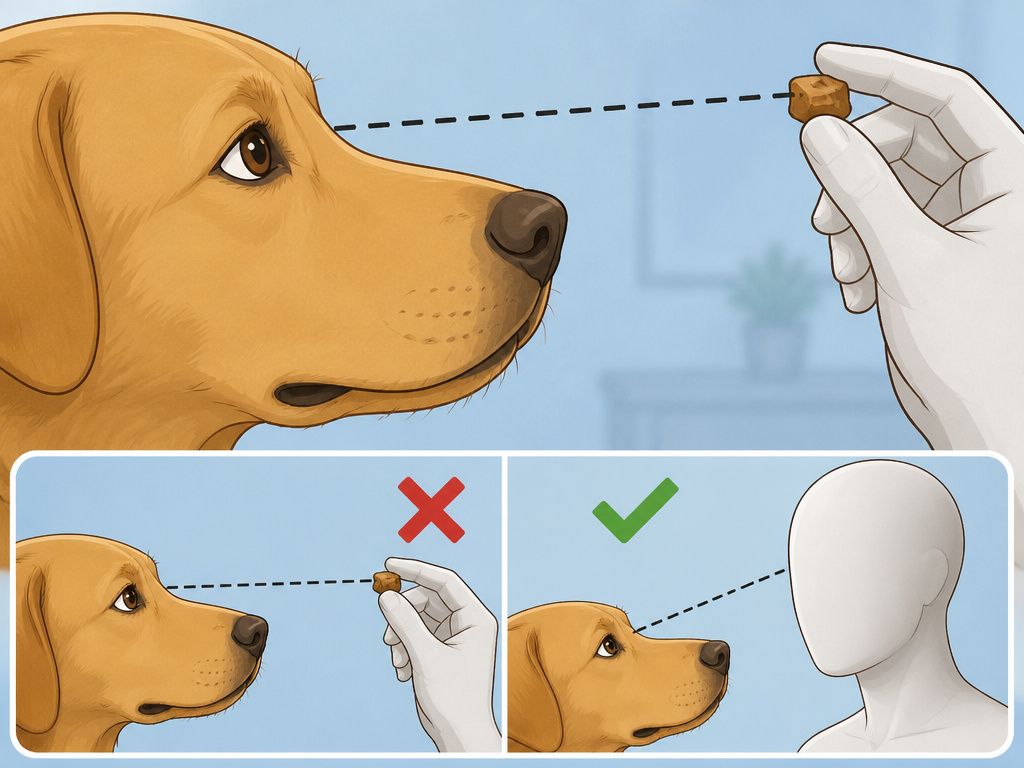
The dog glances at your hand, the treat arrives anyway, and you have just paid for a hand-watch. That is the most common failure in this cue. It is a timing problem, and the dog is doing exactly what you paid for.
| What you’re seeing | What it usually means | The fix |
|---|---|---|
| Dog watches the hand | Treat delivered late or wide | Restart, pay only for the eyes |
| Dog breaks mid-repetition | Duration climbed too fast | Shorten the ask, bank five wins |
| Dog won’t look in the yard | Distraction step too big | Drop back one location |
| Head turns, eye whites show | Eye contact reads as a threat | Aim at the ear or top of head |
If Your Dog Looks at Your Hand
The San Francisco SPCA look command is blunt about this one: your timing is off and you are rewarding the hand-look. Start the repetition over and pay only for the eyes.
UPAWS handles the same moment differently. If the dog looks away before the click, ask again but make the ask shorter so the dog succeeds, and bank at least five successes before lengthening it again. That is a gentler read of the same failure, and for a soft dog it is the better one.
If Your Dog Is Already Staring at You
SF SPCA has a reset for this: walk away, or toss a toy away from you, and start again once the dog’s attention is somewhere else. A dog already locked on is not offering the behavior, so paying for it teaches nothing at all.
I would rather end a session on a few clean repetitions than push too far and finish with a dog checking the door.
Building Duration Without Staring Your Dog Down
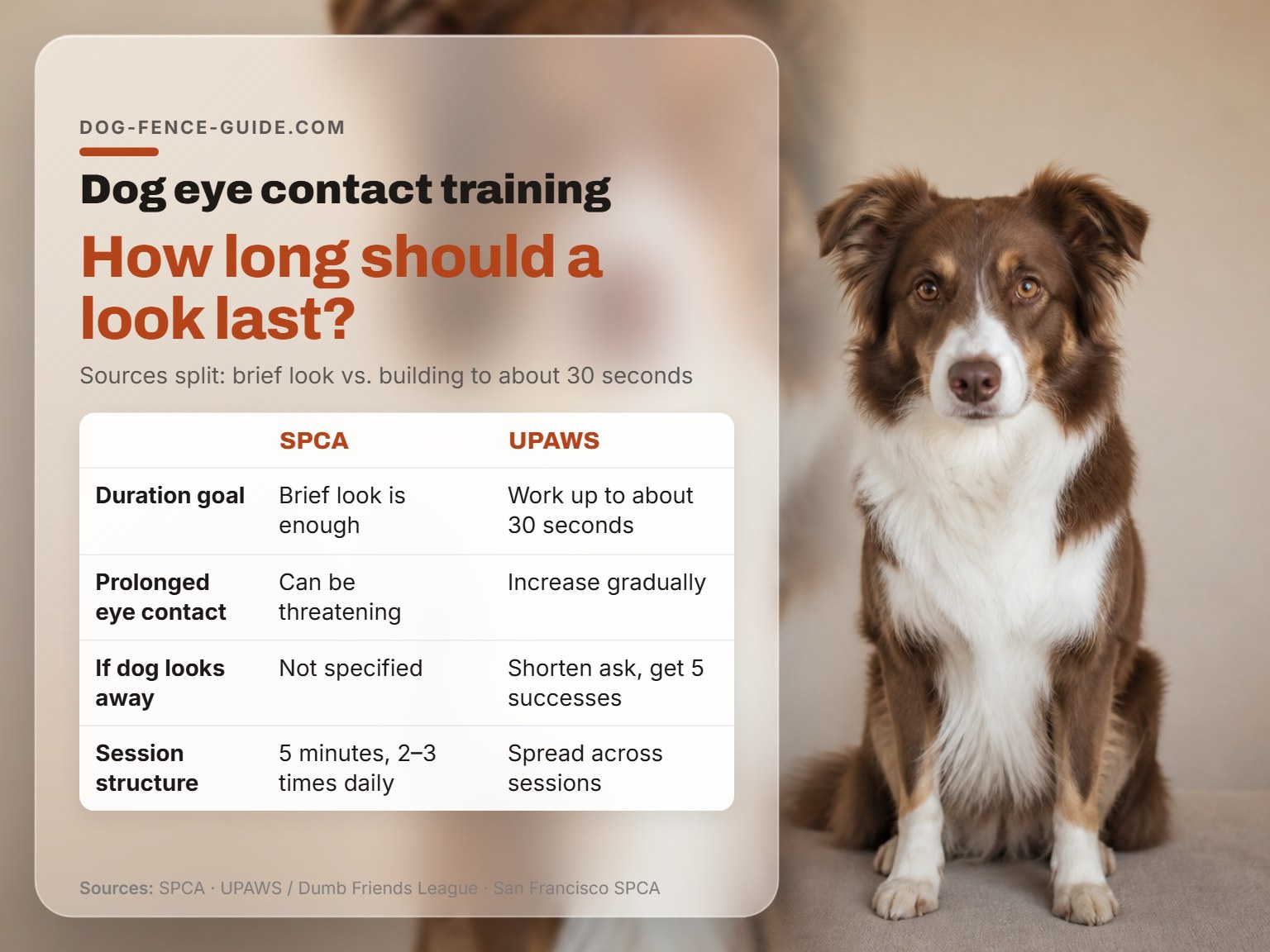
Duration is the one part of this cue where the major handouts genuinely split, and the split is worth understanding before you pick a side.
Short version: the SPCA favors a brief look while UPAWS builds toward about 30 seconds; pick the goal that suits your dog and use UPAWS’s gradual mechanics if you build duration. Build duration on a dog who enjoys the game, and stop the moment the head turns away.
The UPAWS mechanics, in order of how often people skip them:
- Five wins first. If the dog breaks early, shorten the ask and get five successes before lengthening again.
- Two seconds at a time, spread across sessions rather than crammed into one.
- Variable pay. Click and treat on the second, third, fourth, sixth, or tenth repetition, not every time.
- 90% on cue before you retire the clicker for this behavior.
The UPaws watch me training PDF is where that duration ladder comes from, and it is worth reading in full if you plan to build past a few seconds.
Where this goes sideways: Chasing a 30-second hold on a dog who finds eye contact stressful. The dog starts turning away, you keep asking, and the cue quietly stops working. Duration is optional. A willing look is the whole point.
Proofing Past the Living Room
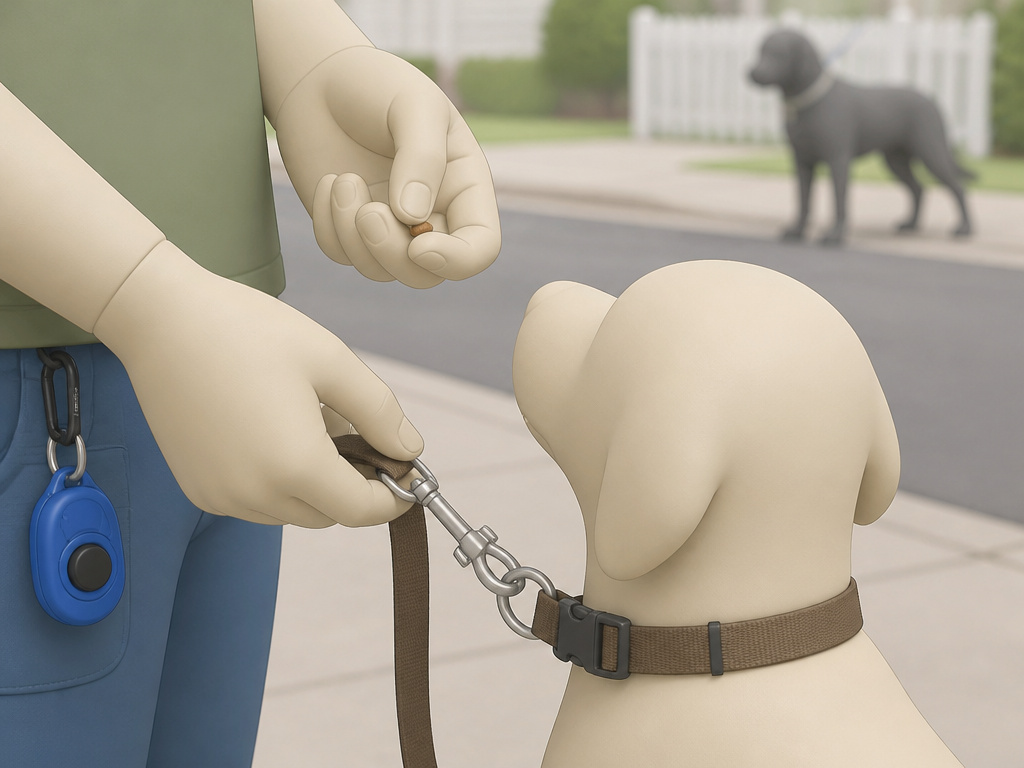
A cue that works in a quiet kitchen and falls apart at the sight of another dog needs one more step: the distraction ladder.
The tell is in your hand. When the dog is genuinely working, the leash goes slack and stays slack. When the dog is over threshold, you feel the tension come up through the clip before the head even turns.
The ladder, in the order I would run it:
- Quiet room, nobody home. The floor everything else stands on.
- Same room, television on. The first honest test.
- Driveway, dog on a Gentle Leader. SF SPCA uses a head collar in the yard for exactly this stage.
- Sidewalk, another dog across the street. The one that actually counts.
For treats, pea-sized morsels are what I keep in a pocket for this kind of work, and a clicker is the one I would grab if you want a click instead of a word. Small and soft matters more than fancy.
Repeated failures in a new place mean the step was too big. Go back one and finish the session there.
What This Cue Is Not
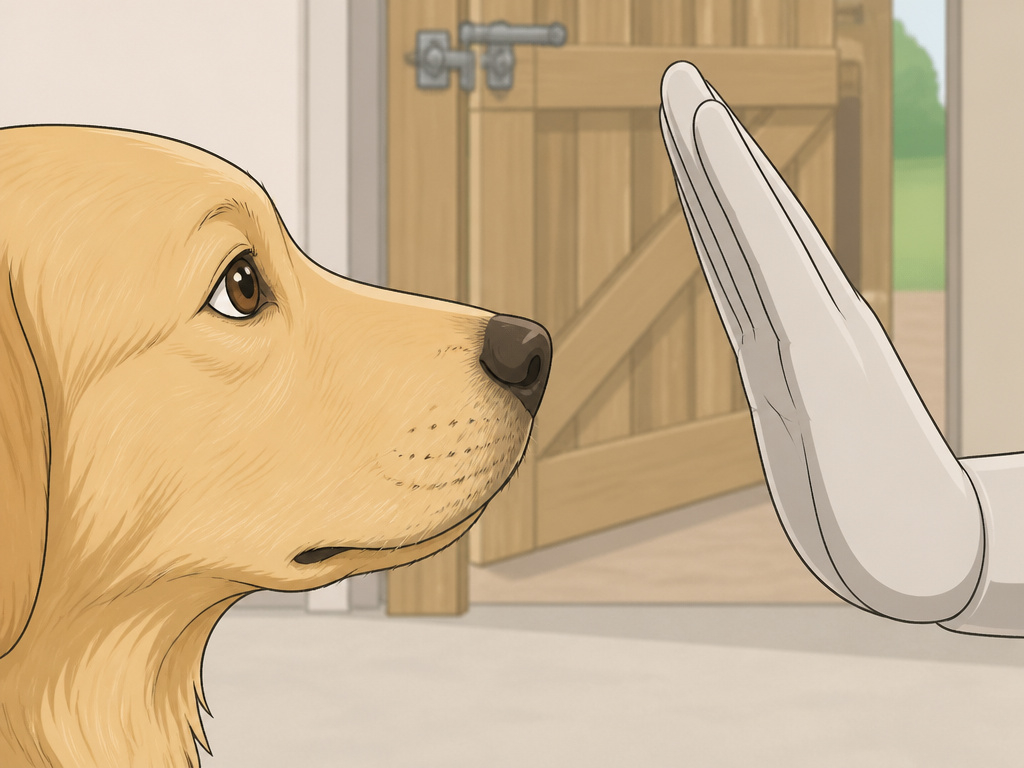
This cue will not keep your dog in the yard.
“Look at me” is a redirect. It buys you a second of attention so you can give the next instruction, and a second is sometimes all you get. That is worth training. It is not containment.
A whistle carries further than your voice out there, which is the only reason I still own one.
The command I would rate highly is a wait at the gate. It prevents more escapes than hardware does.
A look cue buys you a second of attention. A gate latch buys you the rest.
I am not a behaviorist. If your dog’s inability to look at you comes with freezing, lip-licking, or a hard stare, that is a fear response and it needs someone qualified, not a training handout.
Frequently Asked Questions
How long does it take to teach a dog to look at me?
Most dogs pick up the basic look within a handful of sessions. The SPCA notes it can take a few weeks of practice before the dog reliably looks to you in a high-arousal situation like seeing another dog. Plan for the cue to be solid at home long before it survives the sidewalk.
Can I teach this to a dog who hates eye contact?
Yes, and you should adjust the target rather than skip the cue. VIN treats looking at you in general as an acceptable alternative, and UPAWS suggests aiming at the top of the head or an ear instead of the eyes. Build from there.
Should I use a clicker or a word?
Either works. A click marks the exact instant more precisely than a spoken word, which matters when you are paying for a half-second event. If you use a word, keep it to one syllable and use it the same way every time.
What if my dog only does it when I’m holding food?
That means the bait never got faded. The SPCA’s third step is to give the cue with the treat out of sight and reward the instant eye contact happens. If the dog stops responding, you moved too fast and should go back a step.
Is “look at me” the same as “watch me”?
They are the same behavior with different labels. The AKC uses “watch me,” the SPCA uses “look” or “watch me” interchangeably, and UPAWS uses “watch me.” Pick one word and stay with it, because swapping labels resets the dog’s understanding.
The Bottom Line
Here is the threshold I would use: if your dog cannot give a brief look in the kitchen, do not take it to the front door yet. Two seconds at home is the gate you have to clear before the driveway means anything.
Bait, mark, pay. That is the whole assignment.
The whole how to teach a dog look at me sequence fits in five minutes a day, and the honest concession is that none of it replaces a fence, a gate latch that catches, or a recall you have proofed at the property line. A look cue buys you a second. In a real yard, a second is sometimes the difference between a dog who stops and a dog who is already through the gate.
