
How to Stop Resource Guarding in Dogs: A 4-Step Plan
This post contains affiliate links. As an Amazon Associate, we earn from qualifying purchases.
In the Queen’s University Belfast study of four dogs, target-response success more than doubled and Category III behaviors like staring and stiffening dropped 58% to 69%.
Rehearsal is what cements the behavior. Every time the dog growls and you back away, the growl works, and the next approach gets a shorter fuse. That’s why the first phase of how to stop resource guarding in dogs involves no training at all: you’re making sure the dog can’t practice the wrong thing while you build the plan.
What follows is the management setup, the body-language signals that mean you’re too close, the training protocol with the numbers behind it, and the four places where the major welfare organizations flatly disagree.
Key Takeaways
- Management comes first, training second. Feed behind a barrier and stop reaching for dropped food before you run a single exercise.
- A growl is information, not defiance. Dogs Trust warns that telling a growling dog off suppresses the warning and can push the dog toward a bite with no notice at all.
- The clicker protocol has real numbers and a real limit. Category III behaviors fell 58% to 69% in the QUB study, but at the 3-month follow-up they had reverted to baseline in two of the four dogs.
- Children change the risk calculation completely. The ASPCA calls a resource-guarding dog in a home with children unacceptably risky, and that isn’t a problem you solve with treats.
- After a bite, stop. The ASPCA says don’t attempt this alone if the dog is likely to bite, and points to a CAAB, ACAAB, or board-certified veterinary behaviorist.
Start With Management, Not Training
Pull the rehearsal out of the dog’s day before you teach anything about how to stop resource guarding in dogs. That means the dog eats behind a closed door or a baby gate, in a quiet corner away from foot traffic, and nobody walks past the bowl while it’s down.
Resource guarding is a normal, instinctive response to the perceived risk of losing something valued. It ranges from eating faster or moving the body over an item, through flattened ears and hovering, to a hard stare, stiffening, lip lift, growl, snap, or bite. Any breed can show it, and the behavior is not a dominance problem.
PAWS Chicago’s living with a guarding dog protocol puts this step first for a reason: simple management in the home may be all that’s needed in many mild cases. Feed in a quiet, undisturbed spot. Tell the household the dog is eating if it isn’t behind a barrier.
Here’s the setup I’d run for the first two weeks:
- Feed behind a barrier. A closed door, a baby gate, or a crate, so nobody has to walk past the bowl at all.
- Never reach for dropped food near the dog, and never take a stolen item back. PAWS Chicago and the ASPCA land in the same place on this one.
- Keep the dog off the sofa and the bed if that’s where it guards. A leash in the living room, or a crate at night, does the enforcing.
- Check the bowl after the dog walks away. Dogs Trust flags caching, where a dog hides food and then guards the hiding spot later.
Bowl-specific guarding is the most common version, and the setup for food aggression in dogs is the same one you’d use here.
A stuffed chew toy behind the gate gives the dog something to work on that isn’t the bowl. So does a food-smeared toy, for a dog that won’t take a chew.
Where this goes sideways: Removing the bowl but leaving the dropped-food habit intact. The dog still gets to rehearse guarding the toast crust on the kitchen floor, and the two weeks buy you nothing.
The Warning Signs Most Owners Miss
The dog goes still over the chewed bone and the whites of its eyes show. That’s whale eye, and it’s the last clear warning before a lip lift.
AKC evaluator Nicole Costanza lists the sequence: a body stiffened over the item, a hard stare, whale eye, a lifted lip, a low growl, then bared teeth. The order varies from dog to dog, but the sequence runs one way.
What you’re watching for:
- A dog that eats faster when you walk past, or shifts its body to put itself between you and the bowl.
- A hard stare with no other movement. That stillness is the one people read as “fine.”
- Whale eye, where the whites show at the corner.
- A lip lift, a low growl, or a snap that stops short.
Reading those signals accurately is the same skill that helps you prevent dog bites in every other context, and it’s the skill most owners never practice.
Never tell a growling dog off. The growl is the warning system. Suppressing it leaves the fear in place and takes away your advance notice.
Costanza is blunt about the breed question: any dog can be prone to resource guarding, and it isn’t specific to one breed. A dog from a breeder can have it. A dog from a shelter might not.
What the Clicker Study Found, and What It Didn’t
Four dogs, fourteen conditions each, and a result that held at three months for only half the group.
The Queen’s University Belfast clicker study is small: four companion dogs in a nonconcurrent multiple-baseline single-case design. It’s also one of the few published attempts to measure object guarding treatment at all, which is why it gets quoted so heavily.
The method is backward chaining with a clicker. You teach the last link in the chain first, then the link before it, until the dog can release a preferred item on cue.
| Measure | What it looks like | QUB result |
|---|---|---|
| Target response | Releasing the item on cue | Success more than doubled, 2% to 85% |
| Category II | Ears flattened, hovering over the object | Down 39% to 55% in 3 of 4 dogs |
| Category III | Staring, stiffening | Down 58% to 69% across all dogs |
| 3-month follow-up | No maintenance training | Category II down 23% and 35%; Category III back to baseline |
Read the follow-up row twice. At three months, with no maintenance training, Category II behaviors were still down 23% and 35% in the two dyads measured. Category III responses had reverted to baseline in dogs D01 and D02. One dog’s success rate climbed from 2% to 45%. The other’s went back to where it started.
The authors’ own conclusion is careful: backward chaining reduces Category II and III behaviors “at least short term.” That qualifier is doing a lot of work.
Published treatment research is thin overall. A PubMed canine behavior research record documents a functional analysis of food guarding in a single pet dog, and the QUB authors flagged how few studies exist on backward chaining for aggression-related behavior.
How to Stop Resource Guarding in Dogs: The 4-Step Protocol
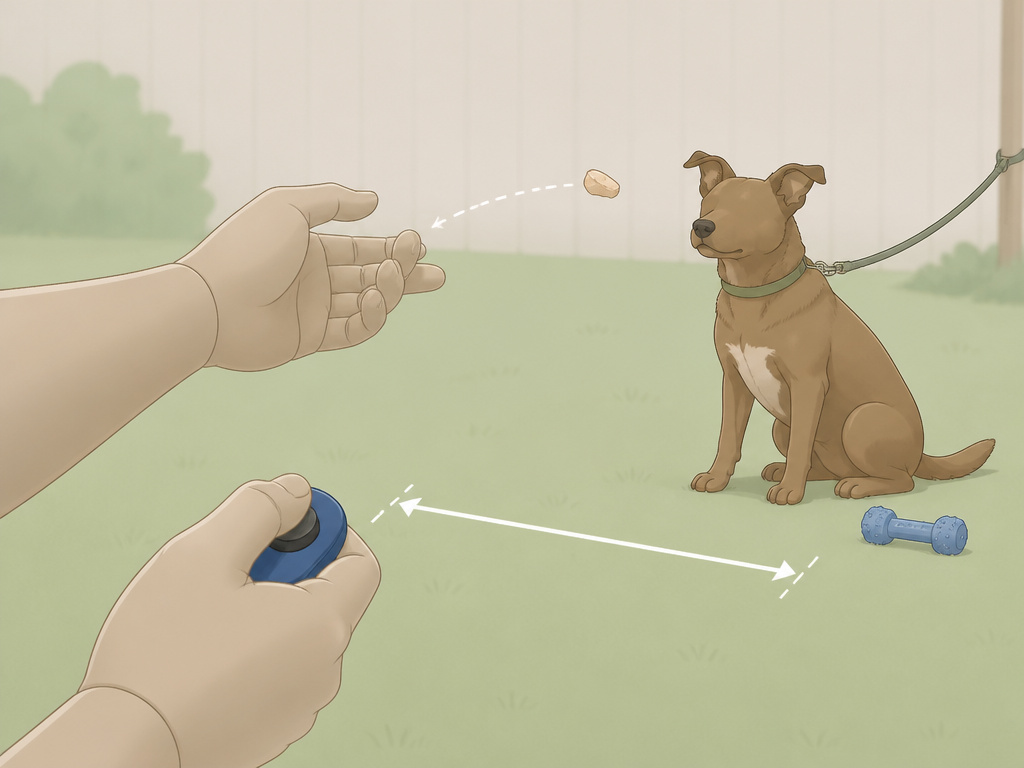
The order matters more than the steps. Get it wrong and you teach the dog that your approach predicts a loss.
Before you start: A guarding dog can bite faster than you can pull your hand back. Tether the dog to something heavy and durable and work from 6 to 8 feet away, the distance the AKC protocol specifies. If a bite has already happened in your home, stop here and read the last section.
- Set a baseline first. Ask for the item from 6 to 8 feet away and count how often the dog gives it up. Skip this and you have no way to tell whether the training is working, so you’ll push too hard or quit too early on a feeling.
- Teach the release, then chain backwards. Backward chaining means the last behavior in the sequence gets trained first, then the step before it. Reverse the order and the cue starts predicting loss, which is the exact worry you’re trying to shrink.
- Mark and pay promptly. The click is a short, flat sound, and it has to land as the item leaves the mouth. A late click teaches the dog that something else earned the food, and the release cue attaches to nothing.
- Add distance before you add value. Distance first, then item value, then duration. Jumping straight to the dog’s favorite chew is where a lot of people stall out.
Costanza’s version of the approach-and-toss drill is in the AKC resource guarding guide: stay 6 to 8 feet back, toss chicken or hot dogs in the dog’s general direction, and walk past without stopping. If the dog stiffens or lifts a lip, you wandered too close. Move closer only when the dog looks up in a happy, anticipatory way.
The one thing that doesn’t belong anywhere in this list is punishment. Alpha rolls and dominance-style corrections suppress the growl and leave the fear intact, which is how you end up with a dog that skips the warning entirely.
Where the Major Protocols Disagree
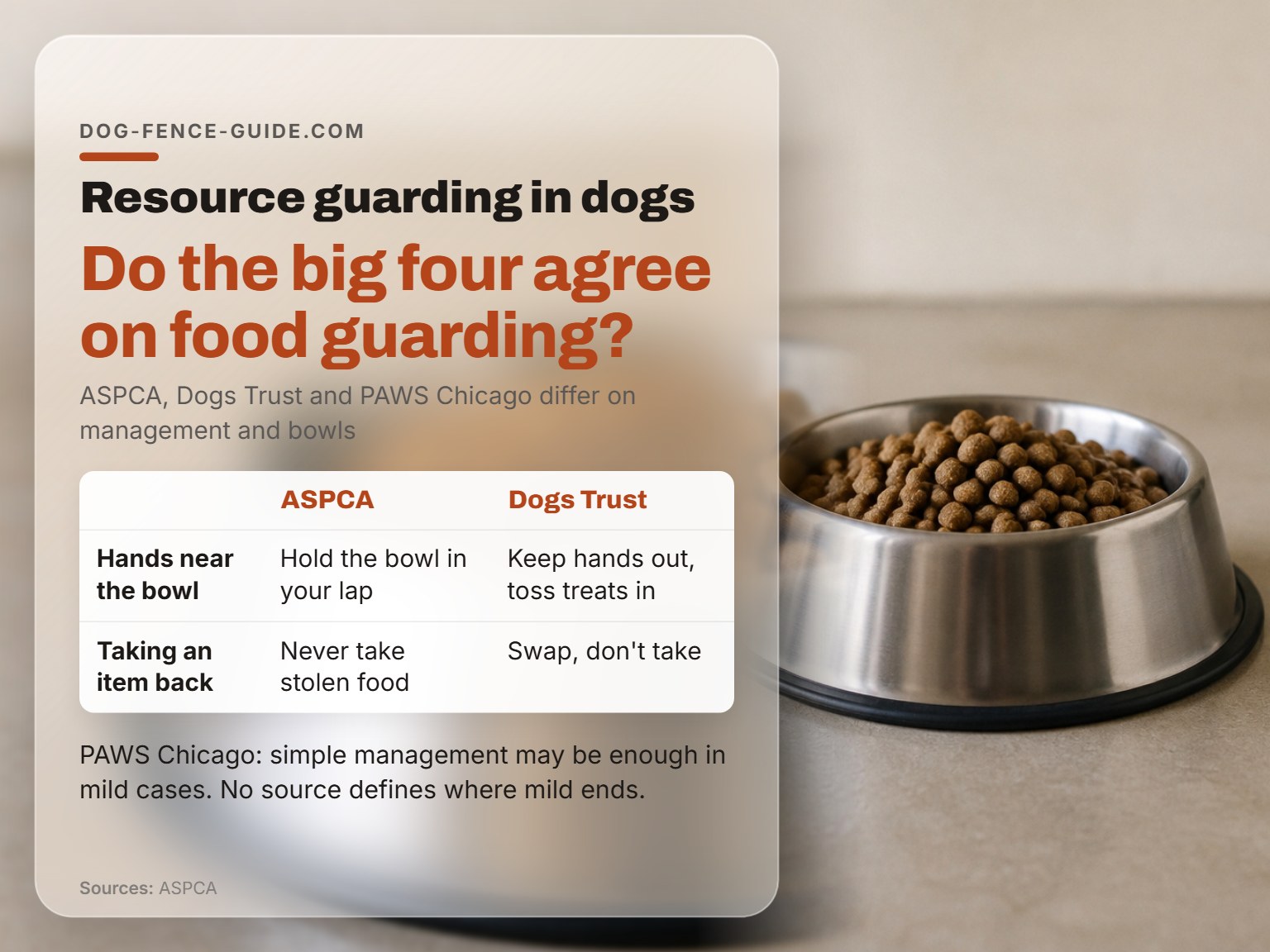
The four biggest welfare organizations do not agree on this, and the disagreement is not cosmetic.
The ASPCA food guarding guide states that in many cases food guarding doesn’t need to be treated at all, and that reasonable precautions are enough. Dogs Trust takes a different view on management as a destination: it stops the guarding response but doesn’t change how the dog feels, and it can create a false sense of security. PAWS Chicago sits in the middle, describing simple management as possibly all that’s needed in mild cases.
| Question | ASPCA | Dogs Trust | PAWS Chicago |
|---|---|---|---|
| Is management alone enough? | Often yes | No, it masks the feeling | May be enough in mild cases |
| Hands near the bowl | Hold the bowl in your lap | Keep hands out, toss treats in | Teach Leave It and Drop It |
| Stop the session when | Dog refuses food but still guards | Any guarding body language | Growling or a guarding posture |
| Taking an item back | Never take stolen food | Swap, don’t take | Never take a stolen item |
The Mild-Versus-Moderate Problem
PAWS Chicago’s protocol is written for mild to moderate cases. The ASPCA says many food-guarding dogs never need treatment, while Dogs Trust argues management doesn’t change how the dog feels and can create a false sense of security. Neither defines where mild ends and moderate begins, and no source in this set puts a number on it.
That gap matters more than it sounds. If you’re deciding whether to run a protocol at all, the threshold you’re deciding against is undefined, so the decision lands on your judgment and your risk tolerance.
Should You Put Your Hand in the Bowl?
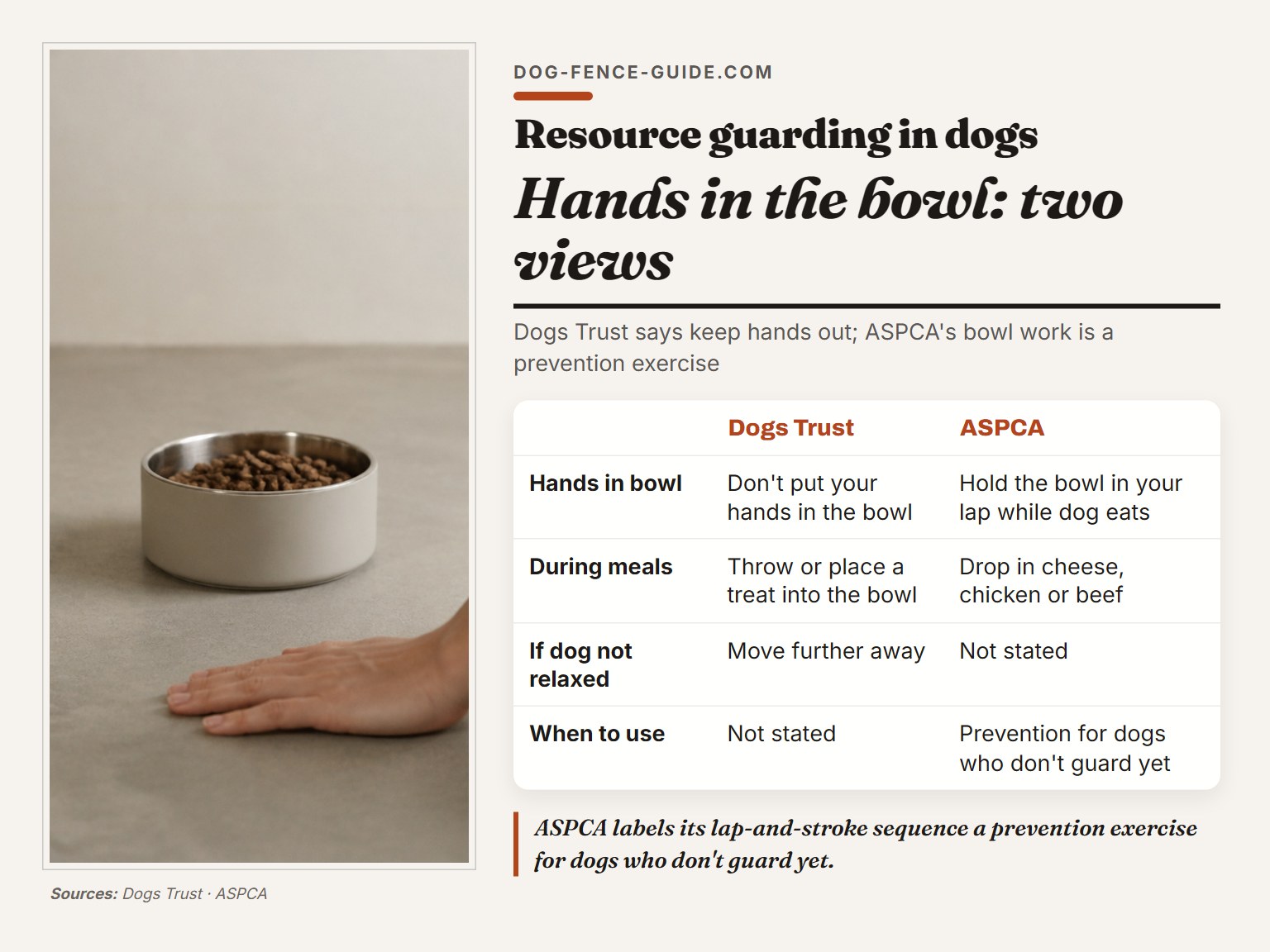
Ask two welfare organizations whether your hand belongs in the food bowl and you get two different answers.
The Case for Keeping Your Hands Out
Dogs Trust is direct: throw or place a tasty treat into the bowl while the dog eats, don’t put your hands in, and move further away if the dog isn’t relaxed. The reasoning is mechanical. A hand entering the bowl is the thing the dog is already worried about, so you’re practicing the fear rather than reducing it.
The Case for Bowl Work
The ASPCA’s sequence runs the other way. Hand feed several meals, one kibble at a time, speaking pleasantly and stroking the dog. Then hold the bowl in your lap while the dog eats. Then set the bowl on the floor and periodically drop in a piece of cheese, chicken, or beef. Keep it up intermittently for the first few months.
Read the framing, though. The ASPCA introduces that sequence as a prevention exercise for a new puppy or adult dog who doesn’t guard things yet.
My rule is simple. Hands stay out of the bowl of any dog that has already growled at one, which aligns with Dogs Trust. The lap-and-stroke sequence is a prevention exercise, and the ASPCA labels it that way in the same paragraph. Run it on a dog that’s already guarding and you’re testing the exact thing it’s afraid of.
That distinction is the whole argument, and it’s the most useful thing on this page.
When Should You Stop and Call a Professional?
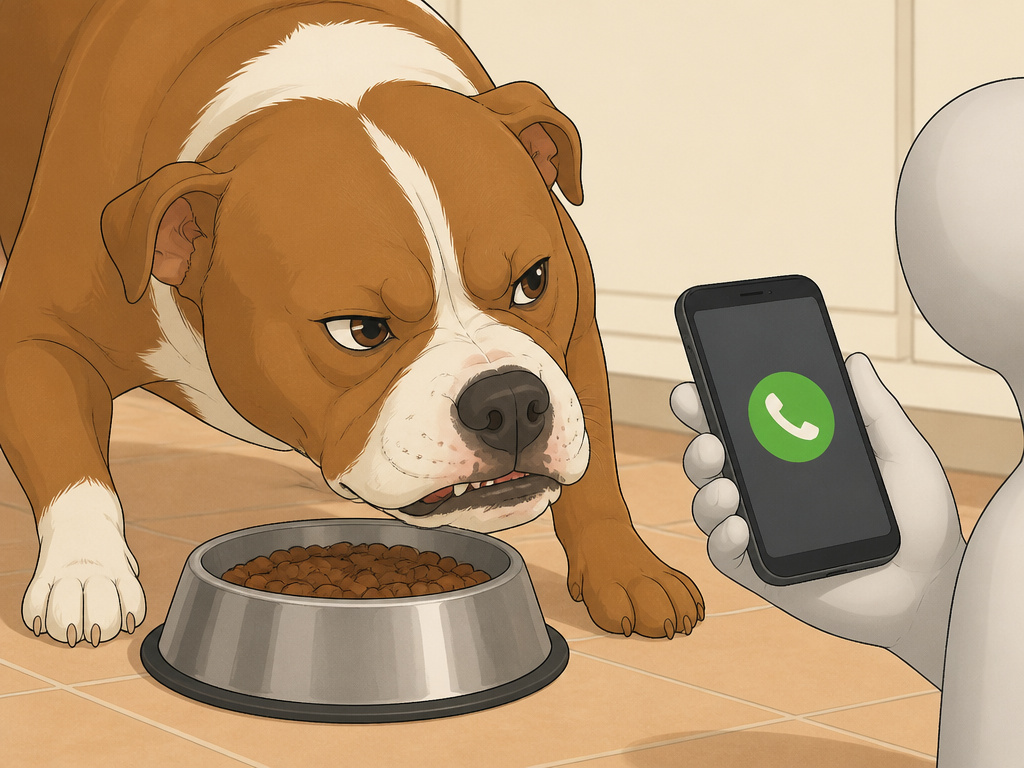
A bite changes the math. So does a toddler in the house.
The ASPCA is explicit that if the dog is likely to bite, you shouldn’t try to fix this alone, and it points to a Certified Applied Animal Behaviorist (CAAB or ACAAB) or a board-certified veterinary behaviorist (Dip ACVB).
Credentials That Actually Matter
The ASPCA offers a CPDT trainer as a fallback when no behaviorist is available, with a caveat worth reading twice: aggression expertise is not required for CPDT certification. Ask directly what experience the person has with guarding and with bites before you book anything.
Children are the other hard line. The ASPCA calls a resource-guarding dog in a home with children unacceptably risky, because children are less able to read warning signals and more likely to behave recklessly around the dog. PAWS Chicago says the same in different words: young children simply can’t read the signs. That’s the kids around dogs conversation, and it isn’t a training problem you solve with treats.
Costanza adds the post-bite rule. If a bite occurs, call in a behaviorist immediately, especially if babies or toddlers live in the home.
Get the vet involved in two situations. The AKC says take the dog to the vet before training if guarding developed in adulthood, since a behavior change can signal an underlying medical issue. Dogs Trust says the same for a sudden change, and also if there’s a risk the dog swallowed what it’s guarding.
Behavioral medication is a separate conversation and not a first step. It’s a vet’s call, and the medication for aggressive guarding behavior question belongs with a veterinary behaviorist rather than a trainer.
Stop and get help now if:
- There’s a bite on record, even a nip that didn’t break skin.
- A child lives in or regularly visits the home.
- The dog guards locations you can’t remove, like the counter, the dishwasher, or the floor. The ASPCA notes those are impossible to avoid and therefore impossible to prevent.
- The guarding started suddenly in an adult dog.
Dogs Trust runs a free Behaviour Support Line on 0303 003 6666, open Monday to Friday 8:30am to 7pm and 9:30am to 5pm on weekends and bank holidays.
Skip this if: You’ve already had a bite in the home. The protocols above are for dogs with no bite history, and running them anyway is how people get hurt.
Frequently Asked Questions
Will my dog grow out of resource guarding?
Dogs Trust is clear that it isn’t a behavior dogs grow out of. Part of the reason is that guarding is a normal, instinctive survival response rather than a phase. Puppyhood is the best window for teaching a dog that nothing bad happens when you’re near its things.
Should I take the item away from my dog?
The ASPCA says never take stolen or scavenged food from the dog. Dogs Trust frames it as a rule: if you take items, the dog’s worry is proved right. PAWS Chicago’s version is to teach “Leave it” and “Drop it” and trade up to something better.
Is resource guarding a breed thing?
No. Nicole Costanza, an AKC Canine Good Citizen evaluator, says any dog can be prone to it and it isn’t specific to one breed. A dog from a breeder can have it, and a dog from a shelter might not. She points to the individual dog and its environment instead.
What if my dog growls when I walk past the bowl?
Dogs Trust says stop and move away. If the item isn’t harmful or precious, wait for the dog to finish with it. If it is harmful, call the dog away or create a distraction. Reward the dog for moving away, and use a barrier while you pick the item up.
Do I need a professional for this?
It depends on the bite history. The ASPCA says don’t attempt it alone if the dog is likely to bite, and to consult a CAAB, ACAAB, or Dip ACVB. After an actual bite, Costanza recommends calling in a behaviorist immediately, especially when babies or toddlers are in the home.
The Bottom Line
Management alone can be a legitimate place to land. The ASPCA says so, and for a dog with no bite history in an adult-only home, feeding behind a closed door and never taking anything back may be the whole solution, though Dogs Trust warns that management doesn’t change how the dog feels and can create a false sense of security. What you shouldn’t do is drift into that by accident and call it a plan.
The line I’d draw is simple. A child in the house, or a bite on record, and the do-it-yourself path is over. Call a behaviorist.
Tonight, do one thing: move the bowl behind a closed door and stop reaching for dropped food in front of the dog. That’s the whole first step, and it costs nothing.
Training a release cue is like seasoning a cast iron skillet. Thin layers, applied consistently, and if you rush a layer the whole thing sticks. Management before you pick up the clicker is the layer most people skip.
Peace of mind is the whole point, and it usually shows up quietly, on an ordinary Tuesday, when the dog looks up at you over the bowl instead of going still.
