
How to Puppy-Proof a House: Room-by-Room Checklist
This post contains affiliate links. As an Amazon Associate, we earn from qualifying purchases.
To puppy-proof a house, work room by room at puppy height: lock up antifreeze, medications, and cleaners, contain the trash, cover cords, gate the stairs, and confine a young puppy to the room you are in. Learning how to puppy-proof a house matters because two or three licks of antifreeze can cause fatal kidney failure in 48 to 72 hours.
Antifreeze can be fatal, and it is enticing to dogs because it often tastes good, which is exactly why a puppy licks it instead of walking past. That single fact reshapes how to puppy-proof a house and how you read every other hazard in it. The stuff that kills fastest is the stuff that tastes good.
What follows is the room order that actually works, the two places where the veterinary sources flatly disagree with each other, and the gate-and-door routine that stops the escape before it starts.
Key Takeaways
- Two or three licks of antifreeze can cause fatal kidney failure in 48 to 72 hours. Lock it up and hose down spills.
- Confine a young puppy to the room you are in. Monitoring one room beats monitoring a whole house.
- Toys should be 4x the mouth and 2x the head so a hand never gets mistaken for a toy.
- Permanent versus temporary off-limits rooms is a genuine disagreement between the clinical veterinary text and AAHA. Decide on purpose.
- Never punish after the fact. A puppy cannot connect a scolding to something it did an hour ago.
What Does Your House Look Like From a Puppy’s Height?
Crouch down in your front hallway and look along the baseboards when you compare a how to puppy-proof a house checklist. The lamp cord, the shoe rack, the trailing curtain hem: all of it sits at eye level for an animal that explores with its mouth.
Puppies investigate the world with mouths, paws, and noses, and a puppy does not recognize danger. Hazards sit at floor level, within reach of a puppy’s head. One pass through the house at that height reveals cords, dropped pills, and cleaning bottles that a standing adult never notices. That is the list to work from.
Both PetMD and AAHA give the same instruction, and it is the only step that has to come first. Get down on your knees and crawl the route your puppy will crawl.
Here is the order I walk, and it works because each room feeds the next:
- Entry and hallway. Shoes, bags, and the front door. Purses and gym bags carry medications, chocolate, and xylitol gum, which is extremely toxic to dogs.
- Kitchen and pantry. Trash, recycling, cleaning bottles, and anything on the counter a puppy could reach by standing on its hind legs.
- Living room. Cords, lamps, bookshelves, curtains, and the furniture a puppy can pull over.
- Bathroom. Medications, toiletries, toilet lid, and the drain cleaner under the sink.
- Bedroom. Nightstand pills, phone chargers, and the dresser a puppy can nose under.
- Garage and utility. Antifreeze, fuel, and every liquid you own.
- Yard. Fence line, gate latches, pool, and anything recently sprayed.
That is seven stops, and the garage is the one people skip.
Antifreeze, Medications, and Trash: The Hazards With the Shortest Fuse
The Cohn and Côté clinical text is blunt about the dose: two or three good licks by a puppy are enough to cause end-stage kidney failure, and the window is 48 to 72 hours.
Before you start: Antifreeze can be fatal, and spilled fluid should be cleaned up with clay-based litter or by hosing the area down thoroughly, not left on the driveway. Drain cleaner can be deadly if swallowed, and cleaning chemical vapors harm a puppy in the same room while you work. Move the puppy out of the area before you open any bottle.
Clean up a spill with clay-based litter or by hosing the area down thoroughly. Do not wipe it with a rag and call it done.
| Hazard | Where it hides | The fix |
|---|---|---|
| Antifreeze | Garage floor, driveway, leaky jug | Locked cabinet; clay litter or hose for spills |
| Medications | Nightstands, counters, under dressers | High shelf or latched cabinet |
| Trash | Kitchen, bathroom, diaper pail | Locking lid or inside a closet |
| Cords | Behind furniture, under rugs | Cord covers or fish tank tubing |
| Cleaners | Under the sink, low shelves | Childproof latch plus puppy out of the room |
The Antifreeze Rule
Anything liquid in the garage, whether fuel or household cleaner, is probably toxic to dogs and cats. Treat the whole shelf as poison and stop sorting it into safe and unsafe piles.
Medications and the Dresser Drawer
The clinical text adds a detail most checklists miss: check under dressers, where pills can roll and a puppy can reach them. AAHA goes further and says no medications on low tables, bathroom counters, or nightstands, even in a closed pill bottle.
Dispense medication over a sink so a dropped pill goes down the drain instead of onto the floor.
Trash Is a Poison Delivery System
A kitchen bin holds raisins, grapes, onions, garlic, and chocolate, all toxic to dogs. High-fat scraps and drippings bring a separate risk of pancreatitis. Get a locking lid or move the bin into a closet, and read up on dog-proof trash cans before you decide a pedal bin is enough.
The clinical veterinary text behind the veterinary client handout on puppy-proofing lists trash cans alongside shoes, remotes, candles, and food on the counters as chew targets to remove when the puppy is not under your gaze.
One more: watch for aluminum foil, plastic wrap, sharp-edged cans, and plastic canisters. A puppy can get its head wedged in a canister, and that is an entrapment problem rather than a poisoning one.
Which Rooms Should Stay Off-Limits, and for How Long?
Here is where the two most authoritative sources in this space part company, and you should know it before you pick a rule.
| Room | Cohn and Côté (clinical text) | AAHA (accredited hospitals) |
|---|---|---|
| Garage | Best kept off-limits, period | Off-limits at first, widen access later |
| Shed | Best kept off-limits, period | Off-limits at first, widen access later |
| Storage basement | Best kept off-limits, period | Off-limits at first, widen access later |
The clinical text treats those three rooms as places a puppy should simply not spend time in, while AAHA frames restricted rooms as a temporary measure whose access should widen as the pet learns the house rules. AAHA frames restricted rooms as a temporary measure and says access should widen as the pet learns the house rules.
My read: the clinical text wins for the garage and shed, because that is where the antifreeze lives and no amount of learning the house rules makes a spill safe. AAHA wins for a spare bedroom with a nice rug. That is a damage question, not a poisoning question.
AAHA also flags something the standard checklists skip entirely. If you are bringing home a large-breed or older dog, put rugs and runners on slippery floors for traction.
Cords, Curtains, and the Furniture a Puppy Can Pull Down
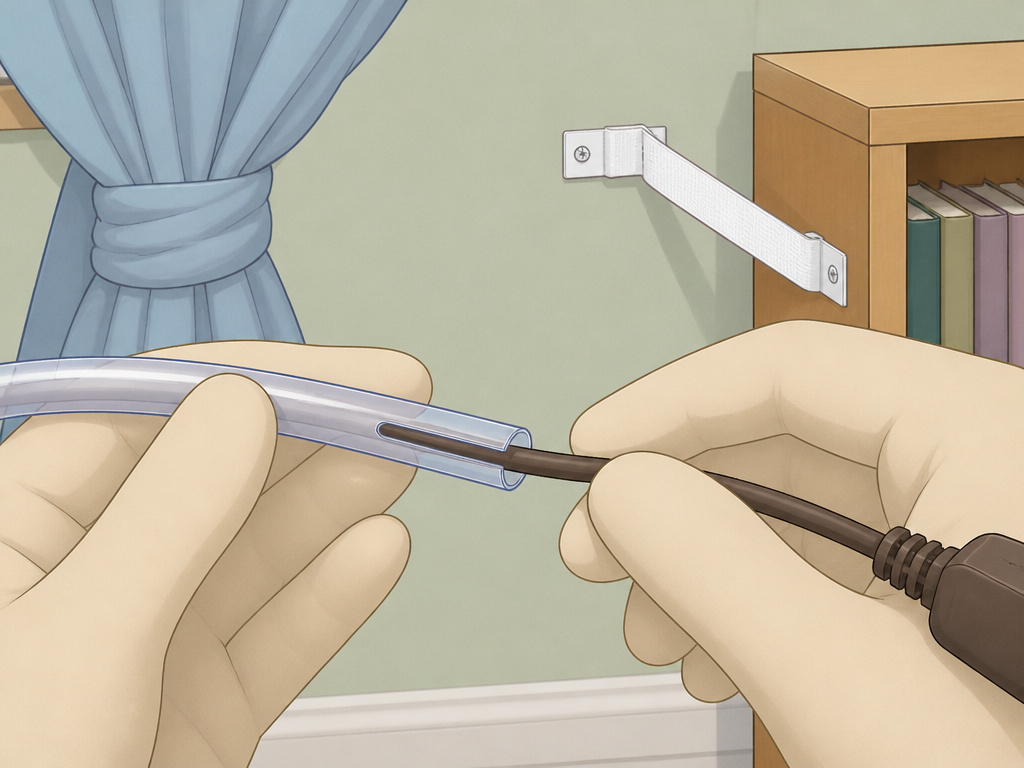
A chewed lamp cord is a shock risk, a burn risk, and a fire risk at the same time. The clinical text lists electrical cords, extension cords, and power strips among the high-risk items to contain.
PetMD has the cheapest fix I know of. Fish tank tubing is fairly chew-proof, and you can run a cord through it after cutting a slit for the wire. Outlet covers handle the wall end.
Curtains are the hazard nobody lists first. A low-hanging curtain becomes a chew target and can come off the wall, and the lift cords can tangle a puppy’s neck. Tie them up or pull them to the side. The same goes for blind cords.
Common mistake: Anchoring a bookshelf to nothing and calling it secure. Lamps, bookshelves, and decorations get pulled over by a puppy on its hind legs. An anti-tipping kit bolted to a stud prevents the injury that ends with a trip to the emergency clinic.
Then there is the chewing itself. Shoes, children’s toys, clothing, books, remote controls, blankets, toilet paper, candles, and cleaning rags all top the list. If furniture legs are already taking hits, the approach in puppy chewing furniture is to redirect rather than scold, and a no-chew spray buys you time on the spots you cannot move.
Hard floors take a beating during this phase, so plan to protect floors before the finish is gone rather than after.
Gates, Doors, and the Airlock That Stops Bolting
Most indoor escapes start at a door, not at the property line. The front door leads to the street, and both PetMD and AAHA note that dogs can learn to open doors, drawers, and cabinets. Childproof latches are not paranoia.
The airlock habit is simple. One door closed before the other opens, every single time, including when a delivery driver is standing there with a clipboard.
I would rather see a cheap gate correctly installed at the mudroom than an expensive one leaning in a doorway. The gate only works if it is latched, and the latch only gets used if the gate is not a hassle to step through.
Pressure-Mounted Gates vs Hardware-Mounted Gates
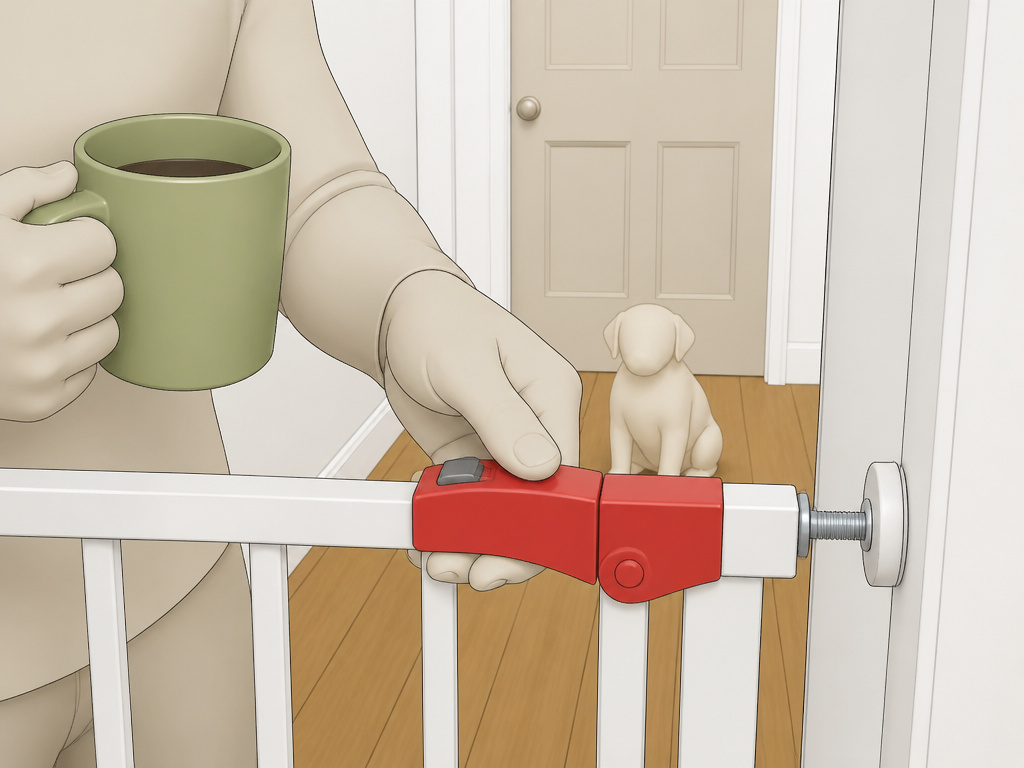
A pressure-mounted gate is fine for a doorway between two rooms. It is a poor choice at the top of a staircase, where a puppy leaning on the bars can push the whole assembly loose. For stairs, use a hardware-mounted gate screwed into the frame.
Walk-through gates that latch one-handed matter more than it sounds when you are carrying a puppy and a coffee. An extra-wide gate is an option for open-plan doorways. The full comparison lives in puppy gates if you want the sizing details.
Gates at the top and bottom of stairs are the clinical text’s recommendation for a small or young puppy. The same logic applies to balconies and decks, and you should check that a puppy’s head cannot pass through the bannister or rail spacing.
For confinement while you are out, crate training and indoor puppy pens do different jobs. A crate is a den. A pen is a play yard. Puppies need both.
How Big Should a Puppy Toy Be?
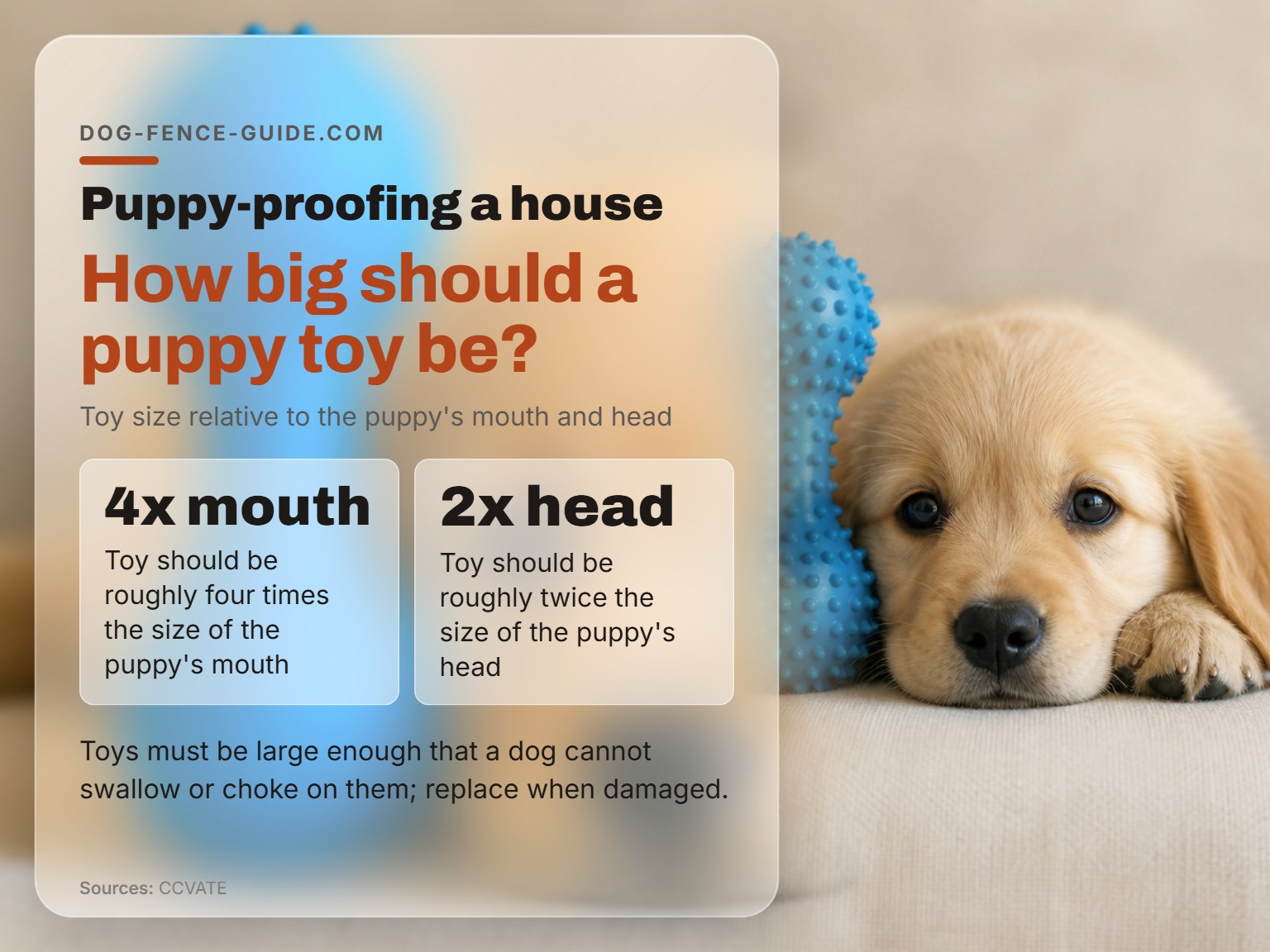
The clinical text gives a number, and it is the most useful one in this whole topic. A toy should be roughly four times the size of the puppy’s mouth, or twice the size of its head, so the puppy cannot mistake your hand for a toy during play.
Every toy should be large enough that a dog cannot swallow or choke on it. Watch the first few sessions, then throw out anything that gets damaged.
Kong makes a series of food toys in sizes and toughness levels, and they go in the dishwasher or get hand-washed daily. That dishwasher detail matters more than the shape, because a food toy that cannot be cleaned becomes a bacteria problem.
Play with a puppy at its level and always use a toy. Hands are for petting and feeding, and a puppy that learns otherwise is a puppy that nips every guest for the next year.
A stuffed food toy also solves a practical problem. Put the puppy in a crate or pen with one when you need twenty quiet minutes, and the chewing need gets met without your shoes paying for it.
The Yard Edges: Fence, Pool, and Treated Grass
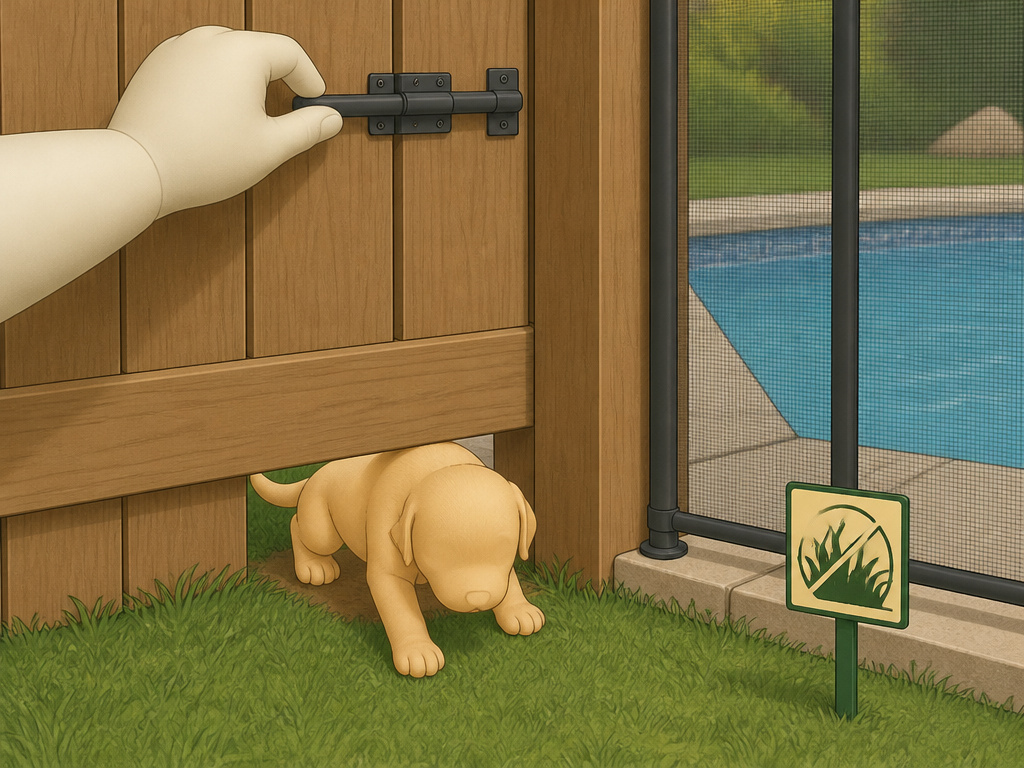
A gate that latches at the top and swings free at the bottom is the classic failure. Walk the fence line and check for the gap a puppy can squeeze through, because the space needed is smaller than you would guess.
Fence height matters less than fence integrity. A fence with no holes beats a taller fence with a rotten corner every time, and a dog with a launch point can clear height without trying.
The AKC’s AKC puppy-proofing expert advice covers the outdoor list well: a fence tall enough to stop jumping, no holes to crawl through, a fence around an in-ground pool, a designated bathroom area, and no unsupervised time outside for a young puppy.
Pools need fencing regardless of whether your puppy can swim. Drowning is a possibility even for a dog that paddles fine, and the pool stays a supervised place for life.
Keep the puppy off grass that was recently treated with fertilizer, pesticide, or insecticide, and skip insecticides where you can. Research every plant in the yard and remove the harmful ones. Sago Palm, Philodendron, Cyclamen, and Autumn Crocus are the four the veterinary sources name most often.
For the full outdoor walkthrough, including gates and boundary planting, see dog-proof garden.
Where this goes sideways: Assuming a “natural” label means pet-safe. PetMD is explicit that natural ingredients are no guarantee of safety, especially if ingested, and the safest course is to secure those products exactly like the conventional ones, though Preventive Vet points readers toward a list of pet-safer cleaning options. One source points readers toward a list of pet-safer cleaning options, which is reasonable for choosing products but not a substitute for a locked cabinet.
The AAHA pet-proofing essential tips add the furniture angle: durable, snag-proof fabrics or good covers, and latches on the drawers and cabinets a clever dog learns to open.
What to Do When the Puppy Chews Something It Shouldn’t
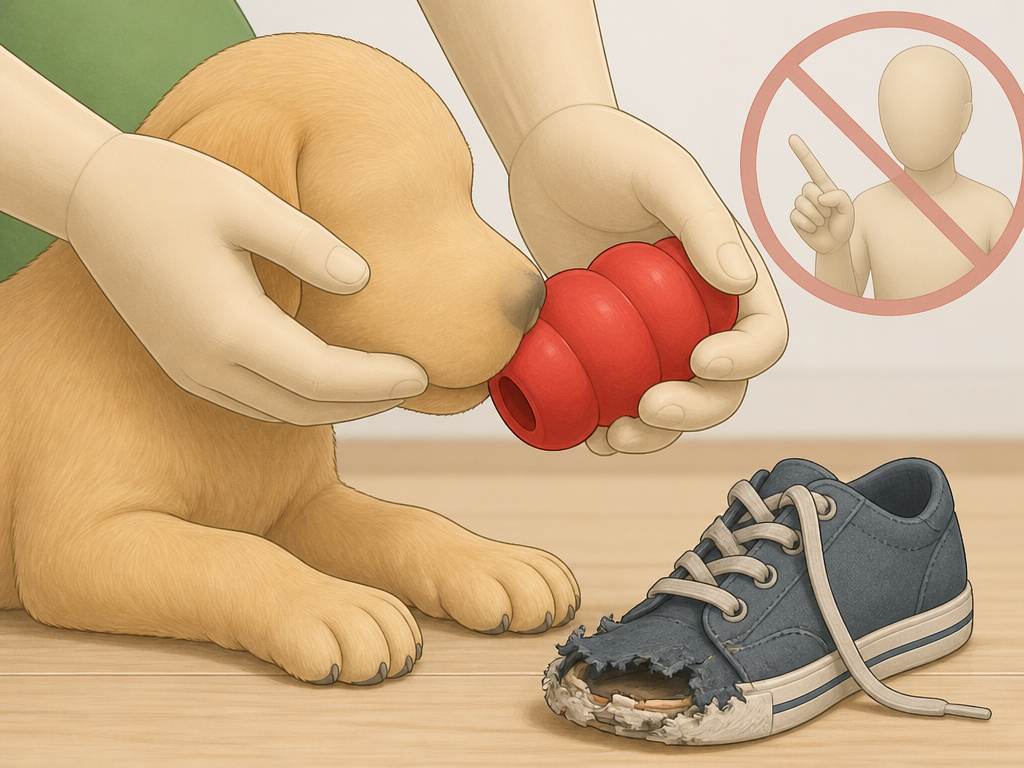
Scolding a puppy two hours after the fact teaches nothing except that hands are unpredictable. The clinical text is unusually direct about this: no amount of scolding or striking conveys the link between punishment and a deed done earlier.
Puppies treated that way learn to hide from the person doing the punishing, and the owner often misreads that as guilt. It is not guilt. It is avoidance.
Reward and praise the behavior you want instead. Redirect a chew toward an appropriate toy, and teach a “leave it” cue so you have a word that works before the puppy has the sock in its mouth.
On training help, choose a certified trainer who uses only positive techniques and avoids fear, force, and pain. The training world is unregulated, so ask directly what methods they use before you book.
One conflict worth naming: Preventive Vet states that socialization should not wait until the vaccination series is complete, and puts the critical imprint period at 7 to 16 weeks old. The clinical text recommends puppy classes for social skills but gives no vaccination timing guidance at all. Ask your own veterinarian how to balance the two for your puppy’s risk level.
Frequently Asked Questions
How long does it take to puppy-proof a house?
Plan a focused indoor pass, and a second for the yard. The crawl-through at puppy height is quick but worth doing carefully. The rest is installation: latches, cord covers, gates, and an anti-tipping kit on the tall furniture.
What is the most dangerous thing in a house for a puppy?
Antifreeze, by a wide margin. Two or three licks can cause fatal kidney failure within 48 to 72 hours, and the sweet taste makes it appealing rather than repellent. Medications and drain cleaner are the next two on the list.
Do I need to wait until my puppy is vaccinated to start socialization?
Preventive Vet says no, and names 7 to 16 weeks as the critical imprint window. The clinical veterinary text recommends puppy classes but stays silent on vaccination timing. That is a conversation to have with your own vet, not a rule to apply blind.
Are “natural” cleaning products safe around puppies?
Not automatically. PetMD states plainly that a natural-ingredient label is no guarantee of pet safety, especially if the product is ingested, while Preventive Vet points readers toward a list of pet-safer cleaning options. Store them in a latched cabinet the same way you would store bleach.
Should I punish a puppy for chewing something?
No. A puppy cannot connect a correction to an action from earlier, and punishment tends to produce a dog that hides rather than one that stops. Redirect to a toy, reward the right behavior, and teach a “leave it” cue.
Before You Go
Ask yourself three questions before you finish the walkthrough. Can a puppy reach the antifreeze shelf by any route, including through an open garage door? Is there a single door in this house that can stand open while the front door is also open? And does the gate at the top of the stairs push loose when a puppy leans on it?
If any answer is uncomfortable, that is your weekend.
The concession worth stating: everything above assumes a puppy. Bring home a large-breed or senior dog instead and the priority list shifts toward traction, floor runners, and furniture clearance rather than cord covers. Same house, different set of risks.
Start this week with one thing. Crouch in your entryway and look at what sits at nose height. Whatever you find there is the first thing to move, and it is usually something you have walked past a thousand times without seeing.
