
How to Create Shade for a Dog in the Yard: Step-by-Step
This post contains affiliate links. As an Amazon Associate, we earn from qualifying purchases.
To create shade for a dog in the yard, plan for two shade sources rather than one, because a single fixed tree loses its shade by mid-afternoon. At 100 degrees F with 60 percent humidity, a dog can only shed heat by evaporation, so moving shade and open airflow do more for it than a fancy structure.
The 2 p.m. Version of a yard looks nothing like the 10 a.m. Version. Shade that covered half the lawn at breakfast sits on the wrong side of the fence by afternoon, and what’s left is bare, hot ground and a dog standing at the edge of it, panting. That swing is where most how to create shade for a dog in the yard plans fall apart.
What follows covers the two-source rule, the dog house argument that splits the veterinary sources, a sheet-and-chair shelter you can put up in ten minutes, and the fabric choices that actually block heat. By the end you’ll be able to walk your own yard at 2 p.m. And know exactly where the shade needs to go.
Key Takeaways
- Two shade sources is the floor, not a luxury. One tree or one sail leaves a gap the sun finds by afternoon.
- Airflow beats insulation in peak heat. A sealed box traps the same hot air the dog is trying to escape.
- Wood outranks plastic and metal for a heat-sensitive dog, per Texas A&M, though a plastic house is the easier portable option; Marygrove, by contrast, argues enclosed doghouses trap heat rather than cooling.
- Plan to move the shelter as the sun tracks. A fixed spot works at 11 a.m. And fails by 3.
- Shade doesn’t replace water, breaks, or indoor time during the hottest part of the day.
Why a Single Shade Tree Fails by Two in the Afternoon
I’ve stood in a yard with a beautiful mature oak and watched a dog pace the fence line at two in the afternoon, because the shade had slid over to the neighbor’s side. The tree was fine. The plan was the problem.
That’s why I won’t sign off on one shade source anymore. Two sources, or one tree plus a sail, is the minimum I’ll recommend for a dog that spends real time outdoors.
Heat leaves a dog by convection, radiation, conduction, and evaporation. On a central Texas summer day at 100 degrees F, 60 percent humidity, and 5 mph wind, only evaporation still works, per Texas A&M College of Veterinary Medicine. A shelter that blocks sun while keeping air moving supports that last pathway.
Read that again and the design brief writes itself. In humid heat a dog is down to one cooling channel, and panting only works when air can move and the ground underneath isn’t cooking it. Shade that blocks the sun but seals off airflow helps less than you’d think.
Put your palm flat on the patio at 2 p.m. And you’ll pull it back fast. That’s the surface your dog is choosing between once the grass in the shade runs out.
The same rules that help you keep a dog cool in summer apply here, and nearly all of them come down to air movement and surface temperature.
How Much Shade Does a Dog Actually Need?
Two sources is the working number for how to create shade for a dog in the yard, and neither one has to be expensive or permanent.
Layering is the move Marygrove recommends: pair something fixed with something you can move. A pergola, an awning, or a mature tree handles the fixed half. A sail, an umbrella, or a raised cot handles the half that follows the sun.
| Shade option | Best for | Main weakness |
|---|---|---|
| Mature tree | Fixed afternoon shade | Shade migrates; roots limit placement |
| Shade sail | Open yards with sun all day | Needs solid anchors in wind |
| Wood dog house | Dogs outside for long stretches | Traps heat if airflow is poor |
| Sheet over a chair | Renters, quick setup, small dogs | Won’t survive a gusty day |
A shade sail over a kennel run is the simplest second zone for most yards. Anchor it to posts set in the ground rather than to a fence panel, because a sail catches wind the way a sail is supposed to.
Portable shade has one job: be somewhere else when the fixed shade isn’t. A portable source that can’t move is just a second fixed source, and you’ve gained nothing.
Wood Dog House or Open Shade? Where the Advice Splits
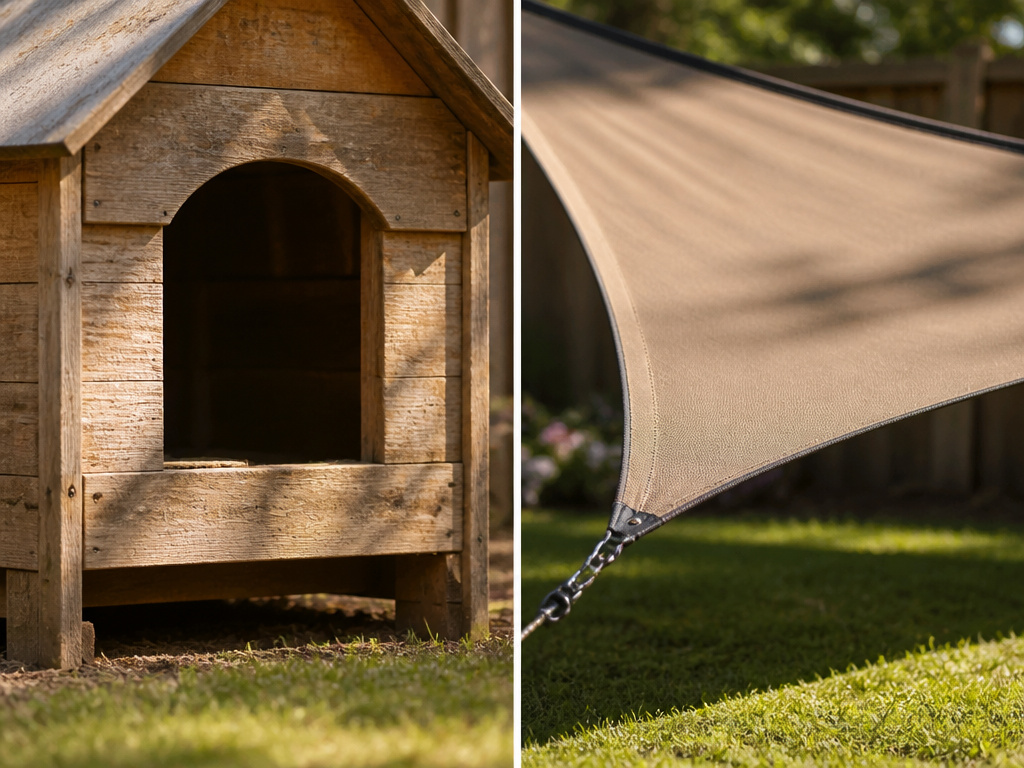
The dog house question splits the veterinary sources, and pretending otherwise helps nobody.
Dr. Sarah Griffin, a lecturer at Texas A&M College of Veterinary Medicine, recommends wood over plastic or metal for a heat-sensitive dog, sized so the dog can make one complete turn inside and no larger, though other sources hold that no universal fixed shelter size exists. She also calls a plastic house a great portable option with easy cleanup, and points owners of part-time outdoor dogs toward portable tents and pop-up pens.
Marygrove, a shade and awning company, argues the opposite for peak summer: enclosed doghouses trap heat rather than cooling it, and poor airflow plus non-UV materials can make the risk worse. Their answer is open, ventilated shade built from UV-blocking fabric.
Both positions have a season. Marygrove is describing August at 2 p.m. Griffin is describing a shelter that has to work in January, in rain, and overnight.
I’d take a ventilated sail and moving air over a sealed wooden box in August. The box wins in November, in wind, and in a yard where fabric turns into a kite. Match the shelter to the season your dog actually struggles with.
A plastic house in full sun smells like hot vinyl the second you open the door. That smell is the air your dog is breathing in there.
Here is the honest version. For most family dogs in a hot climate, open shade with real airflow beats an enclosed house during the day. A wood house earns its place if your dog lives outside, if your winters bite, or if the yard is windy enough that fabric won’t stay put.
Texas A&M’s building the ideal dog house guide is worth reading in full if you go the built route, because the details on lifting the floor and cladding the roof are where most DIY versions fail.
If you’re shopping rather than building, the shortlist of dog houses for hot weather narrows fast once you filter for airflow and shade instead of looks.
How to Create Shade for a Dog in the Yard Without Building Anything
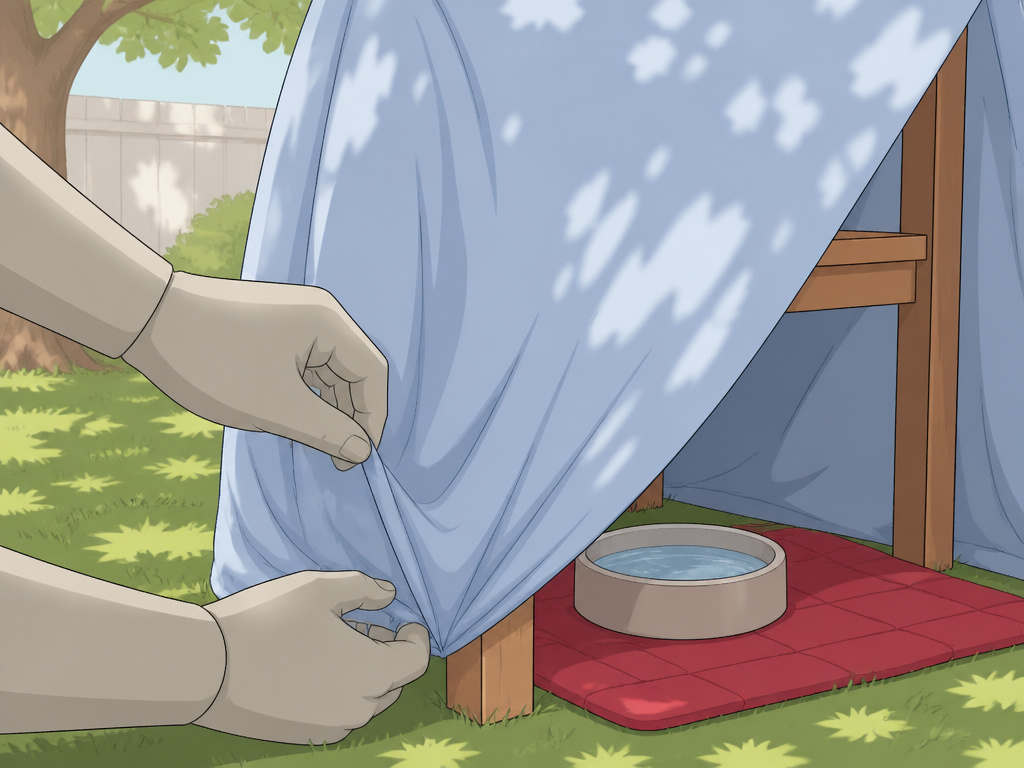
A chair, a bed sheet, and four tucked corners will out-cool a lot of purpose-built shelters, and the whole thing takes about ten minutes.
PDSA, the UK veterinary charity, publishes this build. The order matters more than the materials.
- Pick a spot out of direct sun, under a tree or natural shade. Skip this and the shelter itself heats up like an oven.
- Drape a large sheet or towel over a chair, table, or stool, with the sides covered. Low sun creeps in through any gap you leave.
- Tuck the corners under the shelter corners. Untucked corners flap, and a flapping sheet walks itself off the frame.
- Leave the back open at an angle. It blocks the sun and creates a through draught. Seal the back and you’ve built a hot box.
- Open the front so the dog can come and go, and get out if it’s too hot inside.
- Put water, toys, and treats inside to encourage the dog to actually use it.
- Add a cooling mat or a damp towel on the floor for something cold to lie on.
PDSA’s DIY outdoor sun shelter write-up is short, and it’s worth one read before you build.
This design doesn’t hold up in wind. Hepper’s review of the PDSA build says the same, and adds that anything left out for weeks needs staking down.
Where this goes sideways: Tucking only the front corners. The back lifts on the first gust, the sheet ends up over the dog’s head, and the shelter is gone by mid-afternoon.
When a Built House Makes More Sense
Build something solid if the dog is outside daily, if you get a real winter, or if your yard funnels wind. Otherwise the sheet version covers the two or three weeks a year when heat is the actual problem.
Which Cover Fabric Actually Blocks Heat?
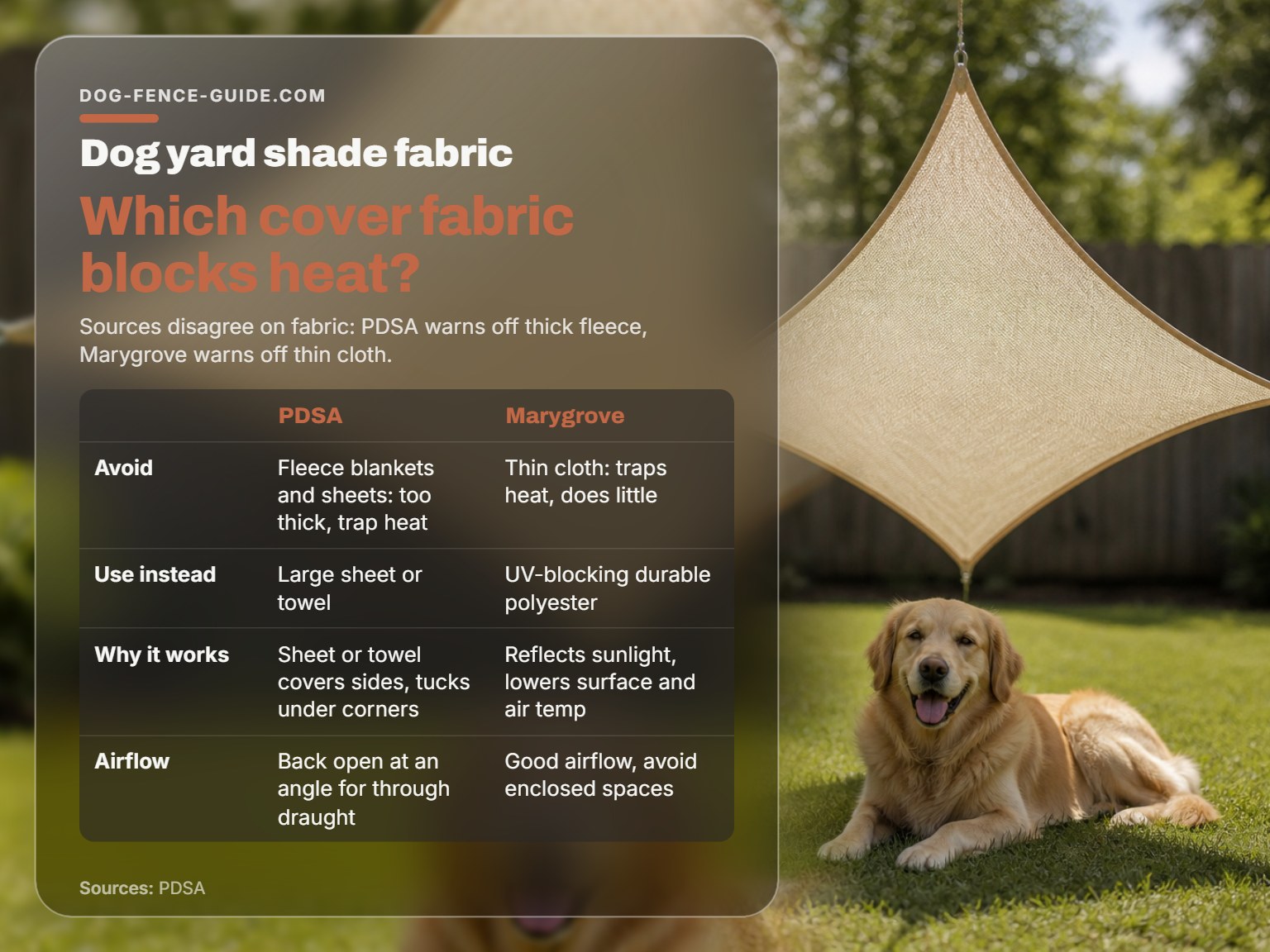
Fabric is where the two main sources part ways, and they’re each right about a different fabric.
PDSA says skip fleece blankets and sheets because they’re too thick and trap heat, and use a large sheet or towel instead. Marygrove says thin cloth traps heat and does little, and that UV-blocking durable polyester reflects sunlight and lowers both surface and air temperature underneath.
Read closely and the disagreement mostly dissolves. PDSA is warning you off thick fleece. Marygrove is warning you off flimsy cotton. The middle is a light, tightly woven fabric that kills direct sun without sealing the airflow.
| Cover material | Blocks sun | Airflow | Use it for |
|---|---|---|---|
| Fleece blanket | Yes | Poor, traps heat | Winter, not summer |
| Cotton bed sheet | Partly | Good | Short sessions, light sun |
| UV-blocking shade cloth | Yes | Good | Long days, kennel runs |
| Durable polyester or acrylic | Yes | Good | Permanent covers |
A tarp in a breeze cracks and snaps all afternoon. The dog doesn’t care. You will.
Hairless and thin-coated dogs burn through shade that’s fine for a Shepherd, so sun protection for dogs belongs on the list next to the shade itself.
Cooling Add-Ons That Do What Shade Can’t
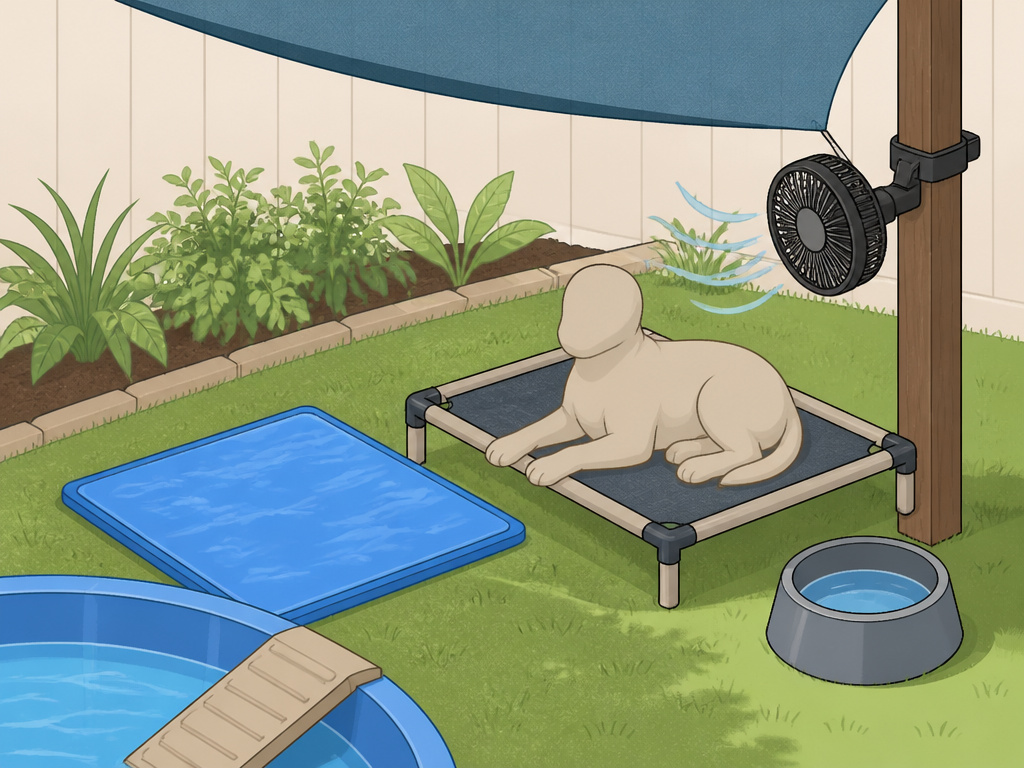
Three add-ons do real work here: something cold to lie on, moving air, and water within reach.
Cooling Mats and Elevated Cots
A pressure-activated gel mat needs no power and no water, which makes it the easiest thing to drop inside a shelter. An elevated cot does a different job: it lifts the dog off hot ground and lets air move underneath.
Both beat a bare patch of dirt. The list of cooling mats for dogs is long, so filter for one that doesn’t need refrigeration.
Fans and Water
Moving air is the cheapest cooling you can buy. A fan aimed into a kennel run moves air and handles outdoor duty better than a decorative oscillating fan.
If your setup is a kennel rather than a yard corner, the guide to fans for outdoor kennels covers mounting and cord safety, which is where most DIY fan setups go wrong.
Marygrove’s extras list is short and practical:
- Cooling mats
- Shaded water bowls
- Fans
- A shallow pool
One thing I’ve watched go wrong near water: dogs paddle in circles along the pool wall because they can’t find the steps. A water-escape ramp matters more than the fence around the pool, and it installs faster than most owners expect.
Where to Put It, and When to Move It
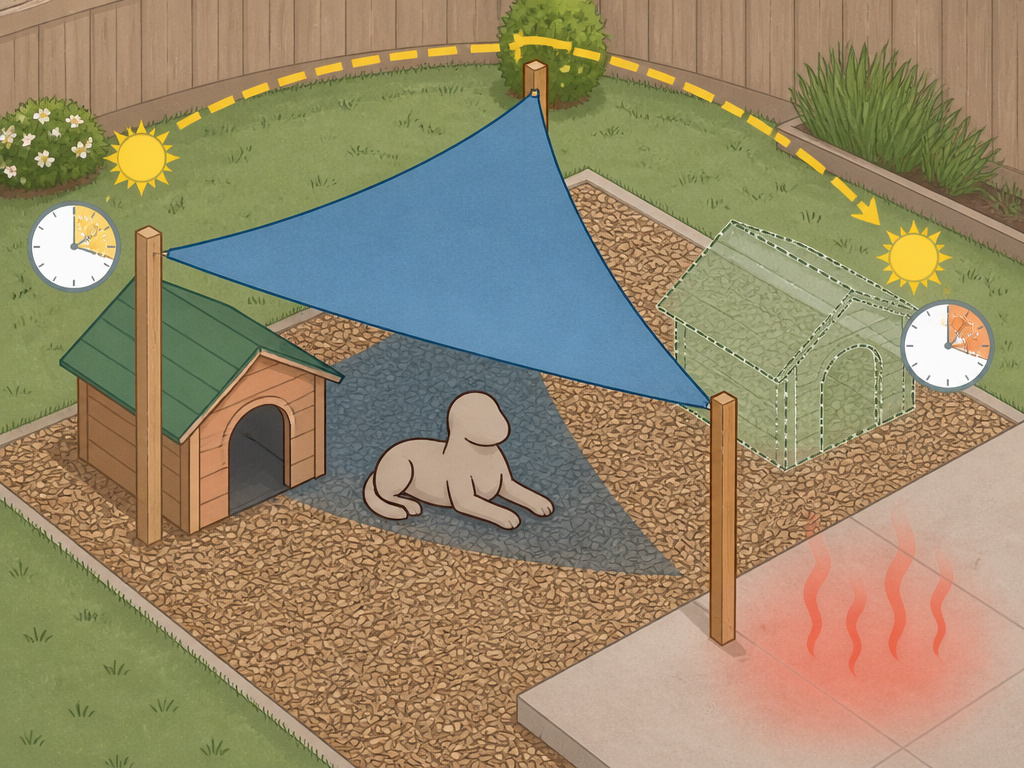
Placement is a one-time decision in one source and a daily chore in another, and the daily version is the one that keeps a dog cool.
Griffin’s advice is to move the dog house to the driest and shadiest part of the yard, and to keep it shaded because sun and weather break down the materials. PDSA goes further: as the sun moves around, you may need to move the shelter to keep it in the shade.
Those two pieces of advice work together. Pick the best permanent spot first, then plan on shifting the portable half of your setup through the day.
- Lift the floor off the ground if you build. Griffin’s reason is mud, rain, and snow sitting under the house, plus better airflow in summer and winter.
- Use wood chips, not concrete or gravel, around the shelter. Marygrove’s point is paw burns from hot hard surfaces.
- Anchor sails to structure, never to a fence panel or a gutter.
- Check the 2 p.m. Position before you commit to anything.
What most people get wrong: Setting the shelter on a concrete slab because it’s level and easy to clean. That slab holds heat into the evening and radiates it straight back at the dog.
If you’re rethinking the whole yard rather than one corner, landscaping a yard for dogs covers ground cover, shade trees, and the paw-safe surfaces that make the rest of this easier.
Frequently Asked Questions
How many hours of shade does a dog need?
Enough that the dog can stay out of direct sun whenever it wants to, which in practice means two sources rather than one. There’s no official hour count, and any page quoting one is guessing. What matters is whether shade is still there during the hottest part of the afternoon.
Is a dog house cooler than a shade sail?
It depends on the season and the airflow. A ventilated sail is cooler on a still, humid afternoon because heat escapes upward. A wood house is better in wind, rain, and cold. Plenty of yards end up using both.
Can I use a tarp for dog shade?
Tarp blocks sun, but it also blocks airflow if you seal the sides. Leave one side propped open at an angle so air moves through. A UV-blocking shade cloth breathes better and holds up longer in sun.
Where should I put a dog house in the yard?
The driest, shadiest corner you have, with the floor lifted off the ground. Then watch where the shade lands at 2 p.m. Before you commit, because a spot that’s shaded at 10 a.m. Can be full sun by afternoon.
Is shade enough to keep a dog cool outside?
No. PDSA’s guidance is to keep pets indoors during the hottest part of the day, with the outdoor shelter as the backup plan. Water, airflow, and breaks inside all matter alongside it.
The Bottom Line
If your yard only holds shade until early afternoon, that’s your trigger to add a second source rather than a bigger one. A second small zone takes less effort than rebuilding the first, and it covers the hours when the heat actually peaks.
Everything above assumes a dog that wants to be outside. A dog that pants hard in the shade, digs at the door, or won’t settle is telling you the yard isn’t working today, and no structure fixes that on a 100-degree afternoon.
One thing worth doing this week: walk the yard at 2 p.m., put a hand flat on the ground in each candidate spot, and move the water bowl to wherever your hand stays comfortable. That spot is where the shelter goes.
