
Dog Breed Shedding Levels Explained: Coat, Gene, Season
This post contains affiliate links. As an Amazon Associate, we earn from qualifying purchases.
Dog breed shedding levels explained: breed averages are set by coat genetics, with the MC5R variant the strongest marker found in a study of 1,873 dogs from 158 breeds, and daylight-driven follicle cycles decide when the hair drops.
Those dog breed shedding levels explained averages matter because they’re where the headline numbers come from. In that 2016 analysis, shedding extent was scored per breed rather than per dog, so a breed-level figure describes a population and says nothing about the individual animal asleep on your rug.
What follows is the genetic layer, the follicle cycle that sets the calendar, the coat types that change the grooming math, and the point where shedding stops being normal.
Key Takeaways
- Breed averages, not individual dogs. The 2016 MC5R study scored shedding per breed, so a DNA result is a population statistic rather than a forecast.
- Peak shedding lands in spring and fall, matching peak telogen in the 1977 Beagle biopsies. Peak growth shows up in winter and summer.
- Double coats run two clocks. The soft undercoat turns over more often than the coarse guard coat above it.
- Don’t shave a double coat. Grooming experts advise against it, and dogs cool through panting and limited sweating at the paw pads.
- Bald patches, inflamed skin, or a sudden jump in loss means a vet visit, not a trip to the pet store.
What the MC5R Study Found in 1,873 Dogs
1,873 dogs from 158 breeds went into the 2016 genome-wide association study that finally put a marker on shedding. The strongest signal sat on chromosome 1, inside the MC5R gene.
The missense variant p.A237T (c.709G>A) in MC5R was the strongest associated marker for extent of hair shedding in a genome-wide association study of 1,873 dogs across 158 breeds. The derived allele, 237-Thr, is associated with reduced shedding and shorter hair.
The practical read: the derived allele tracks with less shedding and shorter hair, and the ancestral form is the heavy-shedding version. That’s the direction of the effect, and it’s the part most summaries get right.
MC5R doesn’t act alone. The same study documented epistatic interactions between MC5R, FGF5, and RSPO2, all of which influence hair morphology. Shedding volume is a combination, not one gene casting a vote.
The wider coat picture came earlier, from a genome-wide study of more than 1,000 dogs across 80 domestic breeds. Variants in RSPO2, FGF5, and KRT71 together account for most coat phenotypes in US purebreds, and that work validated each mutation in a panel of at least 661 dogs from 108 breeds. Short-haired dogs carry the ancestral alleles. You can read the three genes governing dog coats in full if you want the genotype tables.
Here’s where I’d slow down. The OMIA record for this variant carries an explicit warning that inclusion in its table doesn’t mean the variant should be used for DNA testing. It also notes the variant may not be causal without functional studies.
That’s not a small caveat. It’s the difference between a research finding and a shopping decision.
Why Does My Dog Shed in Spring and Fall?
It’s the second week of April, the vacuum is full again, and the couch has grown a second dog. Same food, same shampoo, same animal.
That timing isn’t random. A 1977 study in the American Journal of Veterinary Research took skin biopsies from the thoracolumbar region of nine male Beagles ranging from 2 weeks to 32 months old, then tracked follicle stages across the seasons.
Peak anagen, the growth phase, appeared in winter and summer samples. Peak telogen, the resting phase, appeared in fall and spring. Catagen, the brief transition between them, never exceeded 7% of follicles. Peak shedding of combed hair landed in spring and fall, simultaneous with peak telogen percentages.
| Season | Follicle stage | What you’ll notice |
|---|---|---|
| Winter | Peak anagen (growth) | Full coat, little loose hair |
| Spring | Peak telogen (rest) | Heavy shed, tufts on furniture |
| Summer | Peak anagen (growth) | Coat rebuilding, brushing yields less |
| Fall | Peak telogen (rest) | Second shed, lighter hair drops |
So the growth cycle and the shed event sit roughly a season apart. The coat gets built in winter and summer, then comes out months later.
The AKC’s guidance on when dogs shed most says the heaviest shedding happens in spring and fall, and the Beagle data agrees on the shed peaks. Where popular summaries flatten the story is the other half: the follicle was already turning over long before you saw hair on the floor.
Two more things from that same source. Shedding season runs a few weeks to a couple of months, and a dog can take several weeks to finish dropping a winter coat. Indoor dogs kept under steady artificial light and temperature may shed lightly all year instead.
Most of what you’ll read about seasonal shedding treats the whole thing as one event. It’s two.
The Double Coat Runs Two Shedding Clocks
A double coat is two separate coats sharing one dog. The outer layer is a harsh topcoat of long, coarse guard hairs. Underneath sits a soft, dense undercoat of shorter secondary hairs, sometimes called wool.
The two layers don’t turn over at the same rate, which is central to dog breed shedding levels explained. Topcoat hairs are durable and shed less often. The softer undercoat sheds more often, and it is the layer that releases during a seasonal coat change.
Why the Undercoat Sheds First
The undercoat is denser and shorter, and it’s the insulation layer doing the seasonal work. When daylight and temperature shift, that’s the layer the dog rebuilds or dumps. Which is why a slicker brush loaded with fluff tells you more about the season than the calendar does.
Certified master groomer Jennifer Bishop-Jenkins sorts double coats into four categories: short, medium, long, and triple or arctic. The category decides the tool and the rhythm more than the breed name does.
| Coat type | Example breeds | Go-to tool | Brushing rhythm |
|---|---|---|---|
| Short double | Labrador Retriever, Pembroke Welsh Corgi | Rubber curry or grooming glove | Weekly |
| Medium double | Border Collie, Australian Shepherd | Slicker brush | Weekly |
| Long double | Newfoundland, Great Pyrenees | Slicker plus steel comb | Weekly, more at coat blow |
| Triple / arctic | Pomeranian, Samoyed, Alaskan Malamute | High-velocity dryer, then line comb | At coat blow |
Short double coats typically don’t need trimming, but weekly brushing pulls loose undercoat out before it lands on your floor. Medium coats need the same weekly pass to head off matting. Dense triple coats are a different job entirely, and standard combing alone can be ineffective and can damage the hair. Groomers use a high-velocity dryer and line-combing, working section by section.
Common mistake: Shaving a double-coated dog in warm weather. Shaving doesn’t cool the dog, because dogs regulate temperature through panting and limited sweating through their paw pads. The AKC’s grooming experts generally advise against shaving double-coated breeds, while Dogster says you should never clip a double-coated dog.
The AKC’s guide to caring for double-coated dogs is the source I’d hand a new owner first, mostly because it separates the four coat categories instead of lumping every fluffy dog together.
Do DNA Shedding Tests Work for Every Breed?

The UC Davis Veterinary Genetics Laboratory publishes a shedding test, and the documentation around it is the best argument for reading any DNA result carefully.
Start with scope. The original publication didn’t include seasonal-shedding breeds, so a result for a Nordic or spitz breed can’t be read against the published scale. If your dog blows coat twice a year like clockwork, the model wasn’t built on animals like yours.
Then there’s the measurement gap. Shedding volume in heterozygotes hasn’t been determined, so intermediate genotypes are predicted rather than measured. And shedding itself wasn’t quantified as part of the study, which makes an individual-dog prediction an extrapolation from breed averages.
Here’s what a result can and can’t do for you:
- Can: tell you which MC5R allele your dog carries, in the same way any genotyping panel reports a variant.
- Can: sit alongside RSPO2 and FGF5 results to describe coat type.
- Can’t: put a number on how much hair your specific dog will drop next April.
Fair warning on top of that: the mode of inheritance for hair shedding hasn’t been published at all. The OMIA record says so plainly.
There’s also a naming trap. The derived allele, 237-Thr, is the reduced-shedding form in the published work. Some laboratories label the low-shedding variant as the “n” or “sd” allele, which is the opposite convention. Same gene, opposite labels, so don’t compare results across labs without checking which convention each one uses.
One more split worth naming. The AKC notes that double-coated breeds like Golden Retrievers are more likely to shed year-round, while the genetic model excluded seasonal shedders entirely. Two credible sources with non-overlapping scope. Neither one is wrong; they’re answering different questions.
Choosing a low-shedding dog breed is a different exercise from testing the dog already snoring in your hallway. And a poodle cross doesn’t guarantee a low-shedding dog, since some inherit more coat from the other parent.
The Brush That Matches Your Coat Type
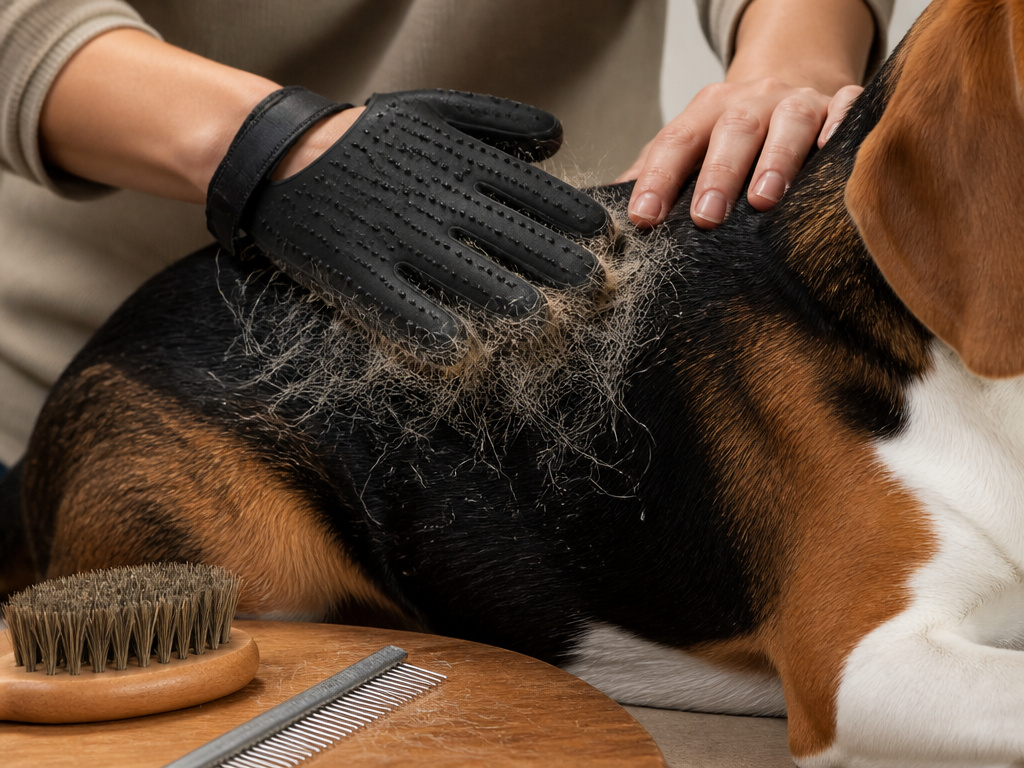
Most shedding brushes get sold on the wrong promise. The tool doesn’t reduce shedding. It removes hair that has already let go, before it reaches your sofa.
Match the tool to the coat. Short-coated dogs like Beagles, Pugs, and German Shorthaired Pointers do well with natural-bristle brushes and grooming gloves. A rubber curry or grooming glove is the tool I’d reach for on that coat type, because it loosens dead hair without scraping skin.
Longer-coated dogs like Pomeranians, Collies, and Pembroke Welsh Corgis need something that reaches the undercoat. A slicker brush does that job and is a sensible starting point for a medium double coat. For a dense or long double coat, a slicker plus a steel comb is the sensible choice.
When shedding really picks up, a coat rake or de-shedding tool removes a lot of loose undercoat fast. A coat rake or de-shedding tool removes a lot of loose undercoat fast, provided you read the next paragraph.
Before you start: Bladed de-shedding tools cut skin when you lean on them. Work any tangle or mat out with a steel comb or a mat splitter before a blade goes near it, and stop the session the moment your dog flinches or the skin looks pink through the coat.
The best dog brushes for shedding list is longer than it needs to be, because half of it is the same slicker with a different handle. An undercoat rake earns its place only during a coat blow, when there’s genuinely loose undercoat to pull.
The Technique That Actually Removes Undercoat
Tool choice is half of it. The other half is that most people brush the top inch of coat and call it done.
With a hound mitt or glove, massage the coat in a circular motion to loosen hair, then brush in the direction of growth and repeat a few times. On a double coat, go over the coat with a slicker in both directions until you’re pulling out less and less hair. With a bladed rake, pull along the coat in the direction of growth, then up and away. Don’t press.
I’d rather see an owner spend three minutes a day with a plain slicker than twenty minutes once a month with a bladed rake. The daily pass catches the undercoat while it’s loose. The monthly pass catches it after it’s packed.
Good deshedding techniques start with sectioning, not pressure.
How Often Should You Deshed a Heavy Shedder?
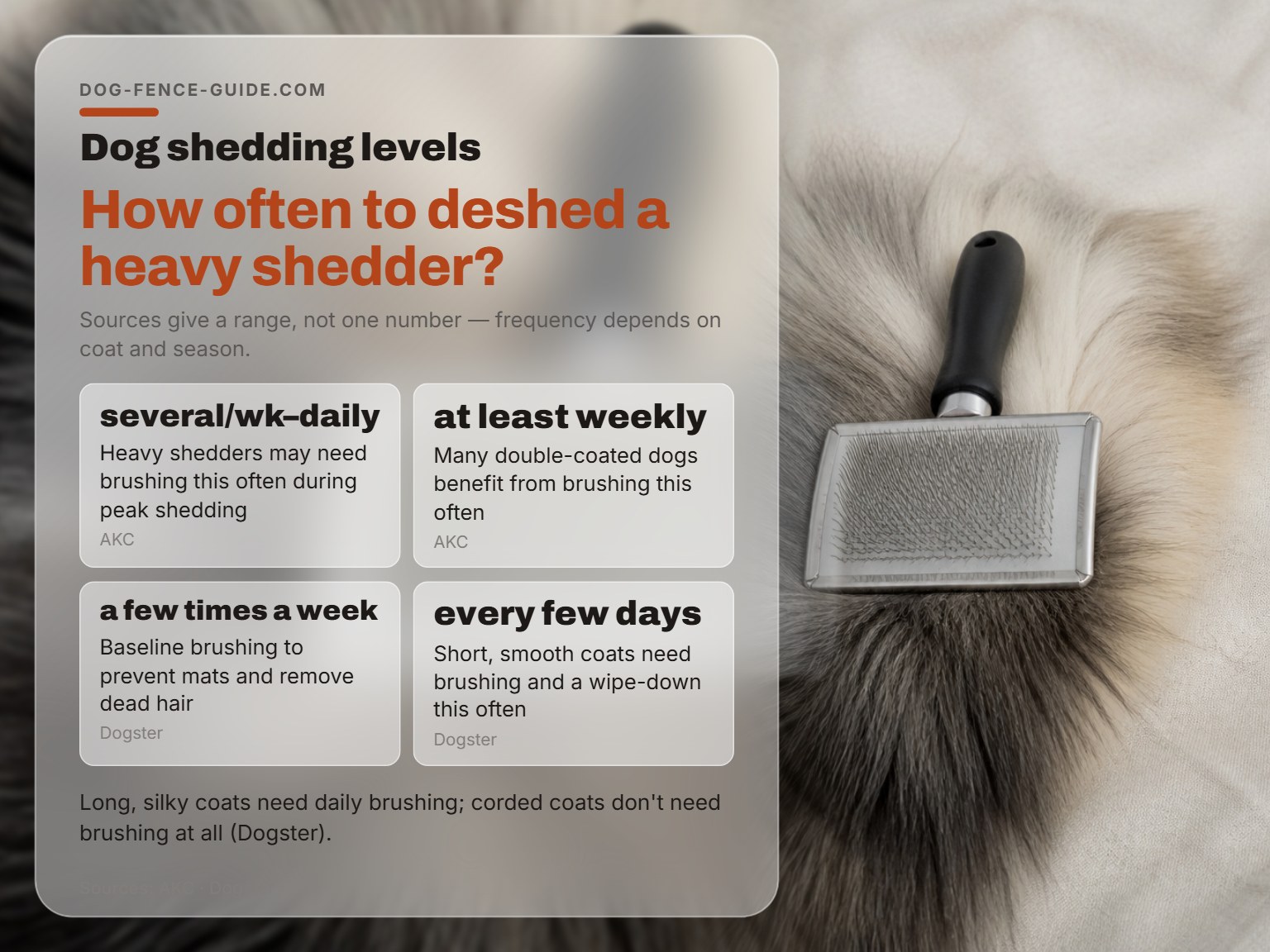
Three things set the schedule: coat length, undercoat density, and whether the dog is mid coat blow.
The sources don’t agree on a single number, and I’m not going to invent one. The AKC says heavy shedders may need brushing several times a week or even daily during peak shedding, while many double-coated dogs benefit from at least weekly brushing, with more frequent grooming during shedding periods. Dogster puts the baseline at a few times a week to prevent mats and remove dead hair. Short, smooth coats need brushing and a wipe-down every few days. Long, silky coats need daily brushing. Corded coats don’t need brushing at all.
So there’s no universal answer to how often to deshed, because the honest answer is a range with conditions attached.
The Weekly Routine
- Brush with the grain in short strokes, one section at a time. Skip the sectioning and you’ll polish the same top inch of coat while the undercoat stays packed underneath.
- Follow with a slicker in both directions until each pass pulls less hair. Stop at the first pass and the loosest undercoat stays in place, then redistributes itself across your floor within a day.
- Switch to a coat rake only when shedding picks up. Running a rake on a coat that isn’t blowing pulls healthy hair and irritates skin.
- Clear mats with a steel comb or mat splitter before any bladed tool touches them. A blade dragged through a mat cuts hair at the skin and leaves a bald stripe.
- Bathe with a shedding-control shampoo, then dry the coat fully. A damp undercoat packs into mats that set as it dries.
Brush the dog in front of you, not the breed chart. A “low-shedding” cross that inherited the other parent’s coat will still fill your car, and a heavy-shedding breed with a good routine beats a low-shedding breed with none.
Seasoning a cast-iron skillet is the closest comparison I can make. You build the layers slowly, and if you crank the heat to save time, you ruin the surface.
When Shedding Stops Being Normal
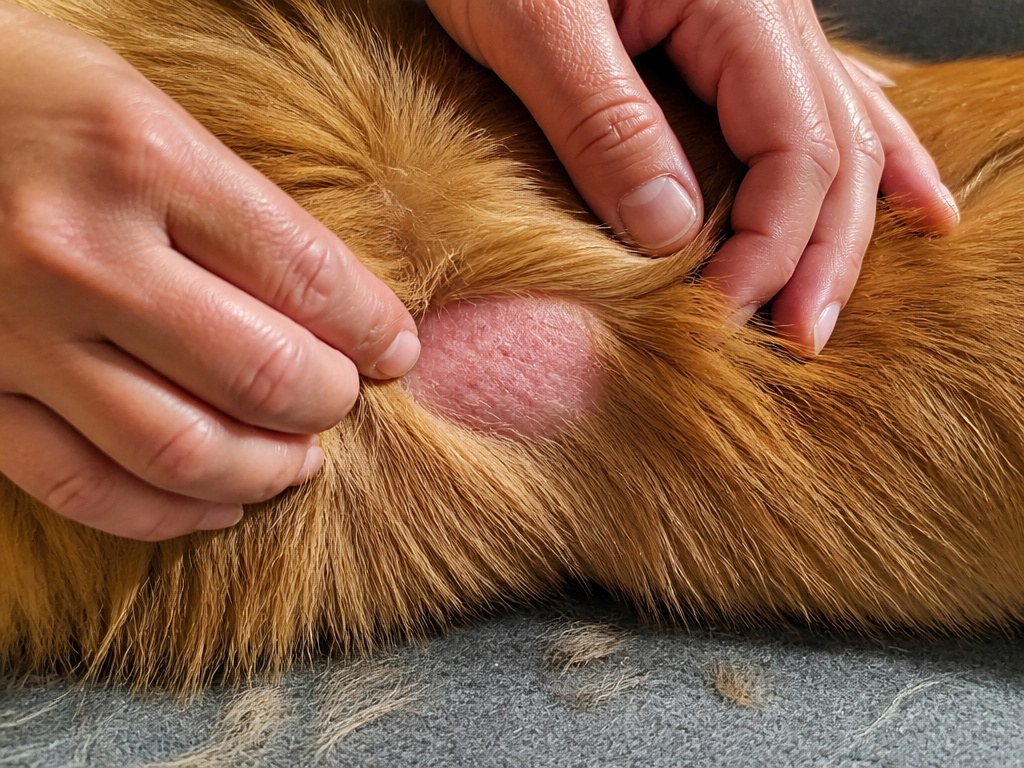
A coat blow is the system working. A bald patch is a different conversation.
The AKC flags bald patches, inflamed skin, and a sudden increase in hair loss as signs worth a vet visit rather than a better brush. It also names conditions that affect skin and coat health and cause unusual loss: hypothyroidism, congenital coat disorders, and allergies.
The red flags, in the order I’d pay attention to them:
- Bald patches or thinning that shows skin, especially in a patchy pattern rather than an even shed.
- Inflamed or irritated skin under all that loose hair, which is easy to miss when the coat is dense.
- A sudden jump in hair loss rather than the gradual taper of a normal seasonal shed.
- Coat that stays dull and sparse well after the shed should have finished, which points at something other than grooming.
Easy to miss: A dog that sheds heavily but evenly is usually fine. A dog that sheds less than usual but leaves visible skin is the one to book in, because the volume of hair on your floor tells you nothing about what’s happening at the follicle.
A new bag of dog food for shedding won’t fix a thyroid problem, and it won’t rewrite a genetic coat either. Rule out the medical list first. The AKC’s rundown of causes of excessive dog shedding covers the same ground in more detail, and it’s the list I’d bring to the vet rather than a shopping cart.
Frequently Asked Questions
Do shedding levels differ between individual dogs of the same breed?
Yes, and the research doesn’t measure that. The 2016 MC5R study scored shedding extent using breed averages rather than individual dogs, so two Labradors from the same litter can differ and the breed figure won’t explain it.
Is a dog’s shedding genetic or seasonal?
Both, and they answer different questions. Genetics set the tendency, while daylight and temperature changes trigger the coat transition. The 1977 Beagle data shows peak telogen in fall and spring, with peak growth in winter and summer.
Can I use a DNA shedding test on a Husky or a Malamute?
Not against the published scale. Seasonal-shedding breeds weren’t included in the original publication, so a result for a Nordic or spitz breed can’t be interpreted that way.
Does shaving my double-coated dog reduce shedding?
It removes coat, but it doesn’t cool the dog. Dogs regulate temperature through panting and limited sweating through their paw pads, and grooming experts advise against shaving double-coated breeds.
How long does a seasonal shed last?
The AKC puts shedding season at a few weeks to a couple of months, depending on breed, coat type, and environmental factors. A dog can take several weeks to fully drop a winter coat.
Why does my indoor dog shed all year?
Consistent artificial lighting and steady indoor temperatures can keep a dog shedding lightly throughout the year rather than in two sharp seasonal peaks.
The Bottom Line
If your dog is under a year old, don’t read anything into the shed you’re seeing right now. Beagles younger than 1 year had 10% fewer telogen follicles than older dogs, and at 2 weeks of age only 12% to 16% of follicles were in telogen. Juvenile shedding patterns aren’t a forecast of the adult coat.
The concession I owe you: if you own a spitz or Nordic breed, the entire genetic section of this article doesn’t apply to your dog. Those breeds were excluded from the model, and anyone selling you a DNA shedding prediction for a Husky is selling you an extrapolation.
Here’s what actually matters for your dog. Pick the tool that matches the coat category, brush weekly as the floor and daily during a coat blow, and keep a vet visit in reserve for bald patches, inflamed skin, or a sudden jump in loss. Peace of mind is the whole point, and none of it requires a DNA swab.
