
Cane Corso Training Needs: What Owners Get Wrong
This post contains affiliate links. As an Amazon Associate, we earn from qualifying purchases.
Cane Corso training needs are daily exercise (around two hours, per the PDSA), short training sessions, early socialization, and a plan for alone time (no more than four hours, per the PDSA). The sources disagree on method and timing, so the honest answer is: pick an approach, commit, and stay consistent.
The disagreement matters more than it looks. The Cane Corso Association of America teaches a swift tug on a choke collar; the PDSA and the British Cane Corso Society teach reward-based training with no punishment. Both are talking about the same breed, and both have been doing it for years. What follows is what each side actually says, where the evidence is thin, and how to build a daily routine that fits a dog that will weigh more than 100 pounds.
Here is what actually matters: exercise volume, training method, socialization timing, alone-time limits, crate use, and the puppy-exercise question that splits the sources cleanly. We will take them one at a time.
Key Takeaways
- Around two hours of daily exercise is the PDSA figure, split into brisk walks and secure off-lead play.
- Never leave a Corso alone more than four hours, per the PDSA, and train the alone-time skill from puppyhood.
- The training method is genuinely contested: the CCAA teaches correction, while the PDSA, BCCS, and Fidecore teach reward-based work.
- The 2-to-13-week sensitive period is real, but the BCCS says socialization does not stop at 16 weeks.
- Skip the “five minutes per month” puppy exercise rule; the BCCS says it has no scientific basis.
How Much Exercise Does a Cane Corso Actually Need?
The PDSA puts the figure at around two hours of exercise every day. That is not two hours of leash walking. It is a couple of longer, brisk walks (or a jog) plus time to play off-lead somewhere secure.
A Cane Corso’s daily exercise should total around two hours, split between a couple of longer, brisk walks or a jog and off-lead play in a secure area, according to the PDSA. The same source caps alone time at four hours and recommends splitting the daily food allowance into two meals.
Royal Canin sets the floor lower: two walks a day at minimum, with a run even better. The British Cane Corso Society adds a warning for puppies, which we will get to. For an adult, the two-hour figure is the one to plan around.
| Source | Exercise guidance | Alone-time guidance |
|---|---|---|
| PDSA | Around two hours daily, including brisk walks and off-lead play | Never more than four hours |
| Royal Canin | Two walks a day minimum, a run even better | Not specified |
| British Cane Corso Society | Short, varied outings for puppies; build gradually | Crate for rest, never punishment |
What does “secure” actually mean? A Cane Corso at full speed hits a gate hard. Check the latch, the hinge, and the post depth before you trust the yard. Check the latch, the hinge, and the post depth before you trust the yard.
- A tall, sturdy fence, not an invisible fence (PetMD is explicit on this)
- A gate that latches securely
- A surface that drains, so the dog is not turning the run into a mud pit
Choose a better latch.
Cane Corso Training Needs: Reward-Based vs Correction
The Cane Corso Association of America training page is the clearest statement of the correction position. It teaches a swift tug on a choke collar for corrections, praise for a job well done, and a frame of owner-as-boss. The PDSA and the British Cane Corso Society teach the opposite: positive, reward-based training from a young age, with no punishment.
Both are talking about the same breed. Here is how the sources line up.
| Source | Method | What it looks like |
|---|---|---|
| PDSA | Positive, reward-based | Treats and praise for correct behavior; no punishment |
| PetMD | Positive reinforcement | Early socialization, rewards for good behavior |
| Fidecore (breeder) | ~90% reward-based | Minimal corrections, never fear or intimidation |
| CCAA | Correction and dominance | Swift tug on a choke collar, owner as “boss” |
| Royal Canin | Assertive leadership | Gentle repetition, but “show the breed who is in charge” |
What the Reward-Based Camp Actually Says
The PDSA’s position is straightforward: train from a young age with rewards, and you prevent the jumping and pulling that make a large dog hard to live with. PetMD says the same thing, adding that positive reinforcement should start as soon as the puppy comes home. Fidecore, a breeder, puts its own split at roughly 90% reward-based, with corrections used only as guidance and never through fear or intimidation.
The through-line is practical. A reward tells the dog what to do, and a correction only tells it what not to do. The PDSA also notes that training treats should not make up more than 10% of a Corso’s daily calories, which matters once you are running several short sessions a day.
What the Correction Camp Actually Says
The CCAA’s argument is that a strong-willed puppy will test you, and if it wins, it becomes more confident. Quick, confident, consistent correction is the key, in their framing. Royal Canin lands in a similar place with softer language: the breed needs a serious, assertive owner, and showing the breed who is in charge from early on is important.
The correction camp’s tools include the choke collar the CCAA describes. Some owners also reach for a shock collar; the PDSA, BCCS, and Fidecore sources all steer away from aversive tools.
The correction camp and the reward camp are both talking about the same dog. What they disagree on is what the dog is learning. A correction teaches a dog what not to do. A reward teaches a dog what to do instead. For a dog that will weigh more than 100 pounds, the second one gives you more to work with.
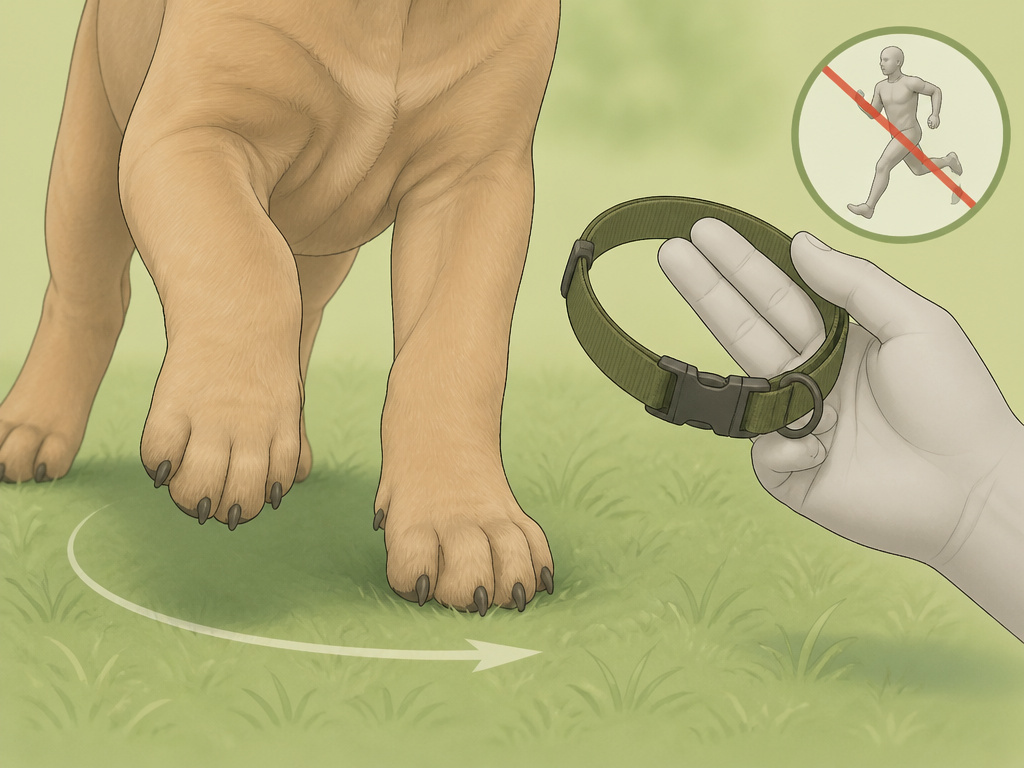
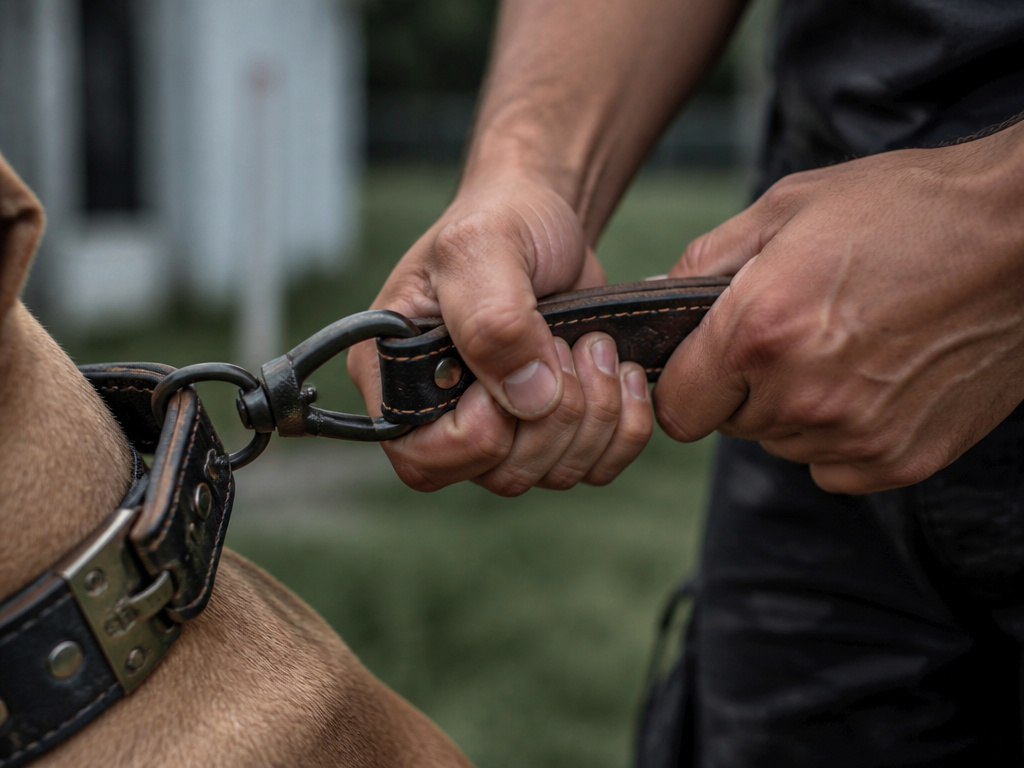
Before you argue about method, get the equipment right. A properly fitted cane corso collar sits high on the neck, not down by the shoulders. A wide leather collar is a reasonable starting point for a dog this size: wide enough to spread pressure, heavy enough that the dog notices it.
The 2-to-13-Week Window (and Why One Source Says It Never Closes)
Two weeks to 13 weeks. That is the sensitive learning period Russell Hartstein, a dog trainer and behaviorist, describes in the AKC Cane Corso puppy training timeline. Behaviors learned in that window tend to stick for life, he says, more than at any other age.
The British Cane Corso Society pushes back on the framing. Socialization, in their view, should not be limited to a fixed 10-to-20-week window. It is a continuous habit, not a deadline you either hit or miss.
Where this goes sideways: Treating 16 weeks as a hard deadline. A puppy that misses a few experiences before 16 weeks is not ruined. The BCCS is explicit that socialization continues past the window, and a scared puppy forced into a crowd learns fear, not confidence.
What Counts as Socialization
Socialization is not a dog park free-for-all. The BCCS describes it as including quietly watching the world, which does not require a long walk. The practical menu looks like this:
- Sitting in a parked car and watching people, strollers, and other dogs pass
- Walking on concrete, tile, grass, dirt, and sand, so the paws get used to different textures
- Meeting people of different ages, sizes, and genders, one at a time
- Hearing the vacuum, the lawn mower, the doorbell, and traffic
- Supervised playdates with stable adult dogs, not a puppy scrum
The pre-vaccination question is the edge case most guides skip. The BCCS says to follow vet advice on disease risk and use safe ways to explore before public walks. Quietly watching the world from a parked car counts. A crowded pet-store aisle does not.
A cane corso muzzle is worth introducing early, even if you never expect to need it. A dog that has worn one calmly as a puppy is a dog you can safely introduce to a nervous visitor.
Treat socialization as a habit. It does not end at a deadline.
How Long Can a Cane Corso Be Left Alone?
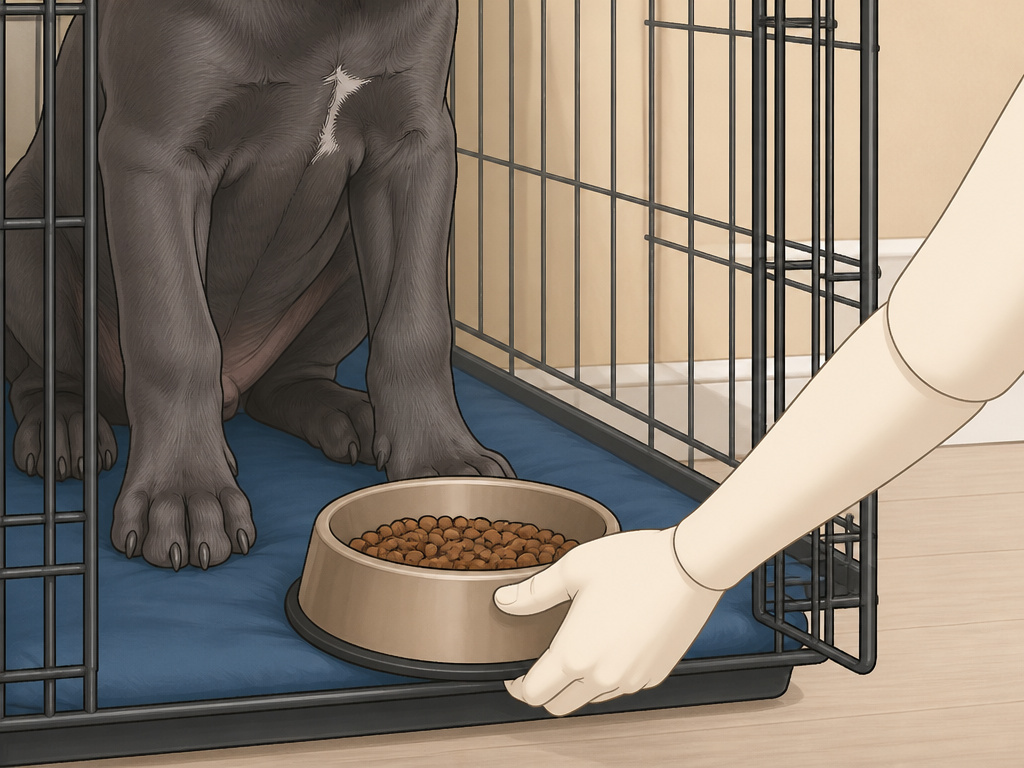
The PDSA’s alone-time ceiling for a Cane Corso is four hours. That is the number to plan your day around, not a suggestion to negotiate with. The same source says to train the alone-time skill from puppyhood, not to wait until the dog is grown and the neighbors are complaining.
Crate training is the usual tool for this, and the sources frame it differently. The AKC and CCAA describe the crate as teaching the dog its proper place in the household and countering a dominant streak. The BCCS reframes it as a rest and settling tool, insists it never be used as punishment, and rejects any fixed daily crate quota.
Before you start: A Cane Corso puppy can already pull an adult off balance. Use a fixed-length leash, not a retractable, keep both hands on it in public, and never hand the leash to a child. A full-grown Corso weighs more than 100 pounds.
The BCCS method for introducing the crate:
- Set the crate up in a quiet room with the door open. Let the puppy investigate on its own.
- Feed meals inside the crate for the first few days. The door stays open.
- Close the door for a few seconds while the puppy is relaxed, then open it. Build up only while the puppy stays calm.
- Never use the crate as punishment. A distressed puppy should never be left to struggle.
- Skip the fixed daily quota. Crate time should suit the puppy’s age, toilet needs, and training stage.
A crate is a rest tool, not a storage unit. If the puppy is screaming, the session was too long. Shorten it and try again tomorrow.
The alone-time skill and the crate skill are the same skill. A dog that can settle in a crate is a dog that can settle on a bed while you take a shower. Build the duration slowly, and do not skip the short sessions because they feel too easy.
What Puppy Exercise Actually Looks Like
A young Corso puppy launches off the back step, lands sideways, and keeps running. It looks like play. It is also a growing joint taking a repeated impact.
The BCCS is blunt about the popular “five minutes per month of age” rule: there is no scientifically established version of it that suits every puppy. What they recommend instead is short, varied outings chosen for the individual dog’s age, health, fitness, and response. They also warn against forced running, long hikes, and repetitive high-impact exercise while the puppy is developing.
This is where the sources genuinely conflict. The PDSA gives a flat two-hour daily figure for the breed, including a jog. The BCCS says to avoid forced running and long hikes while the puppy is still growing. Both can be right if you read the PDSA figure as an adult target and the BCCS guidance as a puppy constraint.
What to skip, and what to do instead:
- Forced running or jogging with the puppy: skip it while the puppy is still developing
- Long hikes: keep them short and varied instead
- Repetitive high-impact exercise: swap for swimming or flat-ground play
- Repeated jumping and sharp turns: choose secure footing and gentle terrain
- Uncontrolled rough play: supervise and interrupt before it escalates
A cane corso puppy collar should be lightweight and snug, with room for two fingers underneath. Puppies outgrow gear fast, and a collar that was snug when fitted will soon be tight as the puppy grows.
Common mistake: Assuming a tired puppy is a well-exercised puppy. A Corso puppy will run until it limps, then keep going. The BCCS says to build activity gradually and watch for lameness, stiffness, or reluctance to move. Those need a vet, not a longer walk.
The BCCS also notes that large breeds may continue developing until around 18 to 24 months, though maturity varies. Demanding sport or endurance work should be discussed with a vet before you start.
Puppy joints are still growing. Treat them that way.
Are Cane Corsos Really Not for First-Time Owners?
Most sources say Corsos are not for first-time owners, though the AKC also describes them as eager to please and generally easy to train. Then the AKC calls them eager to please and generally easy to train. Both statements sit in the same body of advice, and the tension is worth understanding.
The Is a Cane Corso right for you page is blunt about the size and strength problem. Hartstein goes further: a Corso owner should be strong and fit enough to handle a puppy or adolescent. The British Cane Corso Society says much the same: not a breed for a first-time dog owner, and potential owners should think long and hard before committing.
Then the AKC breed profile calls Corsos eager to please and generally easy to train. The AKC’s own training article says the opposite: Corsos aren’t exactly known for being eager to please, and they get bored quickly. Both can be true. A dog can be smart, biddable, and still a poor fit for a first-time owner because of size and strength.
The AKC contradicts itself on this breed. One page calls Corsos eager to please and easy to train; another says they get bored quickly and are not known for eagerness. Both can be true. A dog can be smart, biddable, and still a poor fit for a first-time owner because of size and strength.
“Experienced” is a higher bar than “has owned a dog before.” Hartstein’s point is specific: the physical strength to handle a dog that will outweigh most adults. The AKC Cane Corso breed standard PDF puts dogs at 25 to 27.5 inches at the shoulder, with bitches at 23.5 to 26 inches. That is a lot of dog on the end of a leash.
The small-children question splits the sources too. The PDSA does not recommend a Cane Corso for households with small children; adult-only homes or families with older children and teenagers suit best. The AKC stops short of a blanket no, saying children should always be supervised around the breed and taught not to roughhouse with or in front of the dog.
A first-time owner is still a first-time owner.
Frequently Asked Questions
How much exercise does a Cane Corso need every day?
Around two hours, per the PDSA, split between brisk walks and secure off-lead play. Royal Canin says two walks a day minimum, with a run even better.
What age should Cane Corso training start?
By eight weeks, when the puppy comes home, per the AKC. The sensitive learning period runs from two weeks to 13 weeks, according to Russell Hartstein. Short, fun sessions with high-value treats work better than long drills.
Is reward-based or correction-based training better for a Cane Corso?
The sources disagree. The PDSA, PetMD, and Fidecore teach reward-based work. The CCAA teaches correction with a choke collar. Pick one and stay consistent, because a dog that gets a different rule every day learns nothing.
Can a Cane Corso be left alone for eight hours?
No. The PDSA says never leave a Cane Corso alone for longer than four hours. Train the alone-time skill from puppyhood, and use a crate as a rest tool, not a storage unit.
Do Cane Corsos need a crate?
The BCCS recommends positive crate training as a rest and settling tool, never as punishment. The AKC frames it as teaching the dog its place in the household. Either way, introduce it gradually and build up only while the puppy stays relaxed.
Are Cane Corsos good with small children?
The PDSA does not recommend them for households with small children. The AKC says children should always be supervised around the breed and taught not to roughhouse with or in front of the dog.
The Bottom Line
Pick the method you can actually stick to. The CCAA and the PDSA disagree on almost everything, but both stress consistent training. The Cane Corso training needs that matter most are the boring ones: daily exercise, short sessions, and a plan for alone time.
If you want one answer and you have a Corso puppy: reward-based training, short daily sessions, and a crate introduced slowly. That covers most dogs.
One concession: this all assumes a puppy from a breeder who has done early handling. A rescue Corso with an unknown history is a different calculation.
The contrarian close: a first-time owner who commits to training is better off than an experienced owner who assumes the dog will figure it out. The dog does not care about your experience on paper.
