
Can Dogs Drink Alcohol? What Vets Actually Say
This post contains affiliate links. As an Amazon Associate, we earn from qualifying purchases.
Dogs should never drink alcohol. The published lethal oral dose of 100% ethanol in dogs is 5.5 to 7.9 g/kg, and isopropanol is twice as toxic as ethanol. A 10-pound dog can get sick from less than one or two tablespoons.
Those doses are measured per kilogram of dog, which is where the arithmetic stops being abstract. A Labrador and a Chihuahua lapping the same spilled beer end up with very different amounts of ethanol per pound of body weight, which is why the can dogs drink alcohol question depends on size. That gap is why the same drink is a shrug for one dog and a veterinary emergency for the other.
What follows: the three alcohols that actually reach dogs, the numbers behind each one, the yard sources owners never count, and the short window where a phone call still changes the outcome.
Key Takeaways
- Ethanol kills at 5.5 to 7.9 g/kg in dogs, and that figure comes from the AKC’s chief veterinarian.
- Isopropanol is twice as toxic as ethanol, and serious signs start at 0.5 mL/kg or more. It hides in hand sanitizer and flea spray.
- Call your vet right away if the dog is still acting normal. The decontamination window closes fast.
- Skip the activated charcoal. The Merck Veterinary Manual says it does not bind small-chain alcohols.
- Check the yard before the bar cart. Rotten apples, compost, and unbaked dough are all documented ethanol sources in dogs.
What Happens Inside a Dog After It Drinks Alcohol
Ethanol crosses from the gut into the bloodstream fast, and a dog’s body has no efficient way to clear it.
Alcohols are absorbed rapidly across the gastrointestinal tract and through the skin. Peak plasma concentration is reached in 1.5 to 2 hours. Clinical signs generally begin within 30 to 60 minutes and include vomiting, diarrhea, ataxia, disorientation, lethargy, tremors, and labored breathing. Severe cases progress to coma, hypothermia, seizures, and respiratory depression.
Ethanol irritates the gut lining, so vomiting and heavy drooling come first when you consider can dogs drink alcohol. From there it acts as a central nervous system depressant, and that is the part you will actually see.
The walk is the giveaway.
A dog with alcohol on board moves wide-based and unsteady, one hip dipping, like the floor tilted a few degrees. A dog alcohol intoxication case report describes the same progression, which tells you nothing much has changed in dogs finding drinks.
The Three Alcohols You Are Actually Dealing With
Ethanol gets the headlines, but it is not the only alcohol in a house. The Merck Veterinary Manual names three that show up in companion animals.
- Ethanol: beer, wine, liquor, some rubbing alcohols, drug elixirs, some alcohol-based hand sanitizers, and fermenting bread dough.
- Methanol: windshield washer fluid, which is why a garage is a risk room.
- Isopropanol: rubbing alcohol, some hand sanitizers, and alcohol-based flea sprays. This is the one that catches people out, because it is twice as toxic as ethanol.
The reason isopropanol punches above its weight is what it breaks down into. The liver converts it to acetone, and acetone is itself a central nervous system depressant, so the dog takes the hit twice.
Methanol works differently, and dogs catch a break that humans do not. Primates convert methanol into formic acid and suffer blindness and brain damage. Merck notes that dogs eliminate formic acid efficiently and do not develop either problem.
How Much Alcohol Is Dangerous for a Dog?
The published lethal oral dose of ethanol for dogs is 5.5 to 7.9 g/kg of 100% ethanol. That number traces to American Kennel Club vet advice rather than to a forum thread, which matters when a figure is this specific.
It gives methanol a lethal oral dose of 4 to 8 mL/kg and isopropanol serious signs at 0.5 mL/kg or more, and it notes that notable clinical signs can occur below those numbers.
| Alcohol | Dog Dose That Matters | Where It Hides |
|---|---|---|
| Ethanol | Lethal oral dose 5.5 to 7.9 g/kg | Beer, wine, liquor, elixirs, dough |
| Methanol | Lethal oral dose 4 to 8 mL/kg | Windshield washer fluid |
| Isopropanol | Serious signs at 0.5 mL/kg or more | Rubbing alcohol, hand sanitizer, flea spray |
Those two figures measure different things, so do not line them up side by side. The ethanol number is a lethal dose. The isopropanol number is the point where serious signs begin. Merck’s own summary is the cleaner comparison: isopropanol is twice as toxic as ethanol.
Why a Small Dog Hits the Threshold First
Toxicity is dosed per kilogram, so body weight does most of the work. The AKC notes that for toy breeds, a smaller amount of alcohol is more dangerous than for larger breeds.
A 10-pound dog can get sick from less than one or two tablespoons of alcohol, depending on the type. A 70-pound dog drinking from the same spilled glass is not having the same experience, because the ethanol per pound of body weight is a fraction of it.
Concentration matters as much as volume. The AKC points out that proof is double the percentage of alcohol, so the same mouthful of a stronger drink is a different dose.
Labels give you a shortcut. Proof is double the percentage of alcohol, so a 40% spirit is 80 proof.
If you cannot tell whether the amount was dangerous, treat it as dangerous. The AKC says it is hard to know whether the amount consumed is at a dangerous level, and no source here gives a safe dose below which nothing happens.
The Yard Sources Most Owners Never Count
A crabapple tree drops fruit onto the lawn, and the owner rakes it into a pile against the fence. That pile sits there warm and sweet.
A pile of fallen fruit is a fermenting fruit bowl. The Cortinovis and Caloni review in Frontiers in Veterinary Science lists rotten apples, sloe berries, and uncooked bread or pizza dough as documented ethanol sources in canine case reports.
Dogs find it before people do, because the smell is the point.
One case in that review is worth sitting with. A dog that ate a massive amount of rotten apples vomited, staggered, and trembled, then died 48 hours later. The authors note that chronic liver damage from repeated rotten-apple eating was a suspected contributing factor.
That same review is the source for household foods toxic to dogs more broadly, and it is where the dough cases come from too.
Unbaked dough is the other one. Yeast keeps working in a warm stomach, so the dough rises inside the dog and produces ethanol and carbon dioxide at the same time. The WSAVA proceedings describe dough rising and expanding in the stomach while producing alcohol.
Baking kills the yeast, so baked bread is not a fermentation risk. Raw dough is.
The Yard Audit, In Order
- Fruit trees. Pick up drops daily through the fall. Apples, crabapples, plums, and pears all ferment.
- Compost. A closed bin, not an open pile, and not one a nose can flip open.
- Cocoa-shell mulch. That one is a theobromine problem rather than an alcohol problem, but it belongs on the same walk-through.
- Mushrooms and spoiled food. Same audit, same reasoning, same corner of the yard.
If you have vines, the fallen-fruit habit is worth checking against grape toxicity as well, because grapes and raisins are a separate and well-documented problem in dogs.
This is where a fence or a gate earns its keep. Not to keep the dog in, but to keep the dog out of one corner of the yard.
Can Dogs Drink Alcohol Without Showing Signs?
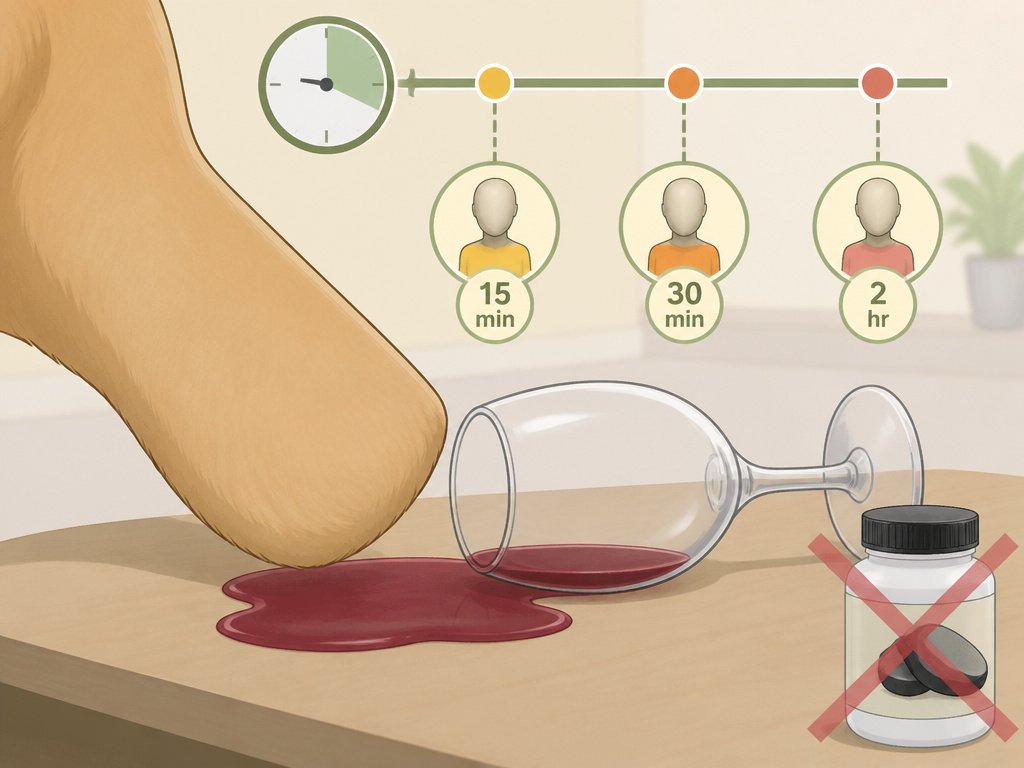
Merck, PetMD, and Rover each publish a different onset window: Merck says 30 to 60 minutes, PetMD says 15 minutes to 2 hours, and Rover says around 30 minutes.
| Source | Signs Appear | Vomiting Window |
|---|---|---|
| Merck Veterinary Manual | 30 to 60 minutes | First 20 to 40 minutes, if asymptomatic |
| PetMD / Pet Poison Helpline | 15 minutes to 2 hours | Not given |
| Rover (Dr. Nell Ostermeier) | Around 30 minutes | Under 15 minutes |
Merck and Rover sit close to each other. PetMD’s window is wider at both ends, which matters if you are deciding whether a two-hour-old exposure is still worth a call.
Where the Sources Disagree on Timing
The vomiting window is where the disagreement gets practical.
Both put the emphasis on speed, and neither suggests waiting to see what happens. That is one more reason a single onset figure is a rough guide at best.
Why Charcoal Does Not Help Here
Activated charcoal is the other split. Merck states that it is not thought to appreciably bind small-chain alcohols and is not often recommended. The WSAVA proceedings list emetics and adsorbents like activated charcoal as treatment for some household toxin ingestions, which is where the instinct comes from.
What most people get wrong: Giving charcoal because it feels like doing something. Merck does not recommend it for alcohol, and a dog that is already vomiting can pull it into the lungs.
What to Do If Your Dog Drinks Alcohol
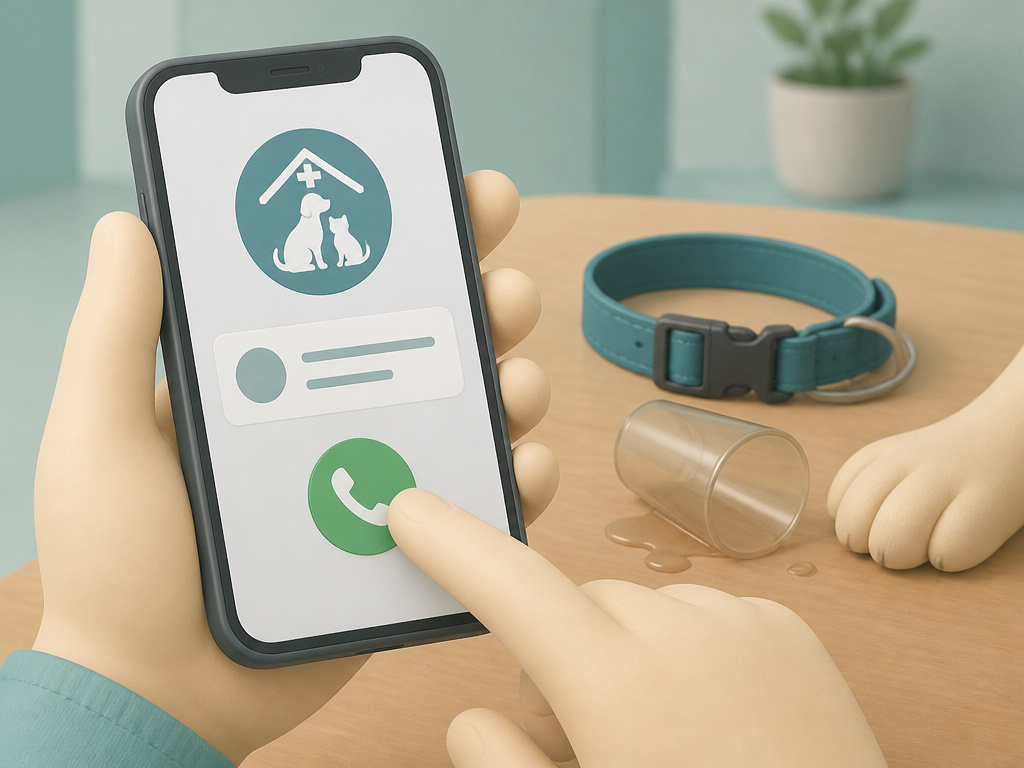
Call first. Everything else is secondary.
Before you start: Three hazards here. Home-induced vomiting can push alcohol into the lungs and cause aspiration pneumonia, so leave it to a vet. Activated charcoal does not bind small-chain alcohols, so it adds risk with no benefit. And a dog that is already staggering should not be left to sleep it off, because respiratory failure, hypothermia, and metabolic acidosis are documented causes of death.
Frequently Asked Questions
How long does it take for a dog to show signs after drinking alcohol?
Signs typically appear within 30 to 60 minutes of ingestion, and blood alcohol peaks roughly 1.5 to 2 hours afterward. Because absorption happens quickly, a dog that seems fine right after lapping a drink can deteriorate fast. Watch closely during that first hour rather than waiting for obvious symptoms.
Is beer safer for a dog than liquor or wine?
No. The danger comes down to grams of ethanol per kilogram of body weight, not the type of drink. Beer is more dilute, but a dog can still consume a harmful dose from a spilled bottle or an unattended glass. Wine and liquor simply reach that threshold with less volume.
Can a dog recover from alcohol poisoning on its own?
Some mild cases do, but there is no reliable way to tell at home which way a case will go. Respiratory depression, seizures, and hypothermia are the outcomes that make this unpredictable. Veterinary care, including fluids and warming, is what changes the odds, so treat any known exposure as a call-the-vet situation.
Does rubbing alcohol on a dog’s paws or skin pose a risk?
Yes. Isopropanol absorbs through the skin as well as the gut, and it is twice as toxic as ethanol. A dog that licks or absorbs enough can develop the same neurologic signs as one that drank a beer. Never use alcohol-based products to cool a dog down or clean its paws.
