
10 Best Robotic Puppies in 2026
This post contains affiliate links. As an Amazon Associate, we earn from qualifying purchases.
The Ruko 18011 Smart Robot Dog is our pick for best overall robotic puppy because it balances expressive animations with real programmability. Kids can sequence up to 50 custom trick routines while the obstacle sensors keep it from crashing into furniture. For those who want a conversational companion, the Loona Robot Pet Dog ChatGPT-4o brings AI chat and home monitoring. Budget-conscious families will find the Ozega Smart Robot Dog for solid programming features at a lower cost.
Choosing a robotic puppy means deciding how much interaction you want from your new friend. Some models respond to touch and touch alone, others need voice commands or a remote. Battery life, size, and whether you want realistic fur or hard plastic matters just as much as the trick count. A tiny one-pound robot fits a toddler’s hands differently than a plush companion of over 23 inches does for a senior.
We researched specifications, manufacturer descriptions, expert round-ups, and patterns in owner feedback to build this guide. The result is a focused set of picks across ten distinct use cases. These range from STEM coding for school-age kids to emotional comfort for older adults, so you can match the right robot to the right person.
Top 10 Robotic Puppies in the Market
Certain content that appears on this site comes from Amazon. This content is provided "as is" and is subject to change or removal at any time.
The Best Robotic Puppies, Reviewed
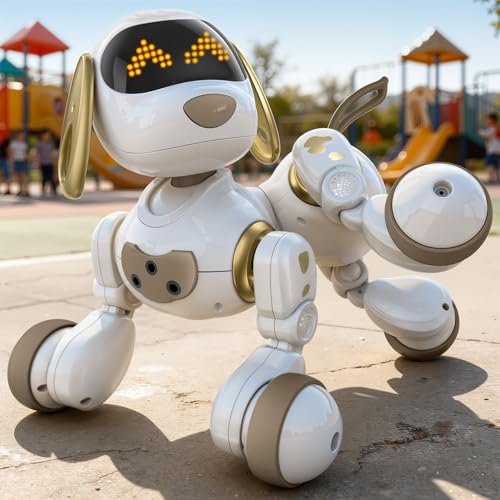
Ruko 18011 Smart Robot Dog
What We Like
- Program up to 50 custom trick sequences
- Obstacle-avoidance sensors prevent crashes
- More than 30 animated facial expressions
Trade-offs
- 45-minute battery limits longer play sessions
- Remote requires 2 AAA batteries not included
More than 30 animated facial expressions and the ability to design up to 50 custom moves let kids train this robot puppy like a pet. The 2.4GHz remote works from up to 98 feet away, so children can guide it across a room or yard, and obstacle-avoidance sensors help it steer clear of walls and furniture. A touch on the head triggers sounds and movements, making the dog feel responsive without the mess of a real animal.
A full three-hour charge delivers up to 45 minutes of play, so for longer sessions you will want to plug it in between rounds. The included USB A-C cable handles recharging, though USB C-C cables are not compatible. This trade-off keeps the unit lightweight and easy for small children to carry around the house. Many families find it works well for short, focused play periods, enough time for a dance routine or a few rounds of fetch before the pup needs a nap.
Product photos
Loona Robot Pet Dog ChatGPT-4o

What We Like
- ChatGPT-powered real-time conversation
- Auto-recharge with multiple route memory
- Home monitoring via camera and speaker
- Face, gesture, and voice recognition
Trade-offs
- Needs well-lit room for camera and sensors
- Dock requires open space with no obstructions
- Clear pronunciation needed for voice commands
A robot puppy that uses ChatGPT and Amazon Lex for voice commands changes what you can expect from a toy. Loona recognizes your face, follows you around, and monitors your home when you’re out. The HD RGB camera and ToF depth sensor let it see and understand gestures, so you can point or wave and it responds like a real pup. For anyone who wants a companion that talks back and responds to your voice, this is a smart option on the shelf.
The trade-off is that Loona needs a clean, well-lit space to work its magic, and the charging dock has to sit in an open area with nothing blocking its path. Compared to the Ruko 18011, which is smaller and has 30 LED expressions, Loona demands more setup but offers voice and gesture interaction. If you want a robotic pet that feels less like a remote-control toy and more like a little roommate, this is the one.
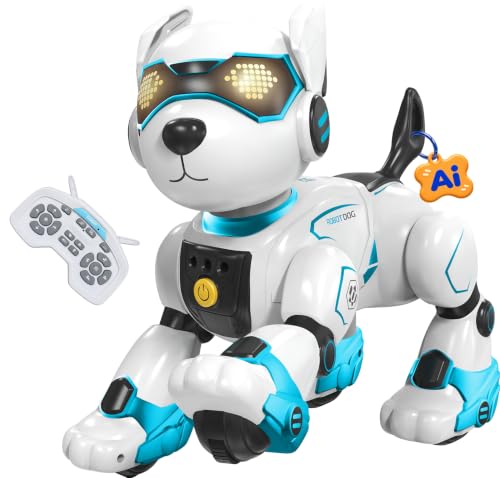
HBUDS AI Robot Dog
What We Like
- Custom action sequences for programming fun
- Three interaction modes: remote, touch, voice
- Expressive LED eyes and puppy sounds
- Rechargeable with 80-90 minute playtime
Trade-offs
- At 1.7 pounds, feels light and less substantial
A dedicated programming button that lets kids build custom action sequences from handstands to push-ups makes this the robot puppy that actually teaches basic sequencing logic instead of just repeating tricks. The three ways to interact, remote, touch, and app-based AI voice conversation, mean a child can start with simple driving and grow into teaching their puppy a full talent show routine. This is the pick for the kid who wants to be the director of their own robotic pet performance, not just a spectator.
The trade-off shows up in the feel: at 1.7 pounds, it’s noticeably lighter than some other robot dogs on the market, which may make it feel less substantial on the floor. The programming lets kids build custom action sequences from the robot’s existing tricks, so the creative freedom is tied to the moves it already knows.
Product photos
Ozega Smart Robot Dog

What We Like
- Programmable up to 50 action sequences
- Touch sensor on back for interaction
- Rechargeable battery with Type-C port
Trade-offs
- At 6 inches long, smaller than many robotic puppies
- No realistic barking or sound effects listed
A built-in programming function lets kids design and store up to 50 personalized motion sequences, turning them into little choreographers. The dynamic LED face responds with real-time emotional expressions, so children can see the robot react to their commands. This type of interactive play encourages STEM logical thinking while helping kids identify emotions and think in new ways. Reviewers note that the combination of customizable routines and expressive feedback makes this a more engaging option than a basic remote-control toy. Yet it stays accessible for families who aren’t ready for premium AI models like the Loona or HBUDS.
The trade-off shows up in size and sensory feedback. What you get instead is a straightforward, rechargeable companion that teaches basic programming logic without a steep learning curve.
Product photos
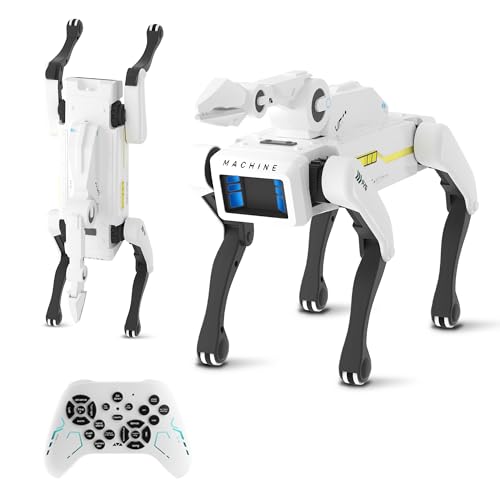
Dingdongwu Robot Dog with Claw
What We Like
- 30+ actions including Kung Fu and somersaults
- STEM coding mode for custom sequences
- USB-C fast charging in 1.5 hours
- Auto-shutdown protects motors on impact
Trade-offs
- At 2.8 lb, heavier than typical budget robot dogs
- No gesture or touch control listed
A full charge in 1.5 hours gives you six hours of play, so kids aren’t hunting for the charger mid-session. The 30-plus actions include silly stuff like a pee-attack prank and kung fu, which keeps children engaged longer than a toy that just beeps and spins. The STEM coding mode lets them design custom action sequences, building logic skills while playing, and the battery has enough stamina to support that kind of extended use.
The trade-off for that runtime is weight: at 2.8 pounds, this dog is heavier than some alternatives like the HBUDS AI Robot Dog at 1.7 pounds. There is also no gesture or touch sensor here, so interaction stays limited to the remote and voice commands. That is fine for a kid who wants to direct the action, but less engaging for a younger child who just wants to pet a robot and have it react. If your priority is a long-playing introduction to robotics with STEM coding and silly tricks, this delivers; if you want a lighter, more sensor-rich companion for a preschooler, consider other options.
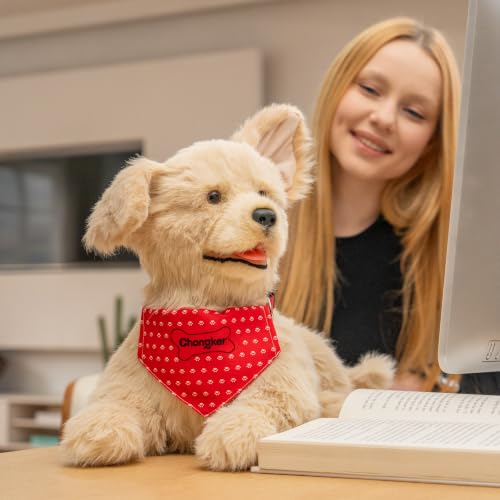
Chongker Realistic Companion Robot Dog
What We Like
- Multiple touch sensors for realistic interaction
- Heartbeat simulation for emotional comfort
- Customizable name for personal connection
- Soft plush material for tactile comfort
Trade-offs
- 23.6-inch length is too large for a small lap or desk
- Lacks programmable tricks or dancing found on other robot dogs
A 23.6-inch plush body with a simulated heartbeat and purring turns this into a comfort object, not a toy. The multiple touch sensors on the head, back, neck, tail, and leg trigger authentic dog sounds and purrs, while a long press on the back activates a heartbeat simulation designed to soothe. That makes it a natural fit for seniors who want a warm, responsive presence without the demands of a live pet, someone who needs calm companionship more than tricks or fetch.
This is a stationary companion, not a roamer. Unlike the Ruko 18011, which has 30 LED expressions and remote control, the Chongker stays where you put it, relying on its soft plush and customizable name for emotional connection. That limits it to passive comfort, so if you want a robot that follows you around or performs programmed tricks, this won’t deliver. For someone who just wants a gentle, purring friend to hold, it fills that niche well.
yiman Remote Control Robot Dog

What We Like
- Compact size fits small hands
- Voice command via applause
- Programmable custom actions
- Rechargeable battery with sleep mode
Trade-offs
- Infrared remote needs line of sight
- At 1.1 lbs, feels lightweight and small
- Only 2 hours of play per charge
Weighing just 1.1 pounds and measuring about as long as a standard tablet, this robot dog is light enough for a young child to pick up and move around the house. The infrared remote works up to 33 feet, giving a kid plenty of space to drive it across a living room floor. It also responds to clapping, two applause triggers a dance mode with three different songs, so even children who can’t handle a remote can still join the fun. The programmable feature lets you set actions like leaning forward, doing handstands, and barking, which adds variety to playtime. For a child ages 3 to 10 who wants an interactive pet, this delivers entertainment without taking up much shelf space.
The trade-off for that small size is that the infrared remote requires line of sight, so you have to point it directly at the dog. Battery life is up to two hours, which is typical for this class of toy, and the 90-second auto sleep helps conserve power if your child wanders off. Compared to the Ruko 18011, which is larger at 8.9 inches tall, the yiman is more suited for younger kids and tighter spaces. It won’t pass for a real puppy, but it also won’t dominate the play area. If you need something small and easy for little hands to manage, this fits the bill.
Contixo R3 Robot Dog

What We Like
- Shatterproof ABS plastic with no sharp corners
- Responds to head touches with sounds and movements
- Programmable remote teaches cause-and-effect logic
Trade-offs
- No voice or gesture control for hands-free play
At 1.8 pounds and 8 inches long, the Contixo R3 is built for small hands and durable floors. The shatterproof ABS plastic and no sharp corners mean it can handle drops without breaking. It also walks, sits, dances, sings, and does push-ups on command, plus you can program a short sequence of moves through the remote, giving a gentle introduction to cause-and-effect logic.
The R3 offers more than seven remote commands, so a child can make it sit, stand, dance, or sing. It lacks voice or gesture control, which means a younger child may need an adult to operate the remote at first. The HBUDS AI Robot Dog includes voice conversation and programmable tricks, making it a different option for families who want that extra interaction. For a first robot puppy that survives drops and keeps a three-year-old entertained, the Contixo fits the bill.
great dachong Robot Dog
What We Like
- Touch & Follow gesture response
- Programmable custom movement sequences
- Dances, spins, and flips to music
- Child-safe durable materials
Trade-offs
- At 5 inches tall, smaller than many robot dogs
- No voice control or app control listed
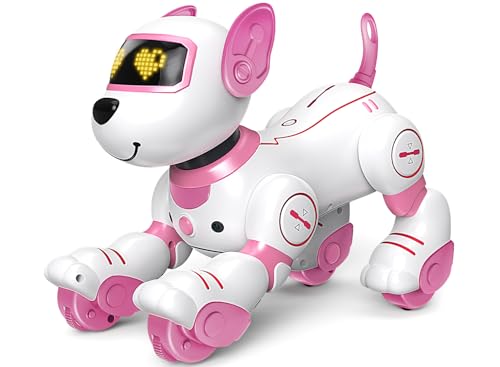
The touch-and-follow feature on this robot puppy means it actually reacts when you pat its head, it wags its tail, makes sounds, and follows your steps around the room. That kind of immediate responsiveness makes play feel less like pushing buttons on a remote and more like interacting with a real pet. That is exactly what kids under ten tend to want. At nine inches long and five inches tall, it’s compact enough for a small playroom or apartment floor, and the programmable trick sequences let children build simple routines, sneaking in some early logic practice without it feeling like homework.
The trade-off here is size and control options. At five inches tall, this dog is noticeably smaller than the Ruko 18011 (which stands nearly ten inches), so it won’t have the same physical presence for older kids who want a more substantial toy. It also lacks voice or app control, everything runs through the remote or touch gestures, which means younger children may need help getting started, while older kids might prefer more advanced interaction. For the preschool through early elementary crowd who just want a responsive buddy that dances and follows them, though, the trade-off is worth it.
Product photos
Eoyeskido Smart Robot Dog
What We Like
- Spray effect for interactive play
- Touch sensor triggers pet-like reactions
- Customizable AI programming for kids
- Ear LED lights with movement
Trade-offs
- No app control, remote only
- Spray effect can stain light-colored carpets.
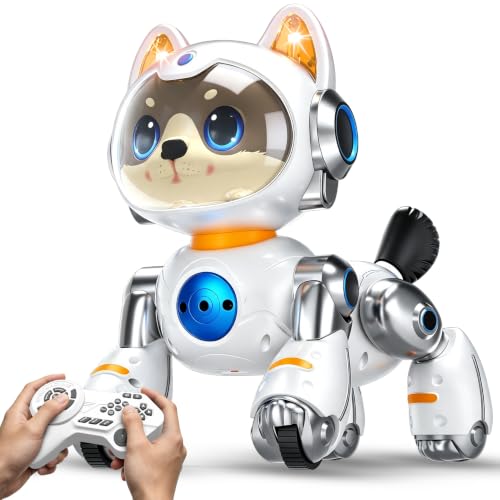
A spray effect and ear LEDs that light up with movement make this robotic puppy stand out from the usual wag-and-bark crowd. That spray nozzle adds a playful, messy layer that kids who love splashy toys will enjoy, while the touch sensor triggers pet-like responses without the shedding or vet bills. The programmable action sequences let children mix moves into custom routines, which gives the toy a creative angle beyond simple remote driving. For a family looking for something that feels less like a standard RC car and more like a tiny interactive performer, this one delivers the kind of sensory fun that keeps a child’s attention through multiple play sessions.
At 2.0 pounds and 9 inches tall, this robot dog won’t have the heft or presence of a larger model like the Loona Robot Pet Dog, which at 2.4 pounds and nearly twice the height offers a more substantial companion feel. The Eoyeskido relies entirely on the included 2.4GHz remote and touch gestures, so there is no app control for programming on a phone screen. That keeps the setup simple for younger kids ages five to eight, but older children used to smartphone interfaces might find the remote limiting. If splash effects and bright LED ears sound like the kind of nonsense your household enjoys, this is a fun, reasonably priced pick that leans into spectacle over realism.
Product photos
How We Evaluated Robotic Puppies
This guide combines manufacturer specifications and product data, expert round-ups from toy-industry sources, and patterns in owner feedback across hundreds of customer reports. We compared features, programming depth, battery life claims, and safety materials across the category to find the best match for each buyer type.
The three criteria that mattered most were programmability depth (how many custom tricks or sequences a robot allows), interaction methods (touch, voice, remote, gesture, or app), and physical build (weight, material safety, and size relative to the intended age group). Battery life and charging method rounded out the evaluation. A robot that dies after twenty minutes frustrates everyone.
A research-led evaluation has honest limits: we cannot verify battery runtime claims in real play, and we cannot measure how durable a plastic paw is after a fall from a couch. What we can do is surface the trade-offs that matter, like the difference between a robot that auto-recharges and one that needs new AAAs, so you can decide which compromises fit your household.
What To Look For In Robotic Puppies
The right robotic puppy balances programming depth, interaction style, battery life, and physical size for the person who will use it most. A robot that responds to touch works for a toddler; a robot that takes voice commands suits an older child; a robot with ChatGPT works for a tech-loving adult.
Programmability And Trick Depth
Not all programmable robots are equal. Some let you sequence up to 50 actions in a custom routine, while others offer a handful of pre-set moves. The Ruko 18011 and Ozega Smart Robot Dog both allow 50-action sequences, which keeps older kids engaged for longer. The Dingdongwu Robot Dog with Claw adds a STEM coding mode that teaches cause-and-effect logic through actual programming.
For younger children, simpler programmability teaches the same concepts without overwhelming them. The Contixo R3 Robot Dog uses a remote to program basic sequences that build cause-and-effect understanding. If you are looking for the deepest programming experience, the HBUDS AI Robot Dog lets kids build their own routines across three interaction modes, remote, touch, and voice.
Interaction Methods: Touch, Voice, Remote, And Gesture
How you talk to your robot puppy determines how natural the play feels. Touch sensors on the back, head, or ears trigger different responses on most models, the Chongker Realistic Companion Robot Dog uses multiple touch sensors plus a heartbeat simulation for a soothing experience. The great dachong Robot Dog adds a Touch & Follow gesture mode that makes the robot track your hand.
Voice control ranges from simple clap recognition on the yiman Remote Control Robot Dog to full ChatGPT-4o conversation on the Loona Robot Pet Dog. Remote control is the universal fallback, but infrared remotes need line of sight. The Eoyeskido Smart Robot Dog uses a remote-only setup with a spray effect for extra fun, though owners should watch for staining on light carpets.
Battery Life And Charging
- Look for rechargeable batteries with USB-C ports, the Dingdongwu Robot Dog with Claw fast-charges in 1.5 hours via USB-C.
- Check whether the robot auto-recharges like the Loona Robot Pet Dog, or if you need to swap batteries manually.
- Consider runtime relative to play sessions: 45 minutes on the Ruko 18011 suits short play, while 80-90 minutes on the HBUDS AI Robot Dog covers longer sessions.
- Factor in whether the robot uses included rechargeables or needs AAA batteries you supply separately.
A robot that auto-returns to its dock is worth paying more for if you know the user will forget to plug it in.
Robotic Puppies Compared
The table below compares battery life, interaction methods, and programming depth across our ten picks so you can see the differences at a glance.
| Product | Dimensions | Weight | Control Type |
|---|---|---|---|
| Ruko 18011 Smart Robot Dog | 8.9 x 8.9 x 9.8 in | 0.0 lb | 2.4GHz Remote & Gesture |
| Loona Robot Pet Dog ChatGPT-4o | 19 x 18 x 18 in | 2.4 lb | Voice & Gesture |
| HBUDS AI Robot Dog | 9.3 x 7.0 x 10.0 in | 1.7 lb | Remote, Touch & Voice |
| Ozega Smart Robot Dog | 6.0 x 9.0 x 10.0 in | N/A | 2.4GHz Remote & APP |
| Dingdongwu Robot Dog with Claw | 12.2 x 5.5 x 7.2 in | 2.8 lb | Remote & Voice |
| Chongker Realistic Companion Robot Dog | 23.6 x 9.8 x 9.1 in | 2.2 lb | Touch |
| yiman Remote Control Robot Dog | 5.1 x 3.5 x 6.7 in | 1.1 lb | Infrared Remote & Voice |
| Contixo R3 Robot Dog | 8.0 x 5.0 x 7.7 in | 1.8 lb | Remote |
| great dachong Robot Dog | 9.0 x 9.0 x 5.0 in | N/A | Remote, Touch & Follow |
| Eoyeskido Smart Robot Dog | 9.0 x 5.5 x 9.4 in | 2.0 lb | 2.4GHz Remote & Gesture |
Frequently Asked Questions
What age is appropriate for a robotic puppy?
Most robotic puppies are designed for ages 3 and up, but check the specific model. The Contixo R3 Robot Dog uses shatterproof ABS plastic with no sharp corners for ages 3-6, while the HBUDS AI Robot Dog targets ages 8 and older due to its programming complexity. For seniors, the Chongker Realistic Companion Robot Dog uses soft plush material and touch sensors that need no fine motor skills.
How long do robotic puppy batteries last?
Battery life varies from about 45 minutes on the Ruko 18011 to 80-90 minutes on the HBUDS AI Robot Dog. The Dingdongwu Robot Dog with Claw charges fully in 1.5 hours via USB-C. Some models like the Loona Robot Pet Dog auto-return to their dock when battery runs low, while others need manual recharging.
Can robotic puppies learn tricks or respond to voice?
Yes, but the depth varies. The Ruko 18011 and Ozega Smart Robot Dog let you program up to 50 custom trick sequences. The Loona Robot Pet Dog uses ChatGPT-4o for real-time conversation and recognizes faces, gestures, and voice. The yiman Remote Control Robot Dog responds to applause commands. Simpler models like the Contixo R3 use remote programming only.
Are robotic puppies safe for toddlers?
Models designed for young children use shatterproof materials and rounded edges. The Contixo R3 Robot Dog is made from shatterproof ABS plastic with no sharp corners. The great dachong Robot Dog uses child-safe durable materials. Always supervise play with any battery-powered toy, and check that the battery compartment is screw-secured.
What is the difference between a robotic puppy and a robotic dog?
Robotic puppies are generally smaller, lighter, and designed for children with simpler interaction methods like touch and remote control. Robotic dogs for adults, like the Loona Robot Pet Dog, tend to be larger, include AI conversation and home monitoring, and cost more. The Chongker Realistic Companion Robot Dog bridges the gap with a plush, emotionally focused design for seniors.
The Bottom Line
The Ruko 18011 Smart Robot Dog is the best overall choice for families with kids ages 3 and up who want a programmable, expressive puppy without AI complexity. Its 50-trick sequencing and obstacle-avoidance sensors give real play value, and the 30-plus facial expressions keep interactions fresh.
If your budget is tighter, the Ozega Smart Robot Dog delivers the same 50-action programming at a lower cost in a smaller package. For tech enthusiasts who want conversation and smart home features, the Loona Robot Pet Dog with ChatGPT-4o is the clear upgrade. Seniors seeking emotional comfort will prefer the Chongker Realistic Companion Robot Dog with its heartbeat simulation and soft plush body.
The single most important factor is matching the interaction method to the user’s age and ability. A toddler needs touch sensors and durable plastic. A school-age child needs programming depth. A senior needs soft materials and soothing responses. Choose the interface first, and the features will follow.
