
10 Best Recommended Puppy Food in 2026
This post contains affiliate links. As an Amazon Associate, we earn from qualifying purchases.
The Purina Pro Plan High Protein Puppy Food earns our Best Overall spot for its chicken-first recipe with DHA from fish oil for brain and vision development, plus calcium and phosphorus for strong bones. The Hill’s Science Diet Puppy Small Bites is our Best Small Kibble pick, and the Blue Buffalo Life Protection Puppy Food takes Best Lamb Recipe.
Every puppy owner faces the same question: which food actually delivers the nutrients a growing dog needs without causing digestive upset or picky eating. Breed size, protein source, kibble shape, and ingredient sensitivity all matter more than brand reputation.
We built this guide by analyzing manufacturer nutritional data, veterinarian guidelines for growth-stage feeding, and patterns in owner feedback across the ten formulas that consistently meet AAFCO puppy standards. You get clear criteria and honest trade-offs for each pick.
Top 10 Recommended Puppy Foods in the Market
Certain content that appears on this site comes from Amazon. This content is provided "as is" and is subject to change or removal at any time.
The Best Recommended Puppy Foods, Reviewed
Purina Pro Plan High Protein Puppy Food

What We Like
- DHA from fish oil for brain and vision
- Chicken is first ingredient for lean muscle
- Antioxidants support developing immune system
- Calcium and phosphorus for strong bones
Trade-offs
- Chicken-based formula not suitable for poultry allergies
- Bag size is small for large-breed puppies.
Chicken is the first ingredient, which means your puppy gets a concentrated protein source to build lean muscle during that rapid growth phase. The DHA from omega-rich fish oil directly supports brain and vision development, while calcium and phosphorus work together to form strong bones and teeth. This is a straightforward, well-rounded recipe for a puppy that needs solid nutritional foundations without unnecessary extras.
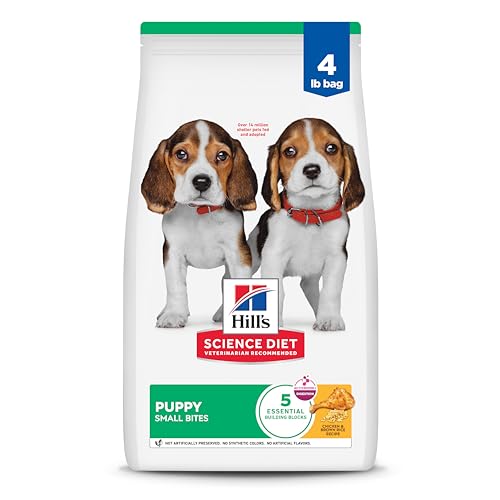
Hill's Science Diet Puppy Small Bites
What We Like
- Balanced minerals for growing bones and teeth
- DHA and Fish Oil for brain and eye development
- Antioxidant blend supports developing immune system
- High quality proteins fuel growing muscles
Trade-offs
- Chicken and brown rice formula not grain-free
- Not suitable for grain-free diet requirements
The #1 Veterinarian Recommended brand means this food is formulated with DHA from fish oil for brain and eye development, balanced minerals for bone growth, and an antioxidant blend for immune support. The small bite size is listed as a feature, which can be helpful for puppies with smaller mouths. This formula covers key developmental needs in one bag.
The 4.5-pound bag is a specific weight option. Compared to the Royal Canin X-Small Puppy option, which comes in a 3-pound bag, Hill’s offers a larger bag by weight. If your puppy is a large breed, the other-products list includes a Hill’s Science Diet Large Breed Puppy variant that may be more appropriate.
Blue Buffalo Life Protection Puppy Food

What We Like
- Real lamb is first ingredient
- DHA and ARA for brain and eye development
- LifeSource Bits with antioxidant blend
- Wholesome grains for gentle digestion
Trade-offs
- Includes grains, not grain-free
- Targets puppies only up to 12 months
Real lamb as the first ingredient means this recipe puts muscle-building protein front and center, which supports healthy growth during the puppy stage from two to twelve months. The inclusion of DHA and ARA targets brain and eye development, while the exclusive LifeSource Bits deliver an antioxidant blend formed at lower temperature to help keep those nutrients effective. This makes it a strong option for owners who want a lamb-based diet with added cognitive support and a grain-inclusive formula that includes oatmeal, barley, and brown rice for steady energy and regular digestion.
The trade-off is that this is not a grain-free recipe, so if your puppy has a known grain sensitivity or you prefer a grain-free approach, you might lean toward ORIJEN’s Grain Free Puppy Recipe instead. But for most puppies without those restrictions, the wholesome grains here provide gentle digestive support through natural prebiotic fiber, and the formula is developed by a team of veterinarians and animal nutritionists. It’s a lamb-first choice designed for puppies from two to twelve months.
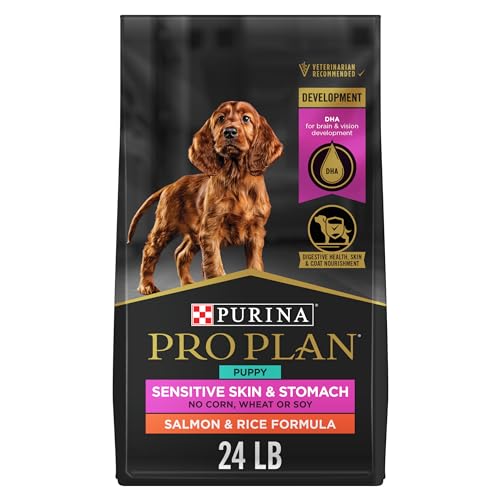
Purina Pro Plan Sensitive Stomach Puppy Food
What We Like
- Contains DHA for brain and vision development
- Prebiotic fiber supports digestive health
- Omega-6 and vitamin A for skin and coat
Trade-offs
- Not suitable for grain-free diets
Combined with easily digestible rice and prebiotic fiber, the recipe is built from the ground up to be gentle on a puppy’s developing digestive system while still delivering DHA for brain and vision development. This makes it a strong choice for owners whose pups show signs of a sensitive stomach or skin issues, without sacrificing the nutritional building blocks a growing dog needs.
The 24-pound bag is a lot of food to store and move around if you have a single small puppy. And because the formula relies on rice as a carbohydrate source, it won’t work for owners who prefer a grain-free diet for their puppy. But if your pup’s stomach is the primary concern, this formula is designed to be gentle and easy to digest.
Hill's Science Diet Large Breed Puppy Food

What We Like
- Balanced minerals for growing bones
- DHA from fish oil for brain development
- Antioxidant blend supports immune system
- High-quality protein fuels muscle growth
Trade-offs
- Only formulated for large breed puppies
- Not suitable for small or toy breed puppies
At 27.5 pounds, this bag is built for people who want a single, straightforward feeding solution for a growing large-breed puppy rather than constant reordering of small bags. The formula includes balanced minerals to support growing bones and teeth, DHA from fish oil for healthy brain and eye development, and an antioxidant blend to support the developing immune system. High-quality proteins fuel muscle growth, making this a complete option for large-breed puppies during their rapid growth phase.
The real trade-off is the size: you’re committing to a 27.5-pound bag, which means finding floor or counter space in the pantry or garage, not a quick grab from a small bag on a shelf. Compared to the Purina Pro Plan High Protein Puppy Food in the 6-pound bag, this Hill’s option demands more upfront space but saves the hassle of frequent repurchasing for a big dog that eats through small portions fast. It is a methodical choice for someone who plans ahead rather than shops weekly. The single-breed focus means it skips the small-breed or sensitive-stomach formulas other lines offer.
ORIJEN Grain Free Puppy Recipe

What We Like
- WholePrey recipe includes nourishing organs
- No corn, soy, tapioca, or wheat
Trade-offs
- Only poultry and fish proteins, no red meat
- Not suitable for puppies needing red meat protein
If you want a diet that mimics what a wild ancestor would eat, this recipe’s WholePrey approach (including organs) gets closer than most bags on the shelf.
The trade-off is the bag size. At 4.5 pounds, you will need to reorder more often than with larger bags like Hill’s Science Diet Large Breed Puppy’s 27.5-pound option, especially if you have a fast-growing big dog. Grain-free is not the right choice for every puppy; some do better with grains for digestive stability. But if you want a recipe with named animal ingredients and no corn, soy, or wheat, this is a strong option.
Product photos
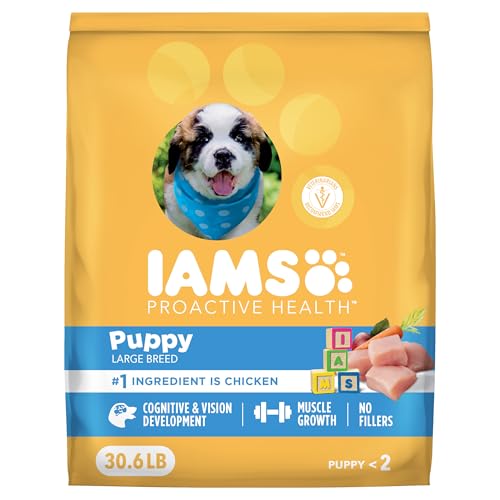
IAMS Proactive Health Large Breed Puppy Food
What We Like
- Real chicken as first ingredient
- Omega-3 DHA for cognitive development
- Vitamin E and Selenium for immune support
Trade-offs
- No grain-free option in this formula
- Not suitable for small or toy breed puppies
The trade-off is the bag itself. At 30.6 pounds, it’s not something you want to haul from the car to the pantry every week. The kibble size is designed for larger jaws, so if you’ve got a smaller large-breed puppy like a Sheltie or a picky eater who prefers tiny bites, the Hill’s Science Diet Large Breed Puppy formula offers a similar weight range. But for straightforward nutrition that hits the big-picture needs of a growing large-breed dog, this IAMS recipe gets the job done without the fluff.
Product photos
Royal Canin X-Small Puppy Dry Dog Food
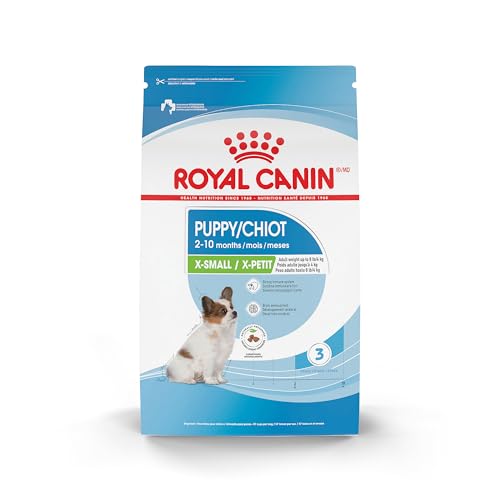
What We Like
- Formulated for puppies under 8 lbs
- Antioxidants support immune health
- Prebiotics and proteins aid digestion
- Crunchy kibble pairs with wet food
Trade-offs
- Not suitable for medium or large breeds
- Not suitable for puppies expected to exceed 8 lbs adult weight
A 3-pound bag of kibble designed for puppies with an expected adult weight of no more than 8 pounds means this food is built for the tiniest of toy breeds. The crunchy texture is easy to serve, and the formula includes antioxidants for immune support plus prebiotics and proteins to help gut health during rapid growth. It suits owners of Chihuahuas, Yorkies, or similar extra-small puppies who want a veterinarian-developed recipe tailored to their dog’s unique energy needs without guessing at portion sizes.
The 3-pound bag is the smallest among comparable puppy foods. Hill’s Science Diet Puppy Small Bites comes in 4.5 pounds and Purina Pro Plan High Protein Puppy Food in 6 pounds, so you’ll need to reorder more often if your pup has a healthy appetite. That said, the compact size means it fits easily in a cupboard or a travel bag, which is handy for trips or small kitchens.
Product photos
Royal Canin Medium Puppy Dry Dog Food

What We Like
- Supports brain development during growth
- Antioxidants for immune support
- Prebiotics and proteins promote gut health
- Crunchy kibble pairs with wet food
Trade-offs
- Only for puppies 23-55 lb adult weight
- Dry kibble only; wet food sold separately
Royal Canin Medium Puppy is built for puppies that will settle between 23 and 55 pounds as adults, which means the kibble size, calorie density, and nutrient ratios are dialed in for that specific growth curve rather than a one-size-fits-all approach. The formula includes antioxidants to back up a developing immune system and prebiotics plus proteins to keep digestion on track during the messy, high-energy puppy phase. For someone raising a medium-breed pup, this takes the guesswork out of portioning or worrying whether the food matches their dog’s eventual frame.
Product photos
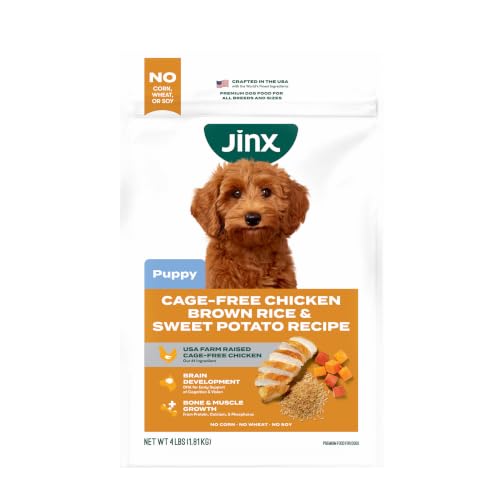
Jinx Puppy Dry Dog Food – Real Chicken, Brown Rice & Sweet Potato
What We Like
- Real chicken listed as first ingredient
- Includes DHA for brain and vision development
- Added probiotics for digestive support
- No corn, wheat, soy, or fillers
Trade-offs
- 4 lb bag is small for large breed puppies
- Contains grains, not suitable for grain-free diets
- Only one protein option available
Real chicken is the very first ingredient here, which means your puppy gets a protein source that supports lean muscle growth right from the start. That matters because puppies grow fast, and a diet built on whole meat rather than meal or filler gives them a better foundation. Jinx also packs in DHA for brain and eye development, plus live probiotics for digestive support, so you’re covering cognitive health and gut health in one bowl. It’s a clean, straightforward recipe with none of the corn, wheat, or soy that can upset sensitive stomachs, and it’s made in the USA. If you value a transparent ingredient list and a brand that puts chicken front and center, this is a straightforward choice for puppies up to 12 months old.
The 4-pound bag means you’ll need to reorder sooner than with a 6-pound Purina Pro Plan or a 4.5-pound Hill’s Science Diet bag, so it’s best suited for small-breed puppies or as a trial size. That compact size is easy to store in a cabinet or on a counter, and it’s light enough to carry without strain. If you’re looking for a recipe with real chicken as the first ingredient, plus DHA for brain development and probiotics for digestion, this formula delivers those benefits without corn, wheat, soy, or fillers.
Product photos
How We Evaluated Recommended Puppy Foods
Our research process started with the nutritional profiles of each formula, focusing on guaranteed analyses, ingredient lists, and the presence of DHA, calcium, and phosphorus. We cross-referenced those specs against veterinary nutrition standards for large, medium, small, and extra-small breed puppies.
The four criteria that mattered most were protein source quality (whole meat first ingredient), brain-development nutrients (DHA and ARA), bone-supporting mineral balance, and kibble size appropriate for the breed’s jaw. Owner feedback patterns told us which foods actually get eaten consistently and which cause stool or coat changes.
A research-led evaluation has limits: we don’t test palatability or digestibility in a lab. What we can do is compare what each formula promises on the bag with what the science says puppies need at each growth stage.
What To Look For In Recommended Puppy Foods
Picking the right food means matching protein source, kibble size, and calorie density to your puppy’s breed size and any sensitivities. Start here.
Look for a named meat protein as the first ingredient, guaranteed DHA for brain development, and calcium-to-phosphorus ratios appropriate for your puppy’s expected adult weight. Avoid artificial colors and fillers.
Protein Source and First Ingredient
The first ingredient on the bag tells you the primary protein. Chicken, lamb, and fish are common. Poultry-based formulas work for most puppies. If your dog shows signs of food allergy, itchy skin, ear infections, or loose stool, a lamb or novel protein recipe like the Blue Buffalo Life Protection Puppy Food may help. Large-breed puppies need moderate protein levels to avoid rapid growth that stresses developing joints.
DHA, Calcium, and Life-Stage Nutrients
DHA is an omega-3 fatty acid that supports brain and vision development during the first year. Most quality puppy foods include it from fish oil or algal oil. Calcium and phosphorus must be balanced: too much calcium in a large-breed formula can contribute to skeletal problems later. The Purina Pro Plan High Protein Puppy Food and Hill’s Science Diet Large Breed Puppy Food both hit these targets.
Kibble Size and Texture
Small and extra-small breeds need kibble they can actually chew. The Royal Canin X-Small Puppy Dry Dog Food uses tiny pieces designed for puppies under eight pounds. Medium breeds like the Royal Canin Medium Puppy formula get a medium-sized kibble. Large-breed puppies can handle bigger pieces, but the texture should still encourage chewing rather than gulping.
- Check the guaranteed analysis for minimum DHA percentage
- Match the kibble size to your puppy’s breed, not all “small breed” bags are the same
- Confirm the formula says “for puppies” or “all life stages” on the front panel
- Look for a calcium content around 1.0-1.5% for large breeds, 1.5-2.0% for small breeds
- Read the feeding guide on the bag; calorie density varies between brands
The right kibble size and texture prevent gulping and support dental health during teething.
Recommended Puppy Foods Compared
The table below lines up all ten formulas side by side so you can compare protein sources, breed-size suitability, and key nutrients at a glance.
| Product | First Ingredient / Protein Source | Key Nutrients | Bag Size |
|---|---|---|---|
| Purina Pro Plan High Protein Puppy Food | Chicken | DHA, calcium, phosphorus | 6 lb |
| Hill's Science Diet Puppy Small Bites | Chicken & Brown Rice | DHA, Fish Oil, Antioxidants | 4.5 lb |
| Blue Buffalo Life Protection Puppy Food | Real lamb | DHA, ARA, choline | 5 lb |
| Purina Pro Plan Sensitive Stomach Puppy Food | Real salmon | EPA, DHA, prebiotic fiber | 24 lb |
| Hill's Science Diet Large Breed Puppy Food | Chicken & Brown Rice | DHA, Fish Oil, Antioxidants | 27.5 lb |
| ORIJEN Grain Free Puppy Recipe | 85% fresh or raw poultry & fish | N/A | 4.5 lb |
| IAMS Proactive Health Large Breed Puppy Food | Real chicken #1 | Omega-3 DHA, Vitamin E, Selenium | 30.6 lb |
| Royal Canin X-Small Puppy Dry Dog Food | N/A | Antioxidants, prebiotics, proteins | 3 lb |
| Royal Canin Medium Puppy Dry Dog Food | N/A | Antioxidants, prebiotics, proteins | 4 lb |
| Jinx Puppy Dry Dog Food – Real Chicken, Brown Rice & Sweet Potato | Real chicken, first ingredient | DHA, calcium, phosphorus, probiotics | 4 lb |
Frequently Asked Questions
When should I switch my puppy from puppy food to adult food?
The timing depends on your puppy’s breed size. Small breeds can transition around 12 months, medium breeds at 12 to 18 months, and large or giant breeds often need puppy food until 18 to 24 months to support proper bone development. Check your formula’s feeding guidelines and ask your vet before making the switch. Our guide on puppy vs adult food explains the differences in calorie density and calcium levels.
What ingredients should I avoid in puppy food?
Steer clear of artificial colors, flavors, and preservatives like BHA, BHT, and ethoxyquin. Some owners also avoid corn, wheat, and soy as common fillers, though not all dogs react to them. If your puppy has sensitivities, look for formulas with a single protein source and limited ingredients. The list of food for sensitive stomachs includes options with prebiotic fiber for easier digestion.
How much should I feed my puppy each day?
Feeding amounts vary by brand, calorie density, and your puppy’s expected adult weight. Start with the chart on the bag, split the daily amount into three or four meals for puppies under six months, then drop to two meals after that. Adjust based on body condition: you should be able to feel ribs without seeing them. Our selection guide covers how to read feeding charts and adjust portions as your puppy grows.
Can I mix dry kibble with wet food for my puppy?
Yes, mixing wet and dry food can add moisture and variety. Many owners combine a dry puppy food base with a small amount of canned food as a topper for picky eaters. Just account for the extra calories and reduce the dry portion accordingly. If your puppy is a finicky eater, our recommendations for picky eaters include formulas with higher palatability.
What is the difference between puppy food and all-life-stages food?
Puppy food is formulated with higher protein, fat, calcium, and phosphorus to support rapid growth. All-life-stages food meets the minimum nutrition for both puppies and adults but may not provide the precise mineral balance a growing large-breed puppy needs. For most owners, a dedicated puppy formula is safer until the dog reaches maturity. Our guide to choosing a healthy puppy diet breaks down the nutrient differences.
The Bottom Line
The Purina Pro Plan High Protein Puppy Food is the best overall choice for most puppy owners. It delivers DHA for brain development, chicken as the first ingredient, and a balanced calcium-phosphorus ratio, all at a mid-range price point that works for single-dog households and multi-dog families alike.
If your puppy has a sensitive stomach, the Purina Pro Plan Sensitive Stomach Puppy Food adds prebiotic fiber and omega-6 for skin and coat. For owners of extra-small breeds, the Royal Canin X-Small Puppy formula matches kibble size and calorie density to dogs under eight pounds.
The single most important factor is matching the food to your puppy’s expected adult size. Large-breed puppies need controlled calcium and moderate protein; small breeds need smaller kibble and denser calories. Get that right, and everything else, protein source, grain inclusion, brand, becomes a matter of your dog’s individual preferences and tolerances.
