
10 Best Puppy Formulas in 2026
This post contains affiliate links. As an Amazon Associate, we earn from qualifying purchases.
The Hill’s Science Diet Puppy Small Bites Dry Dog Food earns our Best Overall spot because it delivers balanced minerals for growing bones and teeth alongside DHA for brain and eye development. The kibble size is small enough that small mouths can manage it easily. For owners prioritizing protein content, the Purina Pro Plan High Protein Puppy Food Shredded Chicken & Rice is a strong choice, while the Purina Pro Plan Sensitive Skin & Stomach Puppy Dog Food Salmon handles delicate digestion.
A new puppy’s first year is the only time you get to set the foundation for lifelong health. Choosing the wrong formula can mean missed nutrients, digestive upset, or a picky eater who won’t transition to adult food later. The size of the kibble, the protein source, and the balance of calcium and phosphorus all matter more than the brand name on the bag.
This guide is research-based, drawing on manufacturer nutritional data, veterinary feeding guidelines, and patterns in owner feedback across dozens of formulas. We organized the 10 best puppy formulas by specific needs, sensitive stomachs, toy breeds, high-protein diets, and budget-friendly options, so you can match a food to your puppy, not the other way around.
Top 10 Puppy Formulas in the Market



Certain content that appears on this site comes from Amazon. This content is provided "as is" and is subject to change or removal at any time.
The Best Puppy Formulas, Reviewed
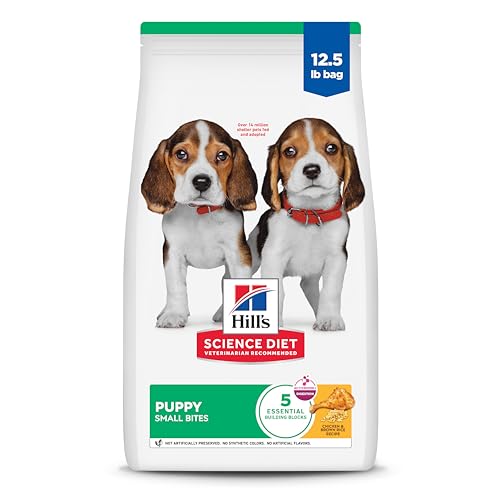
Hill's Science Diet Puppy Small Bites Dry Dog Food
What We Like
- Balanced minerals for growing bones and teeth
- DHA and fish oil for brain and eye development
- Antioxidant blend supports developing immune system
- High quality proteins fuel growing muscles
Trade-offs
- Not suitable for large-breed puppies
- Contains brown rice, avoided by some grain-free buyers
The fact that Hill’s Science Diet is the #1 veterinarian-recommended brand tells you this formula was built on more than marketing. It covers the three biggest concerns for any puppy’s first year: balanced minerals for growing bones and teeth, DHA and fish oil for brain and eye development, and an antioxidant blend for the developing immune system. The kibble is made with natural ingredients, so you are feeding a diet that supports those developing systems without artificial additives.
The 12.5 lb bag is a practical size for a single puppy, but if you have multiple dogs or a larger breed with a bigger appetite, you may need to buy more frequently. For comparison, the Purina Pro Plan High Protein Shredded Chicken & Rice comes in an 18 lb bag, which could be more convenient for owners who prefer a larger quantity. For a puppy owner who wants a vet-backed, nutritionally complete start, this formula delivers on the key developmental needs.
Purina Pro Plan High Protein Puppy Food Shredded Chicken & Rice
What We Like
- Real chicken is the first ingredient
- Crunchy kibble plus tender shredded pieces
- DHA supports brain and vision development
- Antioxidants support developing immune system
Trade-offs
- 18 lb bag is heavier than small-breed formulas
- Not ideal for owners who prefer a uniform kibble texture
Real chicken is the first ingredient, which means your puppy gets a protein-rich start without relying on meat by-products or fillers. The combination of crunchy kibble and tender shredded pieces adds texture variety that keeps mealtime interesting, while DHA from omega-rich fish oil targets brain and vision development during that critical first year. Antioxidants also back up a growing immune system, making this a strong fit for owners who want a high-protein formula that covers multiple developmental bases without gimmicks.
The main drawback here is the bag size: at 18 pounds, it’s heavier than smaller options like the 4-pound Royal Canin Small Puppy. If you have limited storage or a tiny breed that eats slowly, you might find it cumbersome. But for medium to large breed puppies with healthy appetites, the shredded blend delivers a protein boost that most standard puppy foods don’t match. It’s a pragmatic choice for anyone who prioritizes ingredient quality over convenience.
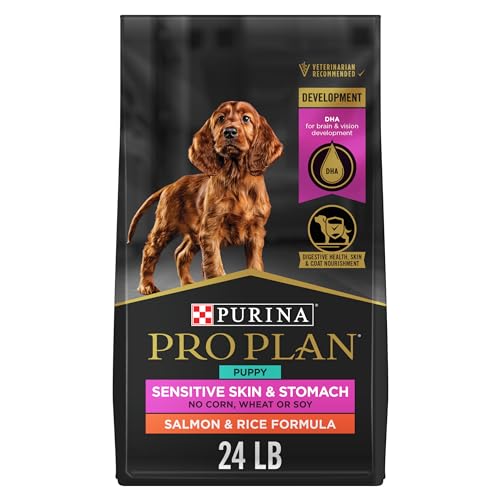
Purina Pro Plan Sensitive Skin & Stomach Puppy Dog Food Salmon
What We Like
- Real salmon as first ingredient
- Contains DHA for brain & vision development
- Prebiotic fiber supports digestive health
- Omega-6 & vitamin A for skin and coat
Trade-offs
- Salmon-based diet not ideal for chicken-only preferences
- Salmon-based recipe not suitable for chicken-only preferences
A 24-pound bag of salmon-and-rice formula built around easily digestible ingredients and prebiotic fiber means this food is designed to keep a puppy’s stomach settled. It still delivers the protein and DHA needed for growth. The real salmon as the number one ingredient gives it a solid protein base, and the addition of omega-6 fatty acids and vitamin A targets skin health directly, useful for pups prone to itchiness or flaky coats. If your puppy has a sensitive stomach or shows signs of food intolerance, this formula’s simple ingredient list and digestive support make it a practical starting point.
Real salmon is the first ingredient in this 24-pound bag of puppy food. Owners of large or multiple puppies get plenty of protein per serving without needing to restock often. Compared to Hill’s Science Diet Puppy Small Bites, which comes in a 12.5-pound bag, this Purina Pro Plan option works best for those who want a salmon-based recipe and are willing to store a larger volume. The kibble is dry, which keeps it shelf-stable and easy to measure out for meals.
Royal Canin Small Puppy Dry Dog Food

What We Like
- Supports brain development during growth
- Antioxidants for immune support
- Prebiotics and proteins aid gut health
- Crunchy kibble pairs with wet food
Trade-offs
- Only 4 lb bag, frequent repurchasing needed
- Not suitable for puppies expected to weigh over 22 lb as adults
A 4-pound bag of kibble designed specifically for puppies that will mature between 9 and 22 pounds means the formula targets the unique energy and growth needs of small breeds. It does so without overfeeding or under-supplying key nutrients. The crunchy texture encourages chewing while the antioxidant and prebiotic blend supports two major concerns for any puppy owner: a developing immune system and a sensitive digestive tract. This is the kind of precision that makes sense for someone who wants a food matched to their pup’s expected adult size rather than a one-size-fits-all bag.
The 4-pound bag is designed for puppies that will mature between 9 and 22 pounds, so the formula targets the unique energy and growth needs of small breeds without overfeeding or under-supplying key nutrients. The crunchy texture encourages chewing while the antioxidant and prebiotic blend supports two major concerns for any puppy owner: a developing immune system and a sensitive digestive tract. This is the kind of precision that makes sense for someone who wants a food matched to their pup’s expected adult size rather than a one-size-fits-all bag.
Hill's Science Diet Puppy Dry Dog Food Lamb Meal & Brown Rice
What We Like
- Balanced minerals support growing bones and teeth
- DHA and fish oil for brain and eye development
- Antioxidant blend for developing immune system
- High quality proteins fuel growing muscles
Trade-offs
- 4 lb bag is small for larger breed puppies or multi-dog homes
- Limited to puppy stage only, not for adult dogs
The #1 veterinarian-recommended brand carries weight when you’re choosing what goes into a growing puppy’s bowl, and this lamb meal and brown rice formula backs that reputation with targeted nutrition. DHA from fish oil supports brain and eye development during the critical first year, while balanced minerals work on those growing bones and teeth that seem to chew everything in sight. The antioxidant blend gives the developing immune system a hand, and high-quality proteins fuel the muscles behind all that zoomie energy. For owners who want a formula built around veterinary guidance rather than marketing hype, this is the straightforward option.
The main drawback here is bag size: at 4 pounds, this bag disappears fast if you have a larger breed puppy or multiple dogs. You will be reordering more often than with the 18-pound Purina Pro Plan High Protein Puppy option. That smaller size does make it easy to try before committing to a larger bag, though, and the lamb meal recipe offers an alternative for puppies who might not tolerate chicken-based foods. If your puppy has a sensitive stomach or you prefer a different protein source, the Purina Pro Plan Sensitive Skin & Stomach formula with salmon is worth a look, but for straightforward, vet-backed puppy nutrition without the fluff, this Hill’s Science Diet formula delivers exactly what it promises.
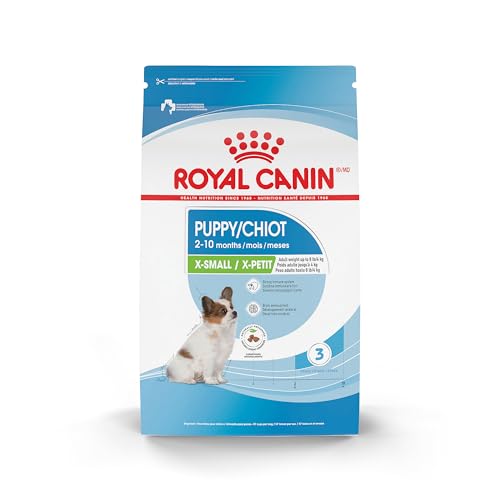
Royal Canin X-Small Puppy Dry Dog Food
What We Like
- Formulated for toy breeds under 8 lbs
- Antioxidants support immune system
- Prebiotics and proteins promote gut health
- Crunchy kibble pairs with wet food
Trade-offs
- Only for puppies up to 10 months old
- 3 lb bag is small for larger toy litters
A maximum adult weight of 8 pounds means this formula is built for the tiniest puppies. Chihuahuas, Yorkies, and similar breeds that need calorie-dense nutrition in a kibble small enough to actually chew. The crunchy texture is simple to serve and pairs well with Royal Canin X-Small Puppy Thin Slices in Gravy wet food cans. The antioxidants support the immune system, while prebiotics and proteins promote gut health, two weak spots for tiny pups. If your puppy will top out under eight pounds, this matches its needs better than a generic small-breed bag.
The trade-off shows up if you have a larger toy breed or a mixed litter: the 3-pound bag runs out fast with multiple puppies, and the formula stops at 10 months, so you will need to switch to an adult version earlier than with all-life-stages foods. Compared to the Royal Canin Small Puppy formula (for dogs 9-22 lbs), this one targets a lower adult weight range, which matters for a tiny pup’s specific nutritional needs.
Product photos
Blue Buffalo Baby BLUE Chicken Small Breed Puppy Natural Dry Dog Food
What We Like
- Real chicken is first ingredient
- DHA supports cognitive development
- Antioxidant-rich LifeSource Bits
- No corn, wheat, or soy
Trade-offs
- Small 4-lb bag for small breeds only
- Designed only for small-breed puppies, not for medium or large breeds
Chicken is the very first ingredient in this formula, so your puppy gets a high-protein start focused on real meat rather than fillers. That protein, paired with DHA for cognitive development and antioxidant-packed LifeSource Bits for immune support, makes this a strong pick if you want a clean ingredient list without corn, wheat, or soy. It’s designed specifically for small-breed puppies, so the kibble size and nutrient balance are tailored to their faster metabolisms and smaller mouths.
The main drawback is the bag’s weight: at only 4 pounds, you’ll be reordering more often than with a larger bag like Hill’s Science Diet Puppy Small Bites, which comes in a 12.5-pound option. That’s fine if you have a tiny pup or want to test a new food without committing to a big bag, but for a growing small breed, you’ll want to factor in the frequency of repurchases. If you prioritize whole ingredients and a simple protein source over bulk convenience, this one delivers.
Product photos
Nutrish Puppy Dry Dog Food Chicken & Brown Rice

What We Like
- Real chicken is first ingredient
- DHA + EPA for brain and vision
- Veterinarian-reviewed formula
- No artificial flavors
Trade-offs
- Not formulated for specific breed sizes
- Not suitable for puppies with grain sensitivities
Real chicken listed as the number one ingredient means this recipe puts whole protein front and center for a growing puppy’s needs. Paired with DHA and EPA to support brain development and healthy vision, it covers the two big developmental boxes owners worry about most during the first year. The formula is also veterinarian reviewed and free of artificial flavors, which keeps the ingredient list straightforward without unnecessary extras. That combination of solid nutrition and clean formulation makes it a sensible pick for anyone looking to feed a puppy well without spending on frills they don’t need.
Real chicken tops the ingredient list, giving your puppy a protein-rich foundation without relying on meat by-products or fillers. The formula includes DHA and EPA to support brain development and vision, and it’s been reviewed by veterinarians to ensure balanced nutrition for all breeds. Owners who prefer a natural recipe will appreciate that there are no artificial flavors added, and each purchase helps support animals in need through The Rachael Ray Foundation.
Product photos
Instinct RawBoost Puppy Freeze-Dried Blend

What We Like
- Cage-free chicken is first ingredient
- DHA for brain and eye development
- No corn, wheat, soy, or artificial preservatives
- Freeze-dried raw bites add texture and nutrition
Trade-offs
- Small bag size for large-breed puppies
- Not suitable for grain-sensitive puppies
Cage-free chicken is the first ingredient, and DHA is included for brain and eye development in puppies. The formula blends crunchy kibble with freeze-dried raw bites, so you get two textures in one bowl without mixing separate products. Brown rice provides fiber for digestive support, and the food is made in the USA.
The trade-off is portion size: at 3.5 pounds, this bag is smaller than many competitors, so you may need to reorder more often depending on your puppy’s appetite. That said, if you’re after a raw-boosted recipe with clean ingredients and no fillers, this delivers what it promises without the guesswork of adding raw toppers separately.
Product photos
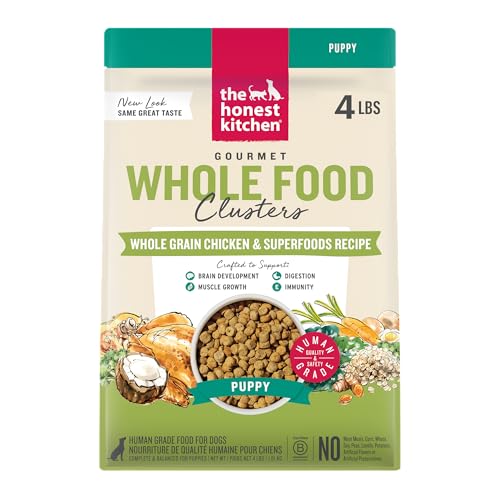
The Honest Kitchen Puppy Whole Grain Clusters
What We Like
- Human-grade whole food ingredients
- DHA from fish oil for brain development
- Live probiotics for healthy digestion
- No corn, wheat, soy, or meat meals
Trade-offs
- 4 lb bag is small for large-breed puppies
- Contains whole grains, not suitable for grain-free diets
The Honest Kitchen Puppy Whole Grain Clusters are the only dry puppy food in this guide made entirely from human-grade ingredients. Every batch starts with cage-free chicken as the first ingredient, then adds recognizable whole foods like oats, carrots, broccoli, and kale instead of mystery fillers or meat meals. DHA from fish oil targets brain and eye development during that critical growth window, while live probiotics and pumpkin support digestion. For owners who read labels the way they read their own grocery receipts and want to feed their puppy the same quality standards they hold for themselves, this is the formula that delivers on that promise without the usual feed-grade compromises.
At 4 pounds, this bag runs out faster than the 12.5-pound Hill’s Science Diet Small Bites bag, especially if you have a growing Labrador or Golden Retriever. If you prioritize ingredient transparency and human-grade standards over sheer volume per bag, this is the formula that makes that choice easy. If you need a bigger bag for a large-breed puppy, the Hill’s option gives you more pounds per purchase.
Product photos
How We Evaluated Puppy Formulas
We started by reviewing the nutritional adequacy statements on every formula to confirm it met AAFCO standards for growth. From there, we compared ingredient lists for named protein sources, checked for DHA and EPA levels, and noted the presence of prebiotics, probiotics, and antioxidants. Manufacturer feeding guidelines and kibble dimensions were cross-referenced with breed-size recommendations.
The four criteria that mattered most were protein quality and source, DHA content for cognitive development, kibble size relative to breed, and the balance of calcium and phosphorus for proper bone formation. A formula with real chicken or salmon as the first ingredient and no unnamed meat meals scored higher. We also weighed bag size against the feeding rate for large breeds, a 4-pound bag disappears fast for a Great Dane puppy.
A research-led evaluation has limits. We did not feed these formulas to puppies in a controlled setting, and individual dogs can react differently to the same ingredient. Owner feedback patterns help, but your puppy’s tolerance to a specific protein or grain is something only a trial period can confirm.
What To Look For In Puppy Formulas
The right puppy formula delivers complete nutrition for rapid growth without pushing a puppy to gain weight too fast. Here is what matters most.
Choose a formula labeled “for growth” or “all life stages” with a named animal protein as the first ingredient and guaranteed DHA levels. Match kibble size to your puppy’s expected adult weight, and verify the calcium-to-phosphorus ratio is appropriate for the breed size.
Protein Source and Content
Puppies need more protein per pound than adult dogs because they are building muscle, organs, and tissue. Look for a named protein, chicken, salmon, lamb, or beef, as the first ingredient. Avoid vague terms like “poultry meal” or “meat meal.” Large-breed puppies need slightly lower protein levels to slow growth and reduce joint stress, while small and medium breeds can handle higher protein levels.
DHA and Brain Development
Docosahexaenoic acid (DHA) is an omega-3 fatty acid that supports brain and vision development in the first year. Formulas that list fish oil, salmon oil, or marine microalgae as a source of DHA provide the most bioavailable form. Some brands add synthetic DHA, which is less effective. Check the guaranteed analysis for a DHA percentage; any amount is better than none.
Kibble Size and Texture
A kibble that is too large forces a puppy to gulp, increasing the risk of choking and reducing chewing. Small-breed and toy-breed formulas use small kibble, while large-breed formulas use larger kibble. Some puppies prefer a mix of crunchy kibble and tender pieces, which the Purina Pro Plan High Protein formula offers. Others do better with a uniform texture for consistent digestion.
- Verify the kibble diameter matches your puppy’s mouth size, a Chihuahua cannot manage a Great Dane kibble.
- Check the feeding chart on the bag against your puppy’s expected adult weight, not current weight.
- Look for a balanced calcium-to-phosphorus ratio for large breeds and small breeds.
- Choose a formula with at least one named source of animal fat (chicken fat, salmon oil) for palatability.
- Avoid formulas with artificial colors, flavors, or preservatives, puppies do not need them.
A puppy’s first food sets eating habits for life. Start with a formula that fits its breed size and stick with it through the first year unless digestive issues arise.
Puppy Formulas Compared
The table below compares the 10 puppy formulas side by side on protein source, key nutrients, and best-use scenarios to help you narrow your choices.
| Product | Protein Source | Key Nutrients | Bag Size |
|---|---|---|---|
| Hill's Science Diet Puppy Small Bites Dry Dog Food | Chicken & Brown Rice | DHA, Fish Oil, Antioxidants | 12.5 lb |
| Purina Pro Plan High Protein Puppy Food Shredded Chicken & Rice | Real chicken first ingredient | DHA from omega-rich fish oil | 18 lb |
| Purina Pro Plan Sensitive Skin & Stomach Puppy Dog Food Salmon | Real salmon (1st ingredient) | Prebiotic fiber, fish oil (DHA, EPA) | 24 lb |
| Royal Canin Small Puppy Dry Dog Food | N/A | N/A | 4 lb |
| Hill's Science Diet Puppy Dry Dog Food Lamb Meal & Brown Rice | Lamb Meal | DHA, Fish Oil, Antioxidants | 4 lb |
| Royal Canin X-Small Puppy Dry Dog Food | N/A | N/A | 3 lb |
| Blue Buffalo Baby BLUE Chicken Small Breed Puppy Natural Dry Dog Food | Real Chicken | DHA, LifeSource Bits | 4 lb |
| Nutrish Puppy Dry Dog Food Chicken & Brown Rice | Real chicken, #1 ingredient | DHA + EPA | 13 lb |
| Instinct RawBoost Puppy Freeze-Dried Blend | Cage-free chicken | DHA, calcium, phosphorus | 3.5 lb |
| The Honest Kitchen Puppy Whole Grain Clusters | Cage-free chicken | DHA, probiotics, superfoods | 4 lb |
Frequently Asked Questions
When should I switch my puppy from formula to solid food?
Most puppies begin the transition from milk to solid food around three to four weeks of age. The process of weaning puppies involves mixing a high-quality puppy formula with warm water or a milk replacer to create a soft gruel. By six to eight weeks, most puppies can eat dry kibble soaked in warm water.
What is the difference between puppy formula and adult dog food?
Puppy formulas contain higher protein, fat, and calorie levels to support rapid growth, along with higher calcium and phosphorus for bone development. Adult dog food lacks the DHA needed for brain and vision development and may not provide enough energy for a growing puppy. Feeding adult food to a puppy can lead to nutritional deficiencies and poor growth.
Can I mix two different puppy formulas together?
Mixing formulas is generally safe if both are complete and balanced for growth, but it complicates knowing exactly what your puppy is eating. If digestive issues arise, you will not know which ingredient caused the problem. Stick to one formula unless your veterinarian recommends a specific mix for a medical reason.
How much should I feed my puppy per day?
Feeding amounts depend on the puppy’s expected adult weight, current weight, and the calorie density of the formula. Most manufacturers provide a feeding chart on the bag that lists daily portions in cups based on weight ranges. Divide the daily amount into three or four meals for puppies under six months, then reduce to two meals after six months.
Do puppies need probiotics or digestive supplements?
Many high-quality puppy formulas already include prebiotic fiber and probiotic cultures. If your puppy has loose stools or gas after switching foods, probiotics for puppies can help stabilize digestion. For puppies with specific health concerns, puppy supplements like omega-3 oils or joint support may be appropriate after consulting a veterinarian.
The Bottom Line
The Hill’s Science Diet Puppy Small Bites Dry Dog Food is the best overall choice for most puppy owners. It combines balanced minerals, DHA, and an antioxidant blend in a kibble size that works for small and medium breeds. It is a veterinarian-recommended formula that covers the essentials without gimmicks.
If your budget is tight, the Nutrish Puppy Dry Dog Food Chicken & Brown Rice delivers real chicken as the first ingredient and veterinarian-reviewed nutrition at a lower cost per pound. For puppies with sensitive stomachs, the Purina Pro Plan Sensitive Skin & Stomach Puppy Dog Food Salmon provides prebiotic fiber and a single protein source that is easier to digest.
The single most important factor in choosing a puppy formula is matching the calcium-to-phosphorus ratio and calorie density to your puppy’s breed size. A Great Dane and a Chihuahua need different nutritional profiles, even if they are the same age. Ignoring breed size is the fastest way to compromise healthy growth.
