
10 Best Friend Mobility Small Rear Leg Deficiency Dog Wheelchair
This post contains affiliate links. As an Amazon Associate, we earn from qualifying purchases.
For small dogs with rear leg weakness, the SugarFox Adjustable Small Dog Wheelchair earns the top spot with its lightweight 1.5-pound aluminum frame and tool-free assembly. The Walkin’ Wheels Small Dog Wheelchair offers a great folding option for travel, while the Gaillty Small Dog Wheelchair XS suits the tiniest pups under 13 pounds.
A rear-leg deficiency in a small dog changes everything about daily walks. You need a wheelchair that supports your dog’s back legs without weighing them down or rubbing their skin. Fit matters more here than in any other pet gear purchase, an inch off in measurement can mean discomfort or chafing.
This guide is based on manufacturer specifications, expert round-ups, and patterns in owner feedback. We compared models across adjustability, weight, harness design, and surface compatibility so you can match the right cart to your dog’s size and lifestyle.
Top 10 Friend Mobility Small Rear Leg Deficiency Dog Wheelchairs in the Market
Certain content that appears on this site comes from Amazon. This content is provided "as is" and is subject to change or removal at any time.
The Best Friend Mobility Small Rear Leg Deficiency Dog Wheelchairs, Reviewed
SugarFox Adjustable Small Dog Wheelchair

What We Like
- Lightweight 1.5 lb aluminum frame
- Tool-free assembly in 5 minutes
- Fully adjustable height, width, length
- Polished rounded edges prevent scratches
Trade-offs
- Requires careful measurement of 3 body dimensions
- Not suitable for pets over 26 lbs
- Designed for short-distance walks only
At just 1.5 pounds, this wheelchair supports dogs up to 26 pounds without adding extra strain to their upper body, so small pups can move around freely during daily walks. The lightweight aluminum frame adjusts in height, width, and length to match your dog’s shape, and assembly takes about five minutes with no tools needed. Rounded corners on the frame help prevent scratches.
Getting the right fit does require a bit of homework: you’ll need to measure hind leg height, hip width, and back length. If your dog is between sizes, the smaller size is recommended for a snug fit. That’s more involved than some other wheelchairs that may use simpler sizing, but for owners willing to take those three measurements, the SugarFox’s adjustability can be fine-tuned to provide even support for hips and hind legs, making daily short walks more comfortable.
Product photos
Walkin' Wheels Small Dog Wheelchair

What We Like
- Lightweight extruded aluminum frame
- Folds for easy storage and transport
- Adjustable height, length, and width
- Chew-proof construction
Trade-offs
- Only fits dogs with 6-8 inch leg height
- No front leg support option included
At just five pounds, this aluminum frame keeps the cart light enough that a 15-pound dog won’t drag it around like an anchor. The extruded aluminum is both durable and chew-proof, which matters when a frustrated pup decides to test the hardware. Adjustable height, length, and width mean you can dial in the fit as your dog’s condition changes, so it’s not a one-shot purchase. This is the chair for owners who want a sturdy, long-lasting frame without the heft of steel, and who plan to take it on the go thanks to the foldable struts.
At five pounds, this wheelchair adds noticeable weight to a very small dog, and the leg height range of six to eight inches means it won’t work for tiny breeds or taller small dogs. Compared to the Gaillty Small Dog Wheelchair XS at 1.7 pounds, this Walkin’ Wheels model is heavier, but it supports dogs up to 25 pounds and uses a durable, lightweight extruded aluminum frame. If your dog is under 13 pounds and you prioritize featherlight weight above all, the Gaillty might be a better fit. But for a small dog that needs real support and a frame that won’t bend, this is the one.
Product photos
Gaillty Small Dog Wheelchair XS
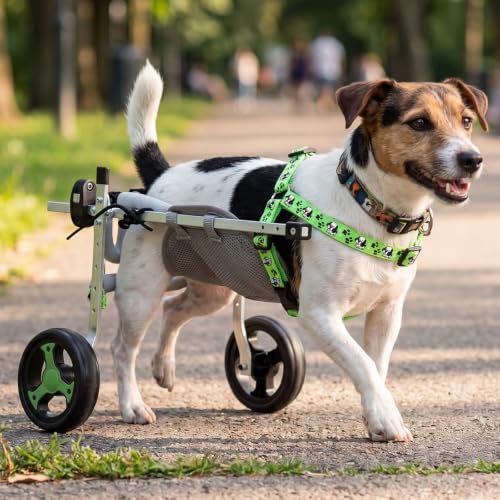
What We Like
- Breathable mesh belly support
- Quick-release buckles for easy handling
- Foldable design for storage
Trade-offs
- Only supports dogs up to 13 lbs
- Requires sufficient front-leg strength
- Mesh support needs regular fit checks
The breathable mesh belly support distributes contact evenly and includes a thoughtfully placed opening for bathroom breaks, which saves you from awkward mid-walk harness removals. For small dogs up to 13 pounds who still have good front-leg strength, this cart gives them back their outdoor freedom without weighing them down.
The trade-off for that featherweight build is that it’s not built for heavier dogs or those without decent front-leg power. Compared to the Walkin’ Wheels Small Dog Wheelchair, which handles 15-25 pounds but weighs 5 pounds, the Gaillty sacrifices some capacity for easier handling. The quick-release buckles make on-and-off fast, but you’ll want to check the mesh fit regularly to avoid rubbing. For dogs under 13 pounds where you prioritize a wheelchair you can toss in a bag and carry one-handed, this is the one.
Product photos
LetPetRun Adjustable Dog Wheelchair
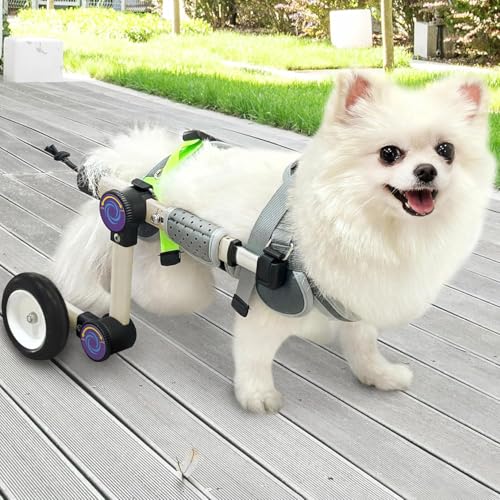
What We Like
- Adjustable height, width, and length
- Lightweight 2.8-pound frame
- Buckle design for leash attachment
- Foldable for easy storage and portability
Trade-offs
- Only supports dogs with healthy front legs
- Requires precise size measurement before purchase
At just 2.8 pounds, this wheelchair is light enough for a small dog to carry its own weight without dragging extra bulk. The adjustable height, width, and length mean you can tailor the fit for your dog’s exact measurements, which is critical when dealing with rear leg weakness. The built-in buckle for leash attachment is a thoughtful touch, it keeps the leash secured to the cart rather than your dog’s collar, so you have control without pulling on their neck. This wheelchair offers straightforward adjustability and safety features for owners who want a no-fuss mobility aid.
The most important thing to know is that this wheelchair is meant for dogs with weak hind legs but healthy front legs. If your dog has front leg problems or a serious injury, you’ll need a different solution. Compared to the SugarFox Adjustable Small Dog Wheelchair, the LetPetRun includes a buckle for attaching a leash, while the SugarFox uses an aluminum frame. For small dogs that need rear leg support and a leash-friendly design, this covers the basics.
BECROWM Adjustable Dog Wheelchair
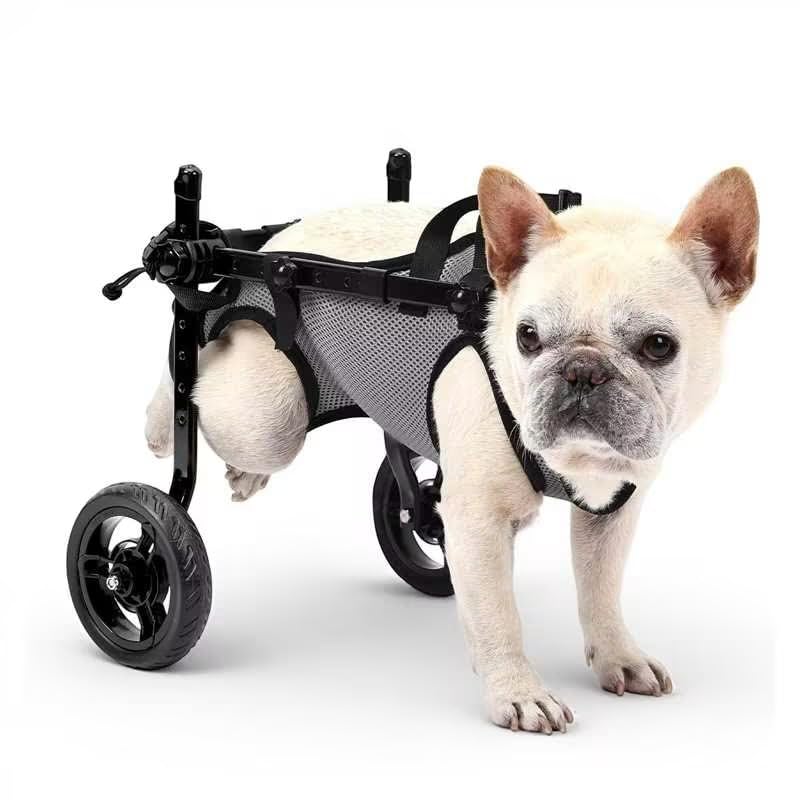
What We Like
- Lightweight at 1.6 pounds
- Easy to assemble and travel-friendly
- Adjustable height, width, and length
- U-shaped design doesn't block bowel movements
Trade-offs
- Only for dogs with normal front legs
- No size range specified for fit
- Serious injury requires vet guidance first
At just 1.6 pounds, this is one of the lightest wheelchairs you’ll find for a small dog with rear leg issues. That low weight matters when you’re lifting the cart in and out of the car or carrying it to the park. The frame adjusts in all three dimensions, so you can fine-tune the fit without tools. The U-shaped rear opening means your dog can relieve themselves normally while wearing it, which saves you cleanup headaches. This chair is ideal for someone who wants a straightforward, no-fuss mobility aid that gets a dog back on its feet quickly and doesn’t weigh them down.
The BECROWM wheelchair is designed for dogs with healthy front legs and hind leg weakness only, so if your dog has front leg issues, this cart won’t work. It weighs just 1.6 pounds, which makes it easy to carry along on walks or trips. Reviewers note the lightweight and durable materials keep the cart comfortable for pets, and the easy assembly means you can get it ready quickly without hassle.
Product photos
LetPetRun Lightweight Dog Wheelchair

What We Like
- Thickened vest-style harness for comfort
- Lightweight 3.6 lb frame
- Fully adjustable height, width, length
- Helps dogs with weak hind legs
Trade-offs
- Only fits dogs 18-33 lbs, not smaller
The thickened vest-style harness is the standout feature here, it provides better support and reduces pressure compared to basic strap harnesses, which matters a lot for dogs with weak hind legs who need stability during walks. At 3.6 pounds, it’s still light enough to carry around, and you can tweak the height, width, and length to match your dog’s specific body shape rather than hoping for a one-size-fits-all solution. This wheelchair works well for owners who prioritize harness comfort and support over absolute minimal weight.
For dogs under 18 pounds, the LetPetRun simply won’t fit, so you’d need to look at that lighter option instead. But for dogs in the 18-33 pound range, the extra padding and adjustability make this a more supportive choice for daily use, especially if your dog needs to wear it for longer periods.
Vertexus Small Dog Wheelchair

What We Like
- 4-in-1 zoned support system
- Lightweight aluminum frame (0.86 kg)
- All-terrain EVA foam wheels absorb shocks
- Quick-release adjustments for length, width, height
Trade-offs
- Limited to dogs 11-26.4 lb
- Not suitable for dogs under 11 lb
The 4-in-1 zoned support system covers chest, abdomen, thighs, and lower legs, which means your dog gets balanced support from front to back rather than just a single strap lifting the rear. That matters for small dogs with rear leg weakness or IVDD because it reduces pressure on healthy front legs and helps maintain a more natural walking motion. The lightweight aluminum frame weighs only 0.86 kg, so a small dog won’t be dragging extra weight around the yard or on walks.
A dog dealing with rear leg weakness, arthritis, or post-surgery recovery benefits from a cart that distributes weight evenly and keeps the front legs from overworking. The 4-in-1 zoned support system cradles the chest, abdomen, thighs, and lower legs, which helps create a more natural walking motion during rehab or daily walks. Owners report the lightweight aluminum frame, weighing only 0.86 kg, makes it easy to lift and carry without straining. The quick-release adjustment buckles let you change length, width, and height settings as your dog’s needs evolve, so the fit stays comfortable over time.
Product photos
HiSnug Rear Wheels Mobility Cart XS
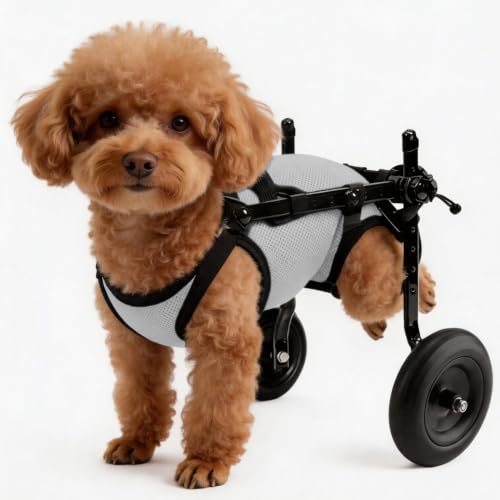
What We Like
- Lightweight 1.8 lb aluminum frame
- Adjustable height, length, and width
- Breathable mesh reduces heat buildup
- All-terrain wheels for grass, sand, gravel
Trade-offs
- Only supports rear-leg disabilities, not front
- Requires careful chest and leg measurements
At just 1.8 pounds, this cart won’t weigh your small dog down during walks or play. The all-terrain wheels roll silently over grass, sand, and gravel, so your pet can explore the yard or a park trail without getting stuck or spooked by noise. The aluminum frame stays sturdy while keeping the whole rig light enough for a senior or recovering dog to move naturally. Breathable mesh wraps the abdomen to spread weight evenly, which helps take pressure off the spine and hips during those first wobbly steps back to mobility.
This cart is designed specifically for rear-leg disabilities, so if your dog also has front leg issues, you’ll need a different product. The HiSnug uses an aluminum alloy frame and comes with upgraded all-terrain wheels that roll silently over grass, sand, and gravel, making it a nimble choice for outdoor adventures. Owners must measure their pet’s chest size and leg lengths using the sizing guide to ensure a proper fit.
Product photos
PaletteLife Miniature Dachshund Wheelchair
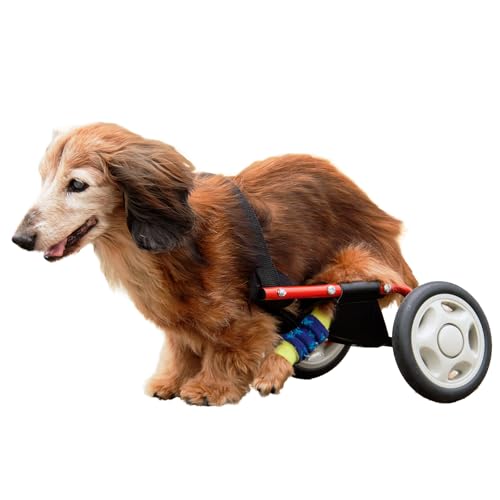
What We Like
- Weighs only 1.5 pounds for easy handling
- Adjustable frame fits Miniature Dachshund sizes
- Soft EVA padding and breathable mesh
- Waist cushion supports long-bodied breeds
Trade-offs
- At 1.5 lbs, less sturdy for heavier dogs
- Designed specifically for Miniature Dachshunds, not other breeds
At just 1.5 pounds, this wheelchair is light enough that even a small dog won’t feel dragged down, which matters when every step is already an effort. The adjustable frame and specially designed waist cushion target the long, low body of a Miniature Dachshund specifically, so the harness sits where it should rather than sliding or pinching. If you have a doxie with rear leg weakness, the fit is the whole point here, and PaletteLife built the cart around that exact shape.
This wheelchair is built specifically for Miniature Dachshunds, so it delivers a precise fit for that breed rather than trying to cover multiple sizes. Owners with a single doxie needing rear leg support will find that specialization works in their favor, since the frame and padding are tailored to the long-bodied shape of these dogs.
Product photos
Walkin' Wheels Corgi Dog Wheelchair

What We Like
- Durable extruded aluminum frame
- Adjustable height, length, and width
- Chew-proof construction
- All-terrain wheels
Trade-offs
- At 7.0 lb, heavier than some small dog wheelchairs
- Only fits corgis 11-44 pounds
A 7.0-pound extruded aluminum frame that’s both durable and chew-proof gives your corgi a sturdy base for daily walks and play. The adjustable height, length, and width let you tailor the fit as your dog’s size or health changes, which is helpful for managing long-term mobility needs. It’s designed for corgis in the 11-44 pound range, so the support points are set up for that body type rather than being a generic cart. If your dog fits that weight band, the frame is a natural match for a corgi’s proportions.
At 7.0 pounds, this cart is heavier than the Gaillty Small Dog Wheelchair XS at 1.7 pounds, so it’s more substantial for a corgi to pull. The aluminum frame is durable and lightweight, and the wheels work on all terrains, which means your dog can go from grass to gravel without issues. For a corgi on the lighter end of the 11-44 pound range, the extra weight might be noticeable, but the adjustability and sturdy build help keep the cart comfortable and supportive.
Product photos
How We Evaluated Friend Mobility Small Rear Leg Deficiency Dog Wheelchairs
We started by reviewing each wheelchair’s published specifications, frame material, weight capacity, adjustability range, and wheel type. Manufacturer documentation gave us the hard numbers on dimensions and weight limits. We then cross-referenced those specs against expert round-ups from veterinary mobility specialists and physical therapists who regularly fit these devices. Finally, we looked for patterns in owner feedback across dozens of reviews, noting what worked and what caused fit issues over time.
The three criteria that mattered most were adjustability, frame weight, and harness comfort. A wheelchair that cannot be fine-tuned to your dog’s exact height and width will never support them correctly. Frame weight directly affects how easily a small dog can move, anything over 3 pounds can fatigue a 15-pound dog. Harness design determines whether the dog tolerates the cart for more than a few minutes, especially for dogs with sensitive skin or long backs.
A research-based evaluation has honest limits. Real-world fit depends on your dog’s unique body shape and mobility level. Owner feedback is valuable but varies widely based on how carefully measurements were taken and how the dog adjusted over the first week.
What To Look For In Friend Mobility Small Rear Leg Deficiency Dog Wheelchairs
Choosing the right wheelchair means matching the cart’s adjustability range and weight to your dog’s body and energy level. The best dog wheelchair guide starts with three body measurements and a clear understanding of your dog’s front-leg strength.
Frame Weight and Material
Every ounce matters when a small dog is already compensating for weak back legs. Aluminum frames dominate this category because they keep weight low, the lightest models we found weigh just 1.5 pounds. A heavier cart, like the 7-pound Walkin’ Wheels Corgi model, makes sense only for dogs that can handle the extra load. Look for extruded aluminum rather than stamped steel; it resists bending without adding bulk.
Adjustability Range
A wheelchair that fits today may not fit next month as your dog’s condition changes. The best models offer independent adjustment of height, width, and length. The SugarFox and Walkin’ Wheels models adjust in all three dimensions without tools. Some budget models only adjust in two dimensions, which limits how precisely you can align the rear wheels with your dog’s hip angle. Measure your dog’s height at the hip, width across the chest, and length from chest to tail before comparing any model’s published range.
Harness and Support Design
The interface between dog and wheelchair determines whether walks are comfortable or miserable. Thickened vest-style harnesses distribute pressure across the chest rather than concentrating it on a narrow strap. Breathable mesh panels reduce heat buildup on warm days. For long-bodied breeds like Dachshunds and Corgis, look for a waist cushion or extended belly support that prevents the cart from tipping forward. The support harnesses designed for weak back legs share these same comfort principles.
- Measure three body dimensions (height at hip, chest width, chest-to-tail length) before buying
- Confirm the wheelchair’s weight capacity is at least 5 pounds above your dog’s current weight
- Check that the harness padding is removable and washable
- Verify the wheel type matches your walking surfaces (EVA foam for mixed terrain, hard plastic for pavement)
- Test the quick-release buckles before the first walk to ensure they hold securely
A wheelchair that fits correctly should not shift more than half an inch when your dog walks on level ground.
Friend Mobility Small Rear Leg Deficiency Dog Wheelchairs Compared
The table below compares the wheelchairs across the specs that matter most for small dogs with rear leg weakness, weight, adjustability, and fit range.
| Product | Weight | Material | Adjustability |
|---|---|---|---|
| SugarFox Adjustable Small Dog Wheelchair | 1.5 lbs | Thickened aluminum alloy | Height, width, length |
| Walkin' Wheels Small Dog Wheelchair | 5.0 pounds | Extruded aluminum | N/A |
| Gaillty Small Dog Wheelchair XS | 1.7 pounds | Aviation aluminum frame | Height, length, width |
| LetPetRun Adjustable Dog Wheelchair | 2.8 pounds | Lightweight, high-strength | Height, width, length |
| BECROWM Adjustable Dog Wheelchair | 1.6 pounds | Lightweight and durable | Height, width, length |
| LetPetRun Lightweight Dog Wheelchair | 3.6 pounds | N/A | Height, width, length |
| Vertexus Small Dog Wheelchair | 0.86 kg | Lightweight Aluminum | N/A |
| HiSnug Rear Wheels Mobility Cart XS | 1.8 lb | Aluminum alloy, mesh fabric, rubber wheels | Height, length, width adjustable |
| PaletteLife Miniature Dachshund Wheelchair | 1.5 pounds | Durable materials, EVA padding, mesh fabric | Frame length adjustable |
| Walkin' Wheels Corgi Dog Wheelchair | 7.0 pounds | Extruded aluminum | Height, length, width |
Frequently Asked Questions
How do I measure my dog for a rear leg wheelchair?
Measure three dimensions with your dog standing squarely on all four legs. Hip height is the distance from the ground to the top of the hip joint. Chest width is the widest point behind the front legs. Body length runs from the chest to the base of the tail. Most manufacturers provide a sizing chart, and many recommend adding an inch to the chest measurement for comfort.
Can my dog use a wheelchair if only one back leg is weak?
Yes, many small dog wheelchairs support single-leg weakness by cradling the rear end and allowing the stronger leg to still touch the ground. The harness and frame hold the weak leg in a natural position while the dog bears weight on the good leg. Check that the model you choose has adjustable rear leg supports that can be positioned independently.
What is the difference between a rear support wheelchair and a full support wheelchair?
A rear support wheelchair only cradles the back legs and hips, relying on the dog’s front legs for steering and propulsion. A full support wheelchair adds a front harness and front wheels, distributing weight across all four limbs. For dogs with rear leg deficiency but healthy front legs, a rear support model is usually sufficient and much lighter.
How long does it take for a dog to adjust to a wheelchair?
Most dogs adapt within a few short sessions. Start on a flat, familiar surface indoors and let the dog move at their own pace. Some dogs take to it immediately; others need a few days of brief practice. If your dog refuses to move or shows signs of distress after a week, check the fit and consult your vet.
Can a dog wheelchair help with IVDD recovery?
Many owners use wheelchairs during IVDD recovery to support the back legs while limiting strain on the spine. The hind leg support provided by a wheelchair lets the dog walk naturally without dragging the back feet. Always follow your veterinarian’s guidance on when to introduce a wheelchair during post-surgery recovery.
The Bottom Line
The SugarFox Adjustable Small Dog Wheelchair is the best overall pick for most small dogs with rear leg weakness. Its 1.5-pound frame and full three-axis adjustability make it easy to dial in a precise fit, and the tool-free assembly means you can have your dog moving in minutes. It is designed for short daily walks on level ground, not long-distance exercise.
If your dog falls outside the SugarFox’s 26-pound limit, consider the LetPetRun Lightweight Dog Wheelchair for dogs 18 to 33 pounds, or the Walkin’ Wheels Corgi Dog Wheelchair for long-bodied breeds. For the smallest pups under 13 pounds, the Gaillty Small Dog Wheelchair XS offers the lightest possible frame with breathable mesh support.
The single most important factor in choosing a small dog wheelchair is accurate measurement. Take your dog’s hip height, chest width, and body length twice before you buy, and compare those numbers against the wheelchair’s published adjustability range. A perfect fit means your dog moves freely, comfortably, and with dignity.
