
10 Best Food For Bulldog Puppies in 2026
This post contains affiliate links. As an Amazon Associate, we earn from qualifying purchases.
The best overall food for bulldog puppies is Purina Pro Plan Large Breed Puppy Food, thanks to its real chicken first ingredient, glucosamine for developing joints, and DHA for brain and vision development. For owners of large breed puppies who want a specialized formula through the full puppy stage, Eukanuba Large Breed Puppy Dry Dog Food is a strong choice. IAMS Proactive Health Large Breed Puppy Food delivers solid nutrition at a more budget-friendly price point.
Bulldog puppies have a unique combination of needs: they grow into heavy-boned, muscular adults on a relatively short frame, which puts specific demands on their joints, bones, and digestive systems. Finding a food that supports steady growth without excess calories that can lead to obesity is the real challenge for bulldog owners.
We built this guide by analyzing manufacturer specifications, ingredient lists, and nutritional profiles, combined with patterns in owner feedback and expert recommendations. Every pick here addresses at least one of the specific needs of bulldog puppies, from joint support to sensitive stomachs to breed-appropriate protein levels.
Top 10 Foods For Bulldog Puppies in the Market
Certain content that appears on this site comes from Amazon. This content is provided "as is" and is subject to change or removal at any time.
The Best Foods For Bulldog Puppies, Reviewed
Purina Pro Plan Large Breed Puppy Food

What We Like
- Real chicken as first ingredient
- Glucosamine supports developing joints
- DHA for brain and vision
- Vitamin A for skin and coat
Trade-offs
- Contains rice, not suitable for grain-free diets
- Bag shape is tall and narrow, awkward to store
A 34-pound bag built around real chicken as the first ingredient means your bulldog puppy gets high-protein support for steady, controlled growth, critical for large breeds prone to joint stress. The glucosamine targets developing joints and cartilage directly, while DHA from omega-rich fish oil backs brain and vision development during those early months. This formula is designed to nourish skin and coat with vitamin A and omega-6 fatty acids, making it a well-rounded foundation for a bulldog puppy’s first year.
This formula includes rice as a grain ingredient, which some owners may avoid if their puppy has a known grain sensitivity. For comparison, the Bully Max Puppy formula is chicken-free and may suit different dietary needs, while the IAMS Proactive Health Large Breed also uses chicken and rice. Choose based on what your puppy tolerates and your feeding preferences.
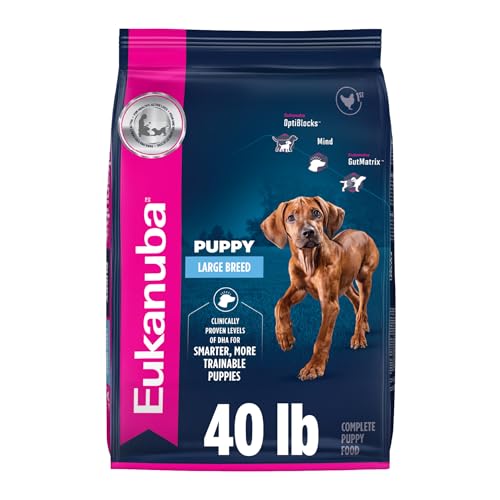
Eukanuba Large Breed Puppy Dry Dog Food
What We Like
- Real chicken as first ingredient
- DHA for healthy brain development
- Optimized calcium and phosphorus for bones
- Concentrated energy for growing puppies
Trade-offs
- Only for puppies up to 15 months old
- Not suitable for adult dogs or small breeds
- 40 lb bag is heavy to handle and store
For a large breed puppy expected to top 55 pounds as an adult, this 40-pound bag of kibble is formulated to support steady growth up to 15 months old. Real chicken is the first ingredient, delivering high-quality protein to fuel muscle development, while clinically proven levels of DHA help support healthy brain function during early training. Optimized calcium and phosphorus levels work together to promote proper bone development, which is especially important for larger breeds. Owners who want targeted nutrition for both structural growth and mental development from the start will find this a practical fit.
This food is strictly for the puppy stage; once your dog passes 15 months, you will need to switch to an adult formula. That adds a transition step some owners prefer to avoid. Next to the Purina Pro Plan Large Breed Puppy Food, which also offers DHA and calcium but in a 34-pound bag, the Eukanuba provides a slightly larger volume per bag and lists chicken as the first listed ingredient. The heavier bag means more food per purchase, but it also requires more storage space and effort to lift. For owners who want a large-breed-specific formula with real chicken first and DHA for brain development through the full puppy window, this delivers without fuss.
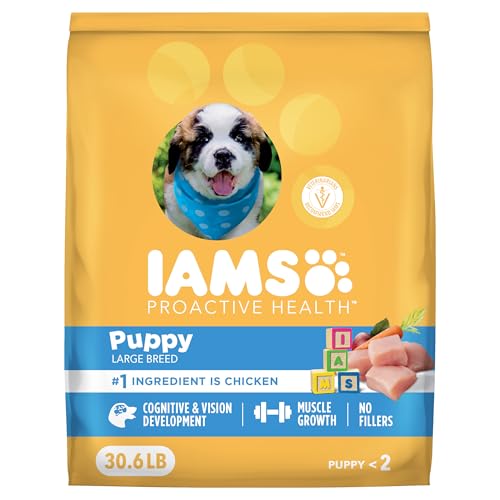
IAMS Proactive Health Large Breed Puppy Food
What We Like
- Real chicken is first ingredient
- Omega-3 DHA supports cognitive development
- Optimal calcium for bones and joints
- Antioxidants Vitamin E and Selenium for immunity
Trade-offs
- Contains grains, not grain-free
- Chicken base unsuitable for poultry-sensitive puppies
Real chicken is the number one ingredient here, which means your bulldog puppy gets a protein source that supports steady muscle growth without fillers or artificial flavors. The Omega-3 DHA targets cognitive and vision development during those critical early months. The optimal calcium levels are specifically tuned for large breed puppies whose bones and joints need careful support to avoid developmental issues. This recipe also packs Vitamin E and selenium to build a strong immune system, giving you a solid nutritional foundation without the premium price tag.
Veterinarians recommend IAMS for large breed puppies, and this 30.6-pound bag delivers real chicken as the first listed ingredient with Omega-3 DHA to support cognitive and vision development. The formula includes optimal calcium levels for healthy bones and joints, plus antioxidants like Vitamin E and Selenium to build a strong immune system. For most large breed puppy owners, this food covers the key developmental bases without the premium price of some boutique brands.
Purina ONE Plus Large Breed Puppy Food

What We Like
- Real chicken is the first ingredient
- DHA supports vision and brain development
- Glucosamine helps joint health
- No artificial flavors or preservatives
Trade-offs
- Contains grains, not grain-free
- Not suitable for puppies that need a grain-free diet
Real chicken as the number one ingredient means this food puts muscle-building protein front and center for a bulldog puppy that needs strong, growing muscles without fillers. The added DHA supports vision and brain development during those critical early months. Glucosamine helps maintain an appropriate growth rate and supports joint health, especially important for a breed prone to hip and elbow issues. This is a high-protein formula designed for large breed puppies, so it suits bulldog pups that need controlled growth and solid nutrition from a trusted brand.
The 31.1-pound bag is a commitment; if your puppy turns out to be a picky eater or you want to switch foods frequently, you are stuck with a lot of kibble. Unlike the Purina Pro Plan Large Breed Puppy Food, this Purina ONE formula offers the same DHA and protein focus but skips the calcium emphasis for bone strength. Some bulldog owners might prefer that for a slower, more controlled growth rate. It is a straightforward, no-fluff option for someone who wants real chicken and joint support without artificial extras.
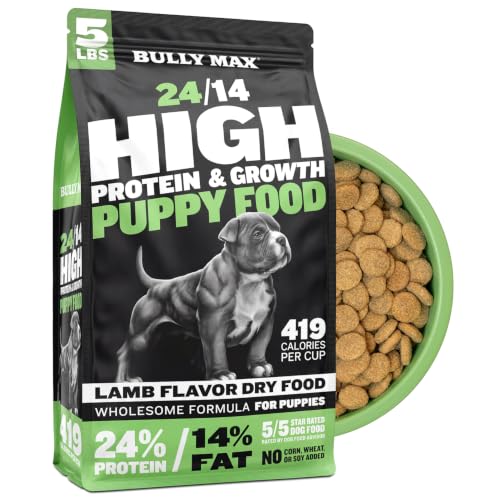
Bully Max Puppy Food High Protein Formula
What We Like
- Chicken-free recipe for sensitive stomachs
- Real lamb as first ingredient
- 419 calories per cup for growing puppies
- Added postbiotics for gut support
Trade-offs
- 5 lb bag is small for large breed puppies
- Higher calorie density requires careful portioning
A 24% protein and 14% fat ratio with lamb as the first ingredient means this food is built around a single, gentle protein source that avoids chicken entirely. That makes it a logical pick for puppies whose digestive systems tend to protest when faced with poultry. The 419 calories per cup provide energy for growing puppies, and the added postbiotics support gut and immune health. Combined with omega fatty acids for skin and coat, the formula targets common digestive sensitivities.
A 5-pound bag means you will restock more often than with larger bags from other brands, but the 419 calories per cup pack a lot of energy into each serving. That calorie density is a real advantage for growing puppies who need fuel without eating huge volumes. The chicken-free recipe with lamb as the main protein source is a thoughtful choice for pups with sensitive stomachs, and the added postbiotics support gut and immune health.
ORIJEN Grain Free Puppy Large Recipe

What We Like
- 85% animal ingredients for high protein
- WholePrey organs mimic ancestral diet
- Grain free formula
- No soy, corn, tapioca, or wheat
Trade-offs
- 23.5 lb bag is smaller than many large breed options
- Grain free not recommended by all vets for large breeds
At 85% animal ingredients, this kibble packs more protein than most large breed puppy foods on the shelf. That high protein and fat content is tailored for peak development in large breed puppies, with fresh or raw poultry and fish as the first five ingredients. The WholePrey approach includes nourishing organs, which mimics what wild canines would eat. If you want a grain free formula built around animal protein rather than fillers, this one delivers that focus clearly.
This recipe is grain free, which some veterinarians advise against for large breed puppies due to potential links to heart health concerns. Unlike Purina Pro Plan Large Breed Puppy Food, which includes rice and a different protein profile, ORIJEN takes a distinct approach focused on animal ingredients. The 23.5 lb bag is a standard size for this brand, so owners should plan their purchase frequency accordingly. Best for those who prioritize a meat-heavy, grain free formula with whole prey ingredients.
Product photos
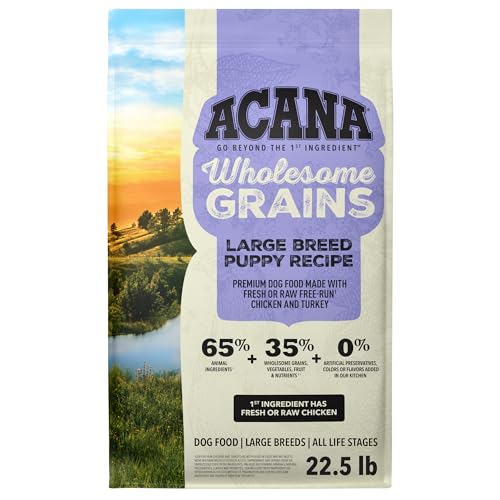
ACANA Wholesome Grains Large Breed Puppy Recipe
What We Like
- Fresh or raw free-run poultry
- Probiotics for digestive support
- Wholesome grains for fiber
- Made in the USA
Trade-offs
- 22.5 lb bag is smaller than many competitors
- Contains grains, which some owners avoid for grain-sensitive puppies
A 65 percent animal ingredient ratio with fresh or raw free-run chicken and turkey means this kibble leans heavily into protein while still including whole grains for fiber. That balance supports brain, bone, and lean muscle development in a large breed puppy, and the added probiotics give the digestive system a hand during the sensitive growing months. It is a grain-inclusive recipe from a US-based brand.
The 22.5-pound bag runs out faster than the 34-pound Purina Pro Plan Large Breed bag, so you will reorder sooner. For puppy owners who like the idea of wholesome grains and probiotics in a protein-forward formula, this is a straightforward fit.
Product photos
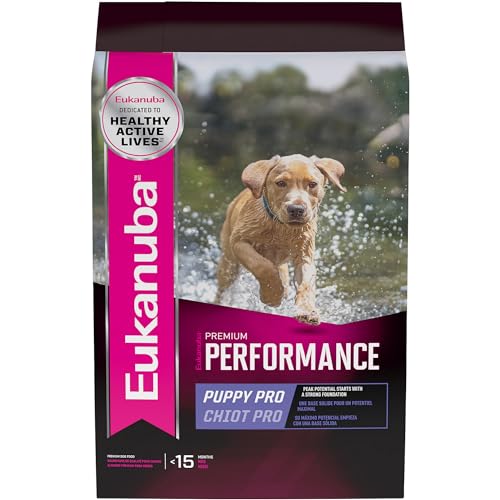
Eukanuba Premium Performance Puppy Pro
What We Like
- Clinically proven DHA for brain development
- Glucosamine and chondroitin for joint health
- Digestive health support complex included
Trade-offs
- Formulated for active puppies, not sedentary ones
- Targeted at puppies up to 15 months only
The clinically proven DHA levels in this formula support smarter, more trainable pups, which is a key benefit for owners focused on training. Glucosamine and chondroitin sulfate with EPA help promote healthy joints, addressing structural needs of growing puppies. This combination makes it a strong option for active puppies that need both cognitive and joint support.
This formula is designed for active puppies, so if your puppy is less active, the nutrient profile may be more than they need. Unlike the Purina Pro Plan Large Breed Puppy Food, which includes calcium for bone development, this Eukanuba formula emphasizes joint support with glucosamine and chondroitin. It’s a better fit for puppies that get regular exercise, but less ideal for those with lower activity levels.
Product photos
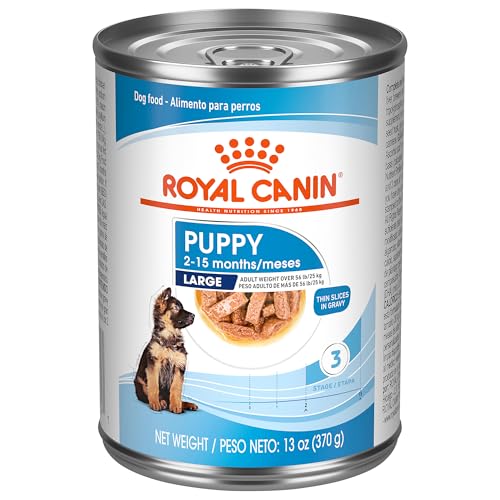
Royal Canin Large Puppy Wet Dog Food
What We Like
- Prebiotics for digestive microbiome support
- DHA for puppy brain development
- Soft slices in gravy for easy eating
- Clinically proven antioxidants for immune support
Trade-offs
- Only for large breed puppies, not small breeds
- Wet food format means shorter shelf life once opened
- Higher moisture content than dry kibble alternatives
A 13-ounce can of thin slices in gravy gives large breed puppies a soft, easy-to-chew meal that supports brain development with DHA and digestive health with prebiotics. The formulation targets puppies from 2 to 15 months with an expected adult weight between 56 and 100 pounds, so it fits large breed puppies like retrievers, shepherds, and mastiffs.
Wet food spoils faster after opening and lacks the dental-scrubbing texture of dry kibble. Unlike the Purina Pro Plan Large Breed Puppy Food in this guide, which offers DHA in a dry format, this Royal Canin option requires refrigeration after opening and doesn’t help keep teeth clean through chewing. But for a large breed puppy that turns up its nose at kibble or needs extra moisture in its diet, the soft texture and gravy make mealtime less of a battle.
Product photos
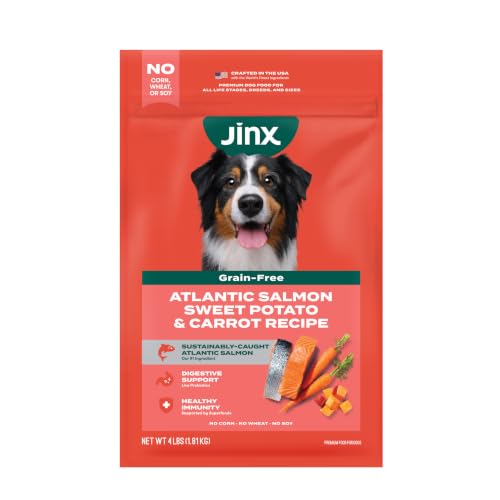
Jinx Grain Free Dry Dog Food
What We Like
- Real salmon as first ingredient
- Omega-3 and omega-6 for skin and coat
- Live probiotics for digestive support
- No corn, wheat, soy, or fillers
Trade-offs
- 4 lb bag is small for large breed puppies
- Not formulated specifically for large breeds
Real salmon is the first ingredient in this 4-pound bag of kibble, delivering high-quality protein to support lean muscle development. Omega-3 and omega-6 fatty acids from salmon and flaxseed help nourish skin and promote a soft, shiny coat. Live probiotics and fiber-rich sweet potatoes work together to support a healthy gut and a strong immune system with every bite, making this a well-rounded nutrition for puppies, adults and seniors. This formula is crafted in the USA with clean ingredients and no corn, wheat, soy, or fillers, so you get premium nutrition without the filler ingredients you might worry about.
This formula is designed for all life stages and all breeds, so it works from puppyhood through senior years. But it isn’t specifically tailored to the growth needs of a large breed puppy like some other options. For owners who want a single food that covers every stage, this is a convenient fit.
Product photos
How We Evaluated Foods For Bulldog Puppies
Our evaluation started with the nutritional science behind large breed puppy development. We looked at calcium-to-phosphorus ratios, protein percentages, and fat content, all factors that affect how a bulldog puppy grows. We cross-referenced these specs against published guidelines for large breed puppy nutrition and checked ingredient lists for quality protein sources and beneficial additives like DHA and glucosamine.
The three criteria that mattered most were joint support ingredients, protein source and digestibility, and calorie density. Bulldog puppies need controlled growth to avoid hip and elbow dysplasia, which made glucosamine and chondroitin non-negotiable for top picks. Protein sources had to be high-quality and easy on sensitive stomachs, bulldogs are notorious for food sensitivities. Calorie density had to support growth without encouraging the rapid weight gain that strains developing joints.
This is a research-led guide, not a hands-on feeding trial. We relied on manufacturer data, veterinary nutrition guidelines, and patterns in owner-reported experiences to identify which formulas consistently work well for bulldog puppies. No single food works for every dog, but the picks here represent the most reliable options based on the available evidence.
What To Look For In Foods For Bulldog Puppies
Choosing the right food for your bulldog puppy means balancing growth support with digestive comfort and joint protection. The following criteria will help you narrow down the options.
Look for a large-breed puppy formula with real animal protein first, controlled calcium levels, and added joint support. Avoid foods with excessive fillers or calorie counts that could lead to rapid weight gain.
Joint Support Ingredients
Bulldog puppies grow into dense, heavy-boned adults, which puts significant stress on their developing joints. Glucosamine and chondroitin are the key supplements to look for, they support cartilage health and can reduce the risk of hip and elbow dysplasia later in life. The best large breed puppy foods include these ingredients at clinically studied levels, not just trace amounts. You can learn more about the specific dietary needs of bulldog puppies in our dedicated guide.
Protein Source and Digestibility
Bulldogs have notoriously sensitive digestive systems, and the protein source in their food often determines whether they thrive or struggle with loose stools and gas. Chicken is the most common and well-tolerated protein, but some bulldog puppies do better with lamb, salmon, or novel proteins. If you notice persistent digestive upset, consider a chicken-free recipe. Our guide on nutrition for English Bulldog puppies covers breed-specific protein considerations in more detail.
Calorie Density and Growth Rate
Large breed puppies need enough calories to grow, but too many calories lead to rapid weight gain that stresses developing bones and joints. Look for foods with moderate fat content and controlled calorie density. A puppy that grows too fast is at higher risk for skeletal problems, so portion control matters as much as ingredient quality. The nutritional needs of bulldogs change as they mature, so understanding growth phases helps you adjust feeding amounts.
DHA for Brain and Vision Development
Docosahexaenoic acid (DHA) is an omega-3 fatty acid that supports cognitive development and vision in growing puppies. It is especially important during the first year of life, when a puppy’s brain is still developing. Most premium large breed puppy foods include DHA from fish oil or other sources. If you are comparing formulas, check the guaranteed analysis for DHA content.
Grain-Inclusive vs. Grain-Free
The debate between grain-inclusive and grain-free diets for large breed puppies is ongoing. Some veterinary cardiologists have raised concerns about grain-free diets and dilated cardiomyopathy (DCM) in certain breeds. For bulldog puppies, a grain-inclusive formula with wholesome grains like brown rice, barley, or oats often provides better digestive stability and follows current veterinary guidance. However, some bulldogs with confirmed grain sensitivities do well on grain-free recipes. The dietary recommendations for French Bulldog puppies can help you decide which approach fits your puppy’s needs.
- Look for a statement from the Association of American Feed Control Officials (AAFCO) confirming the food is complete and balanced for growth
- Check that the first ingredient is a named animal protein (chicken, lamb, salmon, etc.), not a by-product meal or grain
- Verify calcium levels are within the appropriate range for large breed puppy formulas
- Choose a kibble size appropriate for a bulldog puppy’s brachycephalic face, smaller, easily chewed pieces are better than large, hard kibble
- Consider your puppy’s individual response: a food that works for one bulldog may cause issues in another
The safest approach is to start with a well-regarded large breed puppy formula, monitor your puppy’s stool quality and energy levels, and adjust based on what you see.
Foods For Bulldog Puppies Compared
The table below compares the top contenders across the criteria that matter most for bulldog puppies: protein source, joint support, calorie density, and formula type.
| Product | Protein Source | Key Nutrients | Bag Size |
|---|---|---|---|
| Purina Pro Plan Large Breed Puppy Food | Real chicken first | Glucosamine, DHA | 34 lb |
| Eukanuba Large Breed Puppy Dry Dog Food | Real Chicken First | DHA, Calcium, Phosphorus | 40 lb |
| IAMS Proactive Health Large Breed Puppy Food | Real chicken #1 ingredient | Omega-3 DHA, Vitamin E | 30.6 lb |
| Purina ONE Plus Large Breed Puppy Food | Real chicken | DHA, glucosamine | 31.1 lb |
| Bully Max Puppy Food High Protein Formula | Lamb | N/A | 5 lb |
| ORIJEN Grain Free Puppy Large Recipe | Fresh or raw poultry/fish | N/A | 23.5 lb |
| ACANA Wholesome Grains Large Breed Puppy Recipe | Free-run chicken & turkey | Probiotics | 22.5 lb |
| Eukanuba Premium Performance Puppy Pro | N/A | DHA, Glucosamine, chondroitin sulfate | 35 lb |
| Royal Canin Large Puppy Wet Dog Food | N/A | DHA | N/A |
| Jinx Grain Free Dry Dog Food | Real Atlantic Salmon | Probiotics | 4 lb |
Frequently Asked Questions
What is the best food for an English Bulldog puppy?
The best food for an English Bulldog puppy is a large breed formula with controlled calcium levels, glucosamine for joint support, and a high-quality animal protein as the first ingredient. Purina Pro Plan Large Breed Puppy Food meets these criteria well, but some English Bulldog puppies with sensitive stomachs do better on a chicken-free recipe like Bully Max Puppy Food. Every puppy is different, so monitor stool quality and energy levels when introducing any new food.
How much should I feed my bulldog puppy?
Feeding amounts depend on your puppy’s age, weight, and the calorie density of the food. Most large breed puppy formulas provide a feeding chart based on expected adult weight, which for bulldogs typically ranges from forty to sixty pounds. Start with the manufacturer’s recommendation, divide the daily amount into three meals for puppies under six months, and adjust based on body condition, you should be able to feel your puppy’s ribs without pressing hard.
Can bulldog puppies eat grain-free food?
Some bulldog puppies can eat grain-free food, but it is not the first choice for most veterinarians due to concerns about a potential link between grain-free diets and dilated cardiomyopathy in certain breeds. If your bulldog puppy has a confirmed grain sensitivity, a grain-free formula like ORIJEN Grain Free Puppy Large Recipe may be appropriate. Otherwise, a grain-inclusive formula with wholesome grains provides balanced nutrition that aligns with current veterinary guidance for large breed puppies.
When should I switch my bulldog puppy to adult food?
Most bulldog puppies should transition to adult food between 12 and 18 months of age, depending on their growth rate and when they reach their expected adult weight. Large breed puppies need to stay on puppy food longer than small breeds because their growth plates close later. A good rule of thumb is to switch when your bulldog has maintained a stable adult weight for two to three months. Our guide on transitioning from puppy to adult food walks through the process step by step.
What ingredients should I avoid in bulldog puppy food?
Avoid foods with artificial colors, flavors, or preservatives, as well as excessive fillers like corn, wheat, and soy that offer little nutritional value. Bulldog puppies are prone to food sensitivities, so steer clear of vague ingredient labels that list “meat meal” or “poultry by-product” without naming the source. Also avoid foods with calcium levels above the recommended maximum for large breed puppies, which can interfere with proper bone development. The factors in choosing puppy food can help you spot red flags on ingredient labels.
The Bottom Line
Purina Pro Plan Large Breed Puppy Food is our top pick for bulldog puppies because it combines real chicken, DHA for brain development, and glucosamine for joint support in a formula designed for large breed growth. It works well for most bulldog puppies, whether English, French, or American. The formula provides the controlled nutrition these heavy-boned breeds need during their first year.
If your bulldog puppy has a sensitive stomach or chicken sensitivity, the Bully Max Puppy Food with real lamb and added postbiotics is a better choice, though its smaller bag size means more frequent reordering. For owners who want a grain-free option with high animal protein content, the ORIJEN Grain Free Puppy Large Recipe delivers, but be aware of the ongoing veterinary discussion about grain-free diets for large breeds.
The single most important factor in choosing food for your bulldog puppy is controlled growth. Pick a large breed formula with moderate calorie density, adequate joint support, and a protein source your puppy tolerates well, then feed to maintain a lean body condition, not maximum growth speed.
