
10 Best Dog Treadmills in 2026
This post contains affiliate links. As an Amazon Associate, we earn from qualifying purchases.
The PawArmorX98 Curved Dog Treadmill with Disc Brakes earns our best overall spot for its durable build and precise control, offering a high-endurance workout for large breeds. For budget-minded owners, the FYC Dog Treadmill with Remote Control delivers reliable basics at an affordable price, while the Lifepro PawRunner is our quiet-motor pick for noise-sensitive dogs.
Real talk: most dog treadmills gather dust because they don’t fit the dog or the house. A machine that’s too short for a long stride frustrates a runner, and a 108-pound monster that can’t be stored gets shoved in a corner. The right choice balances your dog’s size, your floor space, and the type of workout you want to provide.
This guide is based on manufacturer specs, expert round-ups, and patterns in owner feedback. We focused on belt length, speed range, noise level, and storage needs to help you match a treadmill to your dog and your home.
Top 10 Dog Treadmills in the Market
Certain content that appears on this site comes from Amazon. This content is provided "as is" and is subject to change or removal at any time.
The Best Dog Treadmills, Reviewed
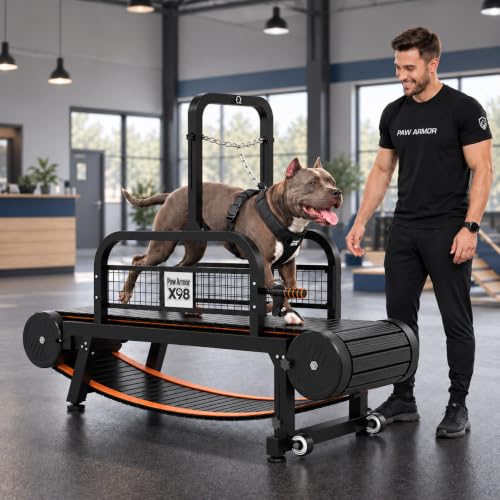
PawArmorX98 Curved Dog Treadmill with Disc Brakes
What We Like
- Disc brakes for controlled stops
- Silicone slats reduce paw slips
- Adjustable incline and resistance damper
- Heavy-duty steel frame with aluminum hubs
Trade-offs
- 108 lb weight makes moving difficult
- Self-propelled design requires dog to learn pace
- Large footprint needs dedicated floor space
The curved track stretches 68.9 inches long, so large breeds can build up a full stride without feeling cramped. The disc brake system gives you reliable stopping control rather than the flimsy brakes found on cheaper slatmills. This manual treadmill lets your dog set its own pace, no motor forcing a speed, while the adjustable incline goes from flat to a 4.6-degree climb. The resistance damper lets you fine-tune difficulty for endurance training. The overhead gantry moves up, down, forward, and back to match the natural stride of medium and large breeds, which means your dog can run comfortably without bumping into the frame. For owners of high-energy large breeds who need a controlled indoor workout, this machine offers adjustable intensity that actually challenges them.
The trade-off is that 108 pounds of steel and aluminum does not budge easily, so you will want a permanent spot for it rather than dragging it in and out of storage. Compared to the Lifepro PawRunner, which weighs 47 pounds and targets small to medium dogs, the PawArmorX98 is a different class of equipment entirely. The self-propelled design allows your dog to dictate the pace, building confidence without forced speeds. Once they get it, you get a workout that adapts to their energy level rather than the other way around. For owners with a large breed and a room to dedicate to indoor conditioning, this is a capable option in the guide.
Product photos
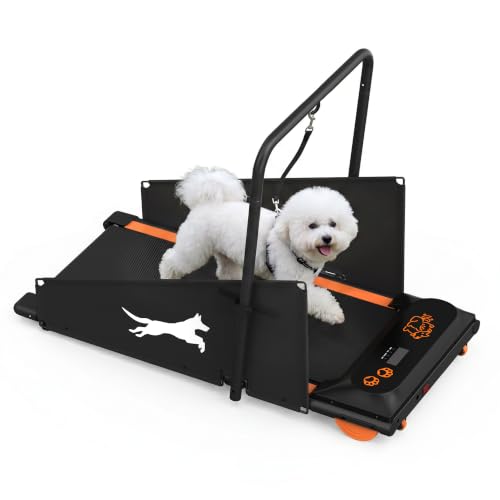
FYC Dog Treadmill with Remote Control
What We Like
- 0.5 mph slow speed for rehab
- Remote control operation
Trade-offs
- No incline adjustment for varied intensity
- 31.3" height limits low-clearance storage
The 0.5 mph minimum speed makes it genuinely useful for senior dogs or post-surgery recovery, where a gentle, controlled walk is the whole point. If you need an indoor workout option that won’t strain your dog’s joints or your budget, this is the one to start with.
The FYC treadmill is compact: at 44.3 inches long and 31.3 inches tall, it fits in a corner of the living room but not under a bed. The Lifepro PawRunner is 48.0 inches long, so it’s actually longer, not shorter; its weight is 47.0 pounds versus the FYC’s unspecified weight. For most owners with a medium dog and a dedicated spot, the FYC’s slow-speed flexibility and stable motor make the floor space worth it.
Product photos
Lifepro PawRunner Dog Treadmill

What We Like
- Ultra-quiet motor for noise-sensitive dogs
- Remote control speed adjustment
- Safety key and emergency stop button
- Easy 10-minute assembly
Trade-offs
- 48-inch length needs dedicated floor space
- 47 lb weight makes moving it awkward
A 0.5-7.5 MPH speed range and a 38.6-inch running surface mean this treadmill can handle everything from a gentle walk to a solid trot for small and medium dogs up to 130 pounds. The ultra-quiet motor is the centerpiece here, dogs are famously jumpy about strange whirs and hums, so a motor that barely whispers keeps them from spooking and actually wanting to use the thing. That makes it a strong fit for owners who need indoor exercise on bad-weather days or during busy work hours, especially when paired with the included remote control so you can adjust speed without hovering.
Physical footprint and weight are the main considerations here. At 48 inches long and 47 pounds, the PawRunner isn’t something you tuck into a closet after each use, it needs a permanent spot in a home gym, garage, or spare room. For owners with room to spare and a noise-sensitive pup, the quiet motor makes that inconvenience worth living with.
GYMAX Dog Treadmill with Remote and LCD

What We Like
- Wide 0.5-7.5 mph speed range
- 3 incline levels for varied intensity
- Remote control works up to 32.8 ft
- Low noise under 45 dB
Trade-offs
- At 42.5 lb, not the lightest to move
- At 42.5 lb, heavier than some models
A 0.5 to 7.5 mph speed range gives you room to walk, jog, or run a small or medium dog without swapping machines. The 2 HP motor keeps it smooth and quiet under 45 dB, so your pet stays calm and your neighbors stay happy. Three incline levels let you add challenge gradually, and the remote works from 32.8 feet away, meaning you can adjust speed or incline from the couch without getting up. This treadmill suits owners who want real speed flexibility for dogs that need more than a slow shuffle but less than a sprint.
At 42.5 pounds, it’s a manageable weight for most people, and the built-in wheels make it easy to roll from room to room. The side protection covers attach with hook-and-loop fasteners for quick removal, and the handlebar is secured with just three bolts per side, so setup takes only a few minutes. Compared to the FYC Dog Treadmill, the GYMAX offers a wider speed range and adjustable incline, giving you more flexibility if your dog’s exercise needs change day to day.
Product photos
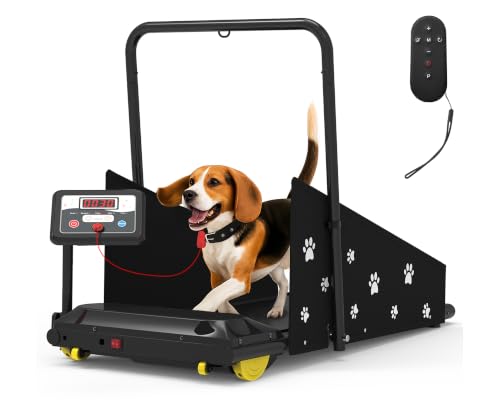
Petbobi 2-in-1 Dog Treadmill
What We Like
- 2-in-1 human and dog walking pad
- 265 lb capacity supports owner use
- 55 dB motor won't spook dogs
- Fits under bed or sofa flat
Trade-offs
- 36.2" belt limits dogs over 20" body length
- 42 lb unit still heavy to move regularly
- No incline adjustment for varied workouts
A 1.5 HP motor that supports up to 265 pounds means this machine pulls double duty as both a dog treadmill and a human walking pad, rare in this category. Detach the side panels to convert it into a compact walking pad for your own light indoor walks. The 55 dB noise level keeps nervous dogs from panicking. It suits small-to-medium breeds like Pugs and Frenchies, especially if you live in an apartment where a second piece of exercise equipment isn’t practical. The slim frame slides under a bed or sofa when not in use, so it doesn’t clutter your space.
The belt length is the main limitation: at 36.2 inches, it’s designed for dogs with a body length up to 20 inches, which rules out longer-bodied breeds. Compared to the Lifepro PawRunner, which stands 41.8 inches tall, this Petbobi is more versatile for owners who want one machine for both themselves and a small dog. But if your dog is over 25 pounds or longer-bodied, you may need a treadmill with a longer belt.
Product photos
Lastforever Dog Treadmill with Safety Leash

What We Like
- 5-layer belt reduces joint impact
- Quiet 2.5HP motor for nervous dogs
- Remote control and LED display
- Safety leash and side panels included
Trade-offs
- 46-inch length limits stride for larger dogs
- 5.2-inch height means no incline adjustment
- 50-pound weight is heavy to move frequently
The 5-layer anti-slip running belt with built-in shock-absorbing pads is designed to reduce impact on joints, paws, and muscles. This makes it a suitable choice for puppies, senior dogs, or pets in rehabilitation and weight management programs. The quiet 2.5HP motor helps nervous or first-time dogs feel calm and confident during training, and the remote control lets you adjust speed without bending over. For owners focused on joint-friendly exercise, this belt is a key feature that supports controlled indoor activity.
At just 5.2 inches high, this treadmill stays low to the ground so small and medium dogs with short strides can step on and off easily, but a leggy Border Collie will feel cramped. There’s no incline to increase intensity, unlike the Lifepro PawRunner which offers a manual incline. However, the 5-layer running belt with shock-absorbing pads reduces impact on joints, which is ideal for puppies or seniors.
Product photos
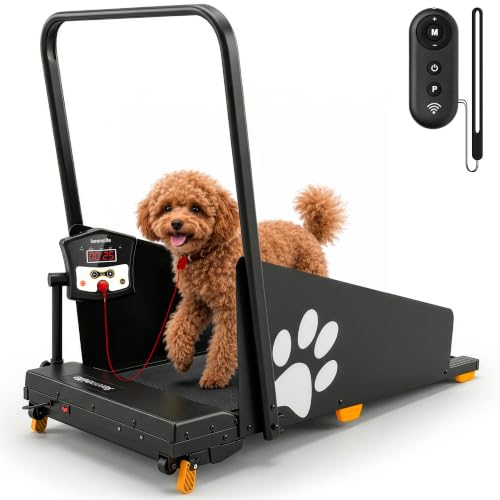
SereneLife Foldable Dog Treadmill
What We Like
- Foldable design with built-in wheels
- 2-level manual incline for varied workouts
- Shock-absorbing belt protects joints
Trade-offs
- Manual incline requires stopping to adjust
- At 42.8 inches long, it needs floor space when open
- No speed presets or programmable workouts
If you live in a smaller home or need to tuck the treadmill away between sessions, the foldable frame and built-in wheels make it one of the most practical options for indoor dog exercise. You won’t have to dedicate permanent floor space.
The trade-off for that foldability is a manual incline that requires you to stop the belt and adjust by hand, no remote-controlled ramp here. Compared to the PawArmorX98 Curved Dog Treadmill, which has a curved track and disc brakes, the SereneLife offers a higher weight capacity but a manual incline. It’s a sturdy, space-saving option for owners who want quick setup and storage, but not for those who need to adjust difficulty mid-run without bending down.
Product photos
Zentrava 2026 Edition Dog Treadmill

What We Like
- Compact footprint for tight spaces
- Quiet motor under 45 dB
- Dual-use as a personal treadmill
- LCD tracks time, speed, distance
Trade-offs
- Small belt limits stride for larger dogs
- No incline adjustment for varied workouts
The 2.5 HP motor stays under 45 dB, so your dog can trot while you watch TV without anyone reaching for earplugs. It’s built for small to medium dogs (up to 220 lbs capacity), and the LCD screen lets you track time, speed, and distance at a glance. If floor space is your biggest constraint, this is the one that actually fits.
The running belt measures 35.43 by 14.76 inches, which works fine for a Corgi or Beagle but will feel cramped for a longer-strided dog like a Border Collie. You get a quiet, space-saving solution for small spaces, just know your dog’s stride length before you commit.
Product photos
ohlo Electric Dog Treadmill with 42-Inch Deck
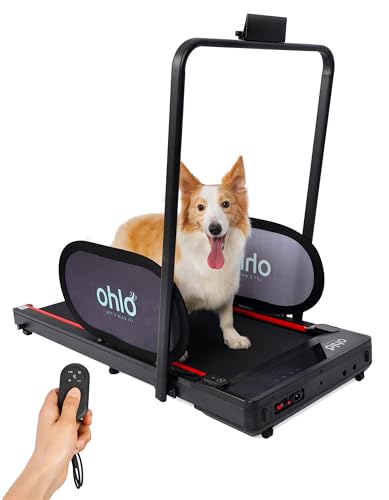
What We Like
- Spacious 42-inch deck for natural stride
- Low step-on height for easy access
- Flexible side panels for safer exit
- Compact storage with wheels included
Trade-offs
- At 62.8 lb, heavier than many competitors
- Speed tops at 4.97 mph, not for fast runners
- Small and medium dogs only per manufacturer
The 42-inch running deck gives small and medium dogs room to stretch into a natural stride rather than shuffling on a short belt. That extra length, paired with a low step-on height and cushioned SafePaws surface, makes this treadmill feel more like a proper running path than a cramped exercise wheel. If your dog has a longer stride or needs a gentler introduction to treadmill work, this is the one that gives them space to find their rhythm.
At 62.8 pounds, this treadmill is heavier than many competing models, so you’ll need to put in a bit more effort to roll it around the house even with the built-in wheels. The speed range tops out at 4.97 mph, which is fine for walking and moderate jogging but won’t satisfy a dog that needs to sprint. For a dog that needs room to move without feeling cramped, that weight is a fair trade-off.
Product photos
Clyrava Black Indoor Dog Pacer Treadmill
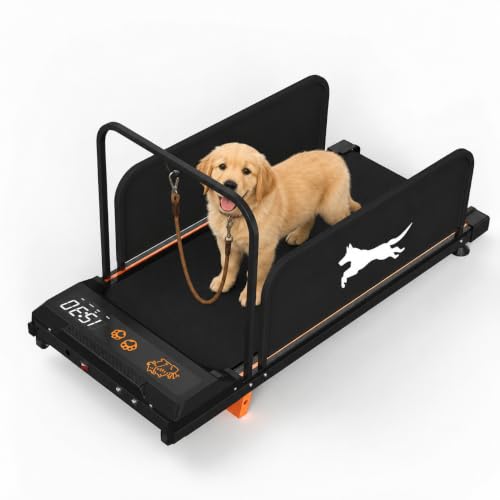
What We Like
- LED display tracks time, speed, distance
- Quiet 2.5HP motor under 45 dB
- Removable side panels and armrests
- Rolling wheels for easy mobility
Trade-offs
- Only for small to medium dogs
- No incline adjustment mentioned
- Running belt shorter than some competitors
A 265-pound weight capacity and a 35.4-inch running belt give this treadmill room for most small to medium dogs to stretch out without feeling cramped. The LED display tracks time, speed, and distance in real time, so you can see whether today’s session hit the mark or if your pup needs another lap around the block. That kind of data-driven feedback makes it easier to manage fitness goals without guessing, especially useful if you’re working on weight management or post-surgery recovery. The quiet 2.5HP motor operates under 45 dB, which keeps noise low during indoor use.
At 39 pounds and 43.1 inches long, this treadmill is sized for small to medium dogs. That deck length means it won’t accommodate larger breeds with a long stride. The Lifepro PawRunner weighs 47.0 pounds and is 48.0 inches long, but it lacks the removable side panels that let this machine double as a personal walking pad. For owners who want quiet operation and clear workout tracking, this one fits the bill.
Product photos
How We Evaluated Dog Treadmills
We built this guide by digging into manufacturer specifications, reading expert round-ups from veterinarians and canine fitness specialists, and analyzing what real owners consistently praise or complain about. No treadmill was put through a lab test, our evaluation is research-led, built on the data and the collective experience of thousands of buyers.
The four criteria that mattered most were belt size, speed range, noise level, and storage footprint. A too-short deck forces an unnatural gait. Rehab dogs need a crawl, while high-energy dogs need a gallop. A loud motor scares anxious dogs off the machine. Most owners don’t have a spare room for a dedicated treadmill.
A research-based approach has limits. We can cross-reference specs, weigh trade-offs, and flag patterns that matter, such as which models owners report as genuinely quiet versus which ones get complaints.
What To Look For In Dog Treadmills
Matching a treadmill to your dog is about more than price. The wrong belt length or speed range will waste your money and frustrate your pet.
Focus on belt size (length and width), speed range (especially the low end for rehab), noise level (under 55 dB for nervous dogs), and storage requirements (foldable vs. Permanent placement). Ignore flashy features you won’t use.
Belt Size and Stride Length
A dog’s natural stride needs room. Measure your dog from nose to tail and add a few inches, that’s the minimum belt length you need. Small dogs (under 25 pounds) can manage with a 30-inch belt, but a larger breed needs 42 inches or more to avoid clipping its nose at the front. Width matters too: a narrow belt makes a broad-shouldered dog feel trapped.
Speed Range and Motor Power
Rehabilitation and senior dogs need a slow crawl, so look for a minimum speed of 0.5 mph. High-energy working breeds need a top speed that provides a real workout. The motor’s power determines how smoothly it maintains speed under load; a 2.5 HP motor is a common choice for medium dogs, while a heavy-duty machine needs more power.
Noise Level
A loud treadmill terrifies many dogs. Look for a motor rated under 45 dB if your dog is noise-sensitive, and under 55 dB for most others. Models with a “quiet motor” claim often include rubber isolation pads to dampen vibration. If your dog spooks at the vacuum cleaner, prioritize noise level over speed range.
- Measure your dog’s body length from nose to tail before shopping.
- Check the treadmill’s folded dimensions if you plan to store it.
- Verify the weight limit includes your dog plus any momentum from running.
- Look for a safety key or emergency stop button on every model.
A treadmill that scares your dog is worse than no treadmill at all, start with a slow introduction and treats on the belt.
Dog Treadmills Compared
The table below compares all ten treadmills across the specs that matter most for a good match: belt size, speed range, motor noise, and storage design.
| Product | Motor | Weight Capacity | Weight |
|---|---|---|---|
| PawArmorX98 Curved Dog Treadmill with Disc Brakes | N/A | N/A | 108.0 lb |
| FYC Dog Treadmill with Remote Control | 2.5 HP | 220 lbs | N/A |
| Lifepro PawRunner Dog Treadmill | Ultra-quiet motor | 130 lb | 47.0 pounds |
| GYMAX Dog Treadmill with Remote and LCD | 2 HP | 220 lbs | 42.5 pounds |
| Petbobi 2-in-1 Dog Treadmill | 1.5 HP | 265 lbs | 42.0 pounds |
| Lastforever Dog Treadmill with Safety Leash | 2.5 HP | N/A | 50.0 pounds |
| SereneLife Foldable Dog Treadmill | 2.5 HP DC quiet motor | 265 lbs | N/A |
| Zentrava 2026 Edition Dog Treadmill | 2.5 HP quiet motor | 220 lbs | 39.0 pounds |
| ohlo Electric Dog Treadmill with 42-Inch Deck | N/A | N/A | 62.8 pounds |
| Clyrava Black Indoor Dog Pacer Treadmill | 2.5 HP | 265 lbs | 39.0 lbs |
Frequently Asked Questions
How do I get my dog to use a treadmill?
Start with the treadmill turned off. Let your dog sniff and step onto the belt, reward with treats, then gradually introduce slow movement. Keep sessions short and positive, never force a scared dog onto a moving belt. Some owners find a treadmill with side panels helps an anxious dog feel more secure.
What size treadmill does my dog need?
Measure your dog from nose to tail and add four to six inches. That is the minimum belt length. A 30-inch belt suits most small breeds, while a 42-inch deck works for medium dogs with longer strides. Large breeds over a certain weight typically need a specialized heavy-duty dog treadmill with a longer deck and stronger motor.
Can a dog treadmill replace outdoor walks?
A treadmill provides controlled exercise, but it doesn’t replace the mental stimulation of sniffing new scents, meeting other dogs, or exploring different terrain. Use it as a supplement on bad weather days or for high-energy dogs that need extra activity beyond their regular walks. Check our guide on keeping dogs active in winter for more indoor ideas.
Is a manual or electric treadmill better for dogs?
Manual treadmills (like the PawArmorX98) require the dog to set the pace, which builds endurance and coordination but has a learning curve. Electric models offer consistent speed and remote control, which is easier for rehab or nervous dogs. Manual machines are heavier and harder to move, while electric ones are lighter but need a power outlet.
How fast should a dog treadmill go?
Rehabilitation and senior dogs need a speed as low as 0.5 mph for a slow walk. Active dogs need a faster speed for a trot, and high-energy breeds benefit from a top speed that allows for a full run. Start slow and increase speed gradually as your dog builds confidence and stamina. Understanding your dog’s breed exercise requirements helps you set the right pace.
The Bottom Line
The PawArmorX98 Curved Dog Treadmill with Disc Brakes is our best overall pick for owners of large, high-endurance dogs who have a permanent indoor space and want manual control over intensity. Its disc brakes and adjustable incline give you precision that electric models can’t match, but the weight and footprint mean it’s a commitment.
If your space or budget is tighter, the FYC Dog Treadmill with Remote Control delivers a steady walking pace for small to medium dogs at a budget-friendly price. The Lifepro PawRunner offers whisper-quiet operation for noise-sensitive pups. The Petbobi 2-in-1 Design is a smart choice for apartment dwellers who want one machine for both human and dog walking.
The single most important factor is belt length. A treadmill that’s too short forces your dog into an unnatural gait that can cause joint strain over time. Measure your dog, measure your floor space, and pick the machine that fits both.
