
10 Best Dog Gps Systems in 2026
This post contains affiliate links. As an Amazon Associate, we earn from qualifying purchases.
The best way to keep tabs on a wandering dog is a dedicated GPS system. Our Best Overall pick is the Dogtra PATHFINDER2 MINI GPS Tracking System. It wins because it delivers a reliable 4-mile range through dense terrain with zero subscription fees. It beats out options like the Fi Mini GPS Dog Tracker for lightweight collar use and the Garmin Alpha 300i for remote-area satellite SOS.
The real problem with most dog GPS trackers is the hidden cost: a monthly subscription that adds up fast. Some owners also discover too late that a phone-only tracker fails the moment they leave cell range. What actually matters is knowing whether the system works where you walk, how much it will cost over the life of the dog, and whether it fits your dog’s size and your daily routine.
This guide is based on a close look at manufacturer specs, expert round-ups, and the patterns in owner feedback for ten of the top systems on the market. We break down the trade-offs between subscription and no-fee models, battery life expectations, and which tracker fits which kind of owner. You get a clear head start on picking the right system for your situation.
Top 10 Dog GPS Systems in the Market
Certain content that appears on this site comes from Amazon. This content is provided "as is" and is subject to change or removal at any time.
The Best Dog GPS Systems, Reviewed
Dogtra PATHFINDER2 MINI GPS Tracking System

What We Like
- No subscription fees ever
- 4-mile range in dense terrain
- Works independently from phone
- Expandable up to 21 dogs
Trade-offs
- Only for dogs 25+ pounds
- Handheld adds bulk to carry
A 4-mile range with no subscription fees means you can roam public land, dense woods, or open fields without worrying about cellular dead zones or monthly bills. The handheld remote works entirely on its own, so your phone stays safely tucked away with a full battery. This system suits the serious off-leash hunter or the owner who wants reliable tracking in remote areas without ongoing costs. The IPX9K waterproof rating protects against high-pressure water jets, and the rapid 2-second GPS updates help you track your dog’s location.
The biggest limitation is that this system only fits dogs 25 pounds and up, so small breeds are out. Unlike a collar-only tracker that relies on your phone, the handheld remote is another piece of gear to carry. For casual walks around the neighborhood, a phone-based tracker might be simpler, especially if you don’t mind paying a subscription. But for serious off-leash work with no ongoing fees and total independence from your phone, this Dogtra setup earns its place as the top pick.
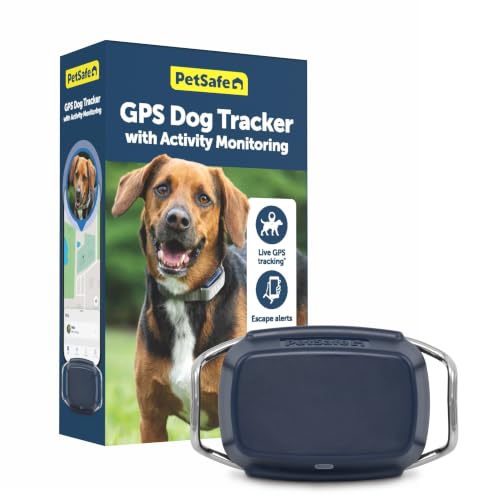
PetSafe GPS Dog Tracker
What We Like
- IP67 waterproof for wet conditions
- Real-time GPS with cellular tracking
- Unlimited custom Safe Zones in app
Trade-offs
- Requires ongoing subscription for tracking
- No satellite connectivity, relies on cellular
The IP67 waterproofing means rain, puddles, and even a quick dip won’t shut it down, and the stainless-steel clip fits collars up to an inch wide so it stays put on most dogs. For owners who want real-time GPS location, escape alerts, and activity monitoring without obsessing over battery levels, this one cuts down on daily hassle.
The trade-off is the subscription: you pay monthly or yearly for the cellular data and app features, and the tracker depends entirely on cell coverage. If you roam far from towers or want satellite backup, the Garmin Alpha 300i handles that, but it’s heavier and pricier upfront. For someone who stays within cell range and values long stretches between charges over an all-in-one upfront cost, the PetSafe makes sense.
Product photos
Nilone GPS Tracker for Dogs
What We Like
- No monthly fee or SIM card
- IP68 waterproof for rain and submersion
- Compact design with magnetic case
- Customizable safe zone alerts
Trade-offs
- iOS only, no Android support
- No handheld remote, relies on phone app
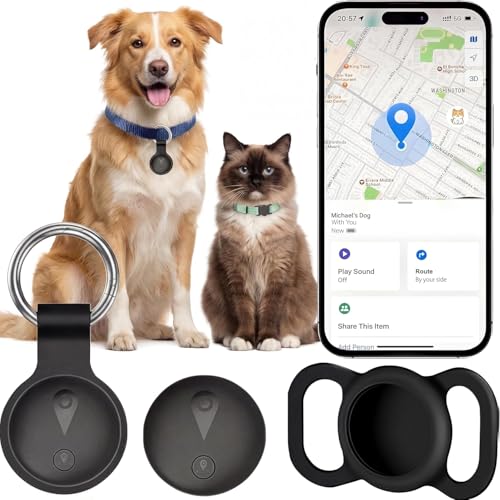
No monthly fee is the headline here, and it’s a rare one in the GPS dog tracker world. The Nilone works with Apple’s Find My app and satellite positioning to show your pet’s location through your iPhone, iPad, or iPod touch, no extra app, no SIM card, no subscription creeping in later. That alone makes it a different kind of proposition: a tracker that costs nothing after you buy it, with IP68 waterproofing that handles rain, splashes, and even a dunk in the yard. It’s a smart fit for iOS-only households who want basic, reliable location tracking without signing up for another monthly bill.
You’re tied entirely to Apple’s ecosystem, and you don’t get a dedicated handheld unit like the Dogtra PATHFINDER2 MINI offers. That means if your phone dies or you leave it behind, you’ve got no way to check on your dog. For off-grid tracking without a phone, look elsewhere.
Product photos
Fi Mini GPS Dog Tracker

What We Like
- Weighs only 0.56 ounces
- Attaches to any collar or harness
- Five stylish silicone cases included
- Tracks steps, barking, sleeping, scratching
Trade-offs
- Requires ongoing Fi Membership subscription
- Only works with LTE-M cellular network coverage.
At 0.56 ounces, this tracker is light enough that your dog won’t even know it’s there. That’s the whole point of the Fi Mini: you clip it onto any collar or harness, pick one of the five included color cases, and go about your day with real-time GPS tracking that lasts up to two months between charges. It also monitors health habits like scratching, sleeping, and barking, which you can share with your vet if something seems off. For someone who wants a tracker that disappears into daily life rather than adding bulk, this is the one.
The Fi Mini requires a Fi Membership to access the LTE-M cellular network and GPS service, unlike some competitors that do not require a monthly fee. That means you’re paying over time for the convenience of real-time tracking and escape alerts. If you’re fine with a subscription and want the lightest possible tracker that still gives you escape alerts and virtual fences, this design is hard to beat.
Product photos
Galawelly GPS Tracker for Dogs
What We Like
- No monthly fee or SIM needed
- IP68 waterproof for all weather
- 7-day historical route playback
- Lightweight with secure collar holder
Trade-offs
- No escape alert or virtual fence
- No offline maps or satellite tracking
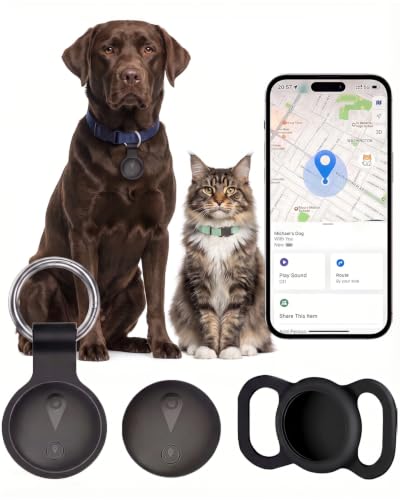
A GPS tracker that asks for no monthly fee and no SIM card is the kind of thing that makes you wonder why everyone else charges you twice. The Galawelly uses the free DEONETAG app to show real-time location and replay up to seven days of your dog’s wanderings. That way you can figure out whether she’s been visiting the same muddy ditch every afternoon. IP68 waterproofing means rain, snow, and the occasional enthusiastic puddle jump won’t kill it, and the included holder keeps the tag snug on the collar even when your dog decides to impersonate a rocket. For someone who wants basic location tracking without a recurring bill, this is the straightforward option.
You get exactly what the name says: a tracker, not a containment system. There is no virtual fence, no escape alert, and no satellite fallback if your dog roams beyond cell coverage. Compared to the PetSafe GPS Dog Tracker, which sends escape alerts but charges a subscription, the Galawelly saves you money upfront and every month after, but won’t buzz your phone when your dog slips the gate. If your main worry is knowing where your dog is right now and where she’s been this week, and you’re willing to check the app yourself, this budget pick handles that job cleanly.
Product photos
Petcube GPS Tracker for Dogs

What We Like
- Glow-in-the-dark case with LED light
- Real-time GPS updates every 3-5 seconds
- Escape alerts for safe zones
- 30-day battery life in power-save mode
Trade-offs
- Requires monthly subscription plan from
- Cellular tracking fails without cell service
A glow-in-the-dark case and a built-in LED light mean you can spot your dog in the dark without fumbling for a phone flashlight. That night-visibility focus is rare among GPS trackers, and it pairs with an IP67 waterproof shell so rain or puddles won’t shut it down. The tracker updates location every 3-5 seconds, which is fast enough to follow a moving dog in real time. For anyone whose dog tends to slip out at dusk or during early morning walks, this is the one that keeps you from chasing shadows.
The catch is the monthly subscription, starting at a budget-friendly rate, which some people dislike on principle. Unlike the Dogtra PATHFINDER2 MINI, which has no subscription and a 4-mile range, the Petcube relies entirely on cellular data and your phone. That means if you’re in an area with no cell service, you lose tracking. But for suburban and urban use, where night escapes are the real worry and cell coverage is solid, the trade-off is worth it. The glow-in-the-dark shell and LED light add visibility that many trackers lack.
Product photos
TSXFYCS Dog GPS Tracker
What We Like
- No monthly fees or SIM required
- IP68 waterproof with protective cases
- Coin-sized, ultra-slim design
- Audible beep for close-range locating
Trade-offs
- Works only with iPhone, not Android
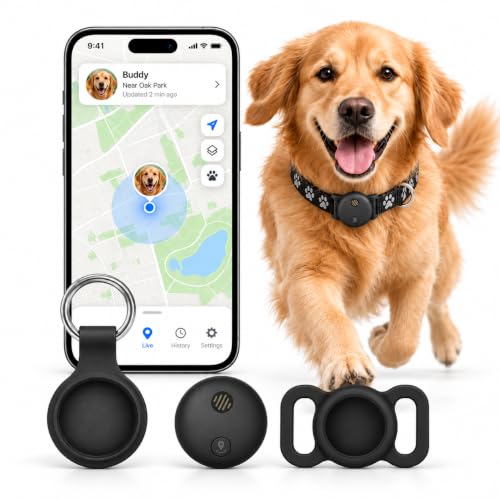
A 500-day battery life means you can attach this tracker to your dog’s collar and basically forget about charging for a year and a half. That’s the standout feature of the TSXFYCS Dog GPS Tracker: it’s designed for owners who want a set-it-and-forget-it safety net rather than a live-tracking dashboard. It’s completely free to run, with no monthly fees or SIM card, and the IP68 waterproofing with two included protective cases means it can handle mud puddles, rain, and the general chaos of outdoor adventures without fuss.
This tracker is iOS-only, so Android users are out of luck. If your main worry is losing a dog on a long hike and you want a lightweight, no-hassle locator that lasts through multiple seasons, this does the job quietly and well.
Product photos
Tractive XL Smart Dog GPS Tracker
What We Like
- Live location updates every 2-3 seconds
- Heart and respiratory rate monitoring
- Up to 6 weeks battery life
- Health and barking pattern alerts
Trade-offs
- Requires ongoing subscription for service
- Only for dogs over 44 lbs
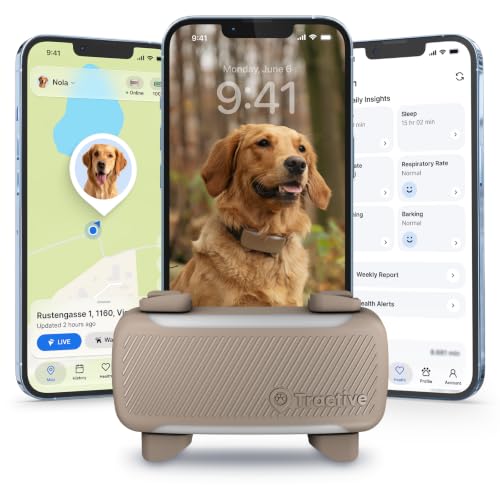
The Tractive XL tracker updates its location every two to three seconds with unlimited range, which means you can follow a wandering dog across town or even across state lines in near real time. That kind of responsiveness matters most for large breeds that cover ground fast and far. It also monitors heart and respiratory rates, plus barking patterns, and sends alerts when those deviate from normal. For owners of big dogs who want health insight alongside location tracking, this is the one to look at.
Unlike the Dogtra PATHFINDER2 MINI, which has no monthly fee and a four-mile range, Tractive requires a plan starting around five dollars a month to keep the built-in SIM active. The battery life stretches up to six weeks, so you are not charging constantly, but the ongoing cost is something to factor in. If you are comfortable with a subscription for unlimited range and health monitoring, this covers ground the others do not.
Product photos
Garmin Alpha 300i Dog Tracking System
What We Like
- Satellite SOS and two-way texting
- 55-hour user-replaceable battery
- Tracks up to 20 dogs at once
- 9-mile range with 2.5-second updates
Trade-offs
- Requires compatible Garmin collars for multi-dog tracking
- Bundle weight of 3.4 pounds is heavy for long hikes
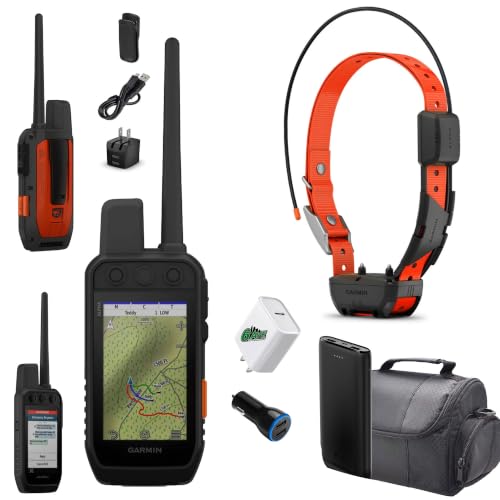
The Garmin Alpha 300i uses inReach satellite communication to send SOS messages and two-way texts from places where cell towers don’t exist. That alone puts it in a different category than GPS-only trackers, when your dog bolts into backcountry or you’re hunting miles from a road, you’re not cut off from help. The handheld tracks up to 20 dogs with a 9-mile range and updates positions every 2.5 seconds on a bright 3.5-inch touchscreen. The battery runs 55 hours and swaps out in the field, so a multi-day trip doesn’t end early.
Heft is the main concern: the bundle weighs 3.4 pounds, which is noticeable if you’re hiking light or want something clipped to a belt. You also need Garmin’s own TT25 collars to track multiple dogs, so it’s a system investment, not a standalone gadget. But for anyone who regularly hunts, hikes, or lives where the map says ‘no service,’ this is the one that keeps you connected when everything else goes silent.
Fi Ultra Satellite GPS Dog Tracker

What We Like
- Satellite connectivity via Starlink for remote areas
- IP68/66K waterproof and durable build
- Sound and vibration recall, no shock
- Escape alerts with geofence Safe Zones
Trade-offs
- Requires ongoing membership for all features
- 5-day battery is shorter than some competitors
- Designed for medium and large dogs only
The Fi Ultra uses satellite connectivity via Starlink to keep you connected to your dog in remote areas across North America, tracking where cell service ends. That satellite link is a key differentiator from trackers that rely only on LTE, so if your dog wanders into areas without cell coverage, you still get location data. It suits owners who regularly hike, hunt, or live near patchy coverage and want real-time location data no matter how far off the grid the trail gets.
A GPS/LTE and satellite plan is required at activation, and the 5-day battery means you’ll be charging more often than with a Tractive XL (up to 6 weeks) if you forget to plug it in after a long weekend.
Product photos
How We Evaluated Dog GPS Systems
To build this guide, we examined the technical specifications and manufacturer documentation for each system, then cross-referenced those claims with patterns we found in owner feedback and expert round-ups.
Four criteria mattered most for this category. Coverage type was the first: does the tracker rely on cellular networks, satellite signals, or a combination? A cellular-only system is fine for the suburbs but useless on a backcountry hike. Recurring cost was the second: subscription fees range from zero to over a hundred dollars a year. The total cost over a few years often exceeds the price of the tracker itself. Battery life came third, because a tracker that dies mid-walk is no tracker at all. Finally, we weighed size and weight limits, since many systems are built for medium to medium to large dogs and simply won’t work for small breeds.
The honest limit of a research-led evaluation is that we cannot report how a tracker performs in every weather condition or terrain type. Owner feedback helps, but individual results vary based on local cell coverage, tree density, and how far a dog actually roams. We flag these variables in each product’s trade-offs so you know what to verify before buying.
What To Look For In Dog GPS Systems
Before you buy, match the tracker’s technology to the places your dog actually goes. A cellular tracker is cheap up front but useless off-grid, while a satellite system costs more but works everywhere. The best choice depends on your terrain, your budget for ongoing fees, and your dog’s size.
Choose a dog GPS system by matching its coverage type (cellular, satellite, or hybrid) to your typical walking areas, then compare recurring subscription costs, battery life, and the minimum dog weight the collar supports.
Coverage Type: Cellular vs. Satellite vs. Hybrid
The single most important decision is how the tracker communicates. Cellular trackers (like the Fi Mini or PetSafe GPS) use LTE-M or 4G networks and require a monthly subscription. They work well in towns and suburbs but go silent the moment your dog leaves cell range. Satellite trackers (like the Garmin Alpha 300i) use GPS satellites for location and a separate satellite network for communication. That setup works in remote areas but costs more. Hybrid systems (like the Fi Ultra with Starlink) combine both, but still require a membership.
If you mostly walk in a city or suburban neighborhood, a cellular tracker is fine. If you hike, hunt, or live in a rural area with spotty coverage, you need satellite capability. The Dogtra PATHFINDER2 MINI is a unique hybrid: it uses radio frequency for tracking rather than cellular, giving you off-grid capability with no monthly fee.
Recurring Costs: Subscription vs. No-Fee
This is where the long-term cost of a system can surprise you. A tracker that costs a moderate amount up front might require a monthly subscription, totaling a significant sum over two years. Over the life of a dog, those fees can exceed the cost of several trackers. The no-subscription models, the Dogtra PATHFINDER2 MINI, Nilone, Galawelly, and TSXFYCS, have a higher upfront price but zero recurring fees.
Subscription-based trackers often include features like escape alerts, health monitoring, and cloud-based location history. If those features matter to you, the monthly fee may be worth it. But if you just want to know where your dog is, a no-fee system is the better value.
Battery Life and Charging
Battery life varies wildly between systems, from a few days to several weeks. The PetSafe GPS dog tracker and Tractive XL both advertise long battery life measured in weeks, partly because they use power-saving modes that update location less frequently. The Garmin Alpha 300i offers a user-replaceable battery, which is a huge advantage on multi-day trips because you can carry spares.
Real-world battery life depends on update frequency, signal strength, and temperature. A tracker that updates every 2-3 seconds will drain faster than one that checks every 60 seconds. If you need constant real-time updates (for a fast-running hunting dog), expect shorter battery life. If you just want a daily location check, a longer-lasting tracker works fine.
Size, Weight, and Dog Suitability
Not every tracker fits every dog. Some systems have a minimum weight requirement, the Dogtra PATHFINDER2 MINI and Tractive XL both require dogs over 25 and 44 pounds respectively. For small breeds, you need a lightweight tracker like the Fi Mini at 0.56 ounces or the compact Nilone.
Collar size also matters. Some trackers attach to any collar, while others require a proprietary collar or harness. If you switch collars frequently or use a harness for walks, look for a tracker that clips on rather than one that replaces the collar entirely.
- Check the minimum dog weight before buying, some trackers are too heavy for small breeds.
- Verify the coverage type matches your typical walking areas (cellular for suburbs, satellite for rural).
- Add up subscription costs for two years and compare against a no-fee model.
- Look at battery life in the mode you will actually use (real-time vs. Power-save).
- Confirm the tracker attaches to your existing collar or requires a proprietary one.
A good rule of thumb: if you walk in cell range, a cellular tracker with a subscription is fine. If you ever leave cell range, go with a satellite or radio-frequency system.
Dog GPS Systems Compared
The table below compares the key specs of all ten dog GPS systems side by side, so you can see the differences in coverage, battery life, and recurring costs at a glance.
| Product | Weight | Subscription | Battery Life |
|---|---|---|---|
| Dogtra PATHFINDER2 MINI GPS Tracking System | 0.7 pounds | None | N/A |
| PetSafe GPS Dog Tracker | 0.2 pounds | Required | Up to 30 days |
| Nilone GPS Tracker for Dogs | N/A | No monthly fee | N/A |
| Fi Mini GPS Dog Tracker | 0.56 ounces | Fi Membership required | Up to 2 months |
| Galawelly GPS Tracker for Dogs | N/A | No monthly fee | N/A |
| Petcube GPS Tracker for Dogs | N/A | GPS plan from per month | Up to 30 days |
| TSXFYCS Dog GPS Tracker | N/A | None | Up to 500 days |
| Tractive XL Smart Dog GPS Tracker | 0.2 pounds | Required | Up to 6 weeks |
| Garmin Alpha 300i Dog Tracking System | 3.4 pounds | N/A | Up to 55 hours |
| Fi Ultra Satellite GPS Dog Tracker | 0.1 pounds | Yes (GPS/LTE & satellite plan) | Up to 5 days |
Frequently Asked Questions
What is the best dog GPS system without a monthly fee?
The Dogtra PATHFINDER2 MINI is the best overall no-fee system, with a 4-mile radio range and no subscription required. The Nilone and Galawelly trackers also have no monthly fees but rely on your phone for the display. For a full breakdown, see our GPS tracker reviews.
How does a GPS dog tracker work?
A GPS dog tracker uses satellites to determine the dog’s location, then sends that data to a handheld receiver or your phone via radio frequency, cellular network, or satellite communication. The type of connection determines where the tracker works and whether it requires a subscription.
Can I use a dog GPS tracker without cell service?
Yes, but only if the tracker uses radio frequency or satellite communication rather than cellular networks. The Dogtra PATHFINDER2 MINI uses radio frequency and works without cell service. The Garmin Alpha 300i uses satellite communication and also works off-grid. Cellular trackers like the PetSafe and Tractive will not work without a cell signal.
What is the lightest GPS tracker for a small dog?
The Fi Mini GPS Dog Tracker weighs only 0.56 ounces and attaches to any collar or harness, making it the lightest option for small dogs. The Nilone GPS Tracker is also compact and lightweight, though it is designed for iPhone users only. Both are good options if you need a tracker for small dogs.
How long does the battery last on a dog GPS tracker?
Battery life ranges from a few days to several weeks depending on the model and update frequency. The Tractive XL advertises up to six weeks in power-save mode, while the Fi Ultra lasts about five days with satellite connectivity. The Garmin Alpha 300i has a user-replaceable battery that lasts 55 hours, which is ideal for extended trips.
The Bottom Line
For most dog owners, the Dogtra PATHFINDER2 MINI is the best overall choice because it combines a long 4-mile range, reliable off-grid tracking via radio frequency, and zero subscription fees. It is built for medium to large dogs over 25 pounds and works independently from your phone, so you are not stuck if your battery dies or you leave cell range. If you have a small dog or prefer a phone-based system, this is not the tracker for you.
If your priority is avoiding monthly costs entirely, the Nilone and Galawelly trackers both offer no-fee tracking with solid waterproof ratings, though they require a phone for the display. For owners who hike in remote backcountry and want satellite SOS capability, the Garmin Alpha 300i is the right tool, but it comes with a higher price and a heavier bundle. Budget-conscious buyers should look at the Galawelly for its combination of no subscription and route playback.
The single most important factor in choosing a dog GPS system is matching the coverage type to where you actually walk. A cheap cellular tracker that fails on your first off-grid hike is no bargain. Pick the system that works where your dog roams, and the rest of the features will fall into place.
