
9 Best Dog Food For Renal Health in 2026
This post contains affiliate links. As an Amazon Associate, we earn from qualifying purchases.
For dogs managing chronic kidney disease, diet is the single most powerful tool you have. Hill’s Prescription Diet k/d Kidney Care Wet Dog Food is our Best Overall pick because its nutrition is shown to improve and lengthen quality of life through reduced phosphorus and sodium, with prebiotic kidney support. Other standouts include the Purina Pro Plan Vet Diets NF Kidney Function Dry Dog Food for restricted phosphorus kibble and JustFoodForDogs Frozen Fresh Prescription Dog Food Kidney for a vet-recommended fresh option.
Renal health in dogs is a progressive condition, and the right diet can slow its advancement while maintaining your dog’s quality of life. The challenge is that kidney-friendly food must balance low phosphorus, controlled sodium, and reduced protein, all while remaining palatable enough that a dog with a suppressed appetite will actually eat it. Not every formula works for every dog, which is why we’ve evaluated options across textures, protein sources, and prescription requirements.
This guide is built from manufacturer specifications, veterinary nutrition guidelines, and patterns in owner feedback. We’ve organized nine products by their specific strengths, from prescription wet foods to over-the-counter options and even renal-friendly treats, so you can match a diet to your dog’s stage of kidney disease and eating preferences.
Top 9 Dog Foods For Renal Health in the Market
Certain content that appears on this site comes from Amazon. This content is provided "as is" and is subject to change or removal at any time.
The Best Dog Foods For Renal Health, Reviewed
Hill's Prescription Diet k/d Kidney Care Wet Dog Food

What We Like
- Nutrition shown to improve and lengthen quality of life
- Reduced phosphorus and sodium for kidney function
Trade-offs
- Requires veterinary prescription to purchase
- Wet food has shorter shelf life once opened
- Only available in wet form, not dry kibble
The trade-off is that this is a prescription food, so you cannot just add it to your cart without a vet’s okay. That is standard for therapeutic renal diets, but it does add a step compared to an over-the-counter option like Dave’s Pet Food Kidney Care. If your dog prefers dry food, the Purina Pro Plan Vet Diets NF offers a kibble alternative. For most owners managing chronic kidney disease, the prescription requirement is a small hurdle for a food that addresses both the mineral and microbiome angles.
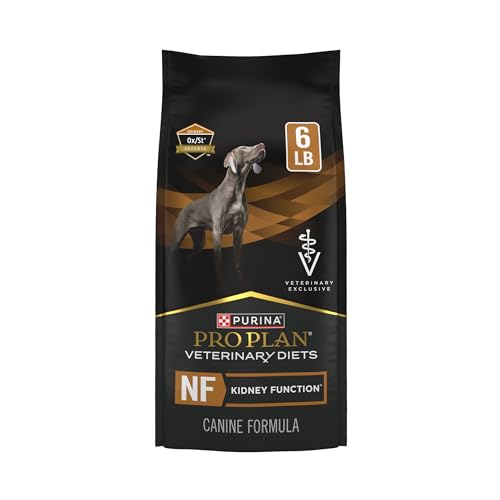
Purina Pro Plan Vet Diets NF Kidney Function Dry Dog Food
What We Like
- Restricted phosphorus for kidney management
- Reduced sodium supports renal health
- Energy-dense formula for needed calories
- Contains antioxidants for overall support
Trade-offs
- Dry kibble only, no moisture for hydration support
- Not suitable for dogs needing a wet food texture
Restricted phosphorus is the single most critical factor in managing kidney function in dogs, and this kibble delivers exactly that, with a restricted level that helps slow the progression of renal damage. It also cuts sodium to reduce strain on the kidneys and packs the calories into a smaller serving so a dog with a poor appetite can still get enough energy. That makes it a straightforward, no-surprises option for owners who need a dry food that hits the key renal targets without fuss.
Dry kibble lacks the moisture that helps flush a compromised urinary system, something the Hill’s Prescription Diet k/d wet food provides in a stew format. If your dog already drinks well or you’re mixing in water, the convenience of a shelf-stable bag and the restricted phosphorus here outweighs that gap. For dogs that refuse wet food or need a consistent dry base, this is the kibble to reach for.
Royal Canin Veterinary Renal Support S Dry Dog Food

What We Like
- Energy-dense formula reduces meal volume
- Low phosphorus supports kidney function
- Antioxidant complex promotes kidney care
Trade-offs
- Veterinary-exclusive, requires a prescription
- Dry food only; less moisture for renal needs
Because this is a dry food, it provides less moisture than a wet diet, which is something to consider for dogs that benefit from extra hydration. If your dog will eat wet food, Hill’s Prescription Diet k/d Kidney Care Wet Dog Food is another option that offers a different texture. But if your dog prefers kibble or you need a food that stays fresh in a bowl throughout the day, this Royal Canin formula focuses on palatability and appetite support. Note that this is a veterinary-exclusive product, so you will need to consult your veterinarian to purchase it.
JustFoodForDogs Frozen Fresh Prescription Dog Food Kidney
What We Like
- 100% human-grade whole food ingredients
- Science-backed by university feeding trials
- No preservatives or growth hormones
- Can be used as meal or topper
Trade-offs
- Must be kept frozen until use
- Fish-based recipes need feeding within 3 days
- Requires vet prescription to purchase
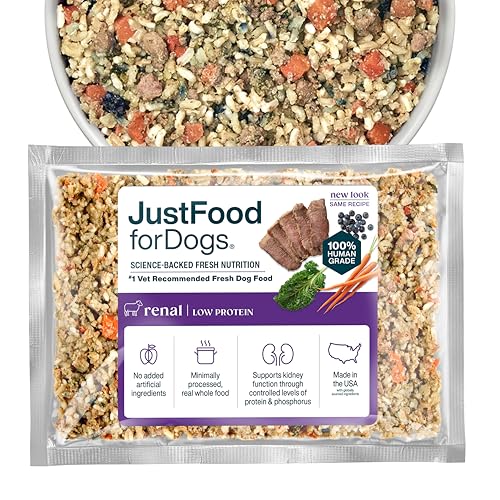
A high-calorie, low-protein frozen fresh diet means this food is designed for dogs who need concentrated nutrition without overloading their kidneys, and who may have reduced appetites. Developed by a team that includes a board-certified nutritionist and supported by independent university research within AAFCO protocol, it is the only fresh dog food brand used in feeding trials published in peer-reviewed scientific journals. That scientific backing makes it a strong option for owners who want whole-food ingredients combined with targeted renal support.
JustFoodForDogs Frozen Fresh Prescription Dog Food Kidney requires frozen storage and has a shorter fridge life after thawing: fish recipes need to be used within three days, other proteins within four. That means it demands more planning than a shelf-stable kibble like Purina Pro Plan Vet Diets NF Kidney Function Dry Dog Food. For dogs who need a fresh texture and human-grade ingredients, this can be a helpful option for kidney support.
This diet is best suited for owners who are comfortable with frozen storage and can plan around the short thawed window. It is not ideal for those who prefer shelf-stable food or need a longer open-fridge period. The fresh, human-grade ingredients and high-calorie formula can support dogs with kidney conditions, especially those who need concentrated nutrition.
Product photos
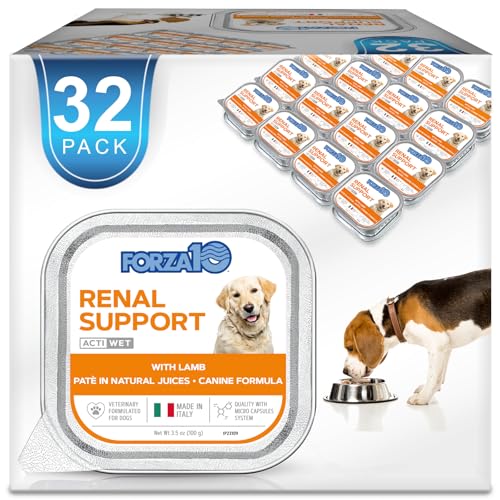
Forza10 Renal Wet Dog Food for Kidney Support
What We Like
- Hydrolyzed protein for food sensitivities
- Cranberries and dandelion support kidney health
- Non-GMO, no by-products or artificial additives
Trade-offs
- Only 3.5 oz per can, small servings
- Single flavor (lamb) limits picky eaters
- Wet food only, no dry kibble option
This food uses hydrolyzed protein, which is broken down into smaller pieces to reduce the chance of triggering food sensitivities in dogs with kidney concerns. The added cranberries and dried dandelion are included to support kidney health, and the non-GMO recipe is free from by-products, wheat, soy, and artificial additives. That makes it a straightforward option for owners who want a limited-ingredient wet food that addresses both renal support and food sensitivities in one product.
Forza10 Renal Wet Dog Food for Kidney Support comes in small cans: each holds only 3.5 ounces, so a medium or large dog will need multiple cans per meal. The single lamb flavor means you’re stuck if your dog turns up their nose. Compared to Hill’s Prescription Diet k/d Kidney Care Wet Dog Food, which comes in 12.5-ounce cans with a chicken and vegetable stew variety, the Forza10 offers a more specialized protein source but less flexibility in volume and taste. Best for owners of small to medium dogs with both kidney concerns and known food sensitivities who don’t mind stocking up on small cans.
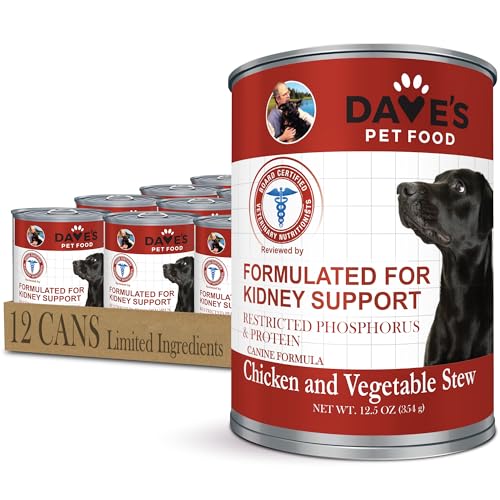
Dave's Pet Food Kidney Care Dog Food
What We Like
- No prescription needed for clinical-grade diet
- Low phosphorus (max 0.30%) supports kidney function
- Moisture-rich stew promotes hydration
- Fortified with B-complex vitamins for lost nutrients
Trade-offs
- Wet food only, no dry kibble option offered
- Not suitable for dogs needing high-protein diets
A low phosphorus level capped at 0.30% makes Dave’s Pet Food Kidney Care Dog Food a precise tool for managing canine kidney disease without needing a vet’s prescription. Developed in collaboration with board-certified veterinary nutritionists, it targets the two big renal concerns: controlled protein to reduce kidney workload and added broth to encourage fluid intake, critical for dogs that don’t drink enough on their own. The B-complex vitamins help replace what gets flushed out with increased urination, and the real chicken, carrots, and brown rice keep it gentle on digestion while tempting picky eaters with that savory aroma. For anyone who wants a clinical-grade renal diet without the hassle of a prescription, this is the most straightforward option available.
This is strictly a wet food, so if your dog prefers kibble or you need the convenience of dry storage, you will be looking at something like Purina Pro Plan Vet Diets NF Kidney Function Dry Dog Food instead. The soft, stew-like texture is great for dogs with reduced appetite or dental issues, but it does mean shorter shelf life after opening and a messier feeding routine. For the buyer who values prescription-level kidney support without the prescription, this delivers exactly what it promises.
Product photos
Blue Buffalo Natural Veterinary Diet Kidney Support Dry Dog Food
What We Like
- Real chicken is first ingredient
- Controlled phosphorus and sodium
- No poultry by-product meals
- No corn, wheat, or soy
Trade-offs
- Requires veterinarian authorization to buy
- Dry kibble only, no wet food option in this line
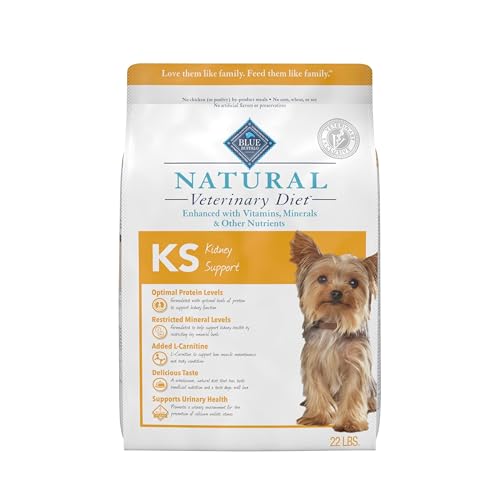
A 22-pound bag with real chicken listed as the first ingredient means this kidney diet starts with a protein source most dogs actually like, rather than relying on fillers or by-products. This food is designed for dogs whose kidneys need a lighter workload, with controlled phosphorus and sodium to support that goal. It’s a practical choice for someone who wants a chicken-based option that still follows veterinary renal guidelines.
The real trade-off here is the prescription requirement: you cannot just grab this bag off the shelf, your vet has to authorize it first, which adds a step before you can switch foods. If your dog needs a chicken-first recipe with vet oversight built in, this bag delivers that combination without the by-product meals or corn that cheaper foods lean on.
Product photos
Kidney Restore Bacon Flavor Dog Treats

What We Like
- Includes anti-inflammatory herbs and vitamins
- Low protein recipe for renal support
- Contains turmeric, cranberry, and B vitamins
Trade-offs
- Not a complete meal, treat only
- Requires pairing with a renal diet for best results
At 1.1 pounds, this bag of low-protein treats is a snack meant to complement a renal care plan, not replace it. The plant-derived bacon flavor delivers turmeric, cranberry extract, and B vitamins that owners report help support kidney health. It’s a practical way to reward a dog already on a veterinary kidney diet without undermining their medical needs.
These treats are not a standalone solution; they work best when paired with a complete renal food like Hill’s Prescription Diet k/d or Purina Pro Plan NF. If your dog is picky about novel flavors, the bacon taste (though cleverly plant-based) might not win them over on the first try. For owners committed to a full kidney management routine, this is a thoughtful addition, just don’t expect it to replace the main course.
Product photos
JustFoodForDogs Pantry Fresh Prescription Dog Food Kidney
What We Like
- 100% human-grade whole food ingredients
- Shelf-stable, no refrigeration needed
- Vet-recommended fresh food brand
- 40% more digestible than dry food
Trade-offs
- Requires veterinary prescription to purchase
- Low protein limits use for active dogs without kidney issues
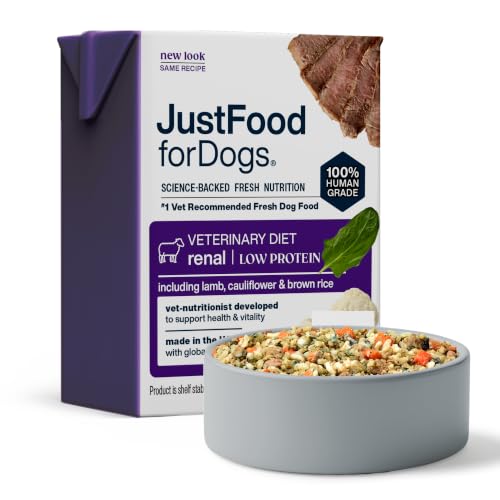
The standout feature here is that this is a shelf-stable, human-grade wet food, no refrigeration needed until you open a tray. That makes it far more convenient than frozen fresh diets for owners who travel or lack freezer space. It’s also 40% more digestible than dry kibble, so a dog with compromised kidneys gets more nutrition from every bite without the extra waste load on the system. That combination of digestibility and convenience makes it a strong option for shelf-stable renal food in this guide.
The only fresh dog food brand used in feeding trials published in peer-reviewed scientific journals requires a veterinary prescription, so this food is intended for dogs with diagnosed kidney disease under a vet’s direction. For owners who want human-grade ingredients without freezer storage, this shelf-stable version offers the same targeted renal support as the frozen version from the same brand.
Product photos
How We Evaluated Dog Foods For Renal Health
We started with the nutritional benchmarks that matter most for kidney disease: phosphorus content, sodium levels, protein quality, and calorie density. Each product was assessed against veterinary standards for renal diets, using manufacturer-published guaranteed analyses and feeding trial data.
Our evaluation focused on four criteria: phosphorus restriction (the primary dietary lever for slowing kidney disease progression), moisture content (critical for hydration support in dogs that may not drink enough), ingredient quality and digestibility (to reduce metabolic waste), and palatability (since appetite loss is common in renal patients). We also weighed practical factors like storage requirements, prescription access, and whether the food works as a complete meal or needs supplementation.
A research-led evaluation has limits, we don’t conduct feeding trials or lab analyses ourselves. For a deeper look at how these diets compare, our guide on renal dog food covers the full selection process.
What To Look For In Dog Foods For Renal Health
Choosing a kidney-supportive diet means reading labels for specific numbers and understanding how your dog’s disease stage affects nutritional needs. The table below shows how our top picks compare on the most important factors.
Look for low phosphorus, low sodium, and moderate-to-low high-quality protein. Moisture-rich foods help hydration. Prescription diets are formulated to precise clinical standards; over-the-counter options offer convenience but less strict control.
Phosphorus Restriction
Phosphorus is the primary concern in renal diets because damaged kidneys cannot filter it efficiently, leading to further kidney damage. Most veterinary renal diets target a low phosphorus level on a dry matter basis. The Dave’s Pet Food Kidney Care Dog Food specifies a maximum of 0.30% phosphorus as-fed, which is tightly controlled.
When comparing dry foods, remember that kibble’s lower moisture content means the dry-matter phosphorus percentage will be higher than the as-fed number on the label. For dogs in later stages of kidney disease, tighter phosphorus restriction becomes more critical.
Moisture Content and Hydration
Dogs with kidney disease lose the ability to concentrate urine, meaning they need more water to flush waste products. Wet foods contain much more moisture than dry kibble. Feeding a canned or fresh diet directly supports hydration.
The JustFoodForDogs Pantry Fresh Prescription Dog Food Kidney offers a shelf-stable fresh option that still provides high moisture. If you prefer a dry kibble like the Purina Pro Plan Vet Diets NF, consider adding water or low-sodium broth to increase moisture intake. Many owners combine a wet base with a dry topper for texture and hydration, using a kidney health dog food.
Protein Quality and Quantity
Reducing protein is a common strategy, but the quality of the protein matters more than the sheer amount. High-quality, highly digestible protein produces fewer nitrogenous waste products that stressed kidneys must filter. The Royal Canin Veterinary Renal Support S uses an energy-dense formula that reduces meal volume while still providing adequate nutrition. For dogs with concurrent food sensitivities, the Forza10 Renal Wet Dog Food uses hydrolyzed protein that is broken down enough to avoid triggering allergic reactions while still being usable by the body.
Prescription vs. Over-the-Counter
Veterinary prescription diets like Hill’s k/d and Purina NF are formulated to precise nutritional specifications for each stage of kidney disease. They undergo feeding trials and are backed by research. Over-the-counter options like Dave’s Pet Food Kidney Care offer a clinical-grade formula without a vet visit, which can be helpful for owners who cannot easily access a veterinarian or want a transitional diet.
However, non-prescription diets cannot guarantee the same level of phosphorus and sodium restriction. If your dog has an official diagnosis, a prescription diet is generally the safer choice.
- Check the phosphorus percentage on the guaranteed analysis, look for “maximum” values, not “minimum.”
- Compare the calorie density: renal diets are often energy-dense so dogs eat smaller volumes.
- Verify whether the food is a complete and balanced diet or intended as a supplement.
- Ask your vet about the appropriate protein level for your dog’s specific kidney disease stage. Consider a diet for kidney failure if your dog has advanced disease that requires tighter restrictions.
A good rule of thumb: if your dog is eating less than their previous meal volume, switch to a more energy-dense or more palatable renal formula.
Dog Foods For Renal Health Compared
The table below compares the nine renal health dog foods across the factors that matter most for managing kidney disease: form, phosphorus control, prescription requirement, and key features.
| Product | Form | Protein Type | Key Feature |
|---|---|---|---|
| Hill's Prescription Diet k/d Kidney Care Wet Dog Food | Wet, canned stew | N/A | ActivBiome+ Kidney Defense prebiotics |
| Purina Pro Plan Vet Diets NF Kidney Function Dry Dog Food | Dry | Restricted high-quality protein | Energy-dense |
| Royal Canin Veterinary Renal Support S Dry Dog Food | Dry | Targeted | Antioxidants, fish oil fatty acids |
| JustFoodForDogs Frozen Fresh Prescription Dog Food Kidney | Frozen fresh | Low protein | High-calorie diet |
| Forza10 Renal Wet Dog Food for Kidney Support | Wet | Hydrolyzed lamb | Cranberries, dried dandelion |
| Dave's Pet Food Kidney Care Dog Food | Wet canned stew | Controlled protein | 20 vitamins & minerals, B-complex |
| Blue Buffalo Natural Veterinary Diet Kidney Support Dry Dog Food | Dry | Chicken #1 ingredient | Controlled minerals |
| Kidney Restore Bacon Flavor Dog Treats | Treat | Low protein | Turmeric, cranberry, pumpkin, B vitamins |
| JustFoodForDogs Pantry Fresh Prescription Dog Food Kidney | Wet / topper | Low Protein | Shelf-stable, no refrigeration needed |
Frequently Asked Questions
Can I feed my dog regular dog food if they have kidney disease?
No. Regular dog food typically contains too much phosphorus and sodium for a dog with impaired kidneys. Even high-quality maintenance diets can accelerate kidney damage. A veterinary renal diet or a carefully formulated over-the-counter kidney support food is necessary to slow disease progression and manage symptoms.
What is the difference between prescription and non-prescription renal diets?
Prescription renal diets like Hill’s k/d and Purina NF are formulated to meet specific nutritional profiles for each stage of kidney disease and are backed by feeding trials. They require a veterinarian’s authorization because they must be used under medical supervision. Non-prescription options like Dave’s Pet Food Kidney Care offer controlled phosphorus and protein but cannot guarantee the same level of restriction as prescription diets.
How do I transition my dog to a kidney diet?
Transition over a week or more by gradually mixing increasing amounts of the new renal food with the old food. Start with a small amount of new food mixed with the old food for a few days, then increase the proportion gradually until fully switched. Some dogs with kidney disease have sensitive stomachs, so go slower if vomiting or diarrhea occurs. Adding a renal support diet slowly helps the digestive system adjust.
Can kidney disease in dogs be reversed by diet?
Diet cannot reverse existing kidney damage, but it can slow disease progression and improve quality of life. The right renal diet reduces the workload on damaged kidneys by limiting phosphorus, sodium, and protein waste products. Many dogs on appropriate renal diets maintain stable kidney function for months or years longer than dogs eating standard food.
Are renal-friendly treats safe for dogs with kidney disease?
Yes, when chosen carefully. Treats like the Kidney Restore Bacon Flavor Dog Treats are formulated with low protein and added renal-supporting ingredients like cranberry and turmeric. They should only make up 10% or less of daily calories and must be paired with a complete renal diet. Avoid high-protein meat treats, cheese, and commercial biscuits that are high in phosphorus.
The Bottom Line
For dogs with diagnosed chronic kidney disease, Hill’s Prescription Diet k/d Kidney Care Wet Dog Food remains a well-established choice. Its reduced phosphorus and sodium levels, combined with prebiotic fiber for gut health, address the core nutritional challenges of renal disease while maintaining palatability. This is the food most veterinarians reach for first, and for good reason.
If your dog refuses wet food or needs the convenience of kibble, the Purina Pro Plan Vet Diets NF Kidney Function Dry Dog Food offers restricted phosphorus in an energy-dense dry format. For owners who want a fresh, human-grade option without freezer space, the JustFoodForDogs Pantry Fresh Prescription Dog Food Kidney provides shelf-stable convenience with high digestibility. And if you need an over-the-counter option, Dave’s Pet Food Kidney Care delivers controlled phosphorus without a prescription.
The single most important factor in choosing a renal diet is consistency, your dog must eat it willingly and in sufficient quantities to maintain body condition. Work with your veterinarian to determine the right stage-specific formula, and don’t hesitate to try two or three options before settling on the one your dog will actually finish. For more targeted recommendations, our guide on food for kidney disease breaks down options by disease stage and feeding preference.
