
10 Best Collars For Doberman Pinscher in 2026
This post contains affiliate links. As an Amazon Associate, we earn from qualifying purchases.
The Mayerzon Martingale No Pull Dog Collar wins as the best overall for Dobermans because its padded neoprene and reflective webbing combine comfort, training utility, and safety in one package. For owners needing instant traffic control, the Joytale Tactical Dog Collar provides a heavy-duty handle and metal buckle. Those committed to structured training will prefer the Herm Sprenger Prong Training Collar for its precise fit and German engineering.
A Doberman’s deep chest and narrow head create a unique challenge: standard collars can slip right off, while ill-fitting training collars can cause discomfort or fail to correct. The right collar must sit high on the neck, distribute pressure evenly, and stay secure during a sudden lunge. Material and hardware durability matter just as much, since this breed can generate serious pulling force.
This guide is built from manufacturer specifications, expert round-ups, and patterns in owner feedback across ten distinct collar styles. We break down which design suits which Doberman temperament and walking scenario, so you can match the collar to your dog’s specific needs rather than guessing.
Top 10 Collars For Doberman Pinscher in the Market
Certain content that appears on this site comes from Amazon. This content is provided "as is" and is subject to change or removal at any time.
The Best Collars For Doberman Pinscher, Reviewed
Mayerzon Martingale No Pull Dog Collar

What We Like
- Reflective webbing for low-light safety
- Neoprene padding for comfort
- Quick-release buckle for easy on/off
- Two-way chain links apply gentle correction
Trade-offs
- Limited to medium/large neck sizes (17.75-21")
- Needs a backup collar or shorter leash on narrow-headed dogs
A martingale collar that tightens when your Doberman pulls and loosens when he relaxes, that’s the core idea here. The built-in two-way chain links deliver that correction in a way that mimics how a mother dog nips her pup. The reflective webbing is a practical touch for evening walks, and the neoprene padding keeps it from digging in during training sessions. For a breed with a deep chest and a tendency to lean into pressure, this design gives you control without the drama of a prong collar. It’s the pick for owners who want effective training tools that don’t scream “training collar” in public.
That’s a real annoyance if you’re trying to keep it high on the neck for best results. Compared to the Herm Sprenger prong collar, this is gentler and less intimidating, but it also won’t give you the same instant correction for a hard puller. If your dog is more of a steady puller than a lunger, this is a solid middle ground.
Product photos
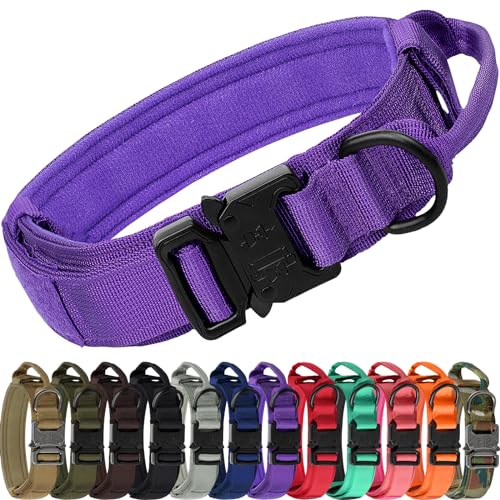
Joytale Tactical Dog Collar
What We Like
- Emergency control handle for instant grip
- Metal quick-release buckle holds heavy pulls
- Padded inner lining prevents chafing
- Velcro patch panel for ID or morale patches
Trade-offs
- Velcro strap is for sizing only, not primary security
- No reflective elements for low-light visibility
Double-layered 1000D nylon and a zinc-alloy quick-release buckle mean this collar stands up to the full-strength pull of Pit Bulls, German Shepherds, and Rottweilers without snapping or fraying. The control handle on top is the real point of difference: you grab it to steady your dog at a curb or when a delivery driver appears. That gives you close-range authority without fumbling for the leash. This collar suits owners who want a rugged, grab-and-go option for training or high-traffic walks, where split-second control matters more than a polished look.
The trade-off is that the Velcro strap only adjusts sizing; the metal buckle does the real securing work, so you need to fit it correctly from the start. Compared to the Max and Neo Nylon Martingale Collar, which is a different style of collar, the Joytale is built for direct control rather than gentle correction. Not ideal if your dog has a very slim neck or you prefer a collar that doubles as a nighttime visibility aid.
Product photos
Herm Sprenger Prong Training Collar

What We Like
- Patented ClicLock buckle for easy on/off
- Fully rotational D-ring for leash attachment
- Made in Germany with precise engineering
- Enlarge or shorten with extra links
Trade-offs
- Neck size limited to 15 inches max
- Requires backup collar for added safety
- Traditional assembly chain tightens when dog pulls
A 2.25 mm wire gauge and fully rotational D-ring mean the collar delivers consistent, controlled correction without binding or twisting, which matters when training a strong-pulling Doberman. It sits snugly under the jawline for clear communication, and the ClicLock buckle lets you get it on and off quickly, no fumbling with a center plate. The collar is designed for training, with the traditional assembly chain tightening when the dog pulls on the leash.
The 15-inch neck size limit rules out larger dogs with thicker necks, and Herm Sprenger itself recommends pairing it with a backup collar for safety, adding an extra step. Compared to the Mayerzon Martingale No Pull Collar, which uses a different mechanism, the prong design gives you more direct feedback but demands careful fitting and a bit more setup. If your dog is in the right size range and you’re serious about training, this is a reliable option.
Max and Neo Nylon Martingale Collar

What We Like
- Donates a collar to a rescue per sale
- Reflective stitching for night visibility
- Lockable snap buckle helps prevent accidental release
Trade-offs
- Medium size maxes out at 20-inch neck
- Plastic tag tab, not metal hardware
Every collar sold triggers a donation of an identical collar to a dog rescue, which is a direct way to support shelters that constantly need supplies. The 2mm nylon webbing and a lockable snap buckle mean the collar stays fastened even during active walks, and two wide reflective bands improve visibility at night. For someone who wants a functional martingale that also gives back, this is a practical choice.
At 1 inch wide with no padding, the collar can feel thin on a strong dog that pulls. The medium size fits necks up to 20 inches, suitable for many females and trim males, while larger dogs may need the large size. The BarkBot Heavy Duty Martingale includes a soft lining and weighs 0.8 pounds, so that collar is heavier and more padded. The Max and Neo is lighter and better suited for everyday use rather than heavy pulling.
ADITYNA Heavy Duty Leather Collar

What We Like
- Double-buckle security and two D-rings
- 400 lb pull test for strong dogs
- 100% genuine leather construction
- Comes in a gift-ready box
Trade-offs
- No reflective stitching or night visibility features
- Leather requires more care than nylon or webbing
This collar passed a 400-pound pulling test, which means it can handle the strength of a determined Doberman or Labrador without coming apart. The double-buckle closure and two D-rings give you two independent attachment points and a backup if one buckle fails. At 1.2 inches wide, it spreads pressure across the neck better than a narrow strap, yet it’s slim enough to sit comfortably under the jaw. The 100% genuine leather construction breaks in over time to conform to your dog’s shape, and the whole thing arrives in a gift-ready box. For anyone who needs a collar that looks like it belongs on a working dog and actually holds up to one, this handmade leather option is a strong candidate for the buying guide.
This collar is made from 100% genuine leather, so it will break in to your dog’s shape over time and develop a classic look that synthetic collars can’t match. It arrives in a beautiful gift box, making it an ideal choice for a special present. Owners should know that leather requires more care than nylon, it won’t shrug off rain or mud the way some synthetic collars do. But if you want a collar that smells like a tack room and comes without the studded styling of some other leather options, this delivers.
Product photos
BarkBot Heavy Duty Martingale Collar

What We Like
- Two reflective tubes for night visibility
- Zinc alloy buckle holds 400 lb pull
- Soft SBR inner lining prevents chafing
- Double-layer nylon webbing for durability
Trade-offs
- Only 1 inch wide, less pressure distribution on a strong puller
- No traffic handle for instant close control
A zinc alloy buckle rated to hold up to 400 pounds of pulling force means this collar won’t snap when a strong dog lunges. Two reflective tubes sewn into the webbing improve low-light visibility, so drivers and cyclists are more likely to spot your dog at night. The thickened SBR inner layer is designed to stay soft and breathable against the skin, which helps reduce chafing on short-coated breeds.
The zinc alloy buckle on this collar holds up to 400 pounds of pulling force, so it won’t pop open even with a strong dog lunging after a squirrel. At one inch wide, it’s narrower than the Joytale Tactical Dog Collar’s 1.5-inch band, and it lacks a traffic handle for quick grabs. Owners who walk a steady dog that just needs a secure buckle and nighttime visibility will find it works well.
Product photos
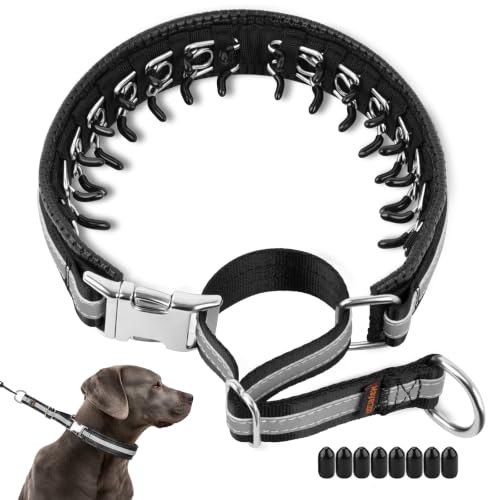
Mayerzon Heavy Duty No Pull Collar
What We Like
- Reinforced webbing and alloy buckle
- Gentle 2.5 mm symmetrical correction links
- Removable rubber tips for new users
- Reflective strip for low-light visibility
Trade-offs
- Requires backup collar or shorter leash fix
- Requires precise high-neck placement for effectiveness
A 25 mm alloy buckle and 2.5 mm symmetrical links mean this collar is built to handle a Doberman that treats every walk like a sled race. The reinforced webbing and thick foam padding keep the collar from digging in or stretching out, while the martingale action delivers gentle, balanced pressure similar to the corrections a mother dog uses with her puppies. For owners of strong pullers who want a training tool that provides consistent control during walks, this collar helps redirect that power into a proper heel.
One thing to know is that the collar can slide down on some dogs, even when sized correctly. Mayerzon’s own instructions suggest a wider backup collar or a shorter leash to keep it in place, a workaround, not a flaw, but something to plan for. If your Doberman is a determined puller and you want a no-fuss martingale that won’t quit, this is the one.
Product photos
PET ARTIST Genuine Leather Dog Collar

What We Like
- Rust-resistant zinc alloy hardware
- Double-layered genuine leather construction
- 7.5mm padded lining for comfort
Trade-offs
- No reflective or high-visibility features
- Leather requires more care than nylon webbing
- Not a martingale or no-pull design
The catch is that this is a basic dog collar, not a martingale or no-pull design, so if your dog tends to slip out of standard collars or needs correction while walking, you may want to consider other options. Leather also requires more care than nylon webbing, as it needs occasional conditioning to maintain its quality. But if your dog walks well on a loose leash and you want a comfortable, durable leather collar for daily use, this padded design delivers on that promise.
Product photos
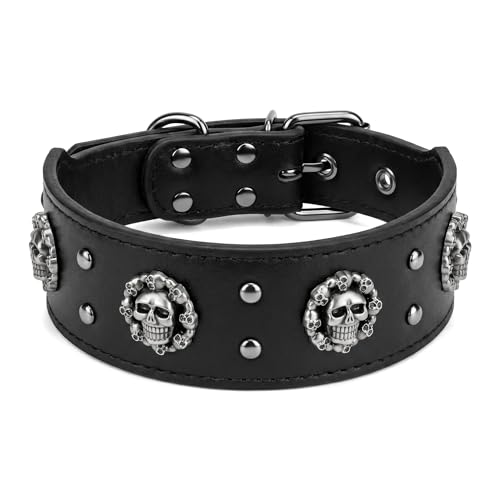
Pimaodog Studded Leather Dog Collar
What We Like
- 2-inch wide design disperses pulling pressure
- Rust-proof stainless steel hardware
- Adjustable fit for large dogs
Trade-offs
- No reflective or visibility features
- PU leather not genuine leather for purists.
A 2-inch wide collar spreads pull force across a larger surface area, which matters when your Doberman decides a squirrel is worth lunging for. That width, paired with the pressure-dispersing structure, reduces concentrated pressure on the trachea, a real concern for deep-chested breeds prone to collapsing tracheas. The stainless steel buckle and D-ring hold up against the kind of daily torque a strong puller generates, and the PU leather avoids the rough edges that can cause chafing on short Doberman coats. This collar suits owners who want a sturdy, wide option that prioritizes neck protection over flash.
The 2-inch wide collar spreads pulling force across a larger area, which reduces pressure on a dog’s neck and trachea during walks. Compared to the Joytale Tactical Dog Collar, which adds a traffic handle and quick-release buckle for instant control, this Pimaodog collar is simpler. It has no extra handling features, just a straightforward wide band. If your Doberman has a thicker neck or you prefer the look of studded hardware, this delivers on durability and pressure relief, but you give up the quick-release convenience and the reflective visibility that some other collars offer.
Product photos
ADITYNA Classic Leather Dog Collar

What We Like
- Top-grain leather for durability and comfort
- Double metal buckle and D-rings for security
- 2-year guarantee included
Trade-offs
- No reflective elements for low-light visibility
- Fixed size range limits fit for smaller or larger necks
The locking system on this collar is rated to withstand up to 400 lb pulls, so it’s built for large dogs that might lunge unexpectedly. The top-grain leather construction is described as soft yet strong, offering durability and everyday comfort without the bulk of some padded collars. The double metal buckle and D-rings provide a secure leash attachment point, matching the hardware you’d expect from a collar in this price range. For owners who want a straightforward leather collar that fits neck sizes 19-24 inches and holds up to daily walks, this one delivers the strength behind the classic look.
The 1-inch width is narrower than the 1.5-inch width on the Joytale Tactical Collar, which has padded webbing. On a dog that pulls hard, a narrower band may concentrate pressure more than a wider padded option would. There’s also no reflective stitching or strip, so if you walk at dawn or dusk, you’ll want to add a reflective leash or light-up attachment. It’s a clean, no-nonsense leather collar that focuses on strength and simplicity, great if that’s your style, less so if you need reflective visibility.
How We Evaluated Collars For Doberman Pinscher
We started with the breed’s anatomy: a Doberman’s neck-to-head taper means a collar that works on a Labrador can slip right over a Doberman’s ears. We examined each collar’s closure type, width, material, and adjustment range against that profile. Martingale designs, prong collars, and wide leather bands each address the slipping problem differently, and our evaluation weighs which approach fits which owner’s training philosophy.
Our criteria prioritized three areas: security (does the collar stay put under load?), safety (are there reflective elements, quick-release buckles, or backup collar requirements?), and durability (will the hardware and stitching survive daily use from a strong puller?). We drew on manufacturer load ratings, hardware specs, and material descriptions. Then we cross-checked those against consistent owner reports of fit issues, hardware failures, or comfort complaints.
A research-based evaluation has limits: individual Doberman neck shapes vary. What we can offer is a clear framework for matching collar features to your dog’s specific build and behavior. For more guidance on the breed’s specific needs, see our dedicated guide to Doberman collars.
What To Look For In Collars For Doberman Pinscher
Choosing the right collar starts with understanding your Doberman’s neck shape, pulling style, and your own training goals. The wrong fit means a loose collar or a dog that chokes itself against the hardware.
A Doberman collar must sit high on the neck, resist slipping over the narrow head, and distribute pressure evenly. Martingale, prong, and wide leather designs each handle this differently. Prioritize hardware strength, reflective visibility, and a backup collar if the design allows it.
Neck Shape and Sizing
A Doberman’s head is narrower than its neck, which means a standard buckle collar can slip off with a single backward step. Measure the widest part of the head, not just the neck circumference, and compare that to the collar’s adjustment range. Martingale collars solve this by tightening when the dog pulls, while prong collars rely on precise placement high behind the ears.
If your Doberman has an unusually narrow head, you may need a backup collar or a shorter leash to prevent escape. Our Doberman collar guide covers measurement techniques in more detail.
Material and Hardware Strength
Dobermans can generate substantial pulling force, so the buckle, D-ring, and webbing must handle sudden tension without failing. Look for zinc alloy or stainless steel hardware rather than plastic or thin chrome. Leather collars offer classic durability but require conditioning, while nylon webbing is lighter and easier to clean. For owners of strong pullers, our guide to durable collars for powerful breeds lists options that hold up to repeated strain.
Training Style and Safety Features
The collar you choose should match how you train. Martingale collars provide gentle correction and are popular for loose-leash walking. Prong collars offer a sharper cue for structured training but require proper placement and a backup collar for safety. If you walk at dawn or dusk, reflective stitching or tube-style webbing can make the difference between being seen and being invisible. Owners considering a correction tool should read our prong collar guide for proper use and sizing.
- Measure your Doberman’s head circumference, not just neck size, before buying.
- Check whether the collar requires a backup collar for safety (many martingale and prong designs do).
- Confirm the hardware is metal, not plastic, especially on the buckle and D-ring.
- Look for reflective elements if you walk in low-light conditions.
- Consider whether you want a traffic handle for close control in busy areas.
A collar that fits high on the neck and tightens evenly is safer than one that sits low and lets the dog pull from its chest.
Collars For Doberman Pinscher Compared
The table below compares all ten collars across the features that matter most for a Doberman: fit security, hardware quality, visibility, and training style. Use it to narrow your options before reading the full review cards.
| Product | Material | Closure Type | Neck Size | Width |
|---|---|---|---|---|
| Mayerzon Martingale No Pull Dog Collar | Reflective webbing, neoprene padding | Quick-release buckle, slider buckle | 17.75-21" | N/A |
| Joytale Tactical Dog Collar | 1000D Reinforced Nylon | Quick-Release Zinc Alloy | 19.0 inches | 1.5 inches |
| Herm Sprenger Prong Training Collar | Black stainless steel | ClicLock quick-release buckle | Up to 15 in | 0.1 inches |
| Max and Neo Nylon Martingale Collar | 2mm nylon | N/A | 16-20 inches | 1 inch |
| ADITYNA Heavy Duty Leather Collar | 100% genuine leather | Double buckle | 17-23 inches | 1.2 inches |
| BarkBot Heavy Duty Martingale Collar | Double-layer heavy-duty nylon webbing | Zinc alloy | 22.0 inches | 1.0 inches |
| Mayerzon Heavy Duty No Pull Collar | Reinforced webbing, thick foam-padded edges | Alloy buckle | N/A | 25 mm alloy |
| PET ARTIST Genuine Leather Dog Collar | Full-grain genuine leather | Heavy duty metal buckle | 19-22" | 2 inch |
| Pimaodog Studded Leather Dog Collar | PU leather | Stainless steel buckle | N/A | 2 inches |
| ADITYNA Classic Leather Dog Collar | Top-grain leather | Double metal buckle | 19-24 inches | 1.0 inches |
Frequently Asked Questions
What type of collar is best for a Doberman Pinscher?
A martingale collar is often recommended for Dobermans because its limited-slip design prevents the collar from sliding over the narrow head while providing gentle correction. For dogs that pull heavily, a prong collar can offer more precise control when used correctly. The best choice depends on your dog’s temperament and your training approach.
How tight should a Doberman collar be?
A collar should fit snugly enough that it cannot slip over the dog’s head, but loose enough that you can fit two fingers between the collar and the neck. For martingale collars, the closed loop should not tighten beyond the width of the dog’s neck. Check the fit regularly, especially with growing puppies.
Can a Doberman wear a prong collar?
Yes, but only with proper sizing and placement. The prong collar must sit high on the neck, just behind the ears, and should never be used as a daily walking collar without a backup safety collar attached. Owners should learn correct usage from a professional trainer before relying on a prong collar for correction.
Do Dobermans need a special collar for pulling?
Dobermans with a strong pull benefit from a martingale collar, a prong collar, or a wide leather collar that distributes pressure across a larger surface area. Standard buckle collars can cause choking or allow the dog to pull with full body weight. The goal is a collar that discourages pulling without causing pain.
What width collar is best for a Doberman?
A width of 1.5 to 2 inches is typical for adult Dobermans, as it distributes pressure evenly across the neck and reduces the risk of tracheal damage. Narrower collars can concentrate force on a small area, while wider collars may feel bulky on dogs with shorter necks. Measure your dog’s neck length to confirm the width fits comfortably.
The Bottom Line
The Mayerzon Martingale No Pull Dog Collar is the best overall pick for most Doberman owners. Its reflective webbing, neoprene padding, and two-way chain links provide a balanced combination of comfort, visibility, and training utility that suits the breed’s anatomy and moderate pulling. Owners who need a stronger correction for a dedicated puller should look at the Herm Sprenger Prong Training Collar. Those who want a heavy-duty handle for instant control will prefer the Joytale Tactical Dog Collar.
For budget-conscious shoppers, the Max and Neo Nylon Martingale Collar offers a secure fit and donates to rescue with every purchase, though it lacks padding for heavy pullers. Owners of well-mannered Dobermans who want a classic look can choose the ADITYNA Heavy Duty Leather Collar or the PET ARTIST Genuine Leather Dog Collar, both of which prioritize durability and style over training features.
The single most important factor in choosing a collar for your Doberman is fit security. If the collar can slip over the head, nothing else matters. Measure your dog’s head circumference, choose a design that tightens under load, and always use a backup collar when the primary one allows for it. Our guide to choosing a dog collar covers the full decision process.
