
9 Best Cognitive Toys For Dogs in 2026
This post contains affiliate links. As an Amazon Associate, we earn from qualifying purchases.
The Outward Hound Nina Ottosson Dog Tornado Puzzle earns the Best Overall spot because its three spinning layers and 12 hidden compartments challenge dogs to think sequentially while slowing down fast eaters. For owners of smart breeds ready for a real test, the TRIXIE Poker Box 2 offers a Level 3 sequential challenge, while the Outward Hound Snoop is our Budget Pick for simple treat-dispensing fun.
A bored dog finds trouble. Without the right outlet, that intelligence turns into shredded pillows, chewed baseboards, and non-stop barking. The trick is matching the toy’s difficulty to your dog’s experience, too easy and they lose interest, too hard and they give up.
We built this guide by digging into manufacturer specs, studying expert round-ups on canine enrichment, and listening to what real owners report about engagement and durability. The result is a curated list of nine toys that actually work for different skill levels, from first-timers to puzzle pros.
Top 9 Cognitive Toys For Dogs in the Market
Certain content that appears on this site comes from Amazon. This content is provided "as is" and is subject to change or removal at any time.
The Best Cognitive Toys For Dogs, Reviewed
Outward Hound Nina Ottosson Dog Tornado Puzzle

What We Like
- Three spinning layers for varied play
- 12 hidden treat compartments challenge problem-solving
- Doubles as a slow feeder for fast eaters
- Tips and Tricks included to adjust difficulty
Trade-offs
- At 1.2 pounds, light enough for small dogs to carry off
- Holds only 1/2 cup kibble for mealtime use
Twelve hidden treat compartments spread across three spinning layers turn mealtime into a small workout for your dog’s brain, and that mental effort pays off faster than a walk. Fifteen minutes of brain-engaging play equals 30 minutes of physical activity, which makes it a practical option for rainy days or when you’re short on time. It suits dogs who already understand the basic idea of nudging or pawing at things to find food. The included Tips and Tricks let you dial the challenge up or down without buying a second toy. At 9.8 inches long and 7.2 inches wide, it fits on most floors without taking over the room.
This is an intermediate puzzle, not a beginner one. A dog that has never worked for food may need you to start with the top layer only and build up, which takes a bit of patience. The KONG Wobbler dispenses kibble as it rolls, while the Tornado asks for more deliberate paw-and-spin coordination. So it rewards dogs that like to figure things out, but it can frustrate a dog that just wants to eat. If your dog is already a confident puzzle-solver, this is the one to grab; if you’re starting from scratch, consider a simpler dispenser first.
Product photos
KADTC Dog Chess Puzzle Toy

What We Like
- 17 hiding spots for long play
- Adjustable difficulty from beginner to advanced
- Large size fits wide paws and long snouts
- Non-slip pads keep puzzle in place
Trade-offs
- At 16.7 inches square, it needs floor space
- No treat dispensing without pawing or sliding
Seventeen hiding spots across three adjustable difficulty levels give a dog plenty to explore. The discs, sliding doors, flip-lid cups, and maze paths require the dog to slide or nudge components to release treats. At 16.7 inches square, the puzzle offers room for wide paws and long snouts, and the four non-slip rubber pads grip hardwood, tile, and carpet to keep it steady. Owners who want a single toy that can be adjusted from beginner to advanced will find the three levels useful for keeping a dog engaged during rainy days or work-from-home breaks.
Space is the main consideration here. This puzzle is as big as a large pizza box, so it won’t tuck into a small corner or fit on a cramped kitchen floor. The TRIXIE Poker Box 2 has a similar footprint, but the KADTC offers 17 hiding spots and three adjustable difficulty levels. If your dog is a fast eater who needs to slow down at meals, the slow-feeder function lets you load kibble into the same compartments, so the dog hunts for every bite instead of inhaling dinner. That dual purpose makes the size a reasonable choice for many households.
Product photos
KONG Wobbler Treat Dispensing Toy
What We Like
- Dishwasher safe for easy cleaning
- Unscrew design for effortless filling
- Promotes healthy eating by slowing feeding
- Wobble action engages natural instincts
Trade-offs
- Only one dispensing method, no sliding or flipping
- Requires kibble or treats small enough to dispense
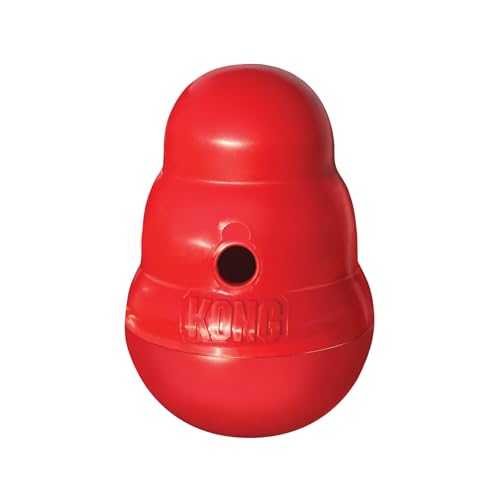
A 7.5-inch wobbling dispenser makes dogs work for their food by nudging it to release treats, turning mealtime into a slow, mentally engaging activity. The toy is dishwasher safe, so cleaning is straightforward. Owners of medium or large dogs who want to extend mealtime and support healthy eating will find this matches their needs.
The Wobbler focuses on one action: it wobbles and dispenses, but it does not offer multiple compartments or sequential steps like some other puzzle toys. If your dog catches on quickly, the challenge may be shorter than with multi-layer puzzles. Still, for a straightforward way to extend mealtime and keep a food-motivated dog busy, this is a reliable option.
Product photos
TRIXIE Flower Tower Dog Puzzle Toy

What We Like
- Three actions: lift, twist, slide
- Level 3 advanced sequential steps
- Safe, BPA/phthalate/lead-free materials
- Dishwasher safe for easy cleaning
Trade-offs
- No treat compartments count listed
- Too heavy for small dogs to move easily.
A 12-inch tower that asks your dog to lift, twist, and slide in a sequence means this isn’t a one-trick puzzle, it’s a real Level 3 challenge for dogs who have already mastered simpler games. If your pup solves a basic slider in under a minute and gives you that bored look, this is the next step. The manufacturer states that 15 minutes of mental stimulation from their food puzzle toys equals 30 minutes of physical exercise. That is a handy trade when the weather is bad or your dog needs more brain work than leg work.
At 2.4 pounds, the tower is light enough that some dogs might try to move it around, so supervision during first use is wise. The Outward Hound Tornado (Level 2, 1.2 lb, 3.1 inches tall) is lighter and shorter, while the Flower Tower is taller at 5.5 inches and weighs about twice as much, but it demands more problem-solving steps. It’s not a chew toy, no toy is indestructible, as TRIXIE reminds you, so supervise the first few sessions until you see how your dog treats it. For the dog who needs a real head-scratcher, this delivers.
TRIXIE Poker Box 2 Dog Puzzle Toy
What We Like
- Three sequential steps: lift, flip, pull
- Safe, BPA/Phthalate/Lead-Free materials
- Dishwasher safe for easy cleaning
- Large 18-inch play surface
Trade-offs
- Only for advanced dogs; Level 3 difficulty
- Not indestructible; supervise during play
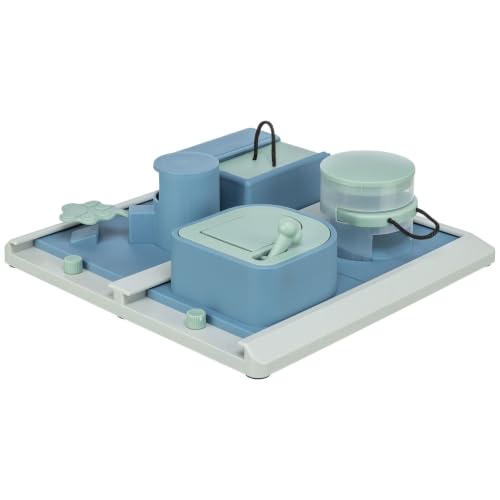
At 18 inches wide with three distinct actions, lift, flip, and pull, this puzzle forces your dog to chain together different problem-solving steps before reaching the reward. That sequential complexity is exactly what separates a Level 3 toy from simpler sliders or spinners. For dogs who have already mastered basic puzzles and need a genuine mental workout, the Poker Box 2 delivers the kind of layered challenge that can turn 15 minutes of play into the equivalent of a half-hour walk, as the manufacturer states. It suits the sharp-minded dog that gets bored with one-step games and starts looking for trouble elsewhere.
The 2.2-pound plastic base lacks rubber feet or grip pads, so on tile or hardwood a determined dog can shove the whole thing around rather than working the compartments. Compared to the Outward Hound Dog Tornado at 1.2 pounds and 9.8 inches, the Poker Box 2 is both heavier and larger. The Poker Box 2 is built for the dog that already knows how to work a puzzle and needs the next level up.
Outward Hound Snoop Treat Dispensing Toy

What We Like
- Slow-feeder design aids digestion
- Mint scent freshens breath during play
- Made in USA with safe materials
- Compatible with Orbee Nook ball for added challenge
Trade-offs
- No adjustable difficulty without optional add-on
The Outward Hound Snoop weighs 0.8 pounds and measures 5 inches across, so it’s light enough to carry in a bag and small enough to fit in tight spaces. Its Orbee-Tuff TPE material rolls and bounces as a dog plays, and the mint oil infused into the toy is meant to keep breath clean during use. That slow-feeding design helps dogs who gulp treats eat at a healthier pace, giving owners a straightforward way to stretch mealtime without a big setup.
The Snoop does not come with adjustable difficulty; the only way to increase the challenge is to buy the Orbee Nook ball separately. The KONG Wobbler is 7.5 inches long and weighs 1.7 pounds, while the Snoop is smaller and lighter, making it easier to pack for travel or use in small rooms. It’s a simple tool for slow feeding, not a puzzle that will occupy a highly persistent dog for long sessions.
KONG Gyro Interactive Treat-Dispensing Toy

What We Like
- Wobble action sparks curiosity and movement
- Treat dispensing extends mealtime naturally
- Promotes healthy eating and weight management
Trade-offs
- No adjustable difficulty for advanced puzzlers
- Only one treat chamber limits variety
A 0.7-pound wobbling base that rolls and flips as your dog nudges it means this toy turns mealtime into a slow, engaging chase. The wobble action sparks curiosity and movement, making your pup work for every kibble rather than scarfing it from a bowl. It suits dogs who need gentle mental stimulation and a slower eating pace, and it can help dogs lose unwanted pounds by extending mealtime. The design engages natural instincts without overwhelming a dog new to puzzle toys.
A lighter build means the Gyro can skitter across hardwood or tile floors, which may frustrate a dog that prefers a heavier, more stable puzzle. The KONG Wobbler weighs 1.7 pounds, while the Gyro’s 0.7-pound build is lighter and moves more easily. For dogs who already master puzzles with multiple compartments like the Outward Hound Nina Ottosson Dog Tornado, the Gyro offers a simpler design with fewer treat chambers. It works best as a slow feeder or enrichment toy for dogs who need a gentle challenge.
Product photos
Barkwhiz Dog Puzzle Toy 3 Levels

What We Like
- 14-hole slow feeder slows eating
- Four ways to play across 3 levels
- Easy to clean with warm water
Trade-offs
- Requires supervision to prevent destruction
- Too easy for large dogs that paw instead of nudge
The 14 treat compartments and four ways to play across three difficulty levels give your dog a mix of sliding, flipping, and tracking tasks that slow down eating and encourage problem-solving. At 10.6 inches wide and just 1.2 pounds, it sits flat on the floor without tipping, and six silicone pads keep it from sliding across tile or hardwood while your dog works. For owners who want a slow feeder that offers multiple challenges in one toy, this model provides a structured way to engage a dog that is new to puzzles.
At only 2.2 inches tall, the treats sit close to the surface, so a determined snout or a dog who prefers to paw rather than think might solve it faster than you’d like. Compared to the Outward Hound Nina Ottosson Dog Tornado Puzzle, which stacks three spinning layers, this Barkwhiz model relies on sliding and flipping rather than rotation, so it offers a different style of play. For a first puzzle that introduces cause-and-effect feeding, the three built-in levels and four play modes give you room to increase difficulty without buying a second toy.
Product photos
Potaroma Dog Puzzle Toy 2 Levels

What We Like
- Weighted base with 4 non-slip mats
- Two difficulty levels in one toy
- Slow feeder slows eating 10x
- No assembly required
Trade-offs
- At 4.2 inches tall, limited for very small dogs
- Only two levels, not enough for advanced puzzle dogs
A 1.6-pound base with four non-slip rubber mats keeps this puzzle planted when a dog nudges, paws, or gets excited, so it won’t slide across the floor during mealtime. That anti-tip design is the main reason to pick it over lighter, tippier options, especially for enthusiastic eaters or dogs who like to shove their bowl around. The two-level system lets you start simple by hiding treats under sliding lids, then step up to a second tier where the dog has to press a top cover to drop food down. It also doubles as a slow feeder that slows eating by over 10 times, so it pulls double duty for gulpers who need to pace themselves.
This is a two-level puzzle in a guide full of three-level and advanced options. If your dog is a seasoned puzzle solver, the KADTC Dog Chess Puzzle Toy offers three levels for more complexity. But for a dog that tips over lightweight feeders or eats too fast, the Potaroma’s weighted, non-slip build and slow-feeder capability make it a practical, no-assembly choice that covers two problems at once.
Product photos
How We Evaluated Cognitive Toys For Dogs
Our research started with the hard specs: treat capacity, number of compartments, material safety, and cleaning method. We cross-referenced those numbers against what experienced owners and trainers say about long-term play value and whether dogs actually solve the puzzles or just knock them over.
The four criteria that mattered most were difficulty adjustability, durability under normal play, ease of cleaning, and whether the toy genuinely slows eating. A puzzle that can’t grow with your dog is a one-week wonder. A toy that traps kibble in hard-to-reach crevices becomes a bacteria farm. We prioritized designs with removable compartments, dishwasher-safe parts, and clear difficulty progression.
A research-led evaluation has limits. We haven’t watched your dog paw at these toys for months, and individual play style varies wildly. A heavy chewer needs different gear than a gentle nudger. What we can tell you is which designs consistently hold up, which ones owners report as favorites, and where the trade-offs live for each pick.
What To Look For In Cognitive Toys For Dogs
The right cognitive toy meets your dog where they are, not where you wish they were. Start with the difficulty level, then check treat capacity, cleaning ease, and whether the toy stays put during play.
Match the toy’s challenge level to your dog’s puzzle experience. Look for adjustable difficulty, easy cleaning, and a stable base if your dog tends to flip or carry toys away.
Difficulty Levels
Most cognitive toys use a 1-to-3 level system. Level 1 toys involve simple sliding or rolling actions. Level 2 adds compartments under flaps or drawers. Level 3 requires sequential steps, lift a block, slide a drawer, then flip a lid. The guide to choosing puzzle toys starts with your dog’s current skill level, not what you hope they’ll master.
Treat Capacity And Dispensing Method
A toy that holds only a few treats ends play too fast. Look for at least 10 compartments for sustained engagement. Some toys dispense treats as the dog rolls or nudges them; others require the dog to paw, slide, or lift specific pieces. The best treat dispensers offer multiple dispensing methods to keep things interesting.
Stability And Base Design
Lightweight toys frustrate smaller dogs and get carried off by larger ones. A weighted base with non-slip pads keeps the puzzle in place while the dog works. For dogs that paw aggressively, look for anti-tip designs with rubber feet or suction cups.
Cleaning Requirements
- Check if the toy is dishwasher safe, hand-washing crevices is tedious.
- Look for removable compartments that let water flow through.
- Avoid toys with felt or fabric components that trap moisture.
- Consider material: BPA-free plastics hold up better than painted wood.
A toy that’s hard to clean won’t get used. Dishwasher-safe designs save time and keep bacteria from building up in treat compartments.
Cognitive Toys For Dogs Compared
The table below compares all nine cognitive toys by difficulty level, treat capacity, and key features so you can see at a glance which fits your dog.
| Product | Difficulty Level | Dimensions | Weight |
|---|---|---|---|
| Outward Hound Nina Ottosson Dog Tornado Puzzle | Level 2 Intermediate | 9.8 x 7.2 x 3.1 inches | 1.2 pounds |
| KADTC Dog Chess Puzzle Toy | 3 Levels (Beginner to Advanced) | 16.7 x 16.7 x 2.6 inches | 2.3 pounds |
| KONG Wobbler Treat Dispensing Toy | N/A | 7.5 x 5.1 x 5.1 inches | 1.7 pounds |
| TRIXIE Flower Tower Dog Puzzle Toy | Level 3 (Advanced) | 12.0 x 5.2 x 5.5 inches | 2.4 pounds |
| TRIXIE Poker Box 2 Dog Puzzle Toy | Level 3 (Advanced) | 18.0 x 17.0 x 8.0 inches | 2.2 pounds |
| Outward Hound Snoop Treat Dispensing Toy | N/A | 5 x 5 x 3.8 inches | 0.8 pounds |
| KONG Gyro Interactive Treat-Dispensing Toy | N/A | 6.8 x 6.8 x 3.8 inches | 0.7 pounds |
| Barkwhiz Dog Puzzle Toy 3 Levels | 3 | 10.6 x 9.4 x 2.2 inches | 1.2 pounds |
| Potaroma Dog Puzzle Toy 2 Levels | 2 | 10.2 x 10.2 x 4.2 inches | 1.6 pounds |
Frequently Asked Questions
What’s the best cognitive toy for a dog that eats too fast?
The Outward Hound Nina Ottosson Dog Tornado Puzzle doubles as a slow feeder with 12 compartments that force your dog to work for each piece of kibble. For a simpler option, the Outward Hound Snoop is a budget-friendly treat dispenser that also slows eating.
How do I know if a puzzle is too hard for my dog?
Watch for signs of frustration: whining, pawing at the toy aggressively, or walking away entirely. Start with a Level 1 or 2 toy and show your dog how it works a few times. If they solve it in under a minute, move up a level.
Are cognitive toys safe for puppies?
Yes, but choose larger pieces that can’t be swallowed and supervise play. The interactive toys for smart dogs category includes puppy-safe options with wide compartments and soft edges.
How many treats should I put in a puzzle toy?
Enough to make it worth solving, about a quarter of your dog’s daily kibble or a small handful of training treats. The goal is mental stimulation, not a full meal, unless you’re using the toy as a slow feeder.
Can I leave my dog alone with a puzzle toy?
Only if your dog doesn’t chew or destroy toys. The TRIXIE Poker Box 2 and TRIXIE Flower Tower are not indestructible; supervise play until you know how your dog interacts with the puzzle. The toys to prevent boredom list includes more durable options for independent play.
The Bottom Line
The Outward Hound Nina Ottosson Dog Tornado Puzzle is the best overall cognitive toy for dogs that have some puzzle experience and need a challenge that also slows their eating. Its three spinning layers and 12 compartments offer real mental work, not just a treat dump.
If your dog is new to puzzles or you’re working within a tighter budget, the Outward Hound Snoop delivers solid engagement without the complexity. For owners of smart breeds who need a genuine sequential test, the TRIXIE Poker Box 2 provides the most advanced challenge in this lineup.
The single most important factor in choosing a cognitive toy is matching the difficulty to your dog’s current skill level. Get that right, and you’ll have a dog that’s tired, happy, and leaving your furniture alone.
