
8 Best Cameras For Dog Photography in 2026
This post contains affiliate links. As an Amazon Associate, we earn from qualifying purchases.
For dog owners who want to freeze that perfect mid-leap catch or capture a soulful portrait, the Canon EOS R6 Mark II Mirrorless Camera is our best overall pick. Its 40 fps burst shooting and animal eye detection make fast-moving dogs look crisp. The Nikon Z6 III offers a bright viewfinder for sunny park days, while the Nikon Z50 II kit gives beginners an affordable start with built-in dog detection.
The real challenge in dog photography isn’t the camera, it’s the subject. Dogs don’t hold still, they move unpredictably, and the best moments happen in low evening light or full-speed sprint. A camera that focuses slowly or shoots one frame at a time will leave you with blurry tail-wags and closed eyes.
We evaluated these cameras based on burst speed, autofocus reliability for moving subjects, lens ecosystem, and real-world owner feedback patterns. The result is a focused list of eight bodies that solve the specific problems of photographing dogs, from hyperactive puppies to senior dogs who need patience more than speed.
Top 8 Cameras For Dog Photography in the Market
Certain content that appears on this site comes from Amazon. This content is provided "as is" and is subject to change or removal at any time.
The Best Cameras For Dog Photography, Reviewed
Canon EOS R6 Mark II Mirrorless Camera

What We Like
- 40 fps burst captures split-second dog action
- Animal eye/face/body detection for sharp focus
- 6 hours continuous Full-HD video recording
- Wireless upload via 5GHz Wi-Fi and Bluetooth
Trade-offs
- Body only, no lens included for dog portraits
- At 1.3 lb, heavier than some mirrorless bodies
An electronic shutter that fires up to 40 fps means you can capture a split-second change in a subject’s expression without guessing the moment. That speed, combined with a focus system that tracks the whole body, face, or eye of animals, lets you lock onto a moving creature while ignoring distractions. The full-frame 24.2 MP sensor is designed to capture sharp, detailed images even in low-light conditions, so indoor or evening scenes still come through clearly. This setup is for someone who wants to walk out the door and come back with shots of fast, unpredictable subjects, no second chances needed.
The trade-off is that you are buying a body only, which means budgeting for a lens that suits your shooting distance and style. For most users, a versatile zoom adds cost and weight, and at 1.3 pounds the body itself is not the lightest option out there. Compared to the Sony Alpha a7R VI, which weighs a similar 1.4 pounds but packs 66.8 MP, the Canon gives up resolution for speed and subject-tracking reliability. If your priority is catching dynamic action shots of athletes, animals, or vehicles in motion, the R6 Mark II’s burst rate and focus system make it the more dependable tool.
Nikon Z6 III Mirrorless Camera
What We Like
- 4000-nit EVF for bright outdoor shooting
- -10 EV autofocus in low light
- 6K/60p internal RAW video
Trade-offs
- No built-in lens for immediate use
- 1.5 lb body heavier than Canon EOS R6 Mark II
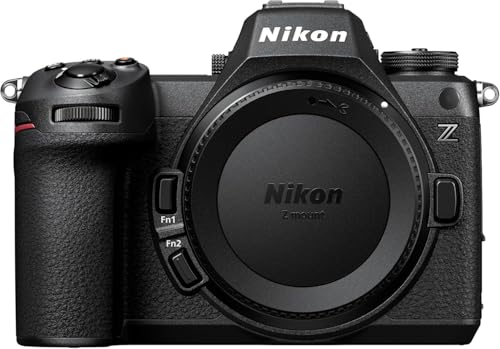
A 4000-nit electronic viewfinder means you can track a sprinting dog through harsh midday sun without losing sight of the action. Nikon’s Deep Learning autofocus detects faces as small as 3% of the frame and works down to -10 EV, which is useful for early-morning walks or dogs that vanish into shadow. If your photography revolves around unpredictable movement and bright outdoor light, this body gives you the visibility to nail the shot.
At 1.5 pounds, this camera is heavier than the Canon EOS R6 Mark II, which comes in at 1.3 pounds. That extra heft adds fatigue during long sessions, especially if you’re holding the camera at eye level for hours. It also arrives as a body only, so you’ll need a lens before you can shoot. For owners who prioritize a bright, fast viewfinder over portability and already have glass, the Z6 III makes sense. If you want a lighter walk-around kit, the Canon body saves a few ounces and still delivers strong autofocus.
Nikon Z50 II Mirrorless Camera with Two Lenses

What We Like
- Detects dogs for autofocus tracking
- Two-lens kit covers wide to telephoto
- Built-in flash for low-light shots
- 31 creative color presets built in
Trade-offs
- APS-C sensor smaller than full-frame options
- 20.9 MP limits large print cropping
- Kit lens apertures slow in dim light
A 20.9-megapixel APS-C sensor is several times larger than a phone’s sensor, which means you get lifelike color and detail from dawn to dusk without hauling a heavy bag. That sensor pairs with autofocus that can detect dogs, cats, birds, and vehicles among nine subject types, so you can trust the camera to lock onto a moving pup instead of the grass behind it.
A 20.9 MP APS-C sensor can’t match the cropping headroom or low-light performance of a full-frame camera like the Canon EOS R6 Mark II, which has a 24.2 MP full-frame sensor. When the light drops or you need to crop in tight, the smaller sensor and slower kit lens apertures (f/3.5-6.3) will push you to raise ISO or add flash. The built-in flash helps indoors, and Night Portrait mode creates natural-looking slow-shutter flash portraits. If you mostly shoot in good light and want a lightweight, ready-to-go system that tracks your subject, this is a practical start. If you regularly need the low-light advantage of a full-frame sensor, the R6 Mark II is worth a look.
Sony Alpha a7 IV Mirrorless Camera with 28-70mm Lens
What We Like
- Real-time Eye-AF for animals and birds
- 33MP full-frame sensor for detail
- 4K 60p 10-bit video with full pixel readout
- Includes 28-70mm zoom lens
Trade-offs
- Lens kit limits low-light range for fast dogs
- Lens kit has slower aperture than dedicated primes or telephoto zooms
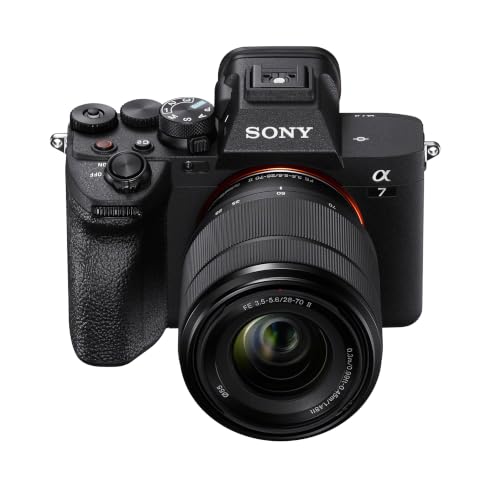
The 33MP full-frame sensor captures enough detail to see every whisker and mud streak on a running dog, and the Real-time Eye-AF for animals locks focus on eyes instead of a blurry nose or tail. That combination makes this kit a natural fit for owners who want sharp portraits of their dog in motion without wrestling with manual focus. The included 28-70mm lens covers the everyday range for park walks and backyard play, so you don’t have to buy glass right away.
The Sony Alpha a7 IV kit weighs 3.3 pounds, so it’s a bit heavier than a dedicated body-only setup, but you get a full-frame 33MP sensor and a zoom lens right in the box. When the light fades or your dog dashes across a field at dusk, the 28-70mm lens’s slower aperture means you’ll need to push the ISO higher than with a faster prime or telephoto zoom. The Nikon Z6 III body alone is lighter by nearly two pounds, which matters if you’re hiking with the camera hanging off your shoulder all afternoon. Still, for a single-box solution that gives you animal eye tracking and full-frame resolution, this Sony kit gets you shooting the moment you open the box.
Sony Alpha a7R VI Mirrorless Camera
What We Like
- 30 fps blackout-free burst shooting
- 66.8 MP fully stacked sensor
- AI processing unit for subject recognition
Trade-offs
- 1.4 lb body shifts balance with long lenses
- Requires fast memory cards for burst shooting
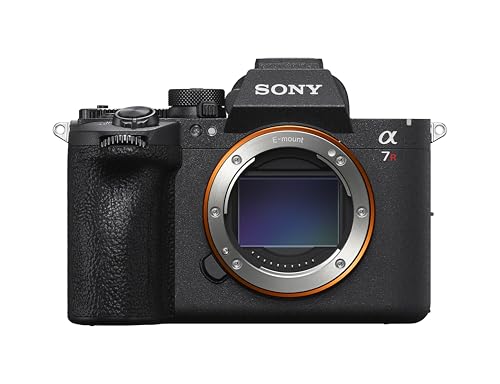
A 66.8-megapixel fully stacked sensor captures enough detail to crop significantly into an image while retaining usable resolution for large prints. The AI processing unit enables subject recognition modes for animals and birds, which helps keep focus on a moving subject rather than the background. With 30 fps blackout-free bursts and up to 60 AF/AE calculations per second, you can shoot fast action sequences without losing track of the subject.
The Sony Alpha a7R VI captures 66.8-megapixel images at up to 30 frames per second with blackout-free viewing, so you can crop deeply into a distant bird or a runner’s expression without losing detail. The body weighs 1.4 pounds, which keeps it light enough for handheld shooting but means a heavy lens will tip the balance forward. Reviewers note that the fully stacked sensor reads out 5.6 times faster than earlier models. That makes the high-speed burst feel responsive even when tracking a fast-moving subject.
Product photos
Canon EOS R7 Mirrorless Camera with 18-150mm Lens

What We Like
- 32.5 MP sensor for crisp detail
- 15 fps mechanical burst for action
- RF-S 18-150mm lens covers wide to telephoto
Trade-offs
- APS-C sensor crops field of view vs full-frame
- Kit lens max aperture narrows at telephoto end
A 32.5 megapixel APS-C sensor paired with a DIGIC X processor means you can freeze a dog mid-leap and still crop in tight on its ear flick without losing clarity. That resolution, combined with 15 frames per second mechanical burst and seven stops of in-body stabilization, makes this kit a strong match for owners who want one lens to handle everything from a sprinting retriever in the park to a sleepy bulldog on the couch. The included 18-150mm zoom covers wide group shots and distant wildlife behavior without swapping glass. That keeps mud and drool off the sensor.
Compared to the full-frame Canon EOS R6 Mark II, the APS-C sensor gives you more reach with the same lens but a narrower field of view in tight spaces. The kit lens’s f/6.3 maximum aperture at the long end means less light reaching the sensor in dim evening walks. If your dog photography leans toward low-light indoor action or you prefer the shallower depth of field a full-frame body offers, the R6 Mark II is worth the extra weight. For daylight romps and all-around versatility straight out of the box, this zoom kit covers the ground.
Product photos
Fujifilm X-T30 III Mirrorless Camera with Lens Kit
What We Like
- Compact body at 1.1 pounds
- AI-powered subject detection autofocus
- 20 built-in Film Simulations for creative looks
- Auto mode for quick, easy shooting
Trade-offs
- Kit lens aperture range limits low-light action shots
- Smaller sensor than full-frame options in this guide
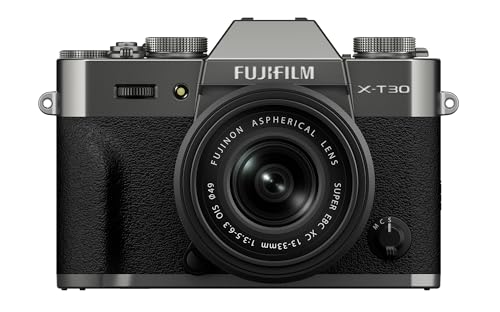
At just 1.1 pounds, this camera is light enough to carry on a walk without weighing you down. The AI-powered subject detection autofocus can track a running dog, and the 20 built-in Film Simulations let you choose a look right out of camera. The included kit lens has optical image stabilization, and the Auto mode helps you stay in the moment. It’s built for ease of use in a compact body.
The kit lens has a maximum aperture of f/3.5 at the wide end and narrows as you zoom, which means less light reaches the sensor in dim conditions. Compared to the Sony Alpha a7R VI, which has a 66.8MP sensor, the Fujifilm uses a smaller sensor. So it may not capture as much detail in low light or produce as shallow depth of field. But if your shooting happens in good light, the light weight and compact design make this a camera you are more likely to carry with you.
Product photos
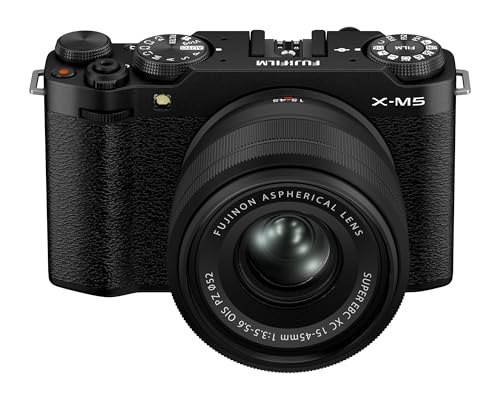
Fujifilm X-M5 Mirrorless Camera
What We Like
- 6K video for ultra-high-resolution capture
- 26.1MP APS-C sensor for image clarity
- Compact 12.5 oz body for portability
- 20 film simulations for creative color
Trade-offs
- Kit lens starts at f/3.5, limiting low-light action
- APS-C sensor smaller than full-frame alternatives
The 26.1MP APS-C X-Trans 4 sensor delivers rich color and superior low-light performance, so you can shoot in dim conditions like a cloudy afternoon or a candlelit room. 6K video recording gives you plenty of resolution to crop into a frame and still have clean footage for sharing online. The X-Processor 5 provides improved autofocus and faster image processing, which helps keep moving subjects in focus during a family outing.
The kit lens has an f/3.5-5.6 aperture, which means it lets in less light than faster lenses, something to consider if you often shoot in low light. An APS-C sensor like this one doesn’t match the low-light reach of a full-frame body such as the Canon EOS R6 Mark II. But at just 12.5 oz, the Fujifilm is light enough to slip into a jacket pocket, so you can take it anywhere without thinking twice.
Product photos
How We Evaluated Cameras For Dog Photography
This guide is built from manufacturer specifications, expert round-up analysis, and patterns in long-term owner feedback across multiple forums. We looked at what experienced dog photographers and wildlife shooters consistently report as the essential features for capturing animals in motion.
The four criteria that mattered most: burst rate (frames per second) determines whether you catch the peak of a jump or a blur. Autofocus tracking quality, especially animal eye/face detection, separates sharp eyes from missed focus. Lens availability matters because a great body with no affordable telephoto zoom is useless for a running dog. Low-light performance dictates whether evening walks produce keepers or noise.
A research-led evaluation has limits, we can’t measure how each camera feels in hand during a muddy hike, and individual dogs behave differently. What we can do is identify the technical specs that consistently correlate with better keeper rates, and flag trade-offs that matter for dog-specific use.
What To Look For In Cameras For Dog Photography
Choosing a camera for dog photography means prioritizing speed and tracking over megapixels. A 20-megapixel camera with excellent autofocus will produce more usable dog photos than a 60-megapixel camera that hunts for focus.
Burst Rate and Buffer Depth
The single most important spec for action shots is how many frames the camera can fire per second, and for how long. A burst rate of 10 fps is the bare minimum for a dog running toward you; 15 fps or higher gives you real chances to capture the peak of a jump or shake. The buffer depth matters just as much, a camera that slows down after one second of shooting will miss the third consecutive leap.
Autofocus Tracking for Animals
Look for cameras with dedicated animal eye/face/body detection, not just general subject tracking. The best systems lock onto a dog’s eye even when the dog turns its head, and maintain that lock as the dog moves across the frame. Some cameras now use AI processing to recognize dogs specifically, which dramatically reduces the number of out-of-focus shots.
Lens System and Low-Light Capability
The body is only half the equation. A fast telephoto zoom with a wide aperture lets you shoot in twilight when dogs are most active, and a lens with image stabilization helps at slower shutter speeds. Full-frame sensors perform better in low light than APS-C sensors, but the lens you put in front matters more than the sensor size. For photographing dogs, a versatile zoom like a standard or telephoto zoom covers most situations.
- Check the autofocus joystick location, some bodies require menu diving to change AF points mid-shoot.
- Test the grip size in a store if possible; a camera that feels awkward with a heavy telephoto lens is hard to use all day.
- Verify that the camera’s burst buffer clears fast enough for your shooting style, some cameras lock you out while writing to the card.
- Look for dual card slots if you shoot professionally; a single corrupted card can lose an entire session.
- Consider weather sealing if you photograph dogs in rain, snow, or sandy environments.
A camera that tracks a dog’s eye at 15 fps will outperform a higher-resolution camera that misses focus on every third frame.
Cameras For Dog Photography Compared
The table below compares all eight cameras side by side, focusing on the specs that matter most for dog photography: burst rate, autofocus features, sensor size, and what you get in the box.
| Product | Sensor | Weight | Video Limit |
|---|---|---|---|
| Canon EOS R6 Mark II Mirrorless Camera | 24.2 MP full-frame CMOS | 1.3 pounds | 6 hrs Full-HD |
| Nikon Z6 III Mirrorless Camera | Full-Frame | 1.5 lb | 6K/60p Internal N-RAW |
| Nikon Z50 II Mirrorless Camera with Two Lenses | 20.9 MP DX format (APS-C) | 2.4 lb | 4K UHD/60p |
| Sony Alpha a7 IV Mirrorless Camera with 28-70mm Lens | 33MP full-frame Exmor R | 3.3 pounds | 4K 60p 10-bit 4:2:2 |
| Sony Alpha a7R VI Mirrorless Camera | 66.8 MP Full-Frame Stacked | 1.4 pounds | N/A |
| Canon EOS R7 Mirrorless Camera with 18-150mm Lens | 32.5 MP APS-C CMOS | 1.1 pounds | 4K 60p |
| Fujifilm X-T30 III Mirrorless Camera with Lens Kit | N/A | 1.1 pounds | N/A |
| Fujifilm X-M5 Mirrorless Camera | 26.1MP APS-C X-Trans 4 CMOS | 12.5 oz | 6K recording |
Frequently Asked Questions
What is the best camera for photographing fast-moving dogs?
The Canon EOS R6 Mark II is our top recommendation. Its 40 fps burst shooting and animal eye detection give you the highest chance of capturing a sharp image of a dog in full sprint. The Nikon Z6 III is a strong alternative if you shoot in bright sun and need a bright electronic viewfinder.
Do I need a full-frame sensor for dog photography?
Not necessarily. Full-frame sensors perform better in low light and offer shallower depth of field, but modern APS-C cameras like the Canon EOS R7 and Fujifilm X-T30 III produce excellent results in good light. The lens and autofocus system matter more than the sensor size for most dog owners.
What lens is best for taking pictures of dogs?
A telephoto zoom with a wide aperture is the most versatile lens for dog photography, it gives you reach for outdoor action and a wide enough aperture for soft backgrounds. For indoor or portrait work, a standard or short telephoto prime lens is excellent for capturing great dog portraits with blurred backgrounds.
Can I use a pet camera for photographing my dog?
Pet cameras and dog monitoring cameras are designed for checking on your dog while you’re away, not for capturing high-quality photos. They typically use small sensors and compressed video that won’t produce print-worthy images. For photography, you need a dedicated mirrorless or DSLR camera.
What camera settings should I use for dog action shots?
Start with shutter priority mode at a fast minimum shutter speed, and go up to faster speeds for running dogs. Enable continuous autofocus with animal eye detection turned on. Set your drive mode to high-speed burst and be ready to take many frames for every one keeper.
The Bottom Line
The Canon EOS R6 Mark II is the best overall camera for dog photography because its combination of 40 fps bursts and reliable animal detection gives you the highest keeper rate for action shots. It’s the camera to buy if you regularly photograph dogs running, jumping, or playing and want the best chance of nailing focus every time.
If you’re on a tighter budget or just starting out, the Nikon Z50 II with its two-lens kit gives you a complete system with dog-detection autofocus at a lower entry point. The Sony Alpha a7R VI is worth the premium for photographers who need extreme resolution for cropping and printing large.
The most important buying factor is honestly assessing how you’ll actually use the camera. If your dog is a couch potato, a slower camera with better portrait capabilities might serve you better. If you chase a border collie across fields every evening, prioritize burst speed and low-light performance above everything else. For keeping an eye on your pup while you’re away, separate dog cameras and puppy cameras serve that purpose. But for capturing the moments you’ll frame and share, one of these eight cameras will get the job done.
