
10 Best No Pull Dog Harnesses in 2026
This post contains affiliate links. As an Amazon Associate, we earn from qualifying purchases.
The rabbitgoo Dog Harness No Pull is the best overall choice for large dog owners because it combines front and back leash clips with four fully adjustable straps and reflective strips for low-light safety. For a lightweight front-clip option, the PetSafe Easy Walk Harness excels, while the Ruffwear Front Range Harness delivers maximum foam-padded comfort for long hikes.
A dog that lunges and pulls can turn a simple walk into a shoulder-wrenching chore. The right harness redirects that forward momentum without choking or gagging, making walks safer and more pleasant for both of you.
We evaluated these harnesses by analyzing specifications, manufacturer documentation, expert round-ups, and patterns in owner feedback. This guide breaks down what to look for so you can choose with confidence.
Top 10 No Pull Dog Harnesses in the Market
Certain content that appears on this site comes from Amazon. This content is provided "as is" and is subject to change or removal at any time.
The Best No Pull Dog Harnesses, Reviewed
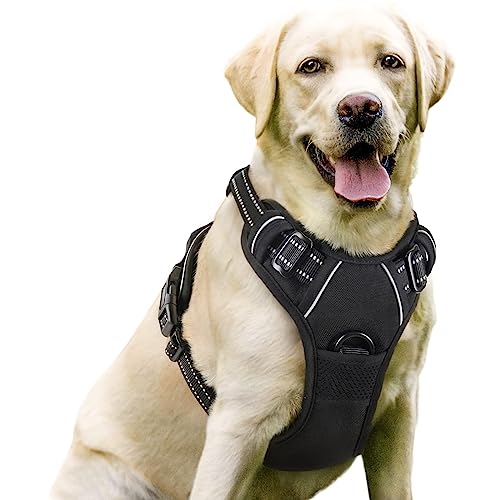
rabbitgoo Dog Harness No Pull
What We Like
- Front and back leash clips
- Four fully adjustable straps
- Reflective strips for low-light safety
- Top handle for quick control
Trade-offs
- Recommended for large dogs only
- No sizing for small or medium breeds listed
Two leash attachment points let you switch between a front clip that redirects pulling and a back clip for relaxed strolls. That means one harness covers training walks and casual jogs without swapping gear. The four adjustable straps and broad chest range (17-33.4 inches) make it possible to dial in a snug fit for deep-chested breeds like Labs and German Shepherds, while the padded mesh vest distributes pressure evenly so there is no rubbing or choking. That combination of versatility and comfort makes it a strong option for owners who want a single harness that adapts to how their dog walks.
The trade-off is that this harness is built for large dogs only, so owners of small or medium breeds will need to look elsewhere. Compared to the PetSafe Easy Walk, which uses a patented martingale loop for gradual shoulder pressure to stop pulling, the rabbitgoo gives you a top handle for immediate control when your dog lunges. If you have a big puller and want both training options and everyday ease, this harness delivers without the fuss of multiple buckles or complicated adjustments.
Product photos
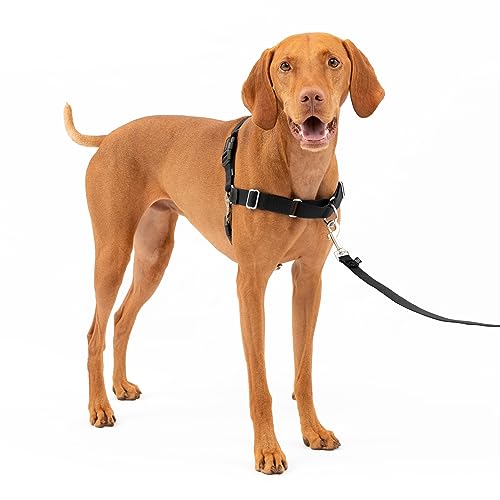
PetSafe Easy Walk Harness
What We Like
- Front clip prevents gagging on pulls
- Martingale loop gives gradual shoulder pressure
- Quick-snap straps for easy fitting
- Lightweight and breathable design
Trade-offs
- Less coverage means less padding for rough terrain
- No rear leash clip for heeling mode
At just 0.2 pounds, this harness is the lightest no-pull option in the guide, which matters if your dog balks at heavy gear or you walk in warm weather. The patented Martingale loop puts gradual pressure across the shoulders rather than yanking the neck, and the front chest clip redirects pulling without gagging. That combination makes it a smart fit for dogs who are strong but sensitive to throat pressure, and for owners who want something simple to snap on and go.
The Ruffwear Front Range weighs 0.4 pounds and offers four adjustment points and foam padding, so it works well if your dog lunges into brush or you need a rear clip for loose-leash training. But for everyday walks where lightweight comfort and pull prevention are the priority, the Easy Walk keeps things straightforward without adding bulk or complexity.
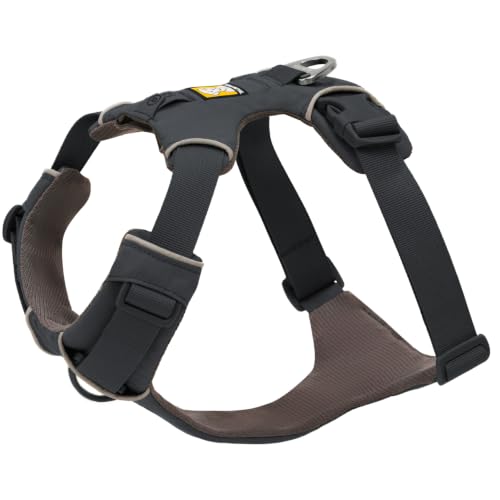
Ruffwear Front Range Harness
What We Like
- Closed-cell foam padding prevents chafing
- Four adjustment points for custom fit
- Two leash attachment points for pulling control
- Reflective trim for low-light visibility
Trade-offs
- At 0.4 pounds, heavier than some harnesses
- No handle for lifting or assisting your dog
Four points of adjustment mean you can dial in the fit across a wide range of dog shapes, which is the difference between a harness that rubs and one your dog forgets they’re wearing. The closed-cell foam padding in the chest and belly panels cushions against chafing during long walks or all-day hikes, so you’re not dealing with sore spots after a weekend adventure. This is the harness for owners who prioritize comfort over minimal weight and want the flexibility of both a back ring for casual strolls and a chest clip for redirecting pullers, all wrapped in reflective trim that keeps your dog visible at dawn or dusk.
Foam padding adds a bit of heft compared to a stripped-down harness like the PetSafe Easy Walk, which comes in at half the weight. That extra cushioning also traps more warmth, so if you live in a hot climate or your dog runs hot, you might notice them panting sooner on summer outings. But for anyone whose main gripe is a harness that chafes or shifts during long days out, the Front Range’s padded construction and four-point adjustability deliver the kind of all-day comfort that makes you forget you’re wearing gear at all.
Product photos
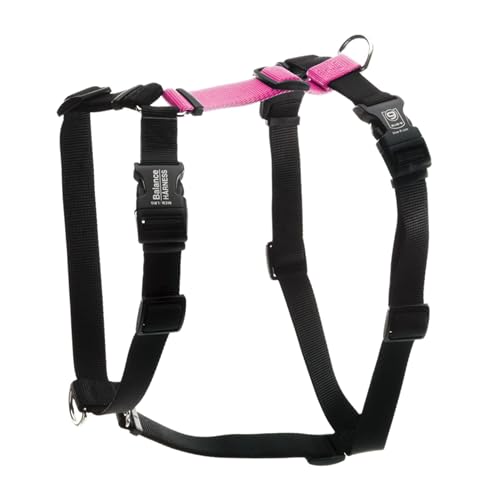
Blue-9 Balance Harness
What We Like
- Six-point adjustment for custom fit
- Buckle-neck design for head-shy dogs
- Two D-rings: front and back clips
- No-choke, no-chafing construction
Trade-offs
- No padded chest or belly panel
- No handle for lifting or control
With six points of adjustment, you can tailor the harness to fit around the ribcage and neck, which is a real help if your dog is between sizes or has a deep chest and narrow shoulders. The buckle-neck closure lets you fasten it like a collar, so you never have to pull it over their head. That is a big plus for dogs that shy away from step-in styles. The two D-rings let you attach the leash on the chest to help manage pulling or on the back for a different walking style.
This harness is unlined and unpadded, so it won’t cushion a dog that lunges hard, and there is no handle for lifting over obstacles or pulling out of a muddy ditch. If you want foam padding and a grab handle, the Ruffwear Front Range offers four points of adjustment with cushioned panels, but it costs more and still lacks the buckle-neck convenience. The Blue-9 Balance harness is built for adjustability and freedom of movement, not for heavy restraint or all-day comfort on a thick-coated dog.
PHOEPET No Pull Dog Harness
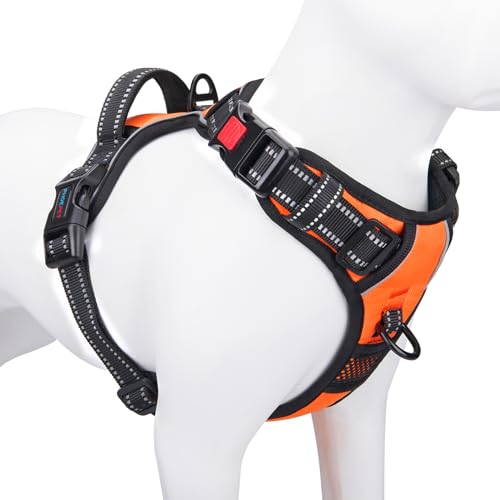
What We Like
- 3-buckle design avoids going over head
- Lockable neck buckle for secure fit
- Front clip reduces pulling
- Reflective material improves low-light visibility
Trade-offs
- Soft handle offers less leverage for strong pullers
Three buckles let you open the harness flat on the ground and clip it around your dog without forcing anything over their ears or snout. That is a real relief if your dog treats head-touching like a personal insult. The lockable neck buckle adds a layer of security for dogs that wriggle backward, and the front chest clip gives you steering leverage when they spot a squirrel. This is the harness to grab if your dog tolerates being dressed about as well as a cat tolerates a bath: speed and simplicity are the whole point.
The soft back handle is useful for guiding your dog closer or helping them into the car, but it lacks the stiffness of a rigid handle. For everyday walks with a moderate puller, the quick on-off design saves more hassle than it creates.
Product photos
Annchwool No Pull Dog Harness
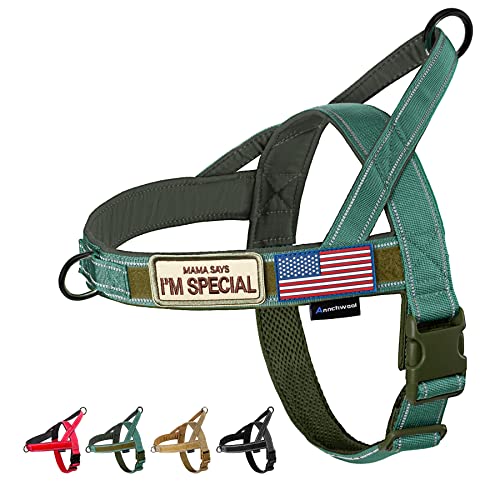
What We Like
- Soft padded chest and back straps
- Reflective stitching for low-light visibility
- Two rings for leash and accessories
- Velcro area with two included patches
Trade-offs
- Only one front clip; no rear attachment option
- Only one leash attachment point (front clip)
At 0.4 pounds, this harness is light enough that a small dog won’t drag its shoulders down on a long walk, yet the 1.5-inch wide straps spread pressure across the chest rather than digging in. That combination of low weight and broad padding makes it a sensible choice for owners who want a no-pull front-clip design without paying for extra frills. The reflective stitching adds a layer of safety when you’re out after dusk, and the two included velcro patches let you personalize the look without buying anything else.
The Annchwool No Pull Dog Harness comes with two metal rings, a front O-ring and a D-ring, so you can attach a leash, ID tags, keys, or a poop bag without needing extra hardware. That front clip helps discourage pulling by redirecting your dog’s forward motion, which is handy for training walks or daily neighborhood strolls. For casual use on a budget, this design keeps things simple and effective.
Product photos
SlowTon No Pull Harness and Leash Set

What We Like
- Bungee leash absorbs strong pulls
- Two handles for control and direction
- Reflective strips for low-light safety
- Soft fleece padding reduces friction
Trade-offs
- 1.0 lb harness is heavier than some alternatives
- Bungee leash can cause sudden recoil if dog bolts
A 1.0-pound harness and leash set with a bungee leash that actually absorbs the shock of a sudden lunge means you’re not fighting your dog’s momentum every time they spot a squirrel. That springy design, combined with two padded handles, one for casual walking and a center handle for steering through tight spots, gives you real control without yanking on your shoulder. The fleece padding under the neck, back, and handle reduces chafing, and the reflective strips keep you visible on evening walks. This is the kind of kit that makes sense for someone who wants a complete, no-fuss solution for a medium to large dog that still needs training guidance.
Weight and focus are the main differences here. At a full pound, this set is noticeably heavier than something like the PetSafe Easy Walk Harness, which comes in at 0.2 pounds and is designed purely for no-pull training with a front chest clip. The SlowTon gives you that front D-ring for guiding direction, but it also adds a back O-ring and a bungee leash, making it more of an all-around walking kit than a dedicated training tool. If your dog is a serious puller and you want the lightest, most targeted harness for training sessions alone, the PetSafe is a better fit. But if you want one set that handles daily walks, jogs, and training without needing to buy separate pieces, this is the better value.
Product photos
Carhartt Nylon Duck No Pull Harness

What We Like
- Rain Defender DWR repels light rain
- Fully adjustable chest and belly straps
- Reflective stitching for low-light visibility
- Martingale chest strap for no-pull control
Trade-offs
- Over-the-head design can be awkward for sensitive dogs
- No front leash clip mentioned in specifications
A 500-denier polyester shell with Rain Defender DWR means this harness shrugs off light rain and holds its shape through daily use, so you are not wrestling with a soggy, stretched-out mess after a wet morning walk. That water-repellent build makes it the pick for owners who walk in drizzle or dewy grass and want something that dries fast and stays put. The martingale chest strap gives you gentle no-pull leverage, and the fully adjustable chest and belly straps let you dial in the fit without squeezing your dog’s ribs.
The Carhartt harness uses a martingale chest strap to discourage pulling, so your dog gets full range of motion while you stay in control. The over-the-head yoke design means you lift it over the dog’s ears and nose each time, which some dogs dislike. If your dog tolerates that, the 500-denier polyester with Rain Defender DWR technology repels light rain and holds its shape through daily use.
Product photos
Ruffwear Flagline Dog Harness
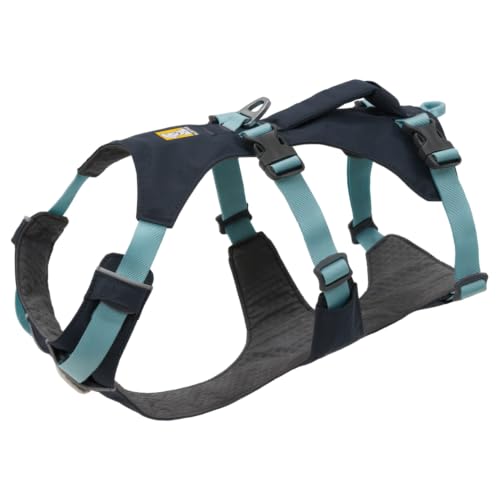
What We Like
- Three leash attachment points for training flexibility
- Six adjustment points for a custom fit
- Padded handle and belly panel for lift assist
- Lightweight at 0.4 pounds
Trade-offs
- No front chest clip is a dedicated no-pull loop
- No martingale-style front loop for strong pullers
At just 0.4 pounds with six adjustment points and three leash attachment locations, this harness is built for dogs who need freedom of movement without the bulk. The padded top handle and belly panel let you lift your dog into a car or over rocks without digging into your hand, and the debris-resistant liner keeps trail grit from collecting under the straps. It suits active dogs that pull occasionally but don’t need heavy correction, the three leash points work for training, no-pull guidance, or switching up your walking style depending on the situation.
The Flagline’s minimalist design means it lacks the martingale-style front loop of the PetSafe Easy Walk harness, which uses gradual shoulder pressure to stop pulling. That makes it better for dogs who just need a little guidance rather than strong pullers who lean into the leash. If your dog is a determined puller, the PetSafe Easy Walk’s patented front clip may offer more control; if you want a low-profile harness for a dog that mostly walks nicely but needs occasional reminders, the Flagline is the lighter, more versatile choice.
Product photos
Kurgo Tru-Fit Smart Harness

What We Like
- Crash tested for car safety up to 75 lbs
- 5 adjustment points for custom fit
- Front and back leash attachment options
- Steel nested buckles and hardware
Trade-offs
- Heavier than many no-pull harnesses at 0.9 lb
- Front D-ring is for training, not primary pulling control
Crash tested and certified for dogs up to 75 pounds, this harness doubles as a seatbelt restraint with a 10-inch tether and steel carabiner. That means your dog stays put during sudden stops or a fender bender, while still being comfortable enough for daily walks thanks to five adjustment points and a broad padded chest plate. It suits owners who want one harness that does double duty: safe in the car and functional on the trail, without swapping gear every time you leave the house.
The trade-off is weight. At 0.9 pounds, it’s heavier than some other harnesses on the market, which matters if your dog is on the smaller side or you’re carrying the harness in a pack. The front D-ring is intended for no-pull training, so if your main concern is stopping pulling on walks, a dedicated no-pull harness with a front chest clip may offer a different feel. But if car safety is your priority, this harness earns its spot.
Product photos
How We Evaluated No Pull Dog Harnesses
Our evaluation is research-based, drawing on manufacturer specifications, expert recommendations, and the collective experience of thousands of dog owners. Instead, we focused on design features that consistently appear in positive owner reports and professional advice.
The four criteria that mattered most were leash attachment points, adjustability, comfort features, and durability for the intended use. Front-clip designs, for example, are widely cited as the most effective mechanism for discouraging pulling because they redirect the dog’s body sideways. Harnesses with multiple adjustment points tend to fit a wider range of body shapes without slipping or chafing.
A research-led evaluation has honest limits. Owner feedback can reflect individual fit issues rather than product flaws, and a harness that works for a Labrador may not suit a Greyhound. We prioritized features backed by consistent patterns in reviews and expert guidance, not isolated complaints.
What To Look For In No Pull Dog Harnesses
The right no-pull harness stops pulling without hurting your dog or making walks frustrating. Focus on the clip location, fit adjustments, padding, and the activities you do most often.
A no-pull harness should have a front leash attachment to redirect pulling, a secure fit that doesn’t shift, and enough padding to prevent chafing during daily walks or hikes.
Leash Attachment Points
The front chest clip is the defining feature of any no-pull harness. When your dog pulls forward, the leash tension turns their body to the side, which naturally discourages the behavior. Some harnesses also include a back clip for casual walks or heeling mode when your dog is not pulling.
For strong pullers, look for a martingale-style front loop that tightens slightly under pressure without choking. The best front-clip harnesses combine a low-set front D-ring with a padded chest strap to distribute pressure evenly.
Adjustability and Fit
A harness that shifts or slips gives your dog leverage to pull harder. Multiple adjustment points let you fine-tune the fit around the neck, chest, and belly. The Blue-9 Balance Harness, with six points of adjustment, is an excellent example of how a custom fit prevents rubbing and escape attempts.
Measure your dog’s girth (around the widest part of the ribcage) and neck before buying. Many fit issues come from guessing sizes. Owners of deep-chested breeds like Boxers or narrow-bodied dogs like Whippets should pay extra attention to adjustment range. Comprehensive guides to no-pull harnesses often include sizing charts to help narrow the field.
Padding and Comfort
Thin, unpadded straps can dig into a dog’s armpits and shoulders, especially on long walks or with a persistent puller. Closed-cell foam padding, like the Ruffwear Front Range uses, spreads pressure and prevents chafing without adding bulk.
For dogs with sensitive skin or thin coats, a padded belly panel and chest plate reduce friction. The trade-off is weight: heavily padded harnesses are warmer in summer and heavier to carry on hikes. For hot-weather walks, a lightweight harness versus collar decision often comes down to breathability versus control.
Handle and Control Features
A top handle gives you quick control at curbs, in crowded areas, or when lifting your dog over obstacles. The no-pull harness with handle designs are especially useful for senior dogs or those recovering from surgery.
Not all handles are equal. Soft fabric handles offer less leverage for strong pullers, while rigid, reinforced handles give you better grip for lifting. If you need to lift your dog regularly, prioritize a harness with a sturdy handle and a padded belly panel for support.
Durability and Weather Resistance
- Check the hardware: steel buckles and D-rings last longer than plastic.
- Look for reflective stitching or trim for low-light visibility.
- Consider water-repellent materials if you walk in rain or damp grass.
- Ensure the leash attachment rings are welded or reinforced, not crimped.
Buy the harness that matches your most common walk conditions, not the one that looks toughest in the store.
No Pull Dog Harnesses Compared
The table below compares the key specs and design features of our top picks so you can see at a glance which harness fits your dog’s size, activity level, and pulling style.
| Product | Weight | Leash Attachments | Reflective |
|---|---|---|---|
| rabbitgoo Dog Harness No Pull | 0.7 lb | 2 (front + back) | Yes |
| PetSafe Easy Walk Harness | 0.2 pounds | Front-chest | N/A |
| Ruffwear Front Range Harness | 0.4 pounds | 2 (back & chest) | Yes |
| Blue-9 Balance Harness | N/A | Front and back D-rings | N/A |
| PHOEPET No Pull Dog Harness | 0.5 pounds | 2 metal hook loops (front + back) | Yes |
| Annchwool No Pull Dog Harness | 0.4 pounds | Front O-ring and D-ring | Yes |
| SlowTon No Pull Harness and Leash Set | 1.0 pounds | Front D-ring and back O-ring | Yes |
| Carhartt Nylon Duck No Pull Harness | 0.4 pounds | N/A | Yes |
| Ruffwear Flagline Dog Harness | 0.4 pounds | 3 (back, chest, rear) | N/A |
| Kurgo Tru-Fit Smart Harness | 0.9 pounds | Front & back | N/A |
Frequently Asked Questions
What is the best no pull dog harness for large dogs?
The rabbitgoo Dog Harness No Pull is our top overall pick for large dogs because it offers both front and back leash clips, four fully adjustable straps, and reflective strips for safety. For a more padded option, the Ruffwear Front Range Harness is excellent for long hikes and daily walks. Owners of very strong pullers should also look at harnesses for strong pullers with martingale front loops.
Are front clip harnesses better for stopping pulling?
Yes, front clip harnesses are widely considered the most effective design for discouraging pulling. The leash attaches at the dog’s chest, so when they pull forward, the tension turns their body sideways. This natural redirection is gentler than choking from a collar and more intuitive for the dog than a back-clip harness that lets them pull with their full body weight.
How do I measure my dog for a no pull harness?
Measure around the widest part of your dog’s ribcage (the girth) and around the base of the neck. Most harnesses rely on girth measurements for sizing, not weight alone. A harness that fits snugly without digging in will prevent slipping and reduce the chance of your dog backing out of it. If your dog is between sizes, size up for adjustability.
Can a no pull harness help with leash training?
A no pull harness is a training tool, not a replacement for training. It makes walks more manageable by reducing the physical reward of pulling, but it works best when paired with consistent training to stop pulling techniques. Use the harness to prevent reinforcement of pulling while you teach loose-leash walking with treats and direction changes.
What is the difference between a harness and a collar for pulling?
A collar puts all the pulling pressure on a dog’s neck, which can cause trachea damage, coughing, or gagging. A harness distributes pressure across the chest and shoulders, protecting the neck. For dogs that pull hard, a harness versus collar comparison usually favors the harness for safety and control. The trade-off is that some dogs find harnesses more comfortable to pull against, so the front-clip design is critical for no-pull effectiveness.
The Bottom Line
The rabbitgoo Dog Harness No Pull is our best overall pick for large dog owners who want a versatile harness with both front and back clip options for training and casual walks. It balances adjustability, safety features, and pulling control at a reasonable price point for what you get.
If your dog needs a lighter harness for warm weather or quick on-and-off, the PetSafe Easy Walk Harness delivers a minimalist front-clip design that is easy to fit. For owners who prioritize chafe-free comfort on long hikes, the Ruffwear Front Range Harness offers closed-cell foam padding and dual leash points. Budget shoppers should look at the Annchwool No Pull Dog Harness for a functional front-clip option at an affordable price.
The single most important factor in choosing a no-pull harness is the front leash attachment point. Without it, most harnesses simply give your dog a more comfortable way to pull. Start there, then match the adjustability, padding, and handle features to your dog’s size and your daily routine.
