
4 Best Dog Food For White Dogs in 2026
This post contains affiliate links. As an Amazon Associate, we earn from qualifying purchases.
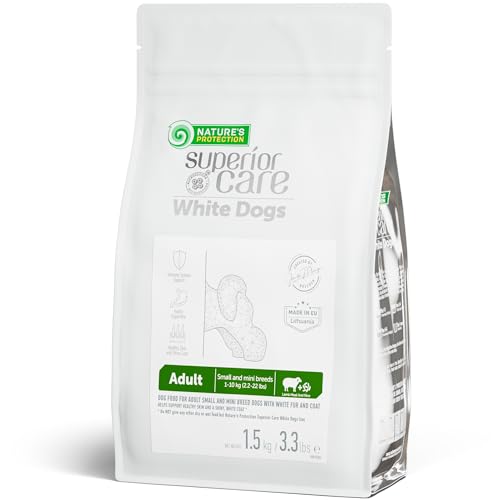
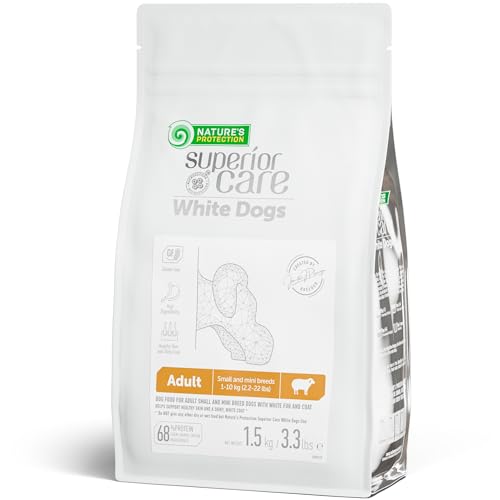
For white and light-coated dogs, diet plays a direct role in coat brightness and tear stain management. The Nature’s Protection Superior Care White Fish Dry Dog Food takes the best overall spot because white fish is the first ingredient and the grain-free formula supports sensitive digestion. Those are two key concerns for small white breeds. For owners focused on tear stains, the Nature’s Protection Superior Care Lamb & Rice formula offers a different protein approach, while the Royal Canin Maltese Adult formula brings breed-specific precision for Maltese owners.
White coats show every speck of discoloration, from brown tear stains to yellowing from saliva or poor diet. The right food can help manage these issues from the inside out, reducing tear stain production and supporting a naturally bright, glossy coat.
This guide compares four foods chosen for their relevance to white-coated dogs, fish-based proteins, grain-free options for sensitive stomachs, and breed-specific formulas. Our research draws from manufacturer specifications, ingredient analysis, and patterns in owner feedback to help you match food to your dog’s specific needs.
Top 4 Dog Foods For White Dogs in the Market
Certain content that appears on this site comes from Amazon. This content is provided "as is" and is subject to change or removal at any time.
The Best Dog Foods For White Dogs, Reviewed
Nature's Protection Superior Care White Fish Dry Dog Food
What We Like
- White fish is the #1 ingredient
- Grain-free formula for sensitive digestion
- Small kibble shape encourages chewing
Trade-offs
- Formulated specifically for small breeds only
- Not suitable for dogs needing grain-inclusive diets
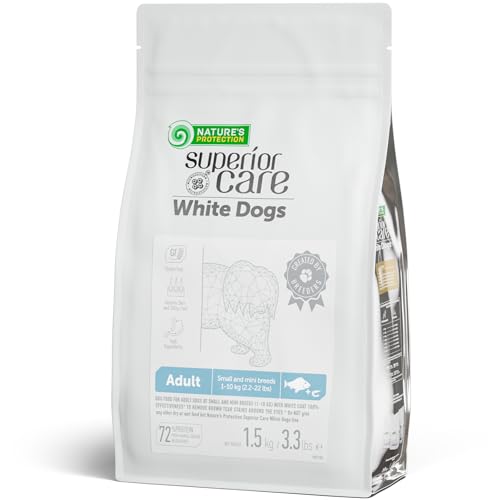
White fish as the first ingredient gives this food a protein source that’s both highly digestible and gentle on sensitive stomachs, which matters a lot for white-coated dogs prone to tear stains and skin irritation. This is the kind of formula that suits owners who want a single, straightforward food that handles coat care and digestion at the same time, especially for small breeds with picky eating habits.
The trade-off is that this bag is only 3.3 pounds, which means more frequent reordering if you have a dog that eats closer to the upper end of small-breed portions. And the grain-free approach, while great for allergy-prone dogs, rules out owners who prefer grain-inclusive recipes for their pets. Compared to the Royal Canin Maltese Adult formula, which is breed-specific but not grain-free, this Nature’s Protection option covers a broader range of light-coated small breeds while keeping the ingredient list simpler and more targeted.
Product photos
Nature's Protection Superior Care Lamb & Rice Dry Dog Food
What We Like
- Lamb as #1 easily digestible protein
- Small kibble for small jaws
Trade-offs
- 3.3 lb bag suits only small breeds
- Not suitable for large or medium breed dogs
The lamb protein is the first ingredient, providing iron, zinc, and B vitamins in a form paired with rice for gentle digestion. This formula targets tear stains by supporting clear tear and saliva composition, so the brown marks around eyes, mouth, and paws fade while the coat stays bright.
Product photos
Royal Canin Maltese Adult Dry Dog Food

What We Like
- Formulated specifically for purebred Maltese
- Omega fatty acids support silky coat
- Highly digestible proteins reduce stool odor
- Specialized kibble shape for small mouths
Trade-offs
- Only for Maltese, not other white breeds
- No anti-tear stain ingredients listed
The specialized kibble shape is the first thing that stands out. It’s designed so a small Maltese mouth can pick up each piece without fumbling, which matters more than you’d think when your dog eats like a tiny vacuum cleaner that misses half the pieces. Royal Canin targets the nutritional needs of a purebred Maltese 10 months and older, with omega-3 and omega-6 fatty acids plus biotin aimed at maintaining that long, silky coat. If you’ve got a picky eater, the formula’s high palatability and strong aromas help, and the highly digestible proteins mean less smell and mess in the yard. This is a breed-specific approach that doesn’t try to be one-size-fits-all.
The trade-off is that this food is formulated strictly for Maltese. So if you have a different white-coated breed, say, a Bichon Frise or a West Highland White Terrier, the nutritional profile may not be as tailored. Compared to Nature’s Protection Superior Care White Fish formula, which targets tear stains and bright coats across white and light-coated breeds, Royal Canin’s Maltese-specific recipe offers no anti-tear stain ingredients. You’re getting a narrower focus in exchange for precision, and the 2.5 lb bag means you’ll be reordering more often than with a larger bag. For a dedicated Maltese owner who wants breed-matched nutrition, that trade-off is worth it.
Nature's Protection Superior Care Anti-Tear Stain Lamb Dry Dog Food
What We Like
- Grain-free formula for picky eaters
- Lamb is the #1 ingredient
- Helps reduce brown tear stains
Trade-offs
- Only 3.3 lb bag, frequent repurchasing needed
- Not suitable for dogs needing a grain-inclusive diet
The trade-off here is bag size: at 3.3 pounds, you will be ordering more often than with a larger bag. And the lamb-only protein means this is not a good choice if your dog needs variety or has a known lamb intolerance. Compared to the Royal Canin Maltese Adult formula, which comes in a 2.5 lb bag and uses highly digestible proteins, this Nature’s Protection option skips grains entirely and adds the tear-stain reduction feature. So you are trading a smaller bag for a more targeted ingredient approach.
How We Evaluated Dog Foods For White Dogs
We started with ingredient quality, specifically, the first protein source and whether the formula included known coat-supporting nutrients like omega fatty acids. White dogs benefit from diets that minimize artificial colors and fillers, which can contribute to tear staining and dull coats. Each food was checked against its stated purpose: tear stain reduction, breed specificity, or digestive sensitivity.
The three most important criteria were protein source and digestibility, the presence of ingredients linked to tear stain reduction (like lamb or white fish in grain-free formats), and kibble size and shape for small-breed mouths. A small kibble encourages proper chewing, which aids digestion and reduces the mess that can stain light fur around the mouth.
A research-led evaluation has limits: we cannot claim to have fed each formula to a panel of dogs, and individual results vary widely based on your dog’s specific allergies, metabolism, and environment. What we can do is present the facts about each formula’s design and what owners most commonly report.
What To Look For In Dog Foods For White Dogs
Choosing a food for a white dog means looking past the bag design and focusing on ingredients that support coat brightness from the inside.
A white-coat diet should prioritize easily digestible proteins, avoid artificial colors and fillers that can worsen tear stains, and include omega fatty acids for coat shine. Kibble size matters for small breeds.
Protein Source and Digestibility
White fish and lamb are common first ingredients in foods designed for white dogs because they are highly digestible and less likely to trigger the food sensitivities that can cause excessive tearing. A single, named animal protein, “white fish” or “lamb”, is preferable to vague “fish meal” or poultry by-products. Dogs that struggle to digest their food often produce more waste and more tear staining, so a grain-free formula can help if grain sensitivity is suspected.
Ingredients for Tear Stain and Coat Support
Look for formulas that include omega-3 and omega-6 fatty acids, which support skin health and a glossy coat. Some foods add ingredients like yucca schidigera extract to reduce stool odor and potentially lower the ammonia compounds that contribute to tear stains. Avoid foods with artificial dyes, which can deposit color in tear tracks and make staining worse on a white coat.
Kibble Size and Shape
Small-breed white dogs have small mouths and sometimes delicate jaws. A kibble that is too large encourages gulping rather than chewing, which can lead to poor digestion and food debris around the mouth that stains fur. The best kibble shapes for small white breeds are small, often star-shaped or oval, designed to be picked up easily and chewed thoroughly.
- Check that the first ingredient is a named protein (white fish, lamb, salmon).
- Look for grain-free options if your dog has a known sensitivity.
- Choose a formula with added omega fatty acids for coat health.
- Avoid artificial colors and preservatives that can stain white fur.
- Match kibble size to your dog’s breed and jaw size.
A good rule: if the kibble looks too big for your dog’s mouth, it probably is.
Dog Foods For White Dogs Compared
The table below compares all four picks at a glance, covering protein source, formula type, and what each food is designed to do for white-coated dogs.
| Product | Protein Source | Kibble Design | Target Dogs | Bag Weight |
|---|---|---|---|---|
| Nature's Protection Superior Care White Fish Dry Dog Food | White Fish (1st ingredient) | Small, crunchy for dental health | White/light coats, small breeds | 3.3 pounds |
| Nature's Protection Superior Care Lamb & Rice Dry Dog Food | Lamb (1st ingredient) | 0.24-0.31 in | Small breeds, white/light coats | 3.3 lb |
| Royal Canin Maltese Adult Dry Dog Food | N/A | Specialized for easy pickup | Purebred Maltese 10 months+ | 2.5 lb |
| Nature's Protection Superior Care Anti-Tear Stain Lamb Dry Dog Food | Lamb (1st ingredient) | Small (small breeds) | White & Light Coats, Small Breeds | 3.3 lb |
Frequently Asked Questions
What is the best dog food for white dogs with tear stains?
The Nature’s Protection Superior Care Lamb & Rice Dry Dog Food is formulated specifically to reduce tear stains and odor in small white or light-coated dogs. Lamb is the first ingredient and easily digestible, which helps minimize the dietary triggers that can worsen tear staining.
Is grain-free dog food better for white dogs?
Grain-free formulas can help white dogs that have grain sensitivities, which sometimes manifest as skin irritation or excessive tearing. However, not all white dogs need grain-free food. If your dog tolerates grains well, a grain-inclusive formula like the Nature’s Protection Lamb & Rice may work better.
Can diet really make a white dog’s coat brighter?
Yes. A diet rich in high-quality protein and omega fatty acids supports coat health and natural shine. Foods like the Nature’s Protection Superior Care White Fish formula use white fish as the primary protein, which some owners report helps maintain a brighter white coat over time.
What should I look for in dog food for a Maltese?
Maltese dogs benefit from small kibble shapes and highly digestible proteins that reduce stool odor and tear staining. The Royal Canin Maltese Adult Dry Dog Food is specifically formulated for the breed, with omega fatty acids for coat support and a specialized kibble shape for small mouths.
How often should I switch my white dog’s food?
Stick with one food for at least 4-6 weeks to see full results, especially for tear stain reduction. Switching too frequently can upset digestion and make it harder to tell what is working. If you see no improvement in coat brightness or tear staining after two months, consider a formula with a different protein source.
The Bottom Line
For most owners of small white or light-coated dogs, the Nature’s Protection Superior Care White Fish Dry Dog Food offers the best balance of coat-supporting ingredients and digestive sensitivity support. Its grain-free formula and white-fish-first ingredient address the two most common dietary concerns for white breeds.
If tear stains are your primary frustration, the Nature’s Protection Superior Care Lamb & Rice formula targets that issue directly with an easily digestible lamb protein. For Maltese owners who want breed-specific precision, the Royal Canin Maltese formula is built around that breed’s unique jaw structure and coat needs.
The single most important factor is matching the protein source and kibble size to your dog’s specific breed and digestive tolerance. A food that causes digestive upset will never produce a bright coat, no matter how many coat-supporting ingredients it contains. Pair your chosen food with a good shampoo for white dogs and a whitening shampoo for external brightness, and consider whitefish dog food as a protein source if your dog has sensitive skin.
If dandruff or dry skin is also a concern, a dog food for dandruff formula may address both coat brightness and skin health at once.
