
Why Does My Dog Have Swelling? Start With the Pattern
This post contains affiliate links. As an Amazon Associate, we earn from qualifying purchases.
Why does my dog have swelling? The pattern of it narrows the cause before any test runs. Fluid that collects between cells shows up as puffiness, and where it lands (one spot, both hind legs, or the whole body) points to inflammation, a lymph or vein problem, low protein, or organ disease.
Pattern is doing real work in that answer, because a dog’s skin cannot tell you whether the fluid came from a leaky vessel, a blocked lymph channel, or a liver that stopped making protein. What the skin can tell you is where the swelling sits, how fast it arrived, and whether the area feels warm. Those three details decide which test a vet reaches for first.
What follows: the focal-versus-generalized split, the four cause patterns, the two fluid numbers that narrow it further, and the log I would hand a vet instead of a guess.
Key Takeaways
- Where the swelling sits matters more than how big it looks. One leg or one side of the face points at inflammation; both hind legs points at a lymph or vein problem.
- A swollen belly is the exception. PetMD notes that abdominal swelling is more often organ swelling or pooled blood than fluid, though when it is just fluid, heart disease is one of the most common causes.
- Fluid total solids below 1 g/dl point to low protein as the driver; above 2.5 g/dl points to congestion, lymphedema, or inflammation.
- Lymphedema isn’t hot, isn’t itchy, and doesn’t answer to antihistamines. It also doesn’t fade on its own.
- Take the dog in today if the swelling came with pain, fever, or is confined to the abdomen.
What “Swelling” Actually Means in a Dog
What you’re looking at is fluid that has escaped the blood vessels and collected in the tissue spaces between cells. The puffiness is just the visible part.
Peripheral edema is a pathologic increase in interstitial fluid, meaning fluid has escaped the blood vessels and collected in the tissue spaces between cells. It can be focal, confined to one limb or one side of the face, or generalized across the body. Visible puffiness is the outward sign; the underlying cause is a separate question.
Now the word problem, because it changes how you read the situation.
The PMC clinical signs reference article takes the wider view: peripheral edema covers any pathologic interstitial fluid increase, focal or generalized, whatever caused it.
Both readings earn their keep. If your dog took a knock on the leg yesterday, the narrow reading fits. If the puffiness arrived with no injury at all, work from the wide one.
Which is why the pattern matters more than the label.
Why Does My Dog Have Swelling? Start With the Pattern
Is it one leg, or is it the whole dog? That single question splits the workup in half.
Focal Swelling: Usually Inflammation
That covers a knock, a bite, a torn nail, or a growth. It also covers the ordinary limping in dogs that shows up after a hard run.
A hot spot is a focal swelling that looks alarming. If you’ve dealt with hot spots before, you know the shape already: a raw, oozing patch that appears almost overnight and spreads while you watch.
Generalized Puffiness: Three Usual Suspects
A dog that looks puffy all over is a different animal entirely. PetMD lists inadequate protein, too much sodium, or a severe bacterial infection as the drivers.
The mouth is its own category. VCA Animal Hospitals states plainly that oral swellings are never normal, and that you should not touch one, because some are painful and you risk a bite. Causes run from local trauma and infection to fluid accumulation and tumors.
The Four Categories of Cause, and How Each One Looks
Four patterns cover most of what you’ll see: one hot spot, two cool hind legs, a puffy whole dog, and a hard belly.
| Pattern | What You’d Actually See | What It Points To |
|---|---|---|
| One small area, warm and sore | Part of a leg, one side of the face, an ear | Inflammation from injury, trauma, or a tumor |
| Both hind legs, cool, not sore | Symmetric swelling that doesn’t fade | A lymphatic or venous problem |
| Puffy all over | Muzzle, eyelids, belly | Low protein, excess sodium, or severe infection |
| A hard, swollen belly | Looks like a swallowed ball | More often organ swelling or blood than fluid |
Read the table left to right and you’re already doing most of what a vet does in the first two minutes of an exam.
If the cause lands in that top row, your vet may prescribe an anti-inflammatory for dogs and send you home with instructions. Never substitute a human one on your own.
The bottom row deserves its own paragraph.
Both statements sit in the same article, and both are worth carrying to the vet.
What the Fluid Tells Your Vet That Your Eyes Can’t
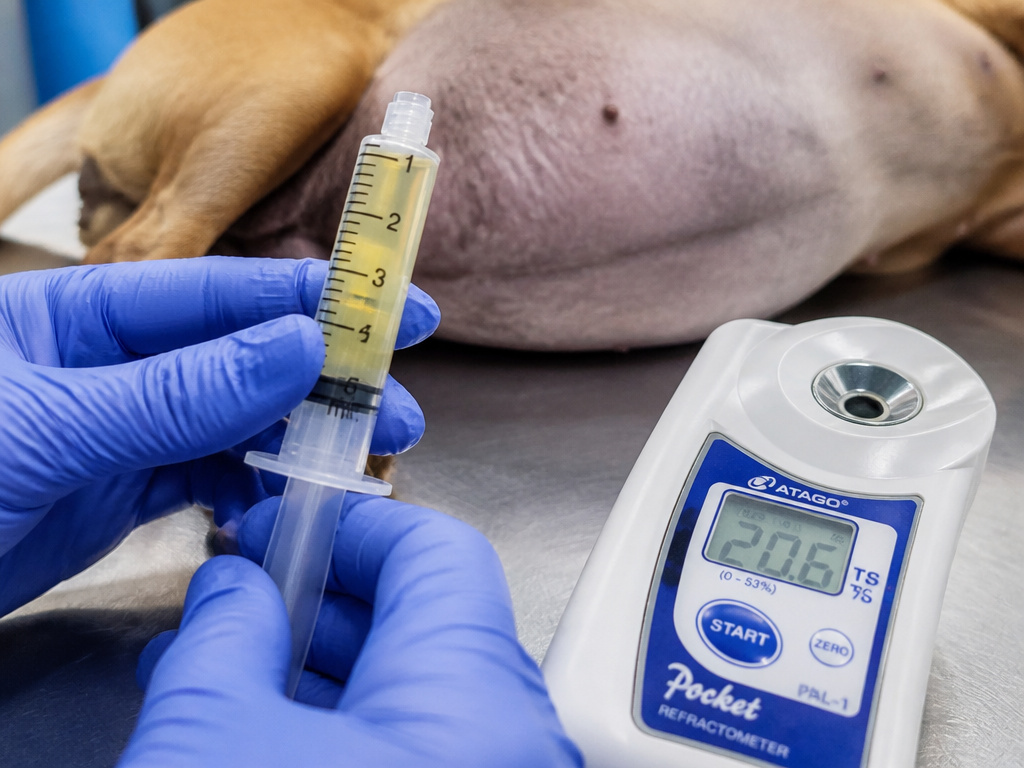
Two numbers do most of the work here: 1 g/dl and 2.5 g/dl.
The fluid accumulation disorders clinical overview in Ettinger’s textbook of veterinary internal medicine sets the cutoffs. Edema fluid total solids below 1 g/dl point to hypoproteinemia, meaning low protein in the blood is driving fluid out of the vessels. Total solids above 2.5 g/dl point instead to venous congestion, lymphedema, or inflammation.
That one measurement separates “the plumbing is blocked” from “the blood can’t hold its water.” Two very different workups follow from it.
| Test | What It Looks For | When It’s Used |
|---|---|---|
| CBC and biochemistry | Organ function, protein level, infection | Most dogs with edema |
| Urinalysis | Kidney and urinary tract disease | Most dogs with edema |
| Heartworm test | Microfilariae | Suspected lymphedema |
| Intraoral X-rays | A tooth or bone source | Swelling inside the mouth |
| CT or MRI | Brain or deep tissue cause | Cerebral edema or a tumor |
One more number worth knowing: generalized edema caused by intravenous fluid overload resolves within 48 hours of discontinuing the fluids, per the same chapter.
There’s a trap in that. Overhydration alone rarely produces marked generalized edema unless a second factor such as low albumin or poor urine output coexists. The swelling itself also creates a jelly-like skin turgor change that corrupts the standard dehydration pinch. Squeeze the scruff and you get a false reading.
A dog with normal protein and a swollen body still needs a heart listen. Normal albumin clears one cause off the list. The rest of the list stays.
That last point catches people. The Ettinger chapter notes that a dog with normal albumin and edema may still have insidious cardiac disease, high-output failure from severe anemia, or anuric renal failure.
Lymphedema: Not Hot, Not Itchy, and It Doesn’t Fade
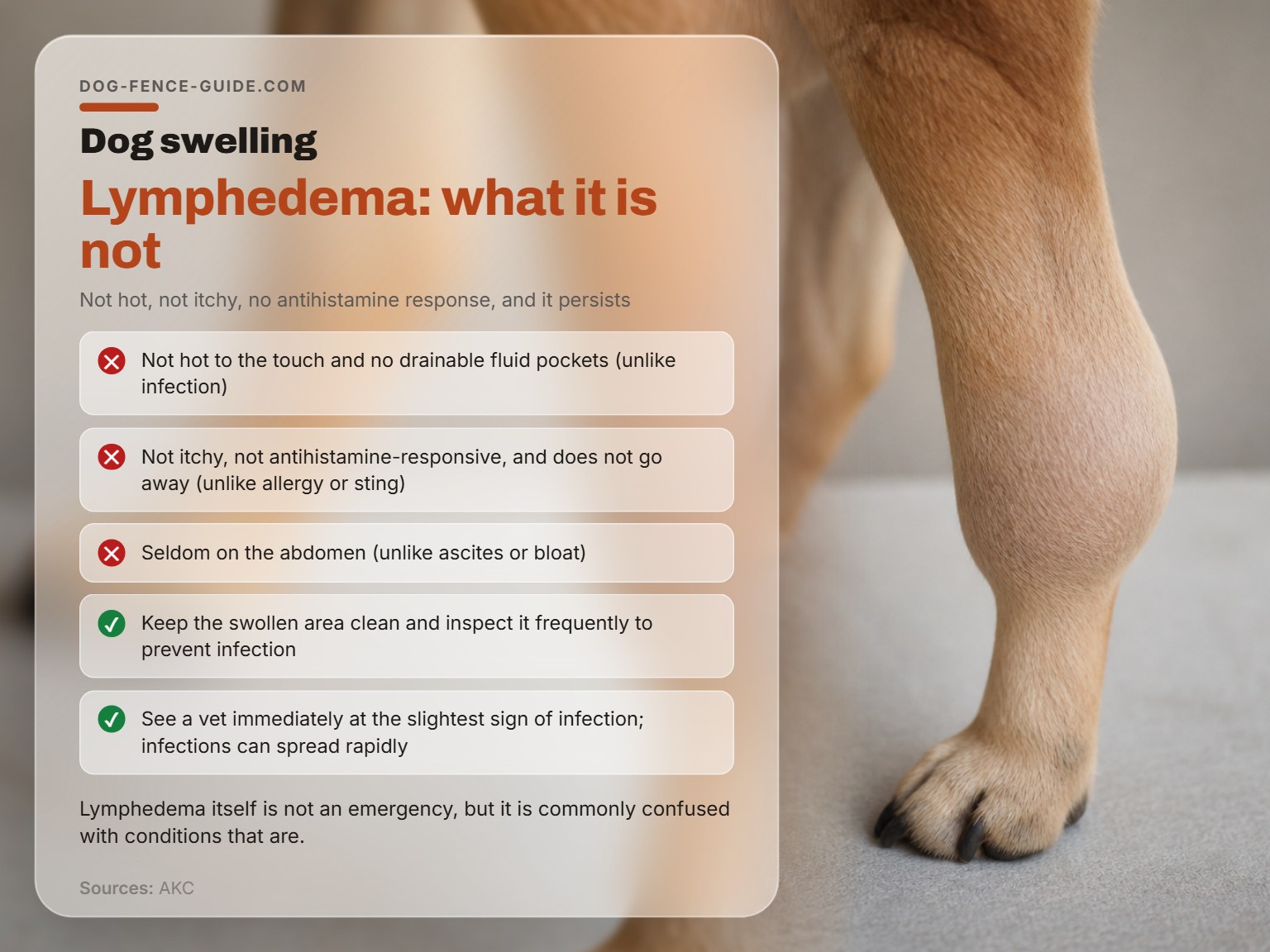
A lymphedema swelling doesn’t hurt, doesn’t itch, and won’t respond to an antihistamine. That combination is exactly why owners wait too long before calling.
The AKC’s canine lymphedema signs and symptoms guide lays out the tells, and they’re mostly about what the swelling isn’t:
- Not hot to the touch, and holding no pockets of fluid that can be drained (unlike infection)
- Not itchy, not antihistamine-responsive, and not going away (unlike an allergy or a sting)
- Seldom on the abdomen (unlike ascites or bloat)
- Often lower on the body than you’d expect, because gravity pulls the fluid down the legs
If the skin is itchy skin as well as swollen, that points away from lymphedema and toward an allergy or an infection.
Primary vs. Secondary Lymphedema
Primary lymphedema means the dog was born with a malformed or poorly functioning lymphatic system. The AKC notes it’s inherited as a dominant trait in some dogs, and it typically first appears within the first few days to months of life, most commonly as swelling in one or both hind legs.
Secondary lymphedema is the more common kind, and it follows injuries, surgery, radiation, or chemotherapy. Here’s the part that surprises people: microfilariae are the leading global cause of lymphedema in humans, but the AKC states that isn’t the case with dogs.
Owners ask me about natural anti-inflammatories for this. They won’t touch a lymph problem, and I’d rather say that plainly than sell hope.
When Swelling Is an Emergency and When It Honestly Isn’t
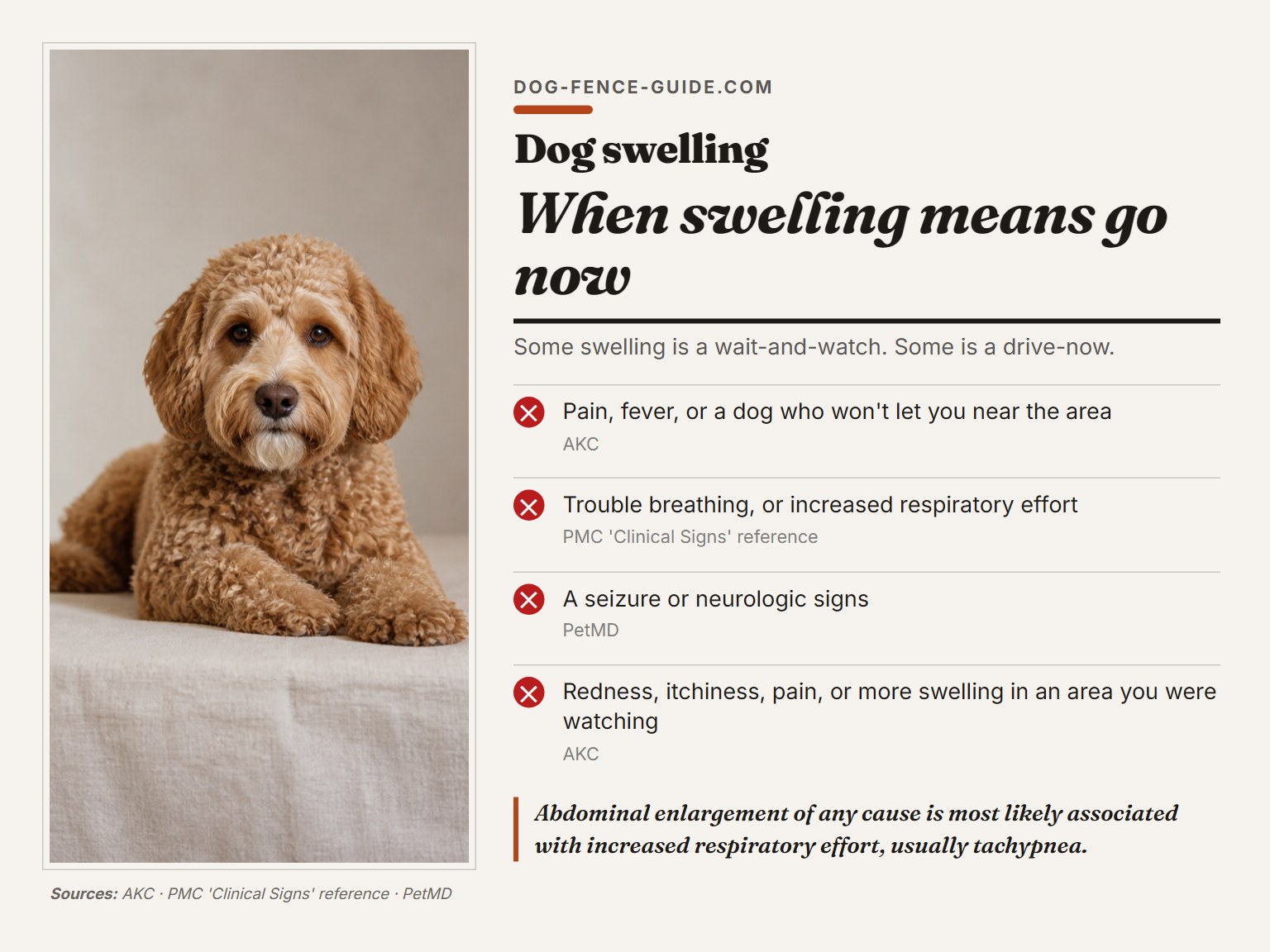
Some swelling is a wait-and-watch. Some is a drive-now.
Go now, not next week, if you see any of these:
- Pain, fever, or a dog who won’t let you near the area
- A hard or rapidly growing belly, which warrants an immediate vet visit
- Trouble breathing, or increased respiratory effort
- A seizure or neurologic signs
- Redness, itchiness, pain, or increased swelling in an area you were already watching
That last one matters more than it sounds. The AKC advises keeping any swollen area clean and inspecting it often, watching for redness, itchiness, pain, and increased swelling. Treatment is usually broad-spectrum antibiotics.
Easy to miss: A swollen belly that comes with a grunt on every exhale is a breathing problem wearing a stomach disguise. The PMC clinical signs reference notes that dogs are more likely than cats to vocalize during expiration, and that abdominal enlargement of any cause is most likely to come with a raised breathing rate.
And the swelling isn’t always visible at all. PetMD points out that most commonly it isn’t, showing up instead as difficulty breathing from fluid in the lungs, or as neurologic signs and seizures from fluid in the brain.
If your dog is flat-out and not themselves alongside the swelling, lethargy in dogs is worth reading before you decide how urgent this is. Same for why is my dog shaking if there’s trembling with it.
How to Log It So Your Vet Can Actually Diagnose It
Before you start: Don’t press, squeeze, or wrap the swollen area. Some swellings are painful enough to earn you a bite, and pressure on a fluid pocket tells you nothing useful. Keep the area clean and leave it otherwise alone. Don’t hand over any medication your vet hasn’t named, and if breathing changes, stop logging and drive.
Fair warning: logging takes only a moment a day, and many owners skip it.
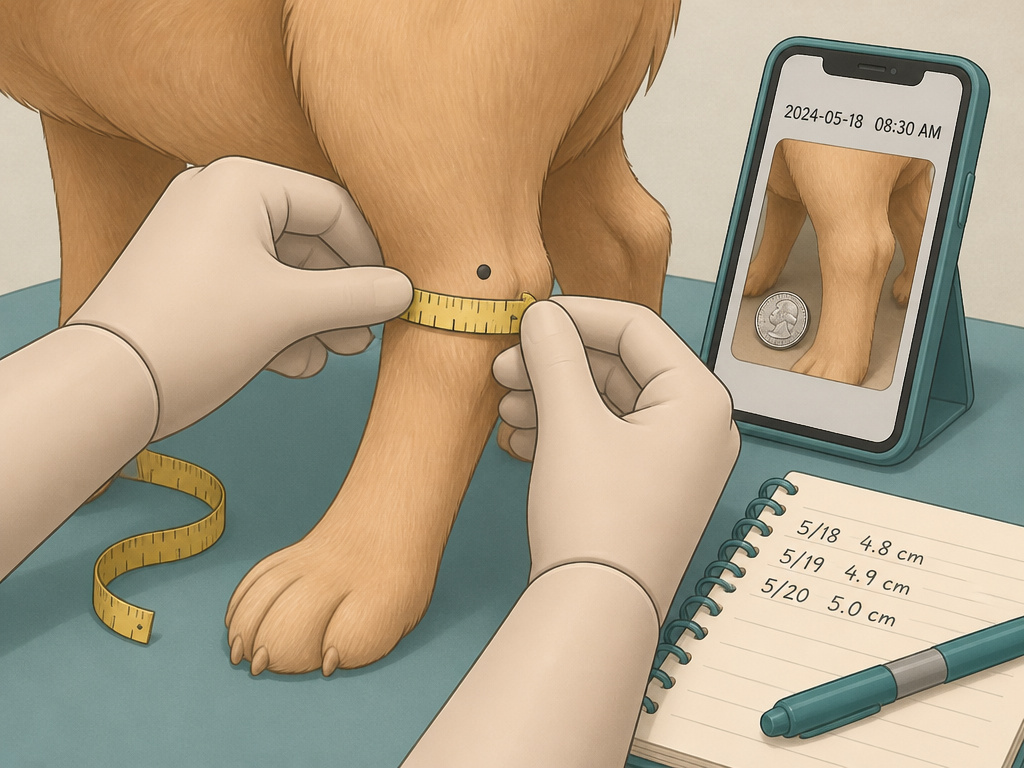
- Photograph the swelling next to something for scale. A coin, a pen, your hand. Without a reference, yesterday’s photo and today’s are just two blurry pictures of a leg.
- Measure the limb with a soft tape at the same landmark every time. Mark the spot with a dot of marker. Skip the fixed landmark and your numbers are noise.
- Time-stamp every entry. “It’s been getting bigger” is a feeling. “Bigger since Tuesday morning” is a timeline a vet can work with.
- Log the boring stuff alongside it: appetite, water intake, urination, breathing rate, energy. Anchoring on one symptom is the most common way owners point a vet at the wrong organ.
- Note any recent surgery, radiation, injury, or new medication. Secondary lymphedema follows surgery and radiation, and that history changes the entire workup.
What to Photograph
Take a wide shot of the whole dog standing, a close shot of the swelling with your scale object, and a shot of the opposite limb for comparison. The comparison shot is the one vets ask for.
I keep a log for my own dog in a notes app, one line a day. The two times I’ve needed it, the vet asked “when did this start” and I had a real answer instead of a shrug. That’s the whole payoff.
Common mistake: Anchoring on the first thing you noticed. Swelling alone points a dozen directions. Swelling plus a change in drinking plus a change in appetite points at a much shorter list.
I’ll be honest about a gap here. I’ve never owned a very large dog, so judging leg swelling on a big dog by eye is genuinely beyond me.
Frequently Asked Questions
Why does my dog have swelling in only one leg?
Focal swelling in one leg points at inflammation from injury, trauma, or a tumor, per PetMD. Lymphedema can also start in one or both hind legs, but it isn’t hot or painful the way inflammation is. A vet visit separates the two quickly.
Can I give my dog an antihistamine for swelling?
Not as a guess. The AKC notes that lymphedema doesn’t respond to antihistamines at all, so a dose tells you nothing and delays a real answer. Ask your vet before giving any medication.
Is a swollen belly always fluid?
No. PetMD states that a very swollen abdomen is more commonly organ swelling or accumulated blood than edema. When it is fluid, heart disease is one of the most common causes.
How fast should swelling go down?
It depends on the cause. Generalized edema from intravenous fluid overload clears within 48 hours of stopping the fluids, according to the Ettinger chapter. Inflammatory swelling resolves once the cause is treated. Edema from organ failure or affecting the nervous system can mean a multiple-day hospital stay.
Does a normal blood panel rule out heart disease?
No. The Ettinger chapter notes that a dog with normal albumin and edema may still have insidious cardiac disease, high-output failure from severe anemia, or anuric renal failure.
Should I keep the swollen area clean?
Yes. The AKC advises keeping any swollen area clean and inspecting it often, watching for redness, itchiness, pain, and increased swelling. A dog showing the slightest sign of infection should see a vet immediately, because these infections spread fast.
The Bottom Line
Here’s the trigger I’d give a neighbor. One small spot, a dog who’s eating and moving normally, and no fever is a next-appointment problem. Two locations, or the belly, or pain, fever, or a change in breathing is a today problem.
This all shifts if your dog had surgery or radiation recently. Secondary lymphedema follows both, and a swelling that shows up in the weeks afterward is a call to the surgeon rather than a wait-and-see.
Do one thing this week: measure that limb at the same landmark every morning and write it down. A moment a day buys you a real timeline.
And if you take nothing else from any of this, take the order of operations. Photograph it, measure it, write down when it changed, then call. The honest answer to why does my dog have swelling comes from a pattern, and a pattern is something you can actually build.
