
Why Is My Dog Losing Hair? Causes and Next Steps
This post contains affiliate links. As an Amazon Associate, we earn from qualifying purchases.
Your dog is losing hair because something has interrupted the hair growth cycle: infection, parasites, allergies, hormones, friction, or a normal seasonal shed. The pattern matters more than the amount. Bald spots, symmetric thinning, and itching point away from normal shedding, and the itch gets investigated first.
A follicle cycles through growth, rest, and shedding, and alopecia begins when that cycle breaks at the follicle itself. The Merck Veterinary Manual splits the causes along exactly that line: diseases that destroy the follicle or hair shaft, and diseases that slow follicle growth. The first group tends to inflame the skin. The second tends not to, which is why the why is my dog losing hair question with a bald patch and no redness sends a vet looking somewhere else entirely.
What follows is a pattern-first walk through the causes: how to tell a seasonal shed from a hormonal one, which breeds carry the risk, what your vet will actually test, and the log I’d bring to the appointment.
Key Takeaways
- Bald spots and symmetric loss are the abnormal markers; an even, thinning coat with no bare patches usually isn’t.
- The itch gets investigated first. If your dog is scratching the bald area, the scratching is the lead, not the hair.
- Photograph and date every patch. A timeline is the most useful thing you can hand a vet.
Why Is My Dog Losing Hair? Start With the Pattern
The Merck Veterinary Manual’s alopecia entry draws the line at the coat itself: shedding counts as abnormal when it produces bald spots or symmetric hair loss. No patches, no symmetry, and the manual treats it as a stage in normal coat replacement.
Alopecia is partial or complete hair loss in areas where hair normally grows. Congenital cases show symmetric or single-site loss without inflammation. Acquired cases vary: isolated or widespread patches, often with inflammation, thickened skin, color change, scaling, or itching. Diagnosis requires history, physical exam, and hair examination to distinguish shed hairs from broken hairs.
The AKC expert advice on dog alopecia takes a wider view. Its guidance says excessive shedding deserves a look if it comes with skin injury, a poor or unbalanced diet, stress, parasites, hormonal problems, or skin disease, and none of those require a bald spot to be present.
Both positions are defensible when you compare a why is my dog losing hair answer. They just lead to different appointments.
| What you see | Normal shedding | Alopecia |
|---|---|---|
| Even thinning, no bare skin | Expected in a seasonal coat | Not the typical picture |
| Visible bald spots | Not expected | Merck’s abnormal marker |
| Symmetric loss on both sides | Not typical | Points to hormonal or congenital cause |
| Redness, crusting, scaling | Not part of a normal shed | Suggests infection or inflammation |
The normal shedding vs hair loss question is really a question about skin. If you can see skin, photograph it and write the date. If the coat is just thinner than it was before and there’s no bare patch, you’re probably watching a shed.
Why the Itch Gets Investigated Before the Bald Patch
The bald patch is the thing you can see, so it gets all the attention. Merck reverses the order when the dog is also scratching: the itching gets investigated first.
That’s because itching and pain are common drivers of acquired inflammatory hair loss. Infections, parasites, and allergies all cause it, and the hair goes as a side effect of the dog working at the skin. Allergic dogs scratch their ears or bellies or chew their paws, which produces cuts and abrasions that then lose hair.
Here’s the part nobody tells you. A hair that snapped off mid-shaft feels stubbly under your palm. A hair that shed from the follicle comes away with a small bulb on the end. Your vet checks which one is happening, because the two point at different causes.
I’d log the scratching before I log the hair. Frequency, time of day, and which body part gets the attention tell a vet more than a photograph of a bald patch ever will.
If the scratching started before the bald patch appeared, work through the scratching and hair loss causes first. Treating the coat while the itch runs unchecked is how people spend months on shampoo and get nowhere.
The Causes That Destroy Hair vs the Ones That Slow It Down
Two mechanisms cover most of it: something damages the follicle or shaft, or something slows follicle growth. Sorting a case into one of those two buckets narrows the list fast.
Damage to the follicle or shaft
- Bacterial, fungal, or parasitic infections
- Severe inflammatory skin disease
- Skin trauma such as burns
- Rare poisonings from mercury, thallium, or iodine
- Friction from a poorly fitted collar
- Excessive grooming, which Merck calls a rare cause
Slowed follicle growth
- Protein deficiency and other nutritional gaps
- Hormonal imbalance such as hypothyroidism
- Pregnancy or lactation
- Several weeks after a severe illness or fever
The damage group tends to be inflammatory. The slowdown group tends not to be, unless a secondary skin infection sets in. Congenital hair loss is a third category: commonly symmetric or confined to one area, not usually inflamed, and it can show up at birth or wait until the dog is a young adult.
| Pattern | Likely category | Next step |
|---|---|---|
| Itchy bald patch, red skin | Infection, parasite, or allergy | Skin smears and culture |
| Symmetric thinning, no itch | Hormonal or congenital | Blood and urine testing |
| Hairless ears, one site only | Inherited | Breed history and exam |
| Bald ring at the neck | Contact or friction | Collar fit and cleaning |
| Patchy loss weeks after a fever | Temporary, post-illness | Recheck on a timeline |
Which Breeds Show Up Again and Again
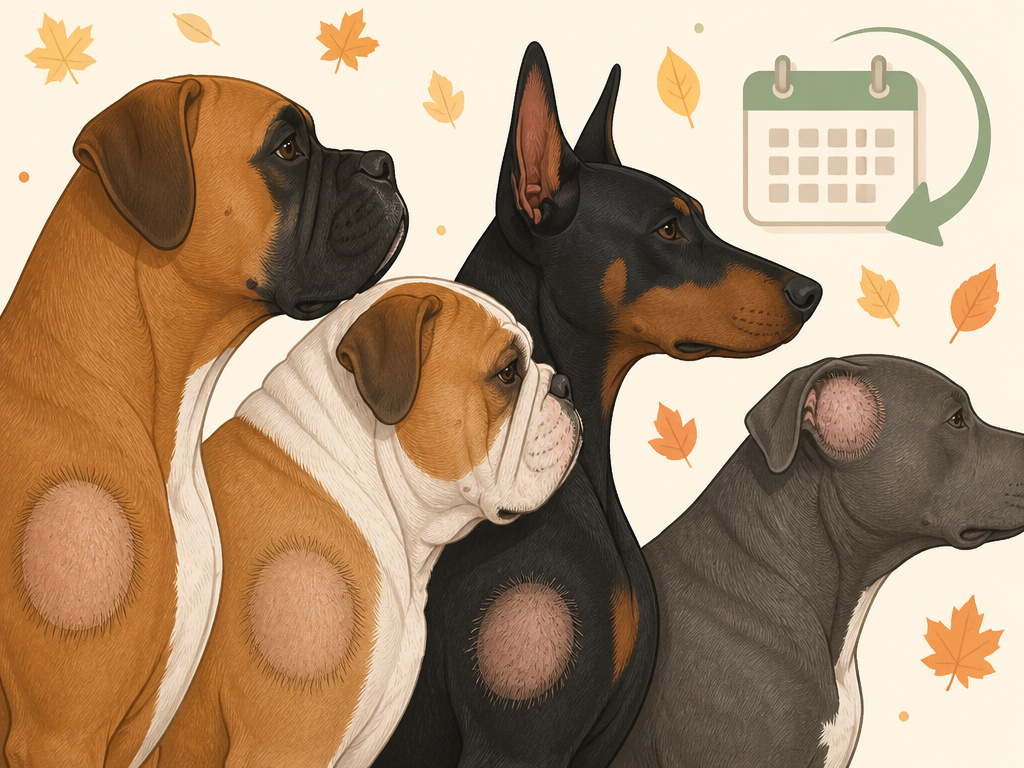
Four breeds dominate the seasonal alopecia list: the Boxer, Bulldog, Doberman, and Staffordshire Bull Terrier. PDSA’s hair loss guidance describes the pattern as harmless autumn patches that don’t regrow for 6 to 12 months, repeating year on year.
- Seasonal alopecia: Boxer, Bulldog, Doberman, Staffordshire Bull Terrier. Harmless autumn patches with a long regrowth window.
- Inherited baldness: hairless ears in the Staffordshire Bull Terrier and Dachshund.
- Bred hairless: Chinese Crested, plus the American Hairless Terrier, Peruvian Inca Orchid, and Xoloitzcuintli on the AKC list.
- Endocrine-prone: Bulldog, Doberman, Greyhound, and Dachshund, per the AKC.
- Coat type: double-coated breeds shed year-round, which is a coat fact rather than a disease.
One more that catches people out: many long-haired, intact female dogs lose significant hair after a heat cycle. That’s a normal hormonal event, not a skin disease, and it regrows.
What Your Vet Will Actually Do, in Order
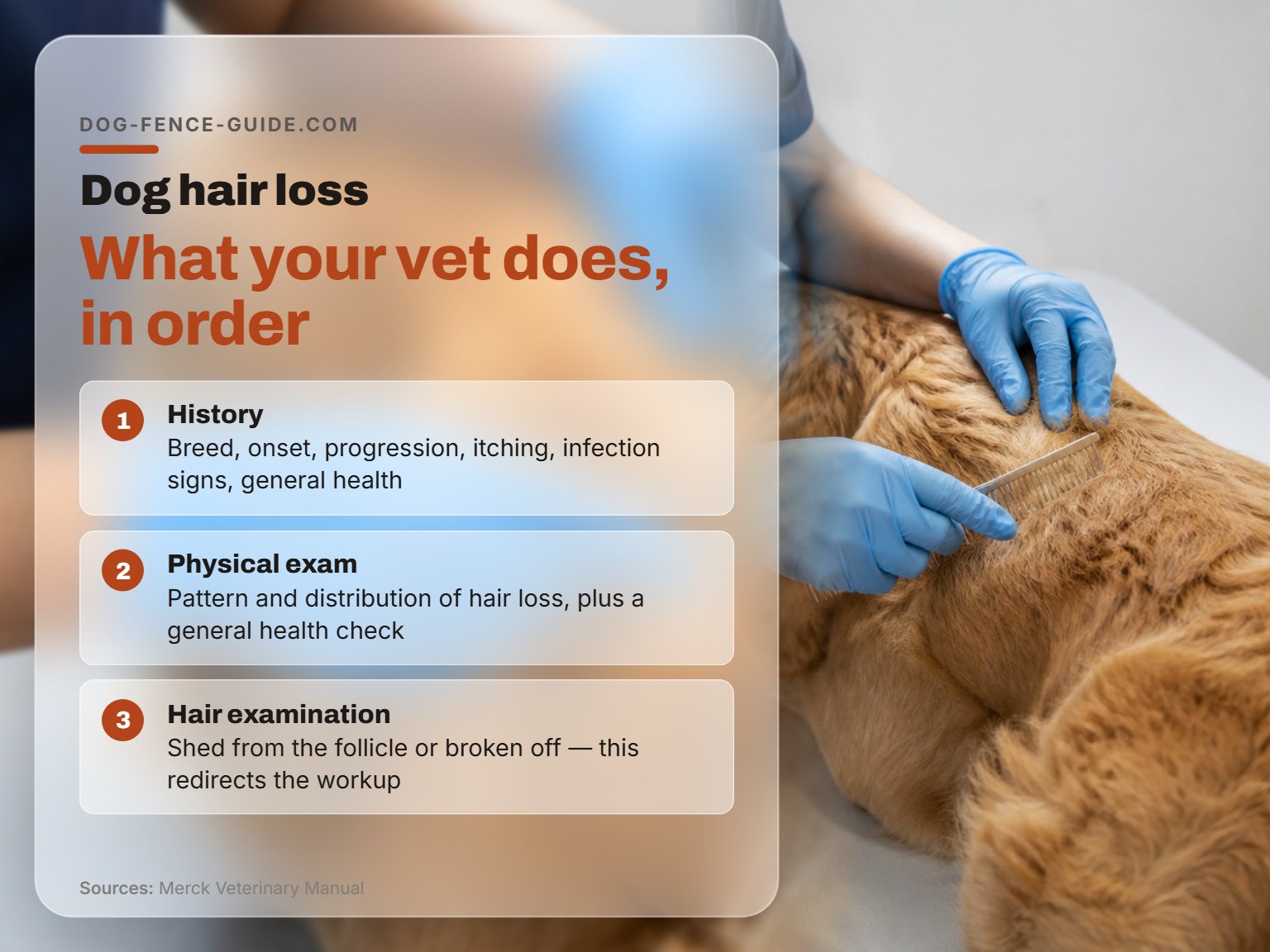
The exam starts with a history and a hands-on look at the coat, and the order matters more than most owners expect.
- History. Breed tendency, when the loss started, whether it’s progressing, whether there’s itching, signs of infection, and general health. A vague timeline is what makes a first appointment inconclusive.
- Physical exam. Pattern and distribution of the loss, plus a general health check.
- Hair examination. Shed from the follicle, or broken off. This single step redirects the whole workup.
- Skin scrapings and combing. Fleas, mites, and lice, with samples saved for the lab.
- Smears and culture. Bacterial, fungal, or yeast infection.
- Biopsy. Only if the earlier tests don’t point anywhere.
- Blood and urine. Only if a hormonal problem is suspected.
Quick tests come before expensive ones, and non-invasive comes before invasive. If your vet jumps straight to a hormone panel without looking at the skin, ask why.
Hormones: Common Cause, Contested Test
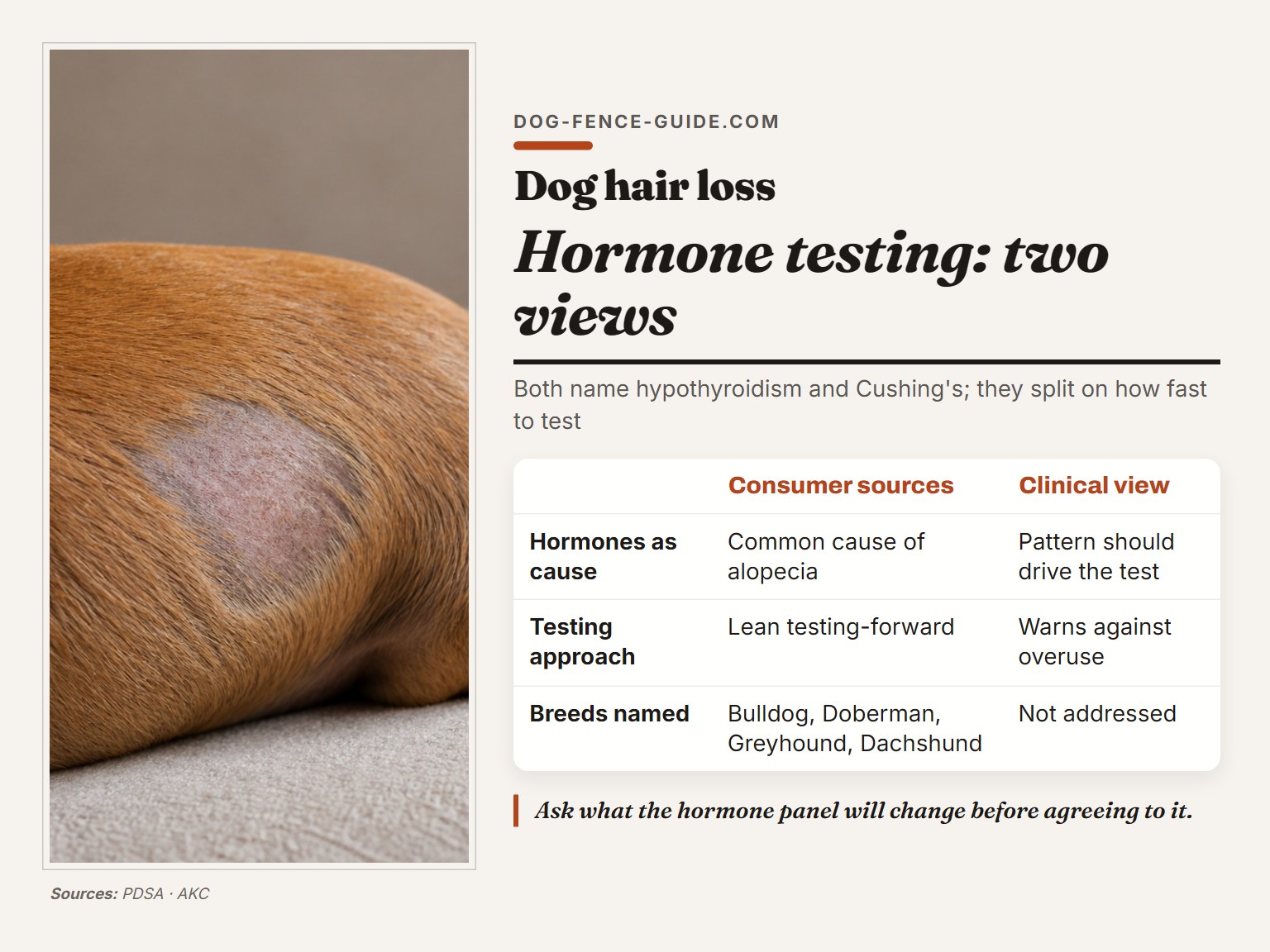
Hormone panels are the most argued-over step in this whole workup. PDSA and the AKC both name hypothyroidism and Cushing’s disease as common causes of canine alopecia, and the AKC lists the Bulldog, Doberman, Greyhound, and Dachshund as breeds prone to endocrine disorders.
Not everyone agrees on how fast to get there. Some veterinary clinicians argue that endocrine testing gets overused in generalized alopecia, and that the pattern on the dog should drive the test rather than the test driving the diagnosis. The consumer-facing sources lean testing-forward. The clinical argument leans restrained.
Worth knowing before you start: Ask what the hormone panel will change before you agree to it. If the answer is “nothing until the skin swabs come back,” waiting costs you nothing and avoids a result nobody can interpret.
Contact Alopecia and the Collar You Forgot to Check
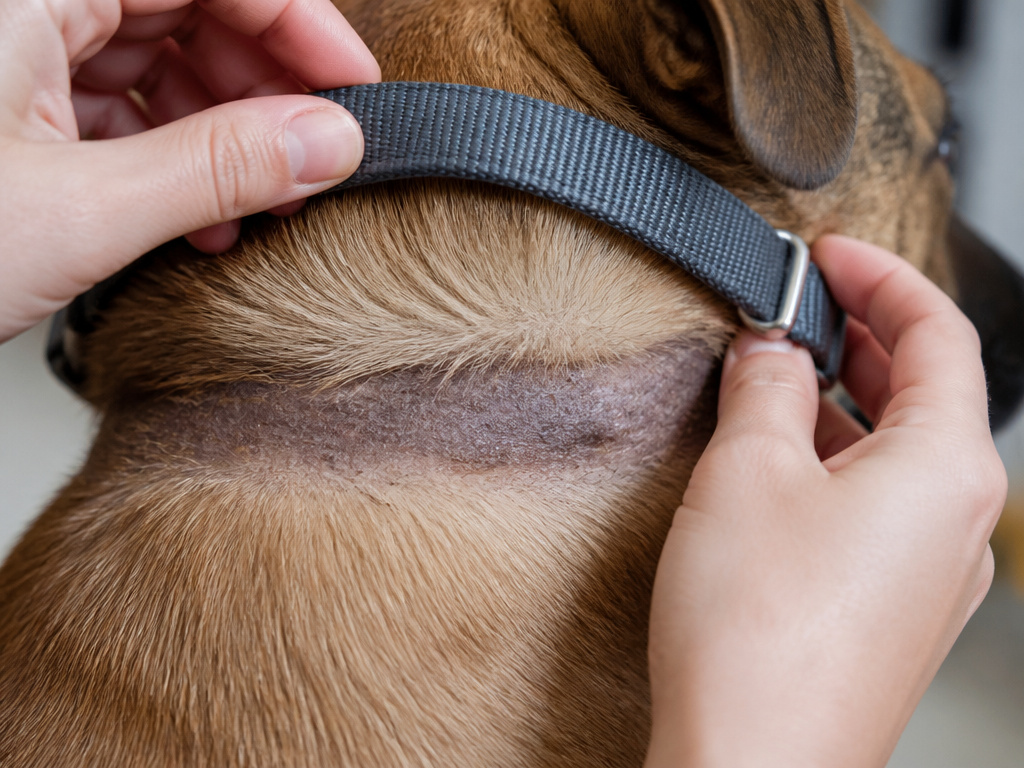
There’s a bald ring around the neck, thin fur on both elbows, and the rest of the coat looks fine. That distribution is the tell.
Contact alopecia happens where something rubs: the neck under a collar, and the elbows on a dog that lies on hard surfaces. The skin there sometimes darkens or develops calluses. It shouldn’t be red, inflamed, or crusty, and that distinction is the whole diagnostic value of looking.
The skin under a callus patch goes dark and slightly leathery, the way a heel callus does, but it stays flat and dry. Red, crusty, or oozing is a different problem and belongs in a vet’s office.
If the bald patch sits exactly where something touches the dog, fix the thing that touches the dog before you buy anything else.
Soft bedding helps the elbows. For the neck, wash the collar regularly, check that it fits comfortably, and keep the skin underneath clean, especially in warm weather.
Can a Food Change Fix a Bald Patch?
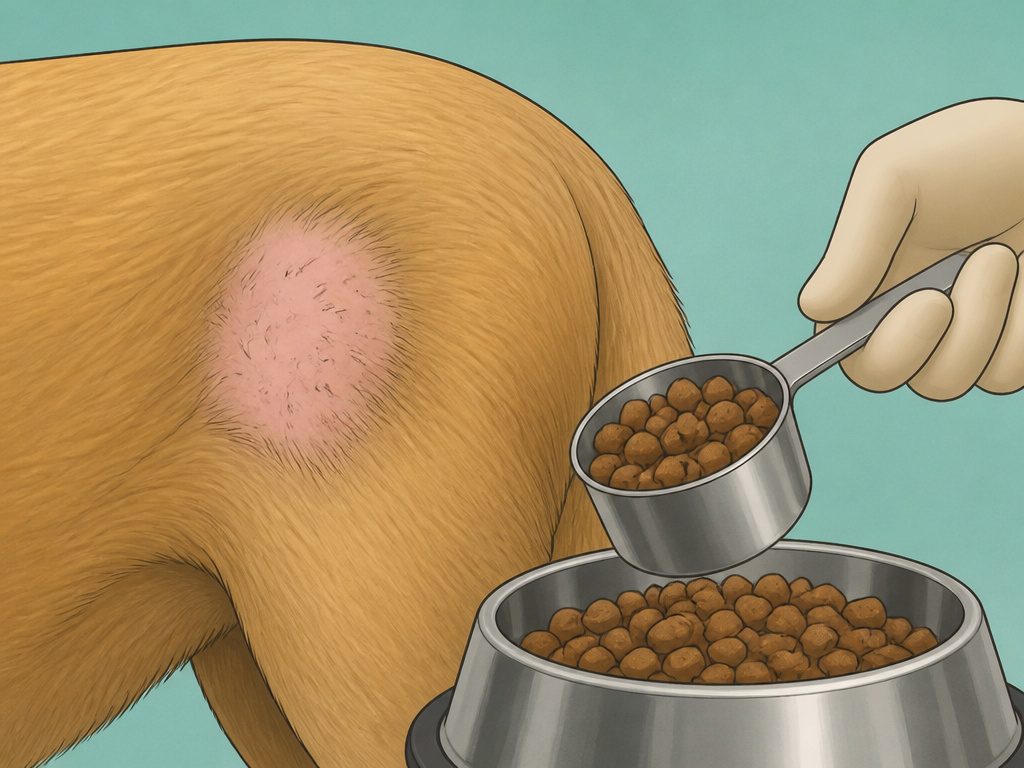
Sometimes, and only when nutrition is the actual cause. Merck names protein deficiency specifically as something that inhibits or slows hair follicle growth, which makes diet a legitimate suspect in a coat that’s thinning without patches.
Where nutrition actually matters
A dog eating an unbalanced diet has a real, fixable cause. The AKC’s guidance is that your vet will discuss nutritional needs and aim for a complete and balanced diet matched to age and activity level. If infection and hormones are already ruled out and diet is still on the table, the dog food for hair loss question becomes worth discussing with your vet rather than a bag swap at the pet store.
Supplements and vitamins
The shedding supplements aisle is full of claims that outrun the evidence, and the vitamins for hair growth shelf is worse. None of it replaces a diagnosis. A supplement given to a dog with an untreated skin infection changes nothing except your bank balance.
Before you start: Don’t reach for human antihistamines or leftover prescriptions. Diphenhydramine can be prescribed for a dog, but PetMD notes it often doesn’t work very well, and it isn’t a substitute for finding the cause.
Grooming and brushing
Brushing doesn’t fix alopecia, and over-grooming is itself a rare cause of hair loss. What brushing does is manage a normal coat. During a moult, the brushes for moulting matter more than shampoo, and if you simply want to reduce shedding in a dog that’s shedding normally, a rubber curry and ten minutes beat any product on the shelf.
When Should You Stop Waiting and Call the Vet?
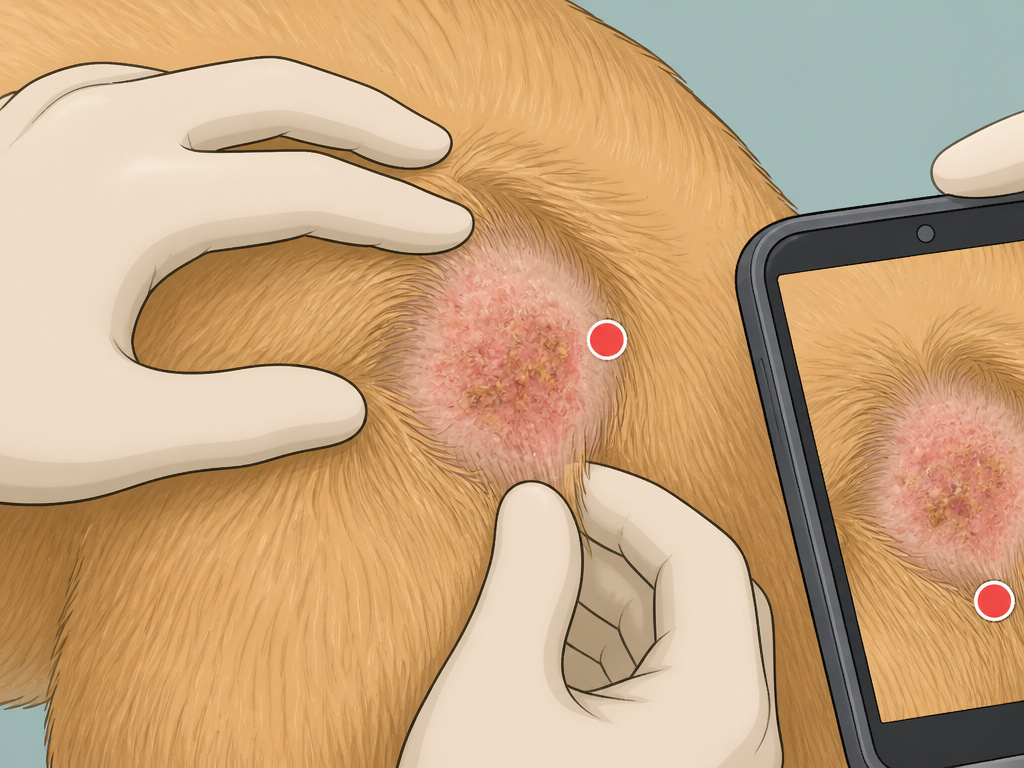
Itchy and getting worse is the short answer. PetMD flags hair loss as especially concerning when it itches or is progressively worsening, and both of those are things you can judge from your own kitchen.
My read: a small, non-itchy, unchanging patch can be photographed and monitored while you decide. Any of these should not wait.
- The dog is chewing, licking, or scratching the area
- The patch is bigger than it was before
- New patches are appearing elsewhere
- The skin is red, crusty, oozing, or smells
- The dog is lethargic, drinking more, or losing weight alongside the coat
Recovery runs from days to months depending on the cause, and some conditions need lifelong management. Most causes of hair loss in dogs aren’t life-threatening and aren’t emergencies. PDSA’s framing is the one I’d keep in your head: often treatable, rarely permanent.
One practical note that gets skipped. Licking, chewing, and scratching at the area slows or stops healing, so a cone or a light shirt isn’t cruelty, it’s part of the treatment.
Frequently Asked Questions
Is it normal for my dog to lose hair in patches?
Not really. PDSA notes that most dogs moult in cycles through the year, but moulting shouldn’t leave the coat bald or patchy. Bald spots or symmetric thinning are the markers Merck uses to call shedding abnormal.
How long does dog hair loss take to grow back?
It depends on the cause. PetMD puts recovery anywhere from days to months, and some conditions need lifelong management. Seasonal alopecia is the slow one: PDSA describes patches that don’t regrow for 6 to 12 months and come back the following autumn.
Can stress make my dog lose hair?
The AKC lists stress among the reasons excessive shedding becomes a concern, alongside injury, poor diet, parasites, hormonal issues, and skin disease. Stress-related over-grooming is a separate, rarer route to hair loss that Merck also names.
Should I switch food before seeing the vet?
No. Diet is one cause among several, and protein deficiency is the specific nutritional gap Merck names. Switching blindly removes a data point your vet could have used, and it delays the tests that would actually answer the question.
What does symmetric hair loss on both sides mean?
It narrows the list. Merck notes that congenital or hereditary hair loss is commonly symmetric or confined to one area and isn’t usually inflamed. Symmetry plus no itch is the pattern that sends a vet toward hormones or genetics rather than infection.
The Bottom Line
Tonight, take three photos: the patch close up, the same patch from a step back so the vet can see where it sits on the body, and one of the whole dog standing. Write the date on each and start a note with what you’ve observed. That’s the first step.
The threshold that changes everything is itch. A small, non-itchy patch that isn’t changing is a conversation. A patch the dog is chewing, or one that’s visibly getting worse, needs a vet appointment.
One concession, because it matters. If your dog is a Boxer, Bulldog, Doberman, or Staffie with an autumn patch on the flank that isn’t itchy, seasonal alopecia is a genuine possibility and your vet may say watch and wait. That’s a legitimate answer. It’s only legitimate after someone has actually looked at the skin.
