
How to Treat Dry Skin on Dogs: What Actually Works
This post contains affiliate links. As an Amazon Associate, we earn from qualifying purchases.
To treat dry skin on dogs, cut the bathing schedule back to once every two to four weeks, switch to a moisturizing or vet-approved shampoo, and apply a dog moisturizer after the bath. Flaking that comes with hair loss, odor, or constant scratching needs a vet diagnosis first, because the skin is reporting something else.
Bathing frequency is one lever, and sources disagree on how to treat dry skin on dogs: PetMD and the AKC warn that over-bathing strips oils, while the 2020 Veterinary Dermatology study frames post-bath moisturizing as beneficial. PetMD puts a sensible routine at once every two to four weeks. PetMD and the AKC warn that washing more often than that strips the oils the coat needs, though the 2020 Veterinary Dermatology study frames moisturizing after bathing as beneficial.
What follows is the order that actually works: rule out the medical causes first, fix the bathing routine second, and treat topical products as support rather than a cure. I’ll also show you where the published research stops short, because a lot of dry skin advice is louder than the evidence behind it.
Key Takeaways
- Bathe every two to four weeks unless your vet sets a different schedule for a medicated shampoo.
- Flaking plus hair loss, odor, or itch points to allergies, infection, or a metabolic disease, so get a diagnosis before you buy products.
- The AKC recommends a humidifier for cold, dry weather, but no controlled study backs it, so treat that as a cheap experiment, not a treatment.
Why Dry Skin on Dogs Is Usually a Symptom, Not a Condition
Flea allergy dermatitis is the most common skin disorder in U.S. Dogs, according to the American Kennel Club dry skin guide, and it shows up as flaking before it ever shows up as scratching. That pattern repeats across almost every cause on the list below.
The skin barrier holds water in and keeps irritants out. Researchers measure how well it is working by tracking transepidermal water loss, the grams of water that escape each square meter of skin per hour. In six healthy beagles, mean transepidermal water loss before experimental disruption was 11 g/m2/h, the baseline any barrier product gets judged against.
Dry skin is a symptom the same way a fever is. It tells you something is happening, and the job is finding out what.
The Causes Worth Ruling Out First
- Allergies, including flea saliva, food, and environmental triggers like pollen, dust, and grass.
- Parasites such as the Demodex mite, canine scabies, and cheyletiellosis.
- Infections, bacterial or fungal. Ringworm is contagious to people, which is worth knowing before you shrug it off.
- Metabolic disease, mainly Cushing’s and hypothyroidism, both of which tend to arrive with hair loss and a dull, brittle coat.
- Environment and routine, meaning dry indoor heat, desert air, and bathing more often than the coat can handle.
| What you’re seeing | Likely cause | Next step |
|---|---|---|
| Fine white flakes along the spine, no itch | Dry air or over-bathing | Cut baths to every 2-4 weeks |
| Flaking plus scratching at the tail base | Flea allergy dermatitis | Vet visit and a flea control plan |
| Hair loss with a dull, brittle coat | Cushing’s or hypothyroidism | Blood work |
| Red ring under the collar strap | Friction and pressure | Take the collar off at night |
The AKC is blunt about the sequence: treatment depends on the cause, so the first step is a diagnosis. That holds whether you’re looking at a dry skin treatment plan or standing in the vet’s exam room.
How Often Should You Bathe a Dog With Dry Skin?
Bathing frequency is where the sources split on how to treat dry skin on dogs, and the split is worth understanding before you change anything. PetMD sets a reasonable routine at once every two to four weeks and warns that over-bathing strips the natural oils. The AKC says reducing bath frequency usually resolves dry skin, as long as excessive bathing is the cause. Adopt-a-Pet says the same thing in fewer words.
Then there’s the wrinkle. The 2020 Veterinary Dermatology study notes that an expert committee has recommended moisturizers to alleviate skin dryness in canine atopic dermatitis, especially after bathing. So bathing isn’t the enemy in that framing. It’s the delivery window.
| Question | Routine bathing | Medicated bathing |
|---|---|---|
| How often | Every 2-4 weeks | Whatever the vet sets |
| Shampoo type | Moisturizing or oatmeal | Vet-recommended or prescription |
| Effect on coat oils | Strips them if too frequent | Deliberate, then moisturize after |
| When it applies | Normal coat, mild flaking | A diagnosed infection or condition |
The two positions can be reconciled: PetMD and the AKC warn that too much routine bathing causes the problem, while the 2020 Veterinary Dermatology study frames moisturizing after bathing as beneficial. Medicated bathing is a treatment with a follow-up step attached. A shampoo for dogs with dry skin belongs in the first category, and a dog conditioner belongs right behind it.
Here’s the test I use instead of counting days. Run your palm against the grain along the spine. A coat in decent shape slides back flat. A dry one catches, and you’ll see a fine white dust left on your hand.
I’d stop chasing the perfect interval and watch the dog instead. If the flaking gets worse shortly after a bath, the shampoo or the frequency is the problem, not the weather. That test costs nothing and tells you a lot.
Common mistake: Leaving the collar on around the clock. The strap rubs the same patch of skin day and night, the hair thins in a ring, and the skin underneath stays pink and irritated long after you’ve blamed the shampoo.
Do Dog Moisturizers Actually Do Anything?
The label on a dog moisturizer promises more than the research does, but the research isn’t empty either. The clearest evidence comes from a 2020 study in Veterinary Dermatology, and it’s worth walking through because it is specific.
What the Study Actually Measured
Six healthy male beagle dogs, two years old, weighing 7 to 12 kg, housed at 25-28°C and 40-60% relative humidity. Researchers disrupted the skin barrier on both sides of each dog’s thorax with tape stripping, then applied a moisturizer containing glycerol and propylene glycol to one side only, twice daily for one week. The other side was left alone as a control.
Transepidermal water loss dropped faster on the treated side during the first 24 hours. By Day 15, water loss had returned to normal on both the treated and untreated sites. Treated sites scored better on all four measures the researchers tracked: water loss, epidermal thickness, stratum corneum thickness, and dermal inflammatory intensity.
That’s a real result, and it’s the dog skin barrier recovery research most often cited for a reason.
A moisturizer is a barrier dressing, not a fix. It buys the skin time to repair itself, and it does nothing about the flea, the food, or the thyroid problem underneath.
Now the honest limit. The study used healthy dogs with experimentally damaged skin, not dogs with clinical dry skin. A later post-bathing spray hydration trial in the same journal flagged that gap plainly: the authors state it is unknown whether the same hydration effect will occur in dogs with xerosis, such as dogs with atopic dermatitis. Beyond that, the published record on commercial emollients for dog skin is limited rather than a body of evidence you can lean hard on.
So: moisturizers are reasonable and supported by one good study in healthy dogs. They are not a substitute for finding the cause. If you want options, the moisturizers for dogs worth considering are the ones a veterinarian approves.
What to Change in the Bowl Before You Buy Another Product
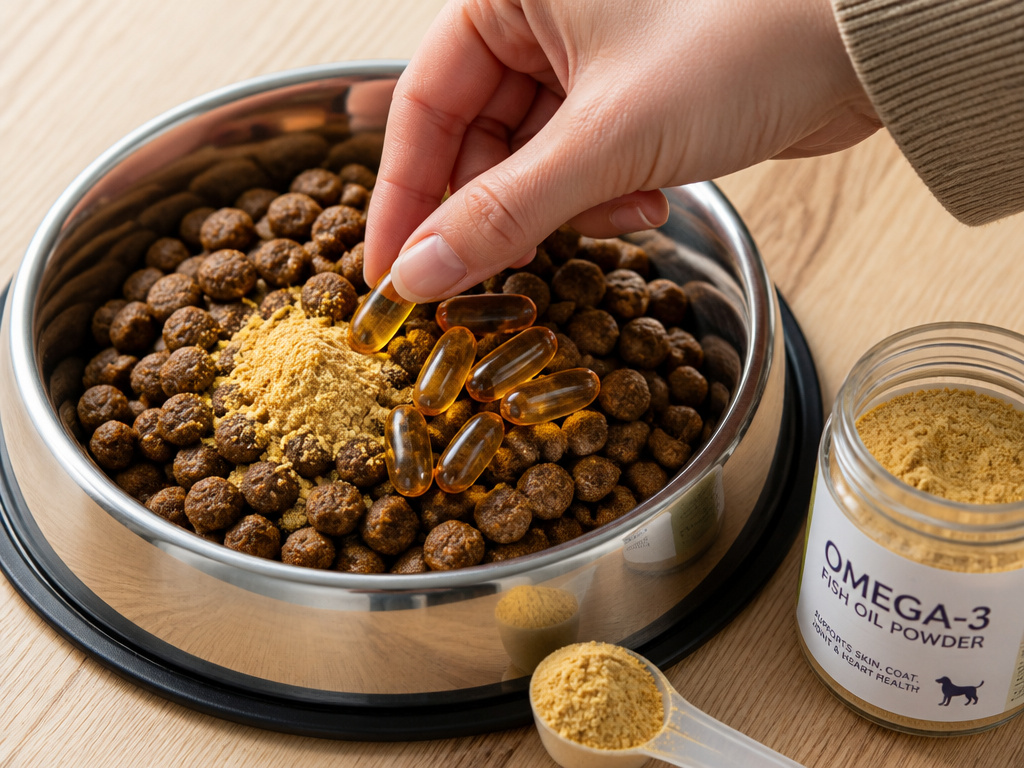
Diet is the slowest lever and the one most owners reach for first. PetMD’s position is that many dogs need more fatty acids than are present in commercial dog foods to maintain normal skin moisture. That single sentence is why fish oil and omega-3 supplements show up in so many articles on this topic.
Here’s the order I’d actually work through.
- Rule out medical causes with your vet first. Skip this and you can spend months rotating supplements while an infection or a thyroid problem quietly gets worse.
- Look at the fat content of what you’re already feeding. If your dog is on a maintenance diet with modest fat, that’s the gap PetMD is describing, and a dry dog food for dry skin is one option to discuss with your vet.
- Consider an elimination diet only under supervision. The AKC notes there is no reliable diagnostic test for food allergens, so the diet itself is the test. Run it yourself without guidance and the result tells you nothing.
- Add skin supplements for dogs last, not first. Adopt-a-Pet reports that probiotics like Lactobacillus have been shown to decrease itchiness in dogs with allergic skin disease, and that some atopic dogs improved with vitamin E. Those are supporting moves, not cures.
The Supplement Question
PetMD recommends Purina Pro Plan Veterinary Diets Skin Care Soft Chew Supplement, which is built on collagen, EPA and DHA, vitamin E, and zinc. The same article discloses that it is sponsored by Purina Pro Plan Veterinary Diets.
That doesn’t make the advice wrong. It does mean you should read the recommendation knowing who paid for the page. I’d rather you notice that than take it at face value.
Easy to miss: A dog that has eaten the same food long-term and suddenly starts flaking may need a vet workup rather than a diet change. The AKC lists Cushing’s disease and hypothyroidism as the two main metabolic diseases behind dry skin, and both need blood work, not a new bag of food.
The Home Humidity Question Nobody Has Good Data On
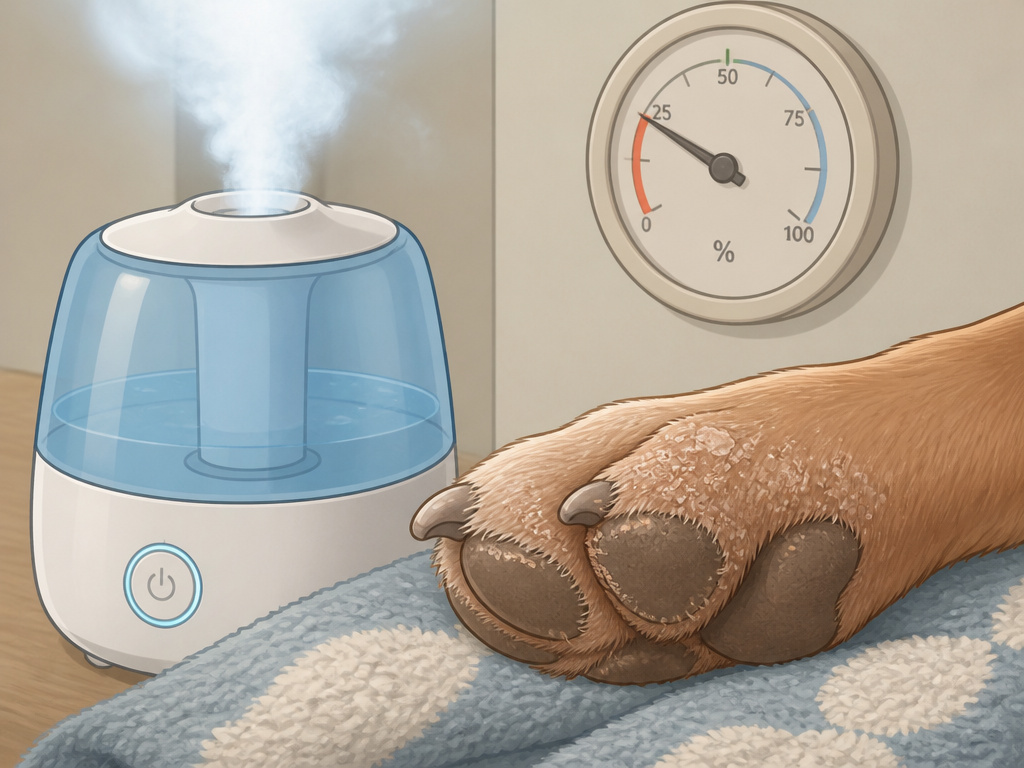
Does dry indoor air actually cause the flaking, or does it just get blamed for it? PetMD notes that a dog’s skin may become dry during winter months, when in-home heating runs, or in low-humidity climates like the desert. The AKC goes further and says buying a humidifier for cold, dry weather, using a vet-approved shampoo, and reducing bath frequency usually resolve dry skin, as long as those factors are the cause.
Neither source cites a controlled study for the humidifier claim. The peer-reviewed work instead tests topical occlusives and humectants, which is a different intervention entirely.
Treat the humidifier as a cheap experiment with a plausible mechanism, not as a treatment with evidence behind it. If your house reads dry in cold weather and your dog flakes then, that’s a reasonable thing to try. If your dog flakes in a humid climate, the humidifier is answering a question nobody asked.
If the itch is the bigger problem than the flake, the approach for soothing itchy skin runs on a separate track from the one for dryness.
When Flaking Means a Vet Visit, Not a Better Shampoo
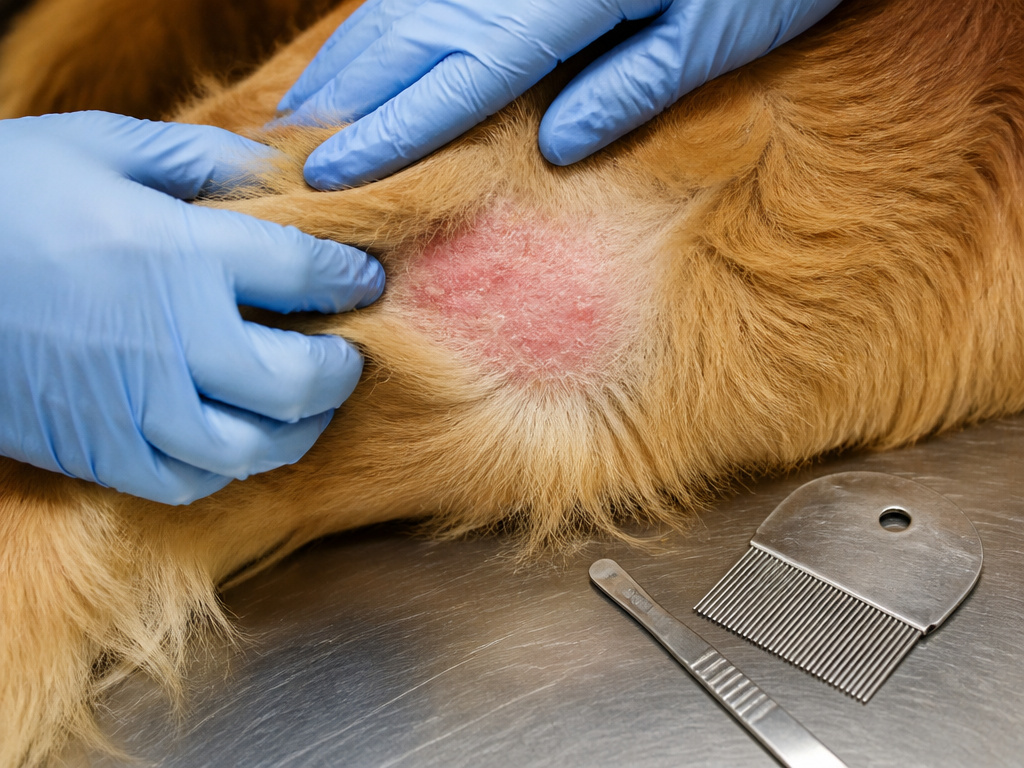
You’re brushing the dog, the light catches the coat, and there’s a patch of bare pink skin where there was fur before. That’s the moment to stop shopping and start calling.
PetMD’s guidance is that a change in skin or coat is worth a vet call, though these causes are typically not an immediate medical emergency. Adopt-a-Pet is firmer: get the vet involved before natural remedies, because skin mites, infections, and endocrine disease need specific treatment and can worsen while you’re waiting to see if coconut oil works.
What Your Vet Will Actually Do
Most dogs will need a skin scrape to look for microscopic parasites, yeast, bacteria, and fungi, and the vet may also flea-comb the pet. More serious cases may require blood work or a skin biopsy. For suspected food allergy, the AKC notes a vet might prescribe an elimination diet, since there is no reliable test for food allergens.
Before you start: Anything you put on broken skin goes onto a dog that will lick it off. If the skin is red, weepy, or smells, stop and get it looked at first. Time spent on home remedies for an infection is time the infection spends spreading.
The red flags that skip the home-remedy stage entirely:
- Severe itch that keeps the dog awake or chewing at itself.
- Hair loss in patches rather than an even thinning.
- Odor coming off the skin, not just the coat.
- Spreading redness or any open, weeping area.
- A ring-shaped lesion, which could be ringworm and is transmissible to people.
The Breeds and Coat Types That Need a Different Plan
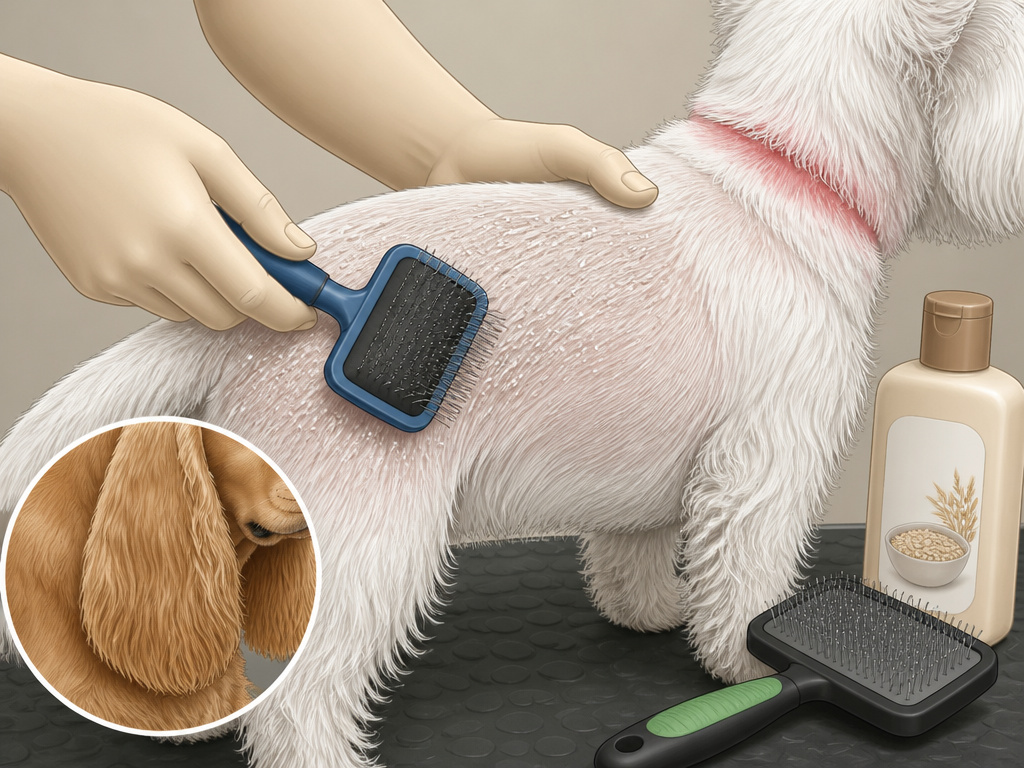
Adopt-a-Pet names five breeds more prone to dry skin, and they have almost nothing in common except skin that struggles. Adopt-a-Pet names English Bulldogs, Cocker Spaniels, Springer Spaniels, Doberman Pinschers, and West Highland Terriers as more prone to the condition.
- English Bulldogs carry skin folds that trap moisture and debris.
- Cocker and Springer Spaniels have heavy, pendulous ears and dense coats that hide flaking until it’s advanced.
- Doberman Pinschers and West Highland Terriers are thin-coated, so flaking shows early and clearly.
For any of these, grooming dogs with sensitive skin is a different job than a weekly brush-out. A soft slicker brush moves through a thin coat without scraping, and a sturdier slicker is worth the step up if you’re brushing a dense spaniel coat daily. An oatmeal shampoo is the option to reach for when the itch is mild and temporary.
One more thing that gets missed. A collar that’s too tight leaves a red band with the hair worn thin in a ring, and it looks like a rash until you take the collar off and watch it fade. Check that spot every time you groom. It’s a quick look that can save a vet visit.
Frequently Asked Questions
How often should I bathe a dog with dry skin?
PetMD’s target is once every two to four weeks for a normal coat. If your vet has prescribed a medicated shampoo, that schedule overrides the general rule, because medicated bathing is a treatment with its own timing. The AKC notes that reducing bath frequency usually resolves dry skin when excessive bathing is the cause.
Can I use human lotion on a dog’s dry skin?
There’s no data in these sources on human lotions. The only moisturizer with published barrier results in dogs is a glycerol and propylene glycol formula tested in a controlled study. Ask your vet before borrowing from your own shelf, and remember the dog will lick off whatever you apply.
Does coconut oil help dry skin on dogs?
Adopt-a-Pet lists applying coconut oil or vitamin E oil to the skin as a home option, and suggests choosing organic, virgin, cold-pressed coconut oil. It also advises consulting a vet before starting any home remedy, since mites, infections, and endocrine disease need specific treatment.
Will a humidifier fix my dog’s flaky skin?
The AKC says a humidifier used in cold, dry weather usually resolves dry skin, as long as dry air is the actual cause. Neither the AKC nor PetMD cites a controlled study for that claim. It’s a low-cost thing to try when your home is genuinely dry, and a waste of money when it isn’t.
How long does improvement take?
In the 2020 barrier study, transepidermal water loss had returned to normal by Day 15 on both treated and untreated sites. That’s barrier recovery on healthy dogs with experimental damage, so treat it as a rough sense of scale rather than a promise about your dog.
When should I stop trying home remedies?
When the skin is red, weepy, smelly, or the dog is severely itchy. Adopt-a-Pet specifically warns against starting natural remedies before a vet rules out mites, infections, and endocrine disease. PetMD adds that a change in skin or coat is worth a call, even though it’s usually not an emergency.
The Bottom Line
This week, count how often you’re actually bathing the dog. If it’s more often than once every two to four weeks and there’s no medicated shampoo in the rotation, that’s your first change and it costs nothing.
Here’s the concession. If you have a West Highland Terrier or a Cocker Spaniel with a long history of flaking, get a vet involved early. Those coats need a vet involved early, and the breeds that show up on every prone-to-dry-skin list are on there for a reason.
I’d rather see you spend the money on a diagnosis than on another bottle of oil. Start with your dog, not the product. That’s the honest version of how to treat dry skin on dogs: fix the routine, rule out the disease, then support the skin with something that has actual data behind it.
