
Can Dogs Eat Bananas: Portions, Peels, and Safety
This post contains affiliate links. As an Amazon Associate, we earn from qualifying purchases.
Can dogs eat bananas? Yes, in small peeled slices. A 1/4-inch slice is the standard unit, portions run from 1 to 2 slices for a 2 to 10 pound dog up to half a banana above 91 pounds, and treats including banana should stay under 10% of daily calories.
That 10% figure is a calorie budget, which is why the same slice count lands differently on a 15-pound terrier and a 90-pound shepherd. Preventive Vet puts half a banana at 7 grams of sugar, so the ceiling arrives faster than most owners expect.
What follows is the serving chart by weight, the peel question that four sources answer differently, and the medical conditions that override the whole answer.
Key Takeaways
- Peel it every time. Peels aren’t toxic, but PetMD, AKC, Chewy and WebMD all point at the same risk: a hard-to-digest mass that can block a dog’s gut.
- A 1/4-inch slice is the unit. A 2 to 10 pound dog gets 1 to 2 slices; a dog over 91 pounds tops out at half a banana.
- Keep all treats under 10% of daily calories, with the other 90% from a complete and balanced food meeting AAFCO standards.
- Banana is not a diarrhea remedy. PetMD says don’t use it that way, while AKC says fiber may help with gastrointestinal issues and Purina says fiber may help but the high sugar might also cause stomach upset and diarrhea.
- Avoid or get vet approval for dogs with diabetes, obesity, advanced kidney disease, or Addison’s unless a vet clears it first.
How Much Banana Can a Dog Have?
The number that matters is 1/4 inch. That’s the thickness of a single slice in the published charts, and every serving size below is built from it.
A 1/4-inch slice is the standard unit in the published charts. PetMD assigns 1 to 2 slices to dogs weighing 2 to 10 pounds, 2 to 3 slices at 11 to 20 pounds, 3 to 6 slices at 21 to 50 pounds, and up to half a banana above 91 pounds.
| Dog Size | Weight | Serving (1/4-inch slices) |
|---|---|---|
| Extra-small | 2 to 10 lb | 1 to 2 slices |
| Small | 11 to 20 lb | 2 to 3 slices |
| Medium | 21 to 50 lb | 3 to 6 slices |
| Large | 51 to 90 lb | A handful of slices |
| Extra-large | 91 lb and up | Up to half a banana |
The large-dog row is the vaguest line in the table. “A handful” leaves room for interpretation, and Chewy’s Dr. Albert Ahn fills that gap with a firmer ceiling: no more than half a banana for a large dog per day. Purina UK lands on the same half-banana cap for bigger dogs.
I keep the 1/4-inch measurement in my head for a reason. Eyeballing a slice for a 12-pound dog goes wrong fast, and a “small piece” cut by hand is usually three times the size it should be.
Puppies and Toy Breeds Need a Different Number
Puppies can eat banana, but not on the adult scale. PetMD calls for smaller portions than an adult dog gets and a slow introduction. Purina UK adds that puppy stomachs are smaller, so less fruit does the same job.
Small breeds get their own callout. PetMD names Chihuahuas and Yorkshire Terriers specifically and asks for especially small amounts to prevent digestive upset. A single 1/4-inch slice is at the low end of the serving range for a dog that size.
Why the Peel Is the Part That Actually Matters
Purina states it flatly: no part of a banana is toxic to dogs. The same page still says peels are best avoided, because they’re hard to digest and a choking hazard.
The fiber load is the problem. WebMD notes that peels are high in fiber and very hard for a dog to break down, which is the setup for a blockage rather than a clean pass. WebMD also flags pesticide residue on the outside of the fruit, a risk that has nothing to do with toxicity and everything to do with what’s sprayed on the skin.
An overripe peel goes slick and stringy in your hand, and it smells faintly sweet and fermented. That texture is exactly what makes it a bad idea in a dog’s mouth.
Common mistake: Feeding the peel because the dog seems fine afterward. Purina calls a whole unpeeled banana low risk and says not to worry, while PetMD, AKC and Chewy all warn about intestinal blockage. The practical read of that split is simple: peel it.
Real toxic foods sit in a different category from a peel. A peel is a texture and choking problem. Grapes are a toxicity problem, which is why grapes being dangerous gets its own warning page.
Signs a Peel Went Down Wrong
Chewy lists the blockage signs to watch for, and they show up as a cluster rather than one symptom:
- Vomiting that keeps going after the fruit is gone
- Loss of appetite lasting past the next meal
- Lethargy, a dog who’d rather lie down than follow you outside
- Diarrhea or constipation, either direction counts
- Abdominal pain and straining to defecate, which PetPlace adds to the list
Chewy’s guidance is an emergency vet visit, not a wait-and-see morning.
The 10% Rule Is the Only Number Every Source Agrees On
Preventive Vet puts half a banana at 7 grams of sugar, and that single figure explains most of the advice below. Every source in this set repeats the same split: treats, banana included, stay at or under 10% of a dog’s daily calories, and the other 90% comes from a complete and balanced food meeting AAFCO standards. PetMD, Chewy, Purina, PetPlace and Bestie Paws all state it.
The reason is arithmetic. A dog’s daily calorie need is set by weight and activity, so every banana calorie displaces a calorie of food formulated to hit AAFCO nutrient profiles. Fill too much of that budget with fruit and the diet stops being balanced, even if the dog looks perfectly fine.
For scale, Preventive Vet puts half a banana at 7 grams of sugar. That’s a modest slice of a small dog’s day and a rounding error on a big one.
Here is the plain version. The 10% rule is the only guidance in this whole topic where every source agrees, so it’s the one to build the habit around.
If you want the wider list of what fits inside that budget, safe table food for dogs covers the rest of the plate.
Can Dogs Eat Bananas Daily? Where the Sources Disagree
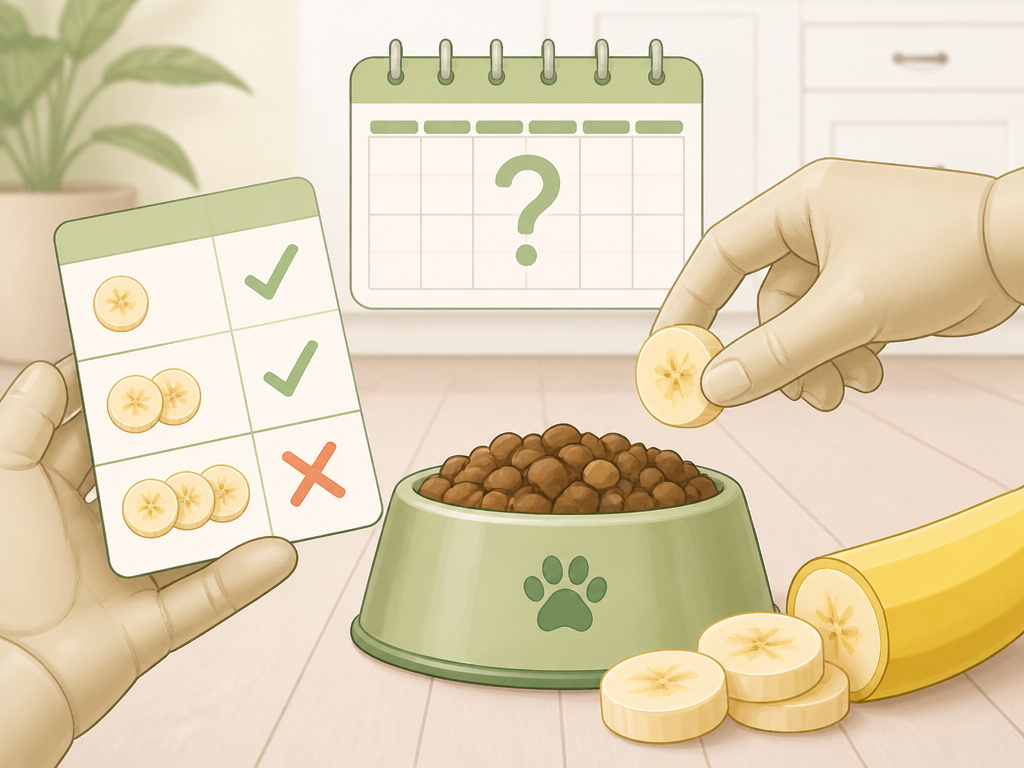
Four sources call bananas an occasional treat. One chart lists the frequency as daily for every size band, and it comes from the same page that later calls banana an occasional snack.
| Question | One Position | The Other Position |
|---|---|---|
| How often | PetMD chart: daily, every size | AKC, PetPlace, Bestie Paws: occasional |
| Large dog ceiling | PetMD: a handful of slices | Chewy, Purina UK: half a banana |
| Peel risk | Purina: low risk, don’t worry | PetMD, AKC, Chewy: blockage risk |
| Diarrhea use | PetMD: not a home treatment | AKC, Purina: fiber helps, sugar hurts |
| Nutrition value | AKC, PetMD: potassium, B6, C | Purina: servings too small to matter |
None of those rows are typos. They’re different judgments about the same fruit, and the honest answer is that the sources don’t agree.
On frequency, the sources disagree: PetMD’s chart lists daily for every size band, while AKC, PetPlace and Bestie Paws call bananas an occasional treat. Half a banana carries 7 grams of sugar, and a food that sweet shouldn’t be a daily habit for a dog whose kibble already covers his nutritional needs. The AKC banana feeding guidance says the same thing in plainer words: an occasional treat, not a regular part of the daily diet.
On nutrition, Purina makes the sharper argument. Small servings deliver small amounts of nutrients, so banana doesn’t work as a supplement. AKC and PetMD list the potassium, vitamin B6, vitamin C and magnesium, and both are accurate about what’s in the fruit. The disagreement is about whether a serving that small matters.
Which Dogs Should Skip Bananas Entirely
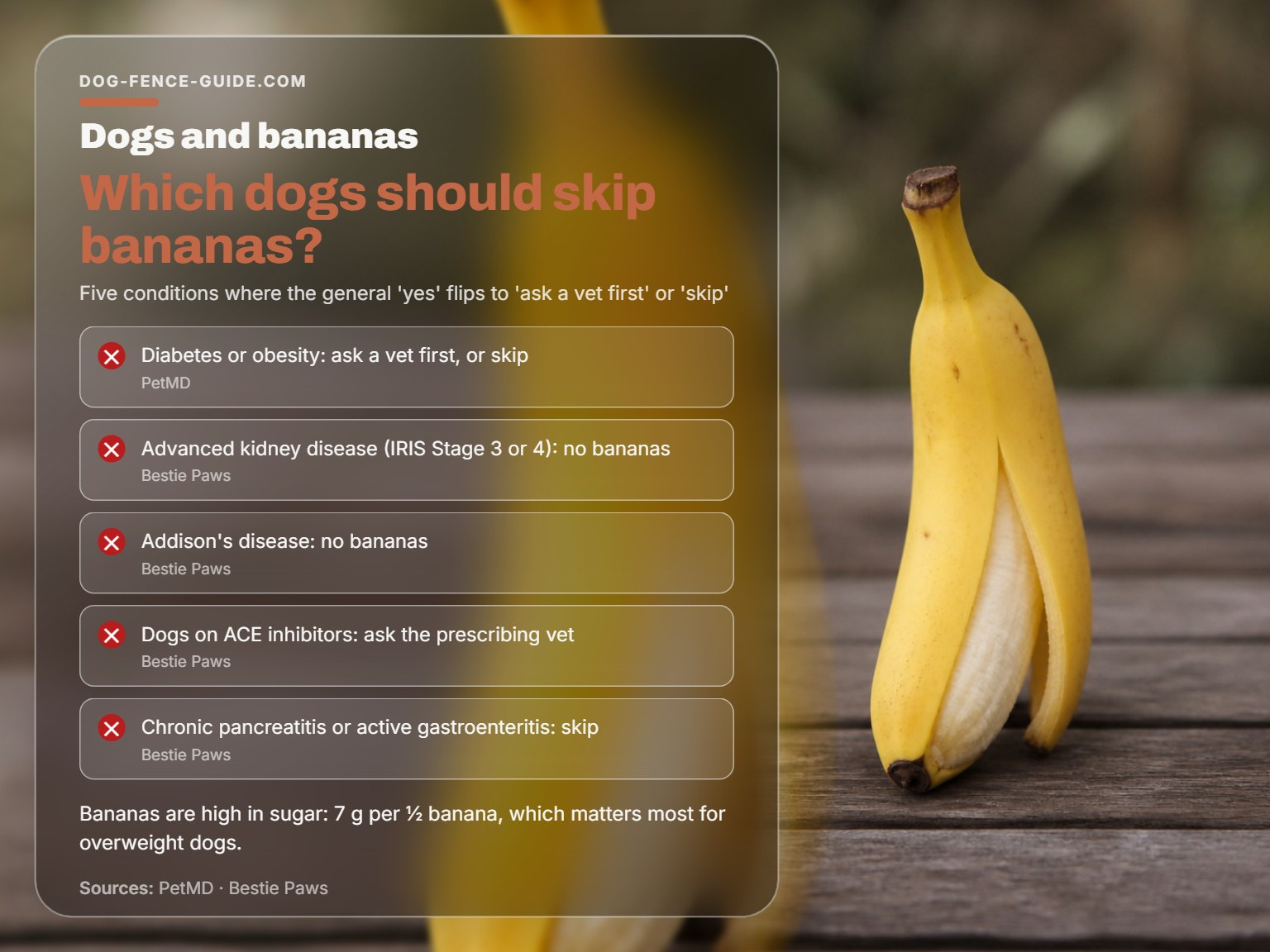
The general answer flips for a specific list of conditions, and the list runs longer than most fruit guides admit.
- Diabetes or obesity. PetMD and WebMD both say to ask a vet first, and Purina UK lists diabetes as a reason to skip.
- Advanced kidney disease (IRIS Stage 3 or 4). Bestie Paws warns that the potassium load raises the risk of hyperkalemia, which is dangerous when the kidneys can’t clear it.
- Addison’s disease. Same source, different mechanism: an aldosterone deficiency impairs potassium excretion directly.
- Dogs on ACE inhibitors. Ask the prescribing vet, since these drugs reduce potassium excretion too.
- Chronic pancreatitis or active gastroenteritis. Bestie Paws and Purina UK both flag these.
- Any dog already overweight. Preventive Vet points out that bananas are high in sugar, which matters most for pets carrying extra weight.
Kidney Disease and Potassium
This is the part almost no banana article covers properly. A healthy dog’s kidneys clear excess potassium without trouble, so the mineral is a benefit. A dog in IRIS Stage 3 or 4 has lost that margin, and the same potassium becomes a risk. Bestie Paws draws a hard line at Stage 3 and 4 and says to ask a vet first at Stage 1 or 2.
How to Serve Banana Without a Stomach Ache
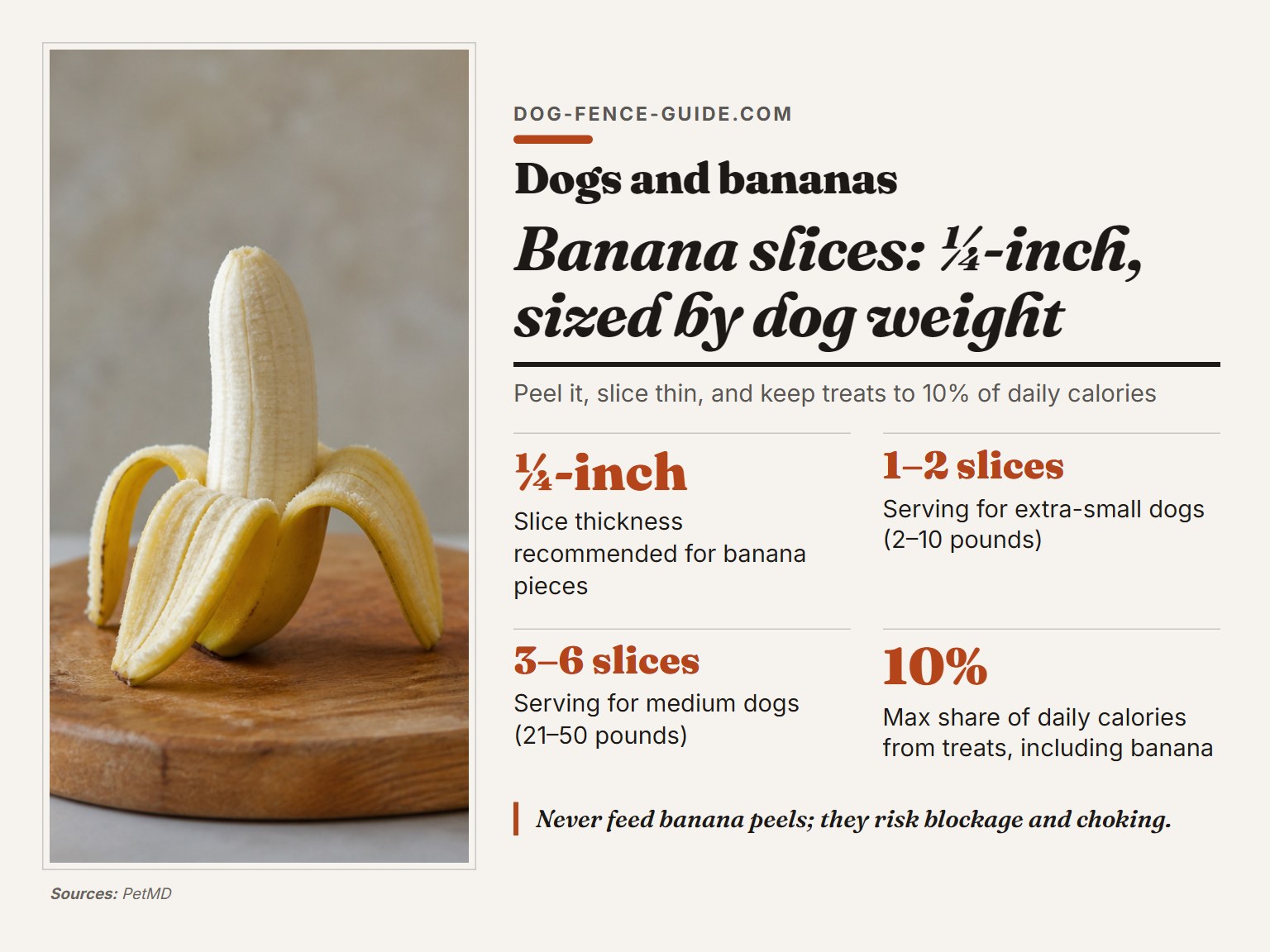
Three things cause most banana problems: piece size, the peel, and volume.
Before you start: Cut pieces small enough that your dog doesn’t have to chew a chunk the width of his throat, since choking is the risk AKC and PetPlace both name. Check any peanut butter for xylitol before mashing banana into it, because Bestie Paws notes many brands now contain it and it’s deadly to dogs. Skip the peel entirely, since it carries blockage, choking and pesticide-residue risk.
- Peel the banana completely. Skip this and you hand over the one part every source warns about.
- Cut 1/4-inch slices, then cut those in half for small dogs. A piece sized for a human mouth is a choking risk for a 10-pound dog.
-
Offer one piece and wait 48 hours. Bestie Paws recommends a single tiny piece before more, because food sensitivities don’t always show up the same day.
-
Count it against the 10% budget. Skipping the count is how a “healthy treat” turns into weight gain over a season.
The volume mistake is the one I see most. A handful of “healthy” pieces during a training session adds up to more fruit than the dog would get in a week, and the owner never notices because each piece looked small.
Small pieces are also the point if you use banana as a training reward. A 1/4-inch slice is about the size of a pea and sticks to your palm when the fruit is ripe, which makes it easy to deliver fast. carrots do the same job and hold up better in a jacket pocket.
What About Frozen, Dried, and Baked Banana?
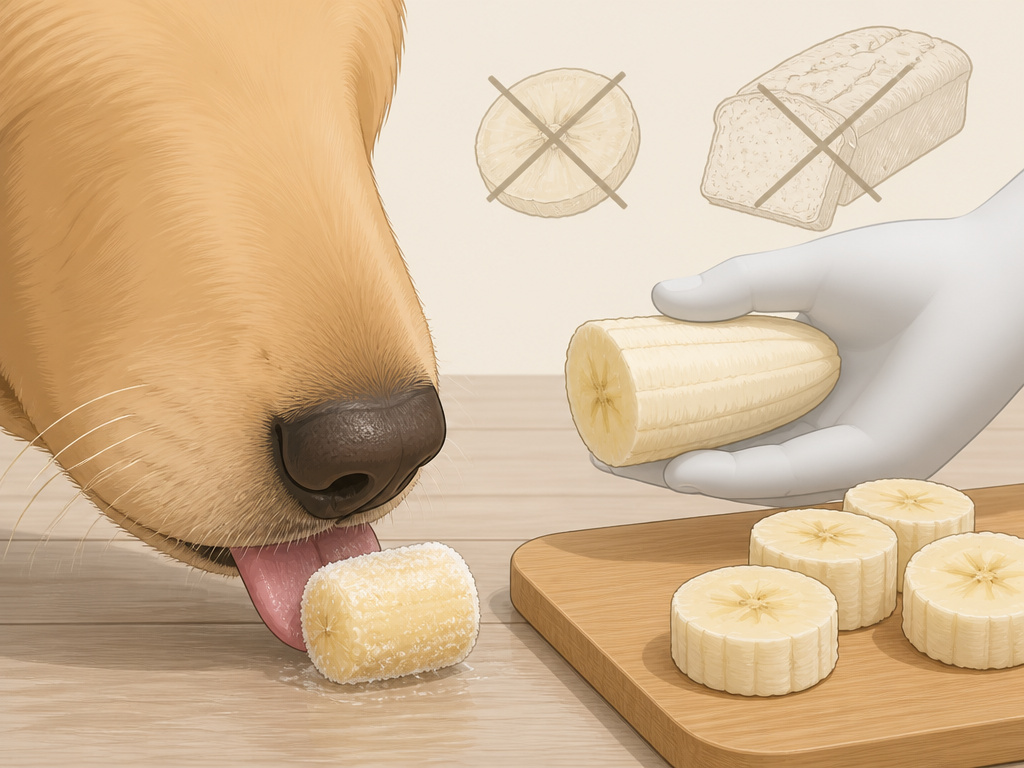
Ever handed a dog a frozen banana chunk and watched him try to chew it like a golf ball? That’s the whole problem with frozen fruit in one image.
Frozen banana is fine within limits. PetMD allows small amounts when served safely, WebMD says to peel first and feed no more than you would fresh, and AKC adds the detail that matters: size the pieces so they can’t lodge in the throat. A frozen chunk cracks against the teeth before the dog works out that licking is faster.
Dried and canned are a different story. PetMD says banana chips and dried bananas generally aren’t recommended, and Dogster points at the reason: drying concentrates the sugar, and canned fruit sits in sugary syrup.
Baked goods are out too. Chewy and Purina both rule out banana bread because of added sugar and ingredients like chocolate chips, and Purina adds raisins to that list since raisins are toxic to dogs. Chewy rules out banana pudding for the same reasons. PetPlace adds one more trap: banana-flavored foods sometimes contain xylitol, so stick to the fruit itself.
If you want variety, apples and watermelon both work as occasional rewards with their own portion rules. avocado is a separate case, since the fat content changes the math for a dog prone to pancreatitis.
Frequently Asked Questions
Can dogs eat bananas every day?
The sources split on this. PetMD’s serving chart lists daily as the frequency for every size band, while the same page’s FAQ calls banana an occasional snack rather than a daily staple. AKC, PetPlace and Bestie Paws all land on occasional, and with 7 grams of sugar in half a banana, occasional is the safer default.
Can dogs eat banana peels?
No. Peels aren’t toxic, which Purina states plainly, but they’re high in fiber and hard to digest. AKC, PetMD, Chewy and WebMD all warn about blockage and choking, and WebMD adds pesticide residue to the list. Remove the peel every time.
Is half a banana too much for a large dog?
It’s the ceiling, not the target. Chewy’s Dr. Albert Ahn caps a large dog at half a banana per day, and Purina UK gives the same figure. PetMD’s chart is looser for the 51 to 90 pound band, where it says a handful of slices. Start below the cap and see how your dog handles it.
Can puppies eat bananas?
Yes, in much smaller amounts. PetMD calls for smaller portions than an adult dog gets and a slow introduction. Purina UK notes puppy stomachs are smaller, so less fruit is needed, and suggests watching for signs of illness or allergy after the first taste. Stop and call your vet if vomiting or diarrhea shows up.
Do bananas help a dog with diarrhea?
PetMD says no and warns against using banana as a home treatment. AKC notes the fiber may help some dogs with gastrointestinal issues, and Purina UK says the fiber may help while the sugar may make things worse.
What about banana bread, chips, or pudding?
Skip all three. Chewy and Purina both rule out banana bread because of added sugar and ingredients like chocolate chips or raisins, and Chewy rules out pudding too. PetMD says banana chips and dried bananas aren’t recommended, and Dogster points to the higher sugar concentration in dried fruit.
The Bottom Line
The threshold that matters most sits at the small end. A dog under 10 pounds gets one or two 1/4-inch slices, which is less fruit than most people would put in a bowl, and that’s the entire serving.
Here’s the first step I’d take this week: cut one 1/4-inch slice, hand it over plain, and wait 48 hours before the next piece. That’s the introduction window Bestie Paws recommends, and it costs you almost nothing if your dog turns out to be one of the sensitive ones.
One concession worth stating plainly. If your dog is in the kidney or Addison’s group, none of this applies without your vet’s sign-off, because the potassium load is the reason. That’s a clinic conversation, not a kitchen one.
Before you feed: peel it, size it to the dog, and count it against the day’s treats. Three checks, ten seconds.
