
How to Train Two Dogs at Once: A Rotation That Works
This post contains affiliate links. As an Amazon Associate, we earn from qualifying purchases.
To train two dogs at once, give each dog its own short one-on-one session while the other has a job: a chew, a food-stuffed puzzle toy, a tether beside you, or a station it holds until released. Keep sessions under 10 minutes, and pay the waiting dog steadily so it stays parked.
The waiting dog is where these plans usually fail. A dog with nothing to do will invent something to do, and whatever it invents gets paid the moment you turn around to deal with it.
What follows is the rotation itself, the marker question the trainers still argue about, four ways to park the waiting dog, and the households where the standard advice stops working.
Key Takeaways
- Train separately first. New behaviors go in one dog at a time; together-work waits until the basics hold.
- Keep sessions under 10 minutes, then swap dogs. That’s the AKC’s guidance, and it’s about the working dog’s focus, not yours.
- Pay the waiting dog at 10 to 12 treats per minute if it’s tethered beside you. That’s Mikkel Becker’s number at Vetstreet, and it’s much higher than most owners guess.
- Wait 10 to 20 seconds before repeating a cue a dog ignored, then reward anything that lands within the next 10 seconds.
- Two puppies need enforced time apart, per the AKC, which says littermates should spend plenty of time apart with only short play periods together each day, while Dogster advises letting mild puppy squabbles and wrestling play out if they don’t get out of control.
The Timing Window That Decides Every Session
The click has to land in the same beat the dog’s rear hits the floor. Miss it by a breath and the dog still learns something, just not the thing you meant.
Two dogs trained together divide the trainer’s attention at the exact moment a reward must land. A correct sit marked a beat late teaches nothing about the sit. Separation solves the timing problem by giving one dog a stationary job while the other works. The waiting dog still needs a job and steady reinforcement, or the arrangement collapses.
Stephanie Gibeault, writing for the AKC, names the same two problems: timing and distraction. You can’t mark a behavior precisely when your focus is split between two animals doing different things.
Distraction is the harder one to fix, because a new behavior has to be built in pieces. Gibeault breaks every behavior into distance, duration, and distraction, and each piece starts at its lowest level and climbs one at a time. A second dog bouncing around the room is the highest distraction setting you own when you compare a how to train two dogs at once.
The click itself is a flat, dry snap with no warmth in it. That’s the point. It sounds identical every single time, which is why it cuts through a room better than your voice does when one dog is barking.
Can You Actually Train Two Dogs at the Same Time?
Three credible sources give three different answers, and every one of them is defensible.
Mikkel Becker at Vetstreet says yes, with a warning attached. It’s possible, but it’s challenging even for professional trainers, because the person training has to reward a dog at the precise moment it does the right thing. Two dogs make that precise moment hard to pin down.
The AKC multi-dog household training tips take a different line. Separation is framed as the answer to both core challenges, and working the dogs together is a later step that waits until the basics are mastered.
Karen Pryor Clicker Training pushes furthest in the other direction and endorses simultaneous work outright. One of its suggested setups is a second person: each person trains a different dog at the same time, and each dog focuses on its own trainer’s click and treats.
I get why people want to jump straight to training both dogs in the yard. But here’s what actually happens: the first week goes fine because both dogs are confused, and week two is when the faster learner starts mugging the slower one for its treats.
That last point matters more than it sounds. The whole argument about simultaneous training hinges on whether you can deliver a reward to the right dog at the right instant. If you can, train together. If you can’t yet, the rotation below buys you the skill.
The Rotation: One Dog Works, One Dog Waits
The sequence has five parts, and they run in this order, though Karen Pryor Clicker Training suggests each person trains a different dog at the same time instead for how to train two dogs at once.
The Five-Part Rotation
- Pick the trainee and give the other dog a job. A bully stick or a food-stuffed puzzle toy is the AKC’s suggestion, while Vetstreet suggests crating one dog with a food puzzle or stuffed Kong and Karen Pryor Clicker Training suggests putting one dog in the yard or a crate with a chew. Skip this and the waiting dog starts offering behaviors you never asked for, and some of those get paid by accident.
- Set a timer for under 10 minutes. Gibeault’s guidance is a session short enough to finish in less than 10 minutes. Run long and the working dog’s accuracy slides, so you start marking sloppy reps and calling it progress.
- Pay the waiting dog on a schedule. If it’s tethered beside you, Becker’s number is at least 10 to 12 treats per minute, while Karen Pryor Clicker Training suggests throwing the tethered dog an occasional treat for being quiet. Thin that out and the dog stands up, and standing up gets rewarded the moment you finally notice.
- Wait 10 to 20 seconds before repeating a cue. Becker’s rule is simple: if the dog doesn’t respond, wait, then ask again. Reward anything that lands within the next 10 seconds.
- Swap and repeat. Every dog gets a turn as the trainee, and every dog gets paid for waiting. Rotate until each one has had a session.
If you’re unsure how long each block should run, this guide to training session length walks through the tradeoffs. The mechanics of timing a reward are covered in treat training.
Here’s the short version of the setup question:
| Setup | What it solves | Where it fails |
|---|---|---|
| Crate with a stuffed KONG | Keeps dogs apart in tight spaces | A dog that stresses alone won’t settle |
| Tether beside you | Lets you reward the waiting dog without moving | Needs steady treats to hold position |
| Station (bed or platform) | Builds patience and self-control, no tether needed | Takes weeks to teach properly |
| Separate room with a puzzle feeder | Removes visual distraction entirely | Fails if the dog can’t be alone |
Where this goes sideways: Tethering the waiting dog and then forgetting to pay it. The dog stands up, you turn around to fix it, and the standing-up gets marked. Two weeks of that and the tether stops meaning anything.
One Marker or Two? Where the Trainers Disagree
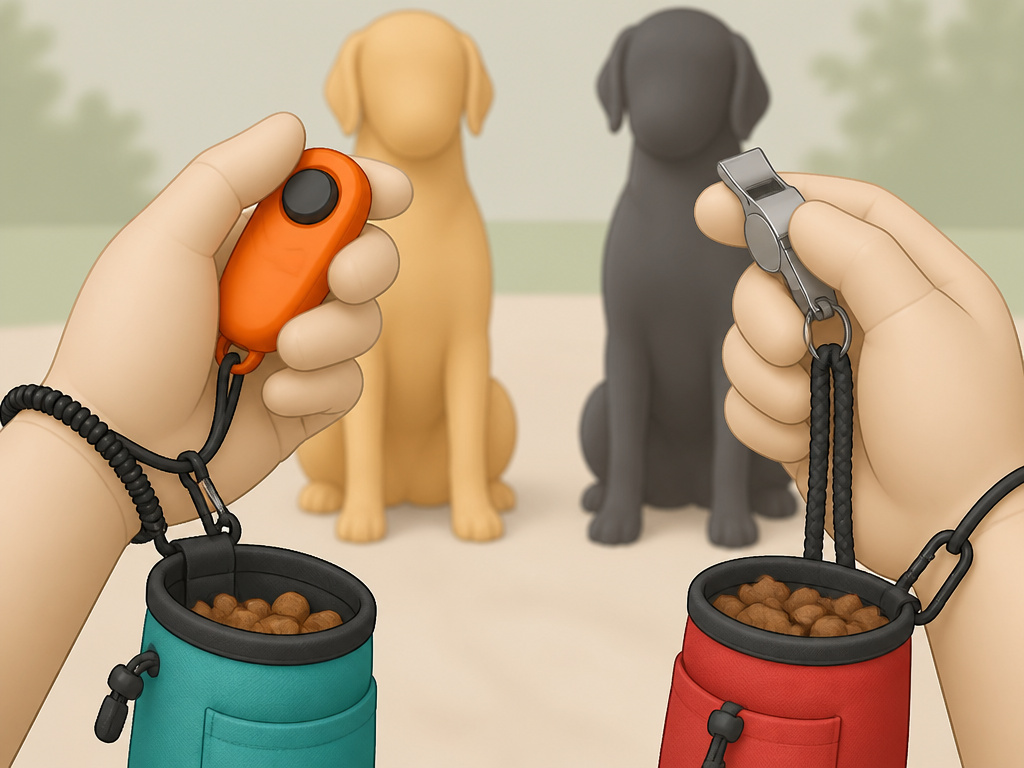
Ask three trainers about markers and you’ll get three answers, none of them careless.
Becker at Vetstreet recommends two distinct markers so both can be delivered at the same moment, such as “good” for one and “yes” for the other, or a clicker for one dog and a verbal marker for the other, while Karen Pryor Clicker Training says a single clicker can carry both dogs and Dogster calls two marker words unnecessary and easy to tangle.
Karen Pryor Clicker Training lands elsewhere: the dog quickly understands which click is its own click and which is not, so a single clicker can carry both dogs, and different sounds, a click for one and a whistle for the other, are offered as an option rather than a rule, while Vetstreet recommends two distinct markers so both can be delivered at once.
Dogster’s Nicole Cosgrove goes further and calls two marker words unnecessary and easy to tangle, suggesting one marker wrapped around the dog’s name: “Joey, yes, Joey,” while Vetstreet recommends two distinct markers so both can be delivered at once.
Rule of thumb: Dogster suggests starting with one marker wrapped around the dog’s name, while Vetstreet recommends two distinct markers so both can be delivered at once and Karen Pryor Clicker Training offers different sounds as an option rather than a rule.
Dogster’s answer is that two markers work when you’re precise and fail when you’re tired, and most of us train tired, while Vetstreet recommends two distinct markers so both can be delivered at once.
Two Puppies Are a Different Job
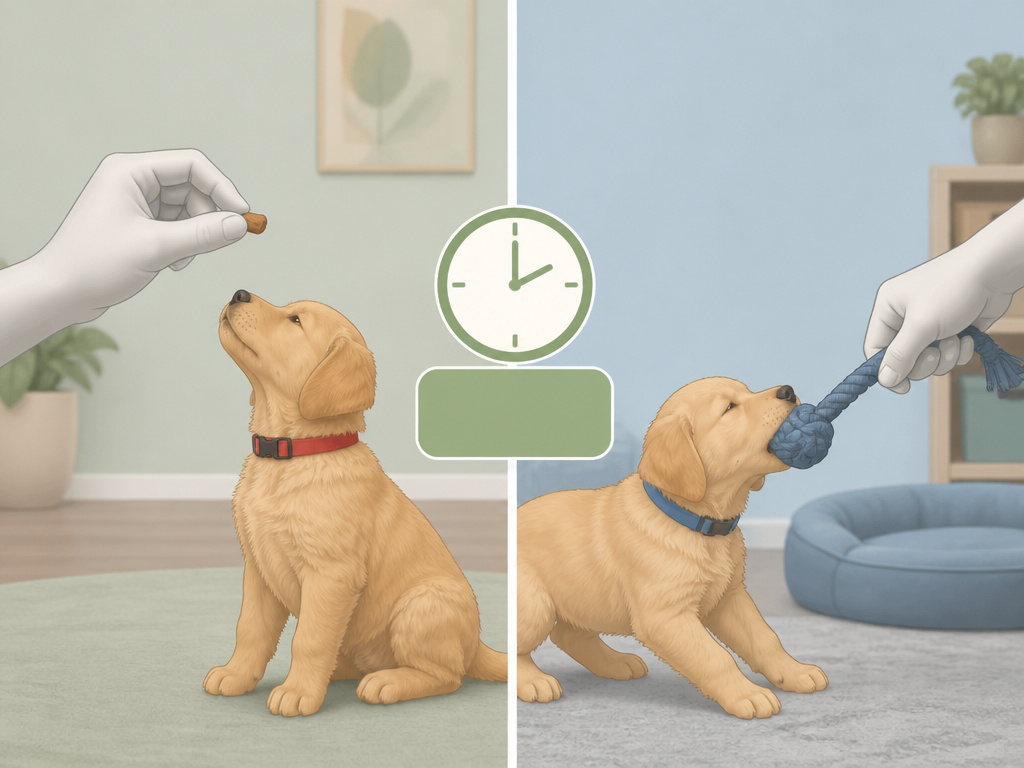
Four months old was the age in the case an AKC trainer was asked about for how to train two dogs at once, and the answer wasn’t the one the owner wanted.
Breanne Long, answering for the AKC’s Ask Our Trainers column, described littermate syndrome: two puppies raised together sometimes struggle to develop social skills with other dogs or people, because they prefer each other’s company to any human’s.
The AKC’s fix is stricter than the adult version: the pups need plenty of time apart and only short periods of playtime together each day, while Dogster advises letting mild puppy squabbles and wrestling play out if they don’t get out of control. Training is done separately for each puppy, and it can start right away.
The AKC trainers on training two puppies made the same point from a different angle. One-on-one time with the human family, spent playing and training, is what keeps the pair from becoming a closed unit.
What that looks like in practice:
- Time apart every day. The AKC calls this extremely important, and it’s the part owners skip because it feels unkind.
- Short play periods only. Not an all-day wrestling match in the hallway.
- Separate training from day one. No waiting for a certain age.
- One-on-one time with you, spent playing and training, not just feeding.
If you’re adding a second dog rather than raising two at once, the sequence in how to introduce two dogs matters more than the training plan itself.
Common mistake: Treating two littermates like one training project. The pair bonds to each other instead of to you, and by the time it shows up as a recall problem, you’re months behind.
Where the Standard Advice Falls Apart
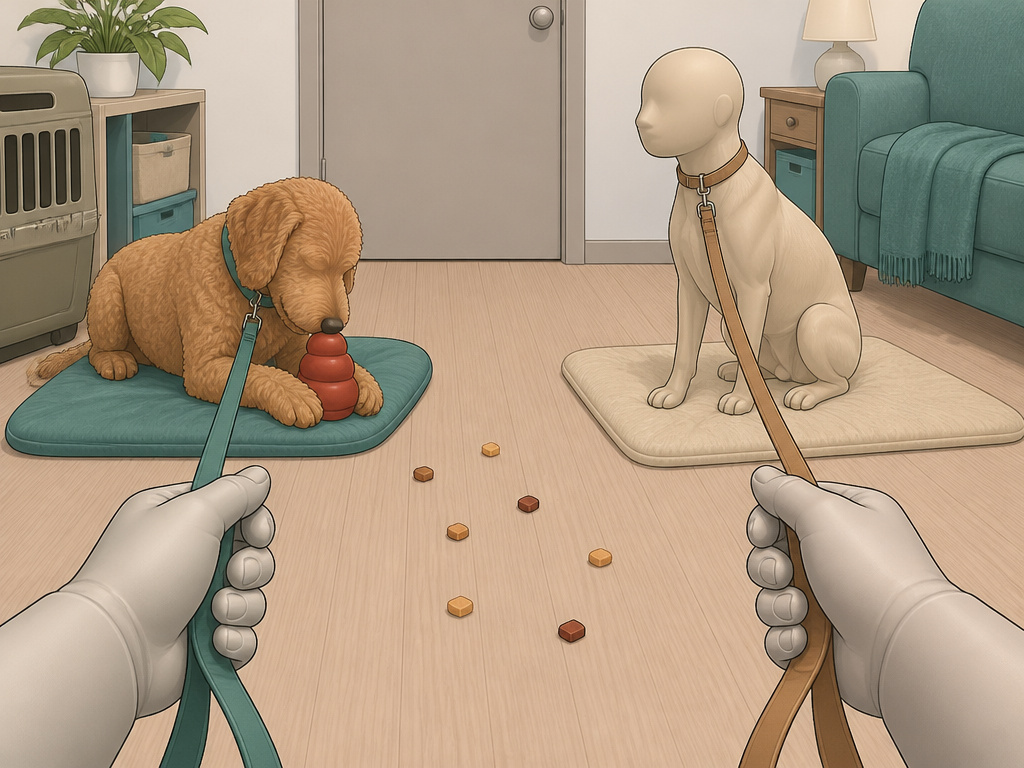
A studio apartment, two dogs, one leash in each hand, and nobody free to hold the door.
Gibeault’s fallback for a small apartment or a dog that panics alone is tethering both dogs in the same room, or keeping them on leash, which stops the dogs from interfering with each other or stealing each other’s treats, while Vetstreet suggests crating one dog with a food puzzle or stuffed Kong and Karen Pryor Clicker Training suggests putting one dog in the yard or a crate with a chew.
That same tether does double duty for a possessive dog, physically preventing the theft that starts the fight, while Vetstreet suggests crating one dog with a food puzzle or stuffed Kong in limited space.
Gibeault is blunt about the limit here: juggling multiple leashes makes it too awkward to give hand signals and deliver rewards at the same time, and a second person or a taught station solves it, while Karen Pryor Clicker Training suggests each person trains a different dog at the same time and Vetstreet permits simultaneous training with two distinct markers.
One more disagreement worth naming. Dogster’s Cosgrove advises feeding, greeting, and training the top dog first once a hierarchy settles. The AKC recommends rotating so each dog gets a turn as the center of attention.
The same split shows up on puppy squabbles. Dogster says let mild tussles play out if they don’t escalate. The AKC’s littermate guidance says short supervised play periods only.
| Symptom | Likely cause | Fix |
|---|---|---|
| Waiting dog keeps standing up | Reward rate too thin | Pay it more often while it holds |
| Working dog ignores a known cue | Cue repeated too fast | Wait 10 to 20 seconds, then ask again |
| Both dogs rush the same reward | Released at the same time | Release each dog individually |
| Waiting dog guards its chew | Resource guarding | Tether so treats can’t be stolen |
Proofing: Distance, Duration, Distraction, One at a Time
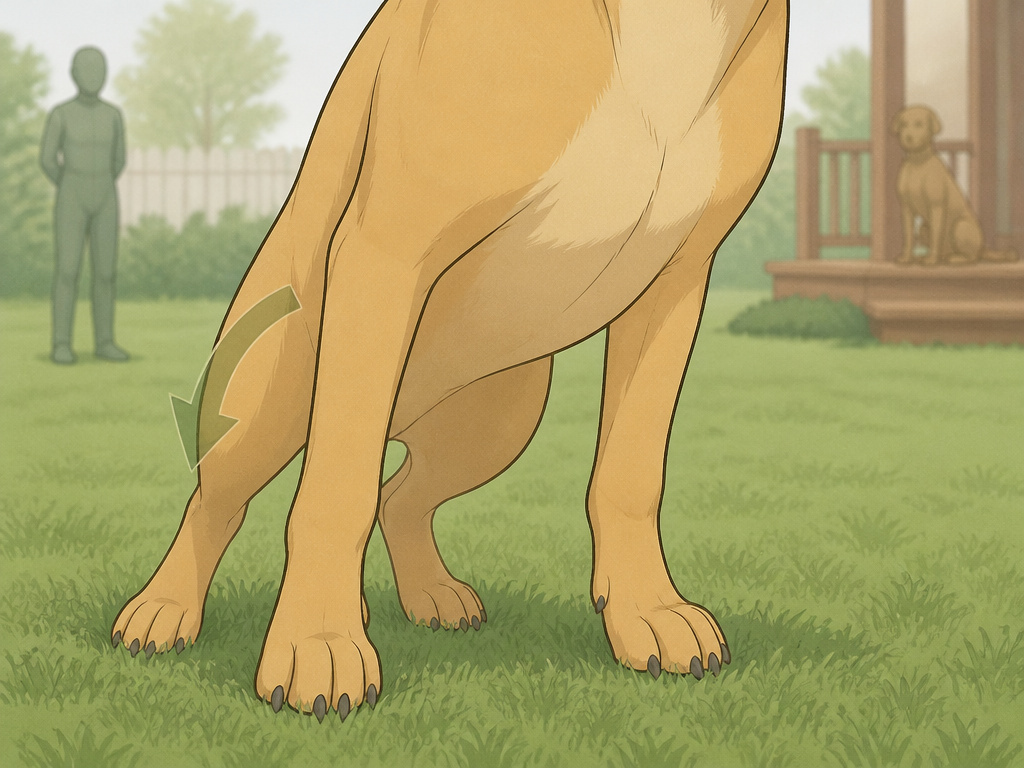
The last stage is where a two-dog household actually pays off, because you already own the hardest distraction in the house.
Gibeault’s framework is to break a new behavior into distance, duration, and distraction, start each at its lowest level, and build one at a time. Working distance training first means the dog can hold a sit while you’re across the yard and the other dog is watching from the porch.
The order that works:
- Distance first, with the other dog out of sight. Add yards slowly. A dog that breaks at ten feet will break at thirty.
- Duration second, still with one dog. Hold the sit longer before you add anything else.
- Distraction last, and the other dog is the distraction. This is the whole point of the exercise.
- Back off one level whenever accuracy drops. Rebuild, then push again.
A dog that’s about to break a stay shifts its weight forward onto its front paws a beat before it moves. Watch the shoulders, not the head.
The deeper work on this stage lives in proofing commands around distractions, and it’s worth reading before you try it with two dogs in the same room.
Frequently Asked Questions
Yes, with a tether instead of a crate, per the AKC’s guidance for tight spaces or a dog that stresses alone: keep both dogs tethered in the same room or on leash, which prevents interference and treat-stealing without needing a second room, while Vetstreet suggests crating one dog with a food puzzle or stuffed Kong in limited space.
You don’t need to, per Dogster, which suggests using the same cue words and letting the dog’s name carry the difference, while Vetstreet recommends two distinct markers so both can be delivered at once. What you do need is a reliable name response, built by rewarding each dog every time it turns toward its own name.
Tether or leash the waiting dog while the working dog trains, which the AKC recommends specifically for dogs who are possessive of their resources because the physical barrier prevents the theft that triggers the conflict, while Vetstreet suggests crating one dog with a food puzzle or stuffed Kong in limited space.
Separate training is the AKC’s recommendation: its guidance on littermates is that training needs to be done separately with each puppy and can start right away, alongside plenty of time apart and only short play periods together each day, while Dogster advises letting mild puppy squabbles and wrestling play out if they don’t get out of control.
Under 10 minutes per dog, per the AKC, which says the limit is about the dog’s focus rather than your schedule, while Vetstreet says working just a couple of short training sessions into your schedule each day is enough.
It helps but it isn’t required: a second person can hold one dog on leash or keep the non-working dog focused, and alone you can substitute a tether, a crate with a food puzzle, or a taught station, while Karen Pryor Clicker Training suggests each person trains a different dog at the same time and Vetstreet permits simultaneous training with two distinct markers.
Before You Go
Here’s the AKC’s gate: if one dog breaks position every time the other one gets a treat, you aren’t ready for together-work, so go back to the rotation until both dogs can hold a station while the other one trains, while Karen Pryor Clicker Training endorses simultaneous work freely and Vetstreet permits it with two distinct markers.
Tonight, pick the harder dog and give it the first solo session, putting the other one in a crate with a stuffed KONG or tethering it beside you with a handful of treats and paying it for staying down, while Karen Pryor Clicker Training suggests each person trains a different dog at the same time. Ten minutes, then swap. That’s the whole first week.
One concession worth stating plainly: all of this assumes the two dogs can share a room without a real fight, and if they can’t, the rotation isn’t the answer and a behavior consultant is, though Dogster advises letting mild puppy squabbles and wrestling play out if they don’t get out of control. Guarding between housemates escalates, and it doesn’t fade with more treats.
Think of it like seasoning a cast iron skillet. You can’t rush the layers. You apply them consistently, one at a time, and the pan gets better every week you don’t skip a step.
