
5 Best Cooking Oil For Dogs in 2026
This post contains affiliate links. As an Amazon Associate, we earn from qualifying purchases.
The Raw Paws Organic Virgin Coconut Oil earns our best overall spot because it is a pure, single-ingredient oil. It works both as a food supplement and a topical treatment for skin issues. For owners who want a veterinarian-backed choice, the CocoTherapy USDA Organic Virgin Coconut Oil is our best veterinarian recommended pick, while the kin+kind Organic Coconut Oil Pet Supplement is the best for skin and coat health.
Choosing the right cooking oil for your dog means cutting through marketing claims to find what actually supports their health without causing digestive upset. The real challenge is matching the oil type to your dog’s specific needs, whether that is a balanced omega profile, a simple skin-soothing supplement, or a multipurpose blend for daily meals.
This guide is based on a careful review of manufacturer specifications, ingredient sourcing, and patterns in owner feedback across the most trusted cooking oils for dogs. We break down what each oil offers, who it works best for, and what trade-offs to expect so you can choose with confidence.
Top 5 Cooking Oils For Dogs in the Market
Certain content that appears on this site comes from Amazon. This content is provided "as is" and is subject to change or removal at any time.
The Best Cooking Oils For Dogs, Reviewed
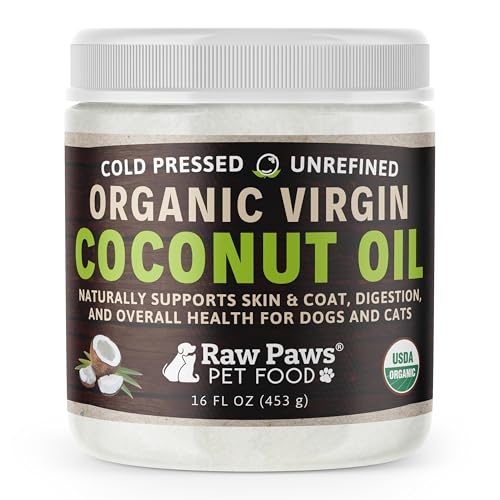
Raw Paws Organic Virgin Coconut Oil
What We Like
- Single-ingredient organic coconut oil
- Cold pressed and unrefined
- Supports digestive, immune, skin health
- Edible and topical use
Trade-offs
- Only one size available (16 oz)
- Introduce slowly to avoid digestive upset
A single-ingredient organic coconut oil that is cold pressed and unrefined means you get the purest form of the fat without chemicals or bleaching. That makes it a versatile supplement for dogs: you can spoon it into meals for digestive and immune support, or rub it on dry noses, paws, and hot spots for skin relief. It’s a straightforward product for owners who want one thing that does a lot.
At 16 ounces, this coconut oil comes in a single size. If you have a large dog or multiple pets, you might find yourself buying it more often than a larger option like CocoTherapy’s 24-ounce refill pouch. Because it’s pure oil, you need to introduce it slowly, starting with a few drops, or your pet’s stomach may protest. That’s a minor step for a clean, versatile product.
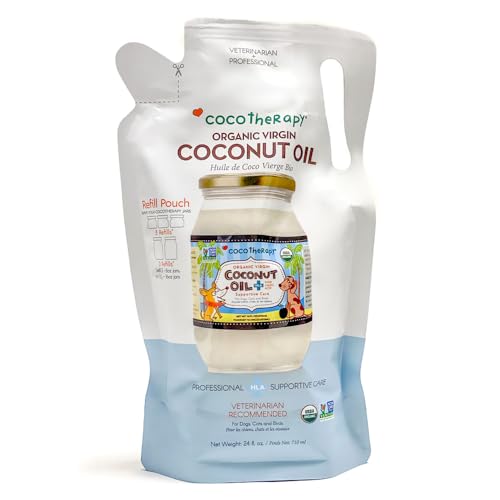
CocoTherapy USDA Organic Virgin Coconut Oil
What We Like
- USDA organic virgin coconut oil
- Refill pouch fills 3 small or 2 large jars
- Supports skin, coat, and digestion
- Suitable for dogs, cats, birds, and humans
Trade-offs
- Only available as a refill pouch, not a jar
- Single oil type limits variety for picky eaters
A 24-fluid-ounce refill pouch of USDA organic virgin coconut oil means you get a concentrated, high-quality fat source that supports healthy skin, shiny coats, and regular digestion. The ingredient list is exactly one thing: organic coconut oil, as stated on the label. It suits owners who want a veterinarian-recommended supplement that works for dogs, cats, birds, and even humans, without extra additives.
This is a 24-fluid-ounce refill pouch, so you will need a jar or another container to pour it into before serving. That is the main difference from a standard jar, it saves on plastic and cost if you already have a CocoTherapy jar or a similar vessel. The pouch fills three small or two large CocoTherapy jars, which means fewer refills for regular users.
kin+kind Organic Coconut Oil Pet Supplement

What We Like
- USDA Organic, cold pressed, extra virgin
- Vet formulated with one ingredient
- Supports skin, coat, and joint health
- Hand mixed in U.S. facility
Trade-offs
- Only one ingredient limits targeted benefits
- Not ideal for pets needing multi-ingredient formulas.
This is a single-ingredient, USDA Organic coconut oil that’s cold pressed and extra virgin. The naturally occurring MCTs stay intact to support hydrated skin, a glossy coat, and comfortable joints without any additives or processing shortcuts. It’s a straightforward option for dogs with dry, itchy skin or cracked noses, and the vet-formulated simplicity means you’re not guessing what else is in the jar. If your dog’s main issue is skin and coat condition, this oil delivers exactly what that job requires without extra fluff.
The trade-off is that this oil contains only one ingredient. If you’re looking for a blend that also tackles digestion or allergy relief, you’d want to look at something like Coconut Essentials Coconut Paws Oil Blend instead.
Product photos
Canpressco Camelina Oil

What We Like
- Balanced Omega 3-6-9 profile
- Includes natural Vitamin E for freshness
- Suitable for dogs, cats, and horses
- Large 4 L jug with dispensing pump
Trade-offs
- Only for equine, canine, and feline use
- Contains no added preservatives beyond natural Vitamin E
A 4-liter jug with a built-in pump means you’re set for months of daily oil additions without wrestling a heavy bottle or measuring from a sticky cap. The balanced Omega 3-6-9 ratio targets skin, coat, and joint health in one pour. The natural Vitamin E keeps the oil fresh for two years, handy if you’re buying in bulk for a multi-pet household. This is the pick for anyone who wants a single oil that covers the basics without needing to rotate supplements or guess ratios.
Product photos
Coconut Essentials Coconut Paws Oil Blend

What We Like
- 3-in-1 oil blend for versatile use
- Cold-pressed virgin coconut oil base
- Free from chemicals
Trade-offs
- Not a single-ingredient oil for purists
A 3-in-1 blend of cold-pressed virgin coconut, olive, and sunflower oils means you get three targeted benefits in one jar. That’s a practical shortcut for anyone tired of juggling separate balms for cracked paws, dry noses, and itchy skin. The formula can be used topically or added to meals, so a single product can handle spot treatments and daily wellness support. It’s a sensible option for owners who want a multi-purpose solution without buying three different bottles.
The trade-off is the 4-ounce size, which goes fast if you’re adding it to meals every day. That makes it better suited as a topical balm for small dogs or occasional use rather than a primary supplement for a large breed. Compared to Raw Paws Organic Virgin Coconut Oil, which offers a 16-ounce single-oil option, this blend gives you more versatility in a smaller package. If you prefer a straightforward single oil for bulk feeding, the Raw Paws bottle goes further. But if you want one jar that covers paws, nose, and coat without mixing your own, this blend saves the hassle.
Product photos
How We Evaluated Cooking Oils For Dogs
We started by looking at the ingredient list and processing method of each oil. Single-ingredient oils with cold-pressed, unrefined extraction tend to retain more natural nutrients, so that was a baseline requirement for top picks. We then checked for organic certification, which eliminates concerns about pesticide residue in a product your dog eats regularly.
The three criteria that mattered most were nutritional profile, versatility, and ease of integration into a dog’s diet. We looked at whether an oil supports skin and coat health, digestion, or joint function, and whether it can be used both orally and topically. We also considered practical factors like bottle size and whether the oil needs to be introduced slowly to avoid digestive upset.
An honest evaluation has limits. The conclusions come from comparing specifications, reading manufacturer documentation, and identifying consistent patterns in what owners report after using each oil for weeks or months. The guide to oils for dogs we maintain covers the full range of options if you want to dig deeper.
What To Look For In Cooking Oils For Dogs
Choosing a cooking oil for your dog starts with knowing what your dog actually needs. A balanced omega profile supports overall health, while a simple coconut oil works best for skin and coat issues. Always check the ingredient list first.
Look for cold-pressed, unrefined oils with a single ingredient. Organic certification removes pesticide concerns. Match the oil type to your dog’s specific health goal, skin, coat, digestion, or joint support.
Oil Type and Nutritional Profile
The type of oil determines what nutrients your dog gets. Coconut oil is rich in medium-chain triglycerides (MCTs) that support digestion and immune function. Camelina oil offers a balanced ratio of omega-3, omega-6, and omega-9 fatty acids, which is harder to find in a single oil. Fish oil provides concentrated EPA and DHA for joint and brain health, while olive oil delivers monounsaturated fats and antioxidants.
For most dogs, a single-ingredient oil is the safest starting point because it lets you control exactly what goes into their bowl. Blended oils can be convenient, but they make it harder to adjust dosage if your dog has a sensitive stomach.
Processing Method and Purity
Cold-pressed, unrefined oils retain more of their natural nutrients compared to refined oils that are processed with heat or chemicals. Look for “virgin” or “extra virgin” on the label, which indicates minimal processing. Organic certification adds another layer of assurance, especially for oils your dog will consume daily.
The absence of additives, preservatives, and fillers is non-negotiable. A cooking oil for dogs should list exactly one ingredient on the label. If you see “vegetable oil blend” or “natural flavors,” put it back. Our guide to coconut oil for dogs covers what to look for in coconut-specific products.
Intended Use: Food Supplement or Topical Treatment
Some oils work well both as a food topper and a skin treatment. Coconut oil, for example, can be added to meals or rubbed directly onto dry patches, hot spots, and paw pads. Other oils, like camelina or fish oil, are primarily intended as dietary supplements and should not be applied topically.
Decide how you plan to use the oil before you buy. If your dog has itchy skin or a dull coat, a versatile oil that works both ways saves you from buying two products. If you only need a daily omega boost for joint health, a dedicated supplement oil is the better value. The page on the best oils for dog skin has more detail on topical options.
- Check the label for a single ingredient and cold-pressed extraction.
- Confirm organic certification if pesticide exposure is a concern.
- Match the oil type to your dog’s primary health need (skin, coat, digestion, joints).
- Decide whether you need oral use only or both oral and topical application.
- Start with a small dose and increase gradually to avoid digestive upset.
A good rule of thumb: the shorter the ingredient list, the better the oil. One ingredient is ideal.
Cooking Oils For Dogs Compared
The table below compares the five cooking oils for dogs we evaluated, covering their key features, best use cases, and what trade-offs to expect with each.
| Product | Size | Ingredients | Target Species |
|---|---|---|---|
| Raw Paws Organic Virgin Coconut Oil | 16 oz | Organic coconut oil | Dogs and cats |
| CocoTherapy USDA Organic Virgin Coconut Oil | 24 fl oz | Organic virgin coconut oil | Dogs, cats and birds |
| kin+kind Organic Coconut Oil Pet Supplement | 8 fl oz | Cold pressed extra virgin oil | Dogs and cats |
| Canpressco Camelina Oil | 4 L jug with pump | Camelina oil | Equine, canine and feline |
| Coconut Essentials Coconut Paws Oil Blend | 4 oz | Cold-pressed virgin coconut, olive, sunflower | N/A |
Frequently Asked Questions
Can I use regular cooking oil from my kitchen for my dog?
Most kitchen cooking oils like vegetable, canola, or corn oil are highly processed and lack the nutrients your dog needs. They may also contain additives or be high in inflammatory omega-6 fatty acids. Stick to oils specifically chosen for dogs, cold-pressed, unrefined, and single-ingredient, to avoid unnecessary risks.
How much oil should I give my dog per day?
Start with a small dose, about half a teaspoon for a small dog and one teaspoon for a medium to large dog, mixed into their food. Gradually increase over a week to the recommended serving size on the product label. Too much oil too fast can cause loose stools or digestive upset, so slow introduction is key.
What is the best oil for a dog with dry skin and a dull coat?
Coconut oil is the most commonly recommended option for dry skin and coat issues because it can be used both orally and applied topically. The kin+kind Organic Coconut Oil Pet Supplement is formulated specifically for skin and coat health. For a different approach, fish oil for dogs provides omega-3 fatty acids that support skin hydration from the inside out.
Are omega-3 oils safe for dogs every day?
Yes, omega-3 oils like fish oil or camelina oil are safe for daily use when given at the recommended dosage. They support joint health, cognitive function, and a healthy inflammatory response. Always check with your veterinarian before starting any daily supplement, especially if your dog has a medical condition or is on medication.
Can I use olive oil for my dog’s food?
Olive oil is safe for dogs in small amounts and provides healthy monounsaturated fats and antioxidants. It is best used as an occasional topper rather than a daily staple because it is higher in calories and lower in omega-3s than fish or camelina oil. Our guide to olive oil for dogs has more details on safe serving sizes and benefits.
The Bottom Line
The Raw Paws Organic Virgin Coconut Oil is our best overall pick for most dog owners. It is a pure, single-ingredient organic oil that supports digestive, immune, and skin health while working both as a food supplement and a topical treatment. If you want one oil that covers the most ground without guesswork, this is it.
For owners who prefer a veterinarian-recommended option, the CocoTherapy USDA Organic Virgin Coconut Oil delivers the same organic quality in a bulk refill pouch that is ideal for multi-pet households. If your primary concern is improving your dog’s skin and coat, the kin+kind Organic Coconut Oil Pet Supplement is formulated with that specific goal in mind. Those with large dogs or multiple pets will appreciate the Canpressco Camelina Oil for its balanced omega profile and generous 4 L jug.
The single most important factor when choosing a cooking oil for your dog is the ingredient list. One ingredient, cold-pressed, and organic if possible. Everything else, omega profile, bottle size, topical use, comes second to purity.
